Toggenburg organ history
In his book, Markus Meier looks at a geographically limited area, but places his observations on the house and church organs in this region within a broad social and religious-political framework.




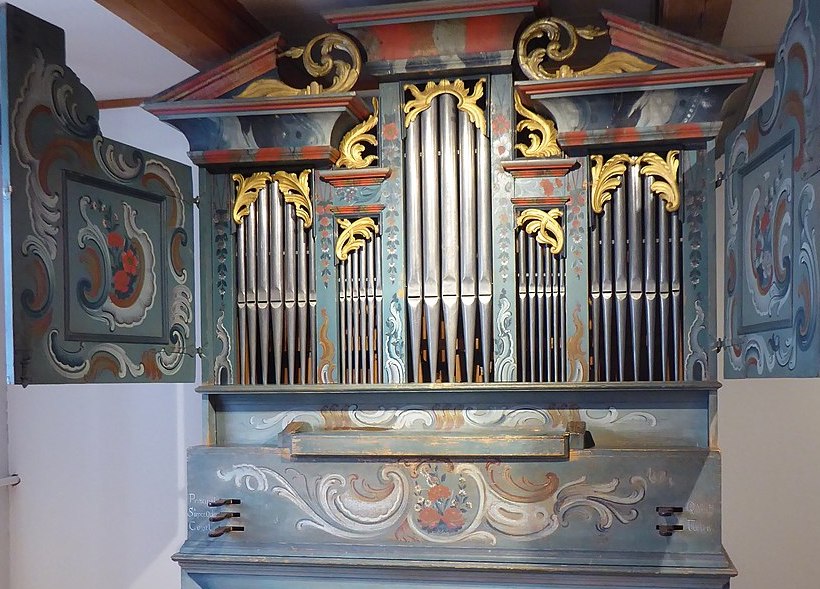
Who hasn't seen them, the pretty, often colorfully painted house organs that stood in the ridge chamber of many a Toggenburg farmhouse in the late 18th and early 19th centuries? The meticulously researched and comprehensively documented book by musician, musicologist and organ builder Markus Meier is therefore naturally dedicated to the history and context of house organ building there.
This can develop over a period of around 75 years and leads to an almost standardized and perfected type of instrument, especially in the instruments of the Looser family (a list of almost 100 instruments can be found in the appendix). Meier also sheds light on the ecclesiastical organ building in the region and makes revealing cross-references that lead back to the organ building tradition in Vorarlberg and the Lake Constance region.
Organs and denominations
With his book, Meier succeeds in placing his topic, which at first glance may seem rather "local", in a context of social, confessional and religious-political conditions that extends far beyond Toggenburg (the "most important area of tension in the confessionally divided Confederation", according to the author).
In the post-Reformation period, its churches were initially often used equally by both denominations, but remained under the control of the Prince-Abbot of St. Gallen, which meant that the Reformed ban on organs could be circumvented to a certain extent "with Catholic blessing". At the same time as the organ returned to the church, the house organ also played an important role in everyday domestic family devotions in the spirit of pietism (a link between the house organ culture and the Zwinglian organ ban is therefore demonstrably false). The emergence of the fortepiano eventually displaced the house organs; however, in some places these were transferred to churches - at least as temporary solutions.
Conclusion
A book warmly recommended to all those interested in organs, which documents an important chapter in the ecclesiastical and secular organ history of our country against its confessional background in accordance with the latest state of research. It is to be hoped that in view of the manifold activities surrounding the Toggenburg house organ culture, a publication on the surviving, still largely unpublished music materials and the repertoire played could also follow!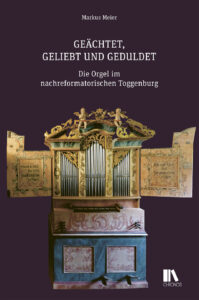
Markus Meier: Geächtet, geliebt und geduldet - Die Orgel im nachreformatorischen Toggenburg, 400 p., Fr. 48.00, Chronos, Zurich 2025, ISBN 978-3-0340-1796-1 (E-Book free of charge)