Romantic Baroque
Edvard Grieg thought he was hiding his personality in the "Holberg Suite", but his handwriting always remains recognizable in this important work for string orchestra.




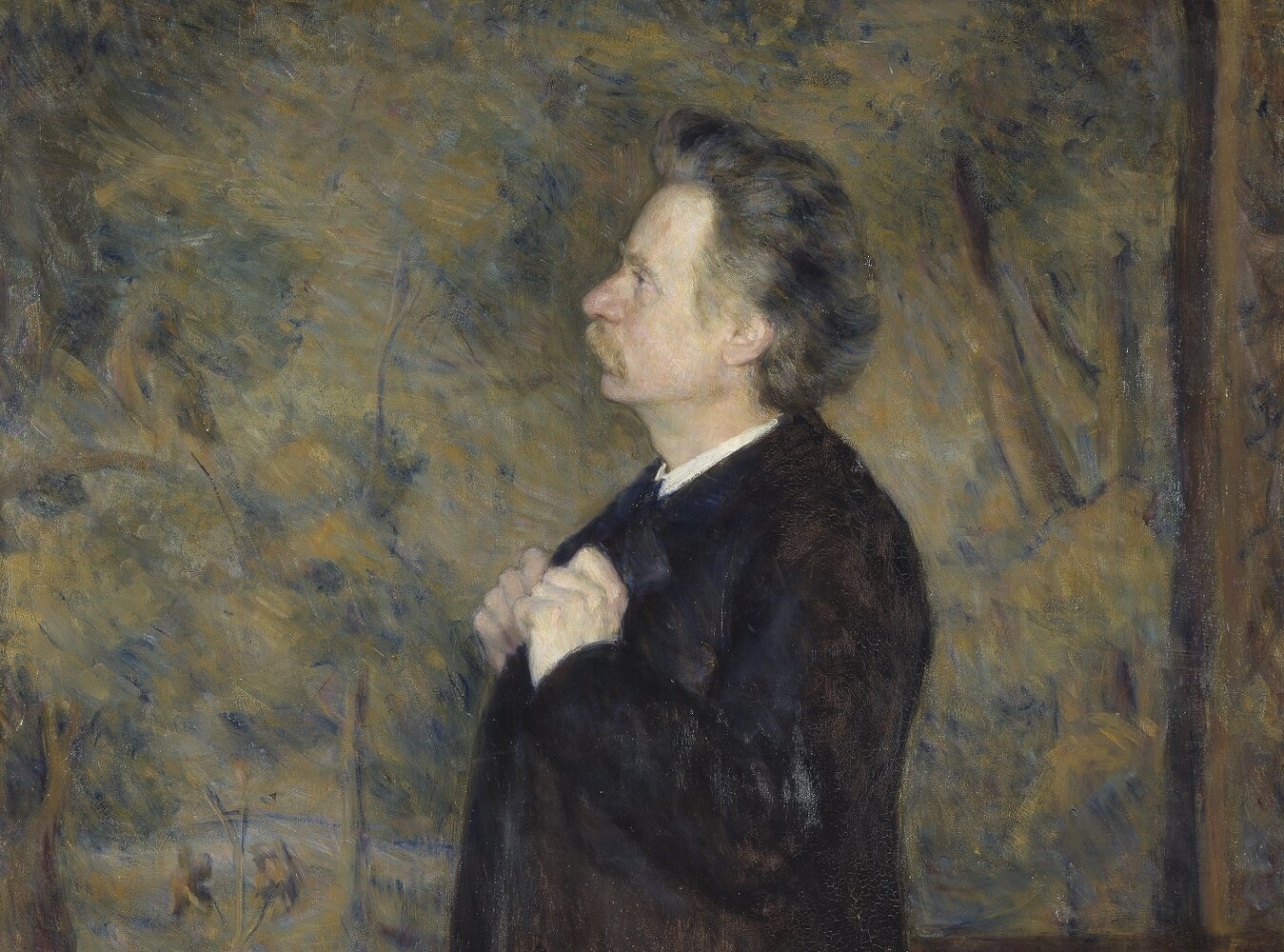
Grieg's Suite From Holberg's time is one of the main pillars of the repertoire for string orchestra. However, for the racy rhythm in the first movement, the beautiful cantilenas in the multiple divided parts of the middle movements and the virtuoso rigaudon in the solos to come into their own, performers of a high standard are required. For me, this suite is a piece for professional, at best semi-professional chamber orchestras. And a wonderful introduction to music for ambitious young string players!
All the more reason for me to welcome the publication of this new edition by Henle, which offers all the comforts that are indispensable today: Bar numbers in the score and in all parts, large-format paper in thick quality, parts set 3/3/2/2/1, clear music notation and a pagination suitable for performance. If you are traveling digitally, you can also purchase the score and parts in the Henle app.
First for piano, then for string orchestra
Edvard Grieg composed the suite in 1884 to mark the 200th birthday of the Norwegian polymath and poet Ludvig Holberg (1684-1754), whom he also referred to as the "Molière of the North". The version for string orchestra was preceded by the version for two-handed piano (also available from Henle, HN 432). It is less well known today than the arrangement for string orchestra completed by the composer in February 1885. It seems that Edvard Grieg already had the string sound in mind when composing the piano work. The fourth movement "Air" is one of the most beautiful string pieces, music for the desert island!
The editor Ernst-Günter Heinemann cites the first editions of the score and parts published by Peters in Leipzig (1886) with the composer's handwritten entries as essential sources. Grieg himself conducted the premiere in Bergen on March 13, 1885 (from handwritten parts). The autograph, which subsequently served as an engraver's model for the publisher, is unfortunately lost. Bowings and occasional fingerings, which are entered in the parts, were probably already there and correspond entirely to the author's ideas. They have been included in this Henle edition. But - don't worry - there are only a few of them, and they are all good!
Grieg cannot deny himself
If the Holberg Suite even if it is "Romantic" Baroque, which has little in common with today's knowledge of historically informed musical practice, it is nevertheless a valuable contemporary document of the reception of Baroque music in Grieg's time. The work allows us to take note with a smile of how its Romantic creator always remains recognizable through the Baroque idiom, despite his remark in a letter to Julius Röntgen in 1884: "It is actually a good exercise, as an exception, to hide one's own personality."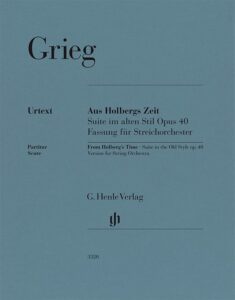
Edvard Grieg: From Holberg's time. Suite in the old style op. 40, version for string orchestra, edited by Ernst-Günter Heinemann; score, HN 3320, € 22.00; set of parts, HN 3322, € 45.00; study score, HN 7012, € 10.00; G. Henle, Munich