Dealing with the beautiful sound
The first string quartet by Daniel Glaus on this album was composed in 1980, the most recent in 2023 and is performed by the Arditti Quartet. The sound journey concludes with a love song for soprano, harp and strings.




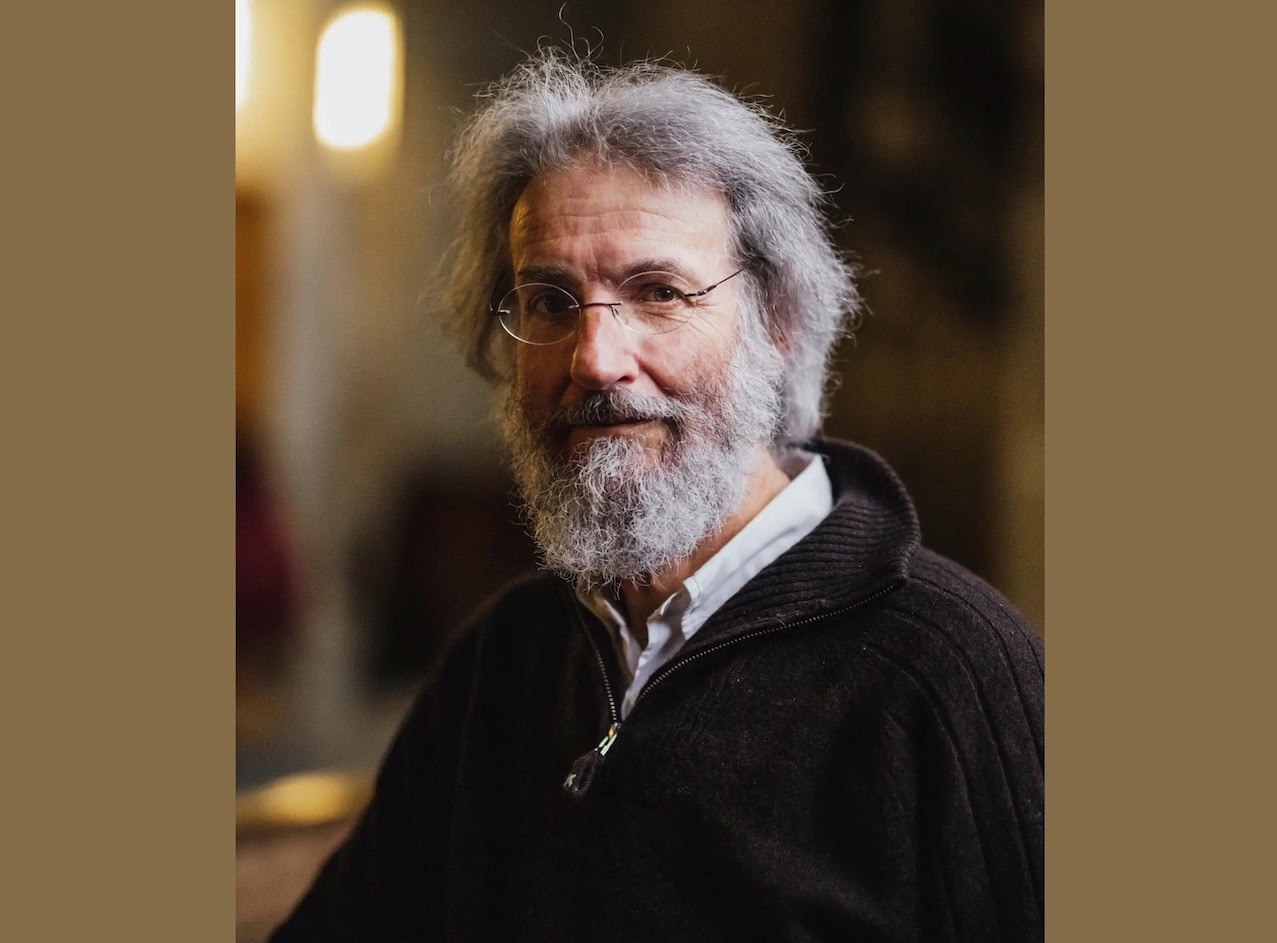
There is a special breed of complete musicians among organists: almost universally educated, equally skilled in interpretation, improvisation and composition (whereby the latter is often somewhat neglected), well versed in literature and theology, active in the direct confrontation with the social and liturgical network of the church service; in addition, there is knowledge of organ building and teaching. Craftsmanship and spiritual superstructure truly go hand in hand.
Daniel Glaus combines all of this in his work. Born in Bern in 1957, he worked as organist at the Stadtkirche Biel from 1985 to 2006 and from 2007 as organist at Bern Minster, where he was responsible for church music and evening music. This was associated with a professorship for organ and composition at the HKB. He taught composition and instrumentation at the ZHdK. He retired from these positions at the end of 2022. But Glaus was never just a church musician: his encounters with his teacher Klaus Huber and later especially with Luigi Nono also led him to think beyond the purely musical in his works. History is just as present in his music as the immediate present.
This is reflected in his works with string quartet, which mark his development. The first quartet, composed in 1980 during his studies at the Bern Conservatory, is already fully formed and reflects his early exploration of classical forms (fugue, scherzo, chorale), but also of the twelve-tone technique in an independent way. The third title Naezach from 2001 is a quartet version of the first movement of the third of four orchestral Sephiroth Symphonies and refers to Jewish mysticism, the Kabbalah. The fourth, which was premiered at the Bern Music Festival in 2023, unfolds an even greater richness of sound. Spectral sounds are embedded in expansive sound fields, often raw, even untamed, but then again beautiful as in a Gregorian, even alpine blessing-like chant.
The dramatic confrontation with beautiful sound, in a way that is as fascinating as it is self-critical, appears again and again in Daniel Glaus' work: It is a sign of resistance, of listening. The music does not make itself completely submissive, it always challenges. This remains the case even in the poetic cantata Chammawet Ahawah for soprano, harp and string quartet. A polyglot love song, based on the Old Testament Song of Songs, but as intimate as it is at times impetuous. Glaus has the best interpreters at his disposal for all of this: Christina Daletska and Consuelo Giulianelli in the cantata and the phenomenal Arditti Quartet on the entire CD.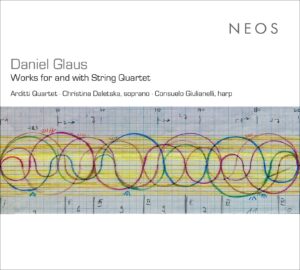
Daniel Glaus: Works for and with string quartet. Arditti Quartet; Christina Daletska, soprano; Consuelo Giulianelli, harp. Neos 12508