A long-standing commitment to supporting musicians
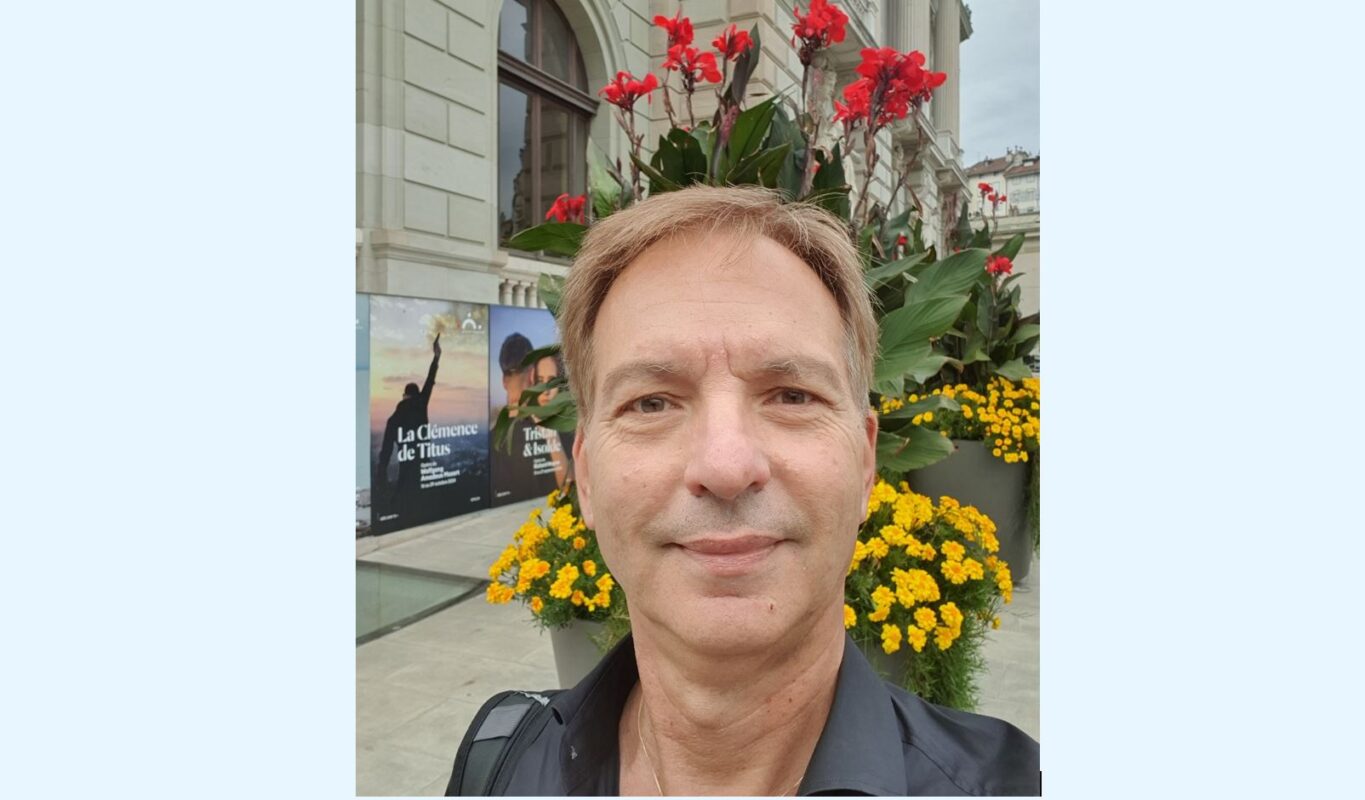
After many years of dedicated service, Beat Santschi is taking his well-deserved retirement.




As a former Central President and Central Secretary, he played a decisive role in shaping the SMV and worked with great dedication to advance the interests of musicians in Switzerland. He was particularly committed to improving working conditions, ensuring strong advocacy for musicians’ interests, and fostering dialogue with policymakers, institutions, and partner organizations. With his calm, approachable manner and extensive experience, he has left a lasting mark on the association. We extend our heartfelt thanks to Beat Santschi for his many years of service and wish him all the best as he embarks on this new chapter in his life.
Short Biography
Beat Santschi studied guitar and piano, archaeology and cultural anthropology, conducting, and cultural management at the University of Zurich, the Lucerne Jazz School, the Guitar Institute of Technology in Los Angeles, and the ZHAW Center for Cultural Management. In addition to his work as a guitarist and cultural manager, he has been a strong advocate for musicians„ interests, not only within the SMV’s governing bodies (member of the Central Executive Board since 1998, SMV Central President from 2009 to 2020, and subsequently Central Secretary from 2020 to 2026), but also as Vice President of the International Federation of Musicians (FIM), President of the Swiss Coalition for Cultural Diversity and Vice President of the International Federation of Coalitions for Cultural Diversity (IFCCD), as well as a board member of Swissperform and the Swiss Performers“ Cooperative (SIG). In 2020, David Schneebeli, who succeeded him as Co-President, wrote a tribute from which we quote the following excerpt: “Beat devoted himself to all areas of the association’s work with equal energy; he was a knowledgeable point of contact for individual members as well as for section boards or representatives of other associations and government agencies. Beat placed great importance on cooperation among professional associations at the national and international levels.”
Interview
The answers to our questions were provided in writing.
– What do you remember most about your years on the Student Council, working on behalf of the musicians?
Meeting so many wonderful people from many different countries and cultures—and a few who weren't so wonderful—and our shared commitment to improving working conditions in the music industry.
The unprecedented extreme situation during the pandemic, when musicians were effectively barred from working—a situation that hit freelancers particularly hard and posed a major challenge for us at the SMV. The gratitude for our emergency aid, but also the endless discussions with some members about the COVID-19 vaccine and the requirement for vaccination certificates, as well as the infection cluster at the OSR. The very close collaboration across all cultural sectors and with federal authorities, all the way up to Federal Councilor Berset, as part of the Task Force Culture.
Important milestones such as the campaign against dumping wages at the Aida production in Pfäffikon, ZH, in 2013, the SMV’s centennial celebration in 2014—during which we succeeded, among other things, in bringing a large orchestra of SMV members from all over Switzerland to the stage for the anniversary concert at the Zurich Opera House, with everyone playing in solidarity without pay, including conductor Mario Venzago—the merger negotiations with the other professional musicians« associations in 2017, which failed due to resistance from within our own ranks —which led to the creation of Sonart—the integration of the SMV’s collective bargaining agreements into the new orchestra support model in Basel, and the highly complex yet successful efforts to organize the FIM Congress at the ILO in Geneva and the »Tarifampel” project last year.
– What developments have you observed over the years on the Board, as President, and as Executive Secretary?
When I began getting involved with the SMV in the 1990s, the association struck me as rather old-fashioned. At the same time, however, it was a given for musicians to be members, without constantly asking what benefits membership brought to the individual. With the increasing individualization and decline of solidarity in society over the decades since then, personal benefits and services have come to the forefront for many (potential) members, sometimes driven by very specific interests. We often had to take steps to counteract this so as not to lose sight of the bigger picture.
At the same time, the demands placed on the association’s work increased due to rising expectations from both outside and within, which also required a certain degree of professionalization on the part of the association’s leadership. Fortunately, however, we were also able to secure additional resources through the BAK’s KuOr association grant program.
– In your opinion, what challenges do you think musicians will face, both today and in the future?
Earning a sustainable income from music recordings is no longer a viable option for most musicians today—at least not since streaming platforms have become the primary source of music for consumers, without the issue of compensation for those who create the music having been seriously addressed. Now we’re seeing the emergence of music production using generative AI, which is only possible by training the models with existing recordings made by humans. These platforms, too, take everything from the creators and performers and give nothing back, without any serious political intervention.
That leaves only live performances—concerts and stage productions. The challenge now is to secure adequate compensation that allows artists to make a living. In most cases, this requires appropriately funded cultural support and, consequently, political will. We can expect to see politicians who believe that savings could be made, for example, on subsidies for one symphony orchestra or another, since nowadays anyone can become a musician with just a few clicks by using AI platforms. In the world of pop music, there are already hologram bands that fill concert halls in Switzerland, even though not a single person is on stage. Here, however, I’m more optimistic: I believe that people will continue to take special pleasure in live human music for a long time to come and will also be willing to pay for it.
– How important do you think international cooperation is for musicians' unions?
International cooperation and solidarity among musicians’ unions are absolutely essential, especially in these times of anti-multilateralism on the political stage. I would go so far as to say that, in some cases, the SMV maintains far more constructive and forward-looking relationships—for example, with our European and American colleagues—than the Federal Council and Parliament do. For example, we are working together—including within the framework of international organizations such as WIPO—to advocate for regulations governing generative AI that benefit authors and performers, an issue that seems to hold little interest for our governments.
Fortunately, the SMV can continue to play a leading role in the Fédération Internationale des Musiciens (FIM).