Cities in German-speaking Switzerland give priority to classical music
The organizers of the Basel-Stadt «Musical Diversity» initiative have published an analysis showing how the cities of Basel, Bern, Geneva, Lausanne, Lugano, and Zurich use public funds to support music creation. The lion’s share goes to the “classical” genre—but the amounts are by no means the same everywhere.




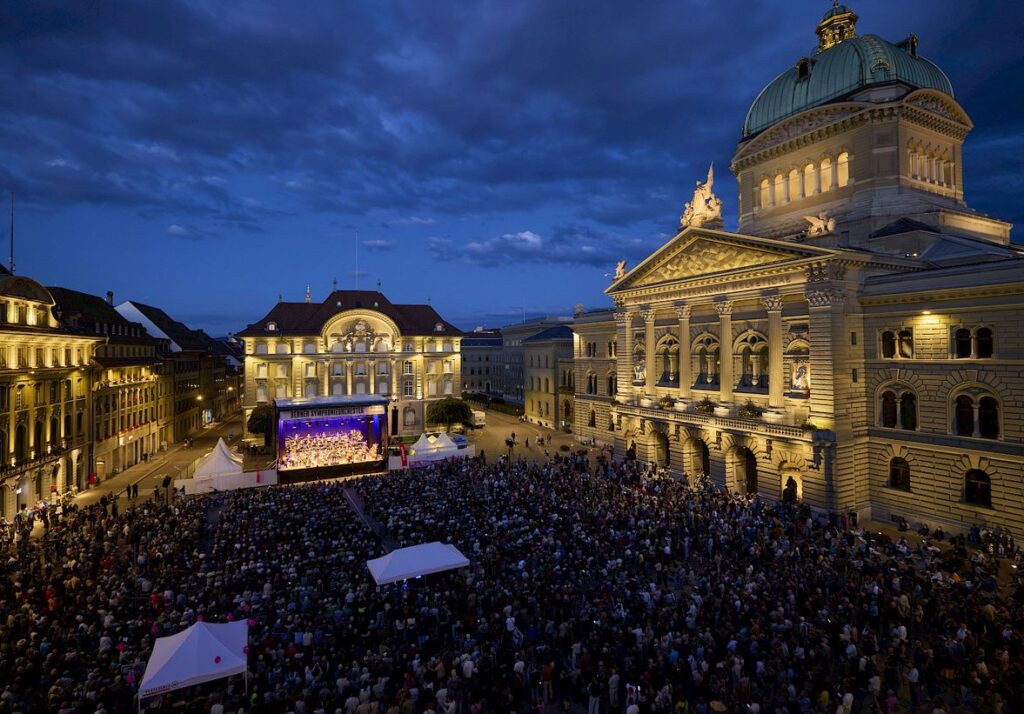
According to figures published on Tuesday, Geneva invested the most in music during the year under review (2024)—namely, 375 francs per capita—while Lugano invested the least, at 99 francs. In Basel, the figure was 144 francs; in Bern, 179 francs; in Lausanne, 201 francs; and in Zurich, 236 francs. According to the compilation by the Music Diversity Initiative, approximately 82 percent—and in some cases as much as 96 percent—of public music funding goes to the same recipients year after year. The analysis takes into account municipal and cantonal funding as well as funds from the lottery. These funds were used to support venues, events, institutions, and projects in the field of independent music creation.
The «Classical» category accounted for over 70 percent of all funding in every city. By contrast, the share of funding allocated to other genres was minimal everywhere, according to the analysis. In Zurich, 95 percent of the funds went to the «Classical» category, and in Lausanne, 76 percent. Cities in French-speaking Switzerland provided proportionally significantly more support for contemporary music genres (pop, rock, jazz, hip-hop, and so on) than cities in German-speaking Switzerland. Geneva, for example, spent twice as much per capita on this as Basel and Bern.
Orchestras, concert halls, and opera houses account for the largest share of funding
With its data, the Music Diversity Initiative demonstrates once again that classical music continues to receive the largest share of funding. This is primarily due to the costs associated with traditional institutions: orchestras, concert halls, and opera houses. There are historical reasons for this: until the end of the 20th century, these institutions were largely regarded as the only serious players in urban musical life. Contemporary music styles and folk culture, by contrast, were primarily supported through the more flexibly allocated funds from the lottery. The increased importance of rock, pop, jazz, and so on is still not reflected in the distribution of public funding.
The Basel-Stadt citizens« initiative »For Greater Musical Diversity” aimed to allocate at least one-third of the canton’s total annual music funding budget to support independent music creation in Basel-Stadt. It was decisively rejected in November 2024, with 64 percent of voters casting “no” votes.