More than just a minor Baroque master
Beate Sorg's biography brings the historical context and everyday life of Christoph Graupner to life.




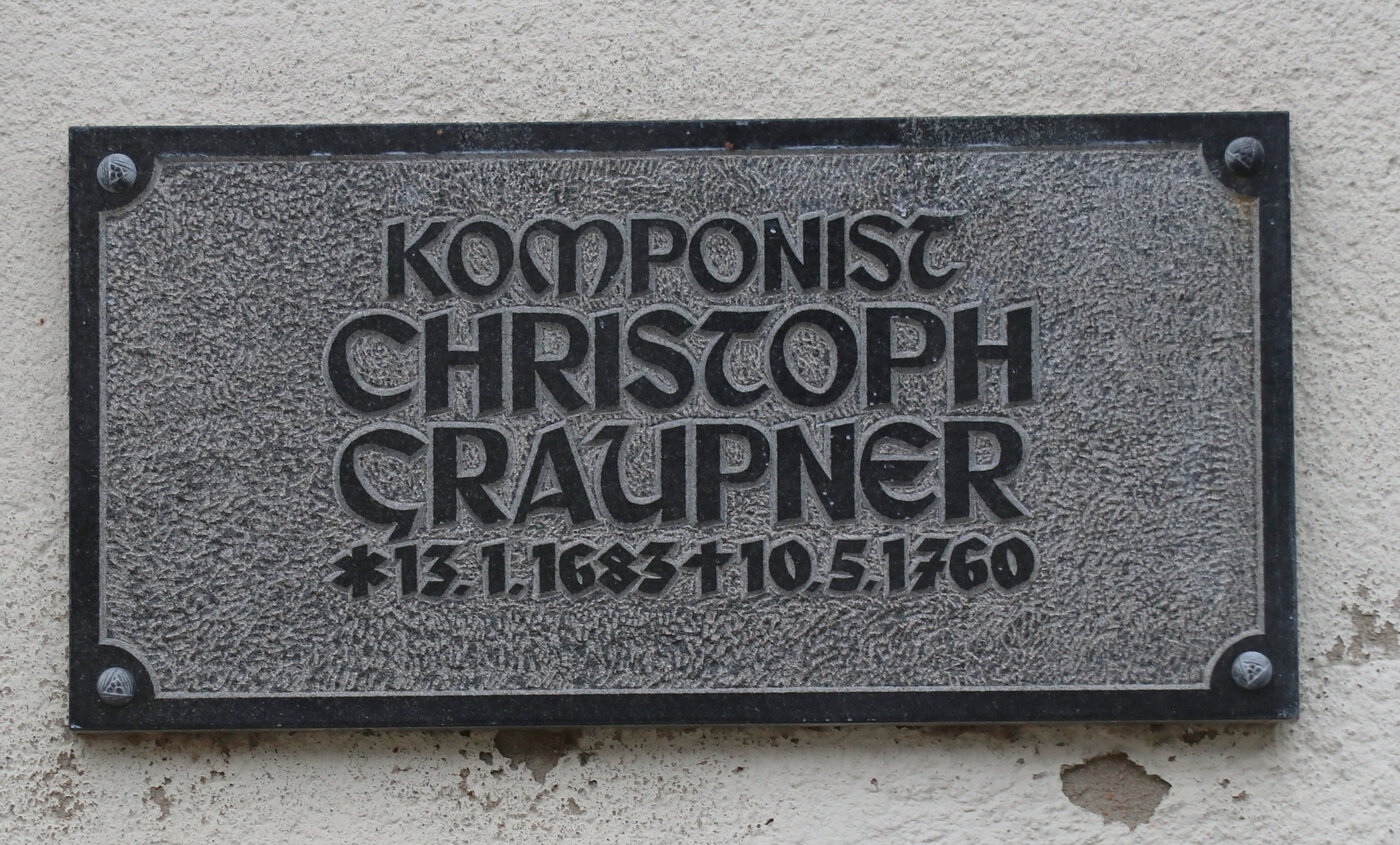
In the 1730s, Christoph Graupner (1683–1760), the court Kapellmeister of Darmstadt, embarked on a curious project: a canon-like composition with 5,626 variations resulting from minute shifts. How long must he have tinkered with it? With a certain obsession. A computer would handle that in no time today. Even Beate Sorg, a biographer well-versed in Graupner’s work, cannot determine what benefit he derived from it. But it reveals the composer as someone who experimented beyond the mundane, a trait that also repeatedly emerges in his actual compositions.
It’s worth taking a closer look. In her biography, the musicologist based in Mainz traces the life of Graupner, who was originally from Saxony and, after several years of wandering, was employed for decades by the Landgrave of Hesse-Darmstadt. Like all musicians of that era, he had to contend with his patron’s whims (and extravagance). He composed some 1,500 cantatas, several operas, and instrumental works as well.
Beate Sorg sheds light on the historical context and the musician’s daily life, including all its hardships. She introduces his companions and colleagues, discusses the sources in a refreshingly non-academic manner, and characterizes certain groups of works—such as the numerous compositions for chalumeau—and other distinctive features of the instrumentation. As locally limited as all this may seem, it is nonetheless vividly portrayed. One might only wish, at times, that she had delved a little deeper into the musical oeuvre. Ultimately, she leaves us wondering what it is about Graupner’s music that could still inspire us today.

Beate Sorg: Christoph Graupner, Biography of a Court Kapellmeister, 265 pp., €39.00, Georg Olms, Münster 2025, ISBN 978-3-487-17157-9