Lorenzo Viotti Delights «His» Zurich Audience
The opera house's designated general music director conducted the premiere of «Elektra» on Sunday. His musical performance won over the local audience just as much as the staging did.


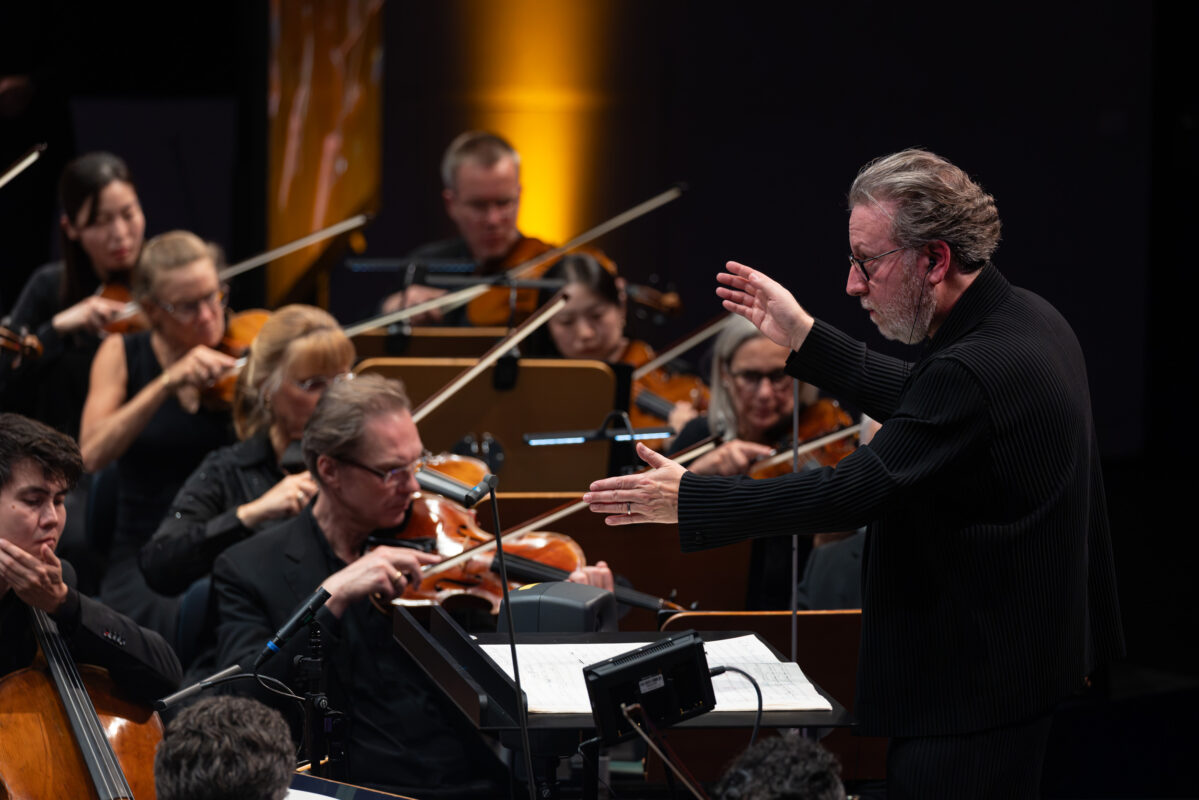
As Lorenzo Viotti steps into the orchestra pit, the premiere audience greets him with warm applause. Since his debut with Jules Massenet’s Werther In May 2018, the Swiss conductor was already at the podium leading the Zurich Opera Orchestra in three more productions: The Bat, The Csárdás Princess and The Dead City. This Electra But this is the first production he will conduct at the Zurich Opera House as its designated General Music Director (starting in 2028)—and by far the most challenging. Richard Strauss’s masterpiece, based on the brilliant libretto by Hugo von Hofmannsthal, throws open the door to modernity and demands the utmost from the orchestra and the three prominent female roles. ’With Electra »Starting to work with this orchestra means a lot to me. The piece demands a lot from all of us, and you quickly realize how important it is to listen to one another and be able to rely on one another," says Viotti in an interview in the program booklet.
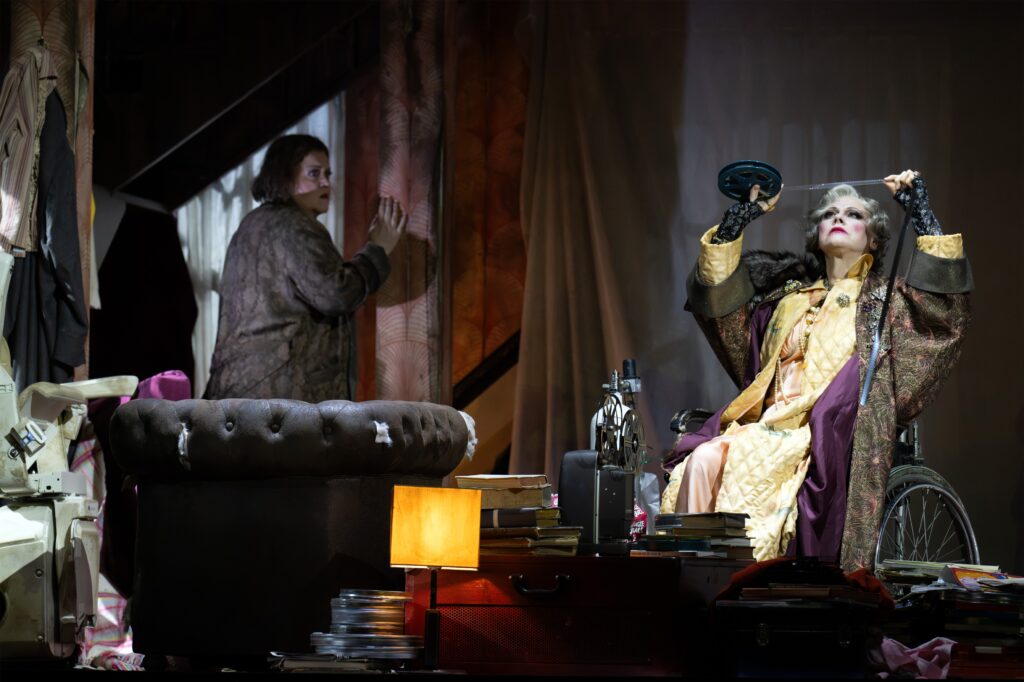
The opera begins in Zurich without music. Miina-Liisa Värelä, as Elektra, lies in a cluttered living room and watches a black-and-white film on the bedsheet that shows her with her family on her tenth birthday. Her brother Orest is blowing a horn, and her little sister Chrysothemis is wearing a little hat. And when Dad Agamemnon brings in the three-tiered birthday cake and Mom Clytemnestra smiles in the background, the family’s happiness seems perfect. Then the «Agamemnon motif» in D minor rings out; the orchestra makes it shine like a beacon. And it’s immediately clear: nothing is right in this family.
Rhythmic precision above all else
The enthusiastically acclaimed Electra Directed by Lydia Steier, the production captivates the audience from the very beginning (set design: Paul Zoller, costumes: Gianluca Falaschi). As in the opera by Strauss and Hoffmannsthal, there are many leitmotif-based connections in the staging. Musically, too, the production exerts an irresistible pull. Lorenzo Viotti draws a wealth of colors and moods from the Zurich Opera Orchestra. As a former percussionist, rhythmic precision is particularly important to him. He achieves clarity not through volume, but through articulation: when the trumpets cut off their muted interjections, or when the 60 string players—seated in the orchestra pit in this reduced version—truly play out every tiny figure, thereby achieving an incredibly vivid effect in the tutti.
Above all, Viotti keeps the balance in mind and only raises the volume at select climactic moments, such as during the frenzy of bloodshed in the triple forte at the end. There is also much that is delicate and lyrical to be heard from the orchestra pit. The excellent ensemble of soloists is able to display a wide dynamic and emotional range without being overwhelmed by the orchestra—a testament to the conductor’s skill.
Showing Off a Toned Upper Body on Social Media
Versatility in his repertoire, as well as in his musical roles, characterizes the meteoric rise of the 36-year-old Swiss conductor, who was born in Lausanne. He has just taken on the role of principal conductor of the Tokyo Symphony Orchestra. From 2021 to 2025, Viotti served as music director of the Dutch National Opera in Amsterdam and remains principal guest conductor of the Netherlands Philharmonic Orchestra. His musical versatility is also evident in his training. Viotti first studied piano, voice, and percussion in Lyon before going on to study conducting in Vienna. At the same time, he played percussion with the Vienna Philharmonic and examined the scores of Herbert von Karajan and Carlos Kleiber in the music archive, transcribing bowings. He then refined his conducting skills during his master’s studies with Nicolás Pasquet at the Franz Liszt University of Music in Weimar.
Lorenzo Viotti was fourteen years old when his father, the conductor Marcello Viotti, died. It was entirely Lorenzo’s own decision to follow in his father’s footsteps. Although his three siblings also became professional musicians—his sister, the mezzo-soprano Marina Viotti, sang in the production he conducted in Zurich— Bat—in the production of *Prince Orlofsky*—he never viewed them as competitors. The fact that he shares a lot about his private life on Instagram and occasionally shows off his naked, well-toned torso has certainly caused some eyebrows to raise in the classical music world. For him, physical fitness is an essential prerequisite for the physically demanding profession of conducting—and sports are a welcome balance.
This performance, which lasts just under two hours and is performed without an intermission, Electra In any case, it also requires a great deal of stamina from the conductor. The evening increasingly turns into a psychological thriller. The boundaries between reality and the world of dreams blur. The tremolos in the strings sound like tinnitus; the score becomes one long panic attack. Two final, sharply accented beats from the orchestra pit. And the lights go out!