Festival Between Mountains: Between the Concert Hall and the Dance Floor
The Between Mountains festival took place for the second time in Hölstein, Basel-Landschaft. Classical soloists and ensembles shared the stage with live electronic acts and DJs.




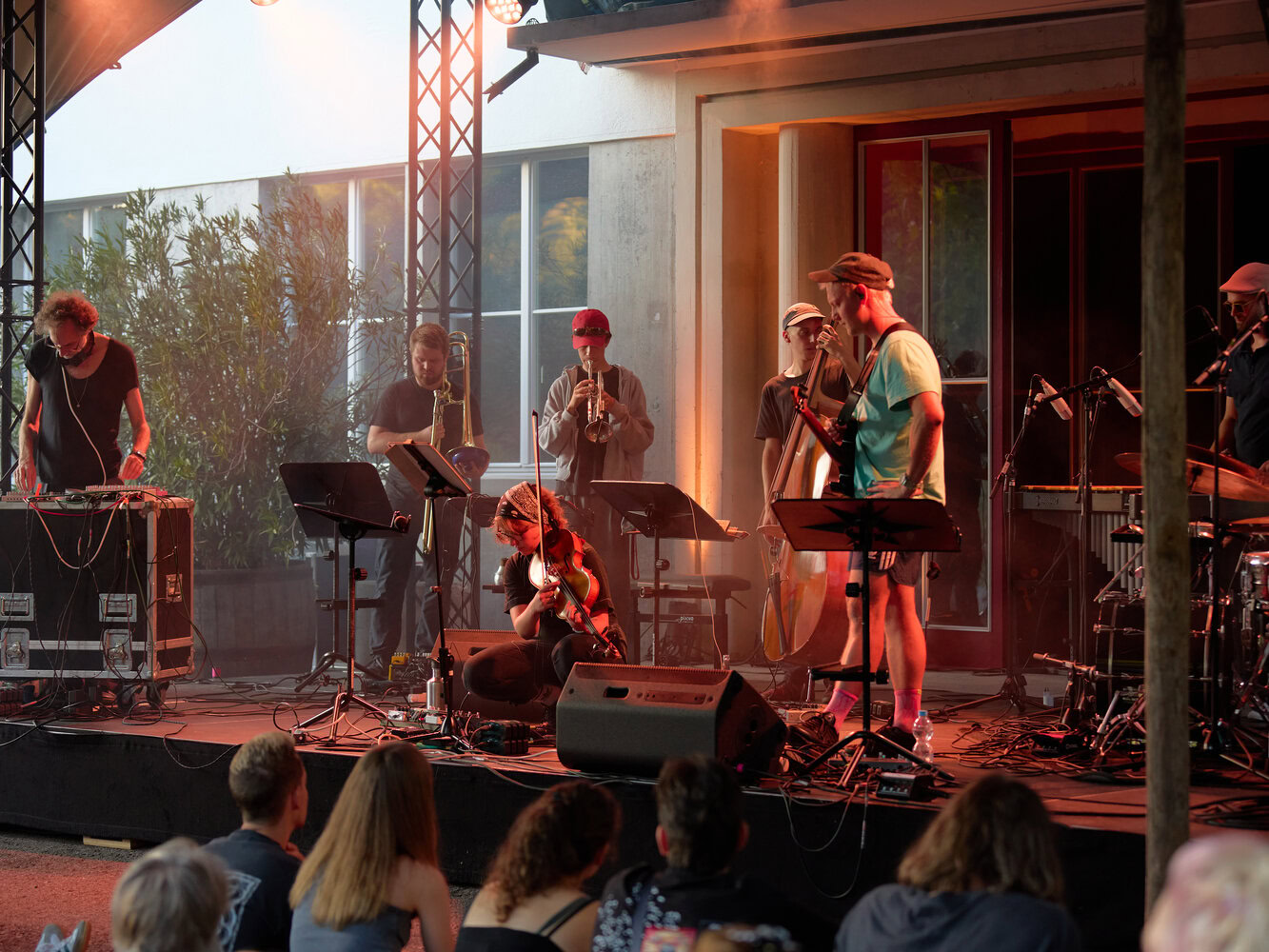
The second edition of Between Mountains took place over three days, from September 4 to 6. Around 800 people visited the venue at Holdenweid near Hölstein, Basel-Landschaft; according to the organizers, twice as many tickets were sold compared to the first edition. Classical soloists and ensembles shared the stage with live electronic acts and DJs; Concerts in halls were just as much a part of the program as outdoor performances and shows in former sanatorium rooms. The various formats often followed one another in quick succession—first a piano recital, followed immediately by a dance floor in the garage area.
Between Mountains sees itself as the Swiss counterpart to the Detect Classic Festival in Berlin, which has been held since 2019 and seeks to forge connections between classical music, electronic music, and other musical scenes. At Holdenweid, people eat, chat, and dance between concerts; there is a deliberate lack of clear separation between the concerts and the festival atmosphere.
Other Approaches to Music
Baldur Brönnimann, who is jointly responsible for the classical program segments, describes the idea behind this as a search for different ways to approach music. He says interest in classical music is by no means low. Many people listen to it today via streaming services and their own playlists, but still do not attend concerts.
Brönnimann sees an interesting overlap precisely here: people who might well be interested in this music, but for whom the traditional concert setting presents a barrier. «That’s actually kind of the basic idea: that there’s a door,» he says. At Holdenweid, this door is meant to be left as wide open as possible.
The audience moves between the different rooms and, in doing so, encounters music they might never have sought out on their own. For Brönnimann, however, it’s not simply about combining electronic and classical music. Rather, the key is to make the categories themselves less important. Ideally, one shouldn’t even stop to think about whether what one is listening to is new or old, classical or electronic. In the best-case scenario, it’s simply music.
Franz Liszt with Cowbells
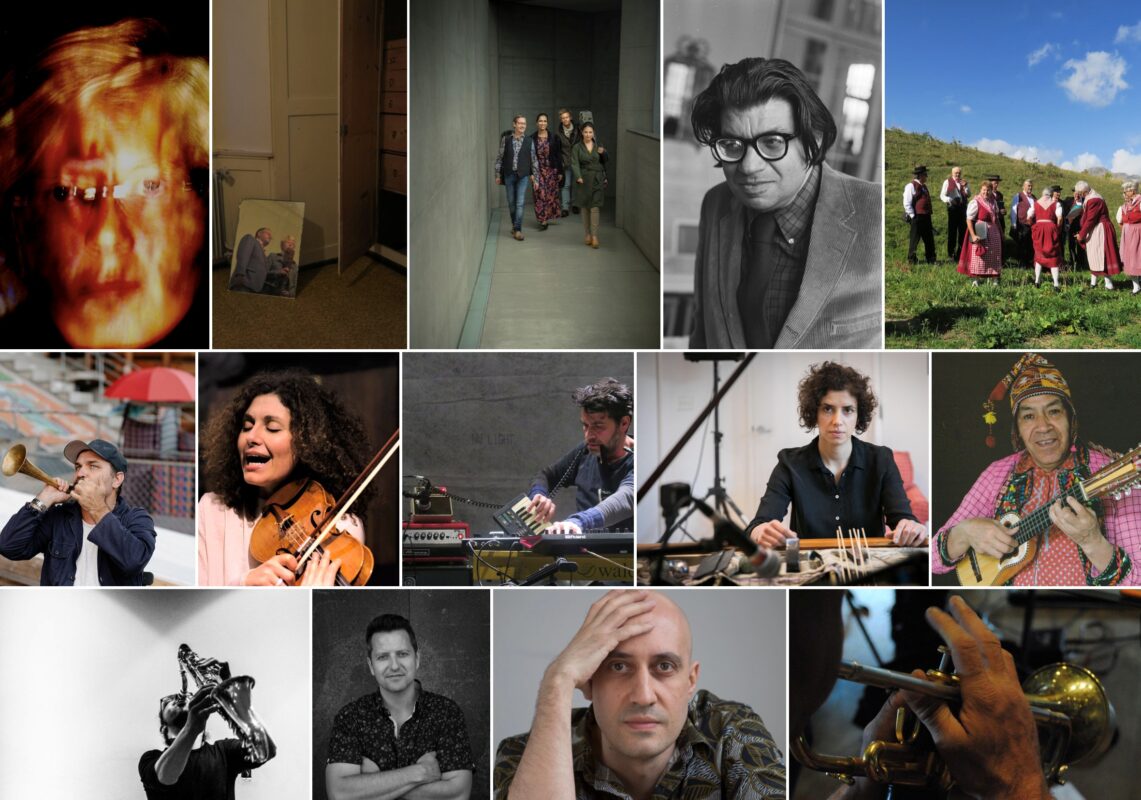
The program demonstrated time and again just how differently this concept can play out in practice. The Valais-based pianist and composer Beatrice Berrut performed twice: first outdoors in daylight, and later in one of the indoor venues. Her two performances thus took place under different conditions and made it clear just how much the perception of a concert is shaped by the specific space. A flawlessly performed piece by Franz Liszt, played on a small festival stage with cowbells in the background, suddenly becomes a truly unique auditory experience. In her diverse program, Berrut brought together Mahler arrangements, pop classics, and original compositions of her own in surprising ways.
The Baselland Youth Chamber Orchestra also made its own mark. The very young musicians performed several times—sometimes alongside a featured artist like trumpeter Simon Höfele—and came across as remarkably self-assured. Other performances also seemed to fit seamlessly into the open-ended nature of the format. The performance by Los Sara Fontan was one of the festival’s highlights, as was that of AFAR & Kai Schumacher. Here, the sense of naturalness that the festival seeks emerged: music did not first have to be defined by its stylistic affiliation but was able to assert itself in the moment and space at hand.
The joint performance by Acid Pauli and the Detect Ensemble particularly highlighted just how different expectations for such a collaboration can be. The combination of an electronic artist and a classically trained ensemble initially suggested a pointed musical interplay. The concert then unfolded primarily as an open improvisation, in which Acid Pauli gave the ensemble plenty of space and kept his own presence relatively low-key.
Please, more of that!
For Brönnimann, this experimentation is about more than just a few successful or less-than-successful concerts. An openness to new ideas also shapes his work with young conductors in the Contemporary Conducting program at the Lucerne Festival Academy. Classical music education is still heavily influenced by tradition, he says. This makes places where not everything is set in stone and new ideas can be tested all the more important. Classical music has always fascinated him, Brönnimann adds. At the same time, it has sometimes struck him as a «closed society.» That’s why he’s now trying to create spaces for different experiences: «Our ultimate goal is actually for you not to even notice what you’re hearing.»
Between Mountains consistently pursues this goal, even if the various musical worlds don’t always mesh quite as naturally as one might expect. At Holdenweid, different audiences and listening habits come together—what emerges from this remains to be seen. And when, at the festival’s close, the cello of Dobrawa Czocher echoes through the surrounding forests of the Basel region, one is tempted to say: please, more of that.