Donaueschingen Asks for Attention
Whether masterfully witty, lighthearted, or sly: at the October Music Festival, the composers challenged or charmed their audiences in wildly contrasting ways.


Sometimes it’s nice to set a question for yourself at a festival like Donaueschingen (while being willing to let it go again). Simply to make sense of the wealth of impressions. So I decided to listen for music that was effortless and unpretentious, and to pay attention to how it made me feel.
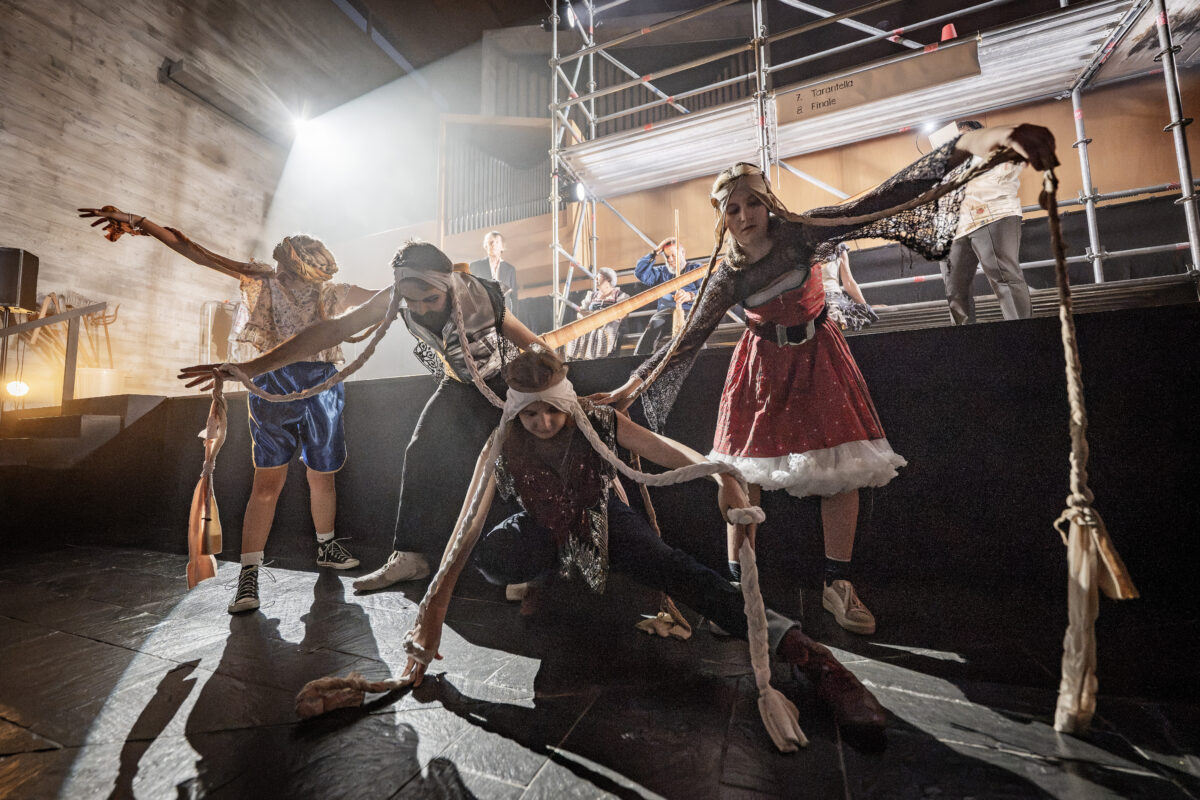
That could mean many things: For example, the stage and video performance was entertaining UR! by Simon Steen-Andersen, though he was only able to partially complete it for Donaueschingen. It blends the Ursonata by Kurt Schwitters, featuring the story of its performer, Michael Schmid, who had to give up his career as a flutist due to illness and instead specialized in performance art—and particularly in Schwitters. In a fast-paced, virtuosic, and witty manner, the video repeatedly shifted into Schmid’s live performance. Although the composer did not contribute a single note, he staged and set the rhythm of the whole piece so skillfully that the result was both playful and unsettling. As in previous years, it was Steen-Andersen’s contribution that everyone in Donaueschingen loved to talk about the most.
A Soothing Sense of Relaxation with Igor C Silva
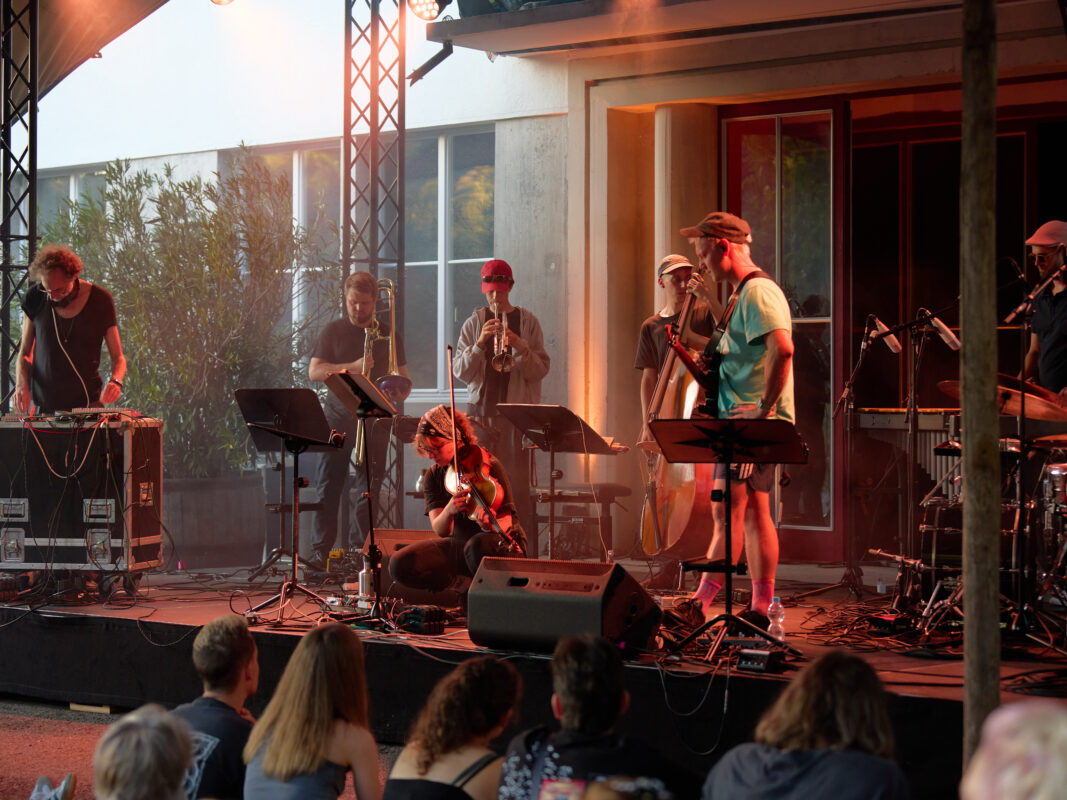
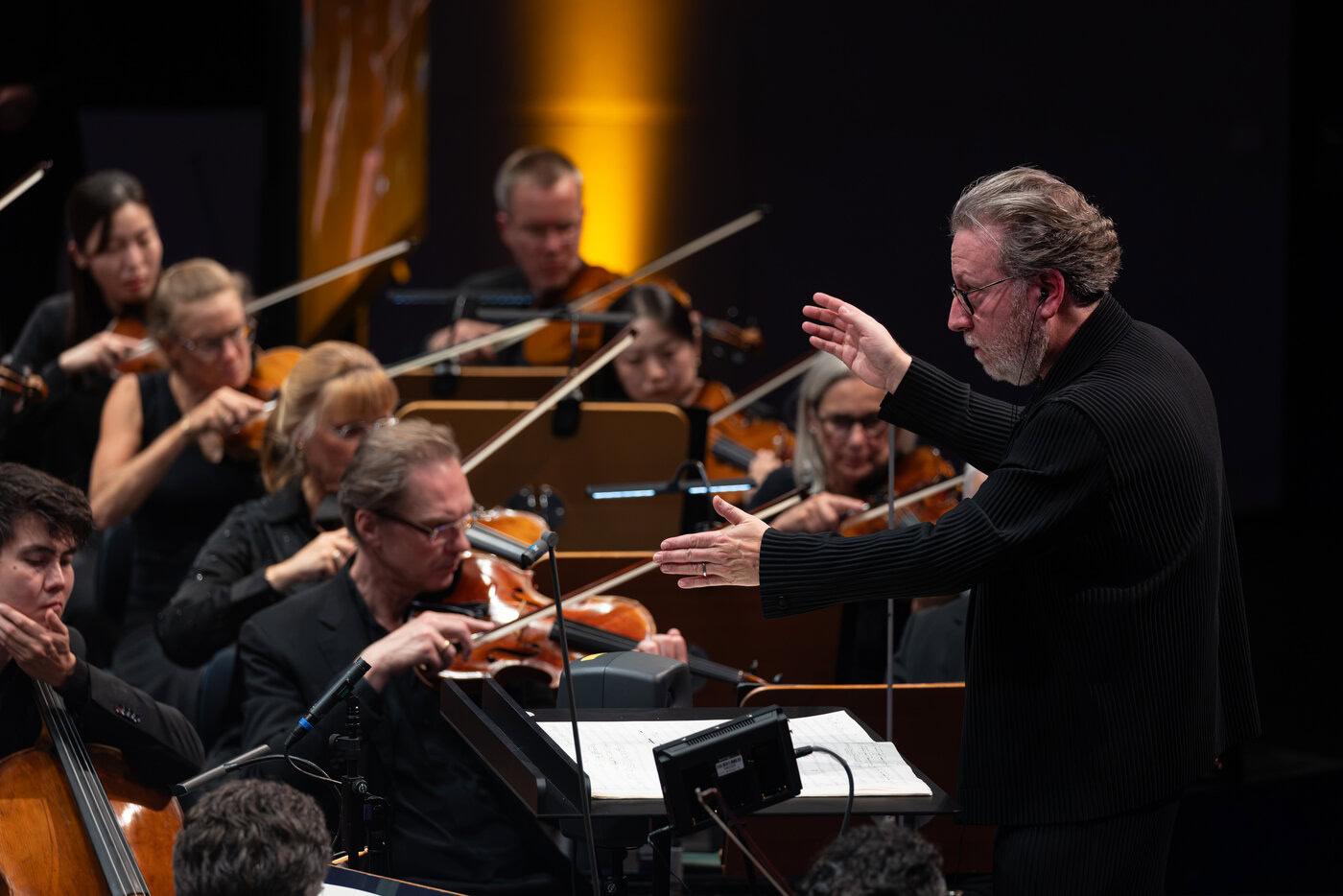
The orchestral piece was effortless, characterized by a relaxed, free-flowing rhythm Tomorrow's Next Bliss by the Portuguese composer Igor C. Silva—and yes, as the title suggested, the way the music moved so effortlessly through time even managed to evoke a sense of happiness. Conductor Brad Lubman interpreted the score freely and in the moment. The composer at the electronics console and the magnificent trumpeter Susana Santos Silva improvised their solo parts. Yet the result was not randomness, but rather a sense of ease and freedom—a breath of fresh air that was truly refreshing.
And then there was, for example, the new piece for string orchestra thirst by Rebecca Saunders. The Berlin-based British composer often works with subtle nuances of color, but here she also told a story that unfolded slowly—calm yet thoroughly compelling. She guided us without being demanding. Rather, the music gave us—or rather, gave us—her attention. Sophisticated, yet without being forced.
When the Audience Is Made a Fool of
Attentive listening is one of those things. These days, we have to keep coming back to it, we have to encourage it—just as we do with the work of the recently deceased Éliane Radigue, whose meditation builds up layer by layer OCCAM XXV zeta for organ and wind instruments. Of course, one can also demand, call for, and challenge this kind of listening—and even, in a sense, overwhelm it—as Stefan Prins does, for example, with his orchestral piece Madness MachineIt did so, and in doing so perhaps attracted less attention than the sense of being overwhelmed or crushed—a reaction that is understandable given the state of the world.
But sometimes this respect and attention also become a fetish. And Brigitta Muntendorf addressed this in her play Last Show in a sneaky way. She pretended to involve the audience in a survey about music and listening via cell phone—but technically, it barely worked and turned out to be a fiction. In contrast, she took aim at the audience’s self-importance in the projected comments. At the end, she displayed on the screen advertising-brochure-like film images of rich, beautiful, and attentive people who had made themselves wonderfully comfortable in a listening idyll, far removed from the evil world. For this ironic, somewhat condescending mockery—a tradition in Donaueschingen—Muntendorf’s piece was the only one to receive loud boos. She’ll be pleased.
Deconstructed Stardust
Do you know Stardust by Hoagy Carmichael? Italian composer Mauro Lanza deconstructed the song from the 1930s and used its rich harmonies to create a rhythmically agile and entertaining orchestral etude. And because the SWR Symphony Orchestra loves playing it so much, it awarded Lanza its traditional orchestra prize.
But other pieces from the final concert would also have been suitable: the cheeky, comic-like *Bestiarium*, which features rubber ducks Musical VI the music of Japanese artist Noriko Baba, the Central African-inspired music of French artist Fabien Lévy, or the utopian and beautiful into a world that is pure blue (where you are transformed completely and forever) ((Amen)), for which the Italian Clara Iannotta would have been suspected of being part of the New Age movement in the past. But the music sounded great… or am I missing something here? Was it maybe not so beautiful and pleasant after all? Did something escape my attention? The questions remain…
…and one more thing: From a compositional standpoint, there was no Swiss participation, nor anyone from Austria, very little from Germany—more French- and English-speaking composers this time.