Music for 0 - 4 year olds: A visit to parent-child singing
Around half of the music schools offer introductory music courses for pre-school children. These are taught by qualified music teachers who know the specific needs of the age group - and the parents - well. An insight.




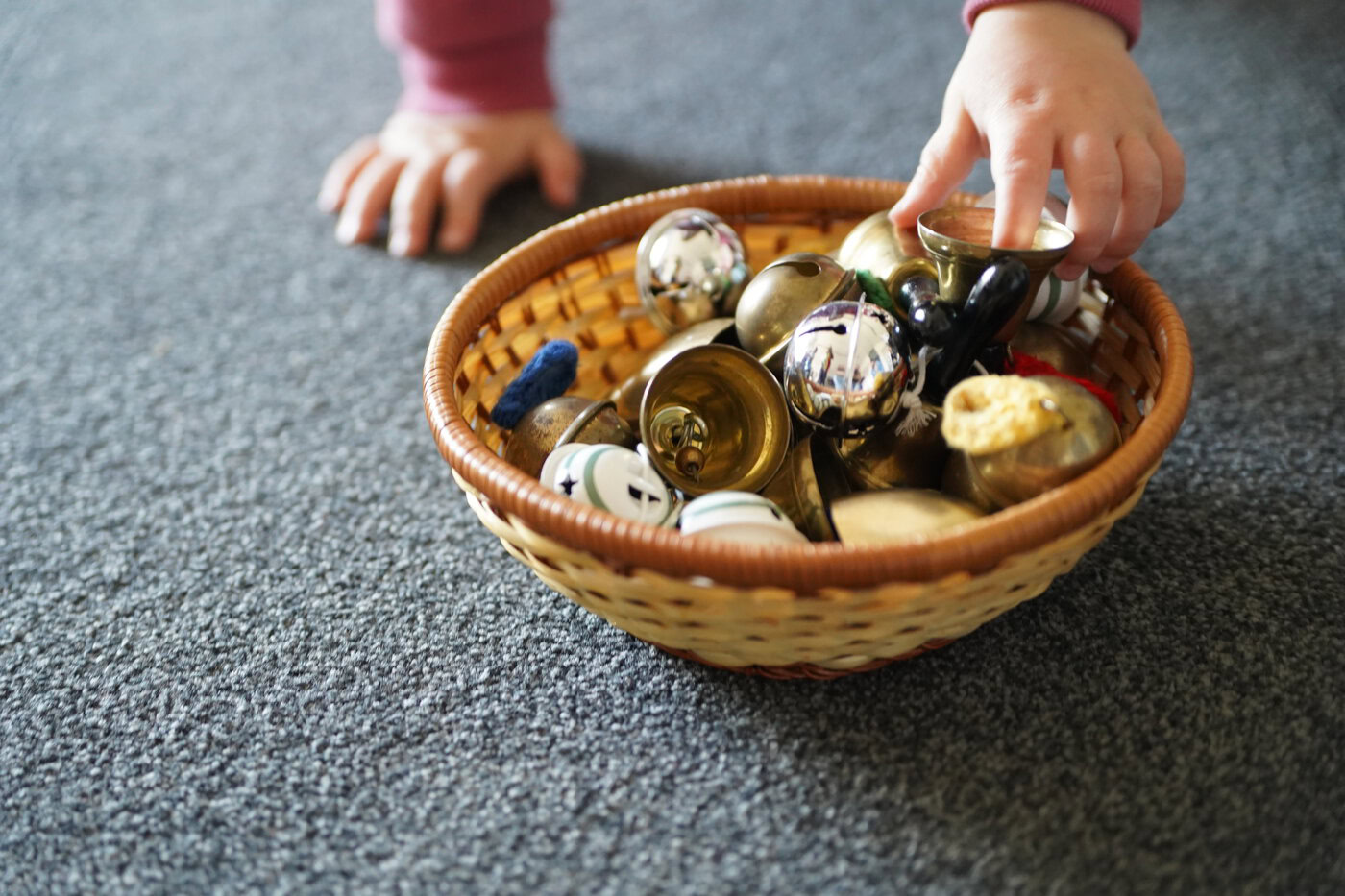
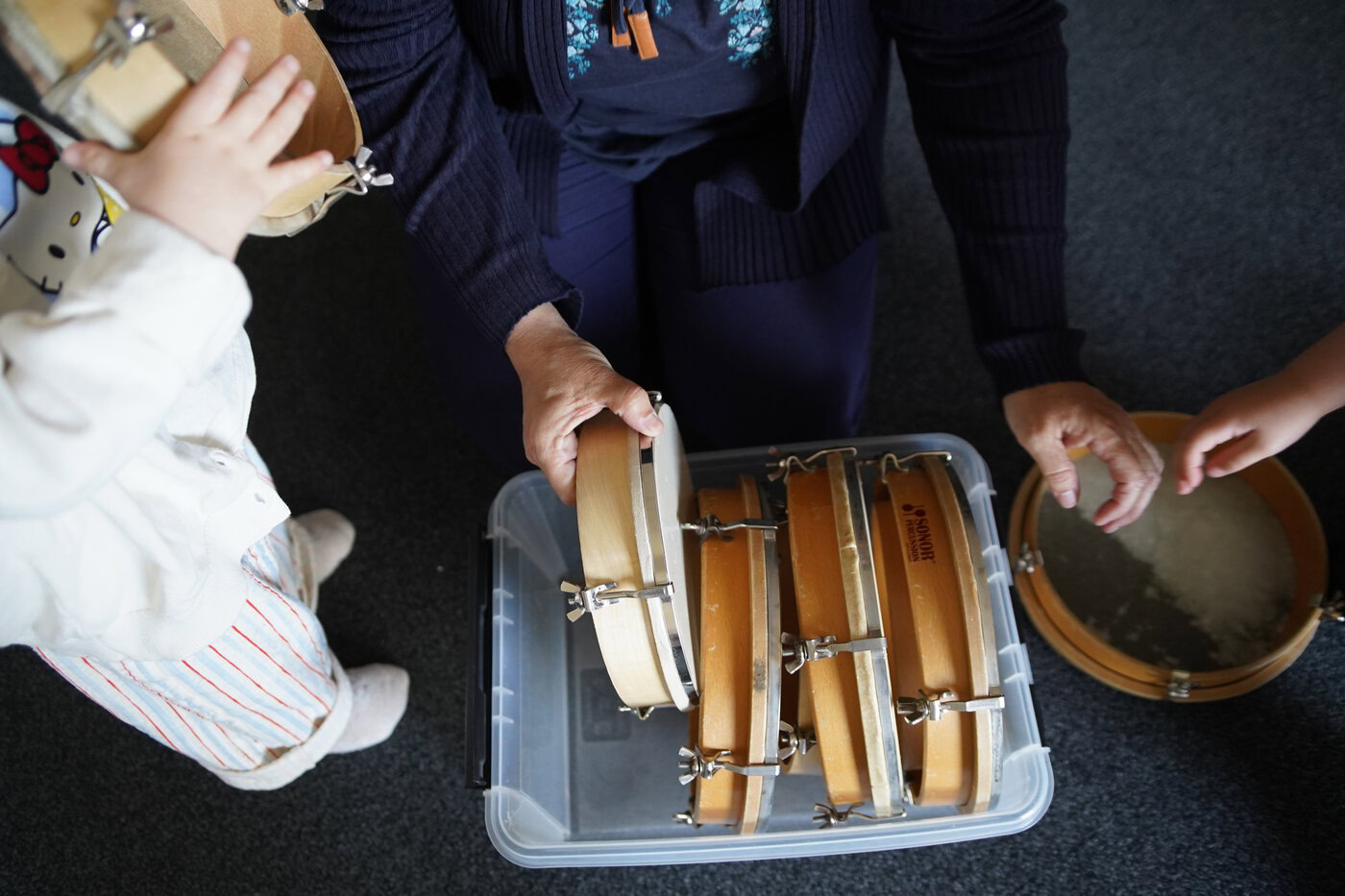
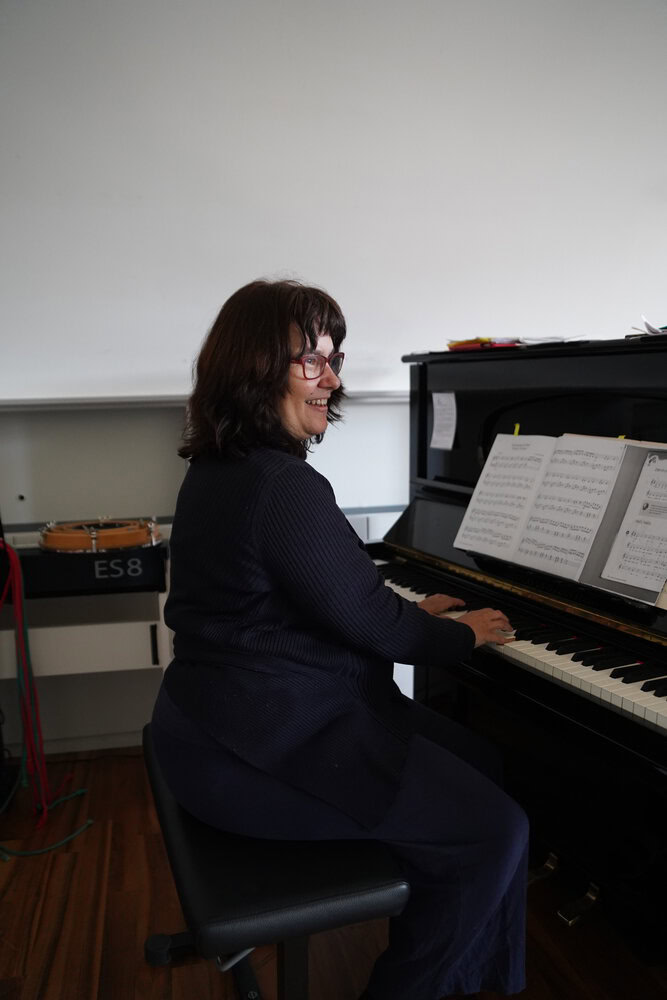
It's almost nine o'clock in the morning in Belp, in the Music School Region Gürbetal in the Canton of Berne. The door to the hall opens, a two-year-old girl comes in holding her mother's hand, another jumps up and brings him a rattle, beaming with joy. Shortly afterwards, course leader Anja Martin sings a welcome song: „Who's here today?“ Each child and parent is greeted personally. Over the next fifty minutes or so, little bells and tambourines are used as well as the piano, which provides the musical accompaniment to a dance - and lots of songs.
Getting into music together
„The children literally soak up the music,“ says Anja Martin, „Parents keep telling us that they now sing at home. It's a great introduction to music.“ The violinist, who plays in the Bern Chamber Orchestra and the Sinfonietta Basel, among others, has been teaching parent-child music at several music schools for five years. She also plays children's concerts and invites the young pupils and their parents to a main rehearsal of a concert in which she herself plays. „Making music at an early age is particularly useful, as many studies have shown,“ says Dorothee Schmid, Head of the Gürbetal Region Music School, „And it's also great for us that children and parents come into contact with the music school at an early age.“ The subject of parent-child music has been offered for thirty years - the only downside is the lack of subsidization, which only begins at school age. Thanks to a foundation, the prices can still be kept low. In collaboration with a parish, a new offer is soon to be launched that combines German courses for migrants with parent-child music.
An experience for children - and for parents
In French-speaking Switzerland, too, pre-school music education is one of the cornerstones of the offer. „Young children have a natural musical sensibility,“ says Marie Reymond, head of the Ecole de musique de Lausanne. While courses for children and parents in German-speaking Switzerland often only start at around two years of age, there are three levels of „Eveil musical“ here: for the youngest children, for 2-3 year olds and for 3-4 year olds, in each case together with their parents. Around half of them then attend the three-year „Initiation musicale“, which builds on this, and so are already well equipped for instrumental lessons at the age of seven. „It is very rewarding to accompany the children for several years,“ reports Wolfgang Leresche, who teaches all age groups, „The very youngest children approach music in such a playful and happy way. I also see that the courses create space for nice moments between the children and their parents. I think that's very nice.“
Specialist training: also for daycare centers and playgroups
Music teachers can qualify to teach music to the youngest children with subject-specific CAS courses offered by several universities in German-speaking and French-speaking Switzerland. The music school „Espace musical“ and the Parent-child singing association train interested parties. All training courses provide an insight into musical and general developmental psychology, methodology/didactics, age-appropriate song and play repertoires as well as planning and implementing your own programs in the music school, but also in the daycare center and playgroup.
Musical and social learning field
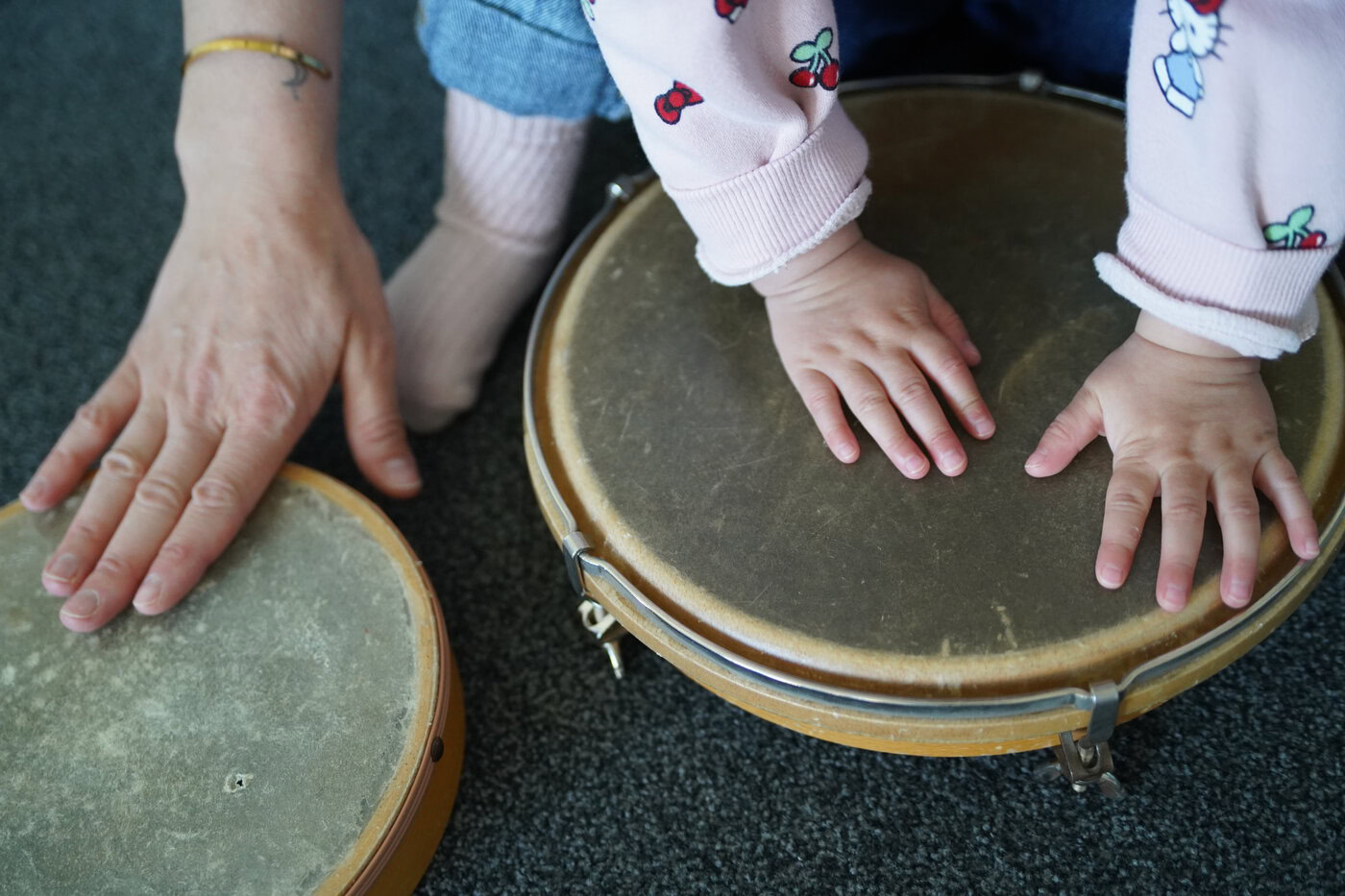
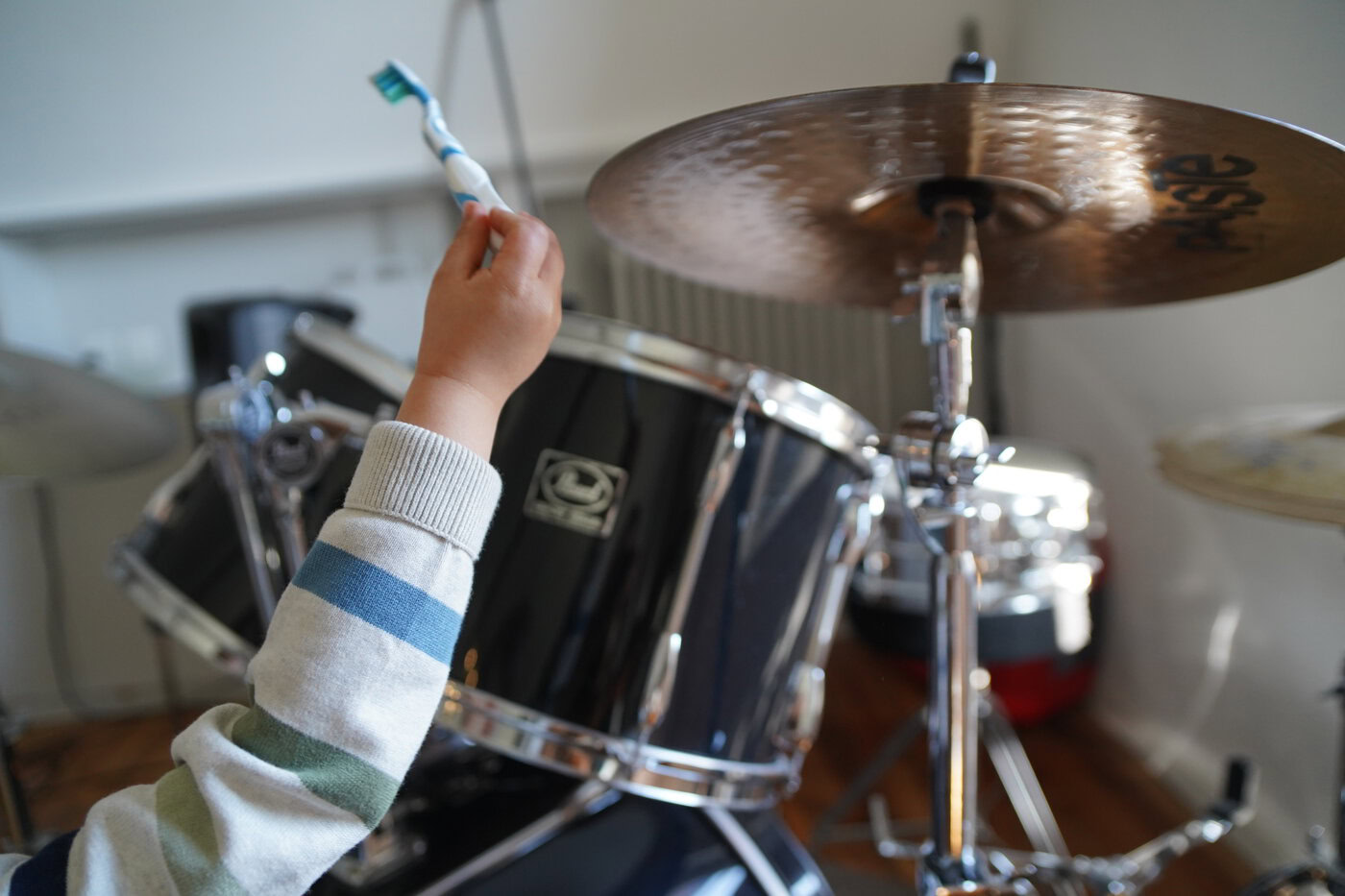
A ritualized schedule is particularly important when planning lessons. „This is crucial for the children, because the lessons are very demanding for them,“ says Andrea Strohbach from the Lucerne Music School. If the process is always similar, the children know how it works after the second or third time and they feel more and more confident. With the help of songs, stories and sound experiments - for example drumming loudly and softly, imitating noises, recognizing high and low tones - the children gain their first musical experiences. But parents benefit too. „It's good for parents to let go and make music without pressure,“ says Martina Felber, Co-President of the Parent-Child Singing Association, which is made up of numerous music school teachers, Anja Martin and Andrea Strohbach are also members. She also observes that families with young children sometimes lack contact with their peers: „Friendships develop in the courses.“
Continue singing at home
This is also confirmed by the participants in Belp, where the lesson has now ended with the farewell song. After a visit to the dwarf world, experiments with noises and sounds and a wild stop dance, the little ones are visibly exhausted. One mother says she was looking for an activity that would allow her and her daughter to socialize during the week, and another adds that this is all the more important because she doesn't go to daycare. The children are still too small for parent-child gymnastics. But not too small to sing the songs from „El-Ki-Singen“ at home or to sing them to their grandparents.