European study on the discoverability of cultural content in the digital world
In the wide-ranging study «Study on the discoverability of diverse European cultural content in the digital environment», the European Commission analyzed how visible cultural content actually is in the digital space. The study, conducted by an international research consortium, comes to a clear conclusion: It is not what is on offer that matters, but how easy it is to find.




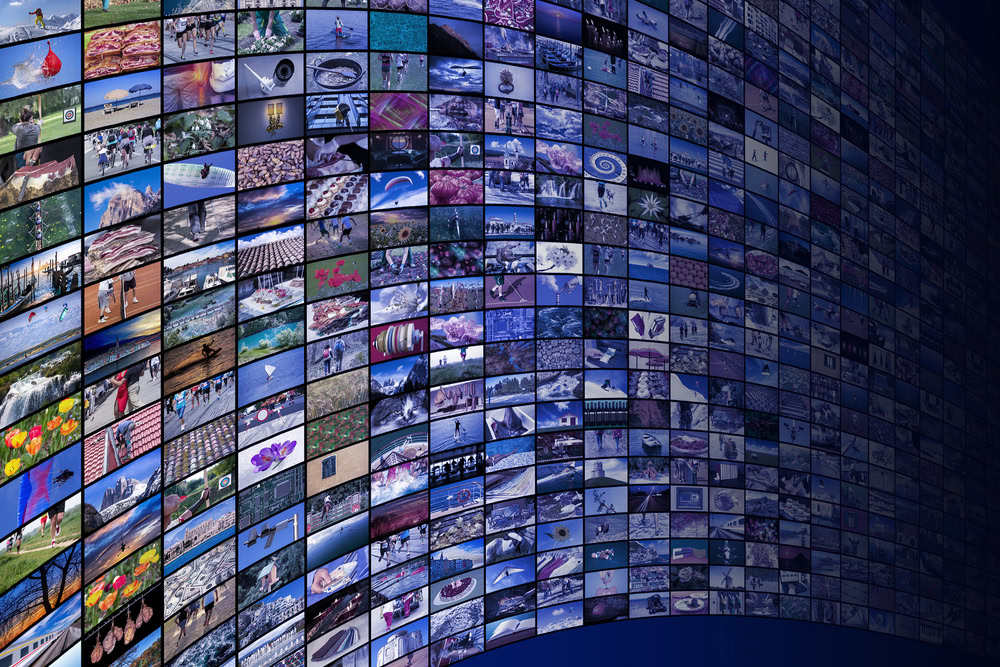
The dynamics that are becoming visible at European level and are reflected in the european Study affect Switzerland in a special way. This is because the mechanisms that decide which music is listened to are also at work here, but in a market that is additionally fragmented by several language areas.
Algorithms decide what is heard
Streaming platforms are the most important access point to music today. Which songs are visible there depends heavily on algorithmic recommendations and curated playlists.
These systems are primarily geared towards existing listening habits and global trends. This effect is reinforced by the market structure: a large proportion of the curated content is controlled at the international headquarters of the streaming providers, often without in-depth knowledge of local scenes or cultural contexts.
As a result, attention is concentrated on already successful content, while new, local or linguistically less widespread music has a much harder time reaching an audience.
Language areas as invisible borders
A key result of the study confirms this: Language acts like a structural filter in the digital space. Users predominantly move within their own language spaces, so-called «language silos».
This has a direct impact on visibility: content in smaller languages is much less likely to be recommended and distributed than content in globally dominant languages.
English-language songs from Switzerland are not treated as «Swiss music» by the platforms, but as part of the global English-language offering. They therefore compete directly with millions of international releases - which makes their visibility even more difficult.
This dynamic is particularly relevant for Switzerland. With four national languages, a small market meets several cultural areas. What is evident on a large scale in Europe is condensed on a small scale in Switzerland: Diversity exists - but it is distributed across separate spaces of perception.
More supply does not mean more presence
The number of available songs is growing rapidly. At the same time, a large proportion of them remain practically invisible. The study proves it: Being online alone is not enough. The decisive factor is whether music is found at all.
In addition, there is a development that further exacerbates this dynamic: the use of artificial intelligence is increasing the amount of music produced even more. The result is a
additional intensification of the competition for attention.
This shifts the central question: no longer «Is enough being produced?», but «Who is being heard?»
Visibility as a cultural policy issue
The results underline the fact that cultural diversity does not automatically arise in the digital environment. In addition to platforms, curated formats, media and targeted promotion continue to play an important role in making different voices visible.
IndieSuisse, SONART and the umbrella organization Swiss Music Council are therefore increasingly addressing the question of how visibility can be strengthened in the digital space in an exchange with platforms, media and politics.
The audience also shapes what becomes visible
However, it is not only algorithms that determine visibility, but also user behavior. A large proportion of usage is based on predefined recommendations,
Trends or automated playlists. Active searches for new or unknown music are comparatively rare.
If you make conscious choices and don't just leave your enjoyment of music to the algorithms, you have a direct influence on what content becomes visible and spreads.
Opportunities to make Swiss diversity audible:
- Search specifically for Swiss music - instead of just relying on automatic recommendations
- Create and share your own playlists
- Use curated offers, such as playlists from labels or media (e.g. «IndieSuisseMonday #fresh»)
- Consciously recommend music
A topic with growing relevance
The question of the discoverability of cultural content is increasingly becoming a central challenge for culture, media and politics. As digitalization progresses, attention is shifting from production to distribution - and thus to the question of who becomes visible at all.
At the same time, technological developments such as algorithmic recommendation systems and generative artificial intelligence are reinforcing existing dynamics. Without targeted countermeasures, the diversity of cultural forms of expression in the digital space is increasingly at risk of being lost.
What the European study shows is therefore more than just a snapshot:
The visibility of music is becoming a central prerequisite for cultural diversity to actually take place.
IndieSuisse, SONART and the umbrella organization Swiss Music Council call on politicians and administrators to provide suitable framework conditions and contemporary regulatory responses in order to effectively counter this undesirable economic and cultural policy development.
This text is the Media release of the Swiss Music Council dated June 1, 2026