The boys are listening to the wrong kind of music. For 2,500 years
Too loud, too simplistic, too commercial, not enough of a handmade touch: People are always turning up their noses at the next generation’s taste in music. It’s always been that way. Maybe that’s why we should think less about what young people are listening to—and more about the conditions under which they can create the music of tomorrow.




First, the bad news: Young people are listening to the wrong kind of music. The good news: They've been doing it for about 2,500 years.
As far back as ancient Greece, people were already considering what effects new musical forms might have on young people and, ultimately, on society. Plato, at any rate, did not consider musical fads to be harmless by any means. In his view, changes in music could quite quickly lead to changes in the political order.
It didn't turn out to be quite that bad after all.
Yet this pattern repeated itself with remarkable regularity. Mozart’s works supposedly had too many notes, jazz was considered offensive, rock «n» roll corrupted the youth, punk supposedly couldn’t even be called music, heavy metal was dangerous, and techno was merely “boom-boom.” Later came hip-hop, Auto-Tune, and streaming. Today, sometimes all it takes is fifteen seconds of TikTok to convince an older generation that the end of music culture has finally arrived.
It seems to be a fact of life in music that every generation gets worked up about what the next one does with it.
Luckily, no one listens to us
Yet that is precisely one of its greatest strengths. Music is passed on, but it doesn't always play along very well.
Bach is played on a synthesizer; folk music is combined with electronic beats; a song from the ’80s turns up forty years later in a playlist put together by teenagers. The boundaries between serious and popular music, high culture and pop, and analog and digital are becoming less and less important.
One might lament this as a loss of certainty. Or one might see it as impressive proof of just how vibrant music is.
After all, cultural transmission does not mean that the next generation is expected to do exactly the same things as the previous one. A legacy that is only allowed to be preserved unchanged will eventually end up in a museum. Music, on the other hand, remains alive because each generation makes it its own, changes it—and occasionally goes completely against the grain.
The crucial question is a different one
When it comes to music policy, therefore, what the next generation listens to isn't the deciding factor. And certainly not whether we like it.
The key factor is whether she even has the opportunity to discover music, learn about it, create it herself, and be heard by the public.
That sounds obvious. But it isn't.
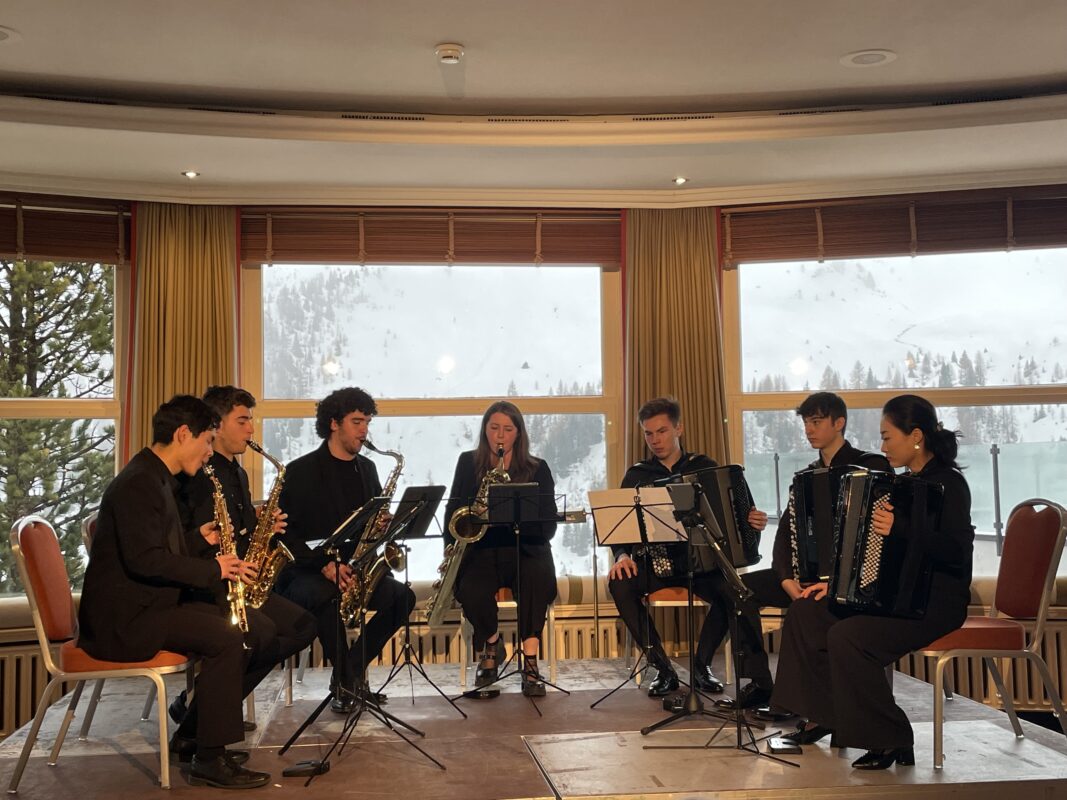
We need music education in schools. Music schools that remain accessible. Programs like “Youth and Music.” Clubs, choirs, bands, and orchestras where young people aren’t just the audience but actively participate. We need professional training, spaces for rehearsing and performing, and conditions that allow a passion for music to eventually become a career.
And we need media and digital spaces where new Swiss music can actually be discovered. Because no matter how creative a generation may be, if its music gets lost in the algorithmic background noise, it won’t do them much good.
None of this happens on its own. Much of it was built up by previous generations. We have taken it on and are now responsible for it.
Our job isn't to determine the musical tastes of the future
Perhaps that is why we should simply understand the much-discussed “intergenerational contract” in music.
It is not our job to dictate to the next generation what music is valuable. Nor do we need to explain to them how long a song should be, what instruments it must include, or whether humans, computers, or artificial intelligence are allowed to play in it.
Our task is much less spectacular—and at the same time more challenging: We must ensure that she has the right conditions in place.
We can then confidently leave it up to the next generation to decide what to do with it.
We'll probably find some of it awful. And that would be a good sign.