

Educational Equity in Practice
Educational equity does not mean giving everyone the same thing, but rather giving each person what he or she needs. At the Forum on Music Education, Prof. Dr. Sabine Doff, a professor at the University of Bremen, will present the key findings from her study „Expedition Educational Equity“ in concrete terms.




“Schools are doing an incredible job,” writes Sabine Doff in the accompanying text to the study, for which she provided detailed profiles of twelve schools—six each from the cities of Bremen and Bremerhaven. To ensure that educational equity—that is, equal opportunities for all children—can be implemented more sustainably, she recommends that administrative and political leaders place their trust in schools and facilitate greater dialogue and collaboration.
"Equality doesn't mean sameness," you say—we shouldn't talk about educational equality, but rather educational equity. What does that mean?
In general, it’s important to know that fairness doesn’t increase just because everyone gets the same thing—because not everyone starts from the same place. If you ask children how they would divide a bar of chocolate among five children, they usually say everyone should get the same amount. That’s great, of course—that’s how they’ve learned to share. But perhaps one of the children can’t tolerate dairy products. Or one might have just polished off an entire bar, while another has never eaten chocolate in their life. Another approach is to take into account the individual circumstances each child brings with them. What is the child particularly good at? What has happened in their life up to this point? What strengths and weaknesses do they bring with them into the education system?
You distinguish between three forms of justice—we've just discussed two of them. Could you briefly explain all three?
If everyone receives the same, regardless of their individual resources and circumstances, we call this distributive justice. It has the advantage of being easy to organize, but the significant disadvantage that it does not compensate for existing differences. The second form is recognition-based equity. It acknowledges that not all children need the same things, and their strengths and weaknesses are taken into account appropriately. The third is what’s known as threshold equity. Here, one says: “My goal is for all children to be able to swim across the Amazon,” and everything offered to them and the support provided is geared entirely toward this goal. Perhaps there are already some really great swimmers among them who need a new challenge. Others may not be able to swim yet. The point is that, in the end, everyone reaches the threshold.
How did you come to focus on educational equity?
I myself grew up with a “middle-class” perspective. The motto of my school years was: “If you want it, you can do it.” I’ve been working in Bremen—Germany’s smallest federal state—for 17 years now. It consists only of the two cities of Bremen and Bremerhaven, both of which are characterized by very challenging social and other conditions. Here, I’ve learned that the belief that “if you want it, you can do it” doesn’t apply to a growing number of children. Many children and families are willing, but in their daily lives they face limitations and obstacles that they cannot overcome simply by wanting to.
What kinds of obstacles might these be, for example?
One example might be: Do I arrive at school feeling full—have I had breakfast? Can I join the basketball club, which requires a basic fee per school semester? Or: Does a child need their own instrument to participate in music class? Language can also be a major obstacle.
As part of the study, you profiled twelve schools and found that they are doing a great deal to promote educational equity. How did you determine this?
A disproportionately large number of the people working there are extremely dedicated. School administrators are often deeply committed—and not infrequently charismatic—individuals who inspire their colleagues with ideas, drive initiatives forward, and ask themselves how they can adapt the system to benefit the children. For me as a researcher, it was a truly wonderful experience to meet such people and see what they accomplish. On the other hand, it must also be said that educational equity should function even in places where there are no such dedicated individuals. The entire system needs to change. Furthermore, it’s a shame when every school has to reinvent the wheel on its own. Greater networking and exchange—not only among schools, but also among administrative bodies and policymakers—would be essential.
Where do you see the biggest obstacles to schools reaching their full potential?
One obstacle is excessive bureaucracy. A second is the need for regulation at the level above the individual school: Schools could function much more effectively if they were allowed to use their resources more flexibly. I see a third obstacle in communication. The academic community too rarely formulates its findings in a way that translates into practical application. Schools know very well what needs to be done, and at the macro level, policymakers actually know it too—the current Bremen coalition agreement is strongly focused on educational equity. However, the intermediate operational level above the individual school—which serves as a hinge—does not yet seem to be effectively fulfilling this role and is barely connecting the two levels.
For your study, you also spoke with students and asked them to visualize their dream school. What were the results?
One example that really impressed me was the idea of school as a large ship. It was clear to the children that there was a clear division of roles and clear rules: a crew that takes care of the ship, and the principal standing on the bridge. The ship itself was very large, because it was meant to convey a sense of security. After all, you don’t notice the waves if the ship is big enough. Plus, the whole ship was very orderly. You could sense that the children were looking for guidance at school—that they know what they can rely on and what they can expect from others. Often, the dream schools also incorporated nature; there were solar panels on the roofs, plenty of water, and greenery. And many created space for physical activity.
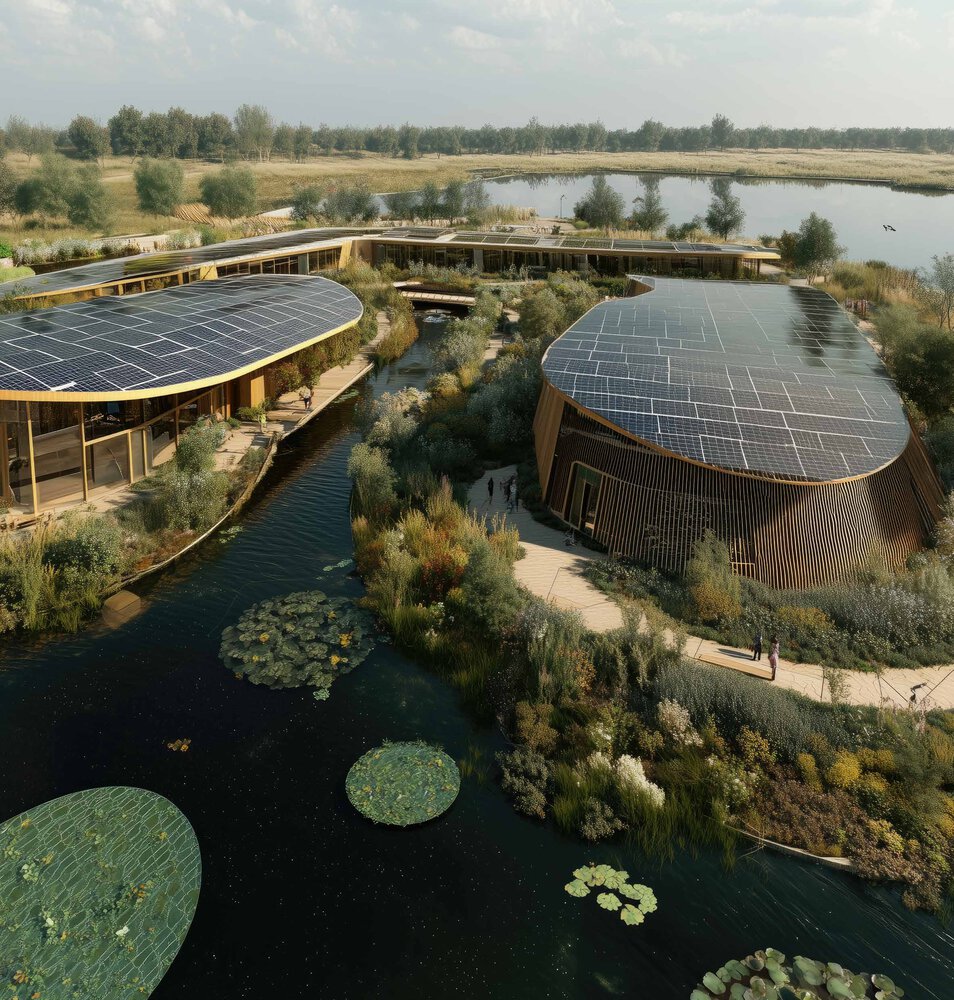
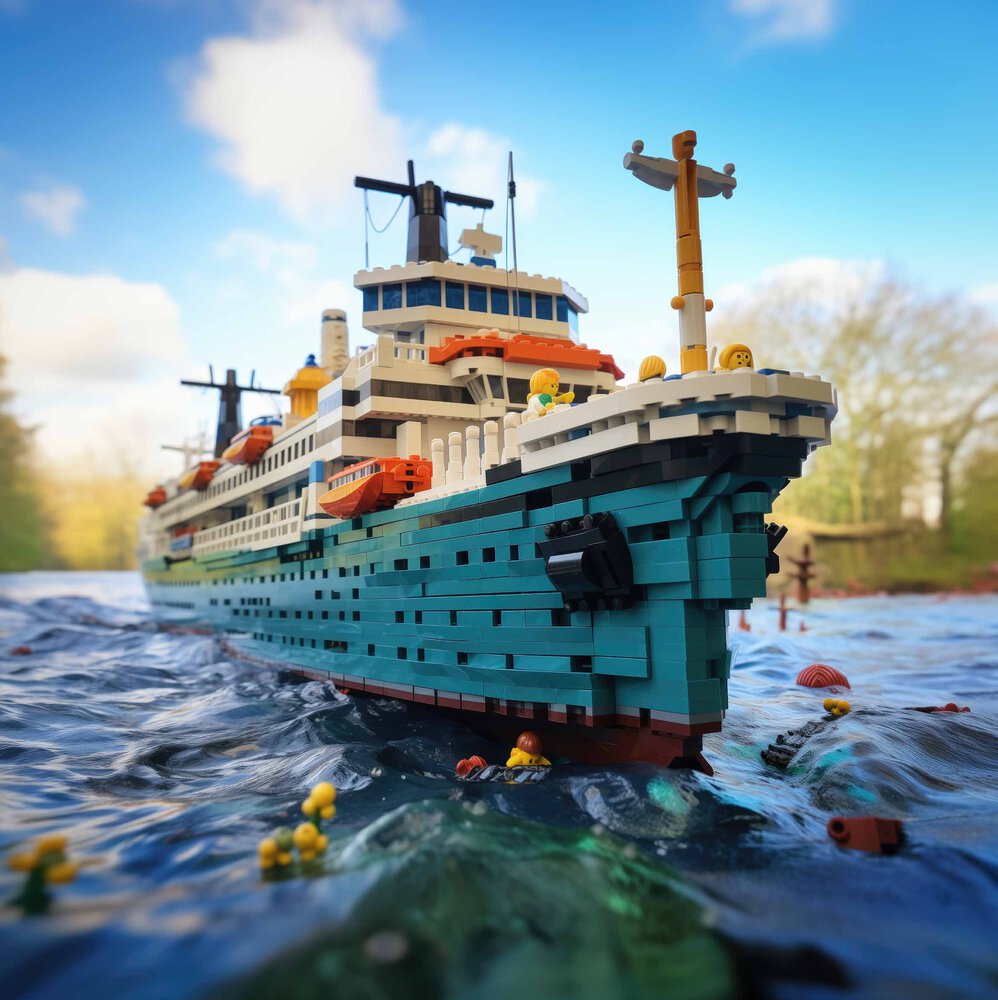
Dream Schools Visualized by Students (Images: © UNLOCK THE FUTURE)
Link About the Study
More Learn about the Forum for Music Education


