Swiss Sounds at the Vilnius Festival
There are a surprising number of connections between the two small countries, Lithuania and Switzerland. This was also evident at this year’s Vilnius Festival.




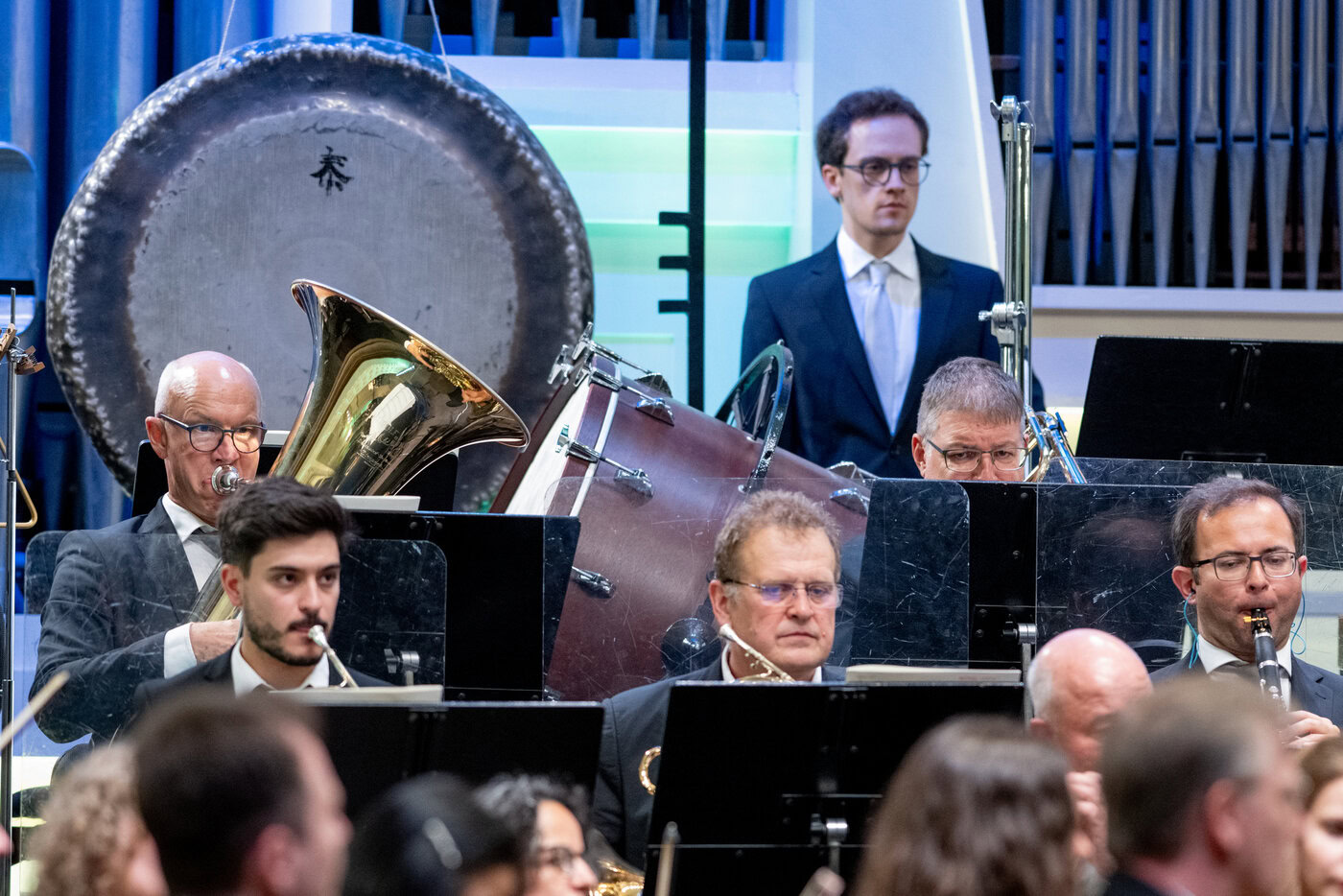
What does St. Gallen sound like? Like the silence of a monastery library? Like HSG students discussing the future of capitalism? This question was addressed at the opening concert of the Vilnius Festival with Fabian Künzli’s orchestral work, which premiered in 2025 This Is What St. Gallen Sounds Like A powerful sonic response. This work weaves together various listening experiences that residents of the canton of St. Gallen were invited to submit in advance.
A catchy melody that sticks in your head keeps reappearing in new instrumental arrangements, while a chorale melody by Johann Sebastian Bach pops up here and there. But that’s not all: Künzli even brings the atmosphere of a café in St. Gallen to life. Midway through the piece, the audience is invited to chat with their neighbors. A smash hit!
A Lithuanian on a farewell tour
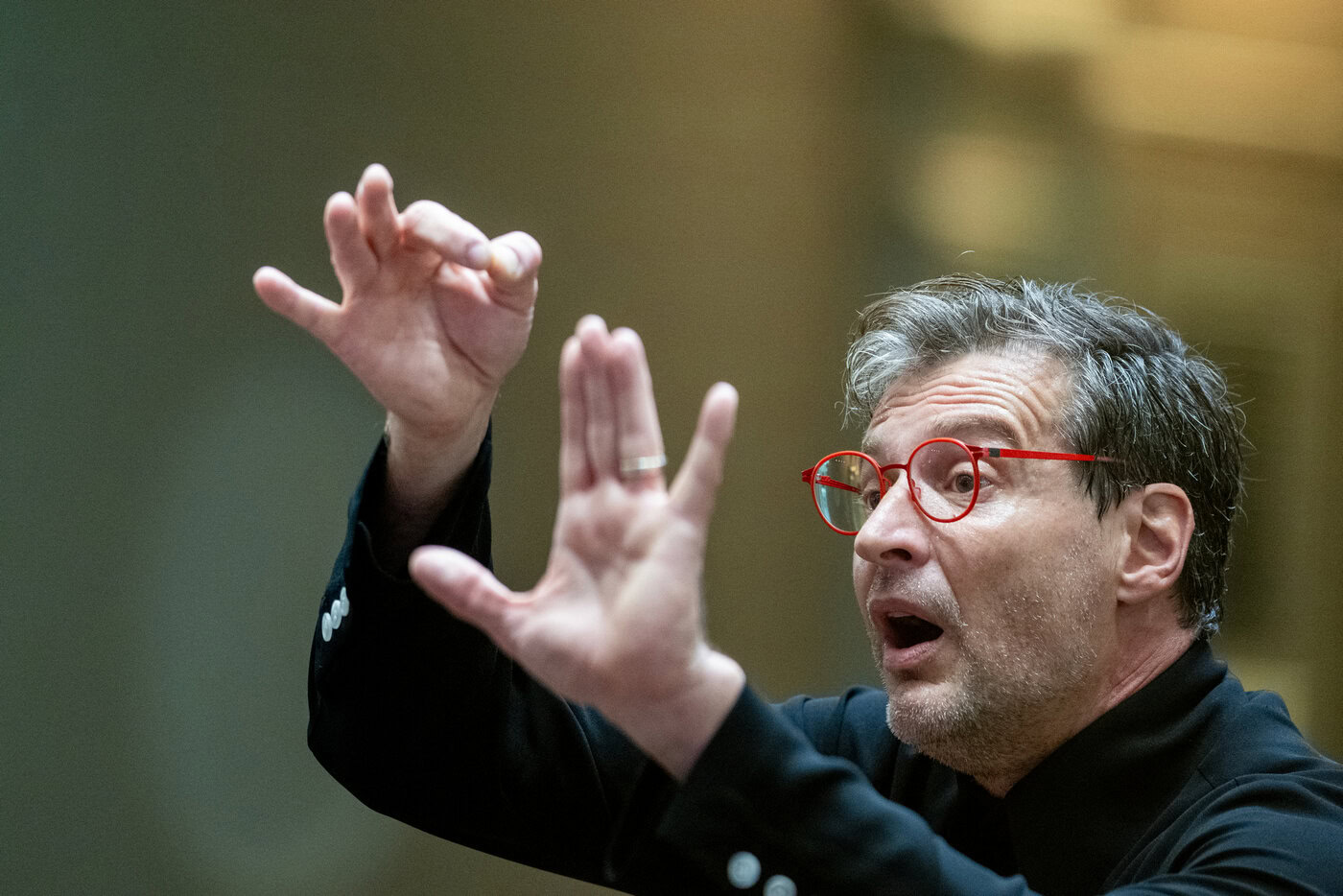
It is thanks to Modestas Pitrėnas that one of the Baltic region’s most renowned classical music festivals opened this year’s edition with a work by a Swiss composer. The Vilnius-born conductor served as music director of the St. Gallen Symphony Orchestra for eight years. His farewell tour has now brought him and the orchestra back to his hometown. A few days after the concert, Pitrėnas’s thoughts are still with the Vilnius Philharmonic: «It was an indescribable feeling to see the St. Gallen Symphony Orchestra in my homeland. To this day, the orchestra is still reminiscing about Lithuania and its hospitable people. I’m very proud of that!»
At the opening concert, there was no sign that the St. Gallen Symphony Orchestra had arrived in the Lithuanian capital late the night before. It performed Daniel Nelson’s accordion concerto with great energy. The Ghost Machine Treatise and Beethoven's Fifth Symphony. The encore by accordionist Martynas Levickis was particularly moving: In his original composition The Dawn Is Breaking Minimalist broken chords met sweeping, elegiac cantilenas—inspired by Lithuanian folk music. A gem!
Anniversary Edition
The Vilnius Festival celebrated its 30th edition this year from June 5 to 25 and has long been a fixture on the Lithuanian cultural calendar. The program brings together leading international classical musicians and the promotion of Lithuanian musical creativity, not least through world premieres and commissioned works. The festival manages this balancing act with astonishing ease.
For years, the Vilnius Festival has been led by Lithuanian musicologist Rūta Prusevičienė. In her office at the National Philharmonic, she talks about Krzysztof Penderecki, who came to Vilnius for one of the festival’s first editions in the 1990s, but also draws connections to other ties between Switzerland and Lithuania: Around 1900, for example, numerous young Lithuanians studied at the predominantly Catholic University of Fribourg. One of them was Juozas Purickis, who later became foreign minister of independent Lithuania.
Stucco Work from Ticino and a Lithuanian Sound Artist
The Vilnius Festival takes place in the heart of the Old Town, whose churches and monasteries are characterized by Baroque architecture. Even architecturally, there are some connections to Switzerland: In the 17th century, artists and stuccoers from what is now Ticino contributed to Lithuanian Baroque. Giovanni Pietro Perti and Giovanni Maria Galli, for example, created the stunning stuccoed interior of the Church of St. Peter and Paul. The Switzerland-Lithuania connection in Vilnius is thus not only audible but also visible.
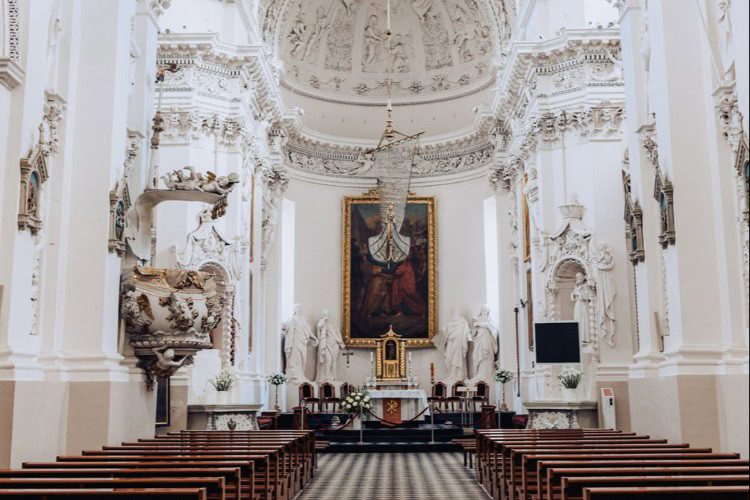
Photo: Go Vilnius
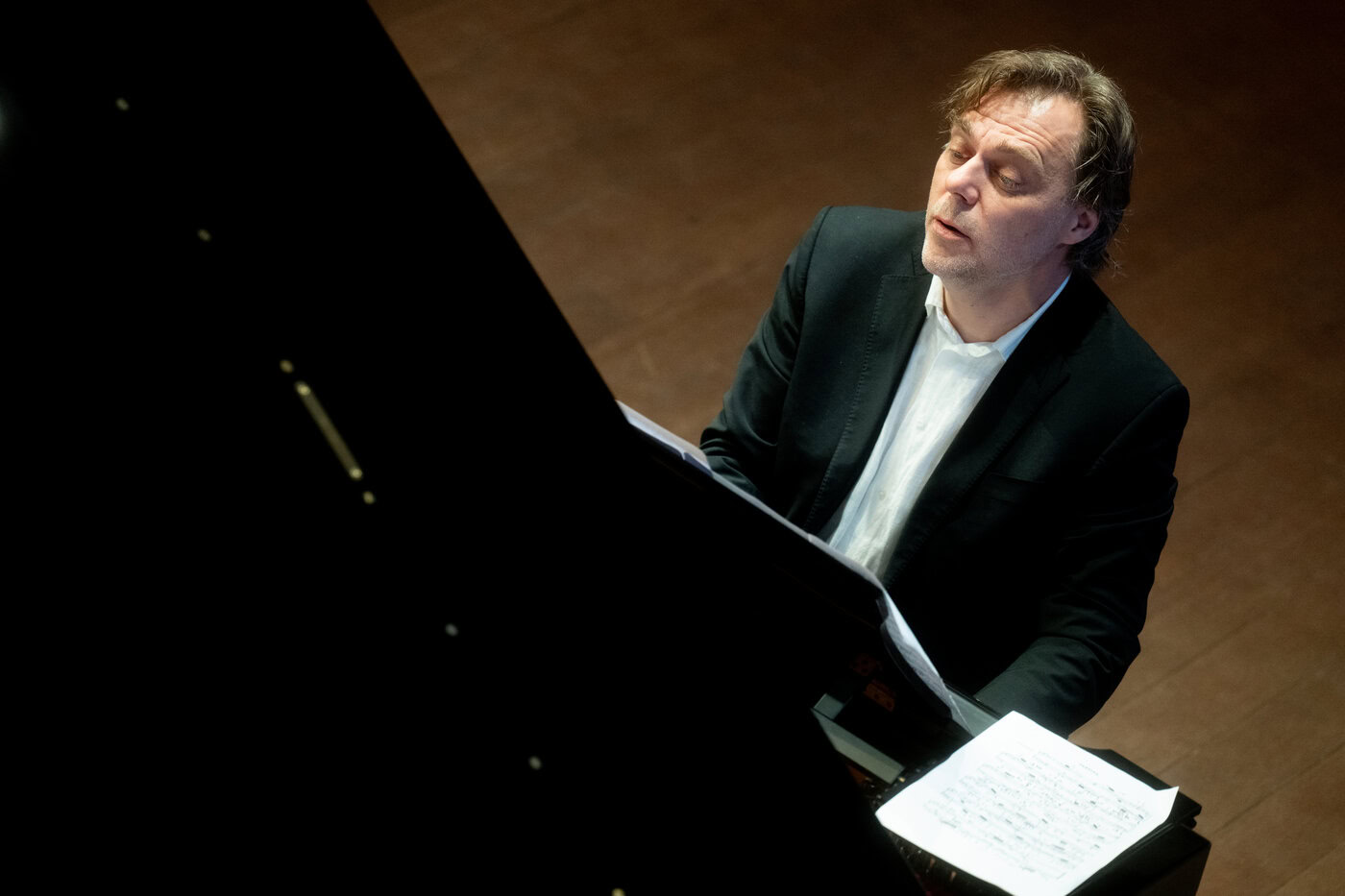
The second concert of the Vilnius Festival was dedicated entirely to the exceptional Lithuanian pianist Andrius Žlabys. What a wide range of timbres he brought to Bach’s Overture in the French Style It was impressive to see how he could conjure up BWV 831 from the Steinway grand piano: every trill, every ornament, every rhythmic nuance took on a color of its own under his hands. Žlabys played Bach’s music as a vibrant presence. Less convincing, however, was the world premiere of his own work Movement for piano and string quartet, which, while it had poetic passages, was stylistically all too clearly modeled after other composers, such as Arvo Pärt.
Feeding marmots before the concert
Musically, Lithuania and Switzerland are closely intertwined. A little over a decade ago, the Lithuanian National Symphony Orchestra made several guest appearances at the Música Romântica festival in the glacier village of Saas-Fee. Festival director Rūta Prusevičienė recalls how the musicians told her that they would hike in the mountains and feed marmots during the day before performing in the parish church in the evening. The Lithuanian piano duo Vilija Poškutė and Tomas Daukantas, on the other hand, have been living in Switzerland for several years and have long been part of the local music scene.
An important bridge between Lithuanian and Swiss music is the conductor and flutist Kaspar Zehnder: He first came into contact with Lithuania in 2002, when the National Opera Orchestra made a guest appearance at his Murten Classics festival. Later, he conducted in Vilnius and Kaunas, brought Lithuanian music by Loreta Narvilaitė, Onutė Narbutaitė, and Anatolijus Šenderovas to Switzerland, and invited the Klaipėda Chamber Orchestra to Murten Classics and the «klangantrisch» festival in his hometown of Riggisberg, where he serves as artistic director. «What I appreciate about Lithuania is that with every performance and every visit, the network expands,» says Zehnder.
Three Weeks of Musical Discoveries
The Vilnius Festival lasted about three weeks. The program’s stylistic breadth was evident right from the first few days of the festival. The third concert featured American countertenor Aryeh Nussbaum Cohen. Accompanied by the St. Christopher Chamber Orchestra under Hossein Pishkar, he spanned a range from the Baroque to the modern era. Cohen was particularly compelling in the quiet passages, where his voice unfolded a bright, delicate timbre that was never glassy. The chamber orchestra did not always seem completely in sync. The spark only flew in places.
That’s part of the appeal of the Vilnius Festival: Just a few hours later, the next concert offers the chance to make another musical discovery—whether or not it has a connection to Switzerland.