How Sebastian Nordmann Brings Music to the Streets of Lucerne
This year's Lucerne Festival, held in August and September, featured a number of unusual formats. The new artistic director, Sebastian Nordmann, hopes this will help attract new audiences.




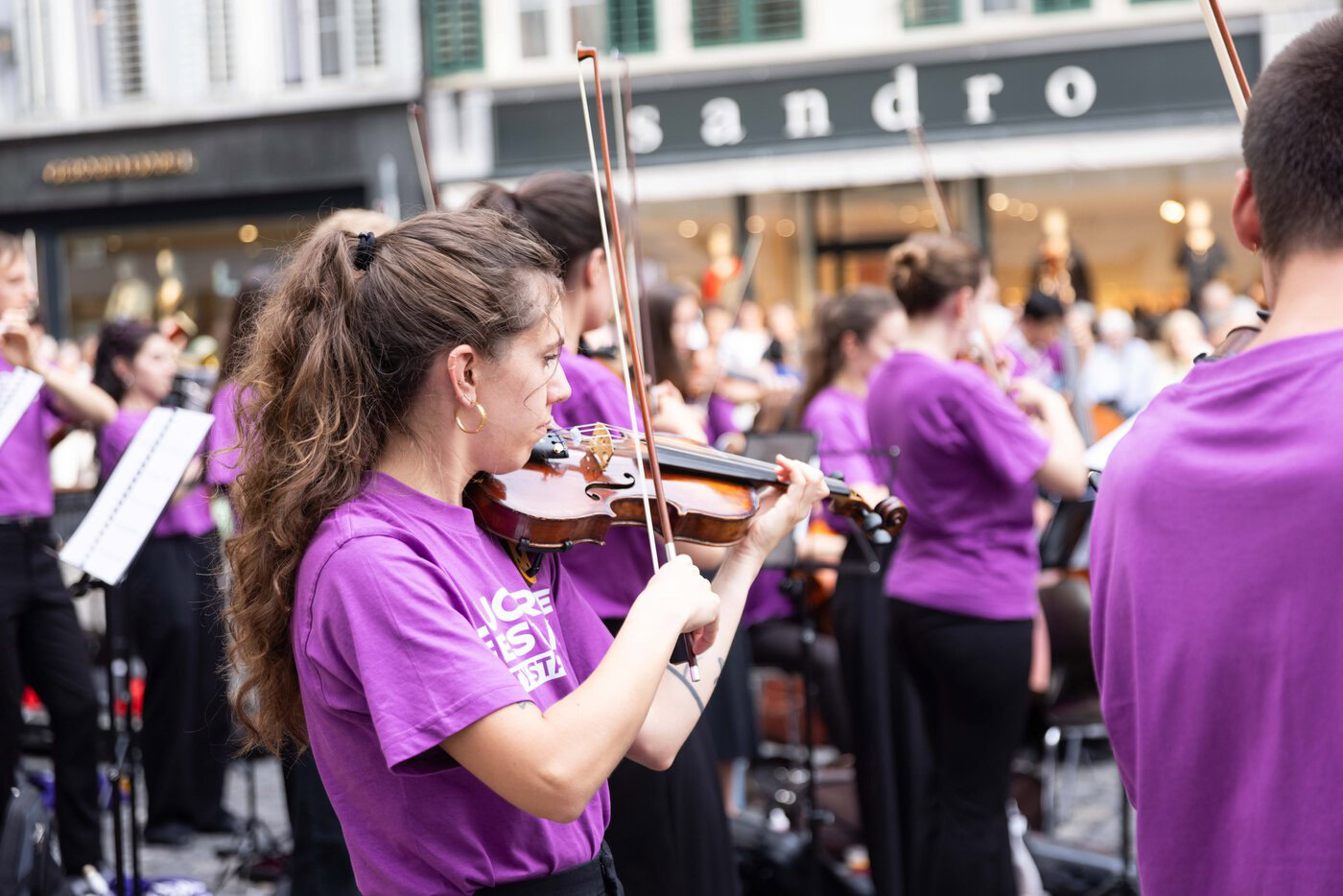
Photo: Manuela Jans/Lucerne Festival
In Lucerne’s Old Town, you can hear muffled beats. «Is that a tower clock?» a tourist asks the person she’s with—and continues on toward the Weinmarkt. Curious onlookers flock to the square from all sides, where a circle of people has already formed and a drummer is tuning his bongos. Two vibraphones and two marimbas are also set up on the pavement. The free concert, part of the newly conceived «In den Strassen: City Stage» festival, is ready to begin.
The new artistic director, Sebastian Nordmann, wants to bring the Lucerne Festival even more into the city. The four young participants of the Lucerne Festival Academy manage to captivate passersby at the Weinmarkt. People pull out their cell phones, and some start moving to the groovy, rhythmically shifted sounds of Steve Reich’s Mallet Quartet.
A few blocks away on Kapellplatz, the experience gets even more interactive. At the «Symphonic Jukebox,» listeners can choose from over 30 songs, which are then performed live by the Lucerne Festival Contemporary Orchestra. Popular pieces such as the waltz from Shostakovich’s Jazz Suite resonates just as much as the rhythmically complex Short Ride in a Fast Machine by John Adams. Conductor Joseph Sieber briefly explains the selected pieces and occasionally offers commentary during an excerpt from Jupiter by Gustav Holst's The Planets hand the baton to a volunteer.
At the Schirmerturm, «sound gardener» Andres Bosshard welcomes a group of twenty for a «Sound Walk.» Together, they listen to the rain, press their noses against the Musegg Wall while humming, learn about the positive social impact of the «Murmelstrom,» and are impressed by the echoes produced, which even make the cows grazing on the neighboring meadow flinch.
Beethoven, as perceived in the 18th century
With this new awareness, you descend the stairs toward the city with a changed perspective. And you savor the subtleties that can be heard in the Royal Concertgebouw Orchestra Amsterdam’s concert at the packed KKL. The orchestra’s interpretation of Beethoven’s Piano Concerto No. 5 in E-flat major is airy. The strings play with little vibrato, and the timpanist uses wooden mallets. Icelandic pianist Víkingur Ólafsson, who is curating the new Pulse Festival in Lucerne this spring, also approaches Beethoven from an 18th-century perspective—in the cadenza, he makes the Steinway grand sound almost like a fortepiano. The strings’ pizzicatos are perfectly executed; indeed, the Amsterdam orchestra delights with its flawless ensemble playing. Ólafsson plays the Adagio with a completely ethereal touch. He then floods the finale with energy and, even if not every triplet opening is technically flawless, transforms it into a rousing dance through his close interplay with the orchestra.
In Sergei Prokofiev’s Symphony No. 5, which premiered in 1945, the Royal Concertgebouw Orchestra, under the baton of Finnish guest conductor Santtu-Matias Rouvali, presents itself as a vibrant ensemble in which the individual instrumental sections are perfectly interwoven. In the second movement, the contours become more jarring and the rhythms sharper—the Adagio is filled with tension and urgency. Only when the violins play in the upper registers in a highly exposed manner, as they do here at the beginning of the movement, is the intonation slightly off.
Hadelich, the Aesthete of Sound
The Berlin Philharmonic also features a rarely performed Russian composition on its program: Alexander Scriabin’s Symphony No. 3 in C minor, Op. 43. How the orchestra shapes this richly textured, complex, and at times bombastic orchestral work—as in the sensuous second movement— Voluptés It’s exhilarating to hear the woodwinds chirp like birds and the brass create emotional peaks. Principal conductor Kirill Petrenko draws the extroverted out of the introverted, using his left hand to maintain balance and his right to ensure musical flow. Unfortunately, the tutti entries following the general rests and the chord changes at the end of the first movement aren’t quite in unison.
In Beethoven’s Violin Concerto, too, the woodwinds« first entry sounds a bit clattery—but then the orchestra settles into a warm sound, fully resonating through the strings, and a flowing pulse. And it lays down the foundation upon which Augustin Hadelich enters the scene on the violin with delicate octaves. This year’s »artist in residence” at the festival is a master of sound aesthetics. Not a single bow change can be heard; every figure is played out in full. The Berlin Philharmonic follows him closely, giving him room to unfold. In the Larghetto, Petrenko has the muted strings play extremely softly, while clarinetist Wenzel Fuchs and bassoonist Stefan Schweigert conjure up a cantabile quality—and Hadelich refines the melody with artful ornamentation.
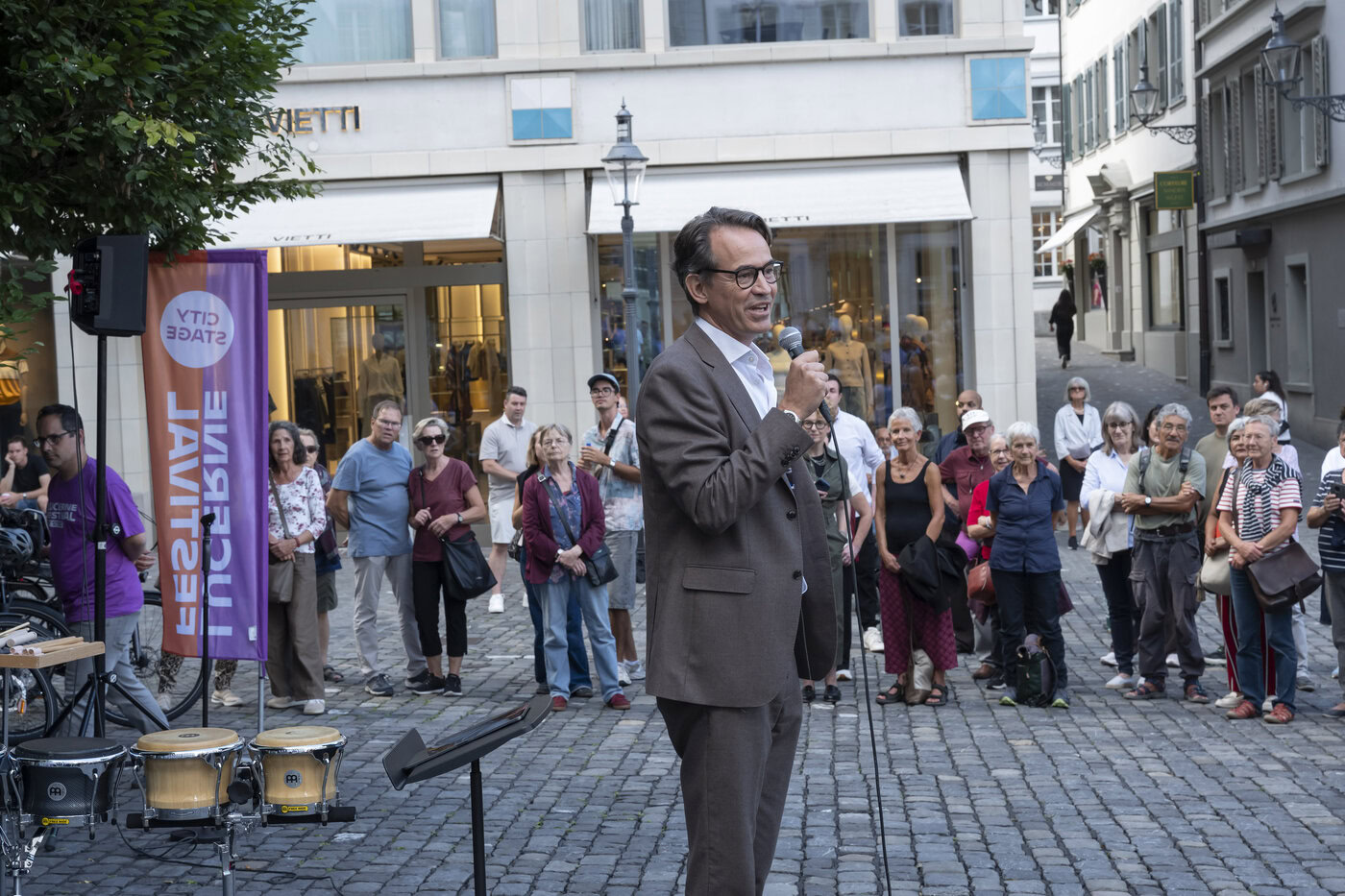
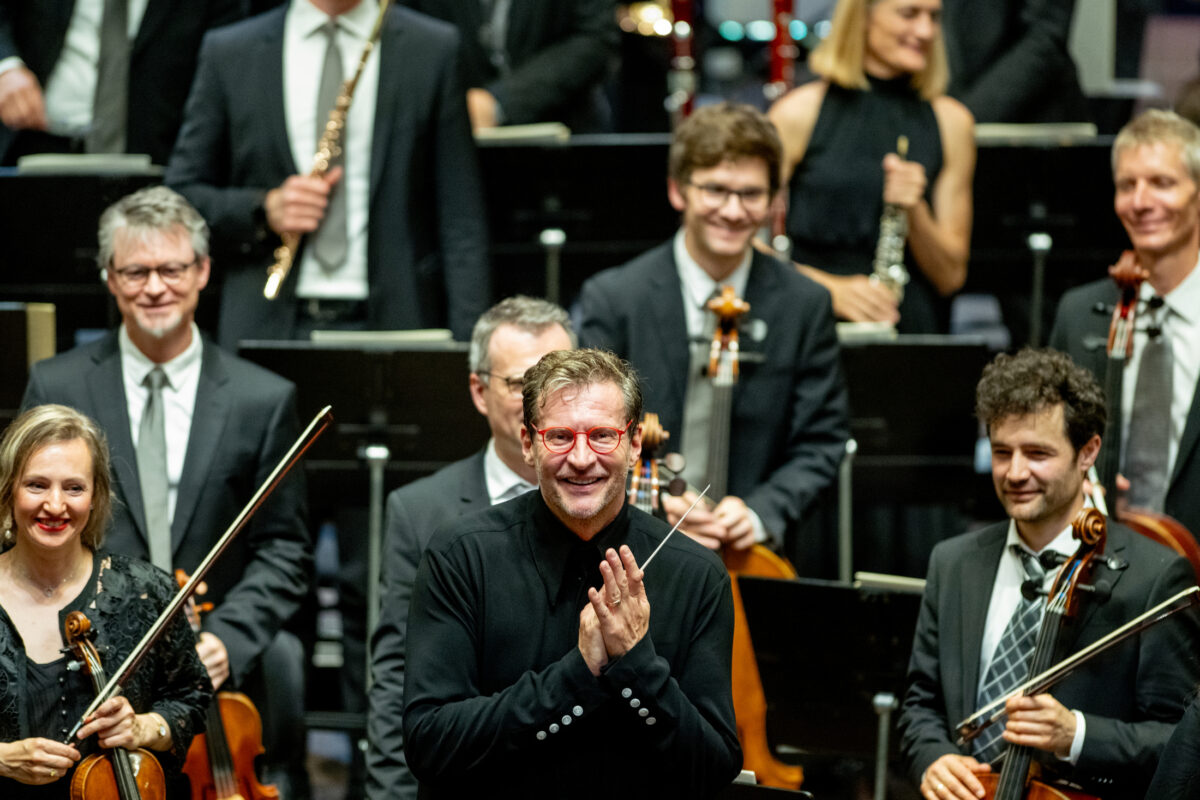
A total of 20 orchestras will perform at the Lucerne Festival over the course of a month. With 12 world premieres, the new artistic director, Sebastian Nordmann, is continuing the work Michael Haefliger has been doing for many years. He hopes to attract new audiences with a more pop-oriented brand, new formats such as «Mittendrin,» where the audience sits on stage, and free events like the Open Air at the start of the festival.
With Jörg Widmann to the limits of audibility
Nordmann has appointed Jörg Widmann—a charismatic composer who succeeds the late Wolfgang Rihm as director of the Lucerne Festival Academy—to the position; Widmann is also active as a conductor and clarinetist—a fact that was particularly evident during the Academy’s fourth concert. Together with the Lucerne Festival Contemporary Orchestra and the SWR Experimental Studio in Freiburg (sound direction: Michael Acker, Joachim Haas, Daniel Miska), Widmann, under the baton of Peter Rundel, About by the French composer Mark Andre, created from the breath, features delicate harmonics and soft clarinet tones at the very limit of audibility.
The world premiere of Tongue of the Land (Roche Commissions) by Australian composer Liza Lim is met with a standing ovation. The rediscovered, reconstructed Celtic instrument, the carnyx (soloist: Marco Blaauw), takes center stage in this sensual, theatrical composition. With its rousing performance, Doctor Atomic Symphony John Adams« work also reflects this year's theme, »American Dreams"—which has been the subject of much discussion in the run-up to the concert—in the Academy concert. A composition that critiques the atomic bomb? That, too, is possible in American music.
Lucerne Festival, through September 13. www.lucerne-festival.ch