

He wanted to make music visible
Conductor, concert promoter, and a decidedly outspoken music educator: An obituary for Armin Brunner, who passed away on August 12 at the age of 93.




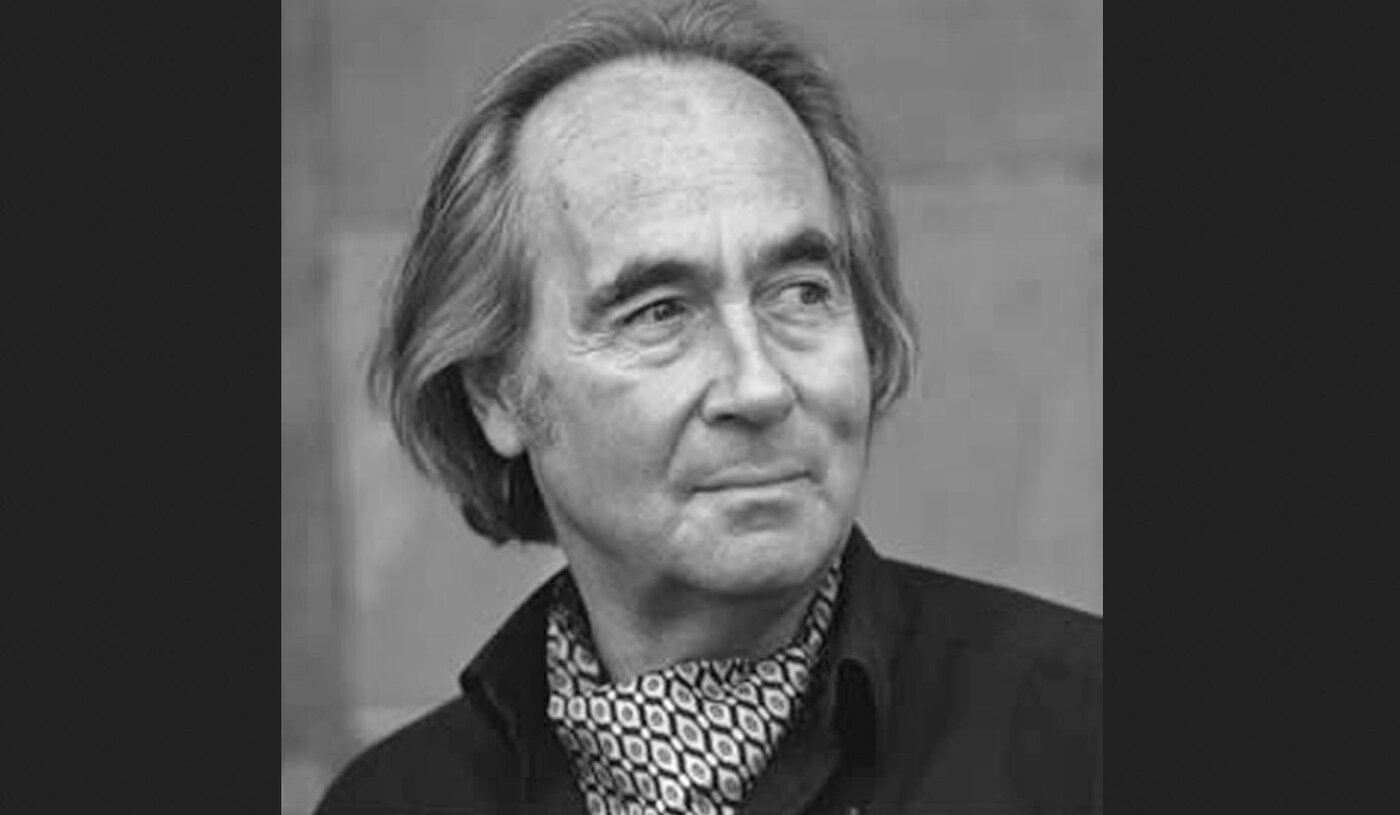
People wandered through the building while different music played simultaneously in every room. Anyone who wanted to listen had to make a choice. The event was called «3×5 Hours of Music»; it was one of those inspiring and stimulating events with which Armin Brunner shook up the music scene in the 1970s. Consumer behavior was challenged, listening habits were called into question, and the concert format was broken up—in a manner that was as witty as it was provocative. New and older music sometimes interacted with pop—a consequence of the turbulent 1960s. Brunner wasn’t one for reverent, contemplative immersion in the “absolute musical.” These were important influences for our generation as well—we were young back then and made a pilgrimage to these events.
Born in Zollikon in 1933, Brunner had studied at the Zurich University of the Arts. He soon became an assistant to Hans Rosbaud at the Zurich Opera House, one of the leading conductors of contemporary music at the time. Brunner was interested not only in the new, but also in the theatrical—or, more broadly, in the connection between music and the visual. After gaining experience with chamber operas, he founded the Musikszenische Studio Zürich in 1971, which he directed until 1983. At the same time, he championed the unconventional. For example, he directed Hans Werner Henze’s show The Long Journey to Natascha Ungeheuer's Apartment in which a wrecked car served as a percussion instrument.
He then moved to Deutschschweizer Fernsehen, where he headed the «Music and Ballet» department from 1979 to 1998. Never before and never since has there been such a flurry of activity there when it came to classical music. It was a time of new beginnings and experimentation. Directors such as Fred Bosman, Peter Schweiger, and Werner Düggelin produced unconventional music films; the latter, for example, created an impressive St. John Passion. A series of ballets by Heinz Spoerli was created. Mauricio Kagel, one of Brunner’s leading influences in his approach to music and media, created magnificent music films.
Innovative Collaboration with Adrian Marthaler
Above all, however, the innovative productions with Adrian Marthaler became a huge success even beyond the country’s borders: concert life was interpreted and reimagined in ways ranging from critical to parodic. Classical works were presented in a modern context. Gershwin’s Rhapsody in Blue For example, one was set in a bar. Later, however, «more serious» film adaptations of Mozart’s works followed, as well as an epic film version of Mahler’s Sixth Symphony. Swiss television hasn’t shown any of this in a long time, even though it ranks among the most glorious creations in its history.
Brunner, who had long directed the Frauenfeld Oratorio Choir, also wanted to explore the great works of church music. Thus, he produced a total of 21 «Musical Meditations,» in which critical contemporaries «preached» on a classical work, as it were, from the pulpit. Wolfgang Hildesheimer, for example, expressed heretical thoughts on Mozart’s Requiem: «Lord, do not grant them eternal rest!» He was followed by writers and theologians such as Dorothee Sölle, Günter Wallraff, Hans Küng, Peter Bichsel, Martin Walser, Wolf Biermann, and Adolf Muschg.
After all, Brunner had a particular fondness for silent films: famous examples such as Nosferatu, Battleship Potemkin or Metropolis He set it to music—though not by composing new music for it, but by compiling existing works and setting them to the images. Over time, a sense of distrust toward the elitism of New Music also became apparent in this work. Over the years, Brunner grew suspicious of music that refused to be accessible. He regarded Arvo Pärt as a shining counterexample.
He was fascinated by the connection between the ear and the eye
As concert manager for the Migros-Klubhauskonzerte, he continued his work as a cultural mediator after his time in television. After eight years, he concluded this chapter with a “co-creation” concert—the diverse program for the final concerts was determined based on a questionnaire. During those years, however, he also revived the unusual concert formats of the past, albeit on a much larger scale. As early as 1990, he had created a large-scale “Sonoptikum” for the Alte Oper Frankfurt. There, too, the focus was once again on the connection between the ear and the eye—the theme that fascinated and drove him until the very end.
Armin Brunner passed away on August 12; he was a critical thinker who, incidentally, also valued a critical spirit in others. He viewed the decline of music criticism in recent decades as a great loss. In fact—and this is a sad realization—much of what he created is hardly conceivable today, especially on television.
