What plans does the new owner of Radio Swiss Classic have?
Do Swiss musicians have reason to fear for their visibility now that SRG has sold Radio Swiss Classic and Radio Swiss Jazz? In this interview, Thomas Gilgen, head of the new owner, Digris AG, addresses the music scene’s concerns.


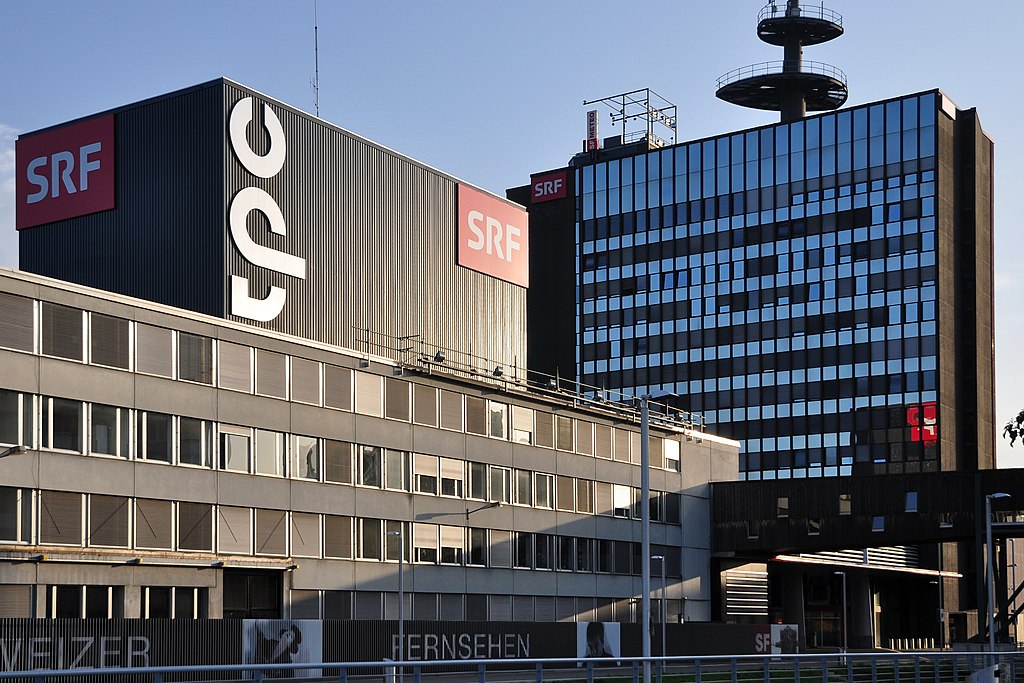
The announcement in September caused quite a stir: SRG is selling its three so-called satellite radio stations. Radio Swiss Classic and Radio Swiss Jazz are going to the Zurich-based company Digris AG, while Radio Swiss Pop is being acquired by the CH-Media Group. SRG argues that, as stations dedicated solely to music, the three stations did not fall within the scope of its license mandate. The music community reacted critically. Sonart, the association of Swiss musicians, was particularly skeptical. There are fears that the sale of the stations could jeopardize the visibility and revenue streams of Swiss musicians. Currently, the stations are required to play at least 50 percent Swiss music. While this requirement also applies to the new owners, it is only in effect for a period of two years.
So what’s next for Radio Swiss Classic and Radio Swiss Jazz? We asked Thomas Gilgen, the CEO of Digris AG.
Mr. Gilgen, many people aren't familiar with you or Digris yet. Who are you, and what do you do?
We are a licensed network operator. We broadcast local DAB radio stations in Switzerland, as well as in the United Kingdom and France.
You are now the owner of Radio Swiss Classic and Radio Swiss Jazz. What experience do you have as a radio producer?
Our roots lie in Zurich’s music and cultural scene. In the 2000s, we founded the radio station Open Broadcast, which still has its own editorial team. So we have a lot of experience, including in curating music programs. Our music director previously spent over 20 years shaping the musical identity of Radio Nova.

But first and foremost, are you a network operator?
That wasn’t part of the plan—it just happened. We originally broadcast Radio Open Broadcast through an external DAB network operator, who charged a great deal of money for the service. That led us, 13 years ago, to develop our own technology for DAB broadcasting. This allowed us to drastically reduce the associated costs, from 250,000 to 10,000 Swiss francs annually. Thanks to a federal broadcasting license, we have since been able to offer airtime to numerous internet and cable radio stations on affordable terms. Our network operations have evolved into a business model that allows us to cross-subsidize our radio station—as a labor of love, so to speak.
Let's talk about your new acquisitions. What sparked your interest in these two stations?
In early 2026, I learned that SRG was once again trying to sell its satellite transmitters, with the condition, among other things, that DAB coverage be provided throughout Switzerland. I thought to myself: That’s so expensive, no one can afford it—unless they’re a network operator themselves. That’s when I began to look more closely at the project. A whole new world opened up to me when I analyzed the listener connection logs. Only about 15 percent of these stations’ listeners are from Switzerland. The rest are spread across 183 countries worldwide, primarily in major cities ranging from Milan to New York to Moscow. It’s incredibly exciting to see what’s been built there.
50 percent of the music played must have a Swiss connection. It’s really interesting that this appeals to an international audience…
I suspect it has to do with the concept: pure music, without any hosting, broadcast via satellite. When the station launched in 1998, that was very innovative.
We were also interested in Radio Swiss Pop. However, CH Media ended up winning the bid.
You have agreed with SRG to keep the purchase price confidential. Do you know if there were any other prospective buyers?
In reality, only the big players—namely Ringier or CH Media—were in the running. I knew that, as a network operator, we were in a strong position. In Ticino, for example, we’re the only ones besides SRG offering DAB broadcasting. Our DAB coverage is only 83 percent nationwide, compared to the SRG’s 99 percent. But with Switzerland’s good internet connections, that should be offset.
Radio Swiss Pop was also up for sale. Why didn't you acquire that station as well?
You'll have to ask SRG about that. We were also interested in Radio Swiss Pop, but CH Media ended up winning the bid.
You now face the challenge of turning a classical music station and a jazz station into profitable ventures. Should listeners brace themselves for commercial breaks?
No. That kind of model wouldn’t work for these stations. We would lose institutional users—banks, shopping centers—in particular if we included commercial breaks. One potential source of revenue is display ads on DAB+ receivers equipped for this purpose, such as car or kitchen radios. This form of advertising does not interfere with the listening experience and has been in use for years. In the digital realm, there are other options, such as banner ads or pre-roll ads: a short commercial that plays when the stream starts, before the radio program begins. Aggregators like TuneIn already use this type of advertising on Swiss Jazz and Swiss Classic. The current program is not interrupted in the process.
The people who listen to Swiss Classic and Swiss Jazz are those with high purchasing power.
Besides advertising, what else could bring you money?
Higher quality. I could imagine that listeners would be willing to pay for a higher audio bandwidth. Or for additional services, such as an archive of their personal favorite tracks. The people who listen to Swiss Classic and Swiss Jazz have high purchasing power. We know this based on the devices they use to listen to the stations. Sponsorship partnerships are also a possibility.
They are required to continue playing 50 percent music with a Swiss connection—but only for the next two years. The music scene is concerned about this relatively short timeframe.
We didn't set this deadline, nor did we negotiate it. However, a two-year commitment isn't exactly a short-term commitment when you're buying a product. But it doesn't bother us.
Do you understand the concerns that Swiss productions might become less prevalent over the long term?
I didn’t expect the sale to cause such a stir. But these fears are completely unfounded. Since we can draw on content from the SRF archive, we’re guaranteed to meet the 50 percent quota at all times. In the long term, an increase is even conceivable—not in linear programming, but through innovative secondary channels. Why not a Spotify-like service featuring 100 percent Swiss music? But we’re not quite there yet.
We've decided to disable satellite broadcasting for the time being, since almost everyone has internet access these days.
Do you have any plans for the satellite channels that you can already share?
Yes, speaking of satellite channels: We've decided to disable satellite broadcasting for now, since almost everyone has internet access these days. If we receive any complaints, we'll turn it back on.
What does the future hold for the employees of the two stations?
There are three people. We'd like to hire them. Their musical knowledge and experience shape both stations and would be of great value to us.
Do you have to move?
You currently work in the greater Basel area. The new headquarters will be here in Zurich. However, we’ve long since set up our technology in such a way that radio production can also be done from home.
Are there plans for synergies with Radio Open Broadcast?
Only from a technical standpoint, not an editorial one.
Finally: What is your personal connection to music? Do you play an instrument?
No. I can't read sheet music anymore either. But I listen to a lot of music—especially classical music when I'm driving. And we often feature jazz on Open Broadcast anyway. So I know my way around it.