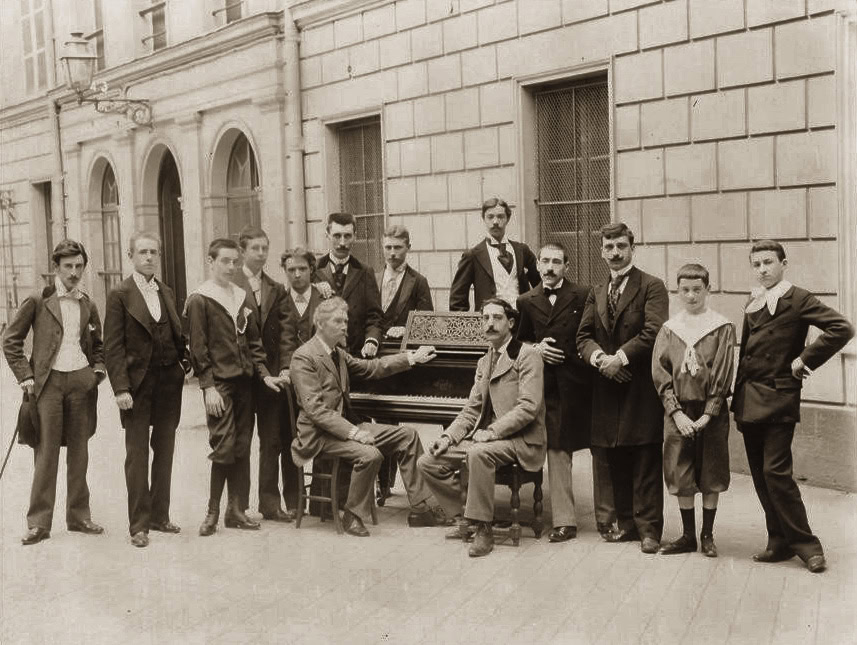
Teenager Ravel at the piano
The «Sérénade grotesque», written by the very young Maurice Ravel, foreshadows characteristics of later works.




«Nous ne savons rien sur l'origine de cette pièce qui constitue la première composition de Ravel pour le piano.» Arbie Orenstein wrote this in the preface to the first edition of the Sérénade grotesque, published by Salabert in 1975 to mark the centenary of Ravel's birth. The prominent Ravel scholar, whose monograph on the great composer is still probably the measure of all things, was not only the discoverer of the autograph, which had long been considered lost. He also arranged the premiere in the same year.
Fifty years later, Andreas Pernpeintner has now republished the short piano piece with Henle. The differences to the French first edition are minor. In Pernpeintner's foreword, however, we learn some fascinating details about how Ravel himself judged this work, which he had written almost as a teenager. Apparently he never kept it completely under lock and key.
The Sérénade grotesque is characterized by strong contrasts between percussive passages («très rude, pizzicatissimo») on the one hand and longer cantilenas («très sentimental») on the other. The numerous echoes of Spanish guitar music are not the only thing that makes the far more famous Alborada del gracioso from the Miroirs (Arbie Orenstein even felt like she was Scarbo recalls). As in these later masterpieces, the piano writing here also lives from orchestral associations. Although it is not overly demanding, the Sérénade has its pianistic pitfalls. In order to overcome these obstacles as elegantly as possible, the French pianist Cédric Tiberghien has contributed some fingerings that are really very practicable.
All in all, a worthwhile new edition! For Ravel fans anyway. But also for anyone who would like to look over the shoulder of a young genius as he develops.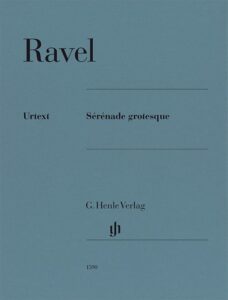
Maurice Ravel: Sérénade grotesque, edited by Andreas Pernpeintner, HN 1590, € 8.00, G. Henle, Munich