A festival is rebuilt
The new Ascona Music Festival was presented to the public at a media conference in Locarno at the end of January. No stone is left unturned.




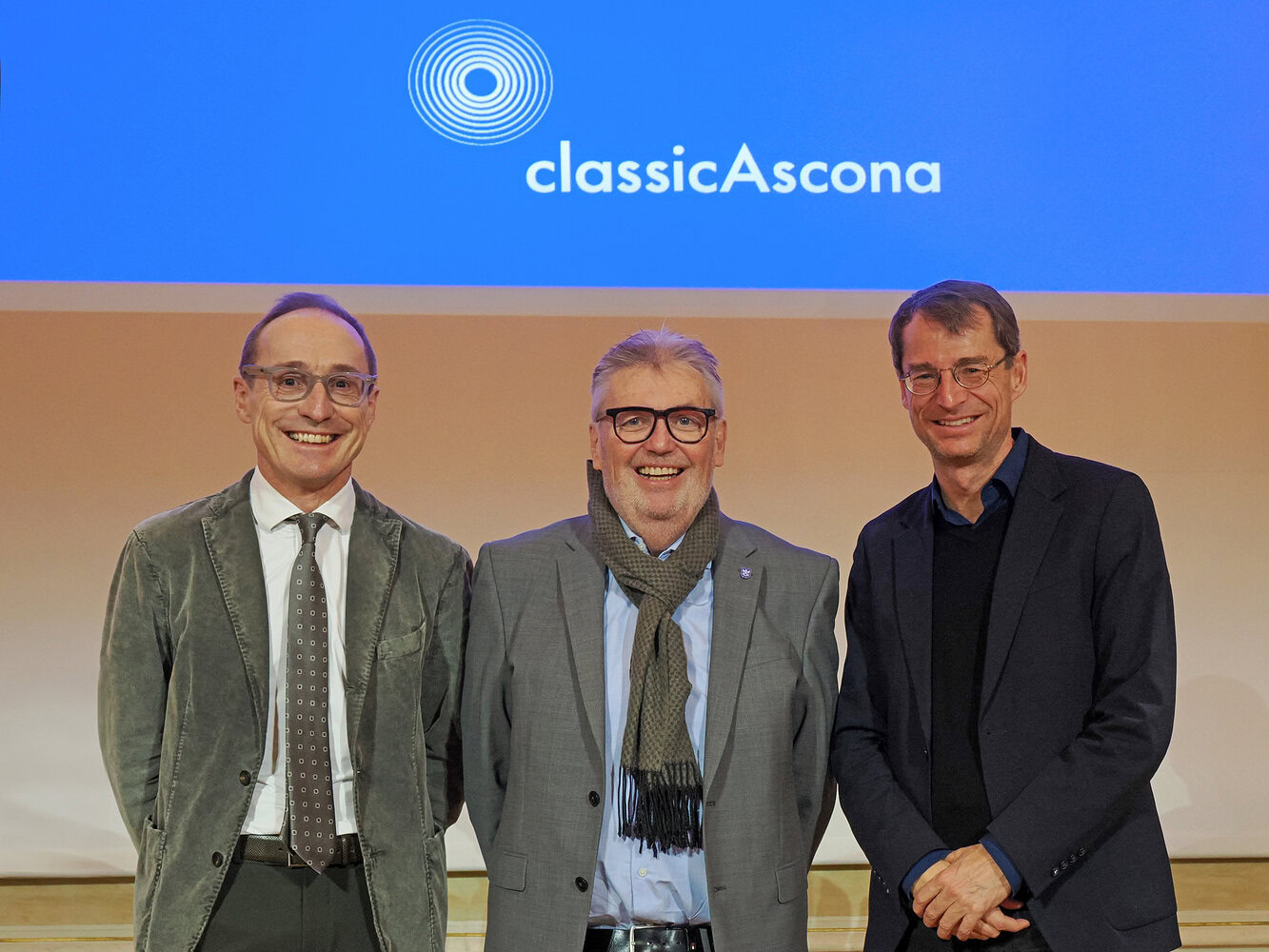
The traditional Settimane musicali di Ascona are history. Founded in 1946, the oldest classical music festival in Switzerland alongside the Lucerne Festival (1938) and the Braunwald Music Week (1936) has been radically restructured in its eightieth year and is now called classicAscona. The transformation process was implemented by the new artistic director, cultural manager Christoph Müller, in collaboration with the local authorities. With Sindaco Giorgio Gilardi on the podium and a large number of local representatives in the hall, they were prominently represented at the media conference. A clear indication of the importance Ascona attaches to the festival in the future. It is to become an economic factor in the region, which means promoting cultural tourism and attracting an increasingly affluent audience to Lake Maggiore. The event period from mid-September to mid-October is ideal for this; the popular summer festivals have come to an end and the sunny early autumn in Ticino does its part. In addition to Ascona and Locarno, the Brissago Islands, Monte Verità and churches in Ronco and the lower Maggia Valley are picturesque venues.
From artist festival to cultural event
The drastic changes range from the new, somewhat cool-looking company logo to the marketing, audience strategy and program structure. The artists' festival, led for 13 years by pianist Francesco Piemontesi, at which the artistic director also performed as a soloist and chamber musician and gathered an illustrious group of like-minded people around him, has thus become a cultural event in which economic considerations and artistic planning are closely intertwined.
Basel-born Müller, a cellist and former member of the Basel Chamber Orchestra, can draw on a wealth of experience as an event organizer. Before his appointment to Ascona, he directed the Menuhin Festival in Gstaad for 25 years, where he increased the annual attendance from 13,000 to around 28,000 - a fact that was noted with great interest in Ascona. He also founded the Lucerne Chamber Circle and, together with Sol Gabetta, the Solsberg Festival in northern Switzerland. Recently, he has also become the director of the Klosters Music Festival. A musical multi-entrepreneur who now wants to make his business model, which he knows how to adapt to local conditions, fruitful for Ascona too.
Media presence, celebrities and artists in residence
Success is to be ensured through improved advertising - Müller speaks of 30,000 e-mail addresses - new program content and an opening to new audiences. And last but not least, the appearance of international celebrities, where Müller can draw on the artist contacts he has built up over the years. The most precious trophy he has now announced for Ascona is Cecilia Bartoli. Her guest appearance in Gluck's Orfeo ed Euridice, The opera is performed semi-staged by the Musiciens du Prince from Monaco, but with tickets costing between 95 and 275 francs, it is not for the average person. With a budget that has doubled to 1.7 million francs, the ticket prices are quite reasonable, even for the concerts of the three «artisti in residenza», soprano Julia Lezhneva, violinist Vilde Frang and cellist Sol Gabetta, who also give master classes. Only guest orchestras such as the Basel Chamber Orchestra, the Camerata Salzburg and the Deutsche Kammerphilharmonie Bremen are a little more expensive.
Academies of all kinds
The educational programs are a new and important part of the festival: the classicAscona Academy, the Choral Academy with the London Tenebrae Choir and the Baroque Academy with the ensemble Il Pomodoro and flautist Maurice Steger. In the final concerts, young musicians can present themselves; they are entitled «Next Generation» and are free of charge. Collaboration with the Conservatorio in Lugano and regional schools is also planned. All these measures are intended to arouse the curiosity of the local public for the paid concerts. International music business, the promotion of young talent and the development of new audiences: an interesting mix. In September, we will see how it all comes together.