Data-driven methods for musicology
A model of the historical spread of certain chorale elements shows how powerful data-driven methods can be for historical musicology.




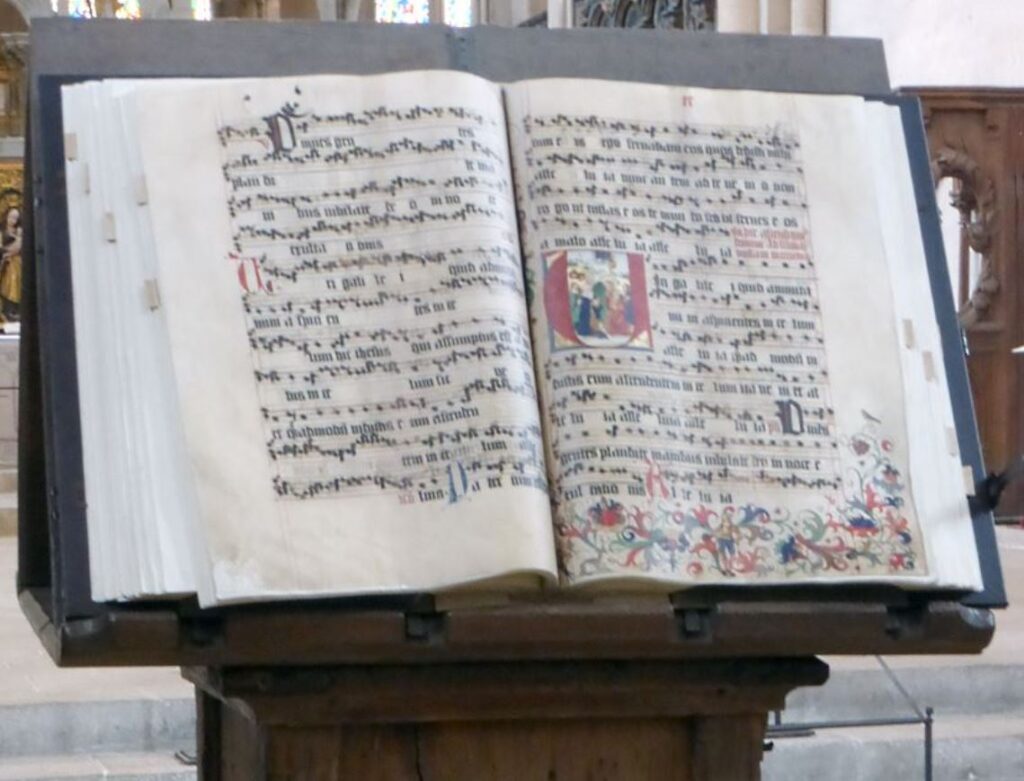
Tim Eipert, who is doing his doctorate under Fabian Moss, Junior Professor of Digital Music Philology and Music Theory at Julius-Maximilians-Universität Würzburg (JMU), has analyzed over 4,000 trope elements - inserted texts and melodies that occur in Gregorian chorales - from 163 manuscripts using a new digital model. It divided the tropes into several levels and four main clusters and used the individual insertions within the chorales to form clusters that can then be displayed on a map. The manuscripts come from areas that mainly comprise the present-day states of France, Germany, Switzerland, Austria, Italy and the south of Great Britain.
It turned out that the spread of the clusters was severely restricted by the political borders of the time after the Treaty of Verdun. There was apparently little cultural exchange about the chorales beyond imperial borders at the time, explains Eipert. The musical tradition thus reflects the political fragmentation of Europe.
Eipert has already integrated the model into a university course: JMU student Jason Ackermann, for example, used it to analyze the comment columns under videos by Taylor Swift and Radiohead on YouTube and identify superfans.
Original publication:
Eipert, T. and Moss, F.C. (2026) ‘Inferring Communities of Medieval Music Manuscripts Using Stochastic Block Models’, Transactions of the International Society for Music Information Retrieval, 9(1), February 26, 2026, https://doi.org/10.5334/tismir.298