100 years of Caspar Diethelm
The Central Swiss composer Caspar Diethelm (1926-1997) could have celebrated his hundredth birthday on March 31. His work is important - but it is in danger of being forgotten. Musicians who still knew him personally and who studied and premiered works with him are therefore campaigning for his music to be heard again, whether through performances or recordings. The pianist Patrizio Mazzola is particularly committed to the memory of an outstanding artistic personality and his work.




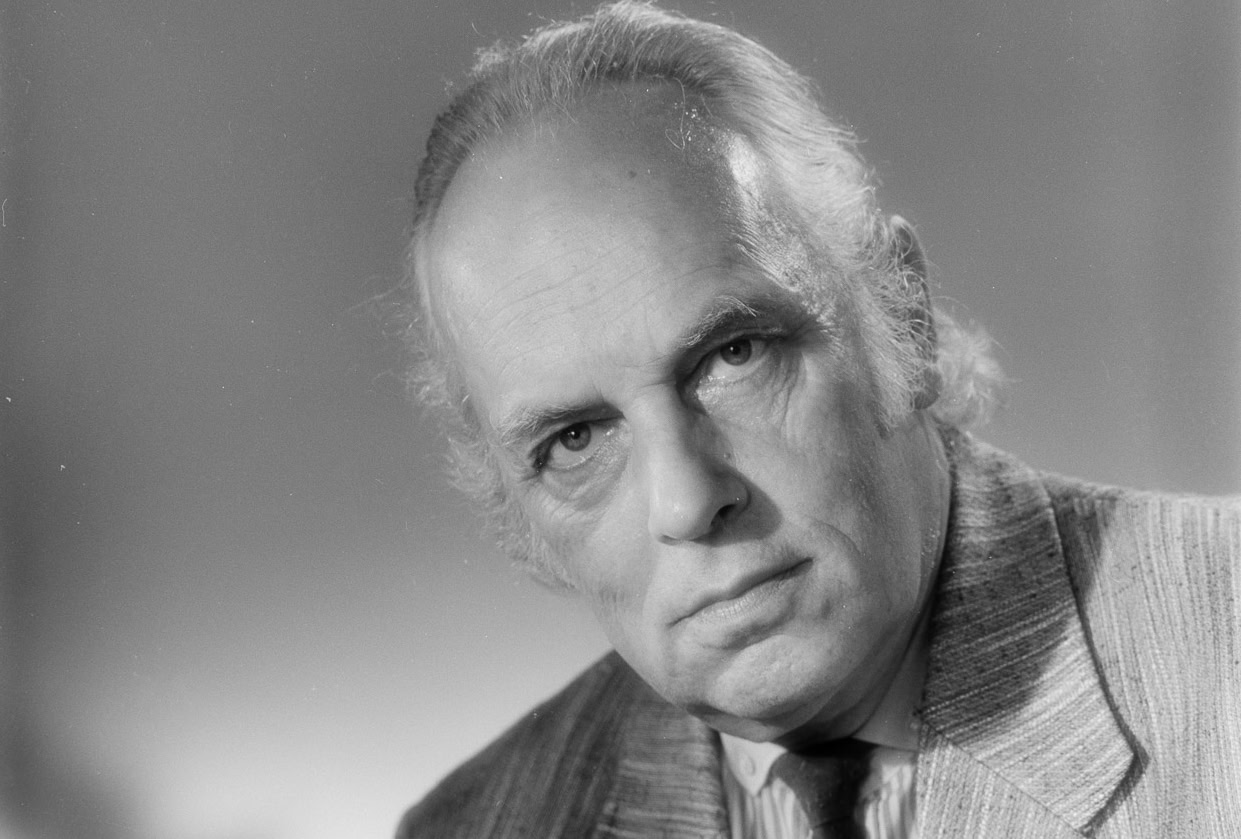
The centenary of this important Swiss composer's birth should be an occasion to pay tribute to him here and help keep his memory alive. It is possible that he is no longer known to younger people, although he enriched the Swiss composer landscape in a worthy manner. Switzerland is generally too modest artistically and therefore too little proud of its artists of the past and present compared to many other nations. Before discussing Diethelm's artistic characteristics and achievements, a selection of individual external landmarks in his life will serve as a framework.
| Vita | |
|
31. 3. 1926 |
born in Lucerne |
| from 1944 | Pupil at the Lucerne Conservatory and Church Music School Private lessons in composition with Johann Baptist Hilber and Albert Jenny |
| 1946-50 | Conducting lessons with Ernst Hans Beer, Lucerne, and Alexander Krannhals, Basel |
| 1946-79 | Professional activity as land registry administrator, tax official etc. in Sarnen, political activities there |
| 1948 - 1952 | Courses with Hindemith and Honegger, as well as participation in the Darmstadt Summer Courses |
| from 1958 | Conducting (Zurich Radio Orchestra, rehearsing his own works) |
| 1960 | Marriage to Brigitte, née Ullrich, three daughters: Esther, Jutta, Irene |
| 1963-93 | Teacher of music history, theoretical subjects and chamber music at the Lucerne Conservatory |
| 1969 | Art Prize of the Canton of Obwalden |
| 1985 | Art Prize of the Canton of Lucerne |
| 1. 1. 1997 | died in Lucerne |
Not just a «musician»
I was able to accompany Caspar Diethelm musically and personally for 25 years. The initial mutual underestimation of our artistic abilities soon turned into a great appreciation for each other. Initial skepticism is nourished almost exclusively by ignorance and lack of knowledge. This is reminiscent of the original saying in the Sarner Aula Cher, where it is (probably still) written in large letters: «Mänge macht sich Gedanke aber dänkt nid derbiä.» This pithy sentence in the original Obwalden dialect could well have been written by Diethelm (or was it even his own? - who knows ...). He «parried» statements with a quick wit and liked to give his works appropriate titles. For example, the piano concerto he wrote for me with Yggdrasil which derives from his reading of the Old Norse Edda-texts, which always made a great impression on him. The word is Old Norse for «world ash tree», the tree of life as it were (everything is connected to everything else). Other work titles include Menhir, a towering (Breton) stone block, The wheel of life (after a Buddhist mandala), Mandala symphony, Maya (according to the Four Buddhist Truths). These few examples already show which phenomena and fields of knowledge accompanied Diethelm throughout his life. Philosophy (he read «ancient Greeks» such as Plato or Aristotle in the original), biology, botany, mushroom science (at a professional level as a cantonal mushroom inspector!) and his activities as a local politician should also be mentioned, although I will limit myself here to selected examples. His education was therefore very varied, even comprehensive, as far as a human being can be. He was therefore not a «mere musician», similar to Robert Schumann in this respect.
Artistic independence
However, as I am outlining Caspar Diethelm here primarily as a composer, the characteristics of his style should be explained here: Stylistically, I believe he originally comes from the German Romantic tradition, which may come as a surprise. Some of his ancestors come from further back in Germany. Diethelm has incorporated this German Romanticism - both the «traditional» style of Brahms, Bruch or Reger, for example, and the «special» styles of Bruckner and Mahler - into his extensive oeuvre. He has, as it were, transferred them into a more modern tonal language of the 20th century. In this he is comparable to Bartók, Stravinsky, Martin or Honegger. All this without being a dependent epigone, but with great independence. In addition, like Debussy and Ravel, he occasionally has a penchant for both «Balkanisms» and Far Eastern influences (also extra-musically).
Diethelm told this anecdote about Bruckner: when asked whether he was a «Brahmsian» or a «Wagnerian», Bruckner replied: «I'm an Aner (one) myself». And I also remember something about Honegger: spontaneously switching on the radio without knowing which work was being played, I thought to myself that Honegger, whom I suspected here, was even more brilliant than Diethelm, only to find out afterwards that it was the Mandala symphony of Diethelm ... Indeed, Diethelm was «Aner himself», to return to Bruckner.
It is to be hoped that Switzerland will remember its important son Diethelm in the future, revive him through his music and carry him out into the world as a great ambassador of little Switzerland.
__________________________________
Further materials and information on Caspar Diethelm
A self-positioning by Caspar Diethelms, probably created at the end of the seventies
"In his works, Caspar Diethelm tries to find a statement that suits him without committing himself to a particular school or style. On the one hand, there is a strong rootedness in tradition, in the landscape of his canton, where he has lived and worked since birth, and in the emphasis on a Swiss uniqueness. On the other hand, there is his preoccupation with all styles from dodecaphonic music to the avant-garde since Webern. Insofar as they can be seen as enriching the composer's expressive possibilities, influences from all these areas can be found more or less clearly. In contrast, »atonality', whatever this may mean in concreto, is avoided; instead, the music is structured and shaped according to centers of gravity, i.e. according to the tonality levels in Hindemith's sense. In addition to an independent harmony that does not avoid the simple in addition to extremely complex sounds, and an idiosyncratic and occasionally aggressive rhythm with a preference for compound time signatures, the composer's particular devotion is to the element of melody, and increasingly so. Even in the earliest works, echoes of elements of folk music cannot be ignored, although there are never any quotations, only formations that are intended to evoke a Swiss or even original Swiss sound. In addition to the great masters of the past, the composer's role models are Paul Hindemith and Bela Bartók, as well as the Swiss composers Arthur Honegger, Othmar Schoeck and Frank Martin."
Events and publications for the anniversary year
In addition to various concerts from the end of March, two CD productions are planned. In October, the Toccata label will release the world premiere recordings of the concertos op. 210, 285 and 211 with the Deutsche Staatsphilharmonie under the direction of Rainer Held. Soloist in Yggdrasil is the dedicatee Patrizio Mazzola, who is now premiering the piano concerto after Esther Diethelm published it in 2024. The solo part in the violin concerto Anubis Sibylle Tschopp, who rehearsed the work with Caspar Diethelm and premiered it in 1996, is responsible for the production. In the Concerto Hiemalis Finally, Kilian Herold, solo clarinettist with the Berlin Philharmonic Orchestra, can be heard. The launch of this CD will take place on November 29 in Lucerne.
The second CD will also be released in November on the Toccata label and features five first recordings of chamber music works.
Further details on CDs and concerts can be found in this document (link to PDF). A newsletter for the anniversary year can be ordered via caspardiethelm.com. https://www.caspardiethelm.com/aktuelles.html
Review in the Schweizer Musikzeitung
Caspar Diethelm: Symphonic Works, Royal Scottish National Orchestra, conducted by Rainer Held.
Guild GM3CD 7808