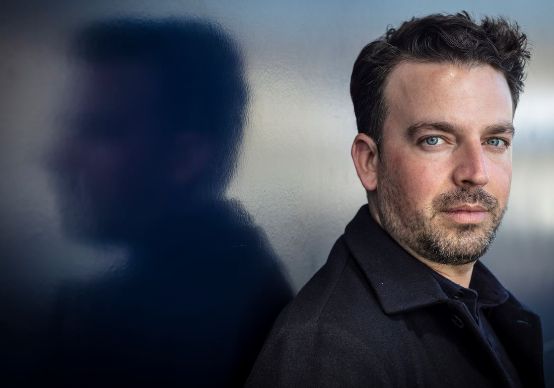
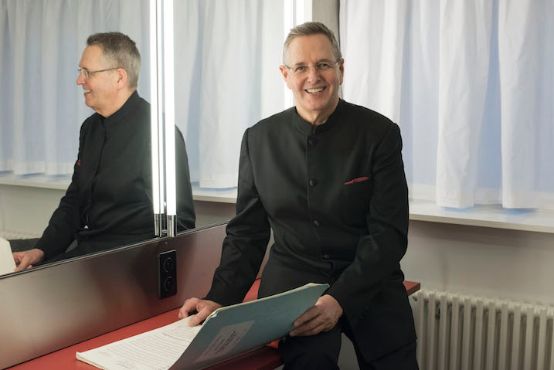
James Gaffigan has been Principal Conductor of the Lucerne Symphony Orchestra since the beginning of the 2011/12 season. His contract was extended early in 2015 until the end of the 2020/21 season. However, he will not stay any longer.
Music newspaper editorial office
(translation: AI)
- Aug 16, 2019
James Gaffigan (Image: zvg)
According to the Lucerne Symphony Orchestra, Gaffigan will "continue important projects of the Lucerne Symphony Orchestra with undiminished commitment in the next two years as Chief Conductor and dedicate himself just as undiminished to the further development of the orchestra."
In addition to conducting his own concerts at the KKL Lucerne, several recording projects are about to be realized. International tours will also round off the James Gaffigan era. For example, he will conduct the Lucerne Symphony Orchestra's second residency at the Ravinia Festival in Chicago (USA) on August 19 and 20, 2019. To date, the Lucerne Symphony Orchestra is the only Swiss orchestra to have been invited to perform at this renowned festival.
For better unemployment insurance
The Austrian Cultural Council has formulated concrete proposals for improving unemployment insurance in order to come closer to the basic idea of comprehensive social security for as many people working in the arts, culture and media as possible.
Music newspaper editorial office
(translation: AI)
- Aug 14, 2019
Photo: Rainer Sturm (see below)
The pay-in system works with two exceptions, writes the Austrian Cultural Council: Firstly, the abolition of the daily minimum income threshold in 2017 has created a hole in the social security system in fields of work for which short-term employment is typical.
Daily employment up to the monthly low income limit is no longer considered full-time employment (even if the total monthly salary exceeds this limit) - unemployment insurance is no longer possible with such employment as things stand at present.
Secondly, unemployment insurance is de facto impossible for anyone who is not employed, as the current model of voluntary unemployment insurance for the self-employed is completely dysfunctional.
The artistic/design-scientific doctoral program of the Faculty of Philosophy and History of the University of Bern and the Bern University of the Arts is now called Sinta.
PM/Codex flores
(translation: AI)
- Aug 13, 2019
Photo: Petra Bork/pixelio.de (see below)
Since 1 August 2019, the former Graduate School of the Arts has been integrated into the Graduate School of the Arts and Humanities (GSAH) as the Studies in the Arts (Sinta) doctoral program. The previous Master of Research on the Arts no longer applies, but students from art colleges will in future have to complete requirements of 30-60 ECTS, which they will discuss with their two supervisors from the university and BUA. The new supervisor is Michaela Schäuble, her deputy is Thomas Gartmann.
The Sinta are a cooperation between the Faculty of Philosophy and History of the University of Bern and the Bern University of Applied Sciences, Department of Bern University of the Arts (HKB). They are aimed at both researching artists and academics who are interested in artistic practice. They are characterized by a combination of different humanities and social science as well as artistic disciplines and thus promote research and reflection, particularly with regard to artistic practices, creative and aesthetic issues as well as the connection between art and science.
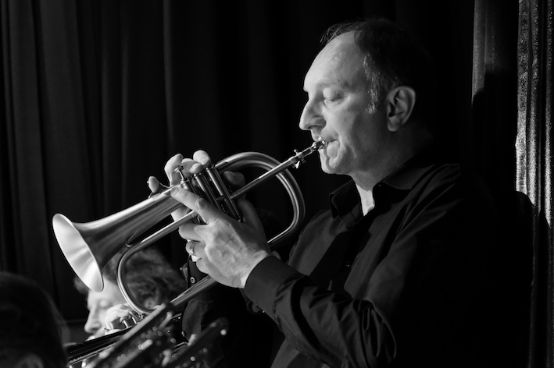
For the 2019/2020 season, Daniel Schenker, trumpeter and lecturer at the Zurich University of the Arts, is once again taking over as interim director of the Zurich Jazz Orchestra after six years.
Music newspaper editorial office
(translation: AI)
- Aug 12, 2019
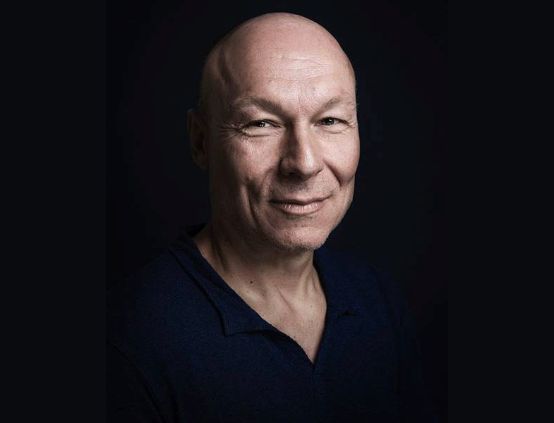
Daniel Schenker. Photo: Palma Fiacco
Steffen Schorn, musical director of the ensemble since 2014, is relinquishing his leadership role to become composer in residence. After five years, during which Schorn has significantly and audibly shaped the sound of the band, and a joint CD production, the orchestra is now looking for a successor.
There will be candidate concerts for the search in the coming season: Ed Partyka has worked with the ensemble several times and should therefore not be missing from the shortlist. David Grottschreiber has made a name for himself as the competent leader of the Lucerne Orchestra, which was founded in 2007 by young up-and-coming jazz musicians. The Danish saxophonist Lars Møller combines jazz with influences from Indian music, among other things, and has been leading various big bands for a good ten years. Tim Hagans is quite rightly regarded as the doyen of the quartet and can look back on an extremely successful international career since the mid-1970s.
Chinese take a stake in Universal
China's Tencent has reached an agreement with France's Vivendi for a ten percent stake in Universal Music, with an option for a further ten percent.
Music newspaper editorial office
(translation: AI)
- Aug 08, 2019
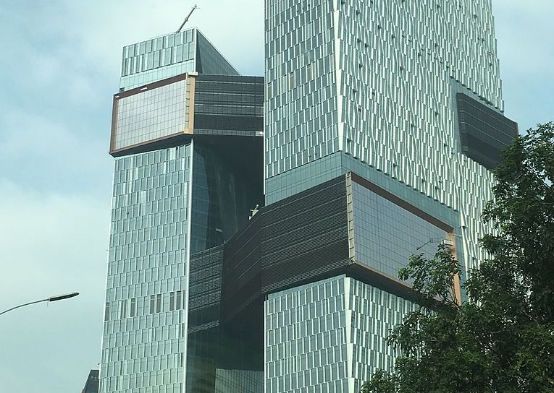
Tencent headquarters in Nanshan, Shenzhen. Photo: Wishva de Silva (see below)
According to international media reports, the Universal Music Group is valued at around 30 billion euros. The agreement is also expected to include further strategic cooperations. Universal Music also owns Deutsche Grammophon.
Tencent, the eighth most valuable brand in the world, operates the music streaming service Tencent Music in China, in which Spotify also has a stake. The French group Vivendi, which is to be split up, wants to sell up to 50 percent of its stake in Universal Music.
The 12th chamber music festival "erstKlassik am Sarnersee" has the motto "Ladies first" and focuses on female composers to mark the current occasion.
Music newspaper editorial office
(translation: AI)
- Aug 05, 2019
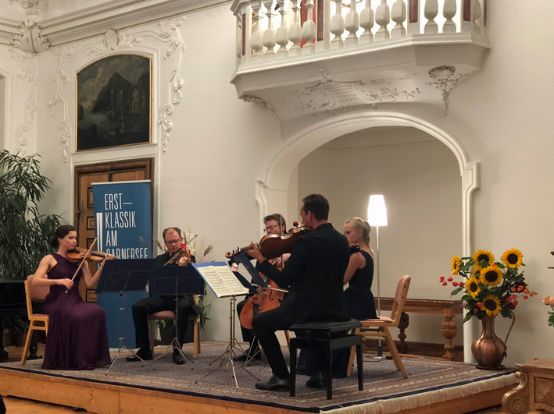
Concert "erstKlassik am Sarnersee" in Engelberg 2018. photo: zVg,SMPV
"erstKlassik am Sarnersee" is the chamber music festival with soloists from the Bavarian Radio Symphony Orchestra. Top-class musicians perform in the canton of Obwalden and are on first-name terms with the audience. The new format with musical encounters with regional artists and a special themed concert introduction for schoolchildren will be continued this year.
The 2019 festival has the motto "Ladies First" and is dedicated to female composers to mark the 200th anniversary of the birth of the composer Clara Schumann (1819-1896).
Walking concert What began two years ago with a pilgrims' concert will continue this year as a "traveling concert": This time, after a first concert with early music by Hildegard von Bingen and J.S. Bach, the route leads from Flüeli to Sachseln to the Bruder Klaus Museum, where the oboe trio with Heinz Holliger will play a second concert.
A region celebrates temporality
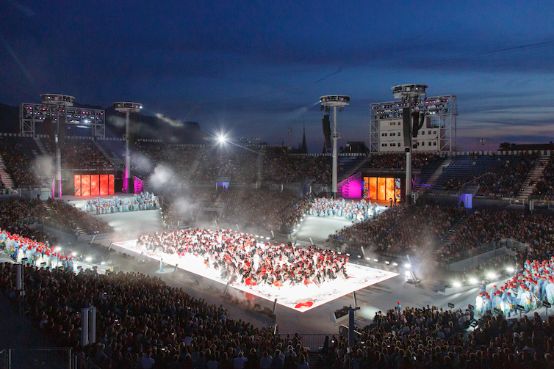
6500 men, women and children from the region take part in the 20 performances of the Fête des Vignerons 2019 in Vevey. - A playful and magnificent round dance of viticulture and life.
Pia Schwab
(translation: AI)
- 02 Aug 2019
Photo: Céline Michel/Fête des Vignerons
On the train that takes me home, I suddenly hear the Ranz des Vaches. A fellow passenger has obviously recorded this part of the performance and is now watching or listening to it. The other passengers smile in their tiredness: recognition, memory. Memories of the Fête des Vignerons performance they have just experienced, which only takes place once a generation. Remembrance too - the pensive attention of the 20,000 spectators and, more poignant today, the countless cell phone lights held high in the arena have just shown it - of something that we recognize as our own and yet is far away, so that longing arises. Homesickness in a way.
Je suis la mémoire
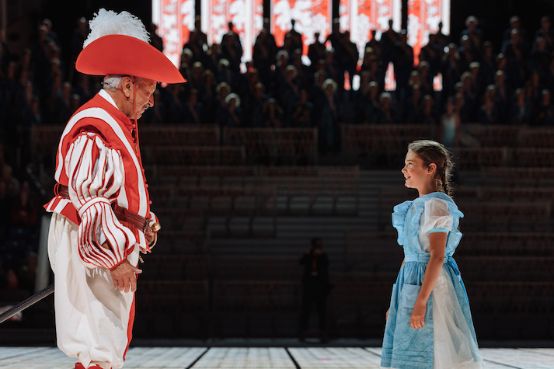
The fact that it is about remembrance and passing on traditions is also evident in the characters that form the central theme of the two-and-a-half-hour stage festival: The girl Julie is in the vineyard with her grandfather and experiences with him the course of the seasons, the development of the vegetation, the work on the vines, the events of life as a winegrower. Julie soon meets a figure in historical garb. "Je suis la mémoire", she introduces herself. It is the chairman of the Cent Suisses, a troupe of a hundred mercenaries who returned home from European courts around the time of the first winegrowers' festival. Like the aforementioned shepherd's song, which resounds down from the alpine pastures above the vineyards, they are an integral part of these performances: Strands of memory through the centuries.
This is the 12th edition of the Winegrowers' Festival since 1797. Every twenty years or so, the Confrérie des Vignerons organizes such an event, at the heart of which is the crowning of the most meticulous winegrowers. Among the thousands of participants, around thirty will be taking part for the fourth time: Periods that unquestionably give rise to a certain solemnity.
The chairman of the Cents Suisses with Julie. Photo: Samuel Rubio/Fête des Vignerons
La vie est éphémère
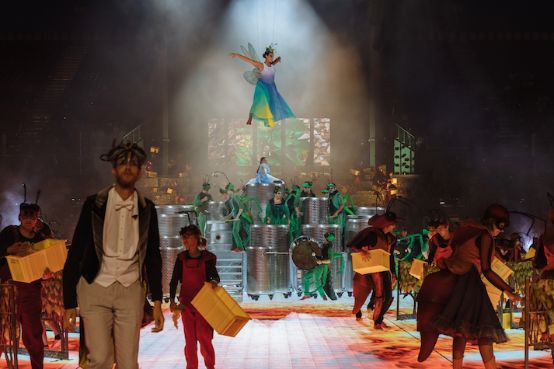
However, the Fête des Vignerons 2019 is not always the same celebration of old traditions, but is extremely contemporary, not only because of the stupendous technology, especially the huge stage floor made of LED components, which literally "underscores" the scenes. In the grape harvest scene, chrome steel tanks and harvest crates made of yellow plastic become instruments in a large percussion happening. The early summer work on the foliage develops into an unleashed cancan, performed in a variation of traditional Vaudois costume, the straw hats in bold red, the skirts lined with rustling ruffles: palpable energy. And the Cent Suisses, these guardians of the past, are joined by hundreds of women.
A total of 5600 amateur performers play and dance at the festival, 900 members of choirs from all over the region sing along, school choirs have been brought together, as have local brass bands. The director is Daniele Finzi Pasca from Ticino, who is known for his work with Cirque du Soleil, among other things; his images have the craziness and poetry of the circus. Their effect is supported by the texts by the Vaudois authors Stéphane Blok and Blaise Hofmann: often more associative clouds of concepts than action. Nevertheless, the focus is very clear: the here and now celebrates what is, what was and what will come, the "fleeting life", supported by an equally contemporary, holistic view of viticulture, society and the foundations of life.
Like a healthy vineyard, this performance is populated by animals: Ants, grasshoppers, butterflies, dragonflies, starlings. The musicians in particular appear in insect costumes. However, there are not very many of them, most of the instrumental music is recorded. A large live orchestra would probably also be unhappy with the acoustics, because despite the great effort, the sounds falter when there are sharp draughts of air. The compositions by Maria Bonzanigo, Valentin Villard and Jérôme Berney model the stage situations with catchy motifs, lively changes of time signature and striking repetitions. They make it swing and carouse, parade and ponder.
The harvest in the lively vineyard as a percussion happening. Photo: Samuel Rubio/Fête des Vignerons
Le vent de la jeunesse
"La vie va trop vite," says Raoul Colliard, the oldest of the shepherds, before the Ranz des Vaches resounds. He is one of those who are experiencing their fourth and therefore probably last Winzerfest. His grandfather sang the song as a soloist at the 1927 edition. In 2019, his sons and grandchildren, and perhaps even great-grandchildren, will be there. So life doesn't just move (too) fast, it also renews itself. That is one of the insights to be gained here. In the picture "J'arrache", young gymnasts from the area perform volleys of daring jumps and next to them, disabled athletes form pyramids. With their strength, they all point to the vigor with which old vines are repeatedly uprooted and new ones planted: Making room for the next generation!
And when the Ranz des Vaches is also sung by the children's choir and by Julie alone, then that is perhaps a little didactic. But ultimately, this is exactly how traditions are passed on. The Trois Docteurs, humorous characters who appear again and again and, for example, dissolve the emotional mood after the shepherd's song into laughter by obsessively directing the most modern cleaning machines to the places where the cows' droppings lie, these three swear the participants and audience, especially the young ones among them, to the future at the end, to the next wine festival: "Vous y serez, au rendez-vous?" That wouldn't even be necessary. Traditions that are filled with life are not lost.
The Fête des Vignerons continues until August 11: www.fetedesvignerons.ch/de/
More clarity for sample use
The German Music Industry Association (BVMI) is pleased that the European Court of Justice (ECJ) has fundamentally strengthened the rights of producers of sound recordings in a recent ruling and created more legal clarity with regard to sampling.
Music newspaper editorial office
(translation: AI)
- 30 Jul 2019
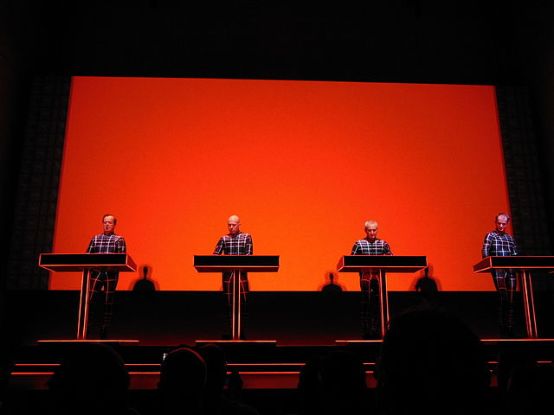
Kraftwerk in Düsseldorf 2013. photo: Miroslav Bolek/wikimedia commons (see below)
According to the BVMI, the court states, among other things, that the phonogram producer's right in this context is entirely in line with the EU Charter of Fundamental Rights and the Copyright Directive and that sampling can constitute an infringement if it is carried out without consent. According to the ECJ, sampling can only fall under artistic freedom if the sampled audio fragment has been altered and is not recognizable when listened to. Musical quotations, on the other hand, are only permissible if there is an explicit artistic examination of the quoted work.
The ruling relates to the legal dispute between the group Kraftwerk and music producer Moses Pelham, which has now been going on for around 20 years. In 1997, the latter had used a striking rhythmic sequence from the Kraftwerk song "Metall auf Metall" for a track sung by Sabrina Setlur. Over the past two decades, several courts, including the Federal Court of Justice twice, had ruled in Kraftwerk's favor until the Federal Constitutional Court overturned the rulings in 2016 as unconstitutional and referred them back to the Federal Court of Justice, in particular with regard to doubts about compatibility with EU fundamental rights. The BGH then referred the case to the ECJ for review.
Photo: Miroslav Bolek /Wikimedia commons CC SA-BY 3.0
Bostock moves from Aargau to Pforzheim
Douglas Bostock, who recently stepped down from his position as Principal Conductor of the Argovia Philharmonic after 18 years, will become Director of the Southwest German Chamber Orchestra based in Pforzheim from 2019/20.
Music newspaper editorial office
(translation: AI)
- 29 Jul 2019
Douglas Bostock. Photo: Priska Ketterer
Douglas Bostock is the new Artistic Director and Chief Conductor in Pforzheim. At the start of the 2019/20 concert season, the British conductor, who lives on the island of Reichenau on Lake Constance, will take over the orchestra founded by Friedrich Tilegant, which celebrates its 70th anniversary in 2020. Bostock prevailed against 114 competitors.
Douglas Bostock was most recently Principal Conductor of the Swiss symphony orchestra Argovia Philharmonic from 2001 to 2019. Further stations in his career have included the Karlovy Vary Symphony Orchestra, the Czech Chamber Philharmonic, the Munich Symphony Orchestra and the Tokyo Kosei Wind Orchestra.
Dripping tap threatens cathedral archive
A dripping tap has damaged thousands of sheets of music in St. Stephen's Cathedral in Vienna. A team from the Austrian Academy of Sciences and the University of Vienna has painstakingly rescued the archive.
Music newspaper editorial office
(translation: AI)
- 26 Jul 2019
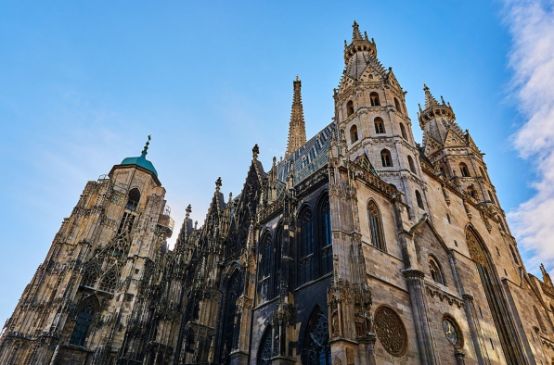
St. Stephen's Cathedral in Vienna (Image: Pixabay)
For a long time, a dripping tap had soaked through the historical holdings of the cathedral music stored in an archive room without anyone noticing. Several centimeters of water had accumulated on the floor. The historical sheet music presented itself with mold stains, washed-out ink and curled paper when it was first recovered.
Musicologist Elisabeth Hilscher from the Austrian Academy of Sciences and her students from the University of Vienna worked for two semesters on the restoration of the historical sources, which were expertly examined, professionally cleaned, documented and cataloged. This means that all of the music will soon be moved to their new location in the cathedral archive, where they will be professionally stored and made accessible again for research and musical practice.
Among the most valuable items now restored are hymns from the late 17th and early 18th centuries as well as copies of works by Georg Reutter the Younger, Wolfgang Amadeus Mozart and Joseph Haydn and his brother Michael Haydn from around 1800, which were in use in the cathedral for several decades.
Opportunities for the independent music scene
In a new online focus on independent ensembles, the German Music Information Center (MIZ), an institution of the German Music Council, highlights the opportunities and challenges of the independent music scene.
Music newspaper editorial office
(translation: AI)
- 25 Jul 2019
Photo: Romain Hus / Unsplash (see below)
The MIZ lists around 400 specialist ensembles in early and contemporary music alone, whereby the transitions from contemporary music to jazz and electronic music are often fluid. There is also a large number of ensembles with a classical-romantic focus. As associations of freelancers, however, many ensembles do not have a regular, secure income, but are financed by fees, project funding and donations.
The MIZ online focus provides an overview of the independent music scene and highlights its artistic focus and specific problems. It is supplemented by structural data collected by the MIZ on professional ensembles for early and contemporary music in Germany. The specialized ensembles are presented with their respective repertoire focus, their number of members and information on their instrumentation. The focus also includes literature references, statistics and documents on the subject.
Dieter Ammann at the BBC Proms in London: His piano concerto for pianist Andreas Haefliger will be premiered on August 19, 2019 in the illustrious setting of the Royal Albert Hall.
Music newspaper editorial office
(translation: AI)
- 23 Jul 2019
Dieter Ammann 2018 Photo: René Mosel/Bärenreiter-Verlag
According to Bärenreiter Verlag, the BBC Symphony Orchestra conducted by Sakari Oramo will perform the work together with Beethoven's 9th Symphony. It will subsequently be performed in Taipei, Boston, Munich, Lucerne and Vienna.
In the broad field of tension between the individual and the collective, which traditionally defines the genre, the composer is concerned with diverse forms of performance, the publisher continues. The concert will be broadcast live by the BBC.
Changing of the guard at Ensemble Proton
Matthias Kuhn, the current conductor of the Bernese ensemble Proton, is stepping down at the end of 2019. In future, artistic and strategic decisions will be made collectively.
Music newspaper editorial office
(translation: AI)
- 22 Jul 2019
Ensemble Proton (Picture: Oliver Oettli)
In addition to Matthias Kuhn, three guest conductors will lead the concerts of the 2020 anniversary season, and talks are currently underway, the ensemble writes. The ensemble is now advertising the position of managing director. The ensemble is looking for a person with knowledge of the national and international contemporary music scene and the foundation landscape as well as experience in cultural policy.
Founded in 2010, Ensemble Proton is the ensemble in residence at the Dampfzentrale in Bern. It performs the Proton am Montag concert series four times a year. In March 2018, it performed at Stanford University and UC Berkeley. As part of further concerts in San Francisco and Seattle, it realized the world premiere of the work "INFR-A-KTION" by Dominique Schafer.
Albums supported by Pro Helvetia
Every year, Pro Helvetia awards grants for the production of sound recordings that it believes have international potential. It now presents a selection of the recipients on a website.
Music newspaper editorial office
(translation: AI)
- 19 Jul 2019
(Image: Pro Helvetia website)
The creation of new repertoire is of great importance for the development and continued existence of a musical project or band, writes Pro Helvetia. Accordingly, it supports the production of new works with contributions.
Every year, around two dozen applications are considered from Swiss formations and labels that are located in the jazz or pop hemisphere. Pro Helvetia is also committed to the international distribution and live presentation of these works.
The German Institute for Quality and Efficiency in Health Care (IQWiG) confirms that music therapy improves the health-related quality of life and subjective well-being of cancer patients.
Music newspaper editorial office
(translation: AI)
- 18 Jul 2019
Photo source: IQWIG
The IQWiG found that, in particular, accompanying psychological symptoms such as fatigue, anxiety, stress, tension and mood swings are favorably influenced in the short term by music therapy interventions. It recommends that music therapy be regulated by law as part of a future uniform professional and training law in Germany.
According to Lutz Neugebauer, Chairman of the Board of the German Music Therapy Association (DMtG), music and dance therapy is listed as an exclusion in the annex to the German Therapeutic Products Directive from 1992. The reasons for this can neither be found nor verified today. A new assessment is therefore needed. The German Music Therapy Society has long been calling for the exclusion to be withdrawn so that German health insurance companies can offer these forms of therapy to their policyholders.