Foundation of the Center for Artistic Legacies

The Center for Artistic Legacies (ZKN) is an institution in Zurich dedicated to the academic study of estates in the fields of art, music and literature.

Photo: PS,SMPV

The ZKN was founded by the lawyer Florian Schmidt-Gabain and the literary scholar Thomas Strässle, who lead the ZKN as President and Vice President, and are supported by an Advisory Board consisting of Lionel V. Baldenweg, Michael Haefliger, Beatrix Ruf and Julia Voss. The ZKN is organized as an association based in Zurich, Switzerland.

On November 21, 2019, the opening conference of the ZKN will take place at the Kunsthaus Zürich. Topics include the estates of Hilma af Klint, Emil Bührle and Max Frisch. The estate of Charlie Chaplin, who composed his own film music - something that is often little known - will also be presented. Kate Guyonvarch, the director of the Chaplin Office Paris, will give a talk on the subject.

More info: www.zkn.ch

British-Swiss symphonist

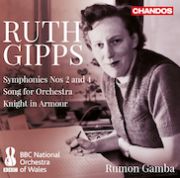
Ruth Gipps was an incredibly versatile musician who is hardly known in this country. On this CD, you can experience her as a composer of opulent, emotionally moving orchestral works: Symphonies Nos. 2 and 4, Song for Orchestra, Knight in Armor

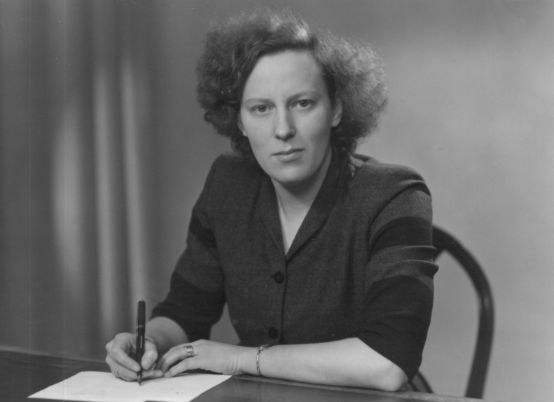
Ruth Gipps. Photo: Courtesy of the Ruth Gipps Collection

In contrast to other European countries, Great Britain almost defiantly stuck to the traditional tonal, mostly four-movement symphony even after the Second World War. Of the large number of British works in this genre, however, almost only those by Ralph Vaughan Williams and William Walton were able to establish themselves on the continent. The symphonies of such outstanding composers as Arnold Bax, York Bowen and Michael Tippett are hardly noticed in this country, let alone performed. The fact that one female composer - Ruth Gipps - has also achieved remarkable things in this field is likely to have escaped the attention of even most connoisseurs of British music. Chandos has now released a CD with her 2nd and 4th symphonies and two short orchestral works, which is highly commendable because it closes a real gap in the repertoire.

Ruth Gipps (1921-1999), whose music is entirely in the English tradition in terms of form, harmony and sound, is half Swiss. Her mother Hélène Johner studied as a budding pianist in Frankfurt, where she met her future husband Bryan Gipps. She came from Basel and her mother was Caroline von Weissenfluh from Meiringen. Ruth showed exceptional talent for music as a child: her first published piano piece, The Fairy ShoemakerShe began composing at the age of eight. As a young woman, she studied composition with Ralph Vaughan Williams and Gordon Jacob, as well as oboe with Léon Goossens. She was so versatile that in 1945 she not only played in the orchestra at the premiere of her first symphony by the City of Birmingham Orchestra, of which she was then a member as oboist and cor anglais player, but also performed Alexander Glazunov's first piano concerto as a soloist. She later founded the London Repertoire Orchestra, which she conducted for decades, an ensemble designed to give young professional musicians the opportunity to get to know the symphonic repertoire. She was also an esteemed composition teacher at three music academies.

All the works on the CD are well worth hearing and are interpreted with virtuosity, color and power by the BBC National Orchestra of Wales under the direction of Rumon Gamba. Gipps' music is traditional, but not at all outdated: emotional depth is combined with the joy of opulent orchestral sound, as well as an excellent knowledge of all orchestral instruments, with expressive solos entrusted to the concertmaster, oboe, cor anglais and horn in particular. The dedicatee of the 4th Symphony from 1972, Sir Arthur Bliss, wrote to the composer: "I have been studying the symphony, and the more I do the more I like it." One can only agree with this.

Image

Ruth Gipps: Symphonies Nos. 2 and 4 (1945/1972); Song for Orchestra (1948); Knight in Armour (1940). BBC National Orchestra of Wales, direction Rumon Gamba, Chandos CHAN 20078

Once expansive, once tighter

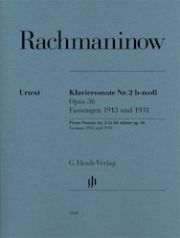
This edition offers the famous Piano Sonata No. 2 by Sergei Rachmaninov in both editions prepared by the composer.

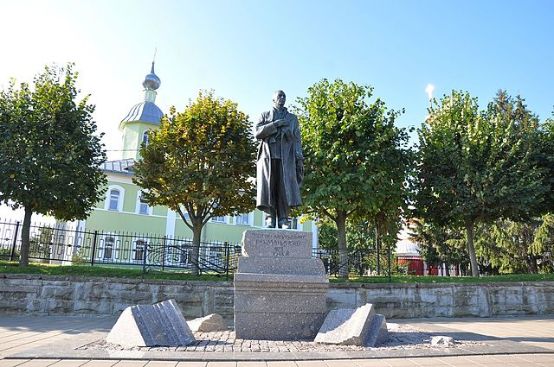
Rachmaninov monument in Tambov. Photo: City administration of Tambov/Russia, wikimedia commons

Rachmaninov's 2nd Piano Sonata op. 36 is one of the Russian composer's most frequently performed works today. The younger generation in particular, and especially those from the Far East, study this demanding, highly virtuoso piece with passion and dedication.

This was not always the case. Especially in the German-speaking cultural area, this sonata had to fight against a bad reputation in the past. In its Handbook of piano literature Klaus Wolters stated succinctly at the time that Opus 36 had generally received almost only negative reviews. And in a later edition (1977) he no longer mentions it at all. Walter Georgii was annoyed by the "monotonous repetition of motifs". The extensive work is therefore "on the whole not very pleasing" (Piano musicAtlantis Verlag).

Rachmaninov himself was evidently not satisfied with the original conception of his Second Sonata from 1913 and subjected it to a thorough revision 18 years later. He made the piano writing somewhat more transparent and deleted a total of around 120 bars. That's more than 10 pages of music!

Whether he changed the work to his advantage as a result is a subject of constant debate. Vladimir Horowitz solved the problem in his own way and created his own mixed version of both versions with Rachmaninov's consent.

Dominik Rahmer has now published both of the composer's versions in one volume with Henle-Verlag, so that you can easily study the differences bar by bar. As usual with Henle, the music is clearly laid out and easy to read, even in the overloaded first version. The fingerings reveal the skillful practitioner and are by Marc-André Hamelin, who not only knows this repertoire very well.

You can take whatever view you like of Rachmaninov's Opus 36. As in the brilliant Piano Concerto No. 3, the composer's consistent motivic work can also be admired here. All the formal sections are developed from very few musical building blocks and artfully and logically linked together. Once in a somewhat tighter dress (version from 1931), another time in a somewhat more expansive, but perhaps more sensual version (1913).

Image

Sergei Rachmaninov: Piano Sonata No. 2 in B flat minor op. 36, versions 1913 and 1931, edited by Dominik Rahmer, HN 1256, € 19.50, G. Henle, Munich

Emerged from obscurity

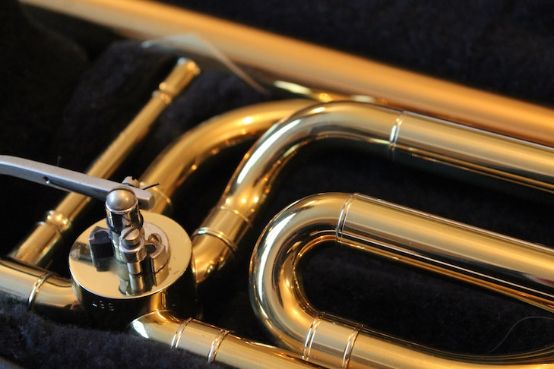
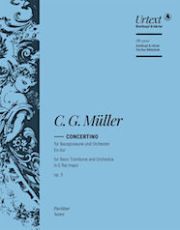
The Concertino for bass trombone and orchestra by Christian Gottlieb Müller offers a high-quality alternative to Ernst Sachse's Concertino.

Photo: Rich Smith / unsplash.com

The composer Christian Gottlieb Müller (1800-1863) is probably quite unknown to many musicians. Perhaps the fact that he was Richard Wagner's teacher may lend him a little more luster. And this is certainly not without good reason: the score of the 15-minute bass trombone concerto from 1832 (already printed by Breitkopf & Härtel at the time) testifies to the good craftsmanship that Müller had acquired through his intensive study of Beethoven's works. The orchestration (2 woodwinds, 2 brass, 2 trp, timp, strings), the key (E flat major), the cadenza-like beginning of the solo instrument, the virtuosity in the 3rd movement and many other features (e.g. melodic line in octaves between flute and clarinet in the 2nd movement) are reminiscent of the 5th piano concerto by his idol Ludwig van Beethoven, written around 20 years earlier.

The Concertino was long considered lost, especially the orchestral version. Only a rather flawed, handwritten piano reduction from the 1950s kept the memory of the work alive. It was not until 2004 that a complete set of orchestral parts surprisingly emerged, forming the basis for the present score. The individual parts are available as rental material, the score and a proper piano reduction are for sale. A truly pleasing alternative to Ernst Sachse's Bass Trombone Concertino - not least for orchestral auditions.

Image

Christian Gottlieb Müller: Concertino for bass trombone and orchestra in E flat major, edited by Nick Pfefferkorn, score PB 33001, € 36.00, Breitkopf & Härtel, Wiesbaden 2012/2018

On the basis of the autograph

An edition of Dvořák's String Serenade with passages that can be found in the autograph but were missing in previous editions.

Photo: Dayne Topkin / unsplash.com

When a work of the repertoire is published in a new edition, especially one labeled "Urtext", there are two possibilities in (only a perceived) 95 percent of all cases: Either the editorial decisions compared to previous editions have to be looked for with a magnifying glass (in which case there are usually market considerations behind the edition - and yes: there is a Musik.biz, and that is unquestionably a good thing), or there really is something new, sometimes even spectacular, to discover. This may only concern a single note or an accidental (from Beethoven to Berg), but sometimes there are entire passages that were once lost in the haste of production or in the maelstrom of tradition.

In this respect, the present new edition of Dvořák's String Serenade also arouses curiosity: in addition to the usual minor corrections and additions, it features new bars: There are 34 in the scherzo and as many as 79 in the finale. They can be found in the autograph, but were not included in the printed score published by Bote & Bock in 1879. Admittedly, they were included in the 1955 volume of the complete edition (albeit in the appendix, and were thus once again lost in IMSLP, a repeated gravis defectus). Robin Tait has made a virtue of this necessity and chosen the autograph as the main source for the new edition, thus also integrating the passages that fell by the wayside during printing into the main text (and yet, as a concession to modern practice, has provided them with a vide-note). This means that it can now be freely explored, although Dvořák himself, as a recognized master, never later demanded a new edition. I used the recording with the Orchestre d'Auvergne under Roberto Forés Veses - and yes, the editors at the time may (?!) have made a good decision. But the discussion is open.

Image

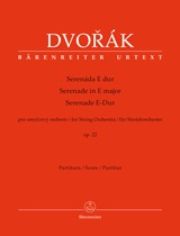
Antonín Dvořák: Serenade in E major op. 22 for string orchestra, edited by Robin Tait, score, BA 10423, € 22.95, Bärenreiter, Prague 

Beastly light pieces

These booklets make playing together for the first time in a string orchestra or string ensemble a pleasure.

Excerpt from the cover of "Don't Feed the Animals"

The twelve fun one-minute pieces by Don't Feed the AnimalsOuverüre, ten animal pictures and epilogue for children's orchestra, are suitable as interludes for a performed story. The scampering hedgehog, which pauses shyly at fermatas, the frog's croaking in rubbing small seconds, busy quavers for the ants, trills and tremolo glissandi for the busy bees, the swan hovering in alternating three-quarter and four-four time, the four squirrels scampering in pizzicato leaps and sixteenth-note scales ... It's all cleverly conceived, well distributed among the parts and - with a certain amount of rehearsal - easy to play.

The 14 canons and 6 string trios that Egon Sassmannshaus composed for the Early start in the Steicherensemble provide a variety of keys from a B flat to two sharps. Even a minuet in A minor joins the small baroque dances.

In the Christmas booklet of the same series, 10 Baroque festive dances in simple keys - major and minor - frame 17 of the best-known German Christmas carols in deliberately simple four-part settings for the youngest string groups.

Image

George A. Speckert: Don't Feed the Animals. 12 pieces for string orchestra, score and set of parts (1st, 2nd, 3rd violin, the latter also for viola, cello), BA 10648, € 13.95, Bärenreiter, Kassel

Egon Sassmannshaus: Früher Anfang im Streicherensemble, score for violin, viola (or 2nd violin) and cello, BA 10688, € 12.95, Bärenreiter, Kassel

id., Christmas, score for two violins (one piece for three violins), viola (one piece for two violas) and cello, BA 10689, € 12.95

Playing practice and school music knowledge

The "Leitfaden Bläserklasse" from Helbling-Verlag combines learning an instrument with school content. It is based on three lessons per week.

Photo: Bruno Pego / unsplash.com

The teacher's handbook for the new teaching aid from the publisher Helbling Wind class guide comes with the weighty volume of more than 450 densely printed pages. The textbook impresses with a wealth of extremely varied and stimulating material. In addition to the teacher's book, it includes student booklets for all wind orchestra instruments, play-alongs and online aids that can be accessed via a code, as well as a CD-ROM with a wealth of additional material.

The Wind class guide was jointly developed by five authors, all of whom teach music at secondary school level and have experience in working with wind classes as well as in school music. The aim of the new teaching aid is to combine the playing practice that dominates wind band classes today with the content of school music lessons (music theory, ear training, creating and inventing music). The teaching material is not aimed at a specific age group. It is suitable for use from intermediate level upwards. The teacher's book explains the concept, the underlying ideas and objectives as well as the methods used in the work with the classes in detail.

The teaching part begins with a preliminary course, which takes place without instruments and extends over 3 units, i.e. approx. 6 lessons. This is followed by Basics with instrumental methodology and then the lessons with the instrument, which are divided into two volumes with 23 and 18 lessons respectively (1st/2nd volume). Each lesson offers material and fully prepared lesson plans for 2 lessons.

This concept is based on 3 lessons of extended music lessons per week, divided into 2 lessons of regular music lessons with the whole class and 1 lesson of instrumental lessons in small groups. If less teaching time is available, it may be difficult to complete the two volumes within 2 school years.

In terms of content, the teaching material places great emphasis on teaching music theory. The basics are introduced thoroughly, but also in an extremely varied and playful way, with lots of suggestions for partner or group work. At the same time, the theoretical content is linked to practical playing on the instrument and used for creative tasks. Pupils are always encouraged to engage in practical activities. On average, there are one or two short pieces of music per lesson (chapter), which is rather few. In most cases, the pieces are accompanied by additional suggestions for interpretation, presentation or reflection as well as links to theory. For many pieces, additional four-part class arrangements with a 2nd part, a bass part and an upper part "for experienced players" are available on the accompanying CD-ROM, which allows for individualization of the requirements through internal differentiation.

Using specially marked toolboxes, the pupils are taught specific methods as a craft, how they can work on music independently, practise pieces or acquire musical material. The student booklets are attractively designed with colors and symbols and contain supportive and stimulating pictures and graphics. However, the pages as a whole seem rather overloaded and very text-heavy, which makes accessibility somewhat more difficult.

Wind class guide sets new standards in terms of thematic breadth, the teaching of theory and a general understanding of music, as well as in its methodical and didactic preparation.

Image

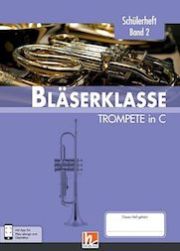
Sommer/Ernst/Holzinger/Jandl/Scheider: Leitfaden Bläserklasse. A concept for successful teaching with wind instruments, teacher's volume 1 and 2 incl. CD-ROM and pupils' solution booklets, S7770, Fr. 84.50, Helbling, Belp et al.

Everyday life as a musician in the Baroque

Under what social conditions did musicians work in those days? - A long overdue, extremely informative, if somewhat cautious book provides the answers.

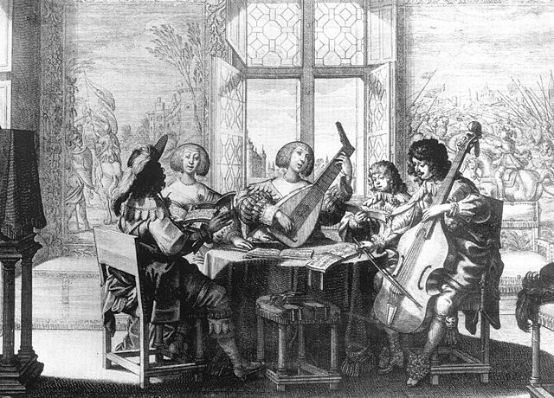
Etching by Abraham Bosse around 1638: The five senses - hearing

Printed sheet music was once expensive. Not everyone could afford them. That's why a musician in the countryside, for example, would have bought a printed edition of the Musical sacrifice bought a copy and paid only eight groschen instead of one reichstaler. (And how much of this did the composer get in a time without Suisa and Pro Litteris?) It would have been even cheaper (about five groschen) to copy the music himself. It was worth it when you consider that a salaried musician had around eight thalers a month at his disposal for himself and his family.

Illuminating details such as these from the everyday life of musicians can always be found in this social history of Baroque music. It takes us into the lowlands of practice in an incredibly exciting way. Several authors are involved, but the two editors Peter Hersche and Siegbert Rampe have made the main contribution: to the economic situation and social order of the time, which is not easy to summarize and even less to generalize for such a heterogeneous, evolving epoch. Things were in a state of flux. So where did music take place and who performed it? What status did the musicians have and what status did their instruments have? Who built them? Who trained them? What could a musician actually afford from his salary: a little garden, a library, a maid for his wife? There are many questions.

And because it is not at all emphatically about art, but rather about the circumstances under which it is created, and especially about money, the topic is presented soberly and clearly. The focus is primarily on the conditions in German-speaking countries and is therefore somewhat blurred towards the outside world. The fact that we actually know far too little is not concealed. For a long time, musicology has hardly paid any attention to this social history. Bach was pitied when he asked for a pay rise, but the fact that this affected almost the entire musical profession was overlooked. Perhaps this is also the reason why the authors do not venture any further into anecdote or even speculation with their findings. Overall, the book is extremely informative and illustrated with many examples, but not really filled with life. This is perhaps even an advantage, because it doesn't disguise anything. It shows us the bare facts of everyday life.

Image

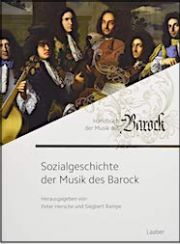
Sozialgeschichte der Musik des Barock, ed. by Peter Hersche and Siegbert Rampe, (Handbuch der Musik des Barock 6), 400 p., ill., hardcover, € 108.00, Laaber-Verlag, Laaber 2017, ISBN 978-3-89007-875-5

Previously unknown sonata fragment

Composing his sonata for cello and piano was difficult for Camille Saint-Saëns. And tradition has not been kind to it either.

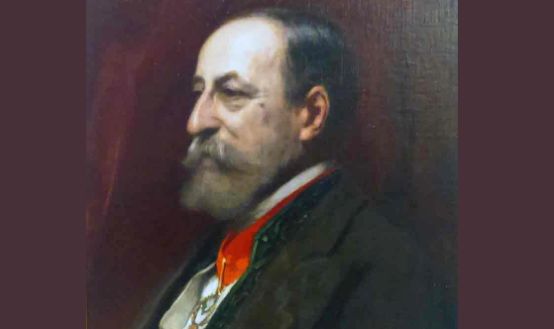
Jean-Joseph Benjamin-Constant: Portrait of Camille Saint-Saëns 1898, source: Musée de la Musique, Paris, inventory number E.995.6.27 / wikimedia commons

The cello literature contains several incomplete works by important composers: Mozart's only work for cello and piano, the Andantino cantabile KV 374 g (Anh. 46), remained a fragment and exists in several foreign additions, of Antonín Dvořák's early Cello Concerto in A major only the solo part and the piano reduction have survived and Othmar Schoeck left the last movement of his Cello Sonata unfinished.

An important discovery can now be added to this (incomplete) list: As part of the Bärenreiter Complete Edition of Camille Saint-Saëns' works, a previously unknown cello sonata has been published for the first time. A letter from the composer from 1919 proves that the work was performed in its entirety during the composer's lifetime. Nevertheless, only the first two of the four movements that were supposedly composed have survived, with the surviving manuscript of the second movement breaking off after 82 bars.

The conception of the sonata dates back to 1913 and Saint-Saëns seems to have struggled with the definitive writing, as he wrote in a letter to his publisher Durand in 1914: "I am working on my duo, which is only progressing with difficulty. What a difficult genre to deal with!"

As in the two sonatas op. 32 and op. 123, Saint-Saëns skillfully plays with rhythmically concise and lyrical passages. Bold harmonic changes are also reminiscent of the tonal language of the 1919 Prière op. 158 for violoncello and organ.

Saint-Saëns' cello oeuvre is given a welcome expansion by this first edition.

Image

Camille Saint-Saëns: Sonata for violoncello and piano in D major (incomplete), first edition, edited by Denis Herlin, BA 10910, € 17.95, Bärenreiter, Kassel

Memories of a legendary concert tour

Just weeks after the end of the war, Yehudi Menuhin and Benjamin Britten traveled through northern Germany and played for and for the benefit of survivors.

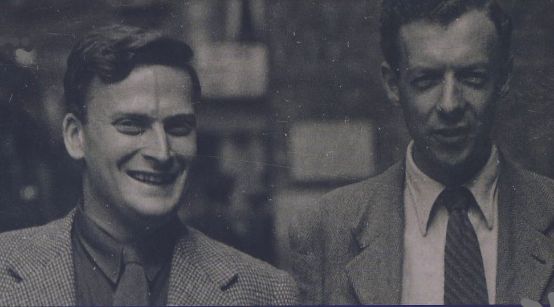
Yehudi Menuhin and Benjamin Britten. Excerpt from the book cover

Set an example is an important book, published at a time when anti-Semitism is threatening to spread again. Werner Schmitt, initiator and co-author of the book, documents the concert he organized at the Bergen-Belsen Holocaust Memorial in 2016. It was dedicated to the memory of the legendary concert tour of July 1945, which Yehudi Menuhin undertook together with the composer Benjamin Britten through northern German towns and villages. They also performed in a movie theater in the barracks of the Bergen-Belsen concentration camp. The camp had been liberated by Allied troops on April 15 of the same year.

The concert took place in the presence of survivors of the camp. Together with Britten, Menuhin played a program that included works by Johann Sebastian Bach, Ludwig van Beethoven and Claude Debussy, but cannot be fully reconstructed due to the sources. The memorial concert with the duo Aleksey Semenenko (violin) and Inna Firsova (piano) included the Chaconne by J. S. Bach, the first movement of the Kreutzer Sonata, the Sonata by Edvard Grieg, works by Chausson, Debussy and Tchaikovsky, and even the Kaddish by Maurice Ravel was played as an encore.

The recording on two CDs is included in the book, which summarizes impressions of the historic concert tour in words and pictures, when the two great musicians played for the benefit of surviving victims. The authors, Werner Schmitt, cellist and long-time director of the Bern Conservatory, and Hendrick Feindt, literary historian and media scientist, have created more than just a documentation with this book: they have set an example that needs to be recognized today more than ever.

Image

Zeichen setzen/ Taking a Stand. Yehudi Menuhin / Benjamin Britten / Bergen-Belsen 1945, edited by Werner Schmitt, 100 p., 2 CDs, Fr. 57.00, Müller & Schade, Bern 2018, ISBN 978-3-905760-19-4

Milestone unrecognized at the beginning

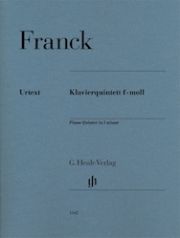
César Franck's cyclical piano quintet, imbued with leitmotifs, got off to a difficult start.

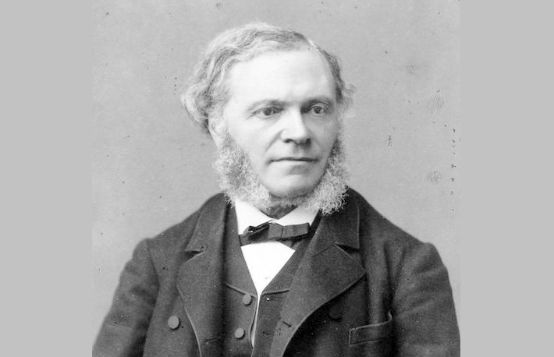
César Franck (1822-1890) photographed by Pierre Petit (1832-1909). Source: New York Public Library's Digital Library (digital ID 1158368)

César Franck composed his monumental Piano Quintet in F minor between the fall of 1878 and the summer of 1879, having not written any chamber music for 25 years. The concerts of the Société nationale de musique, founded in 1871, at which chamber music works by Gabriel Fauré, Édouard Lalo and Camille Saint-Saëns, among others, were premiered, had probably prompted Franck to return to this genre. The Piano Quintet predates the Violin Sonata in A major (1886) and the Symphony in D minor (1887/88). At the premiere on January 17, 1880, Camille Saint-Saëns sat at the piano, to whom the piece is also dedicated. After the work's cool reception, it was only performed a few more times during the composer's lifetime. It was not until the 20th century that audiences and critics recognized the true significance of César Franck's Piano Quintet.

The three movements with a performance time of around 40 minutes are linked together by leitmotifs. As a contemporary witness, this piano quintet stands for French Romantic music in its confrontation between classical form, the influence of Richard Wagner and the departure into new worlds of sound. But Franck's piano quintet is also one of the milestones of the chamber music repertoire as absolute music. With its cyclical structure and rich sound spectrum, it has the character of a symphony.

This Urtext edition, supervised by Ernst-Günter Heinemann, dispenses with technical additions in the string parts. The piano part was provided with fingerings by Klaus Schilde. Turnarounds are optimally placed in all parts, and the cello can place the last three pages without rests side by side on the music stand and play them through. The Critical Report for this edition can be found at henle.de can be viewed.

Image

César Franck: Piano Quintet in F minor for piano, two violins, viola and violoncello, edited by Ernst-Günter Heinemann, HN 1142, € 45.00, G. Henle, Munich 

The common path as a musical goal

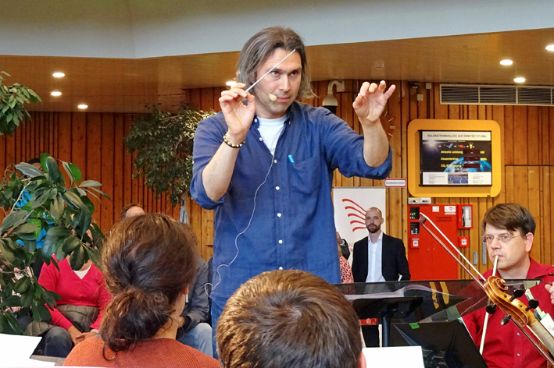
On May 25, Vladimir Jurowski rehearsed Shostakovich's Suite for Variety Orchestra with amateur musicians as part of the Berlin Orchestra Meeting, which takes place every four years to promote amateur instrumental music-making.

Amateur musicians rehearse under Vladimir Jurowski. Photo: © Markus Senften

It is an exciting and appealing starting point for everyone involved: the large symphony orchestra is made up of around 100 expectant amateur musicians of all ages and abilities. On the podium is none other than the renowned conductor Vladimir Jurowski. The common goal of the 90-minute encounter is to rehearse three movements from Dmitri Shostakovich's Suite for Variety Orchestra.

This unique meeting between amateur musicians and star conductors is called an "open rehearsal" and will take place as part of the Berlin Orchestra Meeting at the Landesmusikakademie Berlin at the end of May 2019. In this case, "open" not only means that the rehearsal is open to the public, but also that all interested amateur musicians who have registered to take part in the Berlin State Music Council's orchestra meeting will be admitted. The term "rehearsal" is also to be understood literally, as the orchestral work does not culminate in a concert or a competition audition as is usually the case, but stands on its own.

Vladimir Jurowski doesn't seem to mind, on the contrary. "In this day and age, where everyone only communicates with their screens, making music together is more important than ever," says the Chief Conductor and Artistic Director of the Rundfunk-Sinfonieorchester Berlin before the rehearsal begins. It makes no difference to him whether the music is performed by professional musicians, in amateur formations or - as is usual in the Jurowski family - with relatives. "Amateur musicians are literally 'lovers' of music," he muses. "And that's what this kind of orchestral gathering is all about: coming together, listening to each other, making music together." He doesn't hide the fact that he would have chosen a classical piece rather than a work by his compatriot Shostakovich to work with amateur musicians. But since the wish is there, he accepts the challenge and reveals: "For me, the appeal of this open rehearsal lies primarily in finding a common path from the first performance to the last play-through of the work." What this path would look like and where it would end, well, that too is literally "open".

The first performance of the well-known march from the Suite for Variety Orchestra quickly made it clear that the designated General Music Director of the Bavarian State Opera would not be facing the highest level of perfection. Certain aspects, such as rhythm or intonation, made it clear that the majority of the musicians in the foyer of the Wuhlheide Leisure and Recreation Center in Berlin were amateurs - with the exception of individual string players who belong to the Rundfunk-Sinfonieorchester Berlin.

Precise and targeted

For the participating musicians, it is extremely fascinating to experience the decisive details that the Berlin-based conductor works on briefly but purposefully to bring the work together into a whole: Sometimes Vladimir Jurowski rehearses for several minutes with just the strings, then he asks the trombones to build up individual chords before taking apart individual passages in the alto saxophones or instructing the trumpets on dynamics. He knows how to captivate even those musicians who are not currently playing. Time and again, he intersperses exciting background knowledge about Shostakovich's situation as an "ostracized composer" in the Soviet Union or expresses his tonal objectives in vivid language or stimulating gestures.

While some of the musicians are primarily taking part in the rehearsal to play parts of Shostakovich's Jazz Suite, other orchestral musicians have traveled to Berlin especially to make music under the famous conductor. But as diverse as the demands and intentions of all those involved may seem at the beginning of the rehearsal, in the end everyone in the ad hoc orchestra enthusiastically accepts Vladimir Jurowski's instructions and seems to really enjoy his clear approach and precise rehearsal work.

The final performance of the March, Little Polka and Waltz No. 2 leaves behind a large group of euphoric amateur musicians who, in the hour-long rehearsal under Vladimir Jurowski, have not only traveled an unforgettable path together, but also an unforgettable musical and interpersonal journey.

Editorial note: The author from Aarau played the bassoon.

Continuity in Swiss cultural policy

At its meeting today, the Federal Council opened the consultation on the dispatch on the promotion of culture for the period 2021-2024. Comments on the new cultural dispatch can be submitted until September 20.

In its press release today, the Federal Council summarizes the most important points of the new Culture Dispatch: The three "axes of action - cultural participation, social cohesion, creation and innovation - will be retained for the 2021-2024 period." CHF 942.8 million has been earmarked for the implementation of the draft submitted for consultation, which corresponds to an increase in funding of CHF 35.4 million.

In the area of "cultural participation", the "Youth and Music" program should be consolidated. In cooperation with the cantons and music organizations, the Federal Council will introduce support for talented musicians. In the area of "social cohesion", school exchange activities between the language communities will be strengthened and an exchange program for teachers will be set up. Finally, in the area of "Creation and Innovation", cooperation between culture and business is to be continued.

In addition to continuity, the Federal Council is also placing a special focus on digitalization. The digital transformation is influencing all areas and institutions of culture in terms of production, communication and preservation.

In the 2021-2024 funding period, cooperation with the cantons, cities and municipalities will continue as part of the National Cultural Dialogue. The Confederation also wants to promote gender equality in the cultural sector and appropriate remuneration for cultural workers.

The consultation period will last until September 20, 2019. The report was presented at the 5th meeting of the Parliamentary Group on Music on June 5 in Bern.
 

Link to the cultural message 2021-2024

The message can be downloaded from this page:

https://www.admin.ch/gov/de/start/dokumentation/medienmitteilungen.msg-id-75271.html


It's a time thing!

Michael Egger, the singer of the band Jeans for Jesus, constantly catches himself on his cell phone while waiting. But his lyrics and melodies need time, he says, and sometimes pressure. On tour and in their way of working, waiting is part of everyday life for the band.

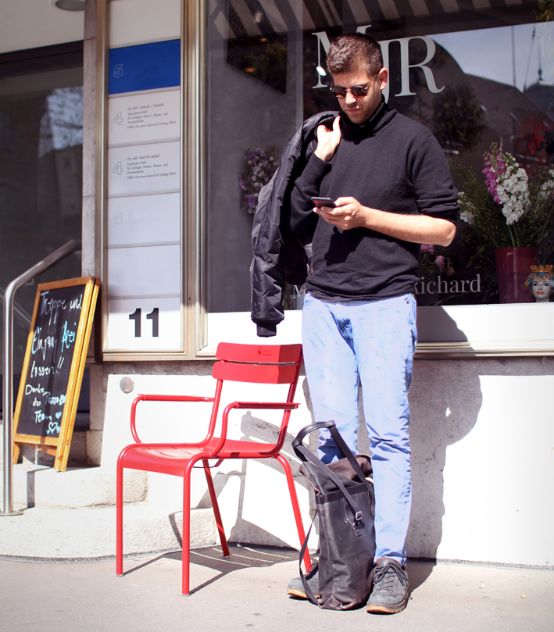
Michael Egger, singer of the band Jeans for Jesus. Photo: Éric Bolliger
Es ist ein Zeit-Ding!

Michael Egger, the singer of the band Jeans for Jesus, constantly catches himself on his cell phone while waiting. But his lyrics and melodies need time, he says, and sometimes pressure. On tour and in their way of working, waiting is part of everyday life for the band.

The Bernese band Jeans for Jesus released their first album in 2014, after they had been working with Estavayeah - unexpectedly even for herself - landed the Swiss summer hit of 2013. They make contemporary digital, spherical electronic music with Bernese-German lyrics. The members, Michael Egger (Mike), Philippe Gertsch (Phil), Demian Jakob (Demi) and Marcel Kägi (KG), have known each other since their school days; Jeans for Jesus emerged from a school band. Their second album "P R O" from 2017, which they released together with a perfume, was also a success. Fans are currently waiting for the third album, which is due to be released at the end of this year.

You already sang on your first album: "Au di huärä Apps heimer ds Wartä vrlehrt." Can you, can you still wait? Without a smartphone?
Apps are programmed in such a way that we spend as much time with them as possible. This gives the manufacturers access to as much data as possible and allows them to place advertising. Of course, I can't defend myself against this either and often find myself doing so. No: I can hardly wait without my smartphone.

But that's not because you have to represent Jeans for Jesus on social media?
No, as a band we're not that active on these channels. I often read newspapers and sometimes watch videos. But there's still a lot of dull stuff on there.

Do you think something is lost by waiting?
I don't like to conjure up the good old days, so I'd rather not. The only problem is attention. Teachers I know say that it has become more difficult for students to read a text and concentrate for fifteen minutes. Of course, you can't judge this development conclusively, and I myself used to be easily distracted when I was only interested in something to a limited extent. I just think that boredom should not be lost.

So waiting and boredom are important things?
Exactly, to practice patience - or, especially for me, who is rather impatient, to have ideas. And it's also a nice thing.

Smartphones have not only changed the way we wait. Streaming has also turned the world of music on its head: Music can be played almost for free. On both of your albums, you take a critical look at consumption. How do you feel about this new music consumption?
We never made music at a time when you could still earn money with it in Switzerland. That's why the change has hit others harder. We know musicians who were still producing albums with six-figure budgets. Back then, ten thousand CDs sold brought in hundreds of thousands of francs. We're not far off that level, but we earn virtually nothing. But you can't stop that, especially not as an individual. What's more, production has become fundamentally cheaper. Making music has become accessible to a much wider audience and has been democratized to a certain extent. All you really need is a PC and, ideally, a bit of talent. Streaming is also a huge opportunity to discover other things - and to become better known.

What I find rather sad about the Swiss situation in terms of consumption is that you absolutely have to write one or two songs that are played on the radio. If you don't do that, you quickly fall under the radar as a pop band. That leads to a lot of compromises, which you can also hear here. Estavayeah or also Where are you still staying have far fewer rough edges than other songs. And with Spotify, this effect is amplified. It amazes me how many musicians are now creating very unobtrusive music that can be played in the background.

A change towards quantity. Does this have an impact on quality?
I don't think so for us; we have tried not to get too involved. But of course the influence is noticeable. This is also where the urban-rural divide comes into play: many musicians, like us as a pop band, who want to make contemporary, internationally influenced music, are almost only successful in the cities. In order to be known throughout Switzerland, others make a lot of compromises and pander. You can hear that the music has been made for the masses.

The same thing is happening internationally: With regard to streaming consumers, stars such as Drake or Migos have released albums with an average length of 25 songs in recent years.
Exactly, that happens with a lot of musicians that we also like to listen to. And short songs are also becoming more and more popular.

But your last album "P R O" also contains a whopping 18 tracks.
Yes, that's true, but it wasn't a calculation. This kind of thinking doesn't work with our size anyway, because streaming is financially insignificant. We simply didn't want to cut any more. We didn't have enough time before the release. You should actually have a month to get some distance and then cut three or four songs. But there won't be enough time for that on the new album either.

Time is pressing. Nevertheless, you took three years between the first and second album. Was it a deliberate wait?
The rule of thumb is actually: two years. There are bands that release an album every two years because they want to make a living from it. That would be the ideal cycle with concerts and so on. For us, three years is an almost natural process. We all work full-time and our kind of music also needs time ...

What do you mean by that?
Our music is contemporary in the sense that we process instruments and voices on the computer to an extreme degree, merging analog and digital until we are satisfied with the sound aesthetics. That takes time. And bringing the sounds to the stage in this way is technically relatively demanding. For our last live set, for example, we linked the lighting to the music via a computer program, which required complicated and time-consuming programming processes.

And now your third album is coming after another three years?
Yes, if everything works out, we can start playing concerts in the fall. During this phase, we'll be away for one or two evenings at the weekends, maybe one more rehearsal, and then the time we have available for music will be gone again. In other words, it's only after a year of touring that you slowly start making new music again.

So you haven't waited, you just need this time.
Exactly, it's a time thing! Only if music is your profession can you record a new album while you're on tour. Or you give away all your free time.

But you can't make a living from music?
Only very few people in Switzerland can do that, and of those who can, many have a job. It's not even up for debate here. I earn maybe 10,000 francs a year, optimistically calculated.

So it's more of a hobby than a job?
It is neither. It's a passion. When we ask each other, "Is it really just a hobby for you?", it's meant more as a joke.

When else are you waiting as a band?
You wait a lot on tours. You usually have to be at the club in the afternoon, you set up, then you wait and wait and eat and wait again.

But we also wait for each other a lot because of our division of labor. You do something on the music or lyrics, send it to the others and wait for feedback or for someone else to continue working on it.

Is that what you call a Dropbox tape?
Exactly, we just have about five chats in which ideas and music are constantly being sent back and forth. People who have a lot to do with us almost go crazy. But anything else wouldn't make sense for us. A rock band goes into the studio and jams. With us, on the other hand, Phil usually makes a sketch, then the song usually comes to Demi and me, we write melodies with imaginary lyrics and continue producing. Then the song goes back and forth. Usually, numerous versions and sketches are created, and sometimes other musicians are involved. The others work on the music from everywhere, Demi and I work on the lyrics from everywhere. If someone has done something new, you can listen to it on the go and give feedback. That's very practical. We always have a lot of fun in the chat. Until KG has to pour everything into a song, which is less fun for him.

So you don't see each other as a band that often?
Four of them? No, only about every two or three weeks. But Demi and I see each other very often at the moment because we write the lyrics together. And KG and Phil probably see each other more often too.

But do you already have a feel for the band?
Yes, very much. We always go away together. Most of "P R O" was written in Atlanta and we're in Italy for a few days at the end of June. Those are the best moments.

That sounds extremely relaxed. Is that how your career is going?
Only with the first album, because there was no pressure back then. We started maybe in 2010 or 2011, sometimes nothing happened for months. But when "Estavayeah" became such a hype, we had to get the album done as quickly as possible - it was a rush job - and perform. We weren't prepared to be a band at all. Everyone was around 25 years old and had a lot of personal stuff going on. I was just starting out in science at the time. It was only during the tour that we really realized what had happened. And then for the second album we were under a lot of pressure - at least it felt that way.

Also pressure from the label? You're on Universal, not a small label.
No, not at all, these are just ideas that are floating around. The pressure comes more from the positive press, the feedback, the expectations. When you're hyped like that, you have to do something good, something better. We think the second album is better than the first, but it was much harder.

The better your music gets, the less you can wait and see how things develop?
The upcoming album will decide a lot, show how things could go on. We might be able to do one or two things abroad or in French-speaking Switzerland, that would be cool of course. There are already two songs in French on "P R O" and we're keen to play with the language. But if it stays within the framework of the last tour, maybe we'll take more time and leave the previous cycle to produce something more challenging, more strange, who knows ...

So having time is still important for quality?
Extreme! At the same time, sometimes you only create good stuff under pressure. We made "Wosch no chli blibä" in three days. We had a crisis meeting shortly before the release of "P R O". "There's not a single song on it that will be played on the radio," I said. "Then we'll just have to make another one now," said KG. Phil went home and produced a beat in a day, Demi and I produced lyrics in a day ... Too much time isn't always good either.

You are also quick to pick up on technical developments.
Yes, we find that exciting. For example, the prospect that songs could be written together with artificial intelligence (AI). But there's also a big retro movement, especially in the arts pages; they like old devices, guitars, 80s synthesizers. Some journalists have even criticized us: so much digital processing ...

But you've also been praised a lot, compared to Frank Ocean or Kanye West.
Both, yes. In music, you can really see that people are afraid or, let's say, uneasy about technology. We once played at my mother's birthday party. People of that generation like rock bands. I wasn't able to explain to them that hitting a pad and triggering pre-programmed sounds is basically the same as playing the piano. It's probably a perception problem. It's difficult to differentiate between analog and digital sound. From the moment you press a key, there is actually no "natural" sound anymore.

But AI still raises the question of whether there will still be a need for an artist or a band like you in the future?
The question is how to use them in an artistically valuable way. We are very optimistic about progress and tech-savvy, but of course you have to observe what the programs achieve. Kanye West already works in a comparable way: for years, he has had dozens of versions of every song made by the producers who are currently the most popular. But at the end of the day, someone has to decide: This is good and that is not. In my opinion, it will be a long time before AI can do that.

Maybe you'd rather do it yourself because it's fun?
Yes, that will be super interesting. But what could also be the case, as Demi always says, is that music will become less important. Kids listen to music much more widely these days; it seems that identity is now more about videos and games. For us, what you listen to is who you are. When I was 15, there was a big divide: Some people listened to rap, others to rock. It's different today - and I actually think it's better that way.

 

Authors
Éric and Yann Bolliger study microtechnology and computer science at the EPF Lausanne and are big fans of the band.


Website of Jeans for Jesus

Kategorien

Waiting for the future

In musical thought, waiting is one of the most fertile concepts for both speculative imagination and technical argumentation. The fundamental notion of interruption - without it, the instruments of a score would all be constantly playing, producing an indefinable cacophony - leads directly to waiting; just as the idea of stasis - when there is no development - leads back to the very essence of waiting. Finally, the need to pause - indispensable for physical and agogic breathing - also contains waiting at its core. We cannot change it: The need to wait is inscribed in the very essence of music.

In addition to these - most important and most frequent - considerations on the subject of waiting in music, we can also imagine another kind of waiting. What we have just mentioned is of a technical, formal and synchronous nature (i.e. relating to content that does not change over time). But there is also something diachronic about waiting that reflects the forces of human development and relates to the ages of human culture. In this sense, waiting is also expectation, hope and perspective. It can express itself as fear or uncertainty, but also as trust. It is fundamentally about the future: waiting also means assessing our relationship to a possible future.

"If noise is always violence, music is always prophecy: by listening, we can anticipate the future of society." This is what the French economist, essayist and banker Jacques Attali wrote a few years ago in Bruits. Essai sur l'économie politique de la musique. And even if this idea does not seem very concrete, it is the one that gives music back the cultural responsibility in the broader sense that it should never shirk: How can music be an expression of timeless realities? How can today's music transcend its temporality in order to identify a direction of development?

Unfortunately, the answer is disappointing, especially when we look at the leading institutions for the preservation of musical culture: The music academies indicate their intentions - at least in Latin - in their very names: 'conservatory' not 'innovatorium'. And the programs of the most important concert organizers reflect a need for expression that must have existed (at least) a hundred years ago. In these cases, the future inspires awe and dread; to expect it means anxiety and fear.

But the future is coming in any case. If it is not to overwhelm us, we must understand that musical culture will not be saved by the monumental preservation of values, content, forms and attitudes of the past, but by the fact that the possibility of music becoming culture remains something natural, as in times past, when it produced so many delicious fruits. Waiting - in a healthy, not frightened way - must turn dynamically and vividly towards the wonderful unknown that life has in store for us. Also in music.


Zeno Gabaglio
 

... is a musician and philosopher, President of the Ticino Sub-Commission for Music, jury member of the Swiss Music Prize and member of the SUISA Board.
 

Kategorien

get_footer();