Band evening at Treibhaus Lucerne

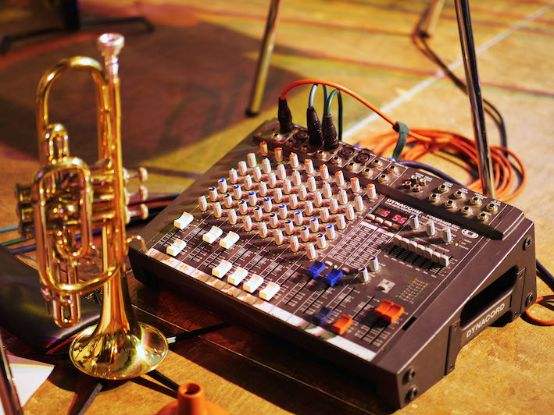
Subjects such as electric guitar, drums and pop vocals are in great demand at the Lucerne Music School. This is reflected in a band night that has developed into a meeting place for up-and-coming rock and pop musicians.

Excerpt from the 2016 flyer

The aim of the pupils is usually to play in a band, give concerts and even write their own songs, writes the city of Lucerne. In order to give them the opportunity to showcase their talent in front of an audience under professional conditions, the first Dr. Git was created around twelve years ago by drum and electric guitar teachers.

The name does not refer to a doctor of guitar, but rather is made up of the abbreviations for drums and guitar. This year, ten bands with over 50 participants will perform in changing line-ups. The Dr. Git bands will be followed by two other formations that regularly rehearse and play together.

A professional attitude is required from the children and young people, as the composition of the bands changes after each piece. With over 50 participants, this is a logistically and organizationally demanding task. In preparation for the concert, the music students and their teachers work on the pieces, which are practiced together in two rehearsals.

Info:
Saturday, June 4, 2016, 7 p.m. (doors open at 6:30 p.m.), Treibhaus, Spelteriniweg 4, 6005 Lucerne


Tariff increase in German theaters

The German Stage Association and the employees have agreed on a pay rise for the artistic staff employed at municipal theaters, state theaters and regional theaters.

Foro: Dr. Klaus-Uwe Gerhardt/pixelio.de

As of March 1, 2016, salaries will be increased by 2.3 percent, but at least by 75 euros, for state-owned theaters and orchestras and by 2.4 percent for municipal theaters and orchestras.

The agreement corresponds to the wage increases in the public sector. This wage agreement applies to around 24,000 artistic employees of theaters and orchestras, primarily actors, singers, dancers and musicians, but also dramaturges, stage managers and stage technicians with predominantly artistic tasks.

The artists' unions GDBA (Genossenschaft Deutscher Bühnen-Angehöriger), the VdO (Vereinigung deutscher Opernchöre und Bühnentänzer) and the DOV (Deutsche Orchestervereinigung) were involved in the negotiations

Precarious working conditions for artists

Many artists work under precarious conditions, according to a (non-representative) study by the Hans Böckler Foundation on the situation - primarily in Germany. A clear majority of those affected expect poverty in old age.

Photo: m. gade/pixelio.de

In 2011, there were over 18,000 musicians and almost 22,000 performing artists in Germany who were subject to social insurance contributions. In 2014, around 51,000 musicians and over 24,000 actors and dancers were registered with the artists' social insurance fund, which is open to self-employed people with an annual income of 3,900 euros or more.

Net income is 40 percent below 10,000 euros per year. The precarious income situation is also due to the fact that 70% of musicians, dancers and actors have to provide unpaid services. A good 80 percent of those surveyed feel that their employment situation is insecure. Deficits in the working environment such as unheated rooms, unsuitable dance floors or poor accommodation are a problem for half of the artists. Almost as many state that protective regulations such as the Working Hours Act are sometimes not complied with. A third have experienced breaches of contract, abuse of power and arbitrariness. A lack of co-determination at work was reported by 25 percent, bullying by 17 percent and sexual harassment by 5 percent.

2,635 working people took part in the online survey. In addition, detailed interviews were conducted with 22 artists, event organizers, agents, politicians and representatives of educational institutions and associations. The survey is not representative, but allows "qualified insights into the working conditions of artists".

Link to the study: http://www.boeckler.de/pdf/p_study_hbs_319.pdf

St. Gallen Culture Promotion Act to be revised

The government of the Canton of St. Gallen is submitting two drafts for consultation on the amendment of cultural legislation: a total revision is intended to adapt the current Cultural Promotion Act to current requirements and circumstances.

Baroque hall of the Abbey Library of St. Gallen. Photo: wikimedia commons

The St. Gallen Cultural Promotion Act from 1995 no longer meets the requirements and circumstances of today's cultural promotion, writes the canton, and a complete revision is therefore overdue. At the same time, there is no legal basis for the preservation and transmission of the cultural heritage in its entirety, in particular movable cultural assets such as the manuscripts and archives of the Abbey Library or the Abbey Archives, which are part of the UNESCO World Heritage Site of the Abbey District of St.Gallen.

At the same time, the division of tasks between the canton and municipalities in the preservation of historical monuments, which the Cantonal Council demanded with the 2013 relief program, requires changes at the legislative level. The new Cultural Promotion Act and the new Cultural Heritage Act with their clear definitions and objectives also provide legal certainty for all parties involved.

The work on the new cultural laws was triggered in particular by the Cantonal Council's mandates on the division of tasks and prioritization of cultural promotion. The main thrusts of the new laws were discussed in the cantonal cultural conferences in 2014 and 2015. The draft of the new Culture Promotion Act "takes into account the heterogeneity of the canton, focuses on strong cultural regions and follows the principle of subsidiarity".

The consultation documents are available electronically on the canton's website:
http://www.sg.ch/home/staat___recht/staat/Kantonale_Vernehmlassungen.html


First annual review of the ZHdK in the Toni-Areal

The ZHdK has arrived at the new Toni-Areal campus. For its first year of operation in 2015, it reported a total turnover of CHF 170 million; it currently has 2888 students (1997 in Bachelor's and Master's degree programs, 891 in continuing education).

Photo: Micha L. Rieser/wikimedia commons

According to the ZHdK (Zurich University of the Arts) press release, the direct costs for research amounted to CHF 10.6 million in 2015, of which CHF 3.12 million were acquired funds. Important donors are the Swiss National Science Foundation SNSF, the EU and various foundations. Since March of this year, the Institute for Art Education at ZHdK has also been involved in the Horizon 2020 project "Traces" (Transmitting Contentious Cultural Heritages with the Arts), a project funded by the EU with 2.3 million euros and the State Secretariat for Education, Research and Innovation with 423,000 francs.

The newly presented Creative Industries Report Switzerland 2016 assumes that over 450,000 people work in the creative economy in Switzerland, half of whom are employed in the creative industries, while the other half pursue a creative profession outside of the creative industries. The concept of creative economies derived in conclusion stands for a new understanding of the creative industries to date, which focuses more strongly on the practices and processes of the players.

Source of supply for the creative industries report:
www.creativeeconomies.com/reports/order
 

Cultural Prizes of the Canton of Basel-Landschaft 2016

The Basel cantonal government honors dancer Tabea Martin and jazz singer Lisette Spinnler with the canton's dance and music prizes, each worth CHF 20,000. The music prize (15,000 francs) goes to choirmaster Abélia Nordmann.

The cantonal government is honoring the dancer and choreographer Tabea Martin from Oberwil, who was born in 1978, with the dance prize. Tabea Martin has had a remarkable international career. She works for the independent scene and at municipal theaters. According to the canton's press release, her projects are highly professional and impress with their humor, intelligence and great choreographic skills.

The 40-year-old musician Lisette Spinnler from Liestal, a successful, internationally recognized jazz singer with roots in Basel, is being awarded the music category prize. The cultural critic Peter Rüedi describes her as a "real singing miracle on the Swiss jazz scene". Her trademarks are her scat and her fantasy languages.

The Music Prize goes to the choirmaster Abélia Nordmann, born in 1988. The music teacher grew up in Germany and France and completed her Specialized Master's degree in 2013. Today, she conducts choirs, ensembles and projects in the Basel region and in Switzerland's neighboring countries. She is the conductor of the contrapunkt chor Muttenz, the professional ensemble for early and contemporary music novantik project basel, the bâlcanto choir, the project choir ensemble liberté, the children's and youth choir Lörrach and the cross-border ensemble Choeur3.

Winterthur practice rooms will not become more expensive

The City of Winterthur submits new rental agreements for the music practice rooms and waives a price increase overall.

Photo: Sascha Erni/flickr commons

The Winterthur Neighborhood Development Office manages and rents out 41 music practice rooms in the city of Winterthur. In December 2014, the Grand Municipal Council cut the department's global credit for 2015 by twenty percent. To help implement this decision, the Neighborhood Development Office decided to increase the rents for the music practice rooms.

The announcement triggered a protest from the musicians. The city had to acknowledge that it had acted incorrectly in some respects and decided last November to forego the planned rent increase. At the same time, it announced its intention to adjust the contracts and prices.

According to its own announcement, the city held an information event yesterday evening to explain to the tenants of the music practice rooms how this adjustment is to take place. The contracts currently available in two versions will be presented to the tenants in a standardized form for voluntary signature.

The prices will be adjusted to the quality of the rooms on the basis of a catalog of criteria and thus made fairer. Overall, there will be no significant price increase. The new contracts will apply from September 2016.
 

Ten years of voice research in Freiburg

The University of Music Freiburg i. Br. is celebrating its 70th anniversary. The Institute for Musicians' Medicine (FIM), a joint institution of the University's Faculty of Medicine and the Freiburg University of Music, is also celebrating an anniversary: it has been conducting voice research for ten years.

Enrico Caruso with a bust of himself. Photo: Library of Congress ID cph.3b09191

In studies funded by the German Research Foundation (DFG), the FIM has now analyzed almost 50 singers, including many who perform regularly at opera houses such as La Scala in Milan, the Metropolitan Opera in New York, the Bayreuth Festival and the Staatsoper Unter den Linden in Berlin.

The studies were primarily carried out using dynamic magnetic resonance imaging (MRI). For the implementation and optimization of imaging, there is close cooperation with the Department of Medical Physics at the Department of Radiology at the University Medical Center Freiburg and the Department of Neuroradiology at the University Medical Center Freiburg.

The FIM is headed by Claudia Spahn and Bernhard Richter. Matthias Echternach, senior physician at the Institute of Musicians' Medicine, has set himself the goal, together with Richter, of scientifically clarifying the question of how the voice develops in high-performance singers.
 

Inspired by the singing virus

With around 40 brilliant performances, the European Youth Choir Festival in the Basel region showed that young people still sing with enthusiasm today. An experience report.

Photo: werner@laschinger.ch

The European Youth Choir Festival (EJCF), which emerged from an ideas competition organized by the Christoph Merian Foundation in 1992, took place in Basel for the tenth time. Co-founder Beat Raaflaub looks back: "Despite all the changes since the first edition, the core idea has been preserved: the peaceful coexistence of very good youth choirs from Europe and overseas without a competitive character. We conceived the EJCF as a festival of encounters." So no elitism, but an experience full of joie de vivre and the joy of singing.

The choirs from the Bäumlihof, Leonhard, Münsterplatz, Liestal, Münchenstein, Muttenz and Oberwil grammar schools took turns to sing a cappella or with subtle instrumental accompaniment at various locations in Basel. It was amazing how the high school students were able to concentrate in the hustle and bustle of the city. The eleven singers from the Leonhard-Schulhaus managed the songs formidably under the baton of their singing director. Some of them hummed their pulses, while two particularly talented singers performed solos. Children sat on the floor in front of the youngsters and listened spellbound, older passers-by stopped and swayed to the rhythm. The large choirs from Liestal and Muttenz secondary schools were also very popular. With the indestructible Zogä am Bogä they captured the hearts of the audience, humming along was compulsory.

Own and foreign folk songs

There was no sign of musical fatigue, of "no desire to sing"; the standard of the 18 participating choirs from all over Europe was very high, as the opening concert showed. Here, the participating choirs met on a musical level after their preparation in their home countries, in keeping with the aim of the festival. Each choir had spent the morning learning a folk song from a partner choir from their own culture, and the songs were presented to the audience together in the Casino Hall in the evening.

The performances were colorful, the atmosphere in the packed hall was cheerful and lively, and there was a lot to discover. The idea of meeting foreign cultures through singing bore fruit and led to constant smiles. For example, there was the program of the phenomenal youth choir Tutarchela from Georgia. In their colorful traditional costumes, they sang folk songs from their homeland, first slowly, polyphonically and in perfect harmony, followed by a fast-paced part, accompanied by dancing. The men's choir Zero8ʼs Youth Choir from Sweden, which specializes in barbershop singing, was then introduced to Georgian folk music, with one of the young men dancing with a Georgian girl to the delight of the audience.

Swiss formations were also present, such as the two boys' choirs from Basel and Solothurn. The Cor Infantil Amics de la Unió from Spain was arousing great enthusiasm: Singing, sounds and movements with arms and legs were performed with virtuoso perfection, rhythmically tricky due to syncopation and changing registers. An inspiring evening!

An inspired region

There were also open singing sessions, one of which was organized by SingplausCH, where children learn children's choir literature at home, rehearse it on SinglausCH Day and then present it in concert. Under the motto E Löu, e blöde Siech, e Glünggi un e Sürmu in St. Martin's Church, enigmatic songs by Mani Matter set the scene. The hits Dr. Sidi Abdel Assar from El Hama and Dr. Ferdinand is gschtorbe were not to be missed, joyfully interpreted by children from the choirs in Pratteln, Bottmingen, Basel, Unterägeri, Beinwil, Bülach, Wil and Gretzenbach. The audience, who actively sang along, also had a lot of fun. Vreni Winzeler, the overall director and presenter, made sure of this with her spot-on comments and interludes.

A Friendship Concert was performed by the Basel Girls' Choir, the Ponomarevʼs Childrenʼs Choir Vesna from Russia and the Grand Chœur de filles de la Schola de Sion in St. Peterʼs Church. First, each of the three girls' choirs introduced themselves with a few works: There was a broad spectrum to be heard, from Telemann to Gounod to Russian songs or Monteverdi. Afterwards, the approximately one hundred girls sang the Stabat mater by Pergolesi.

Bochud emphasized the secular character with the strings of the Capriccio baroque orchestra, choosing brisk tempi and a dramatic verve that audibly suited the work well. A Stabat mater to cheer, which was rewarded with a brilliant repetition of the Amen fugue. It was a symbol of the singing virus that dominated the Basel region for five days. Basel's youth choirs have received an enormous boost thanks to the ever new challenge of the festival.

46 first prizes with distinction

From May 5 to 7, 386 young performers of classical music successfully competed in the finals of the 41st Swiss Youth Music Competition (SJMW) on the music island of Rheinau.

Photo: SJMW

The young talents from all regions of Switzerland qualified for the final at the Entradas in March. As the Swiss Youth Music Competition Foundation (SJMW) announced yesterday, a total of 370 prizes were awarded (solo: 241 prizes, chamber music: 129 prizes), including 46 first prizes with distinction and 118 first prizes. A further 154 young talents received a second prize and 25 a third prize.

Over 60 musicians were particularly pleased to receive a special prize. The results are available on the Website of the competition is now available.

The event came to a festive end with the award ceremony and the prizewinners' concert in the Stadthaussaal Winterthur on Sunday, May 8. The
The concert was recorded by Swiss radio SRF 2 Kultur and will be broadcast at a later date.

www.sjmw.ch


Head of culture leaves Swiss radio and television

Swiss Radio and Television (SRF) has announced that Nathalie Wappler, currently Head of Culture, will take up the post of Program Director at Mitteldeutscher Rundfunk (MDR) in November 2016.

Nathalie Wappler, Head of the Culture Department. Photo: SRF/Oscar Alessio

According to SRF, Wappler will be responsible for MDR's TV, radio and online programs in the areas of culture, youth, education and knowledge. Her position at SRF will be advertised internally and externally.

Wappler had "successfully established a trimedial cultural department at SRF that stands for a contemporary concept of culture - in radio, television and the Internet". She leaves behind a very efficient department with highly qualified employees. The trimedial organization of the department and the established production processes have proven their worth, according to the press release.

Nathalie Wappler has worked for Swiss television since 2005, first as editor and producer of "Kulturplatz" and from 2008 as editorial director of "Sternstunden". She began her professional career in 1996 as an editor for the 3sat format "Kulturzeit", after which she worked for ZDF's "aspekte" and "Berlin Mitte", among others.

Cultural funding harms local societies

A study by the British Arts and Humanities Research Council casts doubt on whether cultural funding programs benefit local communities. Instead of more participation, they promote gentrification and the displacement of ordinary citizens.

Berlin - Festival of Lights 2014 (detail). Photo: Hagens_world/flickr.com

The elaborate study "Understanding the value of arts & culture" by Geoffrey Crossick & Patrycja Kaszynska comes to the conclusion that cultural community centers and cultural mediation only lead to rising property prices in the surrounding area and the displacement of long-established residents. She also questions the positive effects of music education in elementary school and music programs in hospitals and prisons.

Among other things, the study draws its conclusions from an alternative view of empirical data on the effects of the measures. So far, it has mainly been quantitative surveys, such as the number of participants in events. However, qualitative surveys, for example on the personal experiences of those affected, are crucial.

Link to the report:
www.ahrc.ac.uk/documents/publications/cultural-value-project-final-report/
Telegraph article on the topic:
www.telegraph.co.uk/art/what-to-see/how-weve-got-it-wrong-about-the-arts/

Siemens Music Foundation supports the Basel Symphony Orchestra

The Basel Symphony Orchestra (SOB) has been awarded one of the Ernst von Siemens sponsorship prizes of 50,000 euros for commissioned compositions by Christobal Halffter, Georg Friedrich Haas and Dieter Ammann.

Basel Symphony Orchestra in the music hall. Photo: Benno Hunziker

The Ernst von Siemens Music Prize, endowed with 250,000 euros, has been awarded to the Danish composer Per Nørgård. The board of trustees praised him as one of the most original composers in the North, whose work "is of unique importance far beyond Scandinavian borders".

After a serious illness, Christobal Halffter began composing a concerto for double bass trio and orchestra. Halffter has a close personal relationship with Basel. Paul Sacher conducted some of his compositions. The collection of his works is now in the Foundation. Georg Friedrich Haas is writing a trombone concerto and Dieter Ammann has been commissioned to write a new viola concerto for Nils Mönkemeyer.

The Ernst von Siemens Music Foundation (EvS) has been awarding a music prize and prizes to promote contemporary music projects worldwide every year since 1973.

St. Gallen lends André Meier a helping hand

The City of St.Gallen is awarding six grants of CHF 10,000 each in 2016. 33 applications from all disciplines were assessed in total. In music, the trumpeter and composer André Meier will receive the grant.

Photo: Erich Westendarp/pixelio.de

André Meier, born in 1974, studied trumpet, composition and improvisation at the Basel Academy of Music. He completed various further training courses in computer-aided composition. In addition to his work as a music teacher at the Winterthur Conservatory, he mainly devotes himself to new and improvised music. He plays in the duo Thand with the music electronics engineer Thomas Peter, and also performs as a freelance musician, both as a soloist and in chamber music.

Meier will be exploring computer-aided composition in depth in a research/composition project and developing instrumental music whose musical text/grammar is generated using algorithms. So-called non-trivial bots, which he either adapts or programs himself, serve as the starting point. In the new work, these decisions are intended to generate new sonic realities. What the listener ultimately perceives is not an originally composed piece, but the result of the bots' musical decisions.

In addition to Meier, the following artists will receive work grants: Photographer Michael Bodenmann, visual artist Annina Thomann, Rotes Velo Tanzkompanie/Hella Immler under the direction of Exequiel Barreras and filmmaker Ninian Green.

Acoustically enhanced operas in spoken theater

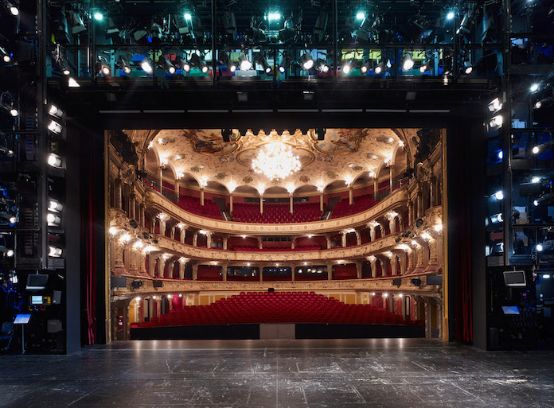
The Zurich Opera House was originally designed for spoken theater. It therefore has good speech intelligibility, but too little reverberation time for opera performances. This has recently been corrected using technology from the German Fraunhofer Society.

Zurich Opera House, view from the stage into the auditorium. Photo: Dominic Büttner

Since the beginning of 2016, the historically evolved, complex loudspeaker infrastructure has been supplemented by the "SpatialSound Wave" technology from the German Fraunhofer Institute for Digital Media Technology IDMT. It can extend the reverberation time of the room. A signal is added to the original sound source. This increases the acoustic impression of the room. Effects and surround sound can even be adjusted spontaneously in live operation.

The audio objects can be positioned so that they can be at different distances from the listener. Effects can even be positioned as if they were sounding outside the room. Sound effects can be edited live and spatial, three-dimensional soundscapes can be created - without having to change the sound system or the room.

The software uses a process known as wave field synthesis. This involves different speakers forming a new acoustic waveform. None of the speakers play the same signal. Each one complements the neighboring one and contributes to the overall sound.


get_footer();