The folk music collection by Hanny Christen

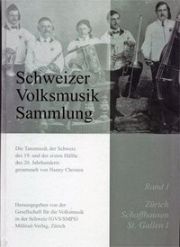
A unique compilation of Swiss dance music between 1830 and 1960 has been available for some time in a ten-volume edition organized by region.

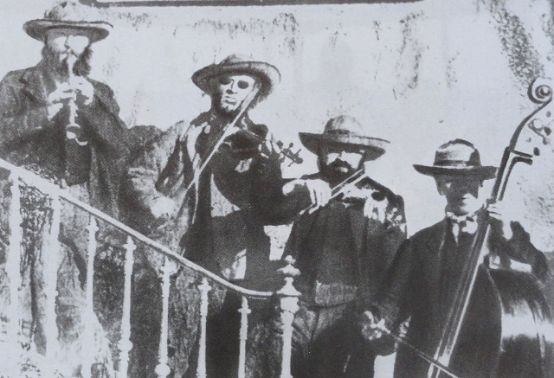
The Fränzli Waser chapel. Photo: Terra Grischuna 3/2013, wikimedia commons,SMPV

Between 1940 and 1960, the folklorist Hanny Christen (1899-1976) traveled through German-speaking Switzerland and compiled her huge collection of folk melodies. On the one hand, older minstrels played or sang to her, which she then wrote down in her little notebooks; on the other hand, she was sometimes allowed to copy entire dance books of the minstrels. As many of these musicians were already between sixty and eighty years old at the time, this collection goes back well into the 19th century.

Under the patronage of the Society for Folk Music in Switzerland (GVS) and under the direction of Fabian Müller, a team of authors worked for around a decade on the publication of this collection, which was found in the estate of Hanny Christen. In 2002 it was published as an encyclopaedia in 10 volumes with around 12,000 melodies, extensive illustrations and an additional index volume.

The publisher, the Society for Folk Music in Switzerland, and the Mülirad publishing house are now offering the complete edition at a particularly attractive price:

All 10 volumes + index volume: instead of Fr. 598.- only Fr. 200.-
Individual volumes CHF 30 each Volume IX out of print! 

Image

Volume I: Zurich, Schaffhausen, St. Gallen I, (with extensive information on the collection, on Hanny Christen and on Swiss folk music in general)
Volume II: St. Gallen II, Graubünden, Ticino
Volume III: Appenzell
Volume IV: Aargau, Basel I
Volume V: Basel II, Law
Volume VI: Fribourg, Valais, Bern I
Volume VII: Bern II, Solothurn
Volume VIII: Zug, Lucerne, Uri I
Volume IX: Uri II, Schwyz, Unterwalden I
Volume X: Unterwalden II, Glarus
Volume R: Index volume

Work grants from the Canton of St. Gallen

The Office for Culture of the Canton of St.Gallen is once again offering grants and residencies in Rome for artists this year. A sum of CHF 200,000 is available for funding in the fields of applied and visual arts, literature, music, theater and dance. The application deadline is March 20, 2014.

On the Capitoline Hill in Rome. Photo: Luigi Versaggi, wikimedia commons

The Cultural Promotion of the Canton of St.Gallen awards annual grants to artists. The grants support artists in the fields of applied and visual arts, literature, music, theater and dance with a budget-independent, fixed contribution. The support is intended to give artists the time they need to develop their ideas, projects or works or to further develop their artistic activities.

It is also possible to submit an individually tailored further education idea that includes a special residency or stage that specifically promotes further development. The work grants are intended to enable projects that give new impetus to artistic work or offer the opportunity to try out other forms of collaboration and encounters.

An additional funding opportunity is a stay in the studio apartment in Rome, which is now being financed in collaboration with the association Freunde Kulturwohnung Rom. An apartment in the lively San Lorenzo district is available there for three months at a time.

More info: www.sg.ch/home/kultur/foerderung/beitraege.html

Javier Hagen newly elected

The Annual General Meeting appointed Javier Hagen as Nicolas Farine's successor.

As announced by the company, Javier Hagen was elected by the General Meeting of Shareholders in Bern on December 15. Swiss Society for New Music (SGNM) - of the Swiss section of the International Society for New Music (IGNM) - as the new President. Hagen succeeds Nicolas Farine, who will continue to serve as Vice President of the SGNM. Max E. Keller (Secretary), Pierre-Alain Monot and Egidius Streiff will also join the SGNM Board.

Javier Hagen is a singer and composer, president of the IGNM-VS (International Society for New Music Section Valais), founder of the festival for new music Forum : : Valais, board member of Swissfestivals and with UMS 'n JIP one of the most active ensembles for contemporary new music. In 2013, he was awarded the Culture Prize of the Canton of Valais.

Death of ethnomusicologist Marcel Cellier

The name of the panpipe virtuoso Gheorghe Zamfir is inevitably associated with him: his discoverer for the West, the producer and organist Marcel Cellier, has died in Vevey at the age of 88.

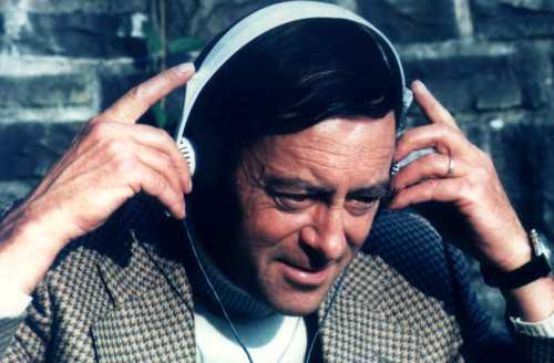
Photo: © Catherine Cellier / (Dajoeri panpipes)

Cellier, an amateur organist, originally worked in private industry as an accountant and salesman. This led to his contacts in Eastern Europe.

In the 1960s, he traveled with his wife Catherine to the then still inaccessible countries of Eastern and Southern Europe and documented the local folk music with tape and camera.

As promoter of the Bulgarian women's choir "Le Mystère des Voix Bulgares", he was awarded a Grammy in 1990. In 2012, his work was also portrayed with critical undertones in the documentary "Balkan Melody".

Recorded in a Lausanne church, Cellier and Zamfir's "Flûte de pan et orgue" embodies a piece of popular music history from the 1970s. It has sold over 1.5 million copies and triggered a boom in pan flute music and Eastern European folklore in Switzerland.

Handschin Prize for Musicology

Since 2007, the Swiss Music Research Society (SMG) has awarded the Handschin Prize for young musicologists every two years. In 2014, suitable candidates can apply directly to the society for the prize.

Jacques Handschin (with kind permission of Het Orgel/NL),SMPV

Doctoral candidates who completed their doctorate between January 1, 2012 and December 31, 2013 (including the defense) are eligible to apply.

They must also be Swiss citizens or have completed their doctorate at a Swiss institution or make a relevant contribution to Swiss music history with their dissertation; citizenship and academic affiliation are irrelevant.

Applications will be accepted by the SMG office until February 28, 2014; electronic applications can be sent to the secretary Benedict Zemp. The prize is endowed with CHF 10,000.

More info: www.smg-ssm.ch

Monika Grütters German Minister of State for Culture

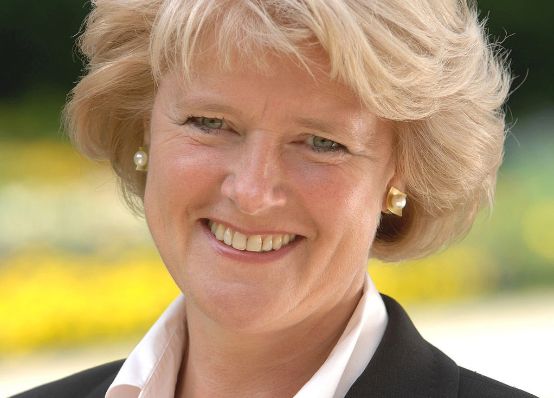
Monika Grütters, who chaired the German Bundestag's Committee on Culture and the Media during the last parliamentary term, will become Minister of State for Culture and the Media in the Federal Chancellery in the new cabinet.

Monika Grütters 2009 Photo: Christof Rieken, wikimedia commons

Johanna Wanka remains Minister for Education and Research. She will continue to be responsible for major model projects in cultural education, writes the German Cultural Council. Dorothee Bär, who headed the Digital Agenda working group during the coalition negotiations on the CDU/CSU side, will become State Secretary for Digital Affairs. Maria Böhmer, previously Minister of State for Integration at the Federal Chancellery, will become Minister of State for Culture at the Federal Foreign Office.

There will be no actual Federal Ministry of Culture in the new federal government. A number of federal ministries and the Federal Chancellery will be responsible for cultural policy. In addition to the Federal Chancellery, cultural policy will be actively pursued over the next four years, particularly in the Ministries of Foreign Affairs, Education, Economics, Labor and Justice.

Gema and music organizers reach agreement

The German copyright society GEMA and the Bundesvereinigung der Musikveranstalter e. V. (Federal Association of Music Organizers) have agreed on an overall contract. It regulates the remuneration for the use of the GEMA repertoire at individual events with live music or sound carrier reproduction as well as in music pubs or clubs and discotheques.

RainerSturm / pixelio.de

The agreement regulates the license remuneration of authors and their publishers for the use of their musical repertoire in four future tariffs: individual events with live music (U-V) or sound carrier reproduction (M-V) as well as the use of music in music pubs (M-CD II 1) or clubs and discotheques (M-CD II 2).

The newly agreed tariff structure is linear, i.e. the larger the event area and the higher the admission fee, the higher the copyright remuneration that the organizer must pay. Concert events are not affected by the structural reform. A separate tariff has applied to them since 2010.

More info: www.gema.de/veranstaltungstarife

Diapason d'Or for Bern Bach album

In the December 2013 issue of the French magazine Diapason, recorder player Michael Form and harpsichordist Dirk Börner - both lecturers at the Bern University of the Arts (HKB) - were awarded the Diapason d'Or for their album Bach Remixed.

Excerpt from the CD cover

On the album released on the Heidelberg label Note1, Michael Form and Dirk Börner group movements from Bach's works into six new recorder sonatas.

The recorder player Michael Form is a member of various ensembles. At the HKB, together with the harpsichordist Dirk Börner, who teaches in Bern and Lyon, he supervised the research project on the relationship between dance and music with Marin Marais.

Bach has taken a break in Leipzig

Anyone who was surprised that Johann Sebastian Bach's immense productivity never diminished his creative power can now take note of the fact that the Thomaskantor apparently also struggled with exhaustion syndromes. At least that is what a document newly discovered by the Bach Archive suggests.

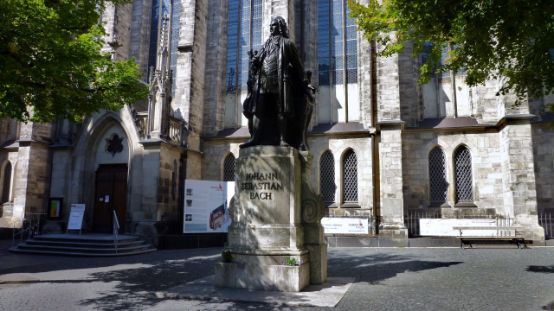
Bach memorial in front of St. Thomas Church in Leipzig. Photo: Makrodepecher / pixelio.de,SMPV

The document was discovered by an employee of the Leipzig Bach Archive in Döbeln. The letter from a Bach pupil proves that the composer largely withdrew from his duties as cantor and director of church music in the later years of his life. The last phase of the Thomaskantor's life has remained largely in the dark until now.

The discovery was made by private lecturer Michael Maul in the final stage of the research project "Systematic exploration of the lives of Bach's St. Thomas Boys Choir", funded by the Gerda Henkel Foundation, which began in 2012 to mark the 800th anniversary of the St. Thomas Choir.

Lucerne Festival announces competition

Lucerne Festival and the Lucerne Museum of Art are jointly calling for the diverse relationships between visual art and music, visual expression and sound to be made the subject of a competition: in 2014, the interface between the two disciplines will be promoted for the second time.

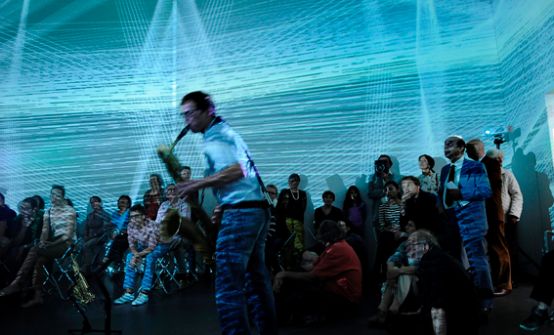
Soundzzz2013_PERFORMANCE_FISCHER_THEINERT. Photo: LucerneFestival / Peter Fischli

The competition is aimed at young, up-and-coming artists who develop a project on the theme of "Psyche" alone, in pairs or in threes. "Psyche" is the general motto of Lucerne Festival 2014, which will take place from August 15 to September 14. The violinist Midori and the soprano Barbara Hannigan will act as "artiste etoile", while the Korean Unsuk Chin and the Austrian Johannes Maria Staud will be "composer-in-residence".

This year, clarinetist Nils Fischer and light artist Kurt Laurenz Theinert created the first soundzzz project under the motto "Recode Revolution" in the "Revolution" exhibition at the Lucerne Art Museum. The museum space, exhibits and audience served as a projection surface for them - and thus became part of a light and sound spectacle. Numerous improvisation artists from Lucerne took part in the grand finale on September 13: dancers, performers and musicians.

The project now selected by the jury will be realized during the Lucerne Festival in summer 2014 in the exhibitions at the Lucerne Art Museum. The deadline for applications is Friday, February 14, 2014.

More info at www.lucernefestival.ch/en/lucerne_festival_academy/soundzz_2014/

First prize for Lausanne at Leipzig conducting competition

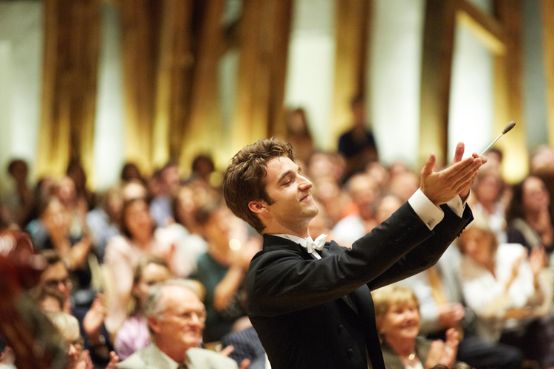
Lorenzo Viotti, the chief conductor of the Academic Symphony Orchestra of the Vienna University of Economics and Business, born in Lausanne in 1990, took first place in the conducting competition of the Central German music academies in Leipzig.

Lorenzo Viotti in June 2012 with the ASO in Vienna. Photo: © photonews.at/Georges Schneider

Viotti studies at the Franz Liszt University of Music Weimar in the class of Nicolás Pasquet and Martin Hoff. Second place went to Giedre Slekyte from Leipzig (class of Barbara Rucha) and third place to Johannes Köhler, another student from Weimar (class of Gunter Kahlert / Martin Hoff / Nicolás Pasquet).

Viotti began studying percussion at the age of 10. He graduated with honors from the Lyon Conservatory in 2008. At the same time, he studied piano and singing.

After numerous national concert appearances as an orchestral and chamber musician, he moved to Vienna in 2009 to continue his studies. Lorenzo Viotti has been chief conductor of the Academic Symphony Orchestra of the Vienna University of Economics and Business (ASO) since February 2012. In summer 2012, he was selected for the final concert of Nicolás Pasquet's Weimar masterclass with the Jena Philharmonic Orchestra.

New recommendations for Swiss copyright law

The Swiss working group on copyright (AGUR12), which was convened by Federal Councillor Simonetta Sommaruga in August 2012, has published its final report.

Photo: nmann77 - Fotolia.com

In the working group, artists and representatives of producers, industry, users and consumers spent over a year compiling and intensively discussing the numerous points of criticism of copyright in the digital age.

As a result, the AGUR12 proposes a package of measures with five key points: Improving information for consumers, expanding and thus increasing the attractiveness of legal offerings, simplifying the fight against piracy, increasing the efficiency and transparency of collecting societies and adapting the limits of copyright law to the latest developments.

These recommendations are aimed partly at rights holders and collecting societies and partly at legislators and the administration. Downloads from the internet should remain permitted; unauthorized uploads, on the other hand, remain prohibited.

The final report of AGUR12: www.ige.ch

Thomas Pfiffner succeeds Sylvester Vieli

The Board of Trustees has appointed the current Director of the Musikkollegium Winterthur, Thomas Pfiffner, to succeed Sylvester Vieli as of April 1, 2014.

Thomas Pfiffner. Photo: Musikkollegium Winterthur

Sylvester Vieli, who has worked for the Foundation since 1990 and was its Managing Director from 1992, is retiring. He has shaped the Foundation since its inception and played a key role in establishing it as one of the leading international institutions for the promotion of highly talented young musicians. According to the Foundation, it is thanks to his great professional, organizational and promotional skills that the Foundation's sponsored concerts, the International Orpheum Music Festival for the promotion of young soloists, the extra concerts and follow-up sponsorship programmes now enjoy an excellent reputation among audiences, experts, sponsors and artists.

Thomas Pfiffner will take up his new position on April 1, 2014. Until summer 2014, he will be at the Music College will continue to be available for artistic planning in order to facilitate the succession of the artistic directorship in the best possible way. Foundation President Hans Heinrich Coninx already worked with Thomas Pfiffner when he was Managing Director of the Zurich Chamber Orchestra. According to a statement from the foundation, he is delighted that Pfiffner has chosen Orpheum: "Thanks to his experience and broad network in the world of classical music, he is an ideal choice for our management team. He will continue our core idea of sponsoring concerts, but will also break new ground, as he has done so impressively at each of his previous professional stations".

www.orpheum.ch
 

Rhaeto-Romanic label

Contemporary music by Rhaeto-Romanic artists has its own label: R-tunes. In addition to producing recordings, it also acts as an artist agency for selected musicians.

Cover of the latest new publication: Pascal Gamboni, Tiara,SMPV

Behind R-tunes are Manfred Zazzi, sound engineer and co-owner and director of 571 Recording Studios in Zurich, and Michel Decurtins, journalist at Radiotelevisiun Svizra Rumantscha and radio play producer. For marketing, R-tunes is testing both "traditional" and new channels (sales in village stores or hairdressing salons) in addition to the usual industry channels. Perhaps the most difficult tasks for artists, administration and fund raising, are part of the offer. As an artist agency, R-tunes not only organizes album launches, but also tours. Concerts that go beyond the regional framework are also targeted. Rhaeto-Romanic music should also be presented on national and, if possible, international stages.

The repertoire ranges from singer-songwriters and performers to jazz and rap. About the Website the label's productions can be ordered. CDs by Rhaeto-Romanic artists published by the label itself are also available.

www.r-tunes.ch


Music is good for you

An inspiring overview of early childhood music education, from the first Swiss music daycare center to educational concerts. Report from the Lucerne conference "Learning music from an early age".

© Westend61 - Fotolia.com

How must educational experiences be designed so that children's individual potential can unfold? This is the core question of any educational endeavor, and it was also the core question of the lectures and workshops at the Lucerne symposium Learning music from an early age. Over a hundred instrumental teachers came to expand their knowledge, to get ideas for their daily work or to finally hear how best to work with very young children. Almost all of them - and this was discussed controversially during the coffee breaks - identified deficits in their professional training in this area.
After "jumping into the deep end" of teaching, many of the participating instrumentalists felt the need to deepen their pedagogical knowledge. In contrast to various CAS courses at Swiss universities, the Lucerne conference offered a concentrated, yet extremely broad and time-limited range of approaches, topics and case studies on early childhood music education with lectures and workshops.
The first task was to reflect on the current teaching situation. The Lucerne host Walter Hess noted that children today spend significantly more time in daycare centers than in small families. To what extent this means that there is still room for early childhood instrumental lessons at all or whether instrumental teachers should instead find their way into daycare centers and schools remained an open question.

Babbling ...
Even toddler caregivers can encourage children's natural interest through a conscious approach to music, as Stefanie Stadler Elmer from the Institute of Psychology at the University of Zurich explained. She showed how closely language development and learning to sing are linked. During the first year of life, the two are indistinguishable; the child's vocalization - the typical baby babble - sometimes tends more towards imitation of syllables, sometimes more towards intonation of different pitches and melodic connections. It is not until the second year of life that the child learns to distinguish between the two modalities, whereby imitating melodies is much easier than imitating syllables. The regularity of singing is much more in line with the natural perceptual and production abilities of infants and toddlers. Daycare centers should therefore offer their children a wide range of listening activities and incorporate voice, motor and sensory skills in equal measure. According to Stadler Elmer, even a one-day training course could result in educators becoming much more aware of the songs and musical rituals that can usually already be found in daycare centers. She has made concrete suggestions in her book Child and music which will be published in 2014.

... romp ...
Movement scientist Renate Zimmer emphasized how fundamental it is for children to find access to music through their own bodies. Her book Romping around makes you smart! alludes to the theory repeatedly expressed in the media that music makes you smart. Zimmer used numerous images to show that both stimulate the formation of synapses in children - and thus, to put it casually, make them "smart". Zimmer referred to anthropology, which sees humans as beings who are designed for movement and experience and who require the use of all their senses in order to form an image of the world and themselves. For children, this means that education must be an active process in which the child experiences its own self-efficacy. Self-will and stubbornness shape the child's basic attitude; both must be encouraged and challenged in the educational process. For example, a child should be able to find out for themselves whether they can hit the table with a peach just as sonorously as with a rattle. It is the intensive experience of all the senses that makes for effective learning. Zimmer did not deny that this also requires guidance from adults - after all, education is also a social process. However, awareness of the circumstances is fundamental. She recommended that the instrumental teachers present should not answer the frequently asked question about their profession with: "I teach violin." But rather: "I teach children."

... and play
Madeleine Zulauf from the Musique Recherche Zulauf formation showed how instrumental lessons can be enriched in concrete terms. She noted that the pedagogical use of playing is very widespread in kindergarten, but is hardly ever found in early childhood instrumental lessons in the sixth and seventh years. Even the youngest children learn traditionally how to reproduce given music. The didactics focus strongly on imitation and repetition and neglect the development of skills to develop their own musical language. This is where playful improvisation could be integrated into instrumental lessons. Zulauf showed examples in which young children are encouraged to musically accompany a picture book story with the instrument of their choice. It is important for the child to be provided with different instruments or sound generators and for the adults to appreciate the musical production. Instrumental teachers can then accompany these lessons by recording, listening and self-analysis by the child; they can introduce musical terms on the basis of the improvisation and encourage notation of the improvisation.

Improvisation was also used again and again in the subsequent workshops: be it as a rhythm game in the workshop Interactions of elementary musical experiences through movement in rhythmics by Sabine Hirtler from the Technical University of Kaiserslautern, be it as a musical response to a Ligeti piece in the workshop Between concert and education project: educational concert events with children, young people and a young audience with Barbara Stiller from the University of the Arts Bremen. Andrea Holzer-Rhomberg presented her string school Fiddle Max in which playing with magic sounds, the spirit of the bow and journeys to ear-tip land are elements of holistic learning, and Susan Young from the University of Exeter drew attention to the diverse everyday musical experiences and activities of children.
In the concluding panel discussion, the question was asked how parents could be persuaded to make music in early childhood. In addition to all the scientific studies that have now proven the benefits, Aron Braun, Managing Director of Musikalische KiTa Zimballothe first and so far only music daycare center in Switzerland, explains the reason for his commitment: "Because music is good for you."

 

get_footer();