"guethe wälsche Music"

Rudolf Franz Erwein von Schönborn (1677-1754) brought back the basis of a music collection from his trip to Italy, which he expanded throughout his life. It comprises around 150 printed scores and around 500 manuscripts.

«guethe wälsche Music»

Rudolf Franz Erwein von Schönborn (1677-1754) brought back the basis of a music collection from his trip to Italy, which he expanded throughout his life. It comprises around 150 printed scores and around 500 manuscripts.

A selection of cello sonatas from Count Erwein's music cabinet can be found on the recently released CD Viaggio italiano. It includes works by Platti, Abbate del Cinque, Romanelli, Vivaldi, Paganelli and Bassani, mostly in first recordings*.

Giovanni Benedetto Platti

Gennaro Romanelli

Ermengildo Abbate del Cinque

Ermengildo Abbate del Cinque

Antonio Vivaldi

Giovanni Benedetto Platti
Image

Audio samples courtesy of Sony Classical.

Viaggio italiano. Music for cello from the Schönborn Collection. Christoph Dangel, violoncello solo; Sergio Ciomei, harpsichord; Rosario Conte, theorbo/baroque guitar; Mara Miribung, violoncello continuo; Mayumi Hirasaki, violin; David Sinclair, violone. german harmonia mundi 88765488332

Kategorien

On the onward journey

Heavyweights of the musical canon challenge us to confront and reshape them. They keep us on the move. Thought fragments about looped canons, a jazzy winter journey, Mozart on the road and a noble savage at Waldeck Castle.

Photo: Picture kitchen
Auf der Weiterreise

Heavyweights of the musical canon challenge us to confront and reshape them. They keep us on the move. Thought fragments about looped canons, a jazzy winter journey, Mozart on the road and a noble savage at Waldeck Castle.

Music is progression in time. This not only applies to the course of a piece. Musical content also moves on. The familiar, be it an entire work or individual elements, reappears in a later epoch and is adapted to suit the musical "landscape". A process that runs through the entire history of music: Looking back and reshaping creates a network of relationships across the ages. Here are some connecting lines from current examples that have to do with travel.

Foot march with variations

In 1705, the twenty-year-old Johann Sebastian Bach traveled 400 kilometers from Arnstadt to Lübeck to hear the famous Dieterich Buxtehude play the organ. A long way for a traveler on foot. Long Walk is what pianist Francesco Tristano calls his concert program more than three hundred years later, in which he combines works by Buxtehude and Bach with his own creations.
Bach extended his stay to a quarter of a year on his own authority and when he finally returned home, he had impressions in his head that influenced his work and the history of European music. The 32-year-old Luxembourger must have traveled to the concert in Bern's Kleezentrum by plane or otherwise under the influence of others. Among other things, he plays Buxtehude's Aria La Capricciosa BUXWV 250 on the folk song Cabbage and turnipswhich may have been Bach's only contribution to the variation genre, the Goldberg Variationsand Bach's Partita No. 5 in G major BWV 829 - on the modern concert grand piano. He thinks it's a shame that classical music is treated as a kind of role play of the past, says Tristano, and doesn't care about the rules of historical performance practice. And then he continues the long march from history, striding into the present with Bach. Tristano also plays in clubs, sometimes working on the grand piano like a DJ. Now he is sending Bach's 14 Canons over the first eight fundamental notes the Aria of the Goldberg Variations BWV 1087 on its journey. He plays it with piano and electronics, leaves it to the room, lets it return from loudspeakers at different distances, surrounds it with noises, expects the condensed sounds back. A dialog across the ages. And the extraordinarily mixed audience now really gets going.

Long Walk, Francesco Tristano plays Buxtehude, Bach and Tristano, concert from May 5, 2013 at the Zentrum Paul Klee in Bern; Deutsche Grammophon 0289 476 5003 4 CD DDD GH

Stumbling in the snow

While Bach traveled back and forth, the wanderer in Schubert's Winter journey in a circle. Although he keeps moving like a fugitive, he remains hopelessly trapped. It is based on the cycle of poems of the same name by Wilhelm Müller, which was published in the collection Gedichte aus den hinterlassenen Papieren eines reisenden Waldhornisten. This heavyweight of the song repertoire has also recently changed horses once again. Mathias Rüegg, the founder and long-time director of the Vienna Art Orchestra, has arranged half of the songs for jazz quintet; and the young singer Lia Pale interprets them with astonishing impartiality. Pale has translated Müller's texts into English, often abridged. It sounds light and yet melancholy, supported by a very clear, heavily thinned-out instrumental sound. Do you really want to give in to the first reflex, which demands a weightier voice for these lyrics? On a second listen, it makes sense to read these songs, detached from the usual instrumentation, as the painful self-exploration of a person in any situation in life, as stumbling steps after the failure of a love, a path taken so far. Pale has written the last song with the eponymous conclusion Gone too far overwritten. Does it take back the boldness of the treatment after all? Let us rather read it as a statement that there is no return to old patterns from such a journey of the soul. For this kind of continuation of lyrical tradition does not seem to me to go too far.

Lia Pale: gone too far. Composer: Franz Schubert aka berT; arranger: Mathias Rüegg aka shoE. Lia Pale, vocals, piano; Ingrid Oberkanins, percussion; Hans Strasser, bass; Harry Sokal, reeds; shoE, piano. Universal Music 0602537296613


Image

Barouche to success

The "Wunderkind Journey" is more about (re)commemorating and exploring than creating new works. On June 7, 1763, the Mozart family set off with seven-year-old Amadé to convince princely courts in Germany and Austria of the little boy's talent. Now, 250 years later, this journey is being retraced under the auspices of the German Mozart Society - right up to the heavily laden calash that set off from Salzburg on June 7, 2013. For the press photo, even actors climbed into the vehicle and empathized with the excitement of the travellers. In collaboration with 44 local organizers, concerts, lectures, guided tours and theater performances will take place in 18 cities along the route on the historically correct dates. Participants include Concerto Köln, l'arte del mondo, the Pleyel Quartet, Michael Quast, Reinhard Goebel and the Bayerische Kammerphilharmonie as well as the Ludwigsburger Schlossfestspiele. An extensive catalog documents the journey.

250 years of the Wunderkind journey - With the Mozarts through 18 German cities. 

Widely traveled novel hero on the opera stage

As a rule, an opera has already undergone a journey of adaptation before music comes into play: the plot is based on a literary model or a folk tale and has been reworked into a libretto. This also applies to André-Ernest-Modeste Grétry's Le Huronfirst performed in Paris in 1768. It is unusual that this journey only leads to Switzerland almost 250 years later. The material is based on the novel L'ingénu by Voltaire, which incorporates the idea of the noble savage. An Indian from the Huron tribe is brought from Canada, a former French colony, to France, where he finds his distant relatives again and - after so much discomfort - also finds love. In contrast to Voltaire, the story has a happy ending on the opera stage; Grétry has reworked the material into an opéra comique. It is now at home at Waldeck Castle from August 9 to 17.

André-Ernest-Modeste Grétry: Le Huron. cantus firmus consort on period instruments; musical direction Andreas Reize; stage direction Georg Rootering. Swiss premiere.



Kategorien

Danielle Nanchen, who previously worked for Pro Helvetia as Head of Programs, will become the new Head of the Cultural Creation Section of the Federal Office of Culture.

Nanchen will take up her post on September 1, 2013. She succeeds Franziska Burkhardt, who has held this position for three years.

Danielle Nanchen was born in Valais and lives in Zurich. She studied philosophy, art history and literature at the University of Lausanne. She worked as exhibition director of the Arteplage Murten for Expo.02, then supervised numerous cultural projects and finally headed the programs department at the Pro Helvetia Foundation.

As Head of the Cultural Creation Section, Danielle Nanchen will be responsible, among other things, for the development of the Federal Cultural Awards, which the Federal Office of Culture has launched in new cultural sectors following the entry into force of the Cultural Promotion Act.

What are the sparrows whistling from the rooftops?

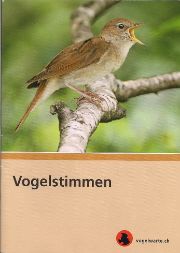
A brochure from the Sempach Ornithological Institute explores bird calls from a biological and musical perspective.

Nightingale on the magazine cover

In the 18th century, young songbirds were kept and melodies were played to them. They were supposed to memorize the tone sequences, "recordari" in Latin, and then whistle them. Recorders were often used for this instruction, which gave them their English name "recorder". There were even collections of melodies that recommended suitable tunes for different bird species.

This brings us to the subject of this publication, which sheds light on bird calls and songs, particularly at the interface with music. The author Christian Marti is an amateur musician himself and has collected material on the subject for over 20 years. You can feel this in every sentence of the 32 pages. Doors to broad ornithological fields of research and a rich musical repertoire are opened, and yet the text is pleasantly readable, one might almost say relaxing, which is perhaps due to the fact that it all begins on an early spring morning: Who starts singing when? And what is it actually for? Do only males sing? Why do we sometimes think in late summer that the birds have all disappeared? Birds don't have vocal chords. So how do they sing? What are calls, what are songs? Are starlings mocking us when they imitate sounds? Is a young cuckoo that makes as many begging sounds as the four-headed brood of its host family also fed four times over? How does birdsong change when there is constant ambient noise? And how is birdsong recorded at all?

More biological questions are being replaced by increasingly musical ones. It is about composers who have written bird calls into their works, about a kind of hit parade of the most frequently quoted species and also about bird calls on tape in the concert hall

The best thing is that all the bird calls and music examples mentioned are on the Website of the ornithological station to listen to! A really worthwhile thing - even the sparrows are whistling it from the rooftops.

Image

Christian Marti with contributions by Gilberto Pasinelli, Vogelstimmen, (=Themen aus der Vogelwelt, Heft 70),
32 p., Fr. 5.00, Swiss Ornithological Institute Sempach 2013, info@vogelwarte.ch
The booklet is also available in French and Italian.

Philippe Trinchan, currently Head of the Press and Information Service of the Swiss National Science Foundation (SNSF), will take over as Head of the Fribourg Office for Culture from October 1, 2013.

Trinchan will hold the office from October 1 to November 30, 2013 with a 50% workload and full-time from December 1, 2013.

Born in Fribourg in 1965, Trinchan studied history and geography in his home town and information and communication sciences in Poitiers and Bordeaux. In 2001, he took over as head of the Communication Division of the Swiss National Science Foundation (SNSF).

He is a member of the board of the International Festival of Sacred Music of Fribourg, vice-president of the Fribourg theater group Claire, board member of the French-speaking history association of the canton of Fribourg and member of the foundation board of the Castle of Gruyères.
 

A wealth of experience

Folkloristic pieces for ensembles of your choice.

Photo (detail): andrei310/depositphotos.com

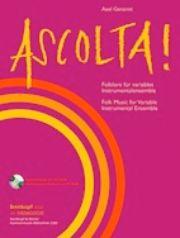
Ascolta! is a collection of pieces, multicultural folk music from Argentina via Ireland, Western Europe and the Balkans to Russia. It was created as part of the many years of work by the editor Axel Genannt with folk ensembles at the music school in Bad Vilbel near Frankfurt am Main. The 14 pieces have therefore been tried and tested many times and are guaranteed to be well received by the pupils.

Thanks to the included CD-ROM, sheet music in C or Bb can be printed out, and guitar tablatures and song lyrics can also be called up. The instrumentation is variable: the author makes suggestions, and some styles require certain instruments - but there are no limits to the imagination! Balalaika or charango can also be played on octave guitars and for the percussion instruments the booklet gives instructions for playing with the tambourine or with soup spoons or recommends buying a washboard at a flea market. You can also improvise over the musical text. All pieces are placed on a music stand (in score form) and can be repeated at will, which encourages individual variations. The accompanying booklet, which also contains the printed music text along with ethnomusicological explanations of the individual pieces, provides suggestions and tips.

Axel Genannt is a classical guitarist by training and has a wealth of pedagogical experience in leading mixed playing groups. He has also performed with his students at the European Youth Music Festivals in Budapest, Linz and Rimini.

The title Ascolta! is intended to encourage people to listen to each other. This collection offers a fun introduction to the world of improvisation.

Image

Axel Genannt, Ascolta! Folklore for variable instrumental ensemble, playing material on CD-ROM, KM 2285, € 26.00, Breitkopf & Härtel 2012

Tschumi Prize of the HKB goes to Pavel Yeletskiy

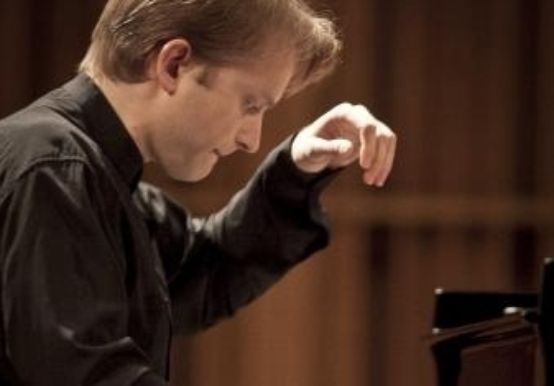
A soloist and four soloists from the HKB successfully completed their Master of Arts in Specialized Music Performance with a gala concert at the Kulturcasino Bern. The pianist Pavel Yeletskiy received a special award - the 2013 Eduard Tschumi Prize, worth CHF 12,000.

Photo: zvg

The Tschumi Prize is awarded annually for the best soloist examinations at Bern University of the Arts (HKB). The Belarusian pianist Pavel Yeletskiy from Tomasz Herbut's class impressed the jury with his interpretation of Prokofiev.

The pianist Meghan Behiel, the guitarist Ye Fan, the bass clarinettist Vincent Hering and the accordionist Rade Mijatovic have also successfully completed their Master's degree in Specialized Music Performance - the highest level of education at the HKB in the field of music.

Under the direction of conductor Frank Ollu, the Bern Symphony Orchestra accompanied the four soloists and the soloist. The gala concert is one of the highlights of the HKB's anniversary year, which is celebrating its tenth birthday in 2013 with numerous events.

Ready for the school stage

Dialect musicals didactically prepared for the lower school.

Illustration: marumayfay/depositphotos.com

Magic castle, wishing machine, music from all over the world, earth, water, air and feet - is the name of the four musicals by Christina Schaffner that . In the Magic castle and the children have to free themselves - singing, dancing and acting - from the captivity of a wizard. With the musical Wishing machine they can transform themselves into other creatures. Into Martians or pirates, into cats or princesses. Music from all over the world sets the framework for a musical journey around the world, an open concept that adapts to the situation of the school class, depending on the countries the children come from. Earth, water, air and air - a tried and tested subject that is ideal for theater and music. But how do you do it, how do you create a musical with a school class that can be performed? This book provides clear and understandable instructions and gives tips on directing, roles, the stage and props. Songs, dances and raps are ready to go. The enclosed CDs contain the sheet music for the songs and recordings of performances. These could certainly be a little more musically mature. But they are certainly authentic.

The individual musicals take about one lesson; the time required for rehearsal is 30 hours. Ideal for a class camp.

Image

Christina Schaffner, Vier Mundart-Musicals für 6- bis 10jährige Kinder, workbook, GH 11753, with CD-Rom (playbacks and piano sheet music), Fr. 59.80, Hug Musikverlage, Zurich 2012

The "WahnWitz" finds its way into the federal city

28 local organizers are joining forces for the 4th Bern Music Festival in September. The festival also includes the STV Tonkünstlerfest, contemporary sounds for an annual marching organ and sound artist Lara Stanic as artist in residence.

Lara Stanic; Photo: Andreas Pfister

The festival will be opened by the Bern Symphony Orchestra with Beethoven's "Missa Solemnis" and works by Vincent de Roguin (world premiere), Daniel Glaus (world premiere) and Roland Moser.

Initiated by the Basellandschaftliche Neue-Musik-Festival Rümlingen, a traditional annual marching organ docks at several Swiss festivals. The Egyptian composer Wael Sami Elkholy has written a composition for the Bern Music Festival.

As part of a cooperation with the Waldau Psychiatric Clinic, there will be special concerts in the clinic's chapel as well as a music therapy workshop, and Eric Satie's famous piano piece "Vexations" will be played in the festival center ten times for two hours, alternating continuously throughout the opening hours.

As Artist in Residence, music performer Lara Stanic is developing five ten-minute and one one-hour music performance on the theme of lunacy - as a bracket around the festival's programs and venues.

Other events include a spoken opera by Elfriede Jelinek ("Kein Licht"), the founding of a competence center for music education, a folk music jam session, a musicological conference on "Wahn und Widersinn" and a performance by the Sinfonie Orchester Biel Solothurn with actor Anatole Taubman.

As part of a cooperation with the Swiss Musicians' Association (STV), the Swiss Musicians' Festival will also take place on the first weekend of the festival. Numerous Swiss composers and performers will present new works, improvisation programs and sound installations.

More info: www.musikfestivalbern.ch

This is the fourth time that the MusikPro Valais commission has awarded grants to musicians, bands, ensembles or institutions. A total of three multi-year grants have been awarded.

15,000 francs will go to the musician Estelle Revaz; Sylvie Bourban and the Upper Valais band "Le Pot" under the direction of Manuel Mengis and Hans-Peter Pfammatter will each receive 30,000 francs.

Pascal Rinaldi will receive CHF 10,000 for a composition project. In the area of collaboration between professional and amateur artists, the "Journées Internationales de la guitare de Sion" and the Visper Ensemble will receive support in the amount of CHF 12,500 and CHF 20,000 respectively.

The Cantonal Department of Culture also selects 5 to 10 sound recordings each year for distribution in the professional music sector. Applications must be submitted before October 31. After this date, a jury of experts awards grants of between CHF 1,000 and CHF 5,000 to the most convincing projects.

Belgian award for ZHdK lecturers

See Siang Wong, lecturer at the Department of Music at Zurich University of the Arts (ZHdK), has received a Belgian Golden Label Award for his latest Schubert album, which includes the Impromptus and the A major Sonata D 664.

The Belgian Classical Music Prize is awarded by an independent jury of experts and is the equivalent of the Dutch Edison Prize, the French Diapason d'Or and the German ECHO. The award ceremony took place on Sunday, June 23, 2013, in the city theater of Mechelen (Belgium).

See Siang Wong studied in Holland with Marjès Benoist and in Switzerland with Homero Francesch and Bruno Canino. From 2006 to 2008 he was a guest lecturer at the Lucerne University of Music. He has been teaching at the Zurich University of the Arts since 2002.

See Siang Wong has recorded six CDs for the Decca label. Further recordings have been released by Deutsche Grammophon, Guild, Novalis, ZHdK Records, Liverpool Records as well as Rose and in 2012 his first album on RCA Red Seal (Sony Music) with piano works by Franz Schubert.

Award for Beat Gysin

The cultural prize will be presented to the composer on August 19.

Beat Gysin. Photo: ©Roland Schmid

To promote cultural activities and recognize significant cultural achievements, the municipality of Riehen awards an annual cultural prize of 15,000 Swiss francs. The jury for the cultural prize of the municipality of Riehen has awarded the prize for 2012 to the composer Beat Gysin, according to the municipality.

Beat Gysinborn in 1968, studied piano, chemistry, composition and music theory in Basel. Coming from a family of musicians, he has written over fifty works, some of them award-winning, for various ensembles since his youth. In addition to classical composition, Beat Gysin is particularly interested in the spatiality of sound phenomena and the creation of surprising sound spaces.

The official presentation of the 2012 Culture Prize will take place on Monday, August 19, at 6.30 pm as part of a public ceremony in the village church in Riehen. The laudatory speech will be given by Rahel Hartmann Schweizer, art and architecture historian. On the occasion of the award ceremony, the composition Babjosh by Beat Gysin with the pianist Irina Georgieva.
 

St. Gallen: Work contributions and stays in Rome

Ten artists from St. Gallen will each receive a work grant of CHF 20,000 for the realization of projects. In addition, four artists will each be able to spend three months developing and pursuing their projects in a studio apartment in Rome. Three prominent musicians are among the recipients.

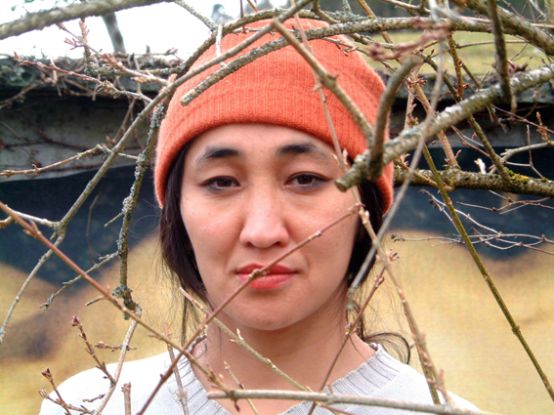
Saadet Türköz. Photo: © Paul Jacquat, Switzerland

Saadet Türköz (resident in Zurich) and Fa Ventilato (Brooklyn NY) will receive a work grant. Simon Winiger, who also lives in Zurich, can complete a residency in Rome.

The project ideas and application dossiers were first assessed and selected by specialist juries. In a second step, all the jury members involved nominated the artists who have now received a work grant or a residency in the Römer studio apartment.

Bern Biennale restructures Board of Trustees

The Board of Trustees of the Bern Biennale is being replaced. The previous director Roman Brotbeck will be replaced by Gabriela Eigensatz from Lucerne, who worked as a cultural attaché for Swiss representations abroad until 2012.

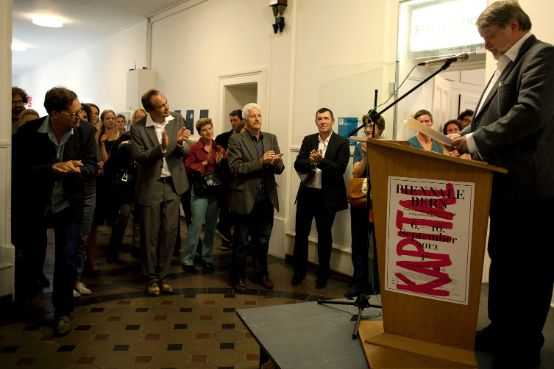
Roman Brotbeck at the opening in 2012, photo: © Loulou d'Aki

Brotbeck played a key role in establishing and developing the transdisciplinary festival and has directed the last three editions (2008, 2010, 2012), the Biennale writes in a press release.

Eigensatz will coordinate the Bern Biennale 2014 Board of Trustees with immediate effect. The other members of the Board of Trustees are Kathleen Bühler, Peter Fischer, Sophie-Thérèse Krempl, Maike Lex, Christian Pauli, Raphael Urweider and Georg Weinand. Together they will design the program for the upcoming festival, which will take place in September 2014.

Gabriela Eigensatz studied Latin American literature in Mexico City and graduated as a Hispanist from London University. While still a student, she joined the Swiss Federal Department of Foreign Affairs.

Since then, she has worked as a cultural attaché at the Swiss representations in Washington, Madrid and New York. Her last post was in Berlin, from where she returned to the head office in Bern in April 2012.

Festival les muséiques redimensioned

The Basel Festival organizes a concert day at the end of September.

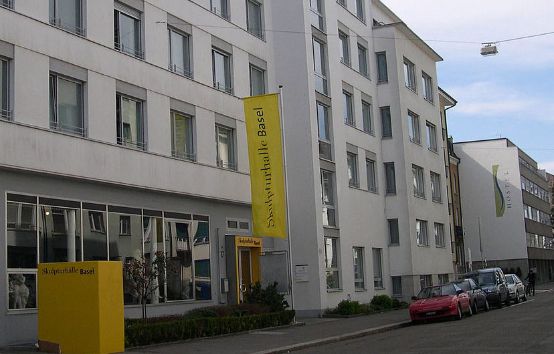
One of the venues, the Skulpturenhalle Basel. Photo: Basmus, wikimedia commons

The music festival les muséiques has been held in Basel's museums every year since 2001. According to the festival management, this year for the first time it will not last several days as usual. A concert day will be held at the end of September and from 2014 the festival will take place every two years.

The reasons, says artistic director Florence Sitruk, are the restructuring of the sponsorship landscape and the new organizational team, which needs time to fulfil these tasks. The festival last took place under her aegis in September 2012 and was praised by the local and international press. Sitruk is confident and calls the festival, which she took over from Peter Sadlo in 2010, "a jewel for bringing all the arts together".
 

get_footer();