Just weeks after the dissolution of the Greek ERT orchestra, another European radio orchestra has suffered the same fate: the Netherlands Radio Chamber Philharmonic is on the brink of collapse. The lights are also being turned out in Mallorca.

According to a report in the Australian trade journal "Limelight", the ensemble will give its last concert at the Royal Concertgebouw on July 14. The orchestra, founded in 2005 and led by Jaap van Zweden at the time, is a victim of the desolate Dutch state finances.

The orchestra, which won the prestigious national Muziekgebouw Prize in 2008 for its interpretation of Richard Rijnvos' "NYConcerto", has made a name for itself above all with its commitment to contemporary music.

As early as 2010, there were attempts to cut public funding for the orchestra. This was prevented at the time.

The closures of state-funded orchestras in Holland and Greece are not the only ones in Europe. The Orquesta de Baleares in Mallorca, which is also no longer receiving public funding, is also being liquidated.

Swiss success at the Belvedere competition

The Swiss mezzo-soprano Eve-Maud Hubeaux took second place ex aequo at the renowned International Hans Gabor Belvedere Singing Competition in Amsterdam.

Photo: © by courtesy of Vera Markus

The winner of the competition is the South Korean baritone Dong-Hwan Lee. He prevailed in the final against twelve other finalists. The first prize is endowed with 7,000 euros and is regarded as an important door opener to the world's major opera houses.

Eve-Maud Hubeaux shares second place with the Russian baritone Roman Burdenko. Tenor Rheinaldt Moagi received the audience prize and the award from the international media jury.

Pre-selections for the Belvedere Competition, which was launched in 1982, are held in 50 cities around the world. The jury consists of artistic directors, opera and casting directors from major opera houses. Previous winners include Angelika Kirchschlager, Ildikó Raimondi, Peter Edelmann and Elina Garanca.

More info: www.belvedere-competition.com

Swiss pop music demos 2013

m4music, the pop music festival organized by Migros Culture Percentage, has released the compilation "The Best of Demotape Clinic 2013".

Winner of the Demotape Clinic 2013. photo: Pete Cameron Dominkovits, m4music,SMPV

"The Best of Demotape Clinic 2013" offers a unique insight into the work of up-and-coming Swiss pop music artists. The CD will be produced in an edition of 6000 copies and will be sent to decision-makers in the Swiss music scene. It will not go on sale.
 
For the 15th Demotape Clinic, newcomers from all over Switzerland submitted 777 demos in the categories pop, rock, urban and electronic. A jury listened to all the tracks and presented the best of them at the m4music festival in March 2013. Industry professionals commented on the demos publicly in front of the festival audience and gave the bands valuable tips. The "Demo of the Year" 2013 prize went to the Rhine Valley band Pedro Lehmann for the song Hurricane.
 
The most exciting demos, including the winners of the Suisa Foundation Awards, have been brought together for the eighth time on a CD compilation. The groups represented come from all over Switzerland: from Basel to Ascona, from Geneva to Altstätten. Migros Culture Percentage is sending the CD to the most important players in the Swiss music scene, such as music journalists, club owners, bookers, music and label managers, in order to draw their attention to up-and-coming artists.

The CD can be listened to and - while stocks last - ordered free of charge at www.demotapeclinic.ch

WEKO opens investigation into stringed instruments

The Competition Commission (COMCO) has opened an investigation into the Zofingen-based instrument dealer Musik Olar AG. A search of the company's premises has been carried out due to concrete indications of the existence of unlawful competition agreements under antitrust law.

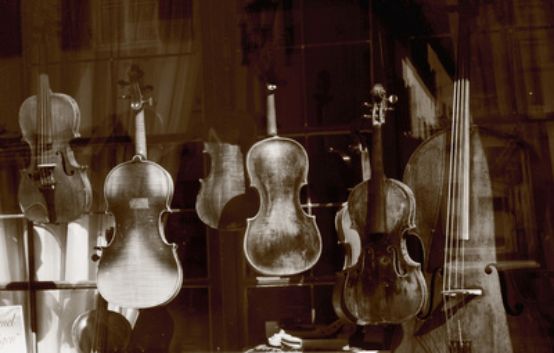
Photo: Djscho (Joachim Frewert) - Pixelio.de

With regard to the distribution of stringed instruments, the competition authorities have concrete information that indicates the existence of agreements on minimum or fixed prices (so-called second-hand price fixing), writes the Federal Administration. In particular, guitars, basses and accessories of the brands Ibanez, Martin and Fulltone are affected.

According to this information, Musik Olar AG systematically exerted pressure on its resellers, primarily by directly influencing their pricing and discount policies.

There were also indications that the price fixing of the second hand had been achieved with the involvement of other market participants. The purpose of the investigation is to examine whether there are any unlawful competition agreements in the aforementioned sense.

A shining winner from Israel

The 29-year-old pianist Boris Giltburg won this year's Concours Reine Elisabeth. His interpretation of Beethoven's Piano Sonata No. 27 and Rachmaninov's 3rd Piano Concerto delighted the jury and audience alike.

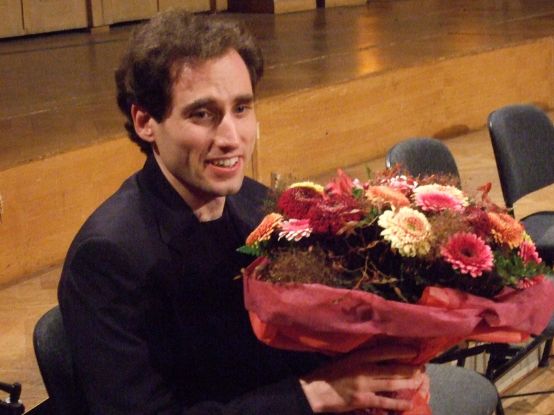
Boris Giltburg. Photo: Martin Studer

At the age of five, Boris Giltburg emigrated with his entire family from the former Soviet Union to Israel. The likeable and modest winner is no stranger to success, having already won 2nd prize at the Santander Competition in Spain in 2002, 1st prize at the Vendome Competition in Lisbon in 2003 and 2nd prize at the Arthur Rubinstein Competition in Tel Aviv in 2011. He has also performed several times in Switzerland. In addition to his inspiring musicality, Boris Giltburg impresses with his ability to converse fluently in Hebrew, Russian, English, French and German. His name indicates a German origin, but his family history, as he explained, cannot be traced back more than three generations through the turmoil of history. In addition to his main occupation as a pianist and musician, he shows great interest in (German) literature, painting and, more recently, photography. This interdisciplinary approach to art is audibly reflected in his musical interpretation. His touching playing is extremely differentiated and rich in nuances, so that the music becomes an agogically breathing and even the pauses become a sounding experience. The fact that technique is never an end in itself, but is always used thoughtfully in favor of the music, sets Boris Giltburg far apart from many of the twelve finalists from nine countries. It will be interesting to see where his path will lead.

Rémi Geniet
The 2nd prize went to the 21-year-old Frenchman Rémi Geniet, who fascinated and convinced the jury with his poetic playing and differentiated touch in Beethoven (Sonata No. 9 op. 14/1) and the contemporary compulsory piece In the Wake of Ea by the young French composer Michel Petrossian. He understood very well how to create a balance between melody and harmony and how to realize gradual gradations in dissonances audibly.

A journey through time and styles with piano works by Aargau composers.

Von einer Wanderung op.17: No.1 Ausfahrt,Von einer Wanderung op.17: No. 20 Das schöne Hexlein Heiderlau,Elegie - Barcarola: Andante con moto

The Aargau pianist Beata Wetli has published a small anthology of Aargau composers from the 19th and 20th centuries under the title Aargau hikes recorded. It is immediately audible how predestined the piano has been since the early Romantic period to create a poetic atmosphere, to parade, dream, narrate, fantasize and capture moods even for less spectacular soundscapes. Pictorial and poetic are the most fitting attributes of this recording, which, in addition to a great stylistic variety - from early Romantic tonal language to late Romantic-Impressionist suggestions to neo-classical sound structures, everything can be heard - also offers first recordings.
The focus is on the 22 short piano pieces From a hike (op.17) by Werner Wehrli. His masterly cycle is synonymous with the programmatic title of the CD. In addition, works by Friedrich Theodor Fröhlich, Ernst Widmer, Emil Frey, Walther Geier, Ernest Bloch, Busoni master student Robert Blum and, fortunately, the multi-talented Peter Mieg can also be heard. And it is also clear that some composers were not included, such as Carl Attenhofer, Hermann Suter and Heinrich Sutermeister.
This may be regrettable at first. But in view of the urgency of Wetli's impressionistic refinement of sound, which is also captured very favorably in terms of sound technology, one can hope that a follow-up edition is planned with other composers. It would be desirable. Aargau offers an inexhaustible source of piano music spanning 150 years. In any case, this recording whets the appetite for more.

About JW Player 6.0.2813...

    00:00           

00:00

 00:00 


Fullscreen


Werner Wehrli (1892-1944)
About JW Player 6.0.2813...

    00:00           

00:00

 00:00 


Fullscreen


Werner Wehrli (1892-1944)
About JW Player 6.0.2813...

    00:00           

00:00

 00:00 


Fullscreen


Friedrich Theodor Fröhlich (1803-1836)
Image

Aargauer Wanderungen. Piano music by Aargau composers from 150 years. Beata Wetli, piano. Wiediscon WD 9451

Members of the Tonhalle Orchestra Zurich (conducted by David Zinman) and the Zurich Konsi Strings (conducted by Philip A. Draganov) are holding a charity concert on September 14, 2013 for the benefit of the "Child and Cancer" research foundation.

The Swiss Research Foundation "Child and Cancer" systematically supports pediatric cancer research and makes financial contributions to projects selected by the medical expert committee that are close to the clinic.

The knowledge gained from the research projects should enable specialists to make more precise diagnoses and develop specific forms of therapy. In this way, "Child and Cancer" helps to further improve the chances of recovery for children suffering from cancer.

All proceeds from the Benfiz concert go to the foundation. The musicians, conductors and soloists donate their fees in full - the Tonhalle also waives the reimbursement of costs.

Beethoven's "Egmont" Overture and Triple Concerto as well as Piazzolla's "Cuatro Estaciones Porteñas" will be performed. Tickets for the benefit concert are now available in advance at the Tonhalle.

More info: www.tonhalle-orchester.ch

One book takes on too much with the topic of "music and the brain" and occasionally slips up.

In just 190 pages, Thomas Richter manages to cover the topics of "Music and the brain", "Music and the history of mankind" and even "The future of the brain". Respect, you might say, especially as these are not only major problem areas, but also largely unexplored topics, even prophecies. Richter does not presume to be able to clarify everything he addresses. "Much remains open," he says at the end of the book. Right at the beginning, the former pianist and current consultant to pharmaceutical companies rightly admits: "Brain research will have to make a clear distinction between what it can say and what lies outside its area of responsibility, just as musicology (...) has a lot to say about Bach's fugue, but must remain silent when it comes to explaining its unique beauty." (S. 8)

The relativization of more or less scientific methods leads Richter to a feuilletonistic tangle of various strands of argumentation. Evolutionist theories eke out a refreshing existence, joined by more strictly orthodox medical discussions about how our brains work, subjective comments on our own music preferences or speculations about the frequency variations of our chamber tone. This is certainly entertaining; the author's skills are convincing in his depiction of the immense brain power involved in listening and making music. As the book progresses, however, the impression of a certain verbosity becomes apparent; too much seems to have been simply shaken out of the sleeve. And time and time again, Richter's subjectivisms lead him onto the slippery slope. He slips up completely when he repeatedly refers to "twelve-tone music" or "neo-tones". While Friedrich Blume once misused the "natural phenomenon" of music to deny electronic music its right to exist, Richter's approach is no different in principle. For him, it is the (natural) brain that is obviously not prepared to take the step from tonality to atonality, from the beautiful melody to the incoherent collection of notes in the Schoenberg style: "The brain resists the atonal, dissonant pieces of twelve-tone music, no matter how much it has influenced music theory and compositional practice in the 20th century." (S. 45)

In the long run, such regressive stereotypes not only come across as gossipy, but also annoying. Especially when the workings of the brain are, in one's own words, unexplained, especially when the omnipresent quota comes into play in an unspeakable (but suddenly unpleasantly contemporary) manner. The dismissal of Dortmund's general music director, who had to go because he was concerned about contemporary music and, as a consequence, because of "dramatically declining capacity utilization" (p. 45), serves as proof of the fact that music after Schönberg is not adapted to human receptivity. So may the classics once again be granted an infinite life! So far at least, concerts with Beethoven and Schubert have always been full.

Image

Thomas Richter, Why you shouldn't listen to Wagner in the car. Music and the brain, 200 p., € 8.95, Reclam, Stuttgart 2012, ISBN 978-3-15-020255-5

The singer-songwriter duo Princess And The Bear waited a whole six years to release their debut. Now they are impressing with songs full of grace.

Princess And The Bear sounds like a fairy tale. And not so much like the Alps or Hamburg. But the duo have left a good piece of their hearts in the harbor of the northern German metropolis and released their first album Sleeping In The Bee House in a wooden hut on the Bürgenstock. This is also where the two of them spent the night during the recording - as the title suggests, in a converted beehive. It is quite possible that this is why the work seems so intimate. Like a ballad in a confined space.

The division of duties in Princess And The Bear is clear: Simone Schorro is the siren who sings and plays the glockenspiel, while guitarist Michael Tobler acts as a silent partner and cue man. Although the two joined forces six years ago, they are still Sleeping In The Bee House their first joint musical testimony. And what a testimony it is. The Lucerne native and the Zurich native create airy song creations of folk, jazzy pop and an all-encompassing melancholy that, despite their heavy content, also have a gentle momentum. Princess And The Bear keep a decidedly low tempo, basking in a well-tempered atmosphere and devoting themselves to fragility.

Schorro's vocals take center stage, circling, swaying and determined; her voice sounds like a message in a bottle on a high but calm sea. In keeping with this, an accordion groans like a bending plank on pieces such as "100 Years" or "I Still Miss You". The songs, as supple as they are gnarled, tell of butterflies, doors or anchors, are more dreamy than playful and full of distortions. The album speaks of longing. And strength. So much so that it is clear: Sleeping In The Bee House is an event.


Image


Princess And The Bear: Sleeping In The Bee House
www.princessandthebear.ch

Why you shouldn't listen to Wagner in the car

One book takes on too much with the topic of "music and the brain" and occasionally slips up.

Excerpt from the book cover

In just 190 pages, Thomas Richter manages to cover the topics of "Music and the brain", "Music and the history of mankind" and even "The future of the brain". Respect, you might say, especially as these are not only major problem areas, but also largely unexplored topics, even prophecies. Richter does not presume to be able to clarify everything he addresses. "Much remains open," he says at the end of the book. Right at the beginning, the former pianist and current consultant to pharmaceutical companies rightly admits: "Brain research will have to make a clear distinction between what it can say and what lies outside its area of responsibility, just as musicology (...) has a lot to say about Bach's fugue, but must remain silent when it comes to explaining its unique beauty." (S. 8)

The relativization of more or less scientific methods leads Richter to a feuilletonistic tangle of various strands of argumentation. Evolutionist theories eke out a refreshing existence, joined by more strictly orthodox medical discussions about how our brains work, subjective comments on our own music preferences or speculations about the frequency variations of our chamber tone. This is certainly entertaining; the author's skills are convincing in his depiction of the immense brain power involved in listening and making music. As the book progresses, however, the impression of a certain verbosity becomes apparent; too much seems to have been simply shaken out of the sleeve. And time and time again, Richter's subjectivisms lead him onto the slippery slope. He slips up completely when he repeatedly refers to "twelve-tone music" or "neo-tones". While Friedrich Blume once misused the "natural phenomenon" of music to deny electronic music its right to exist, Richter's approach is no different in principle. For him, it is the (natural) brain that is obviously not prepared to take the step from tonality to atonality, from the beautiful melody to the incoherent collection of notes in the Schoenberg style: "The brain resists the atonal, dissonant pieces of twelve-tone music, no matter how much it has influenced music theory and compositional practice in the 20th century." (S. 45)

In the long run, such regressive stereotypes not only come across as gossipy, but also annoying. Especially when the workings of the brain are, in one's own words, unexplained, especially when the omnipresent quota comes into play in an unspeakable (but suddenly unpleasantly contemporary) manner. The dismissal of Dortmund's general music director, who had to go because he was concerned about contemporary music and, as a consequence, because of "dramatically declining capacity utilization" (p. 45), serves as proof of the fact that music after Schönberg is not adapted to human receptivity. So may the classics once again be granted an infinite life! So far at least, concerts with Beethoven and Schubert have always been full.

Image

Thomas Richter, Why you shouldn't listen to Wagner in the car. Music and the brain, 200 p., € 8.95, Reclam, Stuttgart 2012, ISBN 978-3-15-020255-5

Impressionistic sound refinement

A journey through time and styles with piano works by Aargau composers.

Werner Wehrli, before 1944. Unknown photographer / wikimedia commons

The Aargau pianist Beata Wetli has published a small anthology of Aargau composers from the 19th and 20th centuries under the title Aargau hikes recorded. It is immediately audible how predestined the piano has been since the early Romantic period to create a poetic atmosphere, to parade, dream, narrate, fantasize and capture moods even for less spectacular soundscapes. Pictorial and poetic are the most fitting attributes of this recording, which, in addition to a great stylistic variety - from early Romantic tonal language to late Romantic-Impressionist suggestions to neo-classical sound structures, everything can be heard - also offers first recordings.

The focus is on the 22 short piano pieces From a hike (op.17) by Werner Wehrli. His masterly cycle is synonymous with the programmatic title of the CD. In addition, works by Friedrich Theodor Fröhlich, Ernst Widmer, Emil Frey, Walther Geier, Ernest Bloch, Busoni master student Robert Blum and, fortunately, the multi-talented Peter Mieg can also be heard. And it is also clear that some composers were not included, such as Carl Attenhofer, Hermann Suter and Heinrich Sutermeister.

This may be regrettable at first. But in view of the urgency of Wetli's impressionistic refinement of sound, which is also captured very favorably in terms of sound technology, one can hope that a follow-up edition is planned with other composers. It would be desirable. Aargau offers an inexhaustible source of piano music spanning 150 years. In any case, this recording whets the appetite for more.

Image

Aargauer Wanderungen. Piano music by Aargau composers from 150 years. Beata Wetli, piano. Wiediscon WD 9451

Gravity, momentum and butterflies

The singer-songwriter duo Princess And The Bear waited a whole six years to release their debut. Now they are impressing with songs full of grace.


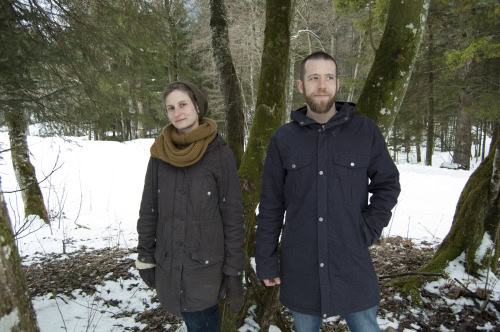
Simone Schorro and Michael Tobler. Photo: zVg

Princess And The Bear sounds like a fairy tale. And not so much like the Alps or Hamburg. But the duo have left a good piece of their hearts in the harbor of the northern German metropolis and released their first album Sleeping In The Bee House in a wooden hut on the Bürgenstock. This is also where the two of them spent the night during the recording - as the title suggests, in a converted beehive. It is quite possible that this is why the work seems so intimate. Like a ballad in a confined space.

The division of duties in Princess And The Bear is clear: Simone Schorro is the siren who sings and plays the glockenspiel, while guitarist Michael Tobler acts as a silent partner and cue man. Although the two joined forces six years ago, they are still Sleeping In The Bee House their first joint musical testimony. And what a testimony it is. The Lucerne native and the Zurich native create airy song creations of folk, jazzy pop and an all-encompassing melancholy that, despite their heavy content, also have a gentle momentum. Princess And The Bear keep a decidedly low tempo, basking in a well-tempered atmosphere and devoting themselves to fragility.

Schorro's vocals take center stage, circling, swaying and determined; her voice sounds like a message in a bottle on a high but calm sea. In keeping with this, an accordion groans like a bending plank on pieces such as "100 Years" or "I Still Miss You". The songs, as supple as they are gnarled, tell of butterflies, doors or anchors, are more dreamy than playful and full of distortions. The album speaks of longing. And strength. So much so that it is clear: Sleeping In The Bee House is an event.Image

Princess And The Bear: Sleeping In The Bee House

"guethe wälsche Music"

Rudolf Franz Erwein von Schönborn (1677-1754) brought back the basis of a music collection from his trip to Italy, which he expanded throughout his life. It comprises around 150 printed scores and around 500 manuscripts.

«guethe wälsche Music»

Rudolf Franz Erwein von Schönborn (1677-1754) brought back the basis of a music collection from his trip to Italy, which he expanded throughout his life. It comprises around 150 printed scores and around 500 manuscripts.

A selection of cello sonatas from Count Erwein's music cabinet can be found on the recently released CD Viaggio italiano. It includes works by Platti, Abbate del Cinque, Romanelli, Vivaldi, Paganelli and Bassani, mostly in first recordings*.

Giovanni Benedetto Platti

Gennaro Romanelli

Ermengildo Abbate del Cinque

Ermengildo Abbate del Cinque

Antonio Vivaldi

Giovanni Benedetto Platti
Image

Audio samples courtesy of Sony Classical.

Viaggio italiano. Music for cello from the Schönborn Collection. Christoph Dangel, violoncello solo; Sergio Ciomei, harpsichord; Rosario Conte, theorbo/baroque guitar; Mara Miribung, violoncello continuo; Mayumi Hirasaki, violin; David Sinclair, violone. german harmonia mundi 88765488332

Kategorien

On the road: in and out of music

How do you prepare a youth orchestra for a competition abroad?

Photos: zvg
Auf Reisen: in der Musik und ausserhalb

How do you prepare a youth orchestra for a competition abroad?

Last year, the Youth String Orchestra of Italian-speaking Switzerland (Orchestra d'Archi Giovanile della Svizzera Italiana) experienced a special journey: It was awarded "First place with outstanding success" at the Summa Cum Laude International Youth Music Festival 2012 in Vienna. The Vienna award was not only the culmination of a long musical journey, it was also the reward for the work carried out over several years with great foresight and expertise by director Anna Modesti. She spoke about this unforgettable adventure in an interview.

Image
The Orchestra d'Archi Giovanile della Svizzera Italiana

The dream comes true

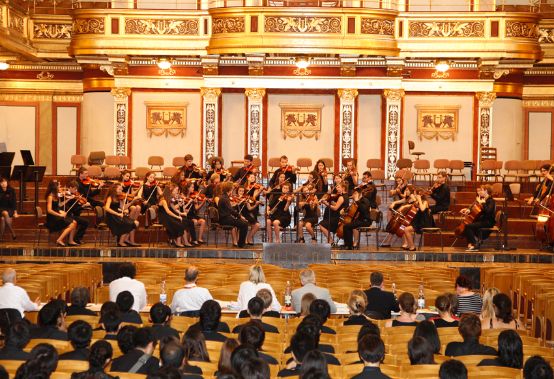
The Summa Cum Laude international competition for youth orchestras and ensembles takes place every year in the Golden Hall of the Musikverein in Vienna, one of the most beautiful and traditional concert halls in the world. Our decision to take part in the competition was based on the dream of playing in this hall. Of course, nobody wanted to leave a bad impression, so we all worked together for two years to prepare for the competition. This long period of preparation can therefore also be seen as a kind of "journey".

Performance of the orchestra in the Minoritenkirche in Vienna on July 9, 2012

The competition included a 20-minute rehearsal in the presence of a competition committee and two concerts, each lasting one hour, which took place at various locations in Vienna and the surrounding area. The prescribed repertoire had to include the first movement of Mozart's Divertimento K 136, a piece by a composer from the participants' country of origin and another work of their choice. Together with the young people, we decided on Policromy by Carlo Florindo Semini and the Serenade for Strings by Dvořák. This latter piece, which is not easy to play, should be the worthy conclusion to a path in the course of which we have already dealt with works such as the Holberg Suite by Grieg, the Serenades by Elgar and Tchaikovsky and Mahler's arrangement of the Schubert Quartet Death and the girl had been busy.

Then the big adventure began. In order to keep to the very tight budget, we left Lugano the evening before by bus. Although we were pretty exhausted after the journey, we were able to save an overnight stay in a hotel. Once we arrived in Vienna, the competition organizers had planned the activities of all the groups in detail for the entire four-day stay. The three musical highlights were of course the competition itself and the two concerts, but there were also many opportunities to exchange experiences between the members of the 36 participating groups from all over the world. Most of the participants were accommodated in the same facility, which made it easy to meet and get to know each other.

Image
Anna Modesti in the middle of her orchestra at the Vienna Musikverein

The role of the orchestra leader

Even outside of our travels, I don't see my role as just being responsible for the music. The Orchestra d'Archi Giovanile della Svizzera Italiana is made up of young people between the ages of 11 and 18. Most of them do not pursue any professional musical goals. Their participation in the orchestra is based solely on their own motivation and the joy of shared, unforgettable experiences. That's why, during the year, I don't just limit myself to what is played during the three-hour weekly rehearsals, but also try to support activities that promote group spirit and social cohesion among the orchestra members. This creates a climate of trust and sympathy, which then allows me, among other things, to travel the world and know that I can count on the young people: from 2005 to the present day, we have performed in the USA, Scotland, various Italian cities (Trento, Verona, Bologna, Ferrara, Genoa, Rome, Trieste) and Switzerland (Winterthur, Basel, Zurich) and - perhaps I have simply been lucky - I have never found myself in situations that would have been difficult to master.

Kategorien

Culture is becoming increasingly attractive for Swiss sponsors

Sport is still the most popular sponsorship area, but Swiss companies are also increasingly focusing on culture. These are the findings of a study conducted by the ZHAW School of Management and Law together with the Swiss Sponsorship Association (FASPO).

Photo: Nejron Photo - Fotolia.com

According to the report by the Center for Cultural Management at the ZHAW, almost three quarters of the companies surveyed are involved in sport. The area of corporate responsibility was supported by 50 percent, culture by 48 percent and the media by 24 percent.

On average, companies spent around CHF 1.8 million on sponsorship in 2012. Most of the money (38%) went to sport, followed by culture (23%). Compared to Germany, cultural sponsorship is more important in Switzerland. In the neighboring country, only around 10 percent of funds flow into culture and a whopping 65 percent into sport. Financial service providers (banks, insurance companies) are more active than average in the sponsorship market.

The most common cultural sponsorships relate to film, classical music as well as rock, pop and jazz music. The experts surveyed assume that sponsorship in the areas of film, rock and pop music will continue to gain in importance in the future, while "traditional" areas such as ballet, opera and classical music will tend to lose importance.

The study can be obtained free of charge via the following link:
www.zhaw.ch/de/management/zkm/forschung-und-entwicklung/studie-sponsor-visions-schweiz.html

get_footer();