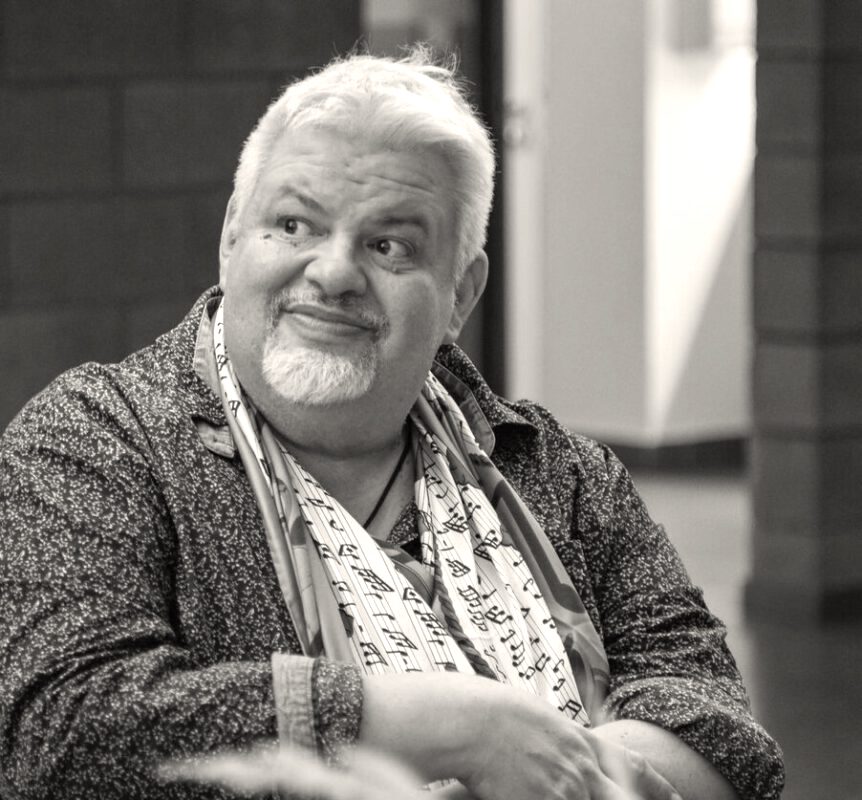
Injustice in the canton of Graubünden

Although the cultural promotion law of the canton of Graubünden stipulates that teachers at music schools in Graubünden receive the same salary as primary school teachers, their salary is 25% lower. SMPV central board member and member of the cantonal parliament of Graubünden, Aita Biert, is fighting against this injustice.

Article 18² of the Canton of Graubünden's Culture Promotion Act (KFG) states that "The minimum annual salary and the number of teaching units for a full-time position are based on the requirements for primary school teachers in accordance with the Education Act." In fact, however, the fixed lesson length for primary school teachers is 45 minutes, while that of music teachers is 60 minutes, as stipulated in the 2018 Cultural Promotion Ordinance in disregard of the KFG. Music teachers in Graubünden therefore effectively earn a quarter less than their colleagues at elementary school, even though the KFG stipulates equal pay.

Dear Aita, you have submitted a request (elsewhere this is called a "motion") to the Graubünden government to remedy this grievance. How was it originally justified during the discussion on the Culture Act Ordinance that music teachers have to work longer hours for the same salary?

Aita Biert: The council members were of the opinion that music lessons do not require any preparation or follow-up and that the responsibility for music lessons, which are often individual lessons, is much less than for classroom lessons.

We both know that this is not true. Why aren't the music school teachers fighting back?

A.B.: Music teachers generally have too little self-confidence. Somewhere, the fact that they were allowed to turn their hobby into a profession still haunts their minds and they say they are "just music teachers".
They are specialists who have completed at least a Master's degree. They therefore have a higher qualification than primary school teachers. But they are afraid of losing their job if they fight back, fearing that pupils will take fewer lessons if they become more expensive and that only the children of the well-off will be able to attend music lessons. In addition, there are many cross-border commuters working in the canton of Graubünden who do not consider the wages to be too low.

You then withdrew your mandate and supported the government's counter-proposal. Why did you do that and what did it look like?

A.B.: The government has recognized the problem. From 2026, the handling of contributions for singing and music schools will be taken over by the Office for Culture, Department for Cultural Promotion. The government saw this change of responsibility as an opportunity to fundamentally review the teaching structure and the cost implications and then work out a fair proposal with the Association of Singing and Music Schools of the Grisons (VSMG) and other stakeholders, which the Grand Council could then have voted on again. That seemed very sensible to me. The ordinance also states that the canton subsidizes a maximum of 14 teaching units per music student per year. An immediate adjustment would have caused massive problems, because suddenly only 10.5 lessons per year would have been subsidized by the canton instead of 14. But I really hoped that the government's proposal could find a majority in the council.

The Council narrowly rejected the proposal by 56 votes to 48. How did this disappointing decision come about?

A.B.: The opponents turned it around so that we wanted to achieve a pay rise of 25% for music teachers, which they could understand, as they would also like more pay. They didn't understand at all that this was not about a pay rise but about the equal treatment of music teachers with primary school teachers, which is laid down in the KFG, i.e. it was actually purely about implementing the law that they themselves had passed. I was very disappointed!

What happens now?

A.B.: The government proposal put forward by J.D. Parolini would have been expedient. As this has now been rejected, the government should actually adapt the Culture Ordinance to the Culture Act on its own initiative, as it should have done from the outset. We will see whether it does so. Otherwise, we really must consider whether it would not make sense to take legal action, because the law is clearly being flouted. The kindergarten teachers in the canton of Graubünden succeeded in winning their primary school teachers' wages through a lawsuit, which was upheld. For the time being, the SMPV OstSüdost-Schweiz and the Verband Sing- und Musikschulen Graubünden must clarify legally whether such a lawsuit could have a chance of success. And we must sensitize music teachers in the canton to the problem and motivate them to join the SMPV, their professional association, so that we are an ever larger group that can work together for justice and equal treatment.

This is also where my new favorite topic fits in: "Music teacher, music educator" should also become a protected profession in the canton of Graubünden - as it already is in the cantons of Vaud and Lucerne.

A.B.: This would certainly go a long way towards improving the recognition of our profession, but there is still a long way to go. I hope that we can solve the problem of unequal pay before then!

Aita Biert, member of the SP Grand Council of the Canton of Graubünden and member of the SMPV Central Committee

In memoriam Gilles Landini (1.10.1963 - 30.6.2025)

Gilles Landini, pianist, teacher, director and much more, died far too early on June 30 at the age of 62 following an operation.

John Michet (former student) On Monday, June 30, 2025, an extraordinary artist suddenly flew up to the stars to make them dance with his music, to make them vibrate with the profundity of his performance, to make them blush with the charm of his interpretation and to make them shine with the radiance of his soul. Gilles Landini was a pianist with a differentiated playing style, always in search of a true interpretation and a sensitive teacher who was never stingy in sharing his culture and knowledge. He leaves us wonderful musical recordings (available on YouTube and elsewhere) and a pianistic and pedagogical legacy through his students.
He was never, as he himself said, a "pianist factory", but rather a "gardener for musicians" who gave them what they needed to develop. His ability to understand people, to listen and his empathy allowed him to get everything out of his students that they could express. The aim was never just to know the score, but to interpret it and enter into a discourse with the composer. Thanks to his historical knowledge, he loved to place the works in the context of their time of origin; geographically, geopolitically and biographically in relation to the composer. He not only wanted to convey culture, but also always wanted to ensure that a work was performed authentically.
He didn't like standardization, he wanted diversity, honesty and personality.
He wanted music to go everywhere and be accessible to everyone.
He loved everything that was true and whole, just as he himself was.

Alexis Domjan (former student) We all know what a wonderful musician Gilles was. He was an artist with heart and soul. Pianist, teacher, director, poet with his fingers and his pen. Throughout his life, he loved music and passed it on to his friends, his students and his audience.
Gilles discovered the piano at the age of 9 in lessons with Susanna Sierro-Rigoli. He later began studying at the Conservatoire de Genève, where he passed his first professional exams with flying colors.
In 1987, she received the prestigious Gabrielle Agostini Scholarship.
He continued his training with Edith Fischer - Claudio Arrau's artistic heir. Gilles writes: "With my wonderful Edith, I find a whole world of musical and pianistic reflection." It was with her that he obtained the diplôme de virtuosité in 1991: premier prix avec mention très bien et félicitations du jury.
In 1990, he joined the Neuchâtel Conservatory of Music, which he remained loyal to until his death. As part of the SMPV, he passionately trained young professional musicians. Time and again, he organized "joint courses" with his piano class. Wonderful moments of work, exchange, music and shared laughter...
Gilles performed in all the major cities in Switzerland, but also in France, Belgium, Germany, Italy, Bulgaria - and even in the prisons of Bellechasse and Bochuz. He wanted the music to go everywhere ...
He gave hundreds of recitals: piano solo, chamber music or orchestral concerts. With the support of his partner Daniel, he regularly played in Alsace under the banner "Musicademeure", and he never hesitated to give a spontaneous concert - as in July 2024 in Bigton on the Shetland Islands. A faithful participant in the Fête de la Musique in Geneva, driving the piano classes in Neuchâtel, a regular at Espace 2's Schubertiades and Edith Fischer's Blonay Festival, he shared music wherever he could...
From 1996 to 2001, he presented a weekly popular science column on the "Zig Zag Café" program on French-speaking Swiss television. On the Geneva radio station Radio-Cité, his "17 heures" made classical music shine. In 2004, the broadcaster Mezzo chose him as the central theme for the documentary "Helvetica , voyage musical en Suisse romande". He was a regular guest on the Disque en Lice program on the radio station La Première.
Gilles was also responsible for several opera productions: Le Château de Barbe-Bleue by Bartók in 2001, La Voix humaine by Poulenc based on a text by Jean Cocteau in 2003, in which he himself played the piano part, and Ginevra degli Almieri, a creation by Raffaello Diabrini-Palazzi, in 2004.
Gilles recorded two CDs: the first in 1992, dedicated to Schubert, D'Alessandro and Rachmaninov, and a tribute to Chopin in 1999, recorded at the salle de musique in La Chaux-de-Fonds. Both received praise for their immense artistic quality.
In 2007, Gilles was artistic director of the Grieg Festival, which was organized by the Neuchâtel Conservatoire to mark the centenary of the composer's death. He performed there and was responsible for the staging of Peer Gynt.
In 2010, he was chairman of the association that was to organize the Chopin-Schumann-Reinecke Festival. In February 2025, he initiated a wonderful musical evening on Espace2 to celebrate Edith Fischer's 90th birthday.
Gilles loved to pass on his knowledge and skills. He gave courses in music history for amateur musicians in Neuchâtel and Geneva, at the conservatory, but also at the senior university. He said that musicians had to come down from their ivory towers. That's why he explained the historical background of the work and the composer before he sat down at the piano: that was always an enrichment.
Gilles' repertoire was very extensive. He wrote: "Everything I play is my favorite". He continued: "In my way of living music, interpretation is the means to present these wonderful composers as living friends." Of course there is Mozart: "Deeply human at heart, with light and shadow", he wrote. He also loved the sophistication of Chopin and Grieg. And of course he did not forget all the great composers, most of whom he interpreted: Schubert, Beethoven, Schumann, Brahms, Rachmaninov, Bach, Bartók, Haydn, Franck, Debussy, Fauré, Dvorák, Ravel, Vierne, Sibelius, Mussorgsky,Gilles also loved to write, he wrote over thirty poems.
With the deep humanity that he radiated, Gilles lives on in us. His credo is not only that of a musician, but also that of the generous and committed person that he was: "Music is for everyone and must reach everywhere".

Monique Buunk Droz (former SMPV examination manager in French-speaking Switzerland) A humanistically educated, radiant, generous artist with a versatile culture and refinement - this is what we will remember of Gilles Landini, who leaves us a great legacy of his life. The large mourners who paid their last respects to him in Veyrier on Wednesday, July 9, were proof of this.
I have fond memories of our collaboration on the SMPV exams and how he always treated the candidates with warmth and respect. I also have fond memories of our broadcasts on Radio-Cité

I quote the message from the Conservatoire de Neuchâte:
"A man who was much more than just a teacher."
Several of his students remember Gilles Landini, who died suddenly after an operation at around 12.30 p.m. on Monday.
The Conservatoire de musique neuchâtelois would like to pay tribute to the tireless commitment of this teacher, who had in particular a deep empathy for all those who needed special support.
He has become the "pianist of the angels".

Vacation pay for part-time work

From the legal advice practice of the Swiss Music Pedagogical Association SMPV.
Dr. iur. Yvette Kovacs, legal advisor to the SMPV and lawyer in Zurich, answers questions from SMPV members.

Question from an SMPV member: I am employed part-time at a music school for 30%. However, I don't get paid during my vacation. The school director says that vacations are included in the monthly salary and that I don't benefit from anything during vacations. Is this permissible?

Answer from Dr. Kovacs:

1. The employer must pay the employee the full salary due for the vacation (Art. 329d para. 1 CO, Swiss Code of Obligations). The employee may not be paid less during the vacation than if he had worked during this time. Agreements that place the employee in a worse position are null and void. The mandatory provision of Art. 329d para. 2 CO also stipulates that vacation may not be compensated in cash for the duration of the employment relationship.

2. However, there is an exception to this principle: in the case of irregular employment, it can be difficult to calculate the current vacation pay, as each monthly salary is different and the current year does not yet allow an average salary to be calculated. In such cases, compensation for vacation pay in the monthly salary paid on an ongoing basis is permitted as an exception to the legal text.

However, this is subject to the following conditions: Firstly, the employment must be irregular. Secondly, the portion of salary earmarked for vacation must be clearly and explicitly stated, provided there is a written employment contract. Thirdly, the individual written payslips must show the portion of salary intended for vacation (e.g. 8.33% vacation pay). Simply stating "vacation pay included" is not sufficient. It is necessary for the vacation pay to appear by stating a specific amount and/or percentage, both in the employment contract and on the individual payslips.

If these conditions are not met, the employer must continue to pay the salary attributable to the vacation during the vacation. Under certain circumstances, this may even constitute a double payment if the normal salary was actually paid plus the vacation pay, but this did not meet the aforementioned requirements. The fact that the employee has actually taken the vacation to which they are entitled does not change this.

3. conclusion and answer to the specific question: The music teacher works part-time, but on a regular basis. The vacation pay is not shown either in the employment contract or on the payslips. The music school director's actions are therefore contrary to mandatory law. The teacher can therefore demand back pay for her vacation. The limitation period is 5 years. The salary claim for vacation can be asserted during or after termination of the employment relationship.

Strategically, however, you should always consider whether you should assert claims during the current employment relationship. It is important and right to assert claims. But sometimes it can also cost you your job.

SMPV and SGB

The SMPV has been a member of the Swiss Federation of Trade Unions (SGB) since 2005.
In March of this year, the DM decided to leave the SGB, but still left room for negotiations.

Twenty years ago, the SMPV joined the SGB. The vote on joining was preceded by heated discussions: those opposed to joining felt that the SMPV did not fit into the SGB in terms of the sector, complained that the SGB was too left-wing and that the SMPV should be politically neutral, or emphasized that self-employed people would gain nothing from membership of the SGB. However, the application for membership submitted by several section presidents stated: "This (i.e. joining the SGB) would allow the SMPV to obtain useful information regarding the protection of the profession of music teacher in Switzerland, but also to reach decision-makers in education and culture".
In the end, the delegates were persuaded by the argument that the SGB would protect SMPV members in a crisis situation. In order to be able to pay the SGB contribution of CHF 12.50 per member at the time, they even agreed to a membership fee increase of CHF 10.

What many delegates were not aware of is that the SGB does not, of course, do the trade union work for the association. The association must be the union that recognizes, names and precisely describes the current problems of music teachers in Switzerland and then seeks solutions to the problems.
Sometimes the problems are minor labor law injustices that can be solved by a discussion between a section president and a music school director. However, some problems affect many people and can only be solved through changes to laws and regulations at cantonal or national level. Here, the SGB can at best open doors and arrange contacts with decision-makers.

First doubts

At the 2007 AGM, the CMA submitted a motion to leave the SGB again. The reason given was that the SMPV was not receiving any equivalent value for the CHF 60,000 SGB membership fees per year. The then Central President, Jakob Stämpfli, who represented the SMPV at the SGB board meetings, reported that only one topic relevant to the SMPV in the broader sense was discussed at the board meetings in 2006. The Central Board admitted that it had not considered during the membership discussion that the important issues for the SMPV in education and cultural policy are decided almost 100% at cantonal level, and that the SGB as a national umbrella organization was therefore the wrong forum. However, he conceded that individual sections had had good experiences with the cantonal associations.
However, Rolf Zimmermann (SGB), with the support of Hans Peter Völkle (SMV), succeeded in convincing the SMPV delegates of the advantages of remaining with the SGB.

The crisis

The "big crisis" came in 2020, when the pandemic initially paralyzed everything and severely restricted the music industry, among others, for a long time.
The self-employed were particularly affected, as they received negligible - if any - compensation that was insufficient to cover their living costs. In addition, art teachers of all disciplines were not regarded as artists, but as mere teachers, meaning that they were excluded from support for cultural workers. The SGB stood up for SMPV members when it managed to ban private music lessons in presence during the lockdown. However, the problem of the lack of compensation was not easy to solve, so we did not receive any help there. The SGB immediately passed on its information about new Federal Council ordinances or the possibilities of Suisseculture-Sociale emergency aid to the SMPV Central Presidium. However, as President of the SMPV Bern, I received this information directly from the Canton of Bern just as quickly.
I think it's fair to say that the protection we had hoped for from the SGB in a crisis was not there to the extent we had expected.

Major concerns of the SMPV

  1. Creeping job cuts and a lack of unemployment benefits:
    Only those who have earned at least 20% less in the last two years receive unemployment benefit. If a music school teacher loses two to three weekly lessons every second year, they will lose 50% of their original employment in eight to ten years, but will never receive unemployment benefit. Wolfgang Pailer has been pointing this out repeatedly since 2007. Last year, the SGB organized a meeting with SECO for Annette Dannecker, where she was told that changes could only be made in the event of a major revision of the law.
  2. The SGB is also unable to help us with the problem that music teachers are only considered by politicians to be in the field of education and not culture, which is why the SMPV, unlike the SMV, is not subsidized and art teachers are at a disadvantage in the event of a crisis.
  3. Music educator/music teacher would have to become a registered profession. The SGB could support the SMPV on the long road to title protection.

Room for negotiation

After the 2025 DM decided to leave the SGB at the end of the year, he gave Annette Dannecker a mandate to negotiate - also out of gratitude for the financial concessions made by the SGB over the past three years. Some sections would like to remain with their cantonal confederations and would also be prepared to pay the corresponding cantonal membership fees. A "light membership" with the SGB with virtually no rights but also very low costs, with which the sections would buy the right to remain with the cantonal confederations, would almost certainly be accepted.
In terms of its statutes, however, the SGB can probably only offer a change to associate membership (7.80/member plus the contribution of the cantonal associations). This would require an increase in the SMPV membership fee. The question is therefore not whether the SMPV can afford (associate) membership, but how it assesses the cost-benefit ratio today, and whether it wants to afford it.

On the death of violinist and violin teacher Ursula Oppenheimer-Isler

In memory of Ursula Oppenheimer-Isler 22.11.1937 - 19.02.2025, a concert with the Spring Sonata and the Kreuzer Sonata by Ludwig van Beethoven took place today, Tuesday, June 3, 2025 in Ascona.

Ursula Oppenheimer-Isler began playing the violin at the age of 7, first privately and then at the Winterthur Music School with Aida Piraccini-Stucki.
She obtained her teaching and concert diploma at the Zurich Conservatory with Prof. E. Morawec from Vienna. Master classes at the Mozarteum in Salzburg and study visits to Vienna complemented her training. She then continued her training with Yehudi Menuhin. In 1962, she played at the Gstaad Music Weeks in a soloist ensemble under the direction of Nadja Boulanger and Yehudi Menuhin.

In addition to her successful concert activities as a soloist, chamber musician (she particularly enjoyed duo evenings with violin and piano) and orchestral musician in the Eastern Switzerland Chamber Orchestra, she devoted herself with great dedication to violin teaching.

Through her marriage to Wolfgang Oppenheimer, she became a "Ticino native". In her new home, she performed and gave concerts on many occasions together with renowned colleagues from Ticino. After being primarily a mother for a few years, she also took up teaching again, initially in a private setting.

In 1978/1980 she was appointed violin teacher at the newly founded conservatory in Curio (Malcantone), now the Conservatorio della Svizzera Italiana in Lugano, where she taught until her retirement for health reasons in 1998.
She was an accredited SMPV/SSPM professional trainer and regularly acted as an expert at SMPV diploma examinations and intermediate examinations and as a juror at various regional competitions of the Swiss Youth Music Competition in Lugano.

In 1993, Ursula Oppenheimer-Isler was elected to the Central Board of the SMPV/SSPM as a representative of Ticino; from 1996 to 1999, she was even Vice President. She also had to step down from these posts in 1999 for health reasons.

She died suddenly but very peacefully in the early afternoon of February 19, 2025, after listening to three wonderful pieces from her much-loved violin literature that morning.

Ursula Oppenheimer-Isler

The Tour Musical homepage is online

The latest SMPV website, www.tour-musical.ch, has been completed in time for the presentation at the DV on March 29, 2025. The Tour Musical is slowly picking up speed.

It is very exciting to hear and read from SMPV colleagues about the special concerts, student concerts, courses and cultural participation projects they are planning for the period from June 7 to 28, 2025, and to feel that some of these events are real projects of the heart.

Members usually call us for advice on labor law or music education issues, for support in filling their profiles on my-music-lessons.ch or rent-a-musician.ch  or simply to inform them of a change of address. But now it's about their music and their music education - in other words, about what drives them every day and what they are passionate about. This reminds me a little of the time when the SMPV still offered professional training and was not yet a purely professional association. Back then, the focus was on the daily artistic and pedagogical work of SMPV members and not on the technical and administrative side of things. I personally think it's great that the Tour Musical brings something of this back to us!

The tour events
Apparently, the SMPV members are still reluctant to use the sponsorship brochure designed by the organizing committee and use it to find cooperation partners for their events. But perhaps we will repeat the tour in two to three years' time and then make the brochures available at least a year before the start of the tour so that there is enough time to find sponsors. In any case, most of the events registered so far are taking place without cooperation partners. They can be divided into three groups:

Section events
The Vaud section, for example, has registered the "Palmarès", the concert of the best students in the level examinations, which will take place on June 17 in Villeneuve. On 14 June, the tour will head to the Alte Stadthaus in Winterthur, where the Winterthur/Zurich Oberland section is organizing three concerts for pupils and teachers. The Bern tour music lesson will take place on June 20 and the concertant! in Bern with Eva Röntz, cello and Reto Reichenbach, piano on June 21, and finally the tour will take us to Schaffhausen, where the SMPV music school concert will take place on June 28.

Solo or chamber music concerts by members
In this category, members register concerts or a combination of courses and a concert. Guitarist Hanspeter Krüsi, for example, sets a special accent with his color concert on 11 June in Aathal-Seegräben, where he bathes the church in different colors and then transforms them into music in an improvisational virtuoso manner. Marc-Henri Aubert combines a master class and a recital in Vufflens on June 21, and Adalberto Riva poses the question of whether a piano can sing in his commented concert in Morges on June 28.

Larger events
Violinist Marc Tairraz has submitted what is probably the most spectacular project to date: on June 21, he will unite his amateur orchestra Amati and Amati junior, made up of his young violin students, with the Orchestre de Chambre de Lausanne for an interactive concert on the stage of the Lausanne Opera. The audience solves quiz questions about the program during the concert. On the same day, the GuitarSoundOrchestra under Jürg Moser performs the anniversary concert "30 years GSO" in Boswil. With around 20 guitarists aged between 13 and 26, the GSO is the largest guitar ensemble in Switzerland. On 28 June, the Tour-Musical-ad-hoc-Choir under Johannes Schröder will perform a varied program at the Rosengarten in Bern. If you would like to sing along, you can register at smpv.ch/bern/registration-tour-musical-chor-bern can still register until May 24.

This is just a small selection from the tour program that you can find on tour-musical.ch and more events are being added all the time, and of course we will be happy to add your concert to the tour map if you register it by May 15, 2025 at the latest:  smpv.ch/anmeldeformuar-formulaire-dinscription-modulo-di-registrazione-tour-de-suisse-musical

Answers to the most frequently asked questions
- If you want to register a concert with pupils from your music school, you must discuss this with the music school management. We will then link the event to the music school's homepage and add it to the list of cooperation partners. For example, the Muri-Gümligen music school has allowed our colleague, Elisabeth Ronja Haerdi, to perform the open-air concert with two ensembles from the music school as part of the tour.
- Yes, if you find a cooperation partner in categories C' to F, you may retain the entire sponsorship fee yourself.
- A picture of the performers, the performance venue or an instrument is suitable as a contribution picture for your event.
- The Tour Musical instructions for members and the declaration of consent for your pupils and their parents can be found at smpv.ch under "Downloads".

I will be happy to answer any further questions at marianne.waelchli@smpv.ch

We look forward to your contribution to the Tour Musical!

The Guitar Sound Orchestra under the direction of Jürg Moser performs on June 21 in the old church in Boswil
photo by Renate Moser


Music and the law: self-employed or employed?

From the legal advice practice of the Swiss Music Pedagogical Association SMPV: Dr. iur. Yvette Kovacs, legal advisor to the SMPV and lawyer in Zurich, answers questions from SMPV members.

Question from an SMPV member: I am a music teacher at a music school and also work as a choir director. After a longer period of illness, the school management only wants to pay me my hours as a teacher as sick pay and claims that my work as a choir director is a contractual relationship and therefore I am not entitled to sick pay. This is despite the fact that the teaching and choir conducting jobs were assigned to me together. Can this be legal?

Answer Dr. Kovacs:

  1. The answer to this question depends on whether the activity as a choir director is carried out as part of an employment relationship or as a self-employed activity.
  2. Almost any activity can be carried out on a self-employed or employed basis. Differences of opinion regularly arise about this. For this reason, the activity should be described in writing in a contract. In particular, the question should also be clarified as to whether it is an employment or an assignment. Ultimately, it is the wording of the specific contract (and not the title) that determines whether the activity is employment or freelance work. The more precisely this is described, the clearer the legal classification can be.
  3. The courts have developed an extensive practice for defining these types of activities. They consider the following demarcation criteria to be essential:
    3a) The following characteristics in particular speak in favor of self-employment:
    - Free determination of working hours by the choirmaster
    - The choirmaster is not bound by the instructions of the choir board and is responsible for his or her own activities.
    - The program is selected by the choirmaster.
    - The choirmaster must pay all social security contributions himself.
    - The choirmaster receives a fee for independent work (not a salary).
    - No remuneration is paid in the event of illness or for vacations.
    3b.) The following in particular argues in favor of self-employment (employment as an employee):
    - The choirmaster is employed as an employee.
    - The choirmaster is part of the organization of the employer (association, school, etc.) and follows its instructions.
    - The program is selected by the employer.
    - The employer pays a salary and deducts social security contributions from it.
    - The employer pays sickness and vacation in accordance with legal requirements.
  4. Only in an employment relationship is the continued payment of salary for a limited period of time, depending on the duration of employment, prescribed by law. In contrast, self-employed persons are generally required to provide for themselves and receive nothing in the event of illness. This is subject to cases in which it is expressly stipulated in the specific contract or in a collective employment agreement that benefits are paid by the client in the event of illness.
  5. The bottom line is that the individual delimitation criteria must be determined and classified in the present case. The choir director subsequently stated that she also has to follow the music school's timetable for her choir conducting activities and that the concert programs are predetermined. In addition, AHV/IV/EO contributions are deducted from her wages for all activities. In addition, the teaching activity is contractually regulated together with the choir conducting. These are strong indications that both activities are to be treated uniformly as an employment relationship. This means that the sick pay must be paid equally for both activities.

While the focus of the SMPV last year was on professionalizing the association, in 2025 the focus will once again be on music education and music itself.

That is why our "Tour Musical SMPV/SSPM" will take place from June 7 to 28, 2025. It is a stage for the artistic activities of our members and for the music education success they demonstrate with performances by their students.
The Tour Musical OC provides you, dear members, with documents for the tour: on our homepage, smpv.ch, can be found under "Downloads/Documents" in"Instructions for members" detailed information about the Tour Musical. You will also find a form "Registration/declaration of consent", which you can have the students performing at your tour event or their parents fill out and sign. This ensures that you are legally protected if videos of your tour event are later published on the interactive map on tour-musical.ch be published.

We include various categories of events on this tour map and in the tour program:

1. section events such as teacher concerts or music lessons that take place during the three tour weeks.

2. concerts by our members (solo, chamber music, choir or orchestra), if the concert organizers agree that part of the performance may be filmed and posted on YouTube, and that this video may be included in the description of the event on tour-musical.ch. In return, we will advertise the event in our tour program.

3. events organized by the sections or individual members especially for the Tour Musical, which can take place with or without cooperation partners.

Events with cooperation partners
The OC has compiled a "Sponsors' Brochure", which you can order by telephone from the Central Secretariat (031 352 22 66) or by e-mail from marianne.wälchli@smpv.ch and which you can use to attract cooperation partners for your tour event. In the brochure you will find a table showing exactly how much the SMPV will donate for which service. In the lower categories, you yourself provide the primary service with your performance or the performance of your students, and therefore you may retain the donation amount. In the higher categories, the SMPV provides services in the form of advertising space, writing and publishing company portraits and landing pages on its various websites. This effort must be compensated. You therefore negotiate the sponsorship agreement with the cooperation partners and the SMPV for these categories. In such cases, the SMPV claims a percentage of the donation amount for its work.

You, the cooperation partners and the SMPV can all benefit from such events. You benefit from the fact that the SMPV advertises your event and from the fact that the sponsors support your event financially. They benefit from advertising for their company - bear in mind that the approximately 2,500 SMPV members teach around 32,000 students of all ages throughout Switzerland. And finally, the SMPV benefits from the fact that the events with cooperation partners open up new circles that get to know the SMPV and also the platforms mein-musikunterricht.ch and rent-a-musician.ch.

Competition
Don't worry, the OC does not presume to be able to judge which member is the most artistically talented or which member teaches best. Rather, the competition is intended to encourage members to organize unusual projects for the tour. The member with the most original performance on a particular tour day will be rewarded with the title of "artist of the day" or "teacher of the day", and on tour-musical.ch a portrait of the member appears, which in turn is linked to their profiles on my-music-lessons.ch, rent-a-musician.ch and the member's homepage.

If you do not wish to take part in the competition, you can do so when you register for the Tour Musical in the Registration form  note.

Singers wanted

The SMPV Bern is looking for singers for the ad hoc choir, which will perform on June 28, 2025 in the Rosengarten in Bern under the direction of Johannes Schröder.

The SMPV Bern cordially invites young and old, experienced and less experienced singers to sing along to this year's ad hoc open-air choir project. Parent-child or grandparent-grandchild teams are also very welcome!

The colorful program ranges from Swiss folk songs to a well-known pop song to an opera aria with choir. The registered singers will receive a link to the sheet music specially arranged for the concert and to mp-3 files, which they can use to rehearse the program. Five rehearsal dates are offered:

Sat, May 31, 2-5 p.m. at EGW, Nägeligasse 9/11, 3011 Bern
Fri, June 13, 7-10 p.m. at CAP, Predigergasse 3, 3011 Bern

If you want to sing with us, you must attend at least three rehearsals.

The program, further information and the electronic registration form can be found at here.

Special prize donated

As part of the "Elvirissima" singing competition, the SMPV Schaffhausen 2025 is donating a special prize from its Elvira Lüthi Fund.

The twenty young singers who took part in the final of the singing competition on June 9 included Elvirissima - young voices 2025
at the MaiHof in Lucerne, the Schaffhausen section president, Thomas Weiss, and one or two other board members will select two singers to perform together at this year's St. Katharinental-EXTRA concert. The prizewinners' concert will take place on Sunday, September 7, 2025 in the beautiful Zunftsaal of the Hotel Rüden, Oberstadt 20 in 8200 Schaffhausen.
The SMPV Schaffhausen provides a piano accompanist, covers all expenses and offers a fee of CHF 500 per person.
In the Registration form For the singing competition "Elvirissima 2025" there is an integrated registration field for the special prize. The registration deadline is April 4, 2025.

50 years at the service of the SMPV Vaud!

This year, the SMPV Vaud Section is celebrating the 50th anniversary of its loyal secretary. Thérèse Durrer joined the board of the SMPV Vaud in 1975 and has been running the section secretariat with all her energy, efficiency and dedication ever since. Mrs. Durrer shares some of her memories with us:

I joined the SMPV in 1967 after receiving my teaching diploma for piano. Thanks to my initial training as a commercial clerk with a federal certificate of competence and a language study trip to England, I had a very interesting and well-paid job as a trilingual secretary by then. I then started teaching at the Conservatoire de Vevey, which was a branch of the Institut de Ribaupierre in Lausanne. The pay there was so miserable that I started teaching privately. But that wasn't enough either.
The situation only improved when the Vaud section approached Jacques Chapuis and Edgar Willems to offer us training in the Willems method to make this possible. The training in this method allowed us to offer group lessons for very young students aged 4-5 years, whose hearing and sense of rhythm we trained. These courses still exist today. They give the students a good musical foundation to later learn an instrument they like. I will continue SMPV Vaud be eternally grateful for his pioneering work!

After witnessing how disastrously poorly organized the stage exams were, I started to get involved, whereupon I was immediately offered the opportunity to take over the organization of the exams in future. So I was already taking care of the stage exams before I joined the board. In 1975, I was elected to the board during a dramatic AGM at which the entire board resigned. A new board was elected. But when it came to electing the presidency, things got very complicated: We wanted Claire Buenzod. "What a horror: a woman!" It took long discussions before the meeting finally agreed to elect Claire Buenzod as president.
Since then, I have been looking after the secretariat of the Vaud section. My training as a commercial clerk helps me to carry out my tasks with a certain ease. It's always nice to be needed and I still enjoy putting my skills at the service of our section.

It is not easy to summarize the most important events of all these years. The negotiations for recognition by the canton of Vaud and thus for a subsidy to finance the annual examinations lasted from 1977 to 1985. According to public opinion, our profession was considered "not a real profession at all" and there was no need to subsidize music lessons "as it is a hobby".
In 1997, however, despite the financial difficulties of the canton and thanks to the persistence of the president, Claire Grin, we were able to obtain an annual subsidy of CHF 5,000.
These negotiations brought us to the attention of the DFJC (Department of Education, Youth and Culture). In 2009, we were invited to a meeting with the State Councillor, Anne-Catherine Lyon. During the consultation she organized, the president, Marc-Henri Aubert, and part of the board were asked to express our opinion on the preliminary draft of the law on music schools. We reiterated our support for the positions of the AVEM-SSP. We also made a strong request to be recognized as a partner in the Vaud music education landscape.

Thanks to the support of the canton, we can carry out our annual audits with a certain degree of serenity. These exams have changed a lot over the last 50 years. In my early days, students competed anonymously and the teacher was not present during the deliberations to avoid nepotism. You had the feeling that you were being judged by a shadow court. Today, teachers are present at their students' performances and take part in the deliberations. This enables a constructive dialog between the students and the teachers.

From 2010 until today, we have been able to continue organizing our events without any particular incidents. I am very pleased that I have been able to work on the various projects of our section and contribute to the good relations within the Board of Directors.

Of course, there is always room for improvement. I hope that the section will continue its work with enthusiasm and a constructive spirit.

The interview was conducted by Guy Fasel, President of SMPV-Vaud - Translation Marianne Wälchli

SMPV tariffs

The SMPV's most well-known service, even among non-members, is the standard rates for private music lessons. However, many people do not know how these rates are set and what is included in them.

Marianne Wälchli The SMPV tariffs are set by those present at the AGMs or GMs of the 15 sections. If a new tariff is decided, it applies in principle with immediate effect. It is up to the sections to decide whether they set semester rates, individual lesson rates or both, whether there are also rates for group lessons and whether other lesson lengths are listed in addition to the rates for 60 and 40 minutes. The rates for adult lessons are slightly higher than those for lessons for children and young people. Some sections define a discount compared to the adult rate as a percentage, others set specific rates for lessons for children and young people.

In 2024, we received many inquiries and requests about the tariffs, and I can only strongly recommend that anyone who would also like a tariff for group lessons or for a 30-minute lesson, or who thinks their section's tariffs are too low or too high, go to the AGM/GM, present these requests there and vote on them. Interestingly, quite a few non-members called who "don't need the SMPV otherwise" but would like to see this or that change on the tariff lists. Of course, they can't have a say.

The level of tariffs is always the subject of heated debate at meetings. There is the view that the tariffs should be adjusted annually in line with inflation, and there is the view of those who would prefer to lower the tariffs because they are afraid that higher tariffs could deter potential students.
The tariffs are standard tariffs, which means that no member can be forced to charge these tariffs if they lose many students as a result. Nevertheless, it makes sense to deviate as little as possible from the tariffs when setting prices for private lessons. It is often surprising what adult students in particular are willing to pay for good lessons. It is not only the tariffs that are adjusted for inflation, but usually also the salaries of our students or their parents. And we must not forget that in addition to the teacher's actual salary, the teaching fee must also cover all social security contributions (AHV, pension fund), the rent for the classroom and infrastructure costs, occupational accident insurance, business insurance, professional association contributions, possibly legal protection insurance, further training costs, costs for instrument maintenance such as piano tuning, costs for sheet music and other teaching materials. Depending on the number of students, even with a lesson rate of CHF 120, there may not be much left over.

It is therefore one of the tasks of the SMPV as a professional association to insist that the rates are not set too low and to encourage members to actually charge the standard rates. After all, you know your students and, if someone is particularly talented but cannot afford the standard rate and therefore only attends lessons irregularly, you can accommodate this person a little and "give them some time".

Private music schools and other platforms often write: "The tariffs correspond to the SMPV tariffs." So here too, the tariffs influence the teachers' salaries. It is imperative that we campaign for reasonable tariffs that generate a living wage for private teachers!

New Year's letter from the Co-Presidents

Dear music teachers in Switzerland
Dear colleagues

Being a music teacher in this day and age is a challenging endeavor! Pupils have less and less time, so it's tempting for them to simply take some virtual lessons at an online music school. Maximum flexibility is promised here, and fun is apparently guaranteed. You can even buy a 10-session subscription without any obligation and don't have to commit to anything. The setting corresponds exactly to our zeitgeist: achieving the fastest possible result with a small investment of time and personal commitment - fun factor included. Qualified music teachers are well aware that serious music lessons are hardly possible in this way.

Many laypeople do not realize that this is precisely the invaluable benefit of music lessons, that students have to commit to lessons over a longer period of time, that they have to practice for hundreds of hours to be able to play a relatively simple piece beautifully and musically, but that this genuine ability then leads to deep enjoyment and improved self-confidence. Nor can they imagine that it takes years of intensive study of the instrument to become a professional musician. So much effort is considered totally unfashionable in this day and age.
Music lessons create a counterbalance to the hectic pace of these fast-moving times, in which everyone demands quick results and the number of mental illnesses is growing exponentially because there is no time for other people. Music lessons are not just about learning a craft, they are balm for the soul because people are allowed to pause and engage with this project. The pupils travel to the teacher, because in-depth learning is only possible in real-life confrontation with a qualified specialist; we have known this since the coronavirus pandemic at the latest. And although terms such as "pause", "come to yourself" and "be in the moment" are often used in the context of music lessons, it is not a therapy in which you can simply let your mind wander. Learning to play an instrument is a complex process that requires full attention, in which all the senses must be involved and the mind focused on the activity. It challenges the person in their entirety with all their thoughts, feelings and body. This is the only way learning can take place. And it makes no difference whether we are preparing students for a diploma or working with a mentally handicapped child.

And precisely because music lessons are so anti-cyclical, their value is often not recognized. Music teachers, unlike musicians, are very often not perceived as important. Music lessons become a non-committal hobby, and it is forgotten that even the big stars once enjoyed such music lessons, but that at some point they said yes and fully committed to their instrument with their teacher.

Be proud of your profession! No matter how difficult it sometimes seems in these hectic times, when everything has to be achieved immediately, but at no cost. Physical music lessons will always exist, they are irreplaceable! We are a counterweight that helps to keep humanity in balance, to keep it healthy. In music lessons, the moment is still a valuable commodity, "commitment" and "being able to get involved" are necessary qualities, and qualified teachers are particularly important. In this way, we make an important contribution to our society!

With this in mind, we wish you a successful new year - don't be discouraged! Move forward with confidence! The SMPV will continue to stand by your side this year and do everything in its power to ensure that music education at all levels is given the status it deserves!

Annette Dannecker and Paola De Luca
Co-Presidents SMPV

Who is coming on the Tour de Suisse Musical?

From June 7 to 28, 2025, an interactive map of Switzerland, which will be available on the association's website, will show when and where SMPV members and their students are making music in Switzerland.

SMPV members produce culture every day - in concerts and short performances, with their students at their auditions and in ensemble music-making and cultural participation projects. Many performances take place on a small scale and do not receive the attention they deserve.

That is why the SMPV is organizing a Tour de Suisse Musical from Whit Saturday, 7 to 28 June. In addition to the usual small and large performances, as many events as possible are to be organized in unusual places with cooperation partners, e.g. from local businesses. We are thinking, for example, of a flute duet by two schoolgirls in a bakery in Wengen on a Monday morning. The bakery sells an "SMPV bread" during the three weeks and gives SMPV information material to its customers. A short video recording of the performance is linked to the Tour de Suisse musical map. In the video description and in the tour program there is space to mention the cooperation partners.
Of course, all Whitsun concerts by SMPV members will also be included on the map if links to video clips are provided. Already planned is an open-air ad-hoc choir event by the SMPV Bern in Bern at the end of the tour on June 28, the Palmarès of the prizewinners of the Vaud section exams on June 17, three concerts on June 14, the "Dreiklang" in Winterthur and Elvirissima 2025 on June 9 in Lucerne will also take place as part of the tour.

You could play music on a ship, in a department store, at a vantage point with a correspondingly unusual audience and a particularly beautiful cinematic background. A short crawling concert could take place outside on a playground. Good, even slightly crazy ideas are needed! SMPV members (or sections) can register their performances and those of their students at: smpv.ch/anmeldeformuar-formulaire-dinscription-modulo-di-registrazione-tour-de-suisse-musical .

I am supported by Guy Fasel (Vaud), Akiko Hasegawa (Aargau), Florian Mall (Northwestern Switzerland) and Josira Salles (Biel/Jura) in the OC, which is responsible for coordinating the events for the main route of the tour.

Anyone who is also interested in joining the OC is welcome to get in touch.

We are looking forward to a colorful, sonorous and somewhat crazy tour and to getting to know many members from a new perspective along the way.

Elvirissima 2025

The next singing competition of the Elvira Lüthi Wegmann Foundation will take place on Whit Monday, June 9, 2025 at the MaiHof in Lucerne.

For Elvira Lüthi-Wegmann, a singer, singing teacher and patron of the arts from Schaffhausen, the training and promotion of her singing students was a matter close to her heart, and she was closely associated with the Swiss Music Pedagogical Association SMPV throughout her life. She therefore bequeathed a large sum to the SMPV with the proviso that it be used to set up a foundation to support the most talented Swiss students of SMPV members. To identify these, the foundation board will once again organize the "Elvirissima" singing competition in 2025.

On Whit Monday, June 9, 2025, a maximum of 20 finalists will be able to present themselves to the jury in the singing competition for the following prizes:

1st prize: CHF 9'600.-
2nd prize: CHF 4'800.-
3rd prize: CHF 2'000.
4th prize: CHF 1'000.

The Board of Trustees selects the finalists after carefully reviewing the submitted dossiers. These must each contain two video recordings of the candidates. As a special feature, the second piece must be sung a cappella. This is a remnant from the pandemic period, when a "home office video" was one of the requirements for the online-only competition in 2020. At the time, the Board of Trustees determined that it was even easier to hear who was particularly musical in the unaccompanied pieces.
Swiss vocal students whose singing teacher is a member of the Swiss Music Pedagogical Association SMPV, qualified Swiss singers who are themselves full members of the SMPV and foreigners who have been resident in Switzerland for at least two years can apply and are studying singing with a member of the SMPV for at least the fourth semester or have been a full member of the SMPV for at least one year. The age limit is 30 years.
The jury consists of the Board of Trustees and two external experts. For 2025, we were able to recruit Dr. Ursula Benzing, Opera Director at Lucerne Theatre, and Mr. Thomas Barthel, Deputy Director of the International Opera Studio, Zurich Opera House, for the jury.

We look forward to once again discovering beautiful voices, highly musical voice owners and interesting young artistic personalities, and we invite you to travel to Lucerne on June 9, 2025 to watch the public audition live from 10:30 a.m. and cheer along with the young singers when the winners are announced from 4:30 p.m. onwards.

The competition rules, the link to the registration form and information for the public can be found at www.elvirissima.ch

The Board of Trustees of the Elvira-Lüthi-Wegmann Foundation: Prof. Dr. Bernhard Hunziker, Dr. Lena-Lisa Wüstendörfer and President of the Board of Trustees, Marianne Wälchli


get_footer();