When can my child start taking music lessons?
For a long time, a simple rule of thumb applied: Private lessons on an instrument should not begin until the third grade at the earliest. This assumption is now outdated, as conversations with teachers and music school administrators show. New programs and adapted instruments.




The vast majority of students at Swiss music schools are of elementary school age. The children choose an instrument during trial days or information sessions held in cooperation with their elementary schools and take private lessons for several years. Many also play in ensembles; they practice playing together in choirs, orchestras, or bands and perform on stage together. Their instrument accompanies them through their childhood and adolescence and provides formative experiences. So when is the best time to start at music school?
„Basically, there’s no specific age for this, because hearing develops as early as the embryonic stage,“ says Philippe Régana, director of the Conservatoire populaire in Geneva, where expectant parents can take prenatal singing classes. In addition to programs such as „parent-child singing“ and courses like „Music and Movement“—known in French as „initiation musicale“ and „éveil musical“—he has observed a significant shift regarding when children begin music lessons. „More and more 5- to 6-year-olds want to learn an instrument—which is now possible thanks to specially adapted instruments,“ he says. Due to a child’s motor and social development, it used to be standard practice to wait until around age eight or nine to start with certain instruments. Today, many music schools and specially trained music educators offer even preschoolers playful lessons on their favorite instrument.
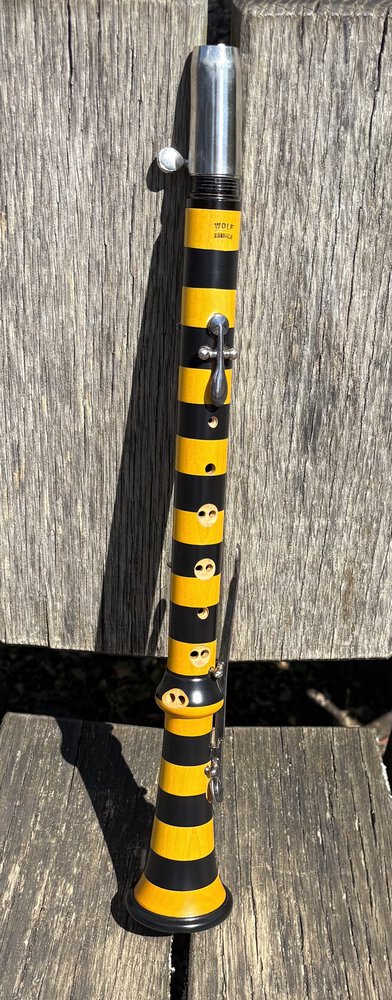
The Tiger Clarinet makes it easier for children to get started early (Photo: Daniela Engel)
DThe Tiger Clarinet as a Beginner's Instrument
This is also confirmed by Daniela Engel, who introduced lessons on the so-called „tiger clarinet” at the Uster Music School. “The spacing on the Clarinet “are still too difficult for a five-year-old,„ she says, “but with the Tiger clarinet—which has a clarinet mouthpiece but only three keys—it’s no problem at all.„ Lessons take place in small groups with parents present. “The goal is to engage the children early on and guide them musically,„ says Daniela Engel. “The lessons are designed to be more holistic; it’s about the music and not just the instrument.”
Suzuki Method: Learning to Play the Violin at an Early Age
Early violin instruction using the Suzuki method has been well known for some time.
Doris Estermann offers these classes at the music schools in Stans and Alpnach. When they start, students are given a cardboard violin so they can get used to the instrument and practice their bowing technique without their parents having to worry that a valuable instrument might get broken. The transition to a „real“ violin is then all the more exciting and serves as proof to the child of just how much they have already learned.
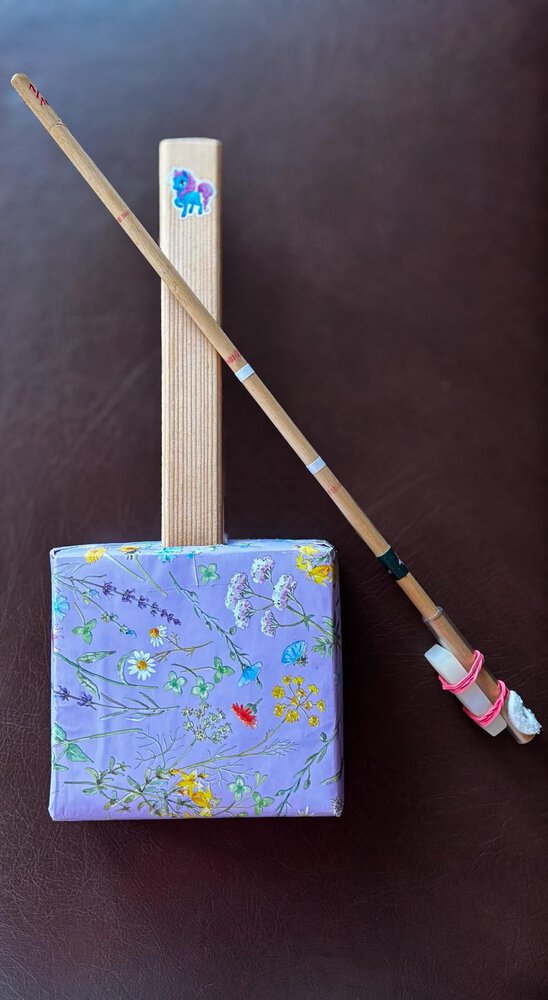
How do I hold a violin? Practicing with a cardboard violin (Photo: Doris Estermann)
Group Classes as a Community
The basic idea behind the Suzuki Method is early ensemble playing—children take one individual lesson and one group lesson each week and are able to join the beginner’s orchestra at an early age. At the Stans Music School, this concept is carried through throughout a child’s school years, so that music students get to know one another well, friendships develop, and close contact with parents can be maintained. This is all the more important the younger the children are—especially in early music classes, parental involvement is encouraged. „I always say: Parents are my assistants.”", says Doris Estermann. It won't work without parental support. It's important to create a supportive environment, incorporate the instrument into the daily routine, and show appreciation when the child plays.
Getting to Know the Child During the Intake Interview
At some music schools, it is customary for prospective students and their parents to be invited to an admission interview—and the Bern Conservatory is no exception. This practice allows the school to get to know the child, assess their current level, and support them on their musical journey. „Every child is different,“ says Saara Vainio, a member of the school administration. „During the admissions interview, we determine whether private lessons are appropriate at this point or if the child might need a little more time—and we can assign them to a teacher who can provide the best guidance.“ What matters is not a specific age, but the child’s individual level and preferences.
Pros and Cons
If music students start playing an instrument at an earlier age, does that mean they’ll also stop playing sooner? Opinions differ on this point. Philippe Régana from Geneva sees a potential risk that children will set the instrument aside after four or five years and pursue a different hobby. Doris Estermann sees it the other way around: „Those who start early are less likely to quit because the instrument becomes part of their daily routine at an early age and is an integral part of their lives.“ Both agree that puberty is a critical phase during which many music students stop taking lessons. Philippe Régana emphasizes how important it is to take the pressure off at this age. „Teachers need to accept that students might not make much progress on the instrument for a few years, and ensure that the connection to—and enjoyment of—the instrument remains.“ Saara Vainio also emphasizes how crucial the teacher-student relationship is during this phase. „That’s where the teacher is important—someone who says: ‘I understand your situation; I’ll be there to support you through it.’”", Saara said. „Often it’s just stress that keeps them from practicing, not a lack of interest.”."
The Joy of Music
In the end, Philippe Régana emphasizes, age is secondary anyway: „It doesn’t matter whether you make music—it’s how you do it that counts. A strict curriculum that isn’t tailored to the child won’t work, whether the child is four, five, six, or seven years old.“ Or, as Doris Estermann from Sarnen puts it: „If you love music and can spark that passion, that in itself makes a huge difference.”."