So that as many people as possible can make music - promoting the general public and talented people
The educational mission of Swiss music schools is broad - it encompasses the promotion of music in general as well as the recognition and promotion of special musical talents. An insight into current national and local programs.




According to educationalist Margrit Stamm, giftedness describes a potential for unusual achievement. In other words, a potential that does not unfold by itself, but that needs to be discovered and carefully nurtured and developed. Important factors here are a supportive and nurturing environment, as well as a child's individual motivation and social skills. Cooperation between music teachers and parents - and between educational institutions - is just as important, especially when it comes to discovering talented children and young people, according to the VMS guidelines for the promotion of gifted students.
Young talents in music
Within the framework of „Young talents in music“ the federal government supports the cantons in the further development and implementation of programs to promote gifted children. The grants are awarded to talented students between the ages of 4 and 25. There are four levels of support in total: Basic, Advanced I, Advanced II (amateurs) and Pre-College. Talent is accepted into the support program after successfully passing an entrance examination. As of spring 2026, almost all cantons have already submitted their own concept for promoting talented students to the federal government. In concrete terms, this means that gifted children who successfully pass the entrance exam for the talent promotion program will now receive financial support of between CHF 1,000 and 2,500 per year, depending on the level of promotion. The cantonal programs include not only the instrument in the main subject, but often also a secondary instrument, as well as workshops, theory lessons, various ensembles and performance opportunities.
Pre-College Days 2026
For the third time, the Pre-College Days for talented students at the highest level took place at the end of January 2026. This year, they were hosted by the Basel Music Academy. Around 100 participants from all over Switzerland traveled to Basel-Stadt for a weekend, attended workshops from a diverse, interdisciplinary range and played concerts together. „The young musicians were very open and curious and enjoyed the exchange with each other,“ reports Martin Neher, Deputy Director of the Basel Music School. Lecturers from the fields of classical music, early music, jazz and music and movement also benefited from this exchange at a national level, as did the site directors from other pre-colleges in Switzerland.
„It is important to have structures that can recognize talent,“ he says, „Where is there an affinity, a curiosity, joy in the subject matter?“ This requires institutionalized tools and competent teachers: „There are so many hidden talents. Being able to develop and express your individual talent is an educational right that everyone should be entitled to.“ That is why it is not possible to promote gifted children without broad-based support, he emphasizes. „Broad-based support is the basis. This is the only way to discover talent and ensure equal opportunities.“
Key players in broad-based promotion
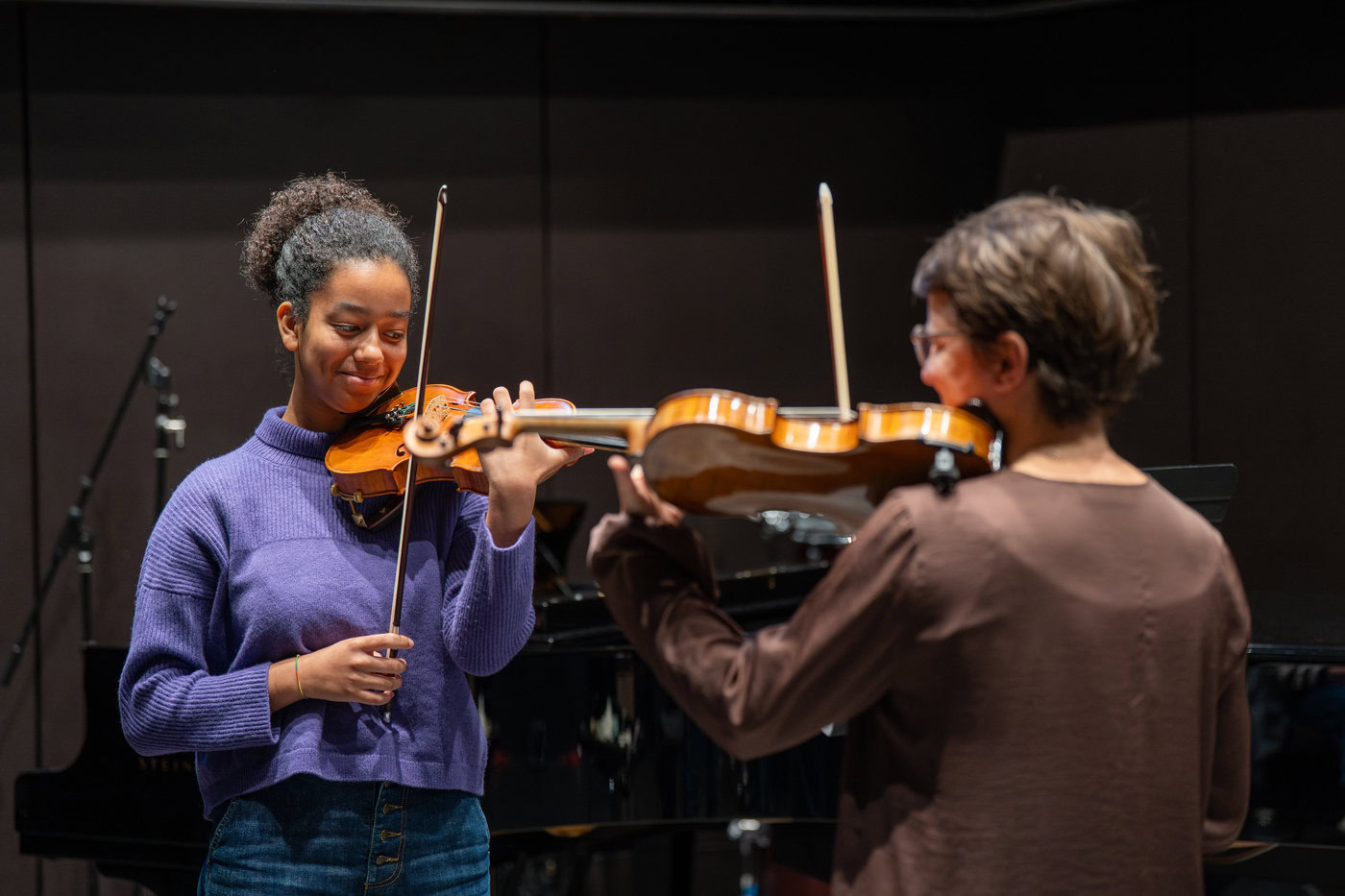
Music educators are ambassadors for music education and are committed to equal opportunities, confirms the Job profile ‚Music teacher‘ of the VMS. On the one hand, they play a key role in discovering musical talent - and on the other, they inspire enjoyment of music, promote self-confidence and set goals that are appropriate to age and interests. Ensembles, leisure camps and concert projects, which pursue not only musical but also social and societal goals, play a particularly important role in the promotion of the general public. Such offers - from music schools, but also from music clubs - are supported by the Federal Office of Culture with the „Youth+Music“ supported.
Youth+Music
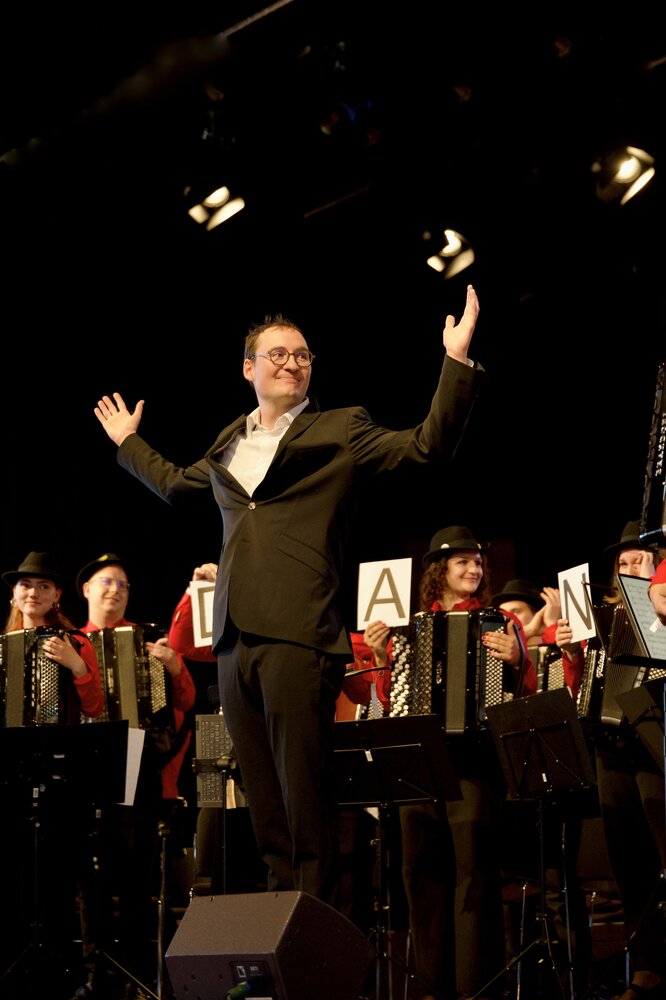
One example of this is the Société des accordéonistes „L'Echo des roches“ in the canton of Fribourg, led by music teacher Julien Tudisco. He teaches accordion in individual lessons and conducts the ensemble rehearsals for the various age groups. „For the children and young people, it's not just about making music,“ he says. „In addition to school and home, it's another place where they can find their place and express themselves.“ The club is mixed in age, which means that older children can support the younger ones musically, but also socially. In addition, the young people can help with the organization and gain experience at an early stage. „I think that's very important,“ he says. „Of course, I'm a musician and I want to introduce them to the accordion, but when I see how relationships build up over the years that sustain them even in difficult times, I'm really happy.“ The social factor in particular leads to children becoming interested in the accordion because they also want to play in the club - which is great for an instrument that children and parents don't think of first. The fact that young people who are active in the club should also not be underestimated, would be less likely to put their instrument down during the otherwise critical transitions to upper school or when starting an apprenticeship. „I lead L'Echo des Roches for 15 years now,“ says Julien Tudisco, „There are many in the adult ensemble who started with us as children. They go to recruit school and then come back to the club, they go to university and then come back again. That's very nice.“