A new concert hall for Altdorf
Since the winters have become warmer and the ski slopes shorter, the mountain regions have discovered summer tourism and with it, culture. Andreas Haefliger wants to convert the old arsenal in the cantonal capital of Uri for this purpose.




The Alpine arc is rich in concert venues, from Zermatt, Sion, Ernen, Verbier and Gstaad to Meiringen, Sarnen, Andermatt, Klosters and Davos, to name but a few. And with a view of the lake and mountains, the classic Olympics in Lucerne. Altdorf is soon to be added to the list.
The capital of the canton of Uri with 10,500 inhabitants, which most people only know from driving past in the south, may be associated with William Tell, but not necessarily with classical music. That is about to change, says Andreas Haefliger. The internationally successful pianist returned to Switzerland from the USA a few years ago and now lives with his wife, the American flautist Marina Piccinini, high above Altdorf at seventeen hundred meters with a magnificent panoramic view of the Uri Alps. The charismatic artist has fallen in love with Altdorf, where he wants to build a concert hall for chamber music and is convinced that the hall will not only be a cultural enrichment for Altdorf, but will also attract attention beyond Switzerland with the internationally renowned artists who will perform here. Economic benefits from cultural tourism would be guaranteed.
A gift with a concept
Haefliger's concert hall idea is already on its way to realization. The plans he is putting on the table for the community are fully developed in terms of architecture, administrative structure and finances. In a way, they form a gift package with a gold ribbon that a generous artist wants to present to the community. The project is to be financed exclusively by private individuals - a stroke of luck for Altdorf. And a pointer towards Europe, where the subsidized cultural sector is dangerously faltering due to the low tide in public coffers.
Haefliger has planned his project with strategic foresight. He wants to reduce his concert activities over the next few years in order to be able to devote himself fully to his passion project as a lobbyist on his own behalf. A foundation with personalities from Altdorf already exists as the operating company for the Saalbau, and a project group consisting essentially of the Haefliger couple and the cultural manager Pius Knüsel will oversee the construction. He has quickly built up a circle of local acquaintances, ranging from bakers to councillors, and he and his wife are already well established here as musicians. Their Magic Sound Festival, he says, attracts local audiences and visitors from all over Switzerland. He does not regard the concert hall in Andermatt, located behind the Schöllenen Gorge, as competition, nor the new hall in nearby Vitznau. The event models are totally different.
Wooden construction by Shigeru Ban
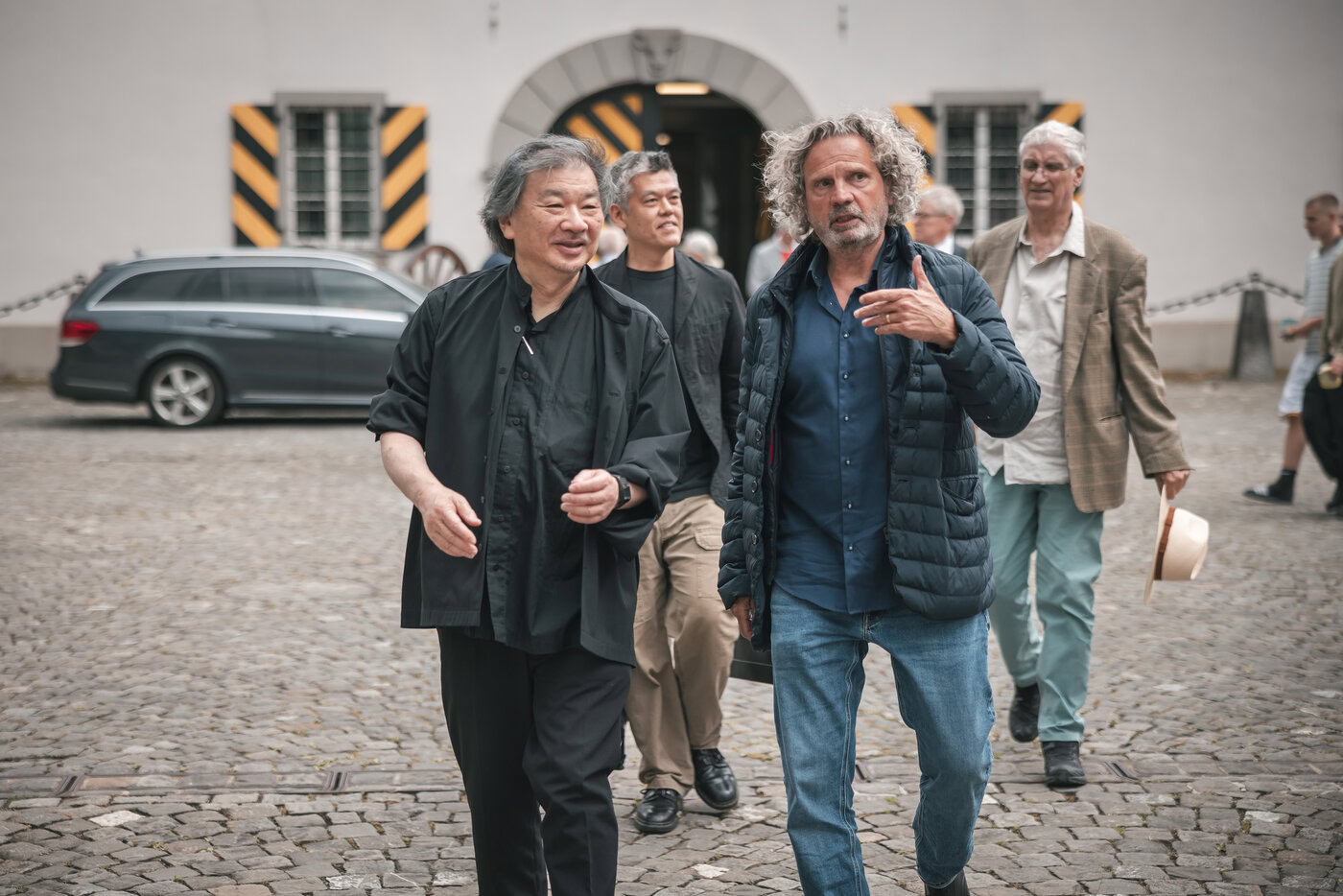
The conversion plans situate the hall in the listed arsenal from the early 19th century in the center of Altdorf. Its façade will remain untouched, but the interior will be redesigned to make way for a wooden structure resting on four pillars and offering space for 250 people. The innovative design was created by Japanese architect Shigeru Ban, an international luminary known for his timber buildings. In Switzerland, he has already designed the headquarters of the Swatch Group in Biel and the Tamedia media building in Zurich, among others.
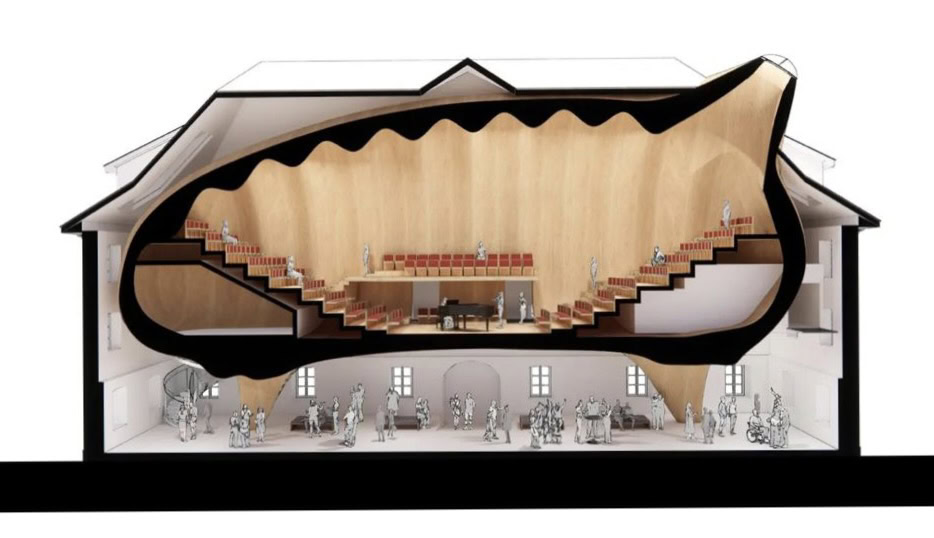
The schedule is tight and precisely timed, and fundraising is already in full swing. The building permit is due to be granted in 2027, construction will begin in 2028 and the building is scheduled to open in 2030. The costs of around 45 million francs are to be covered by donations from patrons and foundations. A bold bet, but Haefliger is certain that it will work, pointing to his extensive personal contacts. The not inconsiderable costs for ongoing operations have already been secured by a firm commitment. The municipality and the canton, which currently owns the arsenal, would therefore also be exempt from the follow-up costs.
A place for everyone
The armory is currently used by the cantonal administration for offices and by the association House of folk music which also has some offices and an archive here and organizes events on the first floor. If no adequate replacement is found, the project could face opposition from this side. Folk music against classical music would be a fatal constellation. Haefliger is therefore seeking an exchange with the locals and emphasizes: "The hall should by no means be a foreign body in the village center, where only high culture is celebrated for a clientele that has traveled here. It should be integrated into local cultural life and also be open to event organizers from other musical genres. The foyer on the first floor is planned as a local meeting place where people can also meet for a coffee or a beer during the day.
The idea of using music to initiate a cultural development process in the region coincides with the models of sustainable tourism practiced today. At the same time, the project generates considerable artistic added value. If all goes well, concerts of exceptional quality will be heard in Altdorf from 2030, sound recordings will be made here thanks to the excellent acoustics, educational programmes will be held for Altdorf schoolchildren and Marina Piccinini, who teaches flute at Johns Hopkins University in Baltimore, will organize international masterclasses here. She has also arranged for her university to send students to Altdorf as early as 2027 as part of a certified exchange program. And finally, what cannot be overestimated: in view of the bleak economic and political prospects for the future, this project is a strong, courageous signal for the preservation of our musical culture.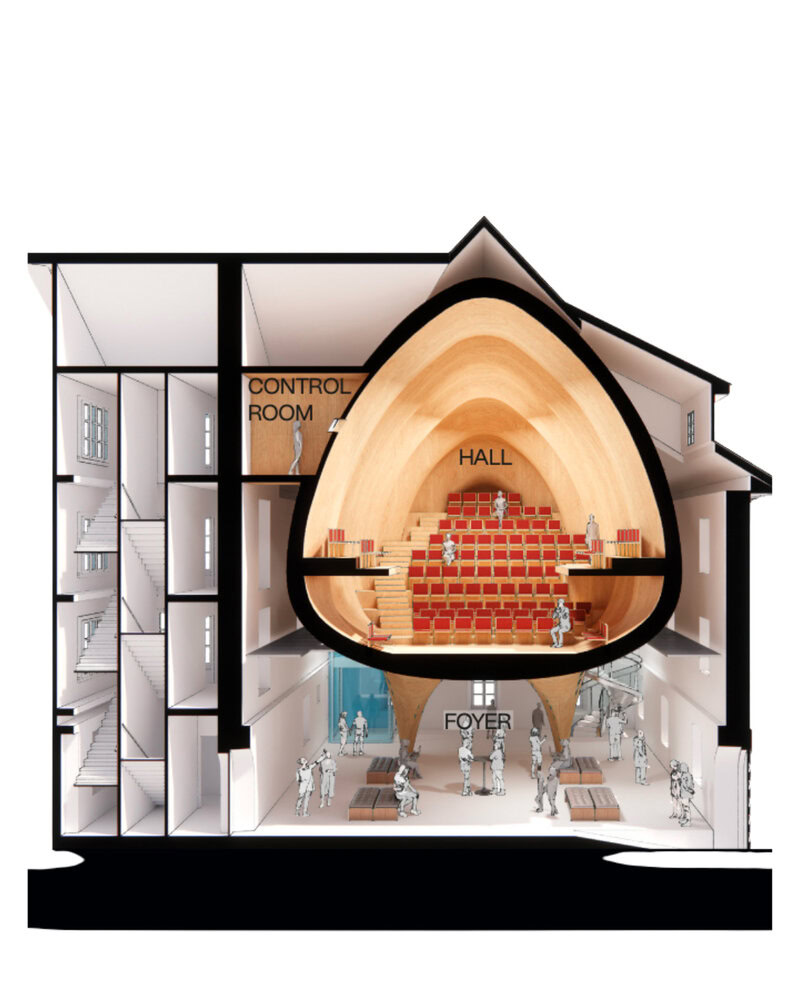
Visualization: Shigeru Ban Architects