A resonance chamber for Zurich's classical talents
The support landscape for young musicians in the canton of Zurich has been enriched by a new platform: «Zurich Youth Classical» ZYC aims to be more than just a competition. The artistic personality should take center stage.




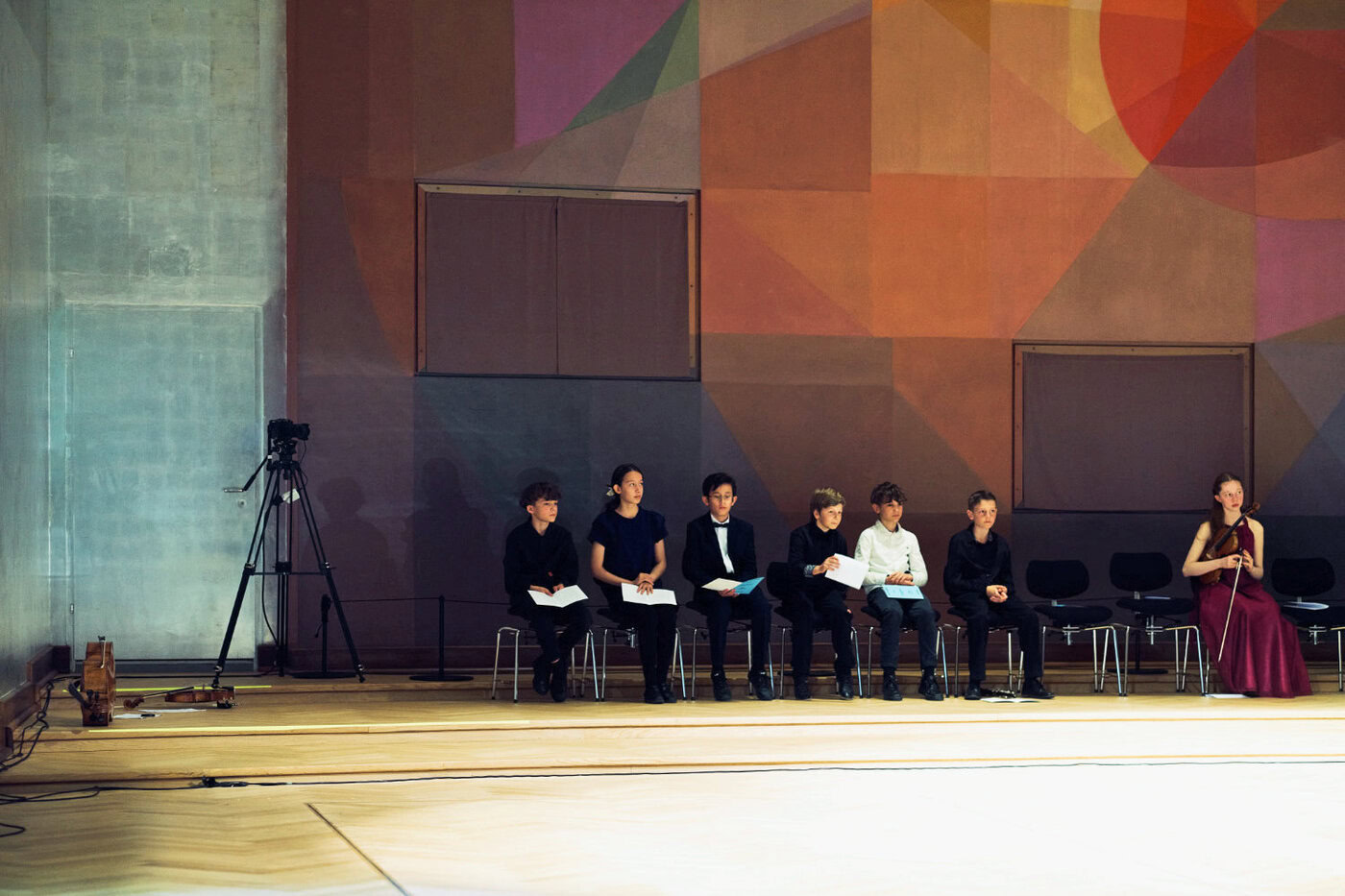
Technical perfection in music-making was not the most important criterion in the qualifying round of the first ZYC in Brunnenhof and Florhof. Technical skill on the instrument was virtually a prerequisite for successful participation. The jury focused on the artistic attitude and personal creativity of the children and young people performing - always taking into account their age and stage of development. According to the concept, the aim of the auditions is not to further select the best, but to promote a holistic approach.
Andrea Raschèr, President of the «Förderstiftung Musik Zürich», believes that Zurich Youth Classical a matter close to his heart that has been with him for a long time. He is responsible for the strategic, financial and structural management of the project. Since the beginning of last year, he has been working on it together with pianist and artistic supervisor Oliver Schnyder and Valérie Probst, Head of the Artistic Office.
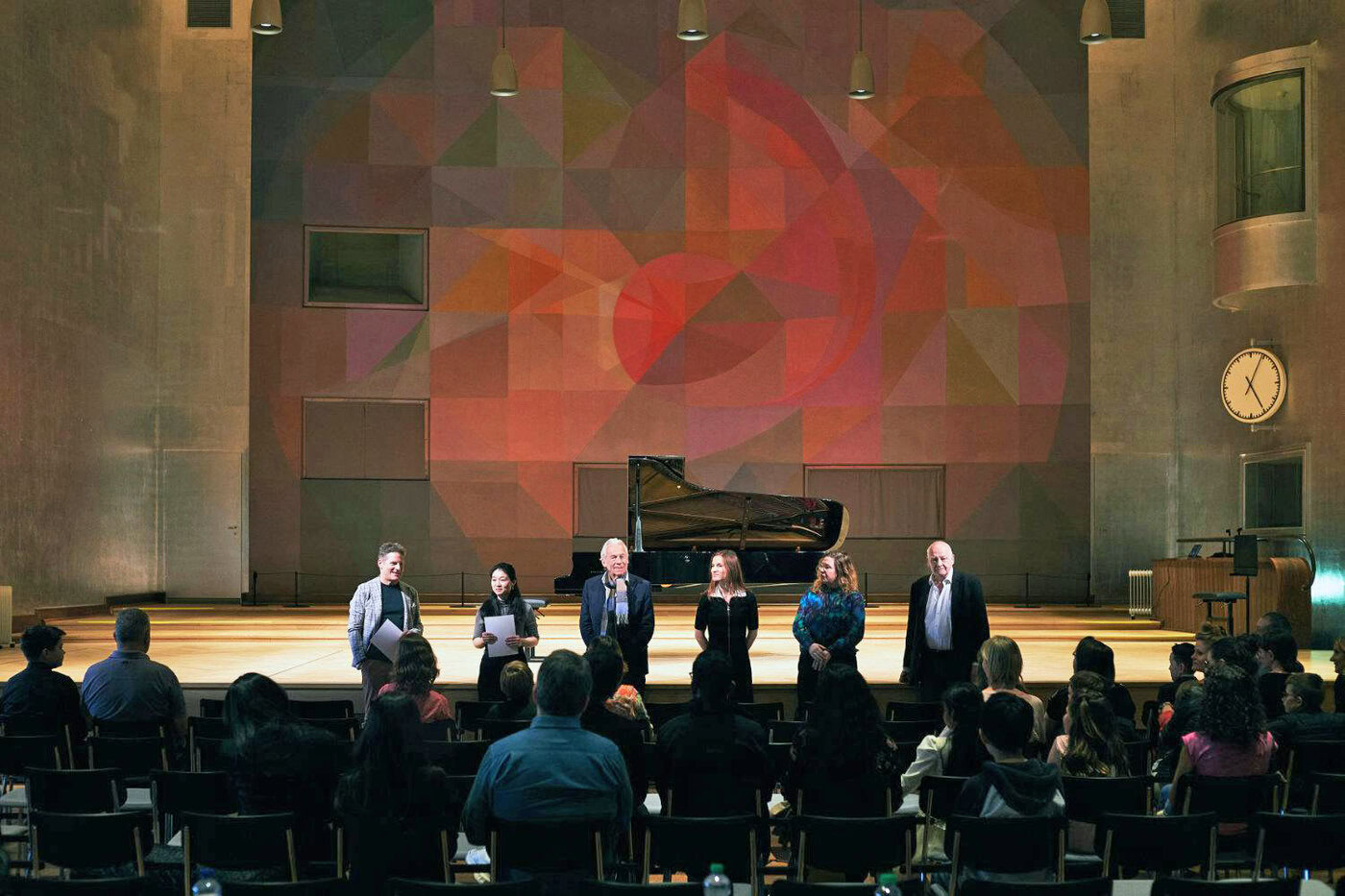
In his speech at the final concert, which was read out by Valérie Probst for health reasons, the basic idea is formulated: «ZYC is not a classic competition in the sense of a performance comparison. It is a resonance chamber. A place where the focus is not on rankings, but on your artistic identity. Each participant has chosen a program that suits them - their own level of development, their own personality.» Raschèr is convinced that musical talent deserves more than recognition, «it deserves space - to grow, to show, to connect.» The new format is intended to enable talented musicians to showcase their «genuine feeling, personality, expressive will and musical voice».
Feedback instead of competition
ZYC is aimed at children and young people as well as pre-professionals between the ages of 7 and 24. All instruments and vocals from all stylistic periods are permitted. Chamber music up to quintet and vocal ensembles are welcome. Further categories are composition and free creative space for experimental music. Only performances that can be classified by the jury as classical music in the broader sense will be considered. Terms such as «contest» or «competition», which imply rivalry and comparison of performance, are avoided by those responsible. Instead, terms such as «recurring funding format» and «fixed platform for the promotion of young talent in the Canton of Zurich» are used.
However, it does not work completely without selection. The somewhat softer term «contest» is used for the auditions. The number of entries was so high that a pre-selection had to be made based on the video material sent in. 47 performers or groups were invited to the qualifying round from March 6 to 8 at the Brunnenhof. Here there was a traditional ranking list with 3rd, 2nd and 1st prizes as well as 1st prizes with distinction. 23 entries reached the final from April 17 to 19.
Jury president Oliver Schnyder had convened a high-caliber and broad-based panel to evaluate individuality, musicality, expressiveness, stage presence and communicative quality according to set criteria. The idea of competition should never arise, but rather the development of potential should be kept in mind. The organizers attach great importance to a relaxed and attentive implementation of the contest. Valérie Probst says: «With this first edition of Zurich Youth Classical, we have achieved and even exceeded our goals. It was important to us to ensure the highest level of professionalism and quality in every respect, while at the same time offering the young artists a welcoming and stimulating environment. We have received very positive feedback in this regard.» The feedback discussions are of central importance. Jury member Daniel Fueter comments: «The jury makes a real effort to provide detailed feedback. These are very relaxed discussions and the young people are happy to take on board what we have to say.»
Following the contest, the potential for a possible professional career is to be developed in the departments «The Cadenza» and «The Crescendo». Up to three participants, usually those with distinction, receive follow-up support, advice and guidance on their career path from proven experts.
Carefree to astonishing achievements
The intended relaxed atmosphere was transferred to the audience at the final concert. They listened relaxed to a varied program of a high standard. At no time did they think of a stressful situation. The 17-year-old cellist Frida Lindner - who attends the Kunst- und Sport-Gymnasium Rämibühl and is preparing for professional studies - confirmed this impression after her remarkable concert contribution with Elgar, Haydn and Kurtág: «You can clearly tell the difference, even with the jury. It is very mixed, in terms of musical style, but also in terms of age. As a result, the judging is also different. In other competitions, it was almost all cellists who paid close attention to the technical aspects.» The 10-year-old harpist Jaron David Kiener, who won the Small Bolero by Anna Sikorzak-Olek, put it succinctly: «It's pleasant to play here. They are less strict than elsewhere.»
«I'm overwhelmed by what they can do at that age, it's simply amazing, one better than the other!» Pepe Lienhard exclaimed during a break in the final. Lienhard was appointed to the jury as a «career changer», as he calls it, to judge the performance quality of the participants. «Of course, I'm not a specialist in classical music. I am best placed to judge the performance of 11-year-old oboist Marc Boller. I got my first saxophone at his age and he already plays such difficult pieces, unbelievable ... I also took part in competitions as a youngster and was often on juries. In terms of level, there's a world of difference between then and now.»
More contemporary, but also more demanding
Oliver Schnyder wasn't sure in advance whether «the basic idea of Zurich Youth Classical would be well received», namely that «it's not about a cross-comparison, but that the young people are measured against the tasks they set themselves. We were pleasantly surprised at how well this worked and that the message got across straight away.»
In some respects, the ZYC format is more demanding for everyone involved than the traditional competitions that aim to be competitive. If you want to see artistic personalities who have something to say on the podium, the instrumental basis must already be in place. As we saw at the ZYC final, this is increasingly the case today and at a younger age. With this in mind, the time is ripe for a rethought, contemporary form of promoting excellence. ZYC could thus actually become a driving force.