Joachim Raff: a composer with a message for today's Switzerland
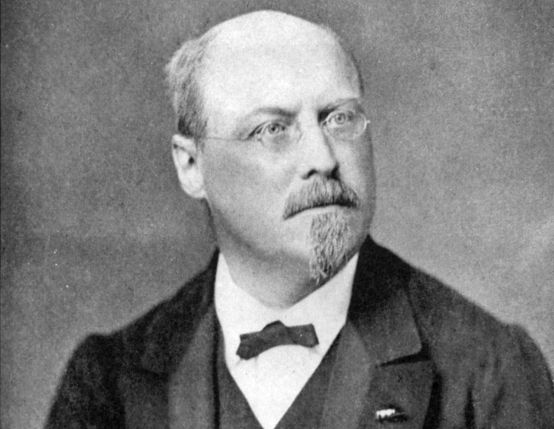
Joachim Raff, who was born in Lachen/SZ in 1822 and died in Frankfurt in 1882, wanted his music and his social views to unite rather than divide.




The original version of this text was first published with many pictures on viewswitzerland.ch
When Franz Josef Raff (1789-1861) fled from Empfingen-Wiesenstetten in southern Germany to Switzerland in 1810 on the advice of his father, he had no idea that his future son Joseph Joachim would have a world career as a composer ahead of him. The Napoleonic wars, in particular the preparations for the Russian campaign and the early death of a brother in the war, ultimately lead to his escape to Wettingen Abbey. After working as a tutor in Lucerne, the musically gifted Franz Josef came to Lachen, the district capital of Märchl, as a teacher and church musician in 1817. Progressive circles from the village's revolutionary liberal elite had already founded an elementary school together with the parish, alongside the Latin school, and Father Raff acted as a strict pedagogue who also excelled in church music.
Katharina's marriage to the daughter of the neighbouring, politically rebellious ox farmer and Landammann Franz Joachim Schmid decisively politicized the mood in the Raff family. Schmid was one of the ringleaders who opposed the domination of the powerful noble families and patricians in Schwyz and, together with the Märchler doctor Melchior Diethelm, wanted to establish an independent canton of Ausserschwyz. Melchior Diethelm would later become one of the architects of the Swiss bicameral system. Joachim Raff was born on May 27, 1822 in the old 16th century Sust. This «multi-purpose building» serves as a commercial and industrial building as well as a school and arsenal. It also had to accommodate the teacher's apartment.
Early giftedness of Joachim
Throughout his school years in Switzerland until 1840, Joachim stood out for his diligence, musicality, multiple talents, maverick nature, ambition and even a desire, expressed to his mother, to achieve something very special in life. His strict father taught him to play the violin, piano and organ. He mastered Latin early on and at the Jesuit College in Schwyz, which he attended from 1838-1840, he was repeatedly top of his class in a wide range of subjects. Throughout his life, he would continue his self-taught education and develop into one of the most recognized music historians and composers. Early influences and an excellent genetic make-up are decisive for his success.
His early politicization at his grandfather's pub table, the awareness of being the son of an exposed political refugee and thus belonging to a minority, but also his great sensitivity, his strong mind and also his striking personality accompany Raff throughout his life.
Early Raff compositions were sung by him, together with his fellow students, at the «Pannerfest» for the banner lord Theodor Ab Yberg (1795-1869) in Schwyz in 1840. He was also impressed by the visit of the Schwyz Landsgemeinde on May 3, 1840 in Rothenthurm.
Joachim Raff is enthusiastic about the political customs, the corresponding democratic rites, procedures and elections in this politically very uncertain time of transition from a confederation of states to a federal state and thus to the foundation stone of Switzerland.
He also wrote about this in May 1840 in the then well-known Catholic-conservative newspaper «Sanct Gallischer Wahrheitsfreund». Early on, he developed his own identity based on justice and equality. There are indications in his biography of early bullying, ostracism due to his giftedness and impressive, very personal conflict management regarding his strict father (he goes on hunger strike against him).
Throughout his life, he defined himself with conviction and an explicitly equal consciousness as someone who came from Switzerland, his motherland, and with Germany as his homeland.
All this can be read in the biography of her daughter Helene Raff, the writer and painter, about her father (Bosse, Ravensburg 1925).
First professional experience and years of travel
Although Joachim Raff wanted to become a professional musician against his parents' wishes, he gained his first professional experience as a teacher in Rapperswil from 1840 to 1844.
An expert opinion from the then already well-known musician Felix Mendelssohn Bartholdy (1809-1847) attests to his above-average musicality, which finally triggers his risky career change to become a freelance musician in 1843. This courageous, adventurous step, which he took against all odds, not only drove him away from his family, but also into homelessness on the Platzspitz in Zurich.
Thanks to a somewhat desperate attempt to make contact with Franz Liszt (1811-1886), then celebrated as a star pianist, at the Casino Basel in June 1845, he received a promising promotion.
After their first joint project, the inauguration of the Beethoven monument in Bonn in August 1845, Liszt arranged various work opportunities for him in music houses in Cologne, Stuttgart and Hamburg. Many more or less successful compositions for piano were written during this time. Above all, however, Raff learned a great deal through self-tuition, was in contact with musicians and published in various international specialist journals. It was in Stuttgart that Raff met and came to appreciate his most important friend and lifelong patron, Hans von Bülow (1830-1894).
Profiling in Weimar
Joachim Raff took the step towards assisting Franz Liszt in the transition from 1849/50. Although the composer from Lachen also felt somewhat exploited by Liszt (many instrumentations, orchestrations, correspondence, organization of trips and music days, negotiations with publishers, journalistic activities), he was also supported by him (help with his own compositions, performances of Raff's works at the piano, conducting Raff's works, offering various relationships, etc.). However, his progressive emancipation from his patron was also unstoppable due to stylistic differences.
From the very beginning, Raff has consistently followed the path of processing the most diverse stylistic elements from music history, from which he is constantly inspired. He is not familiar with the passionate disputes over style that took place in the 19th century.
At the same time, however, he is careful to follow his own path, his own music, with ultimately his own style. Above all, his contrapuntal mastery, the colorfulness of his instrumentation and the complexity of his treatment of the themes became his trademark.
Raff expands his compositional activity. Songs, chamber music works and even an opera («King Alfred») are the focus of his further musical development in his younger years. Successes, but also repeated failures, occurred in parallel.
His network of contacts expands significantly. He met Richard Wagner (1813-1883), the violinists Joseph Joachim (1831-1907), Edmund Singer (1831-1912), Alexander Ritter (1833-1896), the cellist Bernhard Cossmann (1822-1911), but also representatives of the Weimar court such as Grand Duke Carl Alexander (1805-1863). He was able to talk to the composers Hector Berlioz (1803-1869), Robert Franz (1815-1892), Johannes Brahms (1833-1897) and Louis Spohr (1784-1859) personally and on an equal footing. He also regularly exchanged ideas with progressive literary figures such as Peter Cornelius (1824-1874) and August Heinrich von Fallersleben (1798-1874).
The Wagner question
The charisma and success of Richard Wagner in particular challenged Raff. The radical reorientation of opera as a total work of art inspired him. In his book «The Wagner Question» (1854), Raff takes an in-depth but also critical look at the star of his time. Raff attempts to counter Wagner's leitmotif technique, the role of the orchestra and the expansion of harmony with his own interpretation. With the fairy-tale epic «Sleeping Beauty» (1856), he tackles this in a practical way.
The music drama «Samson» (written between 1851 and 1857) should actually have been his doctorate on the one hand, but also a work on a par with Wagner (Lohengrin). Raff also wanted it to qualify him for a position as a secretary at the Goethe Foundation or as a curator at the Weimar library (music department). This example impressively demonstrates Raff's three great potentials, which were already apparent in his early youth: an academic career, a career as a composer and, what remains to be described, his career as a university teacher and university director. Various reasons prevent the performance of the completed tragedy. It was not until 2022, the 200th anniversary of Joachim Raff's birth, that the successful world premiere took place at the German National Theater in Weimar. And in 2023, the World premiere recording at the Theater Bern under the overall project management of Graziella Contratto (Label Schweizer Fonogramm).
Breakthrough in Wiesbaden
It was also in Weimar that Joachim Raff met his future wife, the actress Doris Genast (1827-1912). She worked at the theater in Wiesbaden and the hundreds of pages of mutual letters from their long-distance relationship between Wiesbaden and Weimar fortunately still exist and form the basis for future research on the «Silver Age of Weimar». The touristically and culturally diverse spa town of Wiesbaden was therefore also the place that Raff chose in 1856 as the future center of his work and life until 1877.
As if the floodgates were opening, Joachim Raff plunged into his most fruitful, productive and successful creative period as a composer.
Sophisticated piano suites, his first concerts at the Gewandhaus in Leipzig, which he conducts himself, the 1863 award ceremony at the Gesellschaft der Musikfreunde in Vienna with his first symphony «An das Vaterland», demanding large sonatas for piano and violin, many other chamber music works (trios, quartets, quintets, sextets, octets), songs and choral works, successful symphonies (e.g. the 3rd Symphony op. 153 «Im Walde» in 1869, or the 5th Symphony, op. 177, «Lenore»), which are performed worldwide, characterize this period. For example, the 3rd Symphony op. 153 «Im Walde» in 1869, or the 5th Symphony, op. 177, «Lenore»), which were performed worldwide, characterize this period. New operas were also written (e.g. "Die Parole"; "Dame Kobold").
Joachim Raff's private life also changed. In 1859, he married Doris Genast, the daughter of the Weimar director and actor Eduard Genast (1797-1866), who was still working with Johann Wolfgang Goethe (1749-1832) at the court in Weimar.
In 1865, the couple's only daughter, Helene, joined them. She was brought up and educated in a progressive and equal manner by the couple, who were avant-garde at the time and had artistic and professional careers on both sides. She studied the same school subjects as her male counterparts and was one of the pioneers of the women's movement in Germany at the beginning of the 20th century.
Joachim Raff receives various honors, knight's crosses and medals of merit from various duchies in Germany, Luxembourg and Italy. In 1872, together with Franz Liszt and Richard Wagner, he was made an honorary member of the New York Philharmonic. He dedicates a piano concerto to his friend Hans von Bülow and honors the then leading cellist Friedrich Grützmacher (1832-1903) with the Concerto for Cello, op. 193. Another world-class instrumentalist, the Spanish violinist Pablo de Sarasate (1844-1908), takes on Raff's extensive violin works and disseminates them almost worldwide.
Director of the Dr. Hoch'sches Konservatorium in Frankfurt am Main
It was a great satisfaction and honor for the self-taught Joachim Raff to be asked to become the first director of the newly founded Dr. Hoch'sches Konservatorium in 1877. Personalities such as Johannes Brahms and Josef Gabriel Rheinberger (1839-1901) were also under discussion. The Frankfurt lawyer Dr. Joseph Hoch (1815-1874) bequeathed a considerable fortune to the city to enable the foundation of this conservatory.
Raff enthusiastically puts together an important teaching staff and quickly develops the school into an internationally recognized music academy. He himself teaches composition. Franz Liszt and many other important musicians visit the institute several times.
As a special feature, Raff employed the top pianist and composer Clara Schumann (1819-1896). A woman as a professor at a university is unusual and again testifies to the innovative director's progressive understanding of gender equality. Raff also went his own visionary way by creating a separate class for female composers. In his inaugural speech on September 22, 1878, Raff's Samson studies are mentioned and «he gives an outline of music history in a concentrated form and sophisticated diction that is rarely found.» (Cahn P., Das Hoch'sche Konservatorium, 1878-1978, 1979).
Joachim Raff also continued to compose well-known works. Symphonies, an opera, orchestral preludes, a cantata, a vocal cycle and, above all, his most important sacred work, the oratorio «Welt-Ende Gericht Neue Welt». This opus 212 is one of his last works. Raff's daughter, Helene, mentions in her biography of her father that he was often haunted by premonitions of death towards the end of his life. In 1881, he completed the comprehensive work and the following year, on June 24, 1882, Raff died of cardiac paralysis in Frankfurt am Main.
To mark the 200th anniversary of his birth in 2022, the aforementioned oratorio will be impressively and worthily performed by the Gewandhaus choirs and the Capella Lipsiensis under the direction of Gregor Meyer in the parish church of Lachen, his birth church and in the Gewandhaus in Leipzig and recorded on CD.
A lasting legacy
Raff's legacy is twofold. Firstly, there is his music. Since the 1970s, it has enjoyed an astonishing renaissance. Raff's work is once again present in research (several dissertations, master's theses, research projects in various countries), recordings (around 150 CD productions on 55 labels), countless important concerts all over the world, publications, podcast productions, presence in the electronic media and exhibitions.
It is probably in this context that the music makers responsible also recognize Raff's personality. At a time when provocations, divisions, egoism, fake news, radicalization and nationalism are having an increasingly negative impact on world events, Raff's work, which is based on harmonizing, connecting, coherent, well-founded knowledge and thus respectful and appreciative insights, takes on a new dimension.
Many musicologists recognize the value of the «synthesis» with which they characterize the work of Joachim Raff. Raff could often be harsh in his arguments and pursue his goals with a certain stubbornness; he even came into conflict with the law as a result of his occasional debts. But with his music and his social views, he wanted to unite and not divide. He conveyed values and reduced tensions. As a «counterpoint», his view of mankind and the world fit well into the 21st century.
List of sources
Books
- Cahn, Peter: The Hoch Conservatory 1878 - 1978, Frankfurt am Main, 1979
- Dörffel, Alfred: Die Gewandhauskonzerte zu Leipzig 1781 - 1881, reprint of the 1884 edition,
Leipzig, 1980
- Genast, Eduard: From Weimar's classical period, Stuttgart, 1903
- Kolb, Severin: «The Wagner Question» - Joachim Raff's Confrontation with Richard Wagner in Weimar (1850 - 1856), Raff-Studien Volume 2, Wiesbaden, 2026
- Kolb, Severin and König, Stefan: (eds.), Synthesen. Conference on the opening of the Joachim Raff Archive, Lachen 2018 (conference report), Raff-Studien Volume 1, Wiesbaden, 2026
- Kolb, Severin: Years of upheaval - Joachim Raff in Stuttgart (1847 - 1849) in Musik in Baden-Württemberg, Marbach am Neckar, 2021 / 2022
- Marty, Res: Joachim Raff - Life and work, Lachen, 2014
- Marty, Res: Anniversary publication, 50 years of the Joachim Raff Society, Lachen 2022
- Marty, Res: Lines & Sound, Documents & Stories from the Joachim Raff Archive, Lachen 2025
- Raff, Helene: Leaves from the Tree of Life, Munich, 1938
- Raff, Helene: Joachim Raff, a biography, Regenburg, 1925
- Schäfer, Albert: Chronologisch-systematisches Verzeichnis der Werke Joachim Raff's, Wiesbaden, 1888
- Thomas, Marc: The Music of Joachim Raff, An illustrated catalogue, Stuttgart, 2022
Documents
- Walter Labhart Documentation Library, Endingen AG
- Joachim Raff Archive / Marty Collection, Lachen
This text was first published with many pictures on viewswitzerland.ch