Return of the large forms
At the Donaueschingen Music Festival from October 18 to 20, works were premiered whose common feature is their extended duration.




Large-scale form, a favorite phenomenon of the late Romantic music world, was largely rejected by young musicians at the beginning of the 20th century. When musical structures became so complex and fragile with the early twelve-tone technique, for example in Anton Webern's music, the composer settled for pieces lasting a few minutes. In more recent times, pieces of around an hour in length have appeared time and again. Armin Köhler, program director at SWF and in particular for the Donaueschingen Music Days, has been trying for several years to base the programs on a specific theme. This year, it is the new large-scale form, in all parts of the program, including the installations.
Fundamental problems
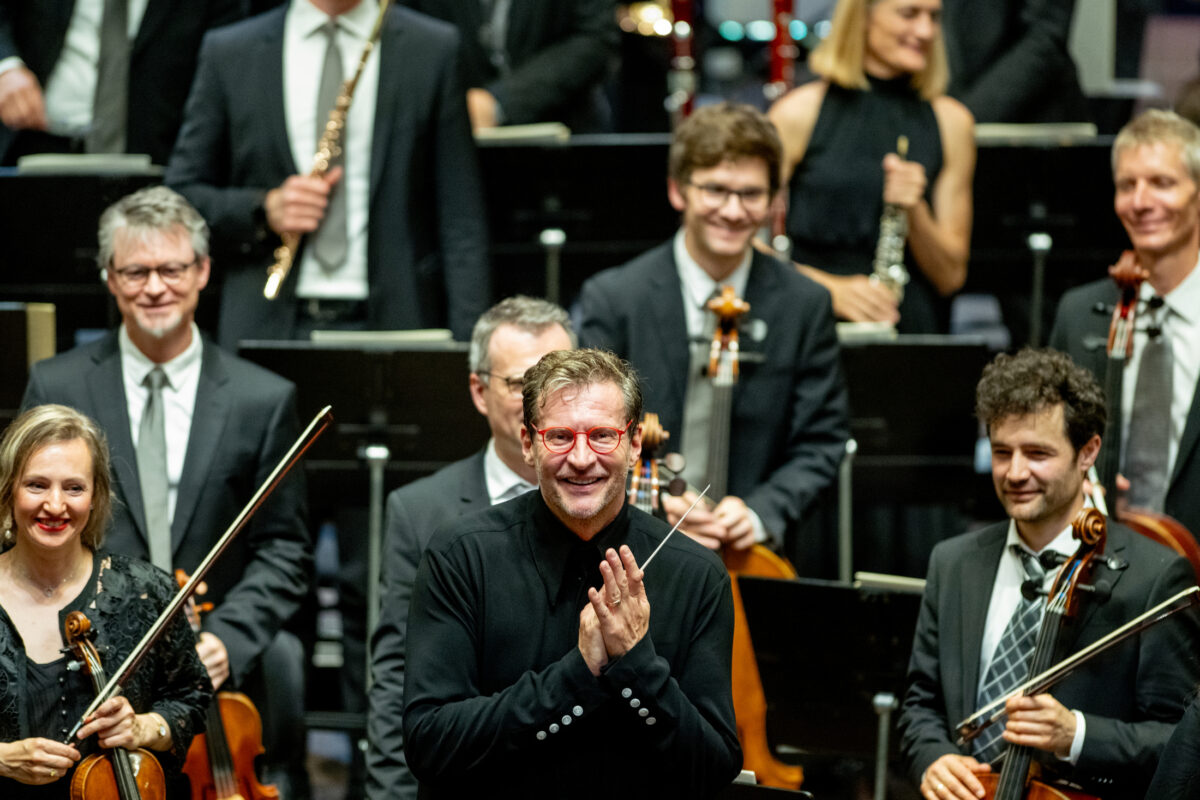
The problem of the large-scale form: to keep the audience interested again and again and yet to create a uniform large-scale form. This was demonstrated by the two pieces on the first evening with the large SWR Symphony Orchestra Baden-Baden and Freiburg under the joint direction of Pascal Rophé, Wolfgang Lischke and Christopher Sprenger. Bernhard Lang works in his Monadologies - This was about the 13th, called "The Saucy Maid" - with motif repetitions and their changes, in a mechanized structure that quickly becomes boring due to the eternal repetitions. The fact that the second orchestral formation, which is positioned behind the audience, is tuned a quarter tone lower does not help much and is lost in the massive overall sound, where sound surface units are shifted against each other. This is quite different with Walter Zimmermann in his Suavi Mari Magno Clinamen I-VI for six orchestral groups, distributed around the audience and held together by several conductors and TV broadcasts of the main conductor via monitors. Canons are joined together in close proximity, but everything is constantly in motion, with lots of imagination, jumping back and forth.
Fascinating and frightening at the same time Memory for large ensemble (Klangforum Wien) by 44-year-old Sauerland composer Enno Poppe, in which a calm four-four time signature is conducted, but the notes always roll down after the beat, their sequence probably defined by the computer. The composer has the instruments constantly screaming in excessive high registers, for 71 minutes in an unbelievable frenzy, and all with the highest precision, like clockwork. This sound event is fascinating, but at the same time you feel sorry for the musicians who have to play incessant sheaves of notes that simply have to be practiced so that they can be called up without thinking. It seems inhuman what the daggy red-haired composer as conductor can conjure up incessantly, dancing with ease.
Various composition techniques
The Greek composer Georges Aperghis, who lives in France, composes in a comparable way. With him, the cascades of sound begin on the conductor's beat (Emilio Pomàrico conducted the Klangforum Wien this time), often creating almost a sense of meter, and he loosens up the overall flow of the Situations for 23 soloists with children's verses, solo interludes, sound duels between the two pianists etc. and texts of a philosophical nature spoken by one pianist (such as «You make a choice between what can be said and what you keep quiet about forever ...»), whereby some things are lisped in such a way that you deliberately don't understand anything. Consequence: the 54-minute piece is always exciting, but falls apart a little formally.
The 61-year-old Frenchman Philippe Manoury has worked with In Situ for orchestra and ensemble, the fifth comparable large-scale work. Here, the 20-piece Ensemble Modern sits at the front, with the SWR Symphony Orchestra surrounding the audience. Manoury composes in the French tradition, which has roughly the same number of notes per second, but not all at the same time, jumping from formation to formation, also with the conductor (here the house conductor Xavier Roth) on different television monitors. But traditional sound concepts still prevail here, often in small groups of figures separated by pauses (Boulezian fermatas). All five works were of course performed for the first time, and all of them received incredibly precise and well-differentiated performances.
Further options
Of course, the four other compositions were also world premieres, which fell somewhat into the background alongside those mentioned. There was the Registre des lumières by Berlin-based 38-year-old French composer Raphaël Cendo for 19 instrumentalists, live electronics and 30 singers (Ensemble musikFabrik from Cologne, the SWR Vokalensemble Stuttgart and IRCAM Paris) on ancient texts. The work produces exclusively primal hissing and rumbling, completely without beat or meter, with almost exclusively unusual playing styles on the orchestral instruments; the choir never sings, it whispers and murmurs. For the choral sections of the 43-minute performance, it would have been absolutely essential to be able to read along with the text, which was printed in full in the program booklet. This would have required full concert lighting, but in Donaueschingen, unfortunately, a kind of television lighting is always practiced, in which the performers are in the spotlight and the audience sinks into darkness!
Alberto Posadas has worked with Kerguelen created a triple concerto for a trio of amplified woodwind instruments and orchestra. Kerguelen is the name of a small island in the southern Indian Ocean, and the trio of soloists is intended to lie like a «plateau» above the overall sound. Sound surfaces dominate the picture, made possible by constant trills and tremolos, rising and falling. But this alone soon becomes boring, and the trills soon become annoying. And finally, Bruno Mantovani wrote his Cantata No.3 for choir and orchestra on Schiller texts in such a conventional and stale style that massive booing was inevitable. It remains to mention a very beautiful, 18-minute, purely electronic piece by Hèctor Parra, born in Barcelona in 1976. I have come like a butterfly into the hall of human life is very tastefully made, but in the style of the 60s.
Freely accessible
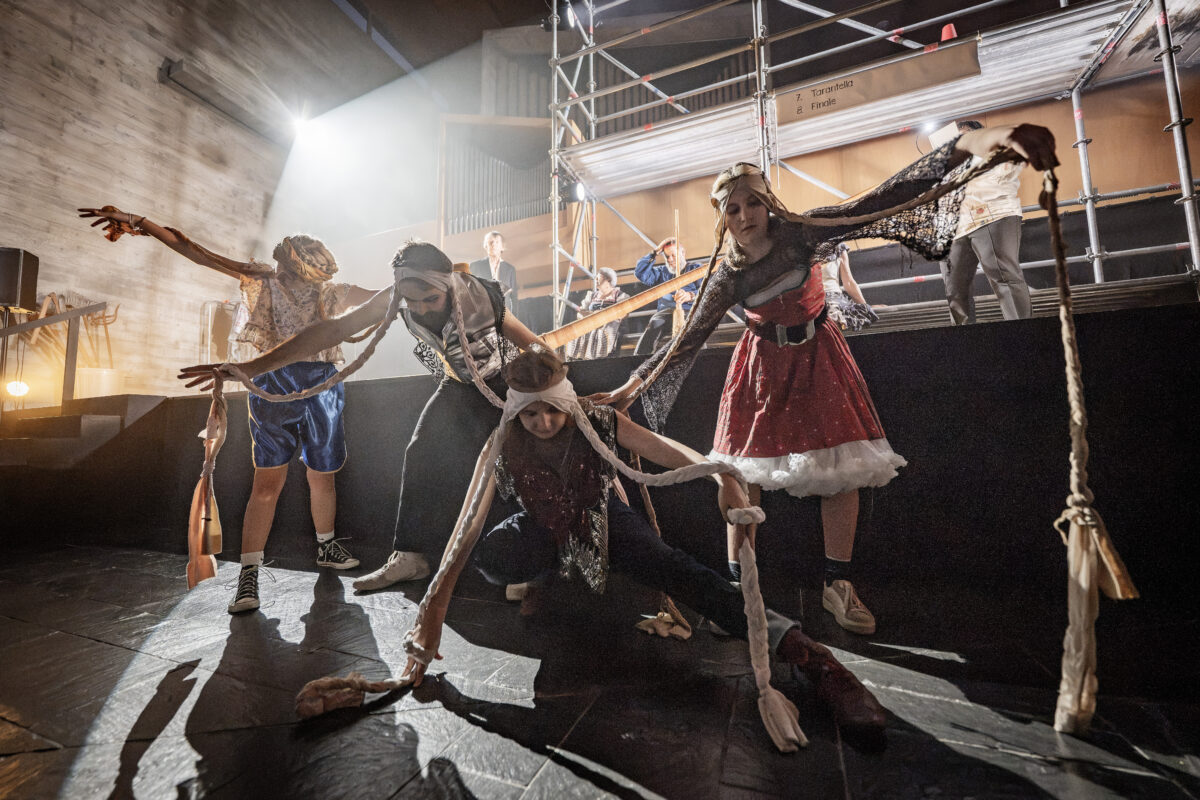
Kirsten Reese and Enrico Stolzenburg created a sound installation together under the title Debate a very long radio play that could be listened to in parts in the town hall. And Georg Nussbaumer took Ring landscape with beer stream takes Wagner's Ring, one of the most famous large-scale forms, for a ride: in the Brauereisaal (Fürstenberg Bier), eight string players with headphones follow the entire Ring (15 ½ hours here) and play out the important themes using piano scores and, as an interlude, they sweep over the whole strings or play slow glissandi. They play high up in the very high hall on tubular scaffolding hung with all kinds of costumes; slides and lots of fog in the room ironically create the right atmosphere: a successful joke. It was very pleasant this year that the program sequences allowed a little more time for reflection, i.e. they were no longer as hectic as usual.
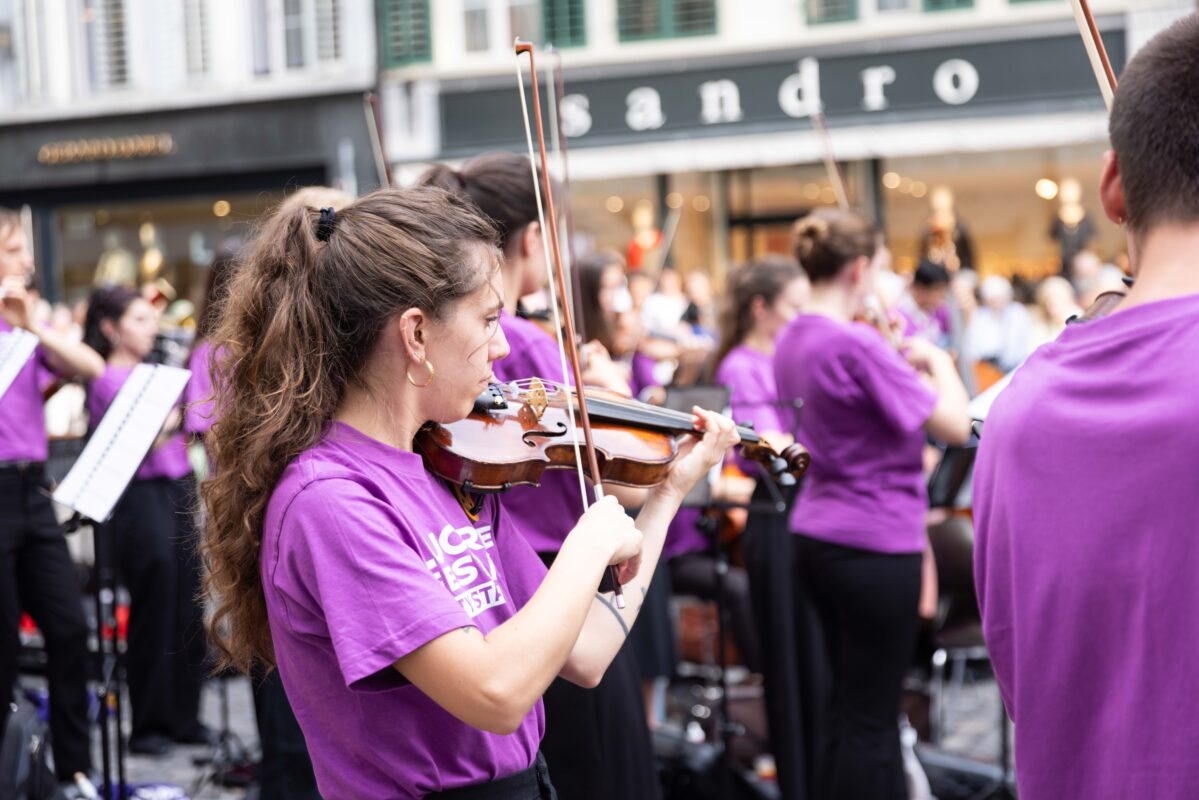
Last year, the state of Baden-Württemberg decided that the SWR Symphony Orchestra Baden-Baden and Freiburg should merge with the Stuttgart Radio Symphony Orchestra by 2016. Of course, this has given rise to much discussion, a protest march through Donaueschingen was organized, buttons were distributed and short speeches were made in the concerts between pieces, but officially there is still no solution to prevent this catastrophic disaster.