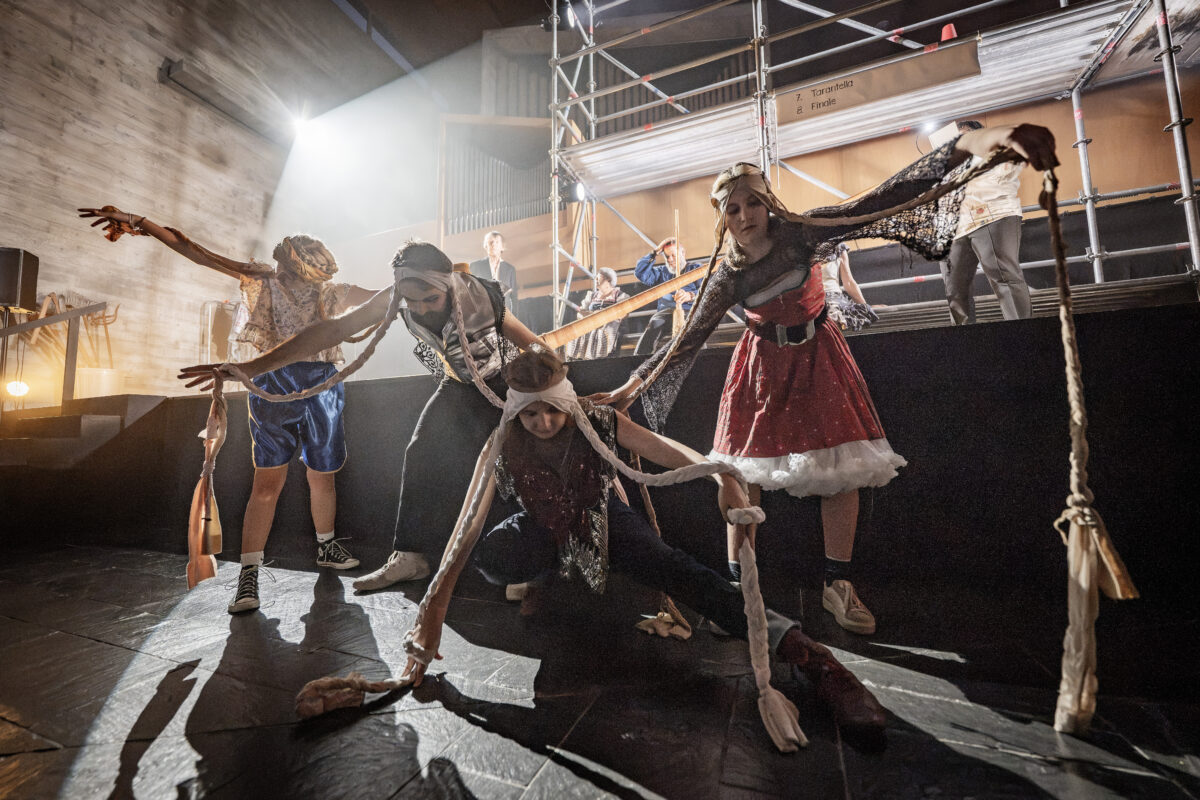
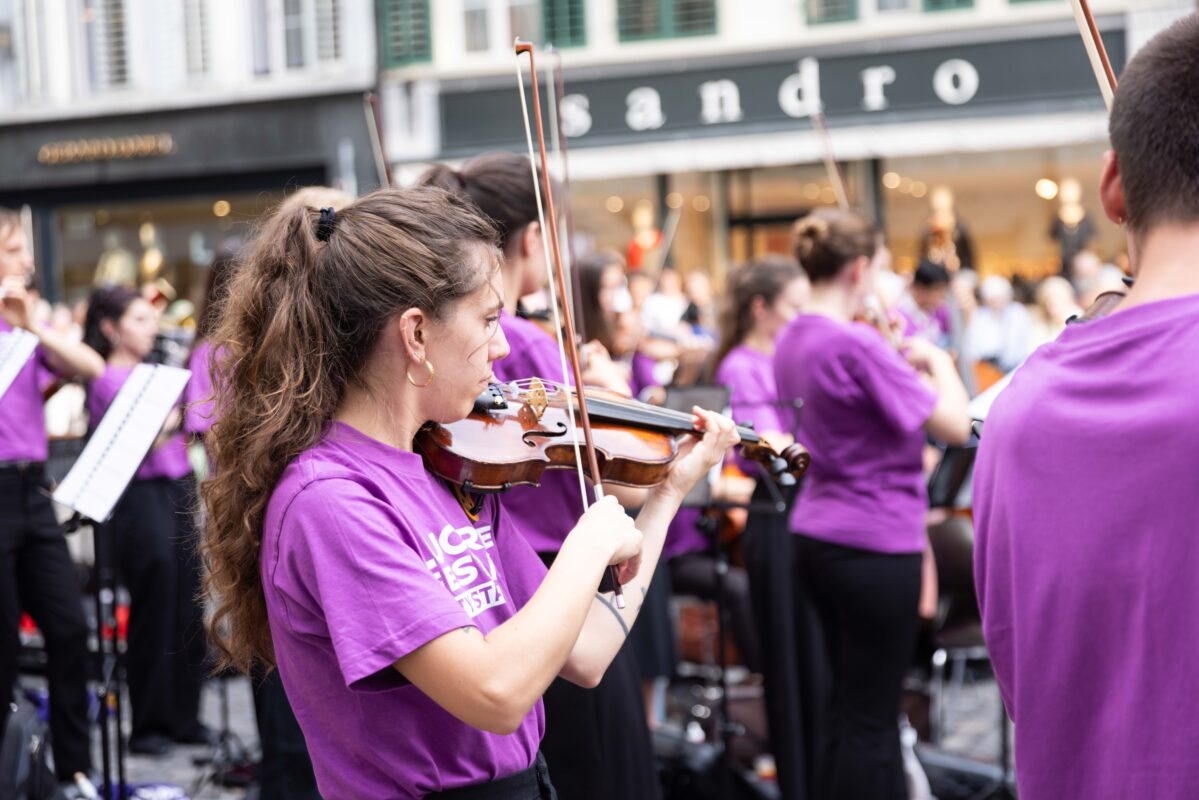
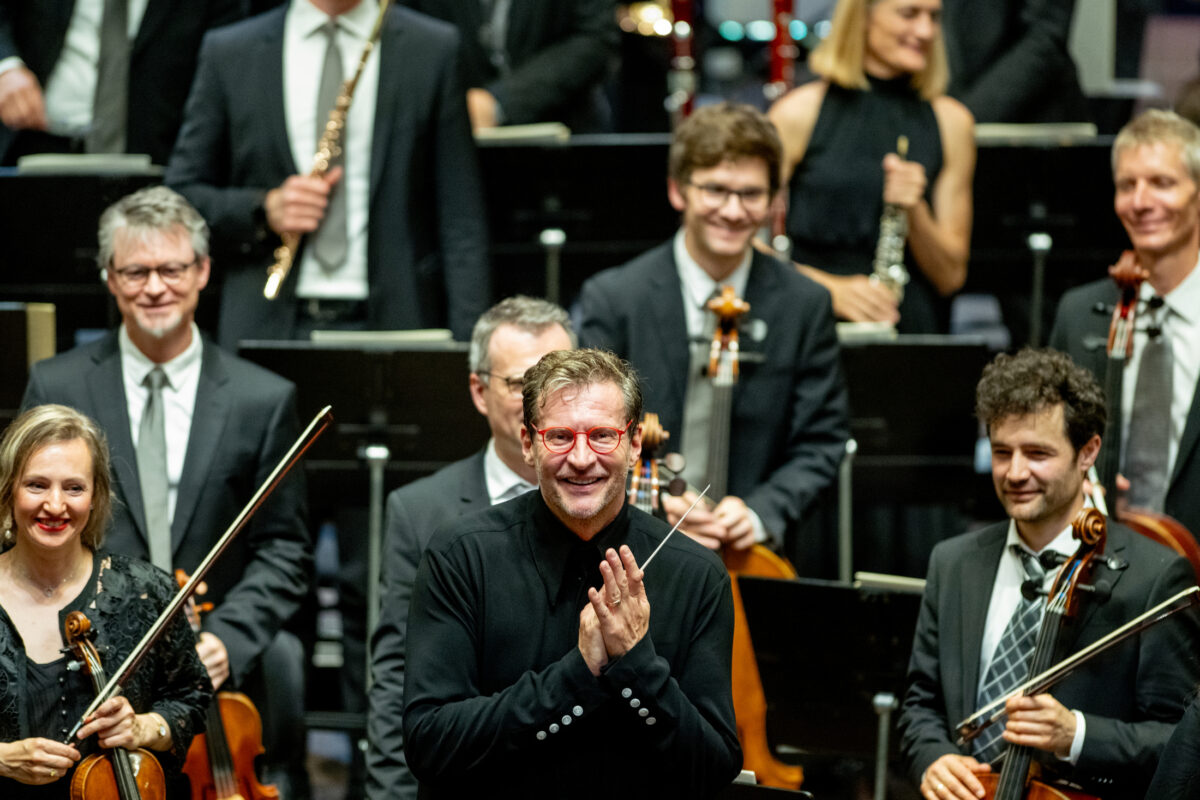
The energy of an orchestra
The Basel Chamber Orchestra sent a trio to the Tinguely Museum to reflect on sustainability. «Unter Strom» provided a speed run through music history, lots of questions and few answers.




No one would probably claim that music can avert the climate catastrophe. But what can it do about the problem that humanity is (increasingly) living beyond its means?
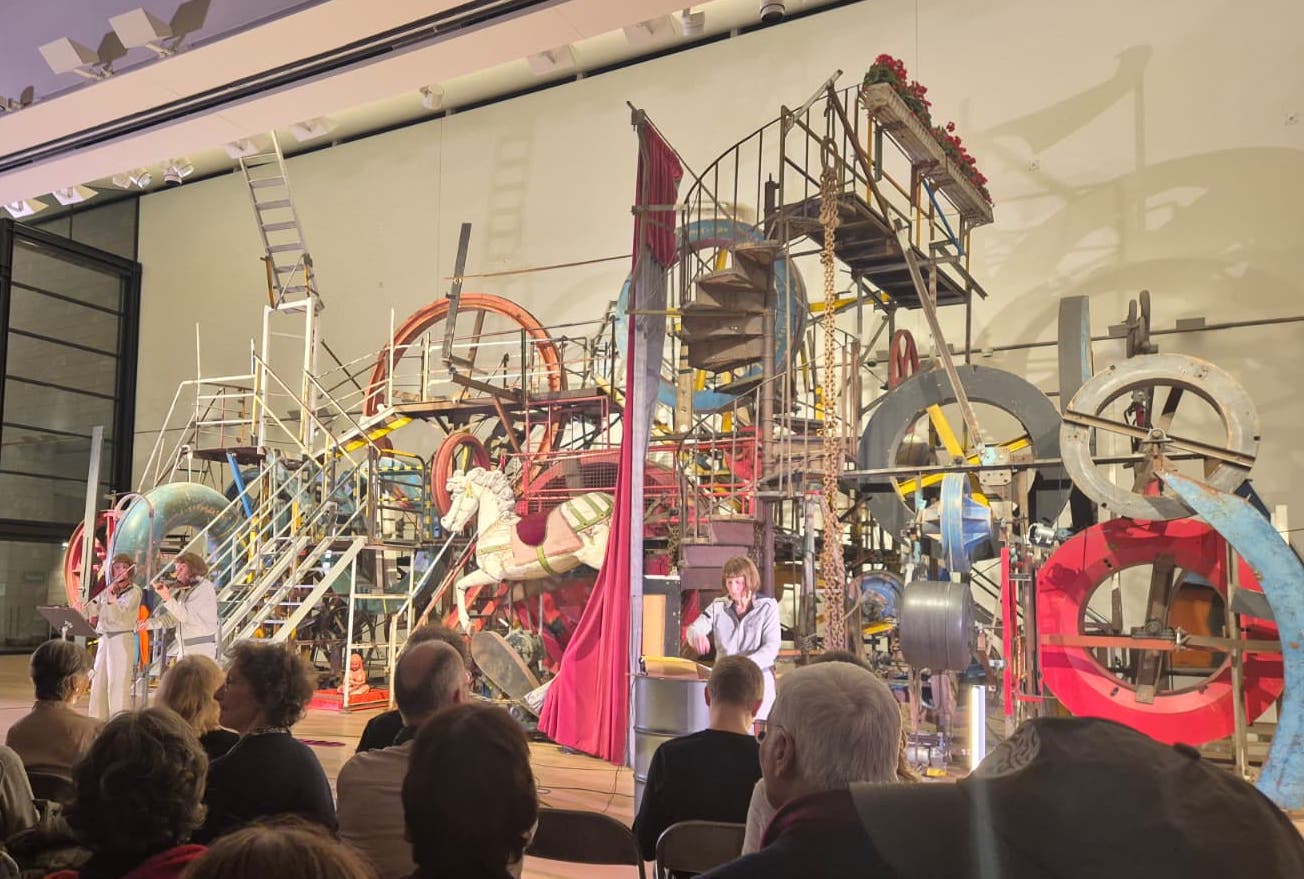
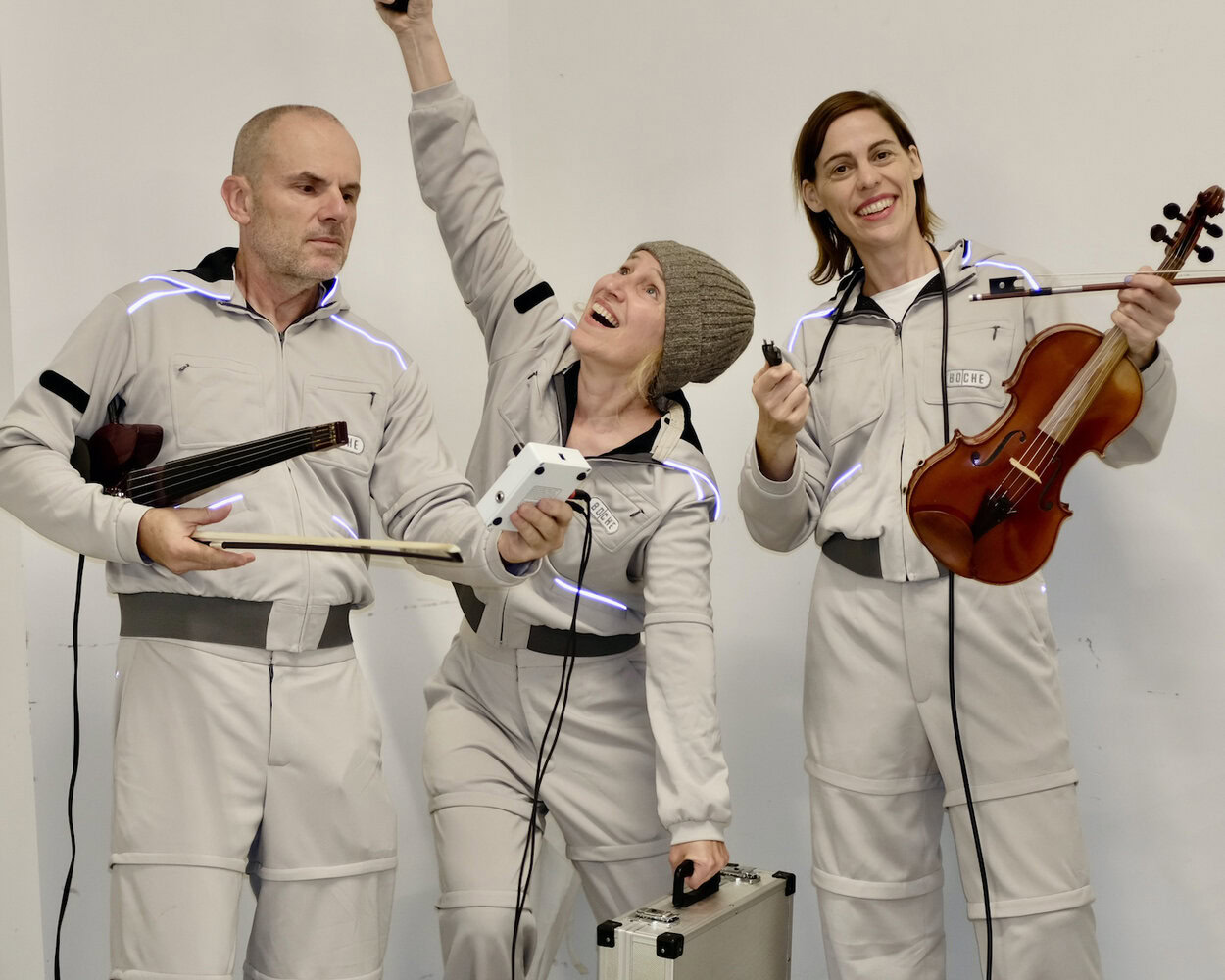
The most obvious thing to do: actively address the topic. This is what the Basel Chamber Orchestra did on February 5, 2026 at the Tinguely Museum with the music theater project «Unter Strom», created and performed by violinist Eva Miribung, violinist Mathias Weibel and director and actress Salomé Im Hof. They had come from «far away» and had heard that there were problems on earth. Their play is not a lament, but «wants to offend you, to poke you in the head». This was the announcement after the three astronauts marched onto the stage via Tinguely's Utopia machine to perform their self-made «energy song». There, Tinguely's oracle prophesied that humans would disappear at some point - «a bit of music first».
The next 60 minutes were a kind of speed run through music history, with pieces and songs that were cleverly dramaturgically linked and focused on nature, energy and the band's own horizons. For example, the Swedish «Water Canon», Lueget, from mountains and valley, I'll Follow the Sun of the Beatles, Never Turn Your Back On Mother Earth the Sparks or Bob Dylan Blowin’ in the Wind. The program mainly consisted of popular songs, but also included classical pieces by Leclair, Liszt and Berio. The trio used an acoustic violin, an electric violin, a synthesizer, a mandolin and a loop station. The electric instruments were unplugged at the end of the performance.
Wit, confrontation and irritating clatter
Between the musical numbers, theatrical interludes led from one piece to the next, but at the same time had the function of involving the audience. Like a survey on what the good life actually means. The answers were recorded and looped to form the second voice in Vivaldi's Sonata in F major. Or in a quickfire session in which the audience had to answer either/or questions («organic or regional», «meat or tofu», «train or bike», etc.). The program had wit, the highlight in this respect being the rewritten Our Father to an oil tanker.
The confrontational nature of the performance ensured that the audience could never simply sit back and relax, but had to remain mentally involved and critical. An atmosphere of being lulled into complacency was prevented by the fact that the Tinguely machines were repeatedly switched on in the middle of the pieces. - Anyone who knows them (a fine example of re- or upcycling, by the way) can imagine that the rattling and crashing in a concert is mightily irritating.
Converted classroom play
The evening was definitely artistically convincing. And it's commendable that the chamber orchestra is dealing with the subject matter in depth. That is more than many other orchestras do. However, there was a lack of direction. One suggestion at least came at the very end, when it came to the frustration of not being able to do anything. Following the example of Georg Danzer, it was turned around into the freedom of not having to do the same as others, of simply doing nothing. A logic of abstinence that will not lead humanity as a whole out of its misery, but as an individual philosophy of life is certainly not a bad one.
The fact that orchestras such as the Basel Chamber Orchestra swallow up a lot of resources due to their size - and the concert tours - is of course a paradox. However, «Unter Strom», part of the Nachtklang series, short performances by members of the orchestra in museums, is a good example of redimensioning and synergies; the concert ticket was also an admission ticket to the museum. And as the trio also performs the piece in schools, the evening was recycled, so to speak. Turning the subject matter into a program is important in any case - perhaps this will lead to more answers than questions at some point.