Convincing part of a big picture

The choir and orchestra of the J. S. Bach Foundation St. Gallen continuously perform all Bach cantatas and release them on CDs. BWV 67, 96 and 121 can be found on No. 20.

Photo: J. S. Bach Foundation St. Gallen

Spectacular things are sometimes quite inconspicuous. The plain orange cover has no photo. You will search in vain for the names of the soloists. Conductor Rudolf Lutz and his orchestra from the J.S. Bach Foundation St. Gallen, which plays on period instruments, are all about the matter in hand - a complete performance of Bach's vocal works over a period of 25 years, including audio and video recordings (see Sswiss music newspaper 9/2009, p. 14 f.).

Musically, the twentieth CD of this ambitious project is a great success. The clarity of the text is excellent throughout. The choir of the J.S. Bach Foundation shines with agility and transparency, while the soloists impress with their clever phrasing and many tonal colors. In the cantata BWV 96 Lord Christ, the one and only Son of God special guest Maurice Steger draws elaborate lines on the sopranino recorder. The fast opening chorus is light-footed and dance-like. The lying notes in the orchestra are lively, the articulation is always eloquent. Jan Börner's alto is just as moving as Noëmi Sohn Nad's limp soprano. And the arias are also in good hands with Hans Jörg Mammel (tenor) and Wolf Matthias Friedrich (bass).

In the light cantata BWV 67 Hold Jesus Christ in remembrance the choir inspires with relaxed coloratura. And when bass Dominik Wörner sings his calm greeting of peace to the troubled souls in the choir and orchestra, the result is great theatricality. In the cantata We should already praise Christ BWV 121 is accentuated by Andreas Holm on the oboe d'amore, while Johannes Kaleschke (tenor) plays the coloratura in the aria O creature exalted by God sparkles. Only the final chorales seem a little breathless in this stimulating interpretation of Bach, which relies on fluid tempi and great agility. But this cannot detract from the excellent overall impression.

Image

Bach Cantatas No. 20 (BWV 67, 96, 121). Choir and orchestra of the J.S. Bach Foundation, conducted by Rudolf Lutz. www.bachstiftung.ch

Symphonic breath

The six-movement Sonata in B minor is probably not Carl Czerny's masterpiece, but it is a thoroughly original interpretation of the genre.

Carl Czerny, LCarl Czerny, lithograph by Josef Kriehuber 1833, Wikimedia commons

"Carl Czerny was perhaps the greatest pianist who almost never performed and the greatest composer who fell into oblivion," writes Iwo Zaluski in his foreword to the new edition of Czerny's ninth piano sonata. He even counts him alongside Beethoven and Schubert as part of the "great triumvirate" of classical piano sonatas. These statements are of course highly contestable. As far as the "triumvirate" is concerned, Haydn and Mozart should not be passed over so carelessly. And it is also not true that Czerny has been forgotten as a composer. However, it is not necessarily his piano sonatas that come to mind. These would actually deserve more attention.

His ninth in B minor op. 145 has now been reissued by Iwo Zaluski for Doblinger. The formal structure is unusual: six movements, including a free fugue at the end. This is more reminiscent of Beethoven's late string quartets than a classical sonata. The harmonic language is also unusually distinctive in places. The melodic phrases are very expansive, especially in the slow third movement (Adagio molto espressivo) - probably the climax of the work - which is imbued with an almost symphonic breath.
Surprisingly, it is the pianistic development of this music that makes the weakest impression. Although the piano writing is comfortable to play, it suffers from the fact that the many accompanying phrases sound stereotypical and unimaginative.

If you want to experience the composer Czerny "at his best", it is better to go for the four-handed Grande Sonata in F minor op. 178, an unusually passionate and colorful work, entirely in the spirit of the Appassionata of his teacher Beethoven.

Image

Carl Czerny: Sonata No. 9 in B minor op. 145, edited by Iwo Zaluski, Diletto Musicale DM 1470, € 18.95, Doblinger, Vienna 

Cutting the cord and reinventing yourself

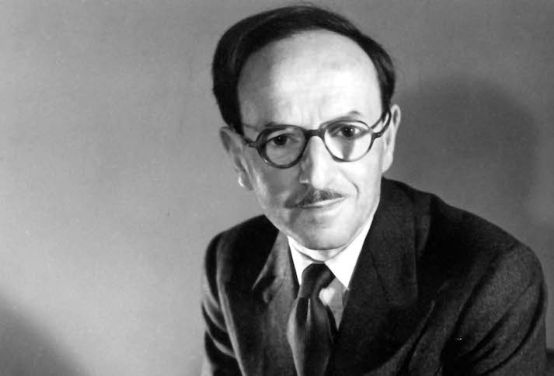
Mátyás Seiber (1905-1960) was the composer we were looking for in the July/August 2018 issue. Here you will find the breakdown of all the clues in the puzzle, which also introduce this little-known musician a little more closely.

Photo: Schott Music/Gabriele Buckley
Abnabeln und sich neu erfinden

Mátyás Seiber (1905-1960) was the composer we were looking for in the July/August 2018 issue. Here you will find the breakdown of all the clues in the puzzle, which also introduce this little-known musician a little more closely.

Our composer was born under an old emperor [in Budapest] and died under a young queen [in South Africa, then still under the Queen]. He studied with Zoltán Kodály, but then took to the high seas to provide musical entertainment for rich passengers [in a string quartet]. Back in Europe, he became one of the very first jazz lecturers at a German music academy [at the Hoch Conservatory in Frankfurt]. When Hitler came to power, he had to flee and found a new home in London. He worked everywhere, became an advisor to Adorno, gave harmony lessons and wrote music for an award-winning film about Australia's most remote city [A town like Alice].

Our composer had a special literary flair. He set excerpts from Irish novels to music [by James Joyce] and composed operas in his native language (his librettist, also an exile, later became famous with a satirical book about Switzerland [George Mikes: Switzerland for beginners]). One of his most popular works was a setting of the supposedly 'worst Scottish poet of all time' [William McGonagall]premiered in the packed Royal Festival Hall [The famous Tay Whaleat the Hoffnung Music Festival]. During this time, he also became the first (and probably only) twelve-tone composer to enter the "Top twenty" with a (tonal) hit. [1956 in Great Britain] reached [By the fountains of Rome] and even won the big pop song prize [Ivor Novello Award for "Best Song Musically and Lyrically"]which much later Amy Winehouse [2008] or Ed Sheeran [2012] won.

In exile, our composer never taught at a university, but is nevertheless considered one of the most important composition teachers of his time [among others by Hugh Wood in Cambridge]. He played a major role in the IGNM [Vice President 1960] and also took part in the major post-war festivals of new music, including Donaueschingen. He died at the age of 55, surrounded by lions and giraffes [in a car accident in the Kruger Park in South Africa]. Two of his famous compatriots [Kodály & Ligeti] composed works in his memory; one of them later became world-famous as a science fiction film score [Atmosphères, in 2001: A Space Odyssey].

Further biographical details:
Encyclopedia of persecuted musicians of the Nazi era
 

Kategorien

Unknown chamber music

Pan-Verlag has made works by the cello virtuoso Johann Benjamin Gross from the early Romantic period available.

Johann Benjamin Gross, drawing by unknown author, before 1848, Wikimedia commons

Johann Benjamin Gross (1809-1848) was principal cellist at the Leipzig Gewandhaus and played in the imperial orchestra in St. Petersburg from 1837. Until recently, the works of this contemporary of Mendelssohn and Schumann were almost completely forgotten. The writing virtuoso dedicated the majority of his compositions to his own instrument, but he also wrote several string quartets, as he was the chamber music partner of the famous Belgian violinist Henri Vieuxtemps in Russia.

Pan-Verlag has published several works by Gross for the first time. Three editions in particular should be mentioned here:

  • The three-movement Sonata in C major for two cellos moves within the 1st and 5th registers, whereby the composer skillfully exploits the tonal possibilities of the limited range. Thanks to the easy technical demands, the work is well suited for teaching purposes. One small drawback to this first edition: it contains two individual parts, but no score.
  • The Capriccio op. 6 (Pan 1602) on a theme from Étienne-Nicolas Méhul's opera Joseph in Egypt for violoncello and bass is an effective virtuoso piece whose variation form corresponds to the zeitgeist of early Romanticism. While the solo part demands brilliant bowing technique and secure (thumb) position playing, the bass part is assigned a purely accompanying function.
  • The Sonata in B minor op. 7 for cello and piano (Pan 1603) is stylistically close to Mendelssohn and represents a significant enrichment of the duo repertoire from the first half of the 19th century. Together with songs and the String Quartet in F minor op. 37.3, it has been recorded on the Laborie Records label (performers: Quatuor Mosaïques; Michael Dahmen, baritone; Yoko Kaneko, piano; Christophe Coin, violoncello).
Image

Johann Benjamin Gross: Sonata in C major for 2 violoncellos, edited by Folckert Lüken-Isberner, PAN 1600, € 10.00, Pan, Kassel

id.: Capriccio op. 6 for violoncello and bass, PAN 1602, € 16.00

id.: Sonata in B minor op. 7 for violoncello and piano, PAN 1603, € 19.00

Petrol pump Copyright

They would tap into the listener's wallet. The collecting societies are often accused of this. Wrongly so, because in order for music to exist, those who create it must be remunerated. Fortunately, things are not looking too bleak for Suisa in the increasingly digital music market. In fact, 2017 was a year of transition.

Photo: © geschmacksRaum®/fotolia.com

In 2017, the copyright income generated from digital music use (streaming and downloading) was higher than that from the production of sound recordings for the first time. The development from physical data carriers to online files is taking place everywhere, including in audiovisual offerings, where traditional video stores have almost completely disappeared while download portals such as Netflix have taken their place.

For Suisa and the rights holders, this shift is tantamount to falling revenues, as the amounts paid are in proportion to the total amount that users pay for their music. As a rule, this is around 10 %. So if a music lover buys a CD for 15 francs, around 1.50 francs go to the authors, the one to ten people on average who created the music on the sound carrier. With a Spotify Premium subscription, on the other hand, around CHF 1.20 of the CHF 12.95 monthly fee is distributed among the authors of all the tracks that the subscriber listens to during this period. This leaves only a minimal amount for the individual composer or performer.

Suisa invests in the digital sector with Mint

Even though online revenues (CHF 7.9 million) have overtaken those from recorded music sales (CHF 6.5 million), these revenues taken together are still far below the level of 2000, when, one year before the launch of iTunes, they amounted to over CHF 30 million! Although it will certainly never be as high as it was 20 years ago for the reasons mentioned above, Suisa is exploiting every opportunity to increase income from music consumption on the Internet. Over a year ago, for example, it founded Mint Digital Services with the American collecting society Sesac, an organization that negotiates licensing agreements with online platforms. By joining forces with Sesac, Suisa is hoping for more favorable licensing conditions because the range of music that the two companies can offer the platforms together is also larger. For example, Sesac manages the rights of world-renowned musicians such as Bob Dylan and Adele.

The joint venture between Suisa and Sesac allows various competencies to be bundled, in particular the possibility of managing copyrights according to both the European and Anglo-Saxon "method". There are numerous differences, particularly in the remuneration of mechanical rights. This is essential when you consider that there has no longer been a territorial monopoly in the online sector since 2006: The collecting societies no longer represent the worldwide repertoire used via Swiss IP addresses, but only the works of their own members in numerous countries. Publishers and labels can also transfer the administration of their online repertoire to a collecting society of their choice. Although Mint is still in the introductory phase, the initial results are encouraging. For example, Warner/Chapell Music, the third largest music publisher in the world, has entrusted Mint with its repertoire for use via iTunes. Negotiations with other major publishers are ongoing.

Rising sales, in particular thanks to private copying

Despite the difficult conditions in online consumption, the overall trend in the area of copyrights is positive. In 2017, CHF 139.2 million was settled in Switzerland, CHF 2 % more than in 2016, in which very good results were also achieved. Performance rights (in particular concert recordings) increased slightly (to CHF 46.9 million, + 1 %). However, the highest increase was recorded for royalties for storage space in digital devices (royalties for private copying). This is mainly because these devices, especially smartphones, are making more and more storage space available.

Contrary to the criticism that is sometimes heard, it is the Suisa members who benefit greatly from this increased income. In 2017, in addition to the CHF 60 million distributed directly to authors and publishers, CHF 2.7 million went to the Fondation Suisa (www.fondation-suisa.ch), which forms an independent part of the company. And 8.1 million to the pension foundation for music authors and publishers. The Fondation Suisa promotes current Swiss music creation in all its facets, as well as projects related to music creation in the Principality of Liechtenstein. The pension foundation enables Suisa members to draw a maximum pension of CHF 38,500 from the age of 63.

The legal basis for the contributions to both foundations is Art. 48 of the Copyright Act. It stipulates that, with the approval of Suisa's General Assembly, parts of the exploitation proceeds can be used for the promotion of culture and social welfare. It should be emphasized that the approved CHF 10.8 million will not be charged to the music users, but will be deducted from the amounts to be distributed to the members. The members have a say in this, as they must approve this process at the General Meeting. The same deduction is also made from the remuneration paid to members of foreign collecting societies. They thus also make a contribution to the development of Swiss music and to the expansion of Suisa members' pension schemes.

Nicolas Pont
... is Head of Legal Services at Suisa in French-speaking Switzerland.

Paul Huber on his centenary

A richly illustrated biography of the composer by Hanspeter Spörri and a list of all his works, compiled by Bernhard Hangartner and Eva Martina Hanke.

Paul Huber at the piano 1988 Photo: Hanspeter Schiess, Trogen

The fact that Paul Huber (1918-2001) was a striking personality and important for St. Gallen was not only demonstrated on the occasion of the unveiling of his statue in the Huberpärkli, which Thomas Scheitlin, Mayor of St. Gallen, writes about in his foreword to the newly published volume on the composer and music teacher. The large number of interested music lovers who attended the vernissage of this book, initiated by the Paul Huber Society, last February leaves no doubt about this.

The first part contains a biographical sketch, lovingly compiled by Hanspeter Spörri. Paul Huber was born as the second son into a farming family and had to accept the loss of his father and mother at the age of ten. He came to classical music through his foster family. Training at the Zurich Conservatory in piano, organ, school music and theoretical subjects, a short trip to Paris to study with Nadia Boulanger, election as head teacher for singing and piano at the St. Gallen cantonal school, starting a family, concerts and concert tours: Stages of a fulfilled life. He has received many honors, including an honorary doctorate from the University of Fribourg.

A catalog raisonné of Huber's works was published back in 1993, edited by Max Lütolf and Bernhard Hangartner. The latter has now completed it together with Eva Martina Hanke to mark the 100th anniversary of his birth. It contains 460 titles, with a particular inclination towards sacred music and an affinity for wind music.

The appraisal of Huber's compositional output that introduces the catalog raisonné is largely based on Max Lütolf's foreword from 1993: "Although he repeatedly sought access to an understanding of modern music, modernism ... remained insignificant in his oeuvre", he writes; the decisive model for Paul Huber throughout his life was the personality and music of Anton Bruckner.

Image

Paul Huber - the composer and his work, ed. by Bernhard Hangartner, Eva Martina Hanke and Hanspeter Spörri, 233 p., Fr. 29.50, VGS Verlagsgenossenschaft St. Gallen 2018, info@vgs-sg.ch, ISBN 978-3-7291-1167-7

Heads of state discuss cultural participation

The heads of state of the German-speaking countries, who met in Switzerland this year for their regular meeting of six, discussed the topic of cultural participation. They also visited the Origen Theaterhaus on the Julier Pass.

Juliertheater, theater house on the Julier Pass. Photo: Lino Schmid

In his statement on the focus topic, President Berset said that societies are strong when as many people as possible can contribute their potential. He emphasized the social importance of culture. The more diverse our societies become, the more we need culture to reflect this complexity and recognize ourselves in it.

In addition to President Berset, the Grand Duke of Luxembourg, Hereditary Prince Alois von und zu Liechtenstein, the King of the Belgians, Austrian President Alexander Van der Bellen and German President Frank-Walter Steinmeier took part in the official talks. Among other things, they discussed the importance of international cooperation in solving global issues, the pressure on state institutions and European cooperation. Migration policy was also discussed.

At the invitation of President Berset and his wife Muriel Zeender Berset, the spouses of the heads of state of the German-speaking countries also attended the meeting of six in Graubünden. At the end of the event, the program included a visit to the Origen Theatre on the Julier Pass. The annual meetings of the German-speaking heads of state have been held since 2004 and are hosted alternately by the participating countries. Switzerland last hosted the event in 2012.

tap

From good ideas that get the money flowing, to copyright and artists' income, public cultural subsidies as investments, productive ways of dealing with unpleasant feelings and fair remuneration for versatile work.

Billion Photos.com - fotolia.com

From good ideas that get money flowing, to copyright and artists' income, public cultural subsidies as investments, productive ways of dealing with unpleasant feelings and fair remuneration for multifaceted work.

All articles marked in blue can be read directly on the website by clicking on them. All other content can only be found in the printed edition or in the e-paper.

Focus

About the flow of ideas and money
Interview with Michael Haefliger, Artistic Director of the Lucerne Festival

Soutirer de l'argent
Le point sur les droits d'auteur
Tapping into money - from a copyright perspective. (German translation of the article)

1 franc invested in culture in relation 4
Studies carried out in several cantons have shown that culture represents more than it costs

Anchoring instead of being afraid
Stage fright as a source of strength

Demands that go far beyond teaching
Music teachers have many different tasks. There is still a long way to go to achieve fair pay.

... and also

RESONANCE

Kotaro Fukuma : pensée japonaise sur musique impressioniste

"Where are you João Gilberto?" - Documentary film by Georges Gachot

A start - Swiss premiere of Genesis

Inside and outside - Festival Rümlingen

Master class model turned on its head - Darmstadt vacation courses

Music for Mario Botta's "Stone Flower"

English music culture in the Alps - Klosters Music Festival

Rest days in Davos

Stradivarifest in Gersau

Swiss music? Swiss music! - Festival Murten Classics

Carte blanche à Francesco Biamonte

FINAL


Riddle
- Torsten Möller is looking for


Row 9

Since January 2017, Michael Kube has always sat down for us on the 9th of the month in series 9 - with serious, thoughtful but also amusing comments on current developments and the everyday music business. The column series was discontinued at the end of 2022.

Link to series 9 at the NMZ in the review/opera&concert section


Download the current print edition

Here you can download the current issue. Please enter the search term "e-paper" in the print archive.
The download is free of charge for subscribers.

All other interested parties will receive the PDF of the current issue (or an earlier issue) by e-mail. Costs: Fr. 8.-.
Click here to order the e-paper.

We are also happy to send you the printed version. Costs: Fr. 10.-
Click here to order the printed edition.

Kategorien

Rebecca Saunders receives "Roche Commissions"

British composer Rebecca Saunders receives the tenth commission from the Roche Commissions. The ninth, "Reading Malevich" by Peter Eötvös, was premiered by the Lucerne Festival Academy Orchestra under Matthias Pintscher on September 1.

Photo: © Astrid Ackermann/Edition Peters

Born in London in 1967, Rebecca Saunders studied with Nigel Osborne in Edinburgh and with Wolfgang Rihm in Karlsruhe. Her music stands for "the finest musical gestures and sounds, the exploration of never-before-heard timbres and the spatialization of musical progressions". She has been awarded the Mauricio Kagel Music Prize and the Ernst von Siemens Music Prize, among others.

Since 2003, a work has been commissioned from a world-renowned composer every two years as part of the "Roche Commissions". Saunders was chosen by Roche at the suggestion of the Lucerne Festival Artistic Director. The world premiere of her work will take place during the 2020 Summer Festival.

"Where are you João Gilberto?"

Georges Gachot's documentary about the Brazilian bossa nova singer Gilberto is a well-made nostalgia film. However, it refuses to be about contemporary Brazil.

Still from the movie "Where are you João Gilberto?" © Georges Gachot

The French-Swiss director Georges Gachot has made some remarkable films that bring us very close to the legends of Música Popular Brasileira. He has portrayed Maria Bethânia, Nana Caymmi and Martinho da Vila and in doing so - as in his excellent feature about the otherwise camera-shy pianist Martha Argerich - created an unaffected, intimate closeness to these protagonists that contributes greatly to the understanding of their music. It is precisely this strength that he can use in the film Where are you João Gilberto? cannot play out. This is partly due to the concept of the film itself, but also to the rather dubious artistic significance of the singer who is the subject of the search.

Gachot withholds Gilberto, who is deliberately hiding from the public, from the audience in several ways. Firstly, he only approaches him indirectly by retelling someone else's search: The late German journalist Marc Fischer had failed in his attempt to get close to the bossa nova pioneer and had written a book about it. The film also traces how Gachot tries to follow Fischer's research, which means that two absentees already block direct access to the Gilberto phenomenon. There is actually a third: Gilberto's daughter Bebel, who apparently had contact with her father during the filming, but who also remains a phantom.

Thus, for long stretches, one merely has to follow travel banalities, telephone calls that lead nowhere, conversations that produce no results, even with Gilberto's ex-wife Miúcha. We learn a little - too little - about bossa nova culture from episodic encounters with greats of the style, above all Marcos Valle and Roberto Menescal, in which the music itself is sometimes - also too little - mentioned.

One would accept all this if João Gilberto's game of hide-and-seek actually had a deeper aesthetic meaning that would shed light on a highly fruitful era in Brazilian music history. João Gilberto is considered one of the fathers of bossa nova. However, the style was decisively influenced by others. These include numerous others, above all Tom Jobim and Vinicius de Moraes, as well as Marcos Valle, Roberto Menescal, Carlos Lyra and Edu Lobo. In today's Brazil itself, we dare say, João Gilberto is by no means held in the same esteem that he enjoys among the ageing, educated middle-class European jazz and world music audience. Most Brazilians probably couldn't care less where and why he is presumably holed up in a hotel room in Rio.

This search for Gilberto is particularly irritating in view of Brazil's current highly explosive political and artistic situation, and seems like a kind of denial of reality: While everything seems to be going downhill in the country, Gachot bites into an irrelevant side aspect of a golden era of Música Popular Brasileira that has long since passed. Where are you João Gilberto? becomes a well-made, at times atmospheric nostalgia flick - but with the wrong theme at the wrong time.

European Parliament discusses copyright law

On September 10, the European Parliament will once again vote on the planned EU Directive on Copyright in the Digital Single Market. The German Music Council is appealing to MEPs to ensure that the directive enters into force quickly.

European Parliament in Strasbourg. Photo: fotogoocom/wikimedia commons

The German Music Council supports an appeal by the State Music Councils of North Rhine-Westphalia, Bavaria, Brandenburg, Berlin, Schleswig-Holstein and Thuringia, as well as the Cultural Council of North Rhine-Westphalia, calling on the Members of the European Parliament to approve the planned EU directive on copyright in the digital single market.

In its vote on July 5, the European Parliament voted by a narrow majority against the negotiating mandate proposed by the Legal Affairs Committee on the planned EU directive on copyright in the Digital Single Market. The Parliament's position is now to be discussed and voted on again at the next plenary session. Negotiations with the EU Commission and the European Council can only begin once Parliament has approved the draft.
 

The Echo Klassik is now followed by the Opus Klassik

On Sunday, October 14, 2018, the Opus Klassik, the new award for classical music in Germany, will be presented for the first time at the Konzerthaus Berlin. Following the end of the Echo in spring, this year's award will once again honor outstanding achievements in the classical music genre.

Photo: Rainer Sturm/pixelio.de

The prize is organized by the newly founded Verein zur Förderung der Klassischen Musik e.V. (Association for the Promotion of Classical Music). The founding members are the Association of Classical Independents in Germany, Deutsche Grammophon, Konzertdirektion Dr. Rudolf Goette, Dagmar Sikorski, Sony Music, Benedikt Stampa and the Warner Music Group. The award ceremony will be broadcast by media partner ZDF on October 14 at 10 pm. 

The association was founded after the organizer of the Echo, the German Music Industry Association (BVMI), announced the end of all Echo awards in the pop, classical and jazz categories. While the rules and jury of the new award are still based on those of the Echo Klassik in this transitional year, the association aims to continuously develop the new award for classical music based on feedback from the industry.


New Basel orchestra rehearsal house

In Basel, Otto Rudolf Salvisberg's church building on Picassoplatz is being converted into an orchestra rehearsal house and will be leased to the Basel Symphony Orchestra (SOB) by Immobilien Basel-Stadt from spring 2020.

Church building by Otto Rudolf Salvisberg on Picassoplatz in Basel (Image: zvg)

In addition to the acoustically high-quality rehearsal room in the former church hall of the First Church of Christ Scientist Basel, the new building offers opportunities for workshops and educational programs. The premises are not intended for concert performances. In addition, the offices of the SOB will also be located in the same building. The new rehearsal house can be used by other orchestras in addition to the SOB. The SOB will be responsible for subletting and managing the space in future.

The renovation is scheduled for completion at the end of 2019. This will allow the Basel Symphony Orchestra to begin rehearsals in the new premises together with the office in spring 2020.
 

Music for Mario Botta's "Stone Flower"

A spatial sound composition by Francesco Hoch was premiered on Monte Generoso.

Mario Botta's "Stone Flower". Photo: Max Nyffeler

Ever since Iannis Xenakis created the spatial sound composition Concret PH for 425 loudspeakers and John Cage's random sounds for American art galleries in the 1960s, countless experiments have been carried out with the aim of creating a meaningful relationship between music and architecture. Some with strategic planning such as the Music for a housewhich Stockhausen staged with fourteen assistant composers in Darmstadt in 1968, some rather casually and on an improvisational basis. "Making space acoustically tangible" is the all-encompassing formula. It implies that the composition renounces autonomous laws and tends towards "musique d'ameublement", as Erik Satie once ambiguously put it. The musical performance approaches the sound installation, and for the audience, situational perception takes precedence over structural or semantically related musical listening. In the case of half-baked concepts, this can end in banalities, but it can also lead to enlightening results.

Musical coloring

The latter was the case with the sound event that Francesco Hoch performed on the last Saturday in August at a lofty height of 1700 meters above sea level on Monte Generoso. This was not only due to the carefully conceived music, but also to the architectural object to which the composition was functionally tailored: the "Fiore di pietra" (Stone Flower) building by architect Mario Botta. The ambitiously designed new mountain station of the cog railway with panoramic restaurant, exhibition and conference rooms was inaugurated last year and has since attracted excursionists, hikers and architecture enthusiasts from all directions.

View from above into the depths of the sound space. Photo: Max Nyffeler

In addition to an elevator, the four floors of the spherical building are connected by an artfully angled, daylight-bright staircase that opens up to the usable spaces in a variety of ways and constantly opens up new perspectives both inside and out. This visually and acoustically equally inspiring ambience was now the setting for the Colorazione musicale per il Fiore di pietrathe "musical coloring of the stone flower", as Francesco Hoch called his music. The sound action lasted half an hour and was repeated three times that afternoon.

Walkable layers of sound

The eight musicians required for the piece were distributed in pairs across the four floors: the low instruments cello and bassoon at the bottom by the entrance, oboe and piccolo at the top and the "middle" instruments violin, flute, clarinet and cor anglais in between. The staircase is separated from the outer wall on one side by a space around one and a half meters wide, which not only allows a view from top to bottom, but also creates the conditions for the sound to mix easily in the vertical. Thanks to this spatial permeability, the eight voices merged into a common sound sculpture that varies depending on the location. Walking up and down the four floors, you could experience how the horizontal layers of sound alternately came to the fore and then disappeared again in the overall sound, and anyone sitting down in one of the adjacent rooms perceived a kind of static distant sound that was only constantly changing in its inner structure.

Francesco Hoch with his score. Photo: Max Nyffeler

The composer had worked out a precise score for the eight performers. As is usual in such spatial sound experiments, the material is simply structured: short melodic phrases, mostly scale components or repetitive patterns that constantly change and form a kaleidoscope-like whole. However, durations and entries are precisely defined in the score, so that the overall course is formally structured; during the performance, coordination across the four floors was ensured by a click track. The half-hour composition is divided into three ten-minute parts according to the A-B-A' pattern. The parts with Petalo (petal), which form the compact frame, differ in their opposing dynamics and density ratios, and in their internal structural progressions they emulate the blossom-like forms of Botta's stone flower. In the three-part large form, the composition could perhaps be compared to a blossom that slowly closes and opens again.

Excerpt from the score by Francesco Hoch. Photo: Max Nyffeler

Shaped past

The three performances were followed by a panel discussion that focused neither on musical nor architectural issues, but on shared biographical experiences. The participants were all born in 1943, the same year as Francesco Hoch, and therefore 75 years old: a lawyer, a musician, a writer, a surgeon, a painter and the composer - all from Ticino. The only one missing was Mario Botta, who was currently in St. Petersburg. A generation that was actively involved in shaping the post-war decades from different perspectives and in very different fields looked back in an intelligent and inspiring way.

Francesco Hoch at musinfo.ch

https://neo.mx3.ch/francescohoch

Restructuring of the Basel university institutes

Jazz receives its own university institute in Basel. With its foundation, the structure and name will be changed: the former FHNW School of Music will now be called the FHNW School of Music.

Staircase on the Jazzcampus. Photo: FHNW

The FHNW School of Music now consists of three institutes: School of Music|Classical Music (previously School of Music), School of Music|Jazz and School of Music|Schola Cantorum Basiliensis. The establishment of the institutes is intended to give jazz a more distinct profile in terms of content and funding, as well as its own development opportunities in teaching and research.

At the end of November/beginning of December, the Schola Cantorum Basiliensis is organizing a symposium on early music between historical sources and the aesthetic present under the title "Darf man das?" ("Is it allowed?") and is exploring the core question of its own work: the question of the conventions of historical performance practice in the context of contemporary culture.

At the beginning of September, a music education symposium will ask how inspired music lessons can succeed and in March, the first results of the Swiss National Science Foundation SNSF project of the same name will be presented at the symposium "Music and Migration" at the Hochschule für Musik, Klassik.

get_footer();