More training places for music therapy

The German Music Council and the German Music Therapy Society are calling for more training capacity in the field of music therapy.

Photo: microgen/depositphotos.com

Due to the stress caused by the coronavirus pandemic and the war in Ukraine, the Music Council writes, mental and psychosomatic disorders have increased significantly, as numerous recent studies have shown. Music can have a positive effect on body, mind and soul and therefore create a connection between people without words - especially in professional music therapy dealing with the emotional suffering of refugees.

However, although the German Rectors' Conference has now recognized music therapy as a "minor subject", thus underlining its relevance, training capacity for music therapy is very limited: Currently, only seven universities in Germany offer a music therapy course with a Bachelor's or Master's degree.

Music as a subject in Switzerland

Music as a school subject varies from region to region. What developments has it undergone in recent decades and where is it heading?

Photo: chris77ho/depositphotos.com

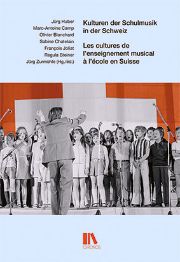
This book has two titles, and that is programmatic. Thanks to its bilingualism, different perspectives on cultural issues and realities come together - entirely in the spirit and tradition of the SMZ. Co-authors Sabine Chatelain and Gabriele Noppeney even write their contribution to the book in two languages. They present two different teaching sequences (language acquisition through song lyrics and bilingual music lessons) which, although based on a common reference model (Integrated Music Education), were each carried out at a French-speaking and a German-speaking teacher training institution.

Each of the ten articles is preceded by a trilingual résumé / summary / abstract, which is particularly helpful when reading foreign-language texts.

In "Le role de la recherche dans le développement de l'éducation musicale scolaire", Madeleine Zulauf looks back on the forty-year history of music education in French-speaking Switzerland and notes that the interest of researchers is increasingly being reoriented and aimed at innovations in practice: "La posture des chercheurs passant de rétroactive à proactive." In contrast to French-speaking Switzerland, German-speaking Switzerland lacks a scientific tradition in music education. Here, school music is primarily seen as a practical discipline that is led by practitioners. But what conceptual ideas underlie this? Olivier Blanchard explores this question in his article "Swiss school music. School or music?". Here performance orientation, there music-making, which gives greater weight to emotional and community-building aspects than measurable performance.

Jürg Huber asks fundamental questions: What actually is the meaning, purpose, content and didactics of school music, and how is it discussed? While in the 1970s the focus was on "singing" and "critical listening education", today there is a more comprehensive understanding of music lessons, as a look at Curriculum 21 or current teaching materials shows. But what is our subject actually called, "singing" or "music"? The school subject was renamed throughout German-speaking Switzerland in 2000. But the question of how to prioritize singing still seems to be virulent, says Christoph Marty: Should singing continue to play the central role in music lessons or should it simply be one of various equally important lesson contents? Three of the ten articles in this book also deal with the position of singing or song in music lessons: "Singing or music. Reasons for changing a subject name" (Marty), "Teaching children's songs at school as a cultural component and core task of music didactics" (Stadler Elmer) and "Choral work as a contribution to artistic education at upper secondary level" (Beat Hofstetter).

A study by the Lucerne University of Applied Sciences and Arts confirms the popularity of singing at grammar schools. Music theory and music history, on the other hand, fared very poorly in the pupils' ranking. However, "listening to music" is even more popular than "singing / making music". What do these results mean for teaching? One obvious consequence would be: making music instead of studying music! Dieter Ringli proposes a different approach based on the primacy of action and student orientation: "Use the joy of singing and combine it with music theory!" How does that work? The pupils (SuS) work on a pop song: creating their own arrangement, making rhythms (body)percussively groove, finding vocal lines, harmonizing accompaniments, writing lyrics - the attempts to solve practical, technical problems lead intrinsically, as it were, to music theory, which is now practically useful. The study also shows that self-directed work in small groups is very motivating for the pupils.

What consequences do these research findings have for the role and tasks of music teachers? And what do they mean for their training? Jürg Zurmühle outlines a "framework model for teaching concepts for music lessons in kindergarten and elementary school", which opens up productive areas of tension between openness and structure, process and product orientation as well as constructivist and receptive learning. By balancing antinomic needs, the model offers guidance for the planning and implementation of music lessons and allows the setting of very different priorities in the school triangle of music, teaching and learning.

The book concludes with a look beyond our bilingual horizons, because: Music is global, but music cultures are local. And music education? In her contribution, Alexandra Kertz-Welzel says that it is precisely in the "context of the internationalization and globalization of music education teaching and academic cultures" that culturally sensitive music education that takes into account the different traditions is needed. Music education concepts such as the Orff-Schulwerk or the methods of Suzuki and Dalcroze are known around the world. However, more recent approaches come mainly from the Anglo-American world. Kertz-Welzel, who herself spent many years researching in the USA, asks whether we have to accept this dominance in music education research. No, because although music education is a global subject area and English is the lingua franca, the basic principle of "transnational exchange" is diversity. At this point, it is helpful to refer to https://www.isme.orgthe International Society for Music Education. The following should also be added https://eas-music.orgthe European Association of Music in Schools, which organizes exciting annual meetings and invites people to exchange ideas.

Cultures of school music in Switzerland features ten committed and profoundly researched contributions - and encourages reflection in many directions. Belongs in every school music room.

Image

Kulturen der Schulmusik in der Schweiz - Les cultures de l'enseignement musical à l'école en Suisse, ed. Jürg Huber, Marc-Antoine Camp, Olivier Blanchard, Sabine Chatelain, François Joliat, Regula Steiner, Jürg Zurmühle, 200 p., Fr. 38.00, Chronos, Zurich 2021, ISBN 978-3-0340-1627-8

In 100 operas through the 20th century

Each composer appears only once in this selection of works compiled by Bernd Feuchtner.

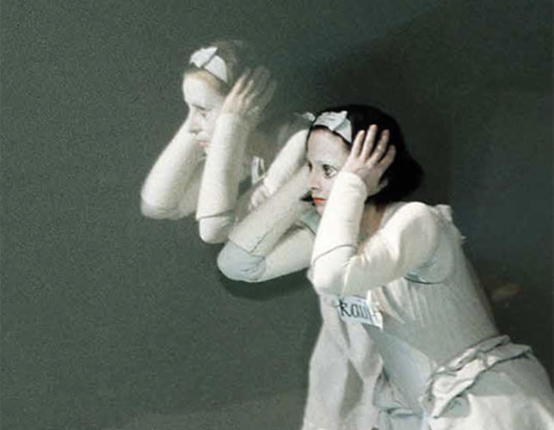
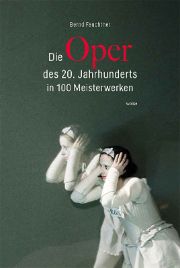
Excerpt from the book cover

This Bernd Feuchtner can be given the surprising title Opera of the 20th century in 100 masterpieces He was a music journalist for twenty years, then dramaturge, opera director, lecturer at various universities and is now a freelance author. With Pfitzner's Rose from the love garden (1901) and Debussy's Pelléas et Mélisande (1902), he continues with Isaac Albéniz' Merlin before moving on to Puccini's Madama Butterfly (1904), each time with introductory basic data on libretto, duration, roles, premiere, venues and language.

He consistently adheres to the rule of including only one work by each of the 94 composers and 6 female composers in the overview of the century, with Ethel Smyth with The Wreckers from 1906 was the only opera composer to be included before 1975. Thea Musgrave, Adriana Hölszky, Meredith Monk, Olga Neuwirth and Kaija Saariaho followed with their masterpieces up to 2000. Othmar Schoeck is the only Swiss composer to be included with his Penthesilea (1927), between King Roger by Szymanowski and The miracle of Heliane by Korngold. The author adds that James Joyce was an admirer of Schoeck's "colorful orchestral cantata Buried alive" was.

Here one does not encounter a dry recounting of the plot and performance numbers, but a very personal experience, assessment and classification. Feuchtner has a pronounced talent for narrating opera plots attractively or summarizing them concisely, but also for establishing references to the cultural environment of the time or explaining reception difficulties. With Krzysztof Penderecki's opera The devils of Loudon the path of Poland's gradual liberation as a satellite of the Soviet Union is shown, which began in 1956 with the founding of the Warsaw Autumn Festival. Feuchtner also draws on his own experiences as a dramaturge and describes his first impressions of a work, but also his disappointments.

Theodor W. Adorno is described as the most influential music theorist of the 20th century, but his misjudgments regarding Sibelius, Britten and Shostakovich are not concealed either. In four material-rich digressions, Feuchtner places opera in the context of contemporary political events: "The path of the Verists into the arms of Mussolini", "Political opera in the USA", "Opera in Latin America", "Berlin, capital of the GDR". In the extensive introduction, he writes: "Far more than ten thousand operas were composed in the 20th century. I was able to get to know hundreds of them as a journalist [...] and in theater practice." And this has resulted in this opera book, which is well worth reading in every respect.

Image

Bernd Feuchtner: The opera of the 20th century in 100 masterpieces, 688 p., richly illustrated, € 39.80, Wolke, Hochheim 2020, ISBN 978-3-95593-250-3

When noise becomes music

Why do dissonance, feedback and sounds that actually have nothing to do with music sometimes feel so good?

Guillaume de Germain / unsplash.com

Question for my Facebook bubble: Why do dissonance, feedback and noises that have nothing to do with music sometimes feel so good? A thousand thanks to everyone who took part!

Stephan Greminger
It is the flaw that makes beauty perfect.

Markus Wicker
And we receive every signal with interference, background noise. Noise, feedback, noise to the music replicate and comment on our situation as recipients of the message, so to speak. Metamessage, so to speak. Whew.

Ernst Hofacker
Because they can trigger emotions and release aggression. When I was a teenager, the violence and shrillness of songs by The Who or Pink Floyd and White Noise helped me to cope better with my own frustrations.

Niklaus Riegg
The sounds in the music? Or sounds in "everyday life", away from the music?
Hanspeter Kuenzler
Sounds that are presented as "music" or integrated into conventional pieces of music. For example, the digital rustling of vinyl, which suddenly appeared on every trip-hop CD and was intended to suggest warmth.
Niklaus Riegg
An exciting question that I have never asked myself. For me, all sounds in music that are deliberately added are music.

Sebastian Hefti
not even nothing actually has nothing to do with music

Andi Gisler
I think rock music in particular would be unthinkable without "dissonance, feedback and noise" and this has a lot to do with music. Distortion makes harmonically "simple" music more complex because overtones are amplified that are not audible when playing "clean" music. A snare drum actually works in the same way, as the snare carpet makes the sound more complex and "harsh".

Daniel Bosshard
Something is only dissonant until you get used to it. As young people get used to something new more quickly, dissonance or noise is an excellent way of differentiating a scene from the rest of the boring world. Examples: Devil's chord/tritone in the Middle Ages, distorted guitars, drum & bass clatter, new rap mumbling.

Chrigel Fish
To say it with Björk: "everything is music!", the proof!
https://youtu.be/R3V94ZtmdbQ?t=189

Chregi Müller
Because harmony is always untrustworthy.

Juergen Asche
good question, maybe because you can feel the music even more that way? it's just nice when it cracks, rustles and echoes, even or especially when a longing melody can be followed. [little heart]

Stefan Strittmatter
Everything has to do with music.

Sascha Krüger
Noise, feedback, interference, even field recordings: for me, the audiophile equivalent of abstract painting. And if you develop a soft spot for it, you will discover more depth, dynamics and intuitive power in it than in any conventional, figurative and "clean" representation. For me, such secondary or dominant sounds trigger downright synaesthetic reactions and emotions.

Samuel Blatter
I don't think you can separate it from the music as you suggest in your question. Dissonance is an indispensable part of music (just as shadow and light cannot exist without each other, dissonance is also needed for consonance). Sound is the basis for music in the first place. For me, feedback and noise are part of sound and are a kind of extreme exaggeration of sound components that would otherwise be drowned out by "euphony". This also works acoustically with the voice or other instruments. In electr(on)ic music, it is even more extreme because, on the one hand, even quiet parts can be made extremely loud or even create a sound of their own through overdriving/effects and, on the other hand, the volume also makes it possible to physically experience the sound.

Daenu Extreme
The hemispheres of the brain react differently to different sounds. While the left half reacts more to harmony, the right half is more responsible for sounds. It's the mix that makes it exciting!
http://www.scinexx.de/news/linkes-und-rechtes-ohr-hoeren-verschieden

Marc Unternährer
Why shouldn't they have anything to do with music?

Pop Ogö
Bold thesis without any evidence:
For me, it somehow works if you think of it from the "opposite": music often becomes very exciting/atmospheric/atmospheric etc..., when many/specific notes are not played, pauses remain, silence can be "heard" ... Conversely, at least in my opinion, you can also experience noises/disturbances/noises that don't "belong" in the music ... In addition to the sheer overwhelming effect of "walls" etc. in, for example, Sonic Youth, My Bloody Valentine, Jesus&MC

Daniel Gfeller
There are whole libraries full of literature on this. Noise / sound = play with object / subject? This mechanism creates pleasure (yes!), similar to eroticism, happiness etc. The clever sound designer deliberately uses this to increase sales 🙂 Others (young gods etc.) use it to promote cult/growl/cool status. And about dissonance: well, it's all in the ear (sensitivity/musical education) of the listener ...

Thomas Widmer
If nothing were really nothing, it wouldn't have a name.

Marcel Thomi
Proper feedback is not good for anyone, neither the ear nor the technology. But you probably meant something else.

Dieter Ammann
Ask Helmut!
https://www.gmth.de/proceedings/artikel/40.aspx

Roli Frei
I let the dissonance tug at my soul from time to time, freeing blocked strands of my soul from a cocoon of endless harmony or inertia, awakening the other side of me, tickling out the weird, the dark, the absurd, or even the garish.
Indispensable for musical and emotional balance.

Michael Sailer
I don't know.
https://www.youtube.com/watch?v=wlBIqfn6Rxs

Hans Rudolf Martin
... and in the meantime I wait for a new song such as "Ruby Tuesday" by the Rolling Stones, 1967; received over the radio in my father's barn with young calves in FM quality, in the background the cooled milk cans into which freshly tapped cow's milk flowed ... 13 years old I was with 1/2 year guitar lesson experience at Grieder guitar lessons in Liestal, nylon sides, my mother had supported me; heard for the first time and I knew this song would be a hit.
Since Dire Straits and "Sultans of Swing", 1978 while wandering past from a coffee shop in Amsterdam: asked and got information, picked up together with my old friend Martin, who emigrated to New York in 1976, (and I knew this band would become famous) since then damn little has happened ...

Heinrich Zwahlen
Bring the noise!

Michael Schimek
Because noise is neither wrong nor right. A wrongly intoned note, on the other hand, can really hurt.

 

------------

Editor's note: The original sound has been retained. With regard to spelling and punctuation, the editorial standards of the Schweizer Musikzeitung have mostly been applied. 

Link to the picture

Strengthening Music in Society

During the congress of the European Association of Conservatories (AEC) which took place in October 2022 in Antwerp, an article entitled 'Musicians as makers in society: a conceptual foundation for contemporary professional higher music education' caused a stir. This aims to put at the heart of the tertiary space of music education certain concepts such as artistic citizenship, critical reflection, cultural entrepreneurship and social commitment.

Antoine Gilliéron - So how can we train today very high-level young musicians who are also artists capable of positively impacting society beyond their musical practice? This article intends to highlight good practices in our Hautes Écoles of Music on this subject.

Musician as a maker in society

The ideas listed above in relation to social and civic responsibility are explored in this seminal article in their interactions with historically central concepts for music education, namely artistic excellence, imagination and creativity as well as musical heritage.

Based on the particular ethnomusicological notion of musicking (see insert), the latter provides dynamic responses to the needs of society. The role of musician being therefore defined as a creator in society, this vision is supported on the one hand by an immersion in the artistic milieu and on the other hand by a sustained practical experience within the city with the intention of guaranteeing a transition to professional life capable of responding to the problems encountered by the communities.

Thus, a change of paradigm is recognized by all the parties involved as necessary to restore the conceptual foundation of the musical space of higher education. The aim is to support and strengthen professional musical practices in this sense by paying attention to this change of paradigm and to the interdependent relationships that it reveals between the vision, artisanship and art of a musician and their commitment to and for society. Maintaining this flow of energy between artistry and imagination on the one hand, and pertinence and social commitment on the other, is a central and growing challenge for the HEMs of our country.

Quelques exemples dans les HEM helvétiques

" L'HEMU prend ses quartiers " is a project of mediation aimed at ensuring that the students in the Master of Education carry out a work of democratization of music in the popular neighbourhoods of Lausanne.

"Les concerts du cœur" supported by HEM Genève - Neuchâtel aims to bring music into the EMS, hospitals and prisons by offering free concerts to the local population.

À Lugano, an initiative of the school of music aims to offer free courses to Ukrainian refugee students and especially students of Russian and Ukrainian nationality.

On the Bâle side, the presence of the Haute École in society is manifested in various projects such as musical mediation in museums, health and educational institutions and even fundraising to help Ukraine in humanitarian aid.

" Music in context " à Berne allows structurer les curriculums via l'organization des majors et minors autour de la question centrale de la médiation culturelle et des formats de concerts innovants.

Lucerne, Zurich and Kalaidos also propose such initiatives which, without a shadow of a doubt, contribute enormously to social cohesion, to the revival of the role of musicians in society and to the broadening of professional perspectives for music students.

The essence of music does not lie in the musical works, but in the participation in the presentation of these works and in social action. Music is therefore not just a name but a verb: to make music. Faire de la musique, c'est prendre part, sous toutes ses formes, à une performance musicale, et le sens du musicking réside ainsi dans les relations qui s'établissent entre les participant.es (y compris le public) par la performance. Music is part of this iconic and gestural process, which consists of giving and receiving information about the relationships that unite the living world. It is in fact a ritual through which the participants not only learn, but also directly experience the way in which they position themselves or should position themselves in relation to human beings and the rest of the world. These ideal relationships are often extremely complex, too complex to be expressed in words, but they are expressed effortlessly through musical performance, allowing the participants to explore, affirm and celebrate them. Music is therefore just as important for our humanity as participation in acts of speech, and all human beings are capable of taking part in it, not only by understanding the existing gestures, but also by creating their own.

One year before almost two secula

Cellist Christoph Dangel and his chamber music partners play what Rossini, Hummel, Romberg and Schubert composed in 1824.

Christoph Dangel. Photo (cut): Matthias Müller

The idea is simple, but in this case captivating. You don't cut the time sausage lengthwise, but crosswise and see what comes next to each other. For example, in 1824, when Beethoven's Ninth was premiered. It was an eventful year, as the comprehensive CD booklet by Johannes Bosch shows, but also a musically moving year, if only because of the young Viennese composer who experienced an enormous creative surge, composed grandiose music and strove for new forms: Schubert. His Arpeggione Sonata may have been the starting point for the program. Basel-based cellist Christoph Dangel, the central figure around whom everything revolves here, plays it together with guitarist Stephan Schmidt - a distinctive and logical combination, as the arpeggione was a string guitar.

Next to him appears the somewhat older Rossini, who two years earlier had bought Schubert's heart in the Viennese opera business and is represented here with a duet for cello and double bass - which one would have expected from him last of all. Then there is the brilliant Johann Nepomuk Hummel with the mature Cello Sonata op. 104 - played on the fortepiano by the lively Els Biesemans. And finally, the somewhat forgotten cello virtuoso Bernhard Romberg with an unusual trio for solo cello, viola (Katya Polin) and cello (here double bass).

Of all things, the larger-than-life Beethoven is missing from this cross-section, but the CD from the innovative Zurich label Prospero offers delightful discoveries and careful interpretations. Take Rossini, for example: Dangel and double bassist Stefan Preyer play around what is schematic about it with charm, subtle wit and thoughtful phrasing, delicately demonstrating the walking bass and being equal partners. The music and booklet allow you to dream yourself back to that year almost two decades ago. The CD is a small work of art to read and listen to.

1824 (Rossini, Hummel, Romberg, Schubert). Christoph Dangel, cello; Els Biesemans, fortepiano; Katya Polin, viola; Stefan Preyer, double bass; Stephan Schmidt, guitar. Prospero PROSP 0016

Around Othmar Schoeck

"Passé composé. Neoclassicism in Switzerland" - The book accompanying the Othmar Schoeck Festival 2021 proves to be a reader on Swiss music history in the first half of the 20th century.

Event at the Othmar Schoeck Festival in the Schoeck Villa in Brunnen. Photo: Mali Lazell / OSF

The "Accompanying book to the Othmar Schoeck Festival 2021" is more than just this and in a certain sense also less. The choice of themes and the composers dealt with are based on the programs played in the festival concerts. Nevertheless, only a few texts (such as Heinrich Aerni's comments on Paul Müller-Zürich, Raffaele d'Alessandro and Hans Schaeuble or Katrin Spelinova's interview with the composer Cécile Marti) are actual concert introductions.

For the most part, the booklet contains mixed essays that aim to achieve different things: Chris Walton gives a condensed outline of his book on Richard Flury, Michael Schneider a short biography of Peter Mieg, Cristina Urchueguía an account of her preoccupation with Walter Furrer, Anselm Gerhard deals with different perspectives of Schoeck's Lied art in three analyses. While neoclassicism was the guiding star of the festival program, the booklet does not take the trouble to fully illuminate this reference or even to advance to new interpretations of this difficult music-historical concept. Only Sibylle Ehrismann's portrait of the Aargau composer Werner Wehrli makes reference to this epoch. Rather, the result is a collection of texts that come together in a refreshingly unagitated way to form a stimulating reader on Swiss music history in the first half of the 20th century. The reflections are supplemented by interviews, for example with Marc Andreae about his grandfather, the conductor and composer Volkmar Andreae.

However, the source texts are real gems, on the one hand Arthur Honegger's Souvenirs sur Othmar Schoeckwhich show the protagonist from unexpected angles, but above all the two sensitive essayistic observations by Schoeck's older brother Walter from the 1940s, which are astonishingly topical in this country today: "Despair grips me at the senselessness of general annihilation for the sake of a few [...]. Mozart, Bach, Beethoven and the others are no longer what they were, because the destroyers like to put the world in such a state of poverty that it is happy for security and bread and makes fools of those for whom a poem or a song is edification [...]. I will try to practise some more."

Image

Passé composé. Neoclassicism in Switzerland, book accompanying the Othmar Schoeck Festival 2021, edited by Alvaro Schoeck and Chris Walton, 134 p., Fr. 15.00, Müsigricht, Steinen 2021, ISBN 978-3-9524842-7-2

Euphony

Some people like certain music, others don't: sounds please, displease, stir up, lull. Those who cannot hear can perceive music through other senses and be more or less impressed by it.

Cover picture: neidhart-grafik.ch
Wohlklang

Some people like certain music, others don't: sounds please, displease, stir up, lull. Those who cannot hear can perceive music through other senses and be more or less impressed by it.

All articles marked in blue can be read directly on the website by clicking on them. All other content can only be found in the printed edition or in the E-Paper.

Focus

Ces sons qui nous apaisent
Some sons defend us, others oppose us. Pourquoi ?

When noise becomes music
How anti-sound became mainstream with rock music
Online supplement: 25 music fans on dissonance, feedback and noise

The euphony and progress - Arvo Pärt

Le mélodieux selon Jacques Cerf

Euphony without sound
Interview with the sign language interpreter Lilly Kahler

La RMS parle du thème de ce numéro à la radio : Espace 2,
Pavillon Suisse, 31 May, de 20h à 22h30 (around 22h)


... and also

RESONANCE


Stolen and remained missing - Provenance research for stringed instruments

Rapid rise of digital art markets - NFT in the music sector

Brought into the open and to the end - Beidler, Ott and Furrer in Witten

L'OSR ouvre ses rangs pour un concert au Victoria Hall

Music in the most difficult times - Kyiv Symphony Orchestra on tour in Germany

On the trail of an executioner - "Baltz Mengis" in Lucerne

Un nouveau festival tourné vers l'avenir - Vevey Spring Classic

Radio Francesco - les cochons/pigs

Chatting about ... - Katharina Nohl and Gotthard Odermatt

Carte blanche for Simone Keller and Lua Leirner


CAMPUS

Touch, enchant, exhilarate - Swiss children's art songs

Les limites du luth - entretien avec Bor Zuljan


SERVICE

News, link recommendations - brèves, liens recommandés
 

FINAL


Riddle
- Torsten Möller is looking for


Row 9

Since January 2017, Michael Kube has always sat down for us on the 9th of the month in row 9 - with serious, thoughtful, but also amusing comments on current developments and the everyday music business.

Link to series 9


Download the current print edition

Here you can download the current issue. Please enter the search term "e-paper" in the print archive.
The download is free of charge for subscribers.

All other interested parties will receive the PDF of the current issue (or an earlier issue) by e-mail. Costs: Fr. 8.-.
Click here to order the e-paper.

We are also happy to send you the printed version. Costs: Fr. 10.-
Click here to order the printed edition.

Kategorien

"Taurus" gala in Switzerland for the first time

On September 24, 2022, the Tonhalle Zurich will host the European Cultural Awards Gala to present the "Taurus". The prize is one of the most important awards in Europe and will be presented in Switzerland for the first time.

The Taurus Award honors personalities, initiatives, artists, politicians and institutions for their outstanding services and achievements to and for Europe and the people of Europe. In recent years, these have included tenors Thomas Hampson, René Pape, Piotr Beczala and soprano Nina Stemme, the European Union Youth Orchestra, the Vienna State Opera and conductor Simone Young.

The evening will be hosted by the Tonhalle Orchestra Zurich under the baton of its music director Paavo Järvi. Performers will include cellist Sol Gabetta, Wagner and Strauss interpreter Camilla Nylund, bass-baritone Bryn Terfel and violinist Nigel Kennedy.

"Taurus" gala in Switzerland for the first time

On September 24, 2022, the Tonhalle Zurich will host the European Cultural Awards Gala to present the "Taurus". The prize is one of the most important awards in Europe and will be presented in Switzerland for the first time.

Tonhalle Orchestra Zurich. Photo: Gaëtan Bally

The Taurus Award honors personalities, initiatives, artists, politicians and institutions for their outstanding services and achievements to and for Europe and the people of Europe. In recent years, these have included tenors Thomas Hampson, René Pape, Piotr Beczala and soprano Nina Stemme, the European Union Youth Orchestra, the Vienna State Opera and conductor Simone Young.

The evening will be hosted by the Tonhalle Orchestra Zurich under the baton of its music director Paavo Järvi. Performers will include cellist Sol Gabetta, Wagner and Strauss interpreter Camilla Nylund, bass-baritone Bryn Terfel and violinist Nigel Kennedy.

"Presenza" with Sol Gabetta

Under the artistic direction of Sol Gabetta, the "Presenza" festival will take place for the first time at the LAC Lugano from June 3 to 5. It aims to put classical repertoire into new contexts.

Sol Gabetta rehearsing at the LAC Lugano. Photo: Luca Sangiorgi,Photo: Kaupo Kikkas,SMPV

The modern cultural center in Lugano, home to the Orchestra della Svizzera italiana (OSI), provides the setting for the staging and visualization of well-known works. The OSI has granted the Argentinian cellist and Swiss by choice, who can also be heard at the festival as a performer, carte blanche for "the Festival Presenza". It is planned to run for several years.

Curator Balthazar Soulier stages the works programmed by artistic director Sol Gabetta. Well-known cello concertos are combined with less frequently performed pieces. The aim is to break with familiar concert sequences and create a theatrical dimension.

"We are convinced that even small adjustments to the classical 'concert ritual' and the program can have a big impact," Sol Gabetta is quoted as saying in the press release of 22 May. "As far as the repertoire is concerned, I will be reviving cello pieces from the 19th century with the OSI. These include works that were inspired by popular opera arias, which have unfortunately fallen into oblivion and are hardly ever played today. I won't be performing as a classical soloist, but will be fully integrated into the orchestra and become part of a new musical experience."

https://www.osi.swiss/presenza
 

Image
The Orchestra della Svizzera italiana in front of the LAC cultural center in Lugano

Social concert experiences thanks to virtual reality

Chemnitz University of Technology is working with partners to develop a social virtual reality (VR) application for experiencing concerts and theater performances together, away from TV and live streams.

Photo: Maxim Hopman/unsplash.com (see below),SMPV

Virtual reality (VR) is now set to bring the experience of live cultural shows from the stage to the home for the first time. A project consortium is currently developing a VR application that transmits stage content live and three-dimensionally into virtual event spaces that can be visited by interested people as avatars.

In addition to Chemnitz University of Technology, the Fraunhofer Institute for Integrated Circuits IIS from Erlangen, Die Etagen GmbH from Osnabrück, YOUSE GmbH Berlin and point omega AG from Heidelberg are also involved in the research project.

Homepage of the project: www.socialstagevr.de


Success for Kamisarau in Cantú

Raman Kamisarau won 1st prize at the 30th Concorso Internazionale per Pianoforte ed Orchestra in Cantù (Italy) with his interpretation of Rachmaninov's 2nd Piano Concerto.

Raman Kamisarau at the award ceremony. Photo: Bern University of Applied Sciences

The Belarusian student at Bern University of the Arts (HKB) has lived in Bern since 2018. He completed the MA Music Performance program in the class of Professor Tomasz Herbut with distinction and is currently studying classical music in the MA Music Pedagogy. During his concert career, Raman has performed in many European and Latin American countries and has won international piano and ensemble competitions.

At the 30th Concorso Internationale per Pianoforte e Orchestra Città di Cantù, Raman Kamisarau competed in the category 19th & 20th century concertos with Rachmaninov's 2nd Piano Concerto, C minor, op.18.

ZHdK bassoon students shine

Minju Kim (1996), Kenichi Furuya and Minju Kim (1999) were awarded the first three prizes at the competition of the Prague Spring International Music Festival (Pražské Jaro).

f.l.t.r. Minju Kim (1999), Minju Kim (1996), Kenichi Furuya. Photo: Ivan Malý/Pražské Jaro

The three prizewinners are studying in Matthias Racz's class at the Zurich University of the Arts (ZHdK). The first prize went to the Korean bassoonist Minju Kim, born in 1996, the second to Kenichi Furuya from Japan and the third to the bassoonist Minju Kim from Korea, born in 1999. All three received further awards in addition to the main prizes.

The competition is held every year in May in two instrumental categories. Musicians up to the age of thirty can take part. This year's competition was for clarinet and bassoon. In addition to cash prizes, there are concert performances to be won, including a performance at the Prague Spring Festival the following year.

The competition for viola and trombone will be held in 2023 and for violin and horn in 2024.
 

Swiss Jazz Award 2022 goes to Quinn

The Jazz Ascona Festival presents the 2022 Swiss Jazz Award to the young Ticino trumpeter Nolan Quinn.

Nolan Quinn (Photo: zVg)

Born and raised in Lugano in 1996, the trumpeter, composer and producer Quinn has made a name for himself with his stylistic versatility and understanding of the jazz language, according to the press release. Nolan Quinn began playing the trumpet at the age of nine. After studying classical music, he completed a Master of Arts in Music Performance Jazz in Bern in 2014. Since then, he has recorded over five hundred live performances for a variety of productions, television and radio programs - with tours that have taken him across Europe and the USA.

He has performed on stage with many internationally renowned instrumentalists and singers, including Paul Anka, DJ Bobo, Tony Momrelle, Roberto Blades, Frank Dellé, Rick Margitza, Lutz Häfner and Guillermo Klein. In Switzerland, he has worked for many years with the Swiss Jazz Orchestra, the Swiss Army Big Band and as first trumpet in musical productions at the Theater St. Gallen and the Thunerseespiele.

The Swiss Jazz Award, which has already gone to musicians such as Pepe Lienhard, Raphael Jost, Bruno Spoerri, Franco Ambrosetti and, in 2019, the late Othella Dallas, will be presented again this year as part of the JazzAscona Festival.

get_footer();