New Swiss Film Music Award announced

The Fondation Suisa is now accepting applications for this year's Film Music Prize. The prize is endowed with CHF 15,000 and honors outstanding achievements in the field of film music composition.

Image from last year's award-winning film "Trapped".

Original compositions for feature films with a duration of at least 60 minutes that were released or will be released in 2013 or 2014 are eligible to apply. The application forms and the regulations for the Film Music Prize as well as all further information can be found at www.fondation-suisa.ch/filmmusikpreis. The candidates submitted will be judged by a panel of experts. The closing date for entries is May 31, 2014.

The prize has been awarded since 2000; the last winners were Thomas Fischer (2013) for Trapped, Michael Sauter (2012) for Mary & JohnnyNicki Reiser (2011) for The blue sky, Diego, Nora & Lionel Vincent Baldenweg (2010) for 180°, Marcel Vaid (2009) for Tandoori Love and Jérôme Baur (2008) for Les petites vacances.


Editions Leduc in British hands

The long-established French publishing house Alphonse Leduc has been sold to the British Music Sales Group. - A look at the publishing landscape in France and how it is changing.

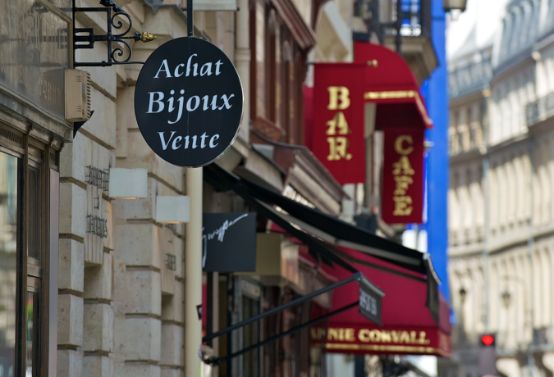
Rue Saint-Honoré. Photo: Daniel Stockman, wikimedia commons,SMPV

The oldest active music publishing house in France, founded in 1841 by Alphonse Leduc, has an impressive catalog, which was expanded by two acquisitions: Editions Heugel (founded in 1839) in 1980 and Hamelle (1877) in 1990. The following composers became part of the publishing base: Gounod, Fauré, Delibes, Widor, Massenet, Offenbach, Gustave Charpentier, Poulenc, Milhaud, Jolivet, Tournemire, Franck, Messiaen, Honegger, Tomasi. Then there were the contemporaries Henry Dutilleux, Pierre Boulez, Charles Chaynes, Betsy Jolas, Thierry Escaich, to name but a few.

Leduc has now been taken over by Europe's largest music publisher, the British Music Sales Group. The traditional publishing headquarters on Rue Saint-Honoré in Paris was sold a few months ago.


On the occasion of this takeover, Michèle Worms offers the following in the editorial of the magazine La Lettre du Musicien a brief overview of the French publishing landscape and its changes (translation by Pia Schwab):


Thirty years ago, there were publishing houses in France ranging from the very small to the very large with a wide variety of orientations. Of the big ones, the flagships of French cultural heritage, Heugel, the publishing house of Jacques Offenbach and Reynaldo Hahn, had already been transferred to Editions Alphonse Leduc. Leduc, based on Rue Saint-Honoré, had long held the rights to Fauré's works and was an indispensable source of valuable performance material for orchestras and opera houses. The publishing house's finest achievement was undoubtedly the printing of Messiaen's Saint François d'Assise in 1983, the score of which ran to 2400 pages!

The Durand publishing house (1869) was enthroned on the Place de la Madeleine, in the salon of the grand piano on which Debussy and others had played while waiting for their publisher. He mainly had the big names of the "Moment 1900" in his program and was very envied for the rights to Ravel's Boléro. In 1986, Durand bought the publishing house Max Eschig (1907), which brought with it a more international range. The Bohemian-born founder was the king of Viennese operetta, publishing great Spanish and South American composers as well as Martinů and Szymanowski.

The business success of Editions Choudens was ensured by Bizet's Carmen and Gounod's Fist. Salabert, on the other hand, focused on operettas, chansons, but also the works of the Groupe des Six and today on a rich selection of contemporary works; Henry Lemoine on classics of piano literature up to Bruno Mantovani. They were all able to keep up with the greats. Other publishers, such as Jobert, which was taken over by Lemoine in 2007, devoted themselves to the contemporary repertoire.

While Durand-Salabert-Eschig have been part of Universal Music for some time now (as has Ricordi, by the way, editor's note), the latest takeover concerns Alphonse Leduc, who comes under the umbrella of the Music Sales Group.

The publishing landscape has therefore changed considerably: Of the historic houses in France, Henry-Lemoine (1772) and Editions Gérard Billaudot (1896), which publish modern composers or high-quality educational literature, remain. Thanks to a myriad of creative small publishers, the signs seem to point to specialization.

In Germany and Austria, the major publishers Schott, Peters, Breitkopf, Bärenreiter, Henle and Universal hold their own. The last four do considerable research and Urtext editing work, which makes them indispensable. The British houses, on the other hand, hold the sceptre of popular music in their hands. And their catalogs will now also include Massenet, Franck, Poulenc, Milhaud, Dutilleux ... without their hearts particularly beating for them. What a pity!

French text

Head of cultural promotion in Zurich resigns

After 17 years as head of cultural promotion in the canton of Zurich, Susanna Tanner is stepping down from her position at the end of August 2014. Tanner, who turns 60 this year, is leaving the position at her own request.

Getting a lot of Zurich culture rolling. Photo: Tram on the Quaibrücke, picswiss

During Susanna Tanner's time in office, numerous changes were made to the canton's cultural funding. For example, small and medium-sized cultural centers now receive significantly more operating subsidies than in the past, writes the Zurich cantonal government in its official statement.

The change of artistic director at the Zurich Opera House was a success, and the Theater Kanton Zürich was artistically successful. With Tanner's involvement, it was also possible to found and establish the Zurich Film Foundation and secure an intercantonal cultural agreement with revenues of eight million francs for the canton of Zurich.

Tanner has restructured the department itself several times over the 17 years, as the budget and number of staff have grown.

Geigerian set theory

A systematic presentation of all violin movements in six volumes that encourages new ways of practicing.

Photo: style-photography.de / fotolia.com

A four-part flower illustrates how the four elements of bow, string, finger and position changes alone can be combined two, three and four times. This results in the 15 parts of the systematic overview of violin technique, spread over six volumes (ED 21161 to 21166, also available as package 21161-1). Helmut Zehetmair, violin professor emeritus in Salzburg, and his former assistant Benjamin Bergmann, now violin professor in Mainz, conceived them as a "violinist's medicine chest" for practicing all the components of technique - a modern Ševčík, so to speak.

The first two volumes discussed here deal with the large "petals", not yet including the combinations. The instructions in the introduction declare that practicing technique is an artistic activity in that it should be creatively combined with rhythm, articulation, dynamics, phrasing, agogic, sound and vibrato: "True virtuosity turns technical necessity into musical virtue (lvirtus)."

The various types and articulations of bow strokes are fully described. However, bowing also has to do with physics: it is not shown that the bow is actually driven like a ferry by the string vibrations in the direction of the obtuse angle in the case of the non-perpendicular "X-stroke", which is very useful for changing contact points. When the bow is forced onto the bowing point, an admixture of high-frequency longitudinal vibrations is created. The Sautillé is not caused by a special position of the fingers, but by the fact that the bowing direction is steeper than the bowing direction thanks to the rolling of the upper arm or the swinging of the wrist. The clearly describable relationships between volume, frequency and bow position, which are a prerequisite for conscious mastery of the sautillé, are also missing.

The awareness of the seven string planes and the resulting half and whole string changes is valuable. The encouragement to legato string changes with string skipping is very commendable.

In the chapter on finger changes, many horizontal supporting fingers are recommended for stabilizing the fourth space, unfortunately not the more efficient way of setting the finger spacing ahead in the air. Why is the fingering within the diminished fourth missing from the list of fingerings? With the harmonics, it should be pointed out that you have to finger a little higher because the string is looser and therefore sounds lower than with a firm fingering in the same place. The various exercises on finger string changes and stretched fifth and sixth fingerings are valuable.

The chapter on intonation is both informative and philosophical. The combination tone is recommended for checking intonation, but why is there no mention of the resonance of the empty strings? The different types of vibrato are well described but the upper arm roll as the origin of vibrato production is not mentioned.

The second volume is a treasure trove of exercises for direct changes of position: exclusively with one finger or with the same fingers for double stops. The often-forgotten pivoting, i.e. partially moving into other positions thanks to anchoring the thumb, as Paganini apparently did, is explained and recommended.

If the subsequent volumes are as stimulating as the first two, they could inspire many violinists to think and practise in new ways.

Image

Helmut Zehetmair and Benjamin Bergmann, Systematic Violin Technique. The building blocks of violin playing; Volume 1, Bow, string and finger changes, ED 21161; Volume 2, Direct position changes, ED 21162; € 18.99 each, Schott, Mainz 2013

Songbook for future soccer stars ...

... clever witches and all the other normal children of today. With lyrics and melodies that make you want to sing.

Excerpt from the title page by Chasper Würmli

The title lives up to its promise: Abracadabra contains unexpected musical twists and turns, amazes with changing rhythms and conjures up ghosts, animals and pirates. The songs are aimed at 5 to 10-year-olds and refer to their fantastic imaginary worlds. The ride on the musical witches' broomstick leads from I am afraid about 'It's hot up to I wish I was a soccer star, a real genius on the ball!

Susanne Würmli-Kollhopp wrote all thirty compositions herself, most of them in dialect. This is music for everyday use, written for the children's choirs that Würmli-Kollhopp directs. While many conventional children's songs convey an outdated world view or moralize, these are pleasantly simple. All the more catchy for that. But not always easy to sing: Changes of key and time signature are surprising here and there, giving the songs a new color.

Speaking of color: Chasper Würmli, the son of the composer and lyricist, has illustrated the songbook with beautiful collages of fabulous animal characters. The result is a carefully and lovingly designed book that is a pleasure to hold in your hands.

On the author's website, all the songs can be heard with simple piano accompaniments as a rehearsal aid. And you also get some initial ideas for practicing in the school classroom or children's choir that go beyond "singing along".

Susanne Würmli-Kollopp: Abrakadabra, 30 children's songs with illustrations by Chasper Würmli, Fr. 37.00 (+ packaging/postage), Fr. 39.90 in stores, Verlag Singlust (self-published); piano accompaniments available separately from: www.singlust.ch

Witches, nymphs and the eternal Loreley

Giving young female musicians the opportunity to perform is commendable, but doing so with a cleverly put together program is even more so. A "Hexen" concert in Zurich, Schaffhausen and Wetzikon demonstrated this.

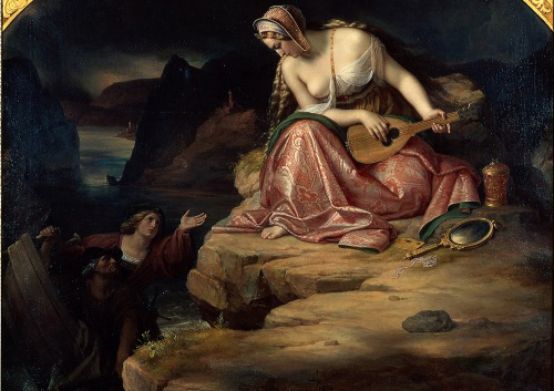
Carl Joseph Begas, Lurelei, 1835, photo: Wikimedia Commons
Hexen, Nymphen und die ewige Loreley

Giving young female musicians the opportunity to perform is commendable, but doing so with a cleverly put together program is even more so. A "Hexen" concert in Zurich, Schaffhausen and Wetzikon demonstrated this.

Since time immemorial, women have had a threatening side to the male world: sinister, seductive, poisonous and of the devil. Witches were burned in Switzerland until 1782. The seductive and fatal woman, the femme fatale, inspired countless painters, poets and composers; mermaids and nymphs were particularly popular in literature and art during the fin de siècle. Tempi passati?

Not quite, because even in recent times there have been examples of witch burnings in Africa and Asia: The composer Maria Porten has taken this as an opportunity to organize the concert Witches in which, in her own words, she wanted to present "various aspects of magic and enchantment". The evening ranged from a romantic verse song to the world premiere of the witch trial by Porten, all of which were superbly interpreted by the young musicians.

The first songs were dedicated to the Loreley, who attracts men with her singing and plunges them into misfortune. It is harmless how Friedrich Silcher sets this story to music in his famous setting of the equally famous Heine poem; as if the elfin creature could not hold back a drop of water. A demonstration of romantic beauty, sung by Anna Herbst with a beguiling cantilena. Franz Liszt's setting was more abysmal; he interprets the text, dramatizes and emphasizes the misfortune of the boatmen.

Rusalka embodies a picture of female longing. Anna Herbst sang the famous aria from Dvořák's fairy-tale opera of the same name in the original language with a melting voice, sensitively accompanied by Sarah Tabitha Staehli on the piano. Max von Schilling's melodrama composed in 1903 The witches' song was performed by Werner Bärtschi as both narrator and pianist. Set in the atmosphere of the fin de siècle, it is about a monk in love who cannot forget the melody sung by his beloved witch at the stake. It is suggestive, leitmotif-like music with a power of attraction similar to that of the sirens. Bärtschi gave the time-bound drama a haunting form.

Maria Porten contrasted these projections of the 19th century male world with her view of witches - witty, playful, elfish, in other words, thoroughly positive. Her gestural music has something consistent in all her works. First up was her setting of Brentano's ballad About Bacharach am Rheine for speaking voice and cello, then the small cycle By the hat of Hermes for soprano, cello and harp on texts by Ariane Braml. Porten plays with all kinds of sounds and ingredients. The dialog between the cello - played dramatically and virtuosically by Ioanna Seira - and the singing voice (Anna Herbst) is skilfully constructed. The title piece was witty, with dance rhythms, beating on the harp body and the use of a whistle; in the last song, the harp evoked the wavering of the Dense fog (Corinne Kappeler).

Finally, the world premiere of the short Witch triala piece for soprano, harp, cello and piano. According to Porten, the "shocking look at the execution of an innocent creature of nature" lacked musical bite, even if a small outburst is dared at the end with powerful cello strokes and piano clusters. A concert that focused less on the horrors and male perspectives of the femme fatale than on offering varied and atmospherically dense moments.
The concerts took place in Zurich, Wetzikon and Schaffhausen from January 24 to 26


World premiere of Mischa Käser's "Verhext"

The composer, choreographer and director calls his latest production "A musical-theatrical minefield", which premiered to a full house at Tanzhaus Zürich on January 23.

Sibylle Ehrismann - Whatever sounds and happens on stage, Mischa Käser has everything under control. Even when he conceives the music, it is always linked to ideas for movement and action, which he then implements on stage. The starting point and inspiration for this performance is Rico Czerwinski's report Bewitchedwhich tells of an emotional minefield: Daughter, father, mother.

The actions of her daughter Tanja (Jelena Dojćinović) serve as a "guide". She "choreographs" the dancers like surreal memory images and lets them loose on her incredible family history. The result is enigmatic sequences of images that always refer to failed relationships.

Lisa Beese, Kilian Haselbeck, Sonja Rocha and Nicolas Turicchia danced these extreme choreographies with expressive fierceness and convincing meaningfulness. The double bass player Daniel Studer played and improvised with virtuosic and eloquent gestures. Studer stood to the left of the stage, with a string quartet from the Collegium Novum Zürich positioned to his right, all outstanding musicians. Käser's whimsical choreographic ideas and his poetically suggestive music complemented each other time and again to create grandiose "nightmare images".
 

Kategorien

The finalists of the Swiss Jazz Award 2014

The field of candidates for the Swiss Jazz Award, which is being presented for the eighth time by Radio Swiss Jazz and the JazzAscona Festival, has been narrowed down to three groups. The winner will be decided after live performances at the final evening of the JazzAscona Festival (June 21) in front of the audience and a jury of experts.

Picture: JazzAscona

Blue Bolero, Nicole Herzog-Stewy von Wattenwyl and the western Swiss band Y-Jazz have qualified for the final. Blue Bolero is a young Zurich trio that has made a name for itself with its debut album Introducing ... Blue Bolero has drawn attention to itself.

The singer Nicole Herzog and the band of Bernese pianist Stewy von Wattenwyl have released the album Intimacy and Y-Jazz from Yverdon-les-Bains is back with the current CD happ'y-jazz event on the market.

Six bands were nominated for this year's award. The Daniel Blanc Quartet, the Ralf Ruh Trio and Belleville were eliminated in the first public vote. Around 2000 votes were cast in the first phase of the public voting, which restarted on March 5 and will run until 12 noon on June 21.

Votes can be cast online at www.swissjazzaward.ch or via SMS to the number 919 (CHF 0.40/SMS) with the codes SJA BLU for Blue Bolero, SJA NIC for Nicole Herzog-Stewy von Wattenwyl and SJA YJA for Y-Jazz.
 

The star behind the scenes

Christian Buxhofer died unexpectedly on February 16 at the age of 52. His death is an enormous loss for Arosa, Graubünden and indeed for the whole of cultural Switzerland.

Photo: Arosa Culture
Der Star hinter den Kulissen

Christian Buxhofer died unexpectedly on February 16 at the age of 52. His death is an enormous loss for Arosa, Graubünden and indeed for the whole of cultural Switzerland.

There were three hearts beating in his chest. One belonged to his family, as a husband and father of a 13-year-old boy, one to the Bündner Tagblatt, which he shaped for years as editor-in-chief, and one to culture, specifically music, which he offered a wide-ranging platform in Arosa. And perhaps in the end it was his burning passion for these things that ended his mortal self too soon.

Each of these areas of his life received so much attention and care that it is hard to imagine how all this could fit into a 24-hour day. Christian Buxhofer, however, was a very extraordinary man. I got to know him at a concert I gave with my fellow musicians from the casalQuartett in Arosa in 2006 to celebrate the 100th birthday of Hans Schäuble, the composer born there in 1906. This meeting gave rise to the Arosa Music Festival, one of the many projects that Christian Buxhofer initiated and knew how to pragmatically turn into reality by bringing together partners of all kinds. In a few days, it will take place for the last time under his direction.

Since 1985, he has been a volunteer for culture, in the small mountain village of Arosa at an altitude of 1800 meters. You can't pass through this village, you can only arrive and leave again. It is always a destination, never a random stop. It is a place surrounded by rough and wild nature, but at the same time it can develop so much warmth, security and potential for longing that you quickly fall into a kind of attachment trap. Getting involved in Arosa means: either completely or not at all. Half measures don't stand a chance.

Christian Buxhofer was not a man for half measures. He had the rare gift of being able to constantly and gently emphasize his concerns, even in the face of resistance and without any prospect of personal laurels. Genuine appreciation of his work made him overjoyed, but he did not demand it. His greatest reward was that what he initiated was successful and had quality.

Today, more than a quarter of a century after the start of his engagement - back then he was a teacher in Arosa - his former adopted home is the place in Europe with the most music courses from Celtic harp to children's choir, has an opera festival in summer, an Easter festival with a mixed program between classical and folklore and, for the past three years, a summer Music Academy, a magnet for numerous music students from all over the world. However, Christian Buxhofer was not only interested in the heavyweights of the annual planning, but also in small and fine cultural continuities, such as the weekly concerts in the acoustically wonderful and visually appealing Bergkirchli. Anyone who is in Arosa knows that they can listen to a concert every Tuesday at 17:00. Free of charge and often with surprising content in the intimate, archaic church room with a view of the village and a magnificent mountain backdrop.

But Buxhofer was not just a provider of ideas, he was also a hard-working doer and congenial networker. He held all the strings in his hand, highly virtuosic and versatile, charismatic and engaging, patient and insistent, knowledgeable and enthusiastic. He never gave up, for him there was a solution to every problem and he was usually the one who actually provided the solution.

In his work for the Bündner Tagblatt, he was particularly interested in political issues. Yes, he could have been a politician himself. His ability to communicate and his sense of mission, his convictions and his public spirit would have been perfect prerequisites. But he probably knew the pitfalls too well. Making lazy compromises would have been very hard on him. Christian Buxhofer could not be bent for purposes that did not make sense to him. His down-to-earth attitude and straightforwardness ensured that he had a clear head and a clear sense of purpose. But independence and the ability to make his own decisions were also simply too important to him. In the field of culture, he was able to get involved as he saw fit.

As an amateur organist, he knew the music and the often demanding expression of artistic characters and idiosyncrasies so well that he was able to adapt to them perfectly. It was impossible for him not to get along with a musician; he knew how to recognize sensitivities, to see and meet needs without bending over backwards. This made him discreetly and unintentionally popular and a sought-after partner. People confided in him, they blindly handed over responsibility to him, simply because he had such a winning personality. Conversely, almost nothing could be refused, he was convincing, without big words or gestures, just like that.

We musicians are happy when we feel that what we do is accepted. When we find ears that listen, words that encourage, eyes that are enthusiastic ... Of course, Christian Buxhofer was not naive. On the contrary, he was psychologically highly refined, or rather: sensitive. Any façade, any affectation could really shake him. They offended his sense of balance. His service to art was so sacred to him that he saw egocentricity and nerve-wracking fuss for what they were: superfluous. It was important to him that people were on fire for the cause, be it in Arosa or at Carnegie Hall in New York ...

There is a difference between providing an artist with a stage and giving them one. prepares. Christian Buxhofer was able to do this like few others. He leaves behind not only a family, but also a huge, dismayed, grieving family of artists and a veritable fan community. He was a silent star behind the scenes and a widely respected and valued friend.

His death is an enormous loss for Arosa, Graubünden and indeed for the whole of cultural Switzerland. Continuing his work is both an enormous task and an urgent duty.

Christian Buxhofer died unexpectedly on February 16 at the age of 52.
 

Kategorien

From Zwingli to SMPV

A brief history of public music culture and freelance music teachers, using Zurich as an example. No dividing lines can be drawn between amateurs and professionals.

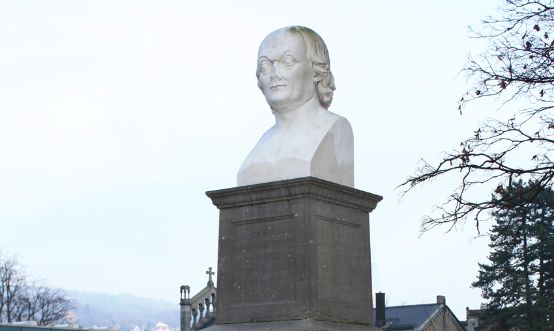
Hans Georg Nägeli monument in Zurich. Photo: Roland zh/WikiCommons
Von Zwingli bis SMPV

A brief history of public music culture and freelance music teachers, using Zurich as an example. No dividing lines can be drawn between amateurs and professionals.

A higher musical culture did not just begin in Switzerland in the 20th century. In earlier centuries, with the exception of Ludwig Senfl, who was active at the court of Emperor Maximilian, there were not many prominent composers, but there was a lively musical life. The legend that the Reformation of Zwingli and Calvin put a white frost over the musical life of the Reformed towns must also be emphatically refuted. The opposite is the case. Huldrych Zwingli sang excellently and, according to the testimony of a contemporary, played the following instruments: "lutes, harps, violins, pipes, rabögli, schwäglen, trummscheit, dulcimer, zinken, French horn". (1) He composed elaborate polyphonic songs and met regularly in private with other music lovers, for example with the priest Leo Jud, to sing together in the evenings.
Psalm books from Basel and Constance circulated in Zurich for private use and were soon joined by hymnbooks from the local Froschauer printing works. Music colleges were formed in which people sang, played instruments and rehearsed for the so-called "quarterly bötter". There were three in Zurich, whose founding year is unknown. They joined together in 1812 to form the General Music Society of Zurich, which performed concerts with varied programs, oratorios, operas and musical comedies.

Schoolmasters, parish priests, composers
What does all this have to do with the freelance music teacher? A great deal, because such a zealous cultivation of music requires training, which was usually in the hands of schoolmasters, occasionally also music-loving parish priests, whereby the line between professional musicians and amateurs is difficult to draw. Zwingli founded the first music school in Zurich as early as 1528 and appointed a musician named Hans Vogler as its director. Heinrich Bullinger's school regulations for the Latin school of 1532 called for the singing of carmina three days a week. Choral and instrumental interludes in school and popular dramas are attested for Zwingli, among others. (2) Two textbooks for singing lessons by Johannes Frisius were printed by Froschauer in 1552 and 1554.

But what happened in the church service? Winterthur and Stein am Rhein reintroduced church singing without instrumental accompaniment as early as 1559; the city council of Zurich hesitated longer until it passed the corresponding resolution in 1598. In addition to psalm singing, whose 125 melodies were written by Guillaume Franc, Loys Bourgeois and Pierre Davantès, the first official Zurich hymnal from 1598, the later so-called Lobwasserthe "Gebräuchliche Psalmen" (the psalm songs printed in Zurich for decades). This was followed by more and more sacred hymns, initially set for one voice, but soon for four voices, whereby Bourgeois placed the cantus firmus in the tenor, as was customary at the time, but the chorale melody was later moved upwards by swapping the soprano and tenor. This four-part homophonic setting can be found in the third edition of the Zurich hymnal from 1641. This type of church singing has survived tenaciously as a substitute for instrumental accompaniment, and remains to this day. Some of the songs are still printed in four-part harmony in Swiss church hymnals. Four-part singing was practiced regularly in all schools and in church lessons.
The repertoire that was cultivated in the three music colleges of the city of Zurich can be deduced from preserved music collections for at least the 18th century. It was thoroughly contemporary and sophisticated. In addition to much Handel, Graun's passion music, Hiller, Naumann, Rolle and, early on, symphonies and masses by Joseph Haydn should be mentioned. There were also Swiss composers: Johann Caspar Bachofen (1695-1753) was theologically trained up to the level of Verbi Divini Minister, but never practiced the pastoral profession, instead devoting himself to music as an autodidact and leaving behind memorable, simple one- to three-part songs with basso continuo. The pastor Johannes Schmidlin (1722-1772) founded and directed the music college in Wetzikon, Zurich Oberland. He taught Johann Heinrich Egli (1742-1810), who was born in Seegräben and worked as a sought-after piano and singing teacher in Zurich from 1760 onwards, composing soulful songs. His pupil Johann Jakob Walder, who was eight years younger, worked in the same spirit and set uplifting sacred texts by Christian Fürchtegott Gellert, which were published in 1791 and became very popular.

Music teachers and traveling virtuosos
Of course, there were plenty of music teachers. The aforementioned, who emerged as composers, are only the tip of the iceberg. One non-composer should be mentioned, namely Goethe's friend Philipp Christoph Kayser, known as "Kunscht-Kayser" from Stäfa on Lake Zurich, born in 1755, who earned his living giving piano lessons as a 15-year-old in Frankfurt am Main and then five years later in Zurich. In addition to the established music teachers, there were also the traveling virtuosos; for example, the Mozart family came to Zurich in 1766, where the ten-year-old Wolfgangerl wrote down a march on the back of a menu card at the Hotel Storchen. Virtuosos appeared like shooting stars in the Zurich musical sky and occasionally settled there, such as Anton Liste, born in Hildesheim in 1772. In 1804, he was appointed by the Musikkollegien to conduct their orchestra in Zurich, where he gave Zurich's musical life an unprecedented boost until 1834 and significantly raised the standard of the orchestra, which was mainly made up of amateurs. He founded the Liste Singing Society, which competed with Hans Georg Nägeli's choirs and performed Haydn's Creation and Seasons as well as Handel's Messiah and other oratorios on several occasions. Liste was also regarded as an important piano virtuoso whose piano works remained highly regarded for a long time.
Nägeli (1773-1836) was the most important representative of music teachers. He grew up in music-loving Wetzikon and was already in charge of its music college at the age of ten. He was particularly interested in choral music. In 1805, he founded the music institute with its mixed choir, men's choir and children's choir. In 1810 his Teaching singing according to Pestalozzian principles, 1821 his Choir singing school. It is thanks to him that the Swiss choral scene flourished both quantitatively and qualitatively for a whole century, so that he is rightly called the "father of singers".

Conservatories, choirs and brass bands
There were salaried orchestral and choral conductors, known as music directors, and single teachers at grammar schools, but no other salaried music teachers before the founding of conservatories. From 1858, Friedrich Hegar promoted Zurich's musical life in a sustainable way. Initially he was concertmaster of the Orchesterverein, but after three years he was already chief conductor. He made a significant contribution to the founding of the Tonhalle Society in 1868, brought international luminaries such as Brahms, Liszt, Joseph Joachim, Klara Schumann, Hans von Bülow and many others to Zurich for guest appearances, left behind remarkable compositions in 1927 and founded the conservatory in 1876, which offered a professional department and a general department from the very beginning and for a very long time. However, Zurich's conservatory was by no means the first in Switzerland. Geneva was the first in 1835, followed by Bern in 1858, the Institut de Musique de Lausanne in 1861, Basel in 1867 and Winterthur in 1873. The Lucerne Conservatory was not added until 1942. Nothing of the kind existed in other cities or in the countryside. This meant that there were publicly accessible music schools in some cities, but they were privately organized and depended on subsidies from the municipalities and their music teachers were employees. But the freelancers were vastly outnumbered. They formed a proliferation of all possible quality levels, whereby the line between professionals and enthusiasts was again impossible to draw. The pedagogical work of music lovers was not always bad. Talented primary school teachers, in particular, led the thousands of male, female and mixed choirs that measured their skills against each other in periodic music festivals, judged by a panel of experts. The numerous brass music associations also took care of the instruction of their young musicians themselves. And in folk music, parents passed on their skills and knowledge to their children, usually without any knowledge of sheet music. The latter still exists today.
Concern for the pedagogical quality of music education ultimately led to the founding of the Swiss Music Teachers' Association in 1893, then called the "Schweizerischer Gesang- und Musiklehrerverein". The name indicates the focus of its efforts. The purpose article in the articles of association also states: "To raise and promote singing and music in schools, churches, homes and clubs". By the way: "Singing and music", this strange name remained in use for a long time. The sign at the top of the spiral staircase to the organ in the Predigerkirche in Zurich still reads: "Access for singers and musicians only". The sign is left hanging out of reverence. Membership of the association, which was renamed in 1911 to its current name, abbreviated to SMPV, was also open to people who did not work in the music profession. Further training courses were offered for choirmasters, school musicians and organists. The new name was introduced in 1911 with the "introduction of examinations for music teachers who do not hold certificates of academic musical education". In 1913, the first announcement of such examinations was made, to which over sixty interested candidates responded, although only five of them took the examination. The requirements of the unfortunately lost regulations were obviously high. This was the beginning of the SMPV's professional training program, which still exists today as a special case throughout Europe, continued by the Swiss Academy of Music and Music Education, which is integrated into the Kalaidos University of Applied Sciences Switzerland as the Department of Music. Diploma examinations for music teachers were only gradually introduced at conservatoires in the course of the 20th century, which makes the pioneering work of the SMPV understandable.

Freelance music teachers today
The wave of music schools founded in the 1960s and 1970s, initially mainly youth music schools, led to a nationwide network of around 440 music schools affiliated to the Swiss Music Schools Association. For a while, it was believed that this upheaval would lead to the extinction of the freelance music teacher. Even though many former youth music schools now also offer adult lessons, the opposite is the case. This is because many professionals either cannot find employment or only work a small part-time job at a music school and teach privately on the side. The same applies to those who do not play full-time in an orchestra or who have ended their singing career. Further niches of increasing importance are opening up in the highly important promotion of young children in parent-child singing courses, elementary music education at pre-school and early school age and music geragogy.
What is the conclusion of this historical walk? In addition to the necessary professionalization of music teachers, we must not lose sight of the broad impact of musical activity and education, the enhancement of which in schools and clubs is inconceivable without amateurs. However, this does not preclude the promotion of the social security of freelance music teachers.

Proof
The text is based on a presentation at the 43rd D-A-CH conference in Würzburg.
The full paper is published in: Elisabeth Herzog-Schaffner and Dirk Hewig (eds.), The freelance music teacher - a profession with a future? Report on the 43rd D-A-CH Conference 2012 in Würzburg, ISBN 978-3-926906-21-2, available from the office of the Deutscher Tonkünstlerverband: info@dtkv. org

 

Notes

1 Quoted from Rev. Leonhard Stierlin, 43rd New Year's Gazette of the Allgemeine Musikgesellschaft Zürich for the year 1855, S. 8
2 MGG2, Sachteil Bd. 9, 1998, Sp. 2479.

Kategorien

The best musician in town

At the beginning of the 19th century, Caroline Boissier-Butini did not have an easy life in Calvinist Geneva, despite her upper-class background.

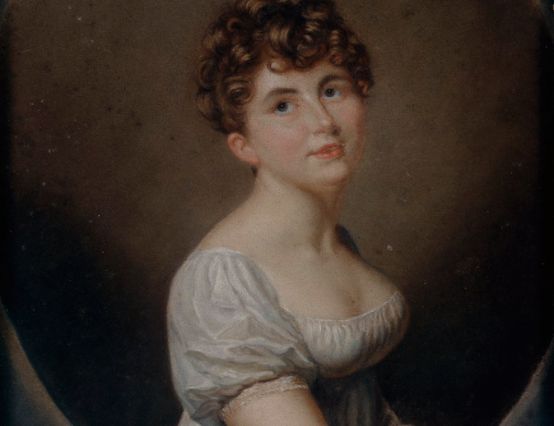
Caroline Butini at the age of 21, painted by Firmin Massot. Detail. Private property. Photo: Monique Bernaz

The translator, gender researcher and music publicist Irène Minder-Jeanneret created a comprehensive account of musical life in Geneva and, in connection with this, in Europe at the beginning of the 19th century in her doctoral thesis, based on the life of the almost forgotten pianist and composer Caroline Boissier-Butini.

The work, which is illustrated in color, clearly structured, with many tables and an extensive appendix, reflects the special position of this daughter who grew up in a complicated social constellation. She was encouraged in music by her grandfather and father and also instructed in the emerging sciences of the time (she would have liked to study medicine).

Irène Minder had actually planned to use the collected material to write a novel about Caroline Boissier-Butini. This is now being written in her head as she reads the dissertation, which is peppered with extensive diary entries, travel reports, letters and quotes from contemporary witnesses! The sources are insightfully annotated and interlinked in such a way that they provide a vivid picture of the period (all the French sources have been excellently translated into German).

The Calvinistically narrow, but thanks to Enlightenment ideas and the French Revolution broadened, then again oppressed by the Napoleonic occupation, conditions in the Geneva Republic resulted in very complex living conditions for Boissier-Butini. One result of this can be seen in her catalog of works: Although organ, piano and chamber music works have survived as manuscripts, the solo part of only one of her seven (!) piano concertos is extant. She was allowed to play for guests at home and in other salons befitting her status, but it was not appropriate for her to perform in public concerts, and certainly not for a salary. Daughters were not allowed to meet demoiselles of the same age; they were to remain in the sole company of their mother for as long as possible. According to Rousseau's conservative statements in his Lettre à d'Allembert and in the L'Émile the natural law perspective of women must take a back seat in favor of social necessity: Women were there for the well-being of their husbands and to bring up their children! It was not until 1838 that Albertine Necker-de Saussure fought for a change of course.

Fortunately, Caroline was married to the music-loving agronomist Auguste Boissier, who played his own two Stradivarius pianos and was very sympathetic to his wife's activities, dueting with her and performing in chamber music groups. Thanks to her privileged position, she was networked with many famous travelers and personalities using the Geneva exile (including Isabelle de Charrière, Germaine de Staël-Necker). Her talent enabled her to develop these inspirations into a mastery of piano playing and composition with limited tuition and above all self-taught. Elaborate trips to Paris and London to buy grand pianos, to try in vain to publish her compositions and to explore metropolitan culture introduced her to famous pianists, to whom she also played herself - earning recognition. Liszt, Kramer and Kalkbrenner's sensitive playing made her realize that she should create music that "touches instead of dazzles". She had her daughter Valérie taught by Liszt in Paris for a winter. Her report Liszt pédagogue first appeared in 1923 under the name "Mme Auguste Boissier", misleadingly reduced to "Auguste Boissier" in German in 1930! As the family lived on their country estate near Yverdon in the summer, she had the freedom to come into contact with ordinary people there, which encouraged her to become involved with folk music. Once, she quickly composed a few dances for a passing village fiddler for free. Her only performable Concerto No. 6 "La Suisse" contains all three elements of the Ranz des vaches.

Many obstacles hindered the development of her skills. Geneva's Calvinist tradition, which allowed music almost exclusively in the form of psalms, made the public performance of secular music difficult. Although she could play the organ and composed organ pieces, she was hardly allowed to play in church services. The Société de musique de Genève (1823), which was founded after Geneva's entry into the Confederation, only accepted women as non-voting members actives honoraires with limited opportunities to perform. Nevertheless, the music festivals held throughout Switzerland helped to establish a musical life in Geneva that was linked to the Confederation. Despite all this, Caroline Boissier-Butini played an outstanding role as a piano virtuoso, composer and music promoter that was also known in other Swiss cities, even though she only played privately everywhere.

Image

Irène Minder-Jeanneret, "Die beste Musikerin der Stadt" Caroline Boissier-Butini (1786-1836) und das Genfer Musikleben zu Beginn des 19. Jahrhunderts, Dissertation University of Oldenburg; printed edition with additional material on CD-Rom, 528 p., € 44.90; edition on CD-Rom, € 24.90; EpOs Electronic Publishing, Osnabrück 2013, ISBN 978-3-940255-36-5

Contemporary guitar music from French-speaking Switzerland

The "Editions Bim", based in the canton of Fribourg, provide us with two attractive works for solo guitar.

Photo: Stephan Landgraf/pixelio.de

The lively piece One minute by the flutist, conductor and composer Caroline Charrière, born in 1960, is a miniature over the note d. Written mainly for one voice, it is technically easy to master. The first half is a great crescendo, also in terms of movement and rhythm. The soft percussive elements that gently introduce the second part are followed by faster and louder notes that lead to a violent conclusion. A piece that is well suited to practicing authentic contemporary music with pupils.

Image

Caroline Charrière, Une minute, for guitar solo, GUI11, Fr. 9.00, Edition Bim, Vuarmarens 2012

Six times longer Livia by Julien-François Zbinden. The now very old pianist and composer wrote it in 1999 at the age of 82 for Maria Livia São Marcos, who taught guitar at the Geneva Conservatory for decades. Zbinden's compositional style is classically modern, free in harmony and melody, but also interspersed with individual serial elements. The piece consists of a single movement, which is divided into a solemn beginning and a rapid second part, only to return to the beginning in a kind of short recapitulation at the end. Some passages are not really playable, so that certain long notes in the melody are only given their full note value in thought. The notated low C in bars 129 and 130 should probably be an E.

Livia is a composition in the tradition of "classical" music. There is little evidence that the composer was also a gifted jazz pianist and that the dedicatee is originally from Brazil. And yet: the Latin American temperament of a Leo Brouwer, for example, resonates from afar, and alongside selective inversions in the melodic line or short crab chord sequences, rhythm is an important element of the composition, even in the fast perpetuum mobile passages. Zbinden does not skimp on accents and sforzati; the quiet last chord is only an echo ...

Image

Julien-François Zbinden, Livia, for guitar solo, GUI 7, Fr. 15.00, Editions Bim, Vuarmarens 2012

One machine for two instruments

The Ravel duo for violin and cello left the first listeners scratching their heads.

Picture: Didi01/pixelio.de

Today, it is hard to imagine that Maurice Ravel's four-movement duo sonata for violin and cello was met with incomprehension by the public at its premiere in 1922 and immediately afterwards. The hitherto unusual treatment of the string instruments - Ravel asked the performers for advice on the playing techniques that were possible on the violin and cello - and the "objectification" and "de-romanticization" of the musical language marked a turning point in the composer's oeuvre. He himself described this sonata as "a machine for two instruments". Hélène Jourdan-Morhange, the violinist at the premiere, wrote in her memoirs about the meticulous work with the composer and said: "The duo, which had an almost repulsive effect at the first encounter, conceals treasures, but it treats the violin very harshly."

Today, the Ravel duo is one of the mainstays of the repertoire for this instrumentation, even though it places high demands on the performers. We have long since become accustomed to the "toughness" and even find large parts of this sonata extremely lyrical! In addition to the traditional edition by Durand & Co, Paris, Bärenreiter now offers a new Urtext edition of the work. The sources consulted are given in the preface and appendix and some are even reproduced as facsimiles of the autograph; the descriptions by Jourdan-Morhange are also quoted in detail. The presentation as a large-format playing score (the violoncello can also read the first movement "in unison" if desired) and the ingenious pagination, which allows for uninterrupted playing, are extremely helpful for the performance. However, the violinist has to turn the pages for the cello a few times!

Image

Maurice Ravel: Sonate en quatre parties pour violon et violoncelle, Urtext edited by Douglas Woodfull-Harris, 2 playing scores, BA 9417, € 22.95, Bärenreiter, Kassel 2013

Ingenious character pieces

The piano version of "Pictures at an Exhibition" is exceptionally richly annotated.

Viktor Hartmann's suggestion for the "Ballet of the Unhatched Chicks". Source: wikimedia commons

"We have no hesitation in presenting this work as the most important piano creation by Russian masters to the present day. Certainly, there is much to criticize about this collection of ten character pieces (...). But an ingenious, original creative power, before which all criticism must fall silent, imprints these pieces with the stamp of the completely unique." Klaus Wolters described this more aptly decades ago in his still unsurpassed Handbook of piano literature (Atlantis, Zurich, 5th edition 2001), the fascination that Mussorgsky's Pictures of an exhibition hardly formulate.

In keeping with the importance of the work, Bärenreiter-Verlag has now edited an exceptionally richly annotated Urtext. The preface by editor Christoph Flamm with information on the genesis of the work, detailed thoughts on the individual images and practical performance suggestions is fascinating to read and goes far beyond what previous editions have published.
It is obvious that with so much material, contradictions also arise, such as the claim that the work is not suitable for orchestration, supported by Svyatoslav Richter's biting remark: "I reject the orchestral version of this work and hate it ..." The correction of some "errors" in the musical text also occasionally throws the baby out with the bathwater. The new readings in bar 17 of the first Promenade, for example, would simply be too absurd even for the idiosyncratic Mussorgsky (an a would probably be more appropriate. However, the composer's handwriting is ambiguous!)

The musical text itself, completely without fingerings, is convincing in its clarity and overview. The appendix contains a few black and white illustrations of Viktor Hartmann's originals, which the work was intended to commemorate. If you would like to find even more practical tips on interpretation, we recommend the Wiener Urtext Edition by Manfred Schandert and Vladimir Ashkenazy. Ashkenazy's experience with the Pictures of an exhibition Both as a pianist and as a conductor and editor of his own orchestral version predestine him to get to the bottom of things. This edition is also illustrated - even in color.

Image

Modest Mussorgsky, Pictures at an Exhibition. Remembrance of Viktor Hartmann, for piano, Urtext edited by Christoph Flamm, BA 9621, € 14.50, Bärenreiter, Kassel 2013

Accordion technique

Exercises of steadily increasing difficulty to accompany a school.

Photo: Kaspar Ruoff

The new magazine Technical Basics by Heinz Hox for piano accordion (standard bass) comes very clearly laid out and in rather large notation - all in all, very "appealing". The author mentions in his preliminary remarks that he has compiled it for beginners, those returning to the instrument, but also for advanced accordion players. The exercises are intended as supplements to accordion schools. Some of the tips on holding the accordion seem rather bold to me, because what do I mean by "ergonomically correctly connected to the instrument" or what is the "right size"? Fortunately, the teacher will certainly clarify this.

In the notes on the individual exercises, the recipient will find lots of interesting and valuable ideas for practicing with lots of variation. These range from different articulations and tempo changes to rhythmic variations. The challenges begin with the five-note range in the right hand, followed by similar exercises for the left hand, then move on to stretches, major and minor scales, through to fingering, intervals, chords, jazz harmonies and cadences. Ideal progression and broad support are therefore guaranteed.

Also worth mentioning are the matching, supplementary video sequences on the Internet (www.heinzhox.de). However, I noticed the often unfavorable bellows guidance when closing (too much lifting of the bellows, which leads to a large interruption) and also the sometimes imprecise coordination between key and bellows change. I am very happy with the steady position of the right hand. However, I cannot understand why the fingers of the left hand often hit the buttons with so much distance, resulting in a very loud key noise (and the sound is correspondingly secco). In any case, the work offers plenty of material to lay a solid technical foundation.

Image

Heinz Hox, Technical Basics. Technical exercises for piano accordion (standard bass), for beginners and advanced players, VHR 1850, € 13.80, Holzschuh-Verlag, Manching 2013

Amateurs - simply love music

What is actually behind the term "amateur"? What is the difference between professionals and amateurs? What do our readers, as well as Pro Helvetia and the Federal Office of Culture, have to say?

Amateure - Musik einfach lieben

What is actually behind the term "amateur"? What is the difference between professionals and amateurs? What do our readers, as well as Pro Helvetia and the Federal Office of Culture, have to say?

Focus

... like the bodger to the craft?
A tribute to the amateur and his predecessors

Is there a dilettante trench in the music business?

Readers respond

Partager son savoir-jouer
Petit panorama des musiciens amateurs en Suisse romande

Do amateurs sing more beautifully than professionals?
The director of the European Youth Choir Festival is looking for answers

You can't put a price on recognition
Discussion about the BAK and Pro Helvetia's support for lay people

... and also

RESONANCE

On the death of Christian Buxhofer: Obituary by Markus Fleck

Pianos historiques : témoins des caractéristiques stylistiques du passé

Amateurs interpret Schubert songs in Bruno Moll's new film

Maria Portens Witch-Kconcerts and Mischa Käser's Bewitched

Le jeune festival lausannois N/O/D/E

Reviews Classical/Jazz/Rock & Pop - New releases books, sheet music, CDs

Carte Blanche with Michael Kube

CAMPUS


Models of talent promotion at the Forum Musikalische Bildung

Reading Concerts sacrés de Duke Ellington par les étudiants de l'HEMU

Freelance music teachers since Zwingli's time

Reviews - Reviews of teaching literature

klaxon - Children's page

FINAL

Riddle Jean-Damien Humair is looking for

Kategorien

get_footer();