The most up-to-date music lexicon

The tried and tested Riemann Music Dictionary has been revised and updated. With five volumes, it is both comprehensive and compact.

Photo: dusk - fotolia.com,SMPV

The new edition of the Riemann Music Encyclopedia offers reliable, up-to-date specialist information, compiled by an international team of renowned academics. Five volumes offer around 9,400 articles on factual issues and basic concepts of music practice and music theory. The articles take into account the latest global developments in high and popular music culture, media technology and music-related fields of research, as well as composers and musicians who have attracted major attention in recent decades.
With this 13th revised, updated and supplemented new edition, the Riemann Music Dictionary its outstanding position as an important reference work which, despite its comprehensiveness, is easy to understand.

Riemann Musiklexikon, edited by Wolfgang Ruf, with the collaboration of Annette van Dyck-Hemming, 2532 pages in five volumes, ED 9000, € 229.00, Schott, Mainz 2013, ISBN 978-3-7957-0006-5

Already great, but still simple literature

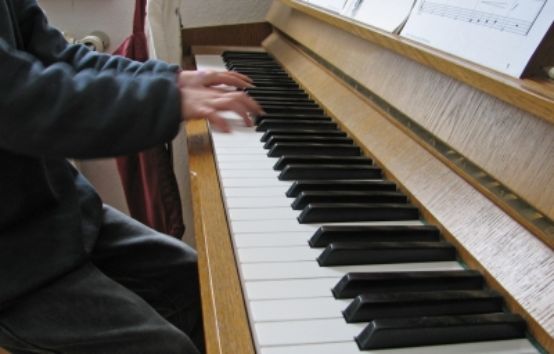
A new series of the Wiener Urtext Edition closes the gap between working through a piano school and further literature.

Photo: Rainer Sturm, pixelio.de,SMPV

Starting from a playing level that is comparable to pieces such as Bach's Minuet in G (BWV Anh. 116), Mozart's Minuet in F (KV 5) or Schumann's Wild rider (op. 68/8) is outlined for each volume of the Urtext Primo series Works by three different composers have been selected with the aim of offering piano students (or even adult returners) a range of repertoire pieces with which they can develop their technical and musical skills.

The range of difficulty of the pieces is relatively narrow so that the volume can be used continuously over a period of around two years. The repertoire selection includes pieces from the classical teaching canon as well as lesser-known works whose relevance for piano lessons is by no means diminished.

The Urtext Primo volumes are published in the internationally recognized standard of the Wiener Urtext editions. The explanatory notes included with each booklet are intended to help deepen your knowledge of musical style, music history and piano playing. A repertoire table at the end of each volume gives a rough overview of the difficulty of the pieces.

Published so far:

  • Volume 1: Bach - Händel - Scarlatti, UT 52001
  • Volume 2: Haydn - Mozart - Cimarosa, UT 52003

In preparation:

  • Volume 3: Beethoven - Schubert - Hummel, UT 52005 (to be published in fall 2013)
  • Volume 4: Schumann - Brahms - Kirchner, UT 52007 (to be published in spring 2014)

René Munz, Head of the Cultural Office of the Canton of Thurgau, is stepping down at the end of September 2013. He will move to the Canton of Zurich's Department of Culture, where he will take over the Cultural Policy Unit in the Canton's Department of Culture.

Munz has worked as head of the Thurgau Culture Office since September 2002. As part of the reorganization of the culture division at the Department of Education and Culture, the culture department was upgraded to a cultural office at the time by combining five cantonal museums and cultural promotion in this office.

The canton writes that René Munz has done important groundwork in this regard, creating and further developing the practical guidelines for cultural promotion and cultivation with the Thurgau Cultural Concept and implementing various projects.

In the fall, Munz will take over the cantonal staff position for cultural policy in the Canton of Zurich's Department of Culture and will also become deputy head of the Department of Culture. The position will be advertised shortly.
 

New violin sonatas sometimes jazzy, sometimes spherical

Nothing is more classical than the combination of violin and piano. But the repertoire here is unusual.

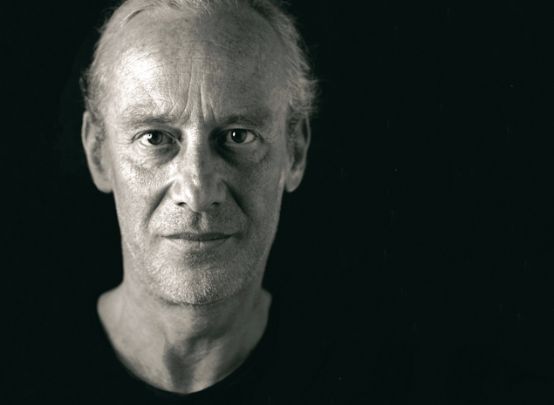
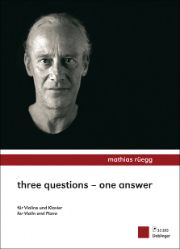
Mathias Rüegg. Excerpt from the magazine cover

When one picks up the violin to sight-read new music, one is extremely pleased when difficult-looking music flows well in the hand and a logical structure becomes visible when looking over the score; this happened to me conspicuously in the works of Rüegg and Wolfgang.

Mathias Rüegg, the Swiss jazz arranger, was the founder and director of the Vienna Art Orchestra. He now teaches at the music academies in Vienna and Zurich and is increasingly composing chamber music. Here he wrote a three-movement jazz sonata lasting a quarter of an hour. Ten increasing variations on a harmonic scheme are followed by a thoughtful blues with an impressionistic gesture, which is rhythmically framed in between. The motorically fast finale with interesting time changes and shifts in accent is concluded by a six times eight-bar "turn around", which looks like a chaconne. In the Listen in one is briefly reminded of Grappelli here and there, but this only points to the roots of this characterful, dynamically differentiated music, which is exciting to play for both instruments.

Image

Mathias Rüegg, three questions - one answer, for violin and piano, D 33205, € 24.95, Doblinger, Vienna 2011

Californian Gernot Wolfgang has developed from computer programmer to jazz guitarist, film composer and creator of new music. He is inspired by nature, which he fights to preserve. His Rolling Hills & Jagged Ridges is expressively captured with spherical sounds, but within a tonal framework. A rhythmic, repetitive echo duet and angular ridges emerging from the fog are presented with virtuosity. A contemplative violin cadenza with wandering pizzicati leads into misty motifs in the piano. The spikes emerge once again in dramatically underscored unison, then the piano mist calms the violin to floating harmonics until the twelve-minute piece ends with a rapid ascent. Audio sample

Image

Gernot Wolfgang, Rolling Hills & Jagged Ridges, for Violin and Piano D 19970, € 19,90, Doblinger, Vienna 2011

Technical building blocks

A rich compilation by Bruno Schneider for all those who want to achieve and maintain a high technical level.

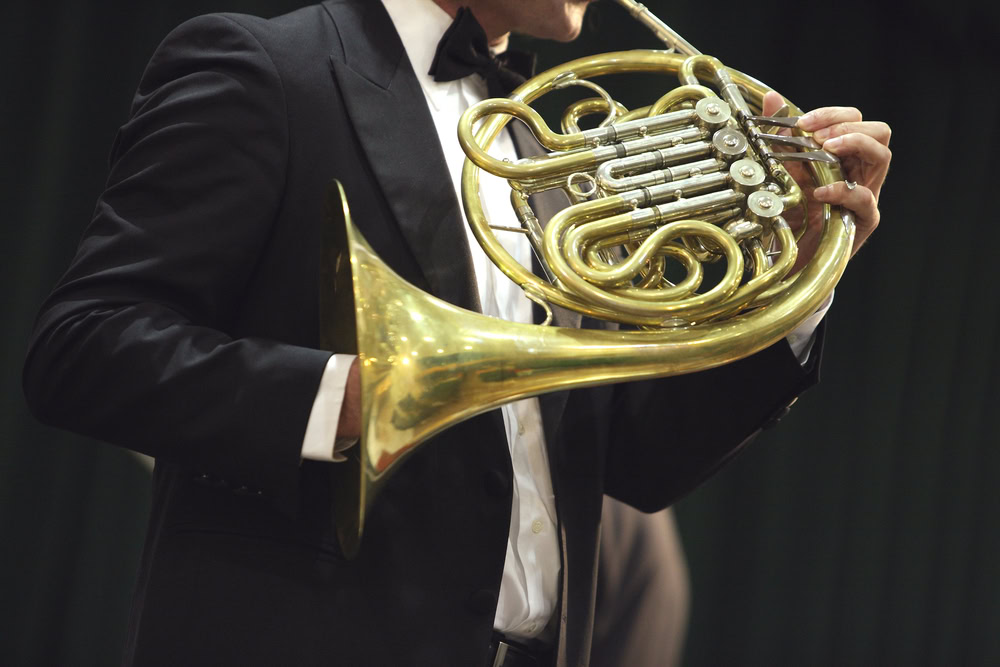
Photo: stokkete/depositphotos.com

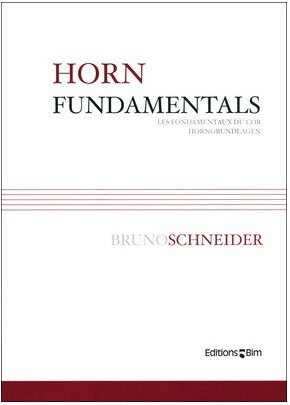
Horn Fundamentals is the title of a new booklet written by the distinguished soloist and horn professor Bruno Schneider (Musikhochschule Freiburg im Breisgau, Haute Ecole de Musique Genève). During his many years of activity, he has compiled his own exercises in order to achieve a high technical level and to consolidate the applied ones, without completely renouncing models (Philip Farkas: The Art of French Horn Playing; Karl Bielig: Compendium of horn technology). A legacy with attention to detail. For horn students who want to achieve something. Bruno Schneider, Horn Fundamentals, Horn Basics, Etudes, CO89, Fr. 29.00, Edition Bim, Vuarmarens 2012

Instructive and entertaining

Easily comprehensible, but not to be underestimated pieces for two young bassoon players - and an encore with double bass.

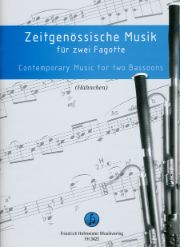
Excerpt from the cover of the issue of Hähnchen

The bassoon still plays a somewhat subordinate role in modern music compared to the clarinet, flute or oboe. To remedy this, young people should come into contact with contemporary techniques, and this is precisely the aim of this collection of bassoon duos for teaching.

Contemporary techniques covered include multiphonics, quarter tones, slap tones, glissandi, key noises, flutter tonguing and the inclusion of the voice. Where altered fingerings are necessary, these are always found directly in the musical text, making fingering charts or explanations of symbols superfluous. Stylistically, the pieces are within a comprehensible and uncomplicated framework; they are often tonal, but also dance-like or song-like. The difficulty of most of the pieces should not be underestimated, although it is not necessarily the contemporary techniques, but rather the basic playing and fitness requirements that speak against confronting too young children with the pieces, although some of the work titles such as Big snake in a tree and its supposed prey point to young players.

No fewer than 23 pieces by eight composers are included in the collection, and some of them are undoubtedly interesting up to university level. Musically impressive are in particular the Five allegories by Friedrich Schenker and A touch of blues by Hermann Keller.Image

Contemporary music for two bassoons (pieces by Bernd Casper, Georg Katzer, Hermann Keller, Friedrich Schenker, Mia Schmidt, Takehito Shimazu, H. Johannes Wallmann, Helga Warner-Buhlmann), edited by Dieter Hähnchen, FH 3423, € 24.80, Friedrich Hofmeister, Leipzig 2012

A charming encore for bassoon and double bass is Low Agenda by Gernot Wolfgang. Connected to the jazz and rock idiom, both instruments show themselves in a varied and colorful light. Imaginative interpreters will want to enrich the solos even more and know how to create free spaces for themselves, but even a note-for-note rendition will have a great effect!Image

Gernot Wolfgang, Low Agenda, for bassoon and double bass, score and parts, D 06714, € 16.95, Doblinger, Vienna 2011

Dedications

A personal network of relationships spans between Debussy and Stravinsky, Bernstein and Shapero.


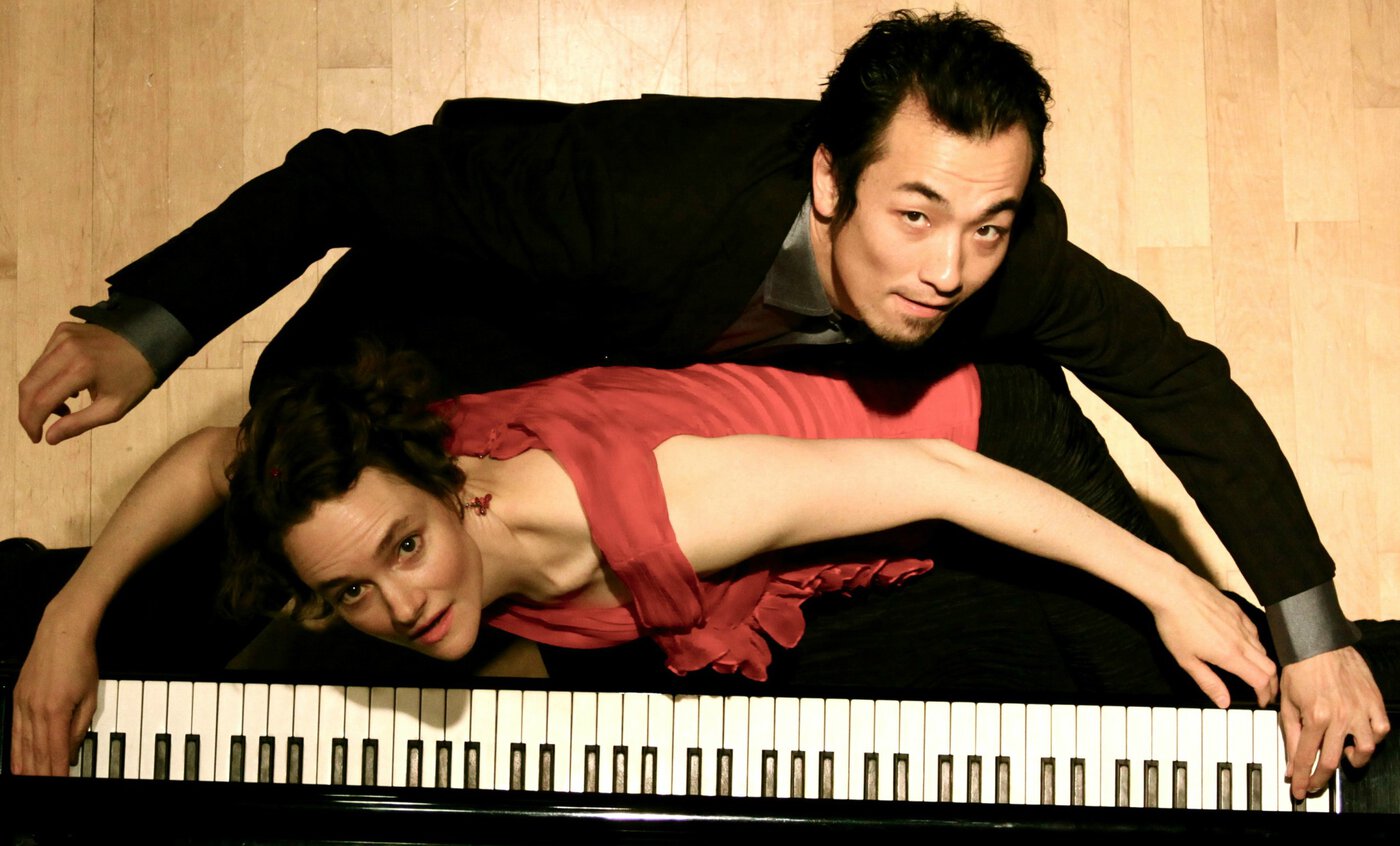
Eva-Maria Zimmermann and Keisuke Nakagoshi. Photo: zVg

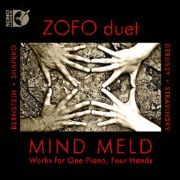
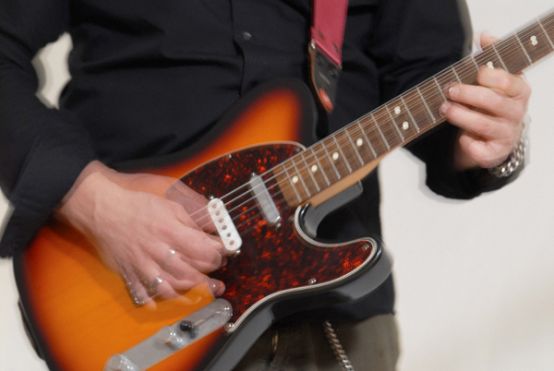
Designed for growth, the Mind Meld The CD by the Swiss-Japanese piano duo ZOFO (Eva-Maria Zimmermann / Keisuke Nakagoshi) culminates in the captivating rendition of Stravinsky's epochal ballet Le Sacre du Printemps as a glittering finale. The duo also plays the many ostinati with the same consistency with which they sustain the very different tempi. In the sevenths of the Rondes printanières unlike other interpreters, it persistently refrains from expressivity by following the musical text exactly. On the other hand, in this new recording the chord blocks that follow do not sound shrill, but unusually muffled, despite the striking accentuations.

The depictions of the other related works have also been thoroughly thought through and are based on a precise concept. The uniformity of design is no less impressive in the Six Épigraphes antiques of Claude Debussy than in the two preceding American compositions.

Provides the Candide Overture by Leonard Bernstein in an arrangement by Charlie Harmon is a spirited homage to Voltaire and the brilliant sonata by Harold Shapero is dedicated to his friend Bernstein, mutual dedications by Debussy and Stravinsky also play an interesting biographical role. While the French composer titled the third movement of his suite 'En blanc et noir' (1915) for two pianos "à mon ami Igor Stravinsky" - Debussy dedicated the first movement to the publisher of the Sacre du Printempsthe conductor Serge Koussevitsky -, the Russian composed his Symphonies d'instruments à vent (1920) "à la mémoire de Claude-Achille Debussy".
Surprisingly, Stravinsky's momentous ballet is not dedicated to a musician, but to the painter and stage designer Nicolas Roerich, who, after his participation in the premiere of the Sacre was hardly noticeable any more.

Image

Mind Meld. Works for One Piano, Four Hands. Bernstein, Shapero, Debussy, Stravinsky. ZOFO duet (Eva-Maria Zimmermann, Keisuke Nakagoshi). Sono Luminus DSL-92151

Scholarships to be awarded

The Freiburg University of Art, Design and Popular Music is awarding three partial scholarships for the 2013/2014 academic year. The application deadline is June 27.

Photo: Kaspar Ruoff

Those who register with the University of Art, Design and Popular Music (hKDM) in Freiburg would like to apply for one of the three partial scholarships (50%), studies in the main subject guitar, piano, saxophone, trumpet or tuba and takes part in the regular auditions in the summer for the 2013/2014 academic year. The three applicants who perform best in these entrance examinations will have 50% of their tuition fees waived for the entire 2013/2014 academic year.

The auditions (entrance examinations) for the "Popular Music" course at the hKDM take place

live in Freiburg:
Friday, July 12, 2013
Saturday, July 13, 2013
Sunday, July 14, 2013

online:
Friday, July 19, 2013
Saturday, July 20, 2013

The registration deadline for the live and online entrance exams is Thursday, June 27, 2013.
 

GNOM turns 20 years old

GNOM, the Group for New Music Baden, is celebrating its anniversary in Baden from June 5 to 9 with a sound installation, concerts and a podium.

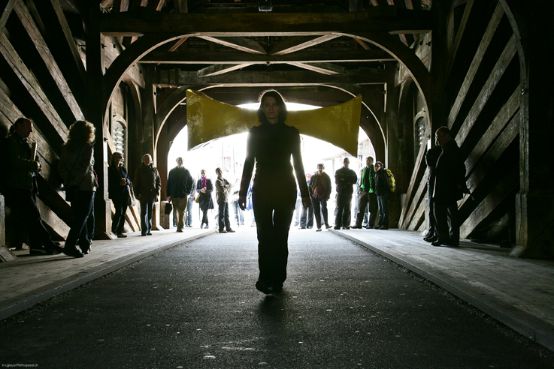
"Pegelstand I" 2010 (Baden wooden bridge), Cathy Van Eck. Photo: Christian Glaus

The first concert of GNOM began on October 17, 1993 at 12 noon and lasted five hours in the historical museum in Baden. The group returns here with the anniversary program "Audibly visible"which was designed by former active GNOM members. Seven concerts are framed by a sound installation by Stephan Rinderknecht.

While a panel discussion will reflect on the GNOM's work on June 9, the GNOM archive will be officially handed over to the Baden City Archives at a ceremony in the Baden Historical Museum on June 8 at 4 pm.

GNOM portrait in SMZ 6/2011

11th Jungfrau Music Festival

From July 6 to 13, wind music formations from all over the world, including the Simón Bolívar Symphonic Youth Wind Orchestra from Venezuela, will meet in Bern, Thun and Interlaken. A master class will be offered for young conductors.

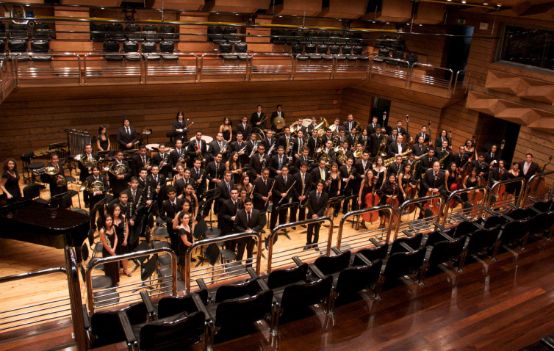
Banda Sinfónica Juvenil Simón Bolívar

From Switzerland, this year's Jungfrau Music Festival the Swiss Army Big Band, the Swiss Army Brass Bandthe Bernese Oberland Brass Band, the Bern Symphony Wind Orchestra and the National youth wind orchestra to be heard.

Alongside many other top international orchestras, the Banda Sinfónica Juvenil Simón Bolívar (BSJSB) under the direction of Sergio Rosales. As the Jungfrau Music Festival writes, the Simón Bolívar Symphonic Youth Wind Orchestra was founded in 2005 on the initiative of Jesús Ignacio Pérez Perazzo and Valdemar Rodríguez. The two recognized the need for a firmly established wind ensemble recruited from the ranks of El Sistema. El Sistema is the national system of children's/youth orchestras and choirs in Venezuela. The first official concert of the BSJSB took place in 2006. The Banda is the first and most important ensemble with this particular instrumentation (woodwinds, brass, percussion, cellos and double basses) that became part of El Sistema's academic program. The members, aged between 12 and 30, come from all over Latin America. El Sistema follows the proven model of a music education program that not only produces great musicians, but can also dramatically improve the conditions of thousands of children living in poverty.

The master class from July 8 to 12 for 12 active participants will be led by Douglas Bostock. The course offers listeners suggestions for their own work.
 

Boris Brüderlin is the new representative for cultural projects in the areas of dance, theater and youth culture in the Basel-Stadt Department of Culture. Among other things, he will develop a concept to promote youth culture.

Born in Basel in 1979, Brüderlin has been managing director of Treibstoff Theatertage in Basel since 2010 and has worked as a dramaturge and producer since 2009. In cooperation with institutions such as the Kaserne Basel, the Theater Roxy, the Fabriktheater Rote Fabrik Zurich and the Theaterhaus Gessnerallee Zurich, he is jointly responsible for the production of various theater, music theater and dance productions.

According to the canton's official announcement, Brüderlin began his career in 1998 as an actor at the Junges Theater Basel. He studied theater, film and literature at the universities of Lausanne, Bern and Berlin as well as dramaturgy in Leipzig. Between 2002 and 2008, he worked as an assistant director and dramaturge.

As cultural projects officer, Brüderlin is responsible for the funding areas of dance, theater and youth culture as well as for related festivals. He will sit on the Dance/Theater BS/BL expert committee and develop a concept for the promotion of youth culture.
 

The State Council of the Canton of Valais has awarded the 2013 cultural prizes: This year's culture prize goes to the musician Javier Hagen. One sponsorship prize each goes to the musician Sarah Brunner, the video artist Samuel Dématraz and the actor Léonard Bertholet.

Born in Barcelona in 1971, Javier Hagen has been director of the contemporary music festival forum: wallis since 2006 and is one of the co-founders of the Valais section of the International Society for Contemporary Music. He studied classical singing, song and medieval and baroque music in Germany, Italy and Switzerland.

Sarah Brunner was born in Eischoll in 1984 and studied organ with Monika Henking as well as church music and choir conducting with Ulrike Grosch, Stefan Albrecht and Pascal Mayer at Lucerne University of Applied Sciences and Arts. She has been a church musician in Visp and Zermatt since 2012.

The Valais Culture Prize, which has been awarded since 1980, is endowed with CHF 20,000. Established in 1982, the prize of 10,000 francs is awarded to three people at a time and is intended both as recognition for their work and as an incentive to continue on their chosen path.

Since 2011, a special prize, also worth CHF 10,000, has been awarded to a person or group that is "committed to the development of Valais culture away from the stage". This year it goes to the Oberwalliser Kellertheater.

Doubter not Värslischmied

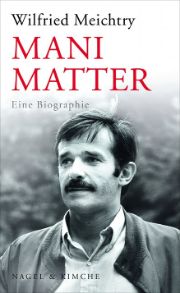
A biography reveals the background and unknown sides of Mani Matter.

Mani Matter on the book cover

There they sit: high school students Phil, Bendicht, Alex and Dani in a pub in Bern's old town. Annoyed by the omnipresence of the troubadour in the German lectures and the seemingly political irrelevance of his lyrics, they have just decided to disrupt the next concert at the Bierhübeli. But when the time finally comes, everything turns out differently; the boys remain silent, somehow this man, standing there at the front with his guitar, has impressed them after all.

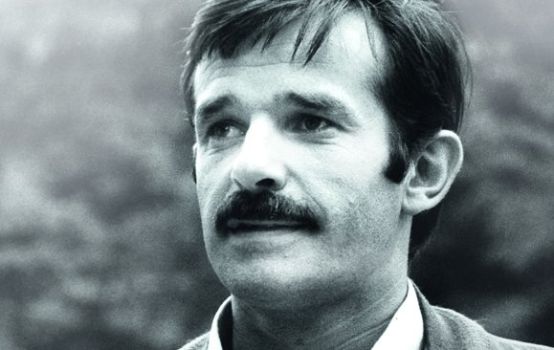
This scene is described by historian and writer Wilfried Meichtry in his newly published biography of Mani Matter (1936-1972). The Bernese troubadour was already an idol during his lifetime. Today, 40 years after his accidental death, his popularity remains unbroken: his songs have long since become popular. Until now, the person behind them, Mani Matter himself, was less well known.

Meichtry writes his way through Matter's life in exciting language and shows a man who was more than just a "Värslischmied": Family man, philosopher, politician, legal advisor, art lover, actor and much more. Better than in the exhibition Meichtry also designed for the Swiss National Museum, the author succeeds in bringing the reader closer to Matter as a person and also addressing unknown aspects: for example, the abandoned German studies course, the passionate chess and boules player, the bad loser.

While Matter's personality can be experienced in all its impressive versatility, the lyrics remain absent - a parallel to the Zurich exhibition, which also failed to show how ingenious and profound Mani Matter's chansons actually are. In his playful language, not a word is chosen at random; the lyrics are the product of intensive work. It is also a pity that Meichtry refrains from giving precise source details for the numerous quotations, thus making it impossible to contextualize them more precisely.

Nevertheless, the author describes a man who had doubts throughout his short life and was never sure whether he should become an academic or a chansonnier. A man who never loved the limelight. With this biography, Meichtry wants to prevent Mani Matter from being put on a pedestal. He succeeds in doing so in a convincing way.

Image

Wilfried Meichtry, Mani Matter. Eine Biographie, 308 p., CHF 34.90, Nagel & Kimche, Munich 2013, ISBN 978-3-312-00559-8

Compositions of a cosmopolitan

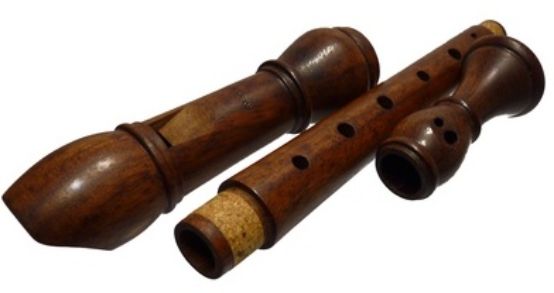
Baroque solo sonatas for treble recorder in Italian, French or completely free style by Carl Rosier.

Photo: Clam/pixelio.de

Carl, Charles, Natalis Carolus or Noël Charles - the names and name variations suggest it: Rosier(s), like most musicians of the time, was cosmopolitan, as the sparse known details about his life attest. Born in Liège in 1640, he was a violinist from 1663 and later deputy conductor in the service of the Cologne Elector Max Heinrich in Bonn. After the dissolution of the court chapel, Rosier settled in Cologne in 1675, returning to Bonn after a few years to take up a permanent position as cathedral conductor in Cologne in 1701, a post he held until his death in 1725. Prints and autographs, as well as concerts with his Collegium Musicum, prove that he was also active in the Netherlands.

The eight solo sonatas for treble recorder and basso continuo come from a collection of works for various instrumentations compiled by Charles Babell, which also includes sonatas, suites and duets by other composers such as Finger, Paisible, Courteville and Fiocco.

Rosier's sonatas consist of four to seven movements, in which all the Baroque styles of Europe at the time are combined: The motivic and harmonic relationship and thus the cyclical formation of the individual movements refers to the model of the Italian sonata da camera. Some sonatas seem more inspired by the French style and use typical suite movements - but there are also examples of completely free forms. Interestingly, there are also some references to Henry Purcell's semi-opera The Fairy Queen. Thus three of Purcell's arias reappear virtually unchanged as movements in Rosier's sonatas in G and C minor.

The present edition is in two volumes, each with four sonatas. There is a single flute and bass part, a score with both parts and one with the basso continuo omitted. Almost simultaneously with the publication of the German edition, David Lasocki published an electronic version of the parts and score in the USA, which is also based on the Babell copy: www.instantharmony.net

Image

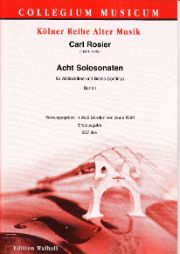
Carl Rosier, Eight solo sonatas for treble recorder and basso continuo, edited by Anne Kräft with a continuo realization by Thorsten Mann, first edition; vol. 1 (1-4), EW 855; vol. 2 (5-8), EW 884; € 21.50 each, Edition Walhall, Magdeburg 2012

No crisis in classical music

From 29 May to 1 June, 850 trade visitors, 500 companies and organizations from 40 countries met at the Vienna Museum of Applied Arts for Classical:NEXT, the trade forum for all sectors of the classical music industry.

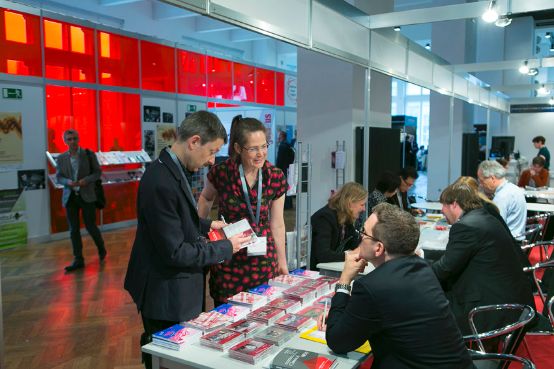
Lively attendance at the Swiss joint stand. Photo: Eric van Nieuwland

In his opening speech, guest speaker Daniel Hope emphasized that classical music is not in a crisis, but rather that this music has been ignored in recent decades. We need to act now, as young people have fewer and fewer opportunities to discover this music. In a so-called network meeting, the Swiss violinist and music manager Etienne Abelin, together with Marshall Marcus from England, presented the Sistema Europe various European offshoots of the Venezuelan El sistema. Switzerland is also involved in the Sistema Europe with the Superar Suisse Association.

The Fondation Suisa, together with Pro Helvetia and the Swiss Performers' Cooperative, organized a joint Swiss stand in which the following organizations participated: classYcal-new ways in classical music, Disques VDE-GALLO, Guild GmbH, Lucerne Festival, Musiques Suisse of the Migros-Genossenschafts-Bund, Schweizerischer Tonkünstlerverein and Schweizer Musikzeitung.

Classical:NEXT took place in Munich for the first time in 2012. This year, with the second edition in Vienna, it has established itself as an important and growing international event for the classical music industry. 120 exhibitors presented their offerings, while 40 international experts took part in conferences, discussion panels and presentations and 100 artists performed at various concerts. Video showcases and film screenings rounded off the program.

It was initiated Classical:NEXT from CLASS-Association of Classical Independents in Germany e.V. The trade fair is organized by piranha womex AG, which has been staging the annual music trade fair WOMEX - the world music expo - since 1994.
 

get_footer();