The Klassik Stiftung Weimar has concluded another case of cultural property seized as a result of Nazi persecution. Two music manuscripts by Franz Liszt have been restituted to the rightful heirs.
Music newspaper editorial office
(translation: AI)
- 01 Feb 2021
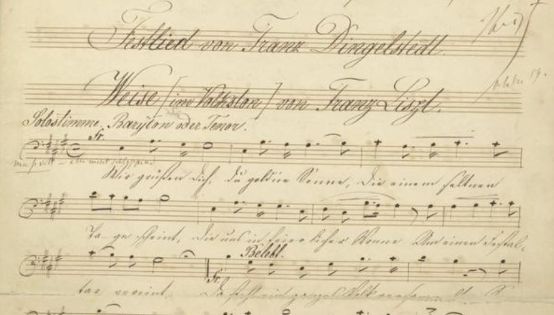
Liszt, manuscript festive song for Schiller's jubilee celebration (Image: Klassik Stiftung Weimar)
Until 1937, the manuscripts belonged to Emma Frankenbacher, a citizen of Jewish origin, whose legal successor the Foundation was able to locate in Argentina. She had been forced to sell the manuscripts in 1937 and died in Theresienstadt after being deported in 1942. After restitution, the Klassik Stiftung Weimar acquired the two manuscripts with the support of the Thuringian State Chancellery and the Society of Friends of the Goethe and Schiller Archive. The manuscripts are now legally part of the Liszt collection of the Goethe and Schiller Archive.
The music manuscripts include a copy of the score of his 1st Piano Concerto in E flat major, extensively revised by Liszt. It is regarded as the final version of the composition and served as the engraver's model for the first edition (Vienna, Haslinger 1857). The second manuscript - a copy of the "Festlied zu Schillers Jubelfeier" - contains a dedication in Liszt's own hand.
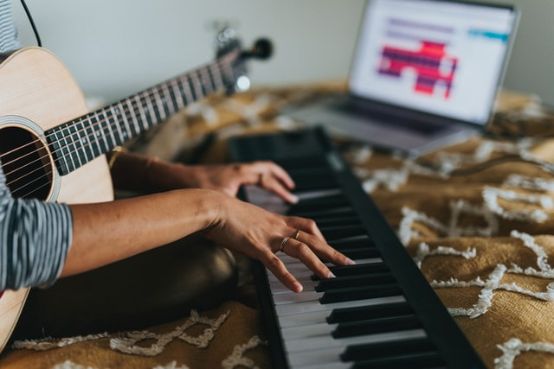
As part of a research project, the Swiss Music Schools Association and the Lucerne School of Music have examined the latest developments in the field of net-based instrumental and vocal teaching.
PM/SMZ_WB
(translation: AI)
- 29 Jan 2021
Photo: Soundtrap/unsplash.com (see below)
According to a newsletter from the Swiss Music Schools Association (VMS), music teachers were surveyed in a sub-project in August and September 2020 about teaching during the lockdown. 1462 music teachers took part in the survey.
The initial evaluations show that only 14 percent of large group lessons were fully replaced by a form of distance learning during the lockdown, which is not surprising given the technological limitations of the interaction (latency of data transmission).
However, 80 percent of one-to-one lessons for children and young people were replaced in full by distance learning, 17 percent to a reduced extent and only 3 percent of lessons took place to a greatly reduced extent or not at all.
In turn, distance learning was well received by the learners. Around 80 percent of music teachers stated that over three quarters of learners regularly took part in distance learning. According to the music teachers, 44 percent of learners who took individual lessons practiced more than at normal times. However, the practice times of learners in group courses were significantly lower than before the pandemic-related restrictions due to the high number of canceled lessons.
Culture is one of the biggest losers in the pandemic
According to a study by the consulting firm EY, sales in the cultural sector have plummeted by a third due to the coronavirus, and in music by as much as 76%. The slump is even greater than in tourism and the automotive industry.
Music newspaper editorial office
(translation: AI)
- 29 Jan 2021
Photo: Markus Spiske/unsplash.com (see below)
With a 31% drop in turnover, the cultural and creative industries are one of the biggest losers in Europe. Only air traffic has been hit even harder. Performing arts (down 90%) and music (down 76%) are the hardest hit; visual arts, architecture, advertising, books, press and audiovisual fell by 20% to 40% compared to 2019. Central and Eastern Europe were hit the hardest (minus 36% in Lithuania to minus 44% in Bulgaria and Estonia).
EY sees three challenges: Firstly, massive public funding and promotion of private investment in cultural and creative enterprises is now required. Secondly, the promotion of the EU's diversified cultural offer must be stimulated by a solid legal framework. Thirdly, the potential of the cultural and creative industries must be harnessed to drive forward Europe's social and ecological transformation.
According to an announcement by the online magazine Slipped Disc, Michael Fichtenholz will step down as Zurich Opera Director at the end of the season.
Music newspaper editorial office
(translation: AI)
- 27. Jan 2021
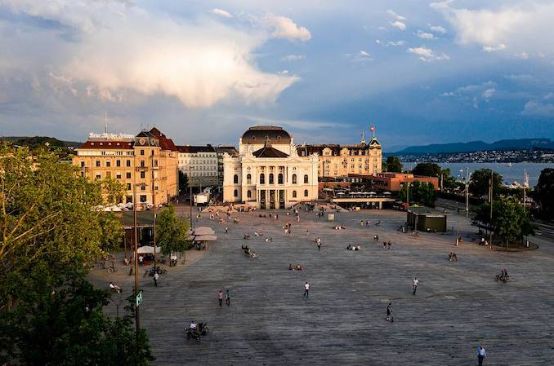
Photo: Andrin Fretz/Opernhaus Zurich
Born in Moscow in 1978, Fichtenholz succeeded Sophie de Lint in Zurich. He was previously opera director at the Badisches Staatstheater Karlsruhe and artistic director of the Karlsruhe International Handel Festival. Slipped Disc assumes that Fichtenholz has not found the connection to younger members of the ensemble.
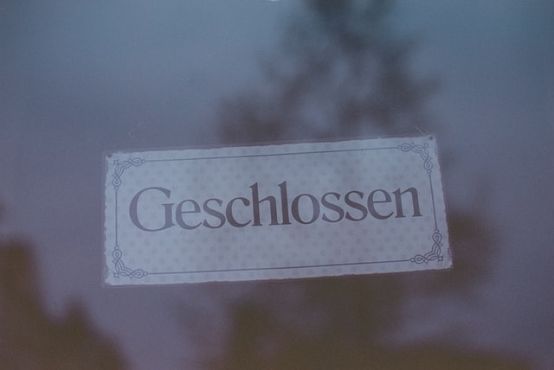
Zurich Opera House is currently effectively closed. Due to the coronavirus crisis, there will be no more performances with an audience until at least the end of February 2021. Instead, it is making some productions, including Bellini's "I Capuleti e I Montecchi" and Gluck's "Orphée et Euridice", available online.
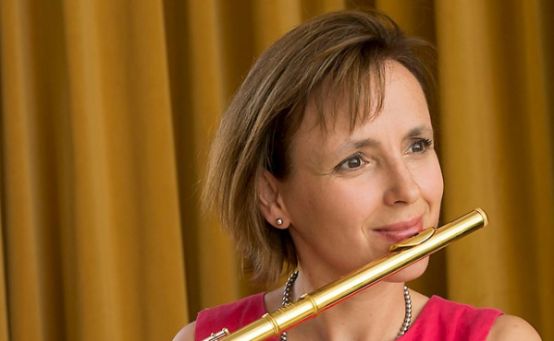
The Zurich University of the Arts (ZHdK) is pleased to announce Sabine Morel Poyé in her new position as a major flute lecturer. Until now, she has held a minor in orchestral positions. She is solo flutist at the Tonhalle Zurich.
PM/SMZ_WB
(translation: AI)
- 26 Jan 2021
Sabine Morel Poyé (Image: zVg)
Sabine Poyé Morel was born in Tours, France, and studied flute with Isabelle Ory-Grangeponte and at the Conservatoire National Supérieur de Musique de Paris in the class of Pierre-Yves Artaud.
Poyé Morel has won flute competitions in Bucharest and Bayreuth and was a prizewinner at the Syrinx International Competition in Riva del Garda and Geneva. She was a member of the Orchestre Français des Jeunes under the direction of Marek Janowski and was appointed solo flutist of the Orchestre de l'Opéra national de Lorraine in 1998. She has been principal flute of the Tonhalle Orchestra in Zurich since 2002.
Music must take place
The 7th Mizmorim Festival was dedicated to Czech music under the title "Bohemian Rhapsody". The event was streamed on a greatly reduced scale.
Niklaus Rüegg
(translation: AI)
- 26 Jan 2021
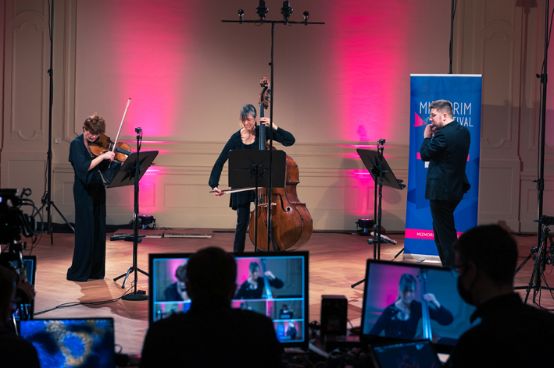
Performance of Erwin Schulhoff's "Concertino". Photo: Benedek Horváth / Mizmorim Festival
When it became clear at the beginning of December that concerts with an audience would not be allowed to take place until further notice, the organizers quickly decided on a livestream. Postponing was not an option. Nobody wanted to know about canceling either, because that would have meant months of intensive preparation work would have been in vain. "Music has to happen," emphasized artistic director Michal Lewkowicz, demanding a great deal of flexibility from the organization team and the performers at short notice. Of course, the planned program could not be carried out one-to-one. Many musicians were unable to travel due to quarantine regulations or illness. Out of seven concerts and two family performances, four concerts remained, all of which took place on January 24, and the audience discussion was postponed. The programs had to be rearranged and several works by Dvořák, Janáček, Martinů, Ullmann, Pavel Haas, Gideon Klein, Marcelo Nisinman and Krištof Mařatka had to be cancelled altogether. Osvaldo Golijov's new additions to the program are Lullaby & Doina for flute, clarinet, violin, viola, violoncello and double bass - a rewarding re-listening to this original composer, whose The Dreams and Prayers of Isaac the Blindfor clarinet and string quartet (Festival 2015) and song cycle Ayre(CH premiere, 2018 festival) are still vividly remembered. There was also Janáček's Sonata for Violin and Piano, which was one of the highlights of the festival in the interpretation by Ilya Gringolts and Benedek Horváth.
Stream with stuttering
The picture direction was one of the plus points of the broadcast. The sound quality was also flawless, but there was a strange feeling of sterility and artificiality, probably due to the lack of ambient noise. It would have been nice to do without the forced bows at the end of the performances. The writer was annoyed by the frequent "loading jams" caused by an overloaded Internet, which significantly reduced the listening pleasure (it is advisable to listen to the concerts later, which usually alleviates the problem).
Despite everything, the festival lived up to its principle of providing a diverse program accessible to all, even under these difficult conditions. Or as Michal Lewkowicz puts it: "There are people who come to the concert because they like to hear great music; others because they like to hear great artists. Then there are people who are really interested in these key topics. I want to offer all of that." The festival is not limited to Jewish works. The current program naturally includes the Czech composers Janáček and Dvořák. There are also no stylistic or chronological blinkers. What is played is what belongs to the theme and meets high quality standards.
Continuity and quality
Presenter Moritz Weber was able to announce some new artists and many familiar ones from previous festivals and present lots of informative bonus material.
Menachem Wiesenberg suggests in his Klezmer Suite a bridge between folk klezmer and classical music. The world premiere of the new version for clarinet, viola, double bass and piano was performed under the direction of the stupendous clarinettist Chen Halevi. In the three Yiddish songs by Viktor Ullmann, composed in 1944 in the Theresienstadt concentration camp, soprano Aurea Marston impressively succeeded in placing her voluminous voice at the service of the folk songs and at the same time combining them with emotional depth. Cornelia Lenzin lent her accompaniment a sensitive profile. The two musicians also left a lasting impression in the two complex songs by the writer and musician Max Brod, Death and paradise based on texts by his friend Franz Kafka, made a strong impression. The winner of the second composition competition, Eleni Ralli, outlines in her 5 Mysterious Scenes for solo violin Character types in the field of tension between stability and instability. Ilya Gringolts unfolded a highly differentiated sound spectrum. The Concertino for flute (Matvey Demin), viola (Silvia Simionescu) and double bass (Ute Grewel) by Erwin Schulhoff turned into a virtuoso and lively firework display. For the performance of Antonín Dvořák's Nocturne B major op. 40 for string orchestra, Ilya Gringolts brought some of his students on stage - the promotion of young talent is also part of the festival concept.
Last but not least, an exquisite jazz concert was on the program. The Basel-based Vein Trio combined Bohemian sounds with their personal musical language. Themes, for example from Dvořák's 9th Symphony and Smetana's piano piece Pensée fugitive as well as, appropriately, from the Bohemian Rhapsody by the rock group Queen, were quoted, transferred into jazz harmonies and varied in skillful improvisations.
Mizmorim has defied Corona in 2021 and will hopefully be back in analog form in a year's time. The concerts are available until January 27 on www.mizmorimfestival.com to listen to.
The Head of the Federal Department of Home Affairs (FDHA), Alain Berset, met today with a delegation of representatives from various cultural sectors for an exchange of views.
Music newspaper editorial office
(translation: AI)
- 25 Jan 2021
Picture: S. Hofschlaeger/pixelio.de (see below)
According to the Federal Council's press release, the representatives of the cultural sector were able to inform the head of the FDHA about the specific problems facing the industry. The overall economic measures to cushion the economic consequences of the pandemic, which are also available to the cultural sector, were also discussed. In addition to the Federal Office of Culture (FOC) and the Pro Helvetia cultural foundation, the Federal Office of Public Health (FOPH), the Federal Social Insurance Office (FSIO) and the State Secretariat for Economic Affairs (SECO) were also represented at the discussion.
In the last revision of the Covid-19 Act in December 2020, the instrument of loss compensation, which was initially limited to cultural enterprises, was extended to cultural professionals. At the same time, the income and asset limits up to which cultural workers are entitled to emergency aid were increased. The extension of short-time work compensation to fixed-term employment contracts is another measure that is particularly important for the cultural sector.
According to the Federal Council, it is unfortunately not currently possible to give a binding outlook on the reopening of cultural institutions or the reopening of cultural events. A gradual reopening would depend on numerous variables, such as progress in vaccination coverage, the spread of the new Covid mutations and compliance with sanitary measures. The Federal Council is constantly evaluating the epidemiological situation. If restrictions can be relaxed in the coming months, this will probably be done in stages and depending on the type and size of the event.
The Federal Council has made funds amounting to CHF 280 million available to finance the package of measures to cushion the economic impact on the cultural sector in 2020. On September 25, Parliament approved the continuation of the measures under the Covid-19 Act and allocated funds of CHF 130 million for 2021.
According to the German Music Council, almost all coronavirus aid programs for culture in Germany are oversubscribed. It is calling for the funding to be increased and extended and for the aid to be adapted and made less bureaucratic.
Music newspaper editorial office
(translation: AI)
- 25 Jan 2021
Photo: Christa Dodoo/unsplash.com (see below)
According to the German Music Council, the renewed lockdown since the beginning of November 2020 has led to a standstill in the music industry, partly due to the de facto ban on work for numerous players in the music sector. After the bridging aid announced by the federal government initially excluded large parts of the professional music industry and solo freelancers in particular due to its strict application regulations, the federal government has now announced improvements.
This includes doubling the flat-rate operating allowance for solo freelancers as part of the new start aid to 50% of their 2019 reference turnover, as the German Music Council has also called for. However, the complex application process and delays in payment remain problematic. Of the estimated €15 billion in economic aid, only €1.2 billion has been paid out so far.
The criteria for Bridging Aid II were changed retroactively to the detriment of many companies, as EU state aid law had not been sufficiently taken into account in the original version. There may also be subsequent corrections for large companies for the November and December aid. These retroactive changes to the application regulations mean that some companies are threatened with substantial repayments.
Esther Roth has won the Beethoven 2020 composition competition organized by the Société Philharmonique de Bienne (SPB). She came out on top against 21 other applicants. The challenge: a string quartet that builds a bridge from Beethoven to her own compositional style.
Music newspaper editorial office
(translation: AI)
- 21 Jan 2021
Esther Roth. Photo: zVg
Esther Roth was born in Zurich in 1953 and now lives in Gontenschwil. She has not only made a name for herself as a musician and composer, but also as a performer, painter and fashion designer. According to the press release, her composition with the simple title "String Quartet" convinced the jury "with its personal language and high level of craftsmanship". The balance created between the compositional idea, the reference to Beethoven, the chosen form and its development were expressed "in delicate and restrained poetry".
The jury consisted of Michael Jarrell, Beat Furrer and Giorgio Battistelli. In addition to Roth's work, they judged the composition "Beethoven for ever" by composer and conductor Michel Tabachnik to be particularly noteworthy. Esther Roth's work will be premiered by the Sine Nomine Quartet on the occasion of the SPB concert on May 9, 2021 at 5.00 pm in the Pasquart Church.
Bagdasarjanz in America
The University of Missouri-Kansas City portrays the Swiss violinist Ursula Bagdasarjanz as part of its online project "Shining a light".
Music newspaper editorial office
(translation: AI)
- 21 Jan 2021
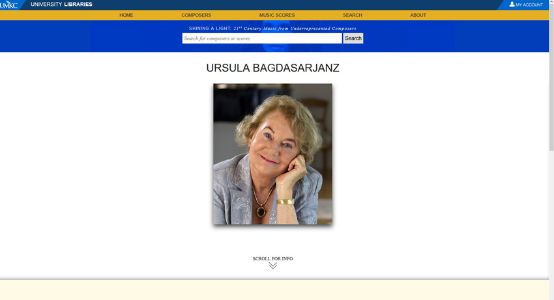
Image: Screenshot of the "Shining a light" platform
There are numerous radio recordings of Ursula Bagdasarjanz from the 1960s. She was "one of the best violinists of her time in Switzerland" and "did not need to shy away from comparison with the international competition of the time. She also rendered outstanding services to the Swiss contemporary heritage and left behind two remarkable textbooks on violin technique." (SMZ 10/2006, P. 44)
VDE Gallo also released these recordings in 2008. These include Bagdasarjanz's reference recordings of Othmar Schoeck's compositions for violin. Another CD was added in 2011. It includes her Sept poésies pour Violon et Piano to be heard. The violinist was later honored several times by Radio SRF and especially in America, which is documented on her website. Recently, the Sept poésies to the holdings of the University of Missouri-Kansas City Library. About the on the platform Shining a light: 21st Century Music from Underrepresented Composers published Short portrait of the violinist you can listen to the pieces, view a sheet music page and - probably particularly suitable for American music fans - borrow the sheet music.
On Shining a light the library portrays lesser-known composers and their music from the 21st century.
Jürg Odermatt and David Moore have captured their love-hate relationship with growing up in the provinces in a multimedia package.
Hanspeter Künzler (translation AI)
(translation: AI)
- 21 Jan 2021
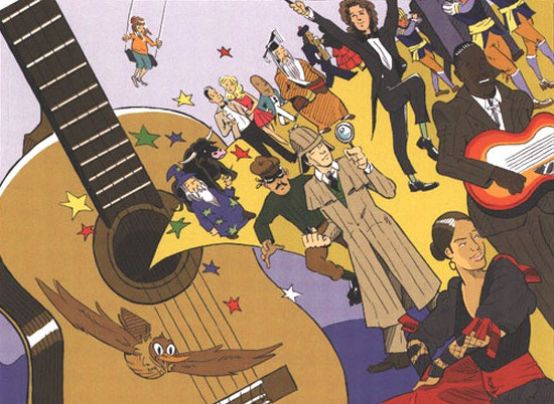
Cover image
So-called concept albums rarely do well. They often suffocate under the ballast of the ambitions of artists who suffer from an inflationary idea of the depth of their insights. But there are exceptions, and this multi-media concept album on the subject of "Neuhausen am Rheinfall" is a particularly fine exception. The project began with the idea for a casual collaboration between two regulars at Schaffhausen's TapTab music club, namely Jürg Odermatt from the guitar band Papst & Abstinenzler and David Moore aka electronica tinkerers Kneubühler and Herr Mehr. The result is a charming testimony to the love-hate relationship with growing up in the provinces in the form of a "package", which includes not only a sound carrier, but also a booklet with music, texts, photos, collages and drawings by artist friends.
As a sophisticated (Schaffhausen German) lyricist, Odermatt is interested in the details in passing, for example the local trolleybus route that starts at one cemetery and ends at another - and that the discotheque where he himself once dared to take his first dance steps was called Terminus. Other pieces are dedicated to an iron bridge or the last man to be hanged on the gallows on the hill, or the Hotel Schweizerhof, where Empress Sissi once stayed. The sounds that accompany these descriptions sound just as laconic and gently ironic as the project title. They consist of cinematic, beat- and bass-driven sound collages, which occasionally also feature a fierce disco groove or a catchy tune (Trolleybus, Chaltfront). The images, which are partly documentary and partly metaphorical, deepen our understanding of the subject matter - and Odermatt's essay Childhood in the backwater is the cherry on top of what is indeed a delicious coupe.
Frank Hill has revised his guitar school, three volumes are already available. A playbook has been published to accompany Norbert Roschauer's school.
Werner Joos
(translation: AI)
- Jan 20, 2021
Excerpt from the magazine cover by Frank Hill
It is not unusual for a guitar school to introduce the notes with the thumb touch first. Characteristic of the teaching work Guitar playing - Guitar games is that the thumb is always placed on the next string when playing, i.e. played apoyando. Frank Hill's revised and self-published new school impresses with a wealth of material based on this basic idea. After many melodies played on the low strings, the index, middle and ring fingers of the right hand also appear initially only in combination with the thumb. It remains strangely unclear where the alternating stroke between the index and middle fingers begins. The fact that there are practically no fingerings contributes to a dignified score. Numerous songs with written-out accompaniments can also be performed as chamber music and round off the first volume.
Volume II, which was published at the same time, offers another rich selection of attractive pieces with over 200 numbers and is also ideally suited for teaching teachers who do not share the author's technical concept. There is now a third part of the ambitious seven-volume textbook. It bears the subtitle "Music for every occasion - Solo".
The course is much more marketable Today we hit the strings! for children aged 6 and over by Norbert Roschauer. Anyone who opens the new, supplementary playbook and takes a closer look at the songs and pieces will be pleasantly surprised. Apoyando or not? - Such questions are not discussed here. But the songs are clearly set, with clear indications of accompanying rhythm and plucking patterns. They range from traditional German folk melodies and Christmas carols to folk, gospel and rock songs. However, anyone looking for classical guitar literature will be better served by other booklets.
Frank Hill: Gitarrespielen - Gitarrenspiele, new version with drawings by David Marian, 2 volumes, € 24.80 each, Musica Longa, Berlin
Norbert Roschauer: Today we're hitting the strings! Playbook for the bestselling method, book, CD and online files, art. no. 20278G, € 19.95, Alfred Music, Cologne
A discreet patron
Ulrike Thiele has compiled her research in the now open archives of the Musikkollegium and Werner Reinhart's private archive in her dissertation.
Verena Naegele
(translation: AI)
- Jan 20, 2021
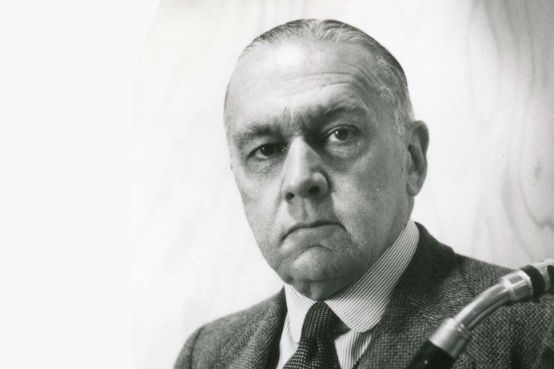
Werner Reinhart. Excerpt from the book cover
"Reinhart" is still a name that resonates throughout Switzerland thanks to the top-class art collection at Römerholz of Winterthur's Oskar Reinhart (1885-1965). The fact that his brother Werner (1884-1951) achieved equally important things in the field of music is now mainly known to insiders. Werner Reinhart was more active in the background, supporting the Musikkollegium Winterthur and bringing the important conductor Hermann Scherchen to the Eulachstadt. Thanks to them, the orchestra became a European center of contemporary music between 1923 and 1951.
Reinhart was an excellent amateur clarinettist who had a flair for new music and made it the focus of his work. This was discreet, however, and his financial involvement in performances was often not even mentioned. Thanks to Peter Sulzer's standard work 10 composers around Werner Reinhart (Volume I, 1979; Volume II, 1980), it has long been known that he, like Paul Sacher in Basel, supported and strengthened selected composers in Winterthur in the long term. These included Stravinsky, Krenek and Honegger, but also Hindemith and Richard Strauss. Strauss in particular, who was "associated" with the Hitler regime, repeatedly gave rise to conjecture in connection with Reinhart. Much was rumored, but nothing more was known.
Now the archives of the Musikkollegium and thus also Reinhart's private archives have been opened; the musicologist Ulrike Thiele was able to go through them and write her dissertation. The result has been published by Bärenreiter. The excitement was great, but certain expectations were not fulfilled. Thiele reports in a differentiated and always balanced manner. This applies, for example, to Reinhart's dealings with the Donaueschingen chamber music performances, which were brought into line after 1933 and which he still attended and supported in 1938.
Thiele's assessment of the famous case of the opportunistic Wilhelm Furtwängler, who conducted in Winterthur in February 1945 despite fierce protests, as a «demonstration of a music-political position», «which is based on the idea of a strict separability of art and politics», is somewhat perplexing. The same applies to the assessment of Reinhart's handling of Richard Strauss.
On the other hand, we are delighted by previously unknown patronage, such as the fact that De Falla's performance of Master Pedro's puppet show at the Marionette Theater Zurich in 1926 was made possible by Reinhart. Or how extensively he supported Clara Haskil over many years, both ideally and materially, thus ensuring her survival. Overall, Thiele's dissertation contains a wealth of information and sources on the history of music in Switzerland in the 20th century.
Ulrike Thiele: Patron and mentor. Werner Reinhart as a pioneer of musical modernism, Schweizer Beiträge zur Musikforschung, vol. 27, 332 p., € 39.95, Bärenreiter, Kassel 2019, ISBN 978-3-7618-7201-7
Historically informed organ practice
Matthias Schneider is a proven expert on Buxtehude and has now written a book on performance practice on the organ from the Middle Ages to Bach.
Bernhard Billeter
(translation: AI)
- Jan 20, 2021
Title page of Bach's little organ book. Source: wikimedia commons
There are plenty of specialist books for organists and organ lovers. But so far none that begins in the Middle Ages and leads up to J. S. Bach. None other than Matthias Schneider, lecturer at the University of Greifswald and director of relevant summer vacation courses there, has now written one. It is to be continued in a second volume into the 20th century. After an introduction on notation, historical fingerings etc., ten chapters are devoted to: Medieval-Renaissance, North German organ tablatures, Italian music, Sweelinck and his pupils, Samuel Scheidt, Dieterich Buxtehude, South German, Iberian and French organ music, and finally Bach.
All users of the book are recommended to use it as a reference work. Read about the composer whose work you are working on. One advantage of Schneider's method is that he writes extensively about a few selected works. What you learn here can be applied to other works of the same genre.
Dieterich Buxtehude
Buxtehude is one of Schneider's specialties; he is one of the two editors of the annual journal Buxtehude studies. Here he discusses the composer on 27 pages.
Buxtehude did not yet notate in our musical notation, but in letters (so-called tablature notation). Not a single autograph has survived. The completely unsatisfactory source situation has led to good and unauthorized music editors arriving at very different results. Among the unauthorized ones, Klaus Beckmann stands out negatively because of his so-called "internal textual criticism". Schneider omits a warning against these editions; the problems can be easily identified, for example, by comparing them with the latest and best edition by Michael Belotti (the latter, however, are extremely expensive).
The most common non-choral North German form is called a toccata or prelude (but not prelude and fugue, as was later the case with Bach and his contemporaries). It consists of a number of alternating free and fugal sections. Schneider thoroughly discusses a single example on almost 5 pages, namely the Toccata in d BuxWV 155 with regard to time signatures (tablature notation shows no bar lines), the distribution between pedal (rarely marked Ped.) and manual as well as between the two hands, the articulative separation of motifs, the freedom of the overlay and the freedom to insert ornaments of various kinds. The choice of registrations and manual changes is a matter of interpretation. Whether and in which parts of the form organo pleno is appropriate needs to be considered. The audience's ears should not be strained on instruments from the era of the "organ movement", which often sound excessively sharp and loud.
At the time of Buxtehude, his predecessors and successors, such forms were generally improvised in church services and evening music. Are written compositions therefore merely intended as models? What is refreshing in Schneider's account is the wide range of freedoms. We can see from this that he not only presents musicologically correct information, but also draws on his experience as a course leader.
Schneider presents examples of three ostinato forms and ostinato parts of toccatas for discussion. Choral works receive a similarly free treatment. - Schneider describes Buxtehude's main organ in St. Mary's Church in Lübeck, which was built in 1518, naturally tuned to mean tones. It was enlarged in 1561 and 1598. None other than the famous organ builder Friederich Stellwagen worked independently in Lübeck from 1634. His rebuilding work in St. Mary's Church lasted until 1641. Presumably in 1684, i.e. during Buxtehude's term of office, it was given a compromise tuning in the style of Werckmeister-III. This made keys with many accidentals possible in the first place. This helps to date entire compositions (e.g. Prelude in F sharp minor BuxWV 146) or parts of them (Prelude in C major BuxWV 137 with B major triads).
The following restrictions must be taken into account with historical fingerings: ae voice per hand, scale sections up and down, keys with little use of upper keys. They also do not apply to several polyphonic voices per hand. It should also be borne in mind that all teaching for keyboard instruments was given on the clavichord (with the exception of France's clavecinists in the 18th century). On the sensitive clavichord, each finger must press down the keys as close to the front as possible. This is also the purpose of keyboards in which the lower keys only extend 2 to 2.5 cm beyond the upper keys, compared to today's piano keyboards with 4.5 cm. Finally, in most countries, the "good" fingers 1 and 3 are emphasized relatively, the "bad" 2 and 4 relatively unaccented; in France this is reversed because of the "jeu inégal".
Johann Sebastian Bach
The author devotes 49 pages to him. It is worth reading Schneider's detailed description of the organs played by Bach during his lifetime and the registration instructions of the time. For example, he treats the indication "pro organo pleno" with care and differentiation: Not every prelude, not every fugue can tolerate loud sound. Schneider could have added fundamentally different acoustic conditions and the effects of maritime and continental climates: While large brick Gothic churches with long reverberation predominated in northern Germany, churches in Bach's native Thuringia had many wooden fittings, meaning short reverberation. This enabled Bach to compose rapid harmonic changes without becoming incomprehensible to the congregation. The climate had serious consequences for the organ dispositions: many reeds in northern Germany, only a few in central Germany and reed mixtures containing thirds as a substitute. The basic principle still applies today: play slowly with a long reverberation and use as few and as quiet stops as possible.
Many organs in Bach's time did not have a complete chromatic row in the great octave. Schneider discusses the so-called "short octave", the "broken octave" and the almost universally missing C sharp in all parts of his book. Only the castle church in Weimar had C sharp in the two manuals and in the pedal (contrary to the inaccurate account by Hermann J. Busch, corrected by Jean-Claude Zehnder). Bach stayed in Weimar for 6 months from January 1703, employed at court as "Laquey". In the penultimate piece of the series of partitas on Oh, what am I supposed to do sinner BWV 770 contains the treacherous C sharp once in the left hand. This allows the work to be dated to this period. Schneider deservedly discusses this delightfully youthful work in detail.
Many of Bach's organ works were written during his Weimar period: the Organ bookletthe 17 great chorale arrangements (slightly revised after 1740 as Leipzig chorales more than half of his preludes and fugues and the concerto arrangements after Vivaldi's L'estro armonico op. 3. each genre is discussed in detail in a few examples. Three preludes are missing: A major BWV 536, F minor BWV 534 and C minor BWV 546, for whose fugues Bach's authorship was doubted by David Humphreys and Peter Williams. However, I was able to prove that they were written long before and that the fugue in A major is to be played manually, with the pedal only being added shortly before the end (in: The Organ Yearbook 2008).
Schneider is certainly correct when he writes in the 6 chamber music trio sonatas BWV 525-530, composed for the eldest son Wilhelm Friedemann, that one stop per voice is sufficient, that the left hand can be fingered an octave lower with four feet for more comfortable playability and, above all, that a sixteenth foot is superfluous for the pedal. Schneider could have mentioned the cantatas with obbligato organ from the 1726/27 cycle, also written for Wilhelm Friedemann before he left Leipzig.
What should be added in a second edition of this seminal handbook: cases of temporelations in the "proportio sesquialtera". Here are just two impressive examples: Prelude and Fugue in A minor BWV 543. The crotchets of the measuredly paced prelude, which is laden with many dissonances, take up the same amount of time as three quavers in the alto fugue. The prelude and fugue in G major BWV 541 behave the other way round: whole bars in the same period as half bars in the fugue. Only in this way does the prelude with the Vivace marking develop the necessary effervescence, without a highly exaggerated tempo in the demanding fugue.
Matthias Schneider: Handbuch Aufführungspraxis Orgel, Volume 1: From the Middle Ages to Bach. 267 p. hardcover € 49.95, Bärenreiter, Kassel 2019, ISBN 978-3-7618-2338-5
The essence of fire
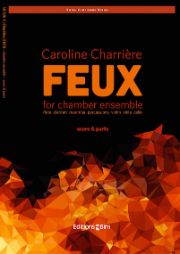
The chamber composition "Feux" by Caroline Charrière is an attractive piece for six or seven musicians with conductor.
The Swiss composer, flautist and conductor Caroline Charrière (1960-2018) lived and worked mainly in Fribourg after studying with Aurèle Nicolet, Jean Balissat and René Klopfenstein. She composed this twelve-minute work in 2015 Feux for flute, clarinet, marimba, percussion, violin, viola and violoncello. The composer was inspired by the various stages and aspects of fire: small flame, burgeoning fire, smouldering under the ashes, will-o'-the-wisp, heat, destruction, excitement, agony, purification, love, ashes and desolation, rebirth and joy. Here and there, a few notes of an Icelandic folk song are inserted. This programmatic concept becomes comprehensible to the listener, the piece is varied and exciting.
In terms of the cast Feux for example with Schönberg's Pierrot Lunaire and/or with the Folk Songs by Luciano Berio (the former requires a piano instead of percussion, the latter a harp, both additionally a singer or diseuse). Not to forget the conductor, who is needed for Feux needs in any case! Marimba and percussion can be played by the same person. The instruments all have easily realizable parts with versatile playing techniques. An attractive piece of new music by a Swiss composer who died all too soon!