Opening of the Tonhalle Zurich postponed

Construction work on the renovation of the Kongresshaus and Tonhalle continues. However, the coronavirus-related protective measures are delaying construction progress. The opening date of the Kongresshaus and Tonhalle has been postponed from March to September 2021 due to the increased schedule risk.

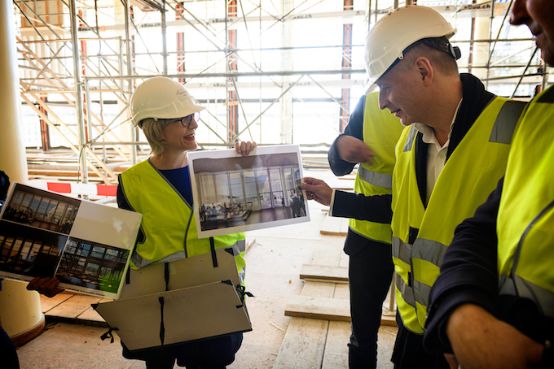
Architect Boesch and Paavo Jaervi during an earlier visit. Photo:Alberto Venzago

The measures imposed by the federal government and the extraordinary situation are having an impact on the construction process, writes the City of Zurich: the construction process and material deliveries are being affected. Sticking to the original opening date of March 2021 is too great a risk for the operators under the current circumstances.

The Tonhalle-Gesellschaft Zürich will perform the 2020/2021 season in the Tonhalle Maag instead of the Tonhalle am See and is planning accordingly.

It is currently difficult to estimate when the supply chains will stabilize and what long-term consequences the measures will have on the schedule. Not least because the federal government's easing of restrictions is being implemented gradually and with reservations. The client is still aiming for completion as quickly as possible.
 

Energies released by music

Researchers at the Fraunhofer Institute for Manufacturing Technology and Advanced Materials IFAM in Dresden have photographed the instruments of the Berlin Philharmonic Orchestra with a thermal imaging camera after they have been played.

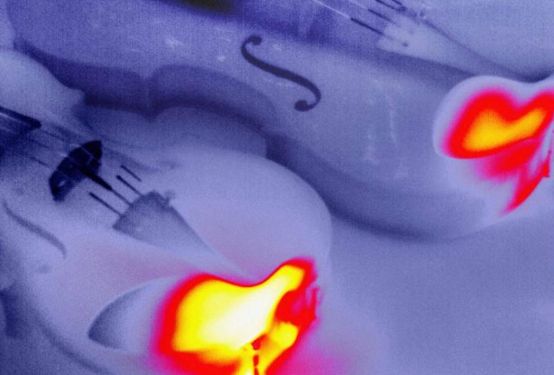
Thermal image of violins/violas (Image: Heribert Schindler Fraunhofer IFAM Dresden),SMPV

Using infrared radiation, the thermal imaging camera recorded the surface temperature of instruments before, during and after a concert. The resulting thermograms show impressively and sometimes surprisingly which temperatures are generated at which points on the instruments. These are caused by touch, pressure or breathing air. For example, by placing a violin on the shoulder, playing a timpani or holding the baton.

The scientists at Fraunhofer IFAM Dresden discovered that the instruments heat up by up to 10 degrees when they are played. Of course, this also depends on the material. Brass instruments absorb heat faster, but also release it more quickly. Woodwind instruments, on the other hand, absorb heat more slowly, but retain it for longer. For example, the mouthpiece of a trumpet heats up to 30 °C, while the fingerboard of a violin only heats up to 25 °C in relation to the room temperature of 20 °C.

More info:

Music in times of Corona

An international research project is investigating the effects of the coronavirus crisis on our musical behavior.

Photo: Fixelgraphy on Unsplash (see below),SMPV

April 20 marked the start of the online survey for the international research project "Music Use in the Time of Corona". Melanie Wald-Fuhrmann, Lauren Fink (both Frankfurt a.M.), Niels Chr. Hansen (Aarhus), Lindsay Warrenburg (Boston), Claire Howlin (Dublin) and Will Randall (Jyväskylä) want to document and evaluate the global developments.

Inspired by videos with hashtags such as #coronasongs, #quarantunes or #covidance, which are currently going viral, the researchers designed an online study that asks about personal music-making and listening to music before and during the crisis. In detail, the study looks at the technical formats used to listen to music, forms of making music alone and with others, situations in which people listen to music, as well as the reasons and motivations for listening to and making music.

More info:
http://ww2.unipark.de/uc/musicandcorona

Heri moves from Basel to Lucerne

Felix Heri will take over the management of the Lucerne Festival Academy and Alumni on June 1. Heri joins the festival from the Basel Sinfonietta, where he has worked since 2012 and has been Managing Director since 2013.

Felix Heri (Photo: Gregor_Brändli)

The Lucerne Festival Academy was founded in 2004 by Pierre Boulez and Festival Director Michael Haefliger. Every summer, young orchestral musicians, conductors and composers from all over the world work with renowned composers and conductors from the new music scene on contemporary scores and modern classics.

Composer Wolfgang Rihm has been Artistic Director of the Academy since 2016. The Lucerne Festival Alumni are a constantly growing network of over 1ʼ200 former Lucerne Festival Academy participants. They are not only present in Lucerne during the summer, but also act as international ambassadors for the Lucerne Festival and perform in various countries.

Felix Heri was born in Deitingen/Solothurn in 1986 and initially studied clarinet at the Lucerne University of Applied Sciences and Arts, before completing a degree in cultural management at the University of Basel.

"Close distance instead of cultural distancing"

The Swiss Arts Council Pro Helvetia has launched the "Close Distance" call. The aim is to encourage innovative productions that deal creatively with the current restrictions on social life. Applications can be submitted via myprohelvetia until further notice.

Excerpt from the signet of "Close Distance". Image: Mirjana Farkas/Pro Helvetia

The Covid-19 pandemic is an extraordinary and existential situation for many people and calls for new, creative solutions, writes Pro Helvetia. Artists and cultural practitioners should be able to continue working together despite mobility restrictions and find an audience willing to pay for their work despite assembly bans. "Cultural distancing" is not an option and culture is therefore called upon to deal with distance in an innovative way.

With the "Close Distance" call, Pro Helvetia wants to "encourage artists and cultural institutions to initiate forms of collaboration that are independent of mobility as well as new forms of publicity or to intensify existing formats - both within Switzerland and together with international partners. Of particular interest are experimental artistic collaborations, new formats for reflection, international networks and partnerships as well as platforms." We are looking for new formats "that will endure beyond the coronavirus crisis and no longer make physical mobility a mandatory prerequisite for cultural production and reception," says Seraina Rohrer, Head of Innovation & Society at Pro Helvetia. Both digital and analog projects are supported in all artistic fields/disciplines supported by Pro Helvetia.
 

Prerequisites

The project must have a connection to Switzerland, be of interest to the whole of Switzerland and pursue and implement a clear impact. It must convince through high cultural and technical originality and quality, be implemented according to professional standards and have the capacity to transcend artistic and social distances.

A maximum of CHF 50,000 can be allocated to a project. Applications are reviewed on an ongoing basis and a decision is made within three weeks. Further details on how to apply can be found at:

Sonata for horn and piano

Beethoven every Friday: to mark his 250th birthday, we take a look at one of his works every week. Today it's the Sonata for Horn and Piano in F major.

This sonata is still a challenge for every horn player today, regardless of which instrument is used. For example, the French horn's range of notes is limited to the natural harmonic series in terms of construction, which musically did not allow for a continuous diatonic or chromatic line. Before the later introduction of mechanical valves (of which Johannes Brahms was not a great friend, by the way), this limitation could only be largely overcome by the so-called plugging technique - a technique in which the hand in the funnel influences the pitch depending on its position and shape. Only a few outstanding musicians were able to adequately compensate for the characteristic change in sound (namely from radiantly open to tightly stopped). One of these was the Bohemian-born Wenzel Stich (1746-1803), who also called himself Giovanni Punto, italianizing his name. He had managed to persuade Beethoven to take part in an academy at the Hofburgtheater on April 18, 1800, but the agreed composition was only completed at the very last moment. In his probably anecdotally heightened recollection, Ferdinand Ries put it like this: "Beethoven almost always postponed the composition of most of the works he was supposed to have finished by a certain time until the last moment. ... Beethoven began the work the day before the performance and it was finished at the concert."

Whether for this reason the middle slow movement (Poco adagio, quasi andante) has only a comparatively small range and functions more as an introduction to the concluding rondo? The very beginning of the first movement shows that Beethoven deliberately played with the tonal possibilities of the horn and probably wrote the composition Stich/Punto to suit it. Here the horn opens with a signal from the natural tone row. However, it is inconceivable to take over the narrow-step vocal main theme on a valveless instrument without using a sophisticated stopping technique. For today's musicians, who usually play on the technically sophisticated and tonally balanced valve horn, this poses the challenge of keeping some of this expressive, differentiated tonality alive.


Listen in!


Solothurn aid for culture

The Solothurn cantonal government has decided to implement the Federal Council's Covid-19 Ordinance on Culture. With immediate effect, cultural enterprises and creative artists can apply to the canton for additional financial aid.

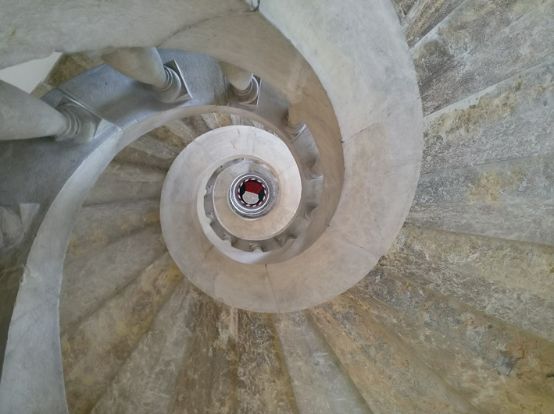
Spiral staircase in Solothurn town hall. Photo: WikimediaCommons, proof see below

The Solothurn cantonal government has decided on the concrete implementation of the measures and approved support aid with a maximum cost ceiling of CHF 3.48 million. Specifically, non-profit cultural enterprises based in the canton of Solothurn can apply to the canton for repayable interest-free loans to secure their liquidity. Self-employed cultural professionals resident in the canton of Solothurn and cultural enterprises based in the canton of Solothurn can apply for loss compensation.

The support measures are subsidiary to all other state benefits in connection with cushioning the economic consequences of the coronavirus (short-time work compensation; unemployment compensation; compensation for loss of earnings; emergency aid to cultural workers, bridging fund canton of Solothurn). They cover the damage for which no other state compensation is paid and which is not covered by private insurance. At present, it is therefore difficult to predict the extent to which this form of support and the corresponding financial resources will be used in the canton of Solothurn.

Applications for additional support contributions can now be submitted, if possible, by Thursday, April 30, 2020, but no later than Wednesday, May 20, 2020. The corresponding application forms and information sheets are available at https://corona.so.ch/bildung-kultur/kultur-und-sport is now available.
 

Picture credits

By Gestumblindi - Own work, CC BY-SA 4.0,

https://commons.wikimedia.org/w/index.php?curid=79125276

Basel region supports cultural enterprises

The cantonal government of Basel-Landschaft has passed resolutions to implement the Federal Council's COVID-19 Ordinance on Culture. With immediate effect, creative artists and cultural enterprises can apply to the canton for loss compensation and loans.

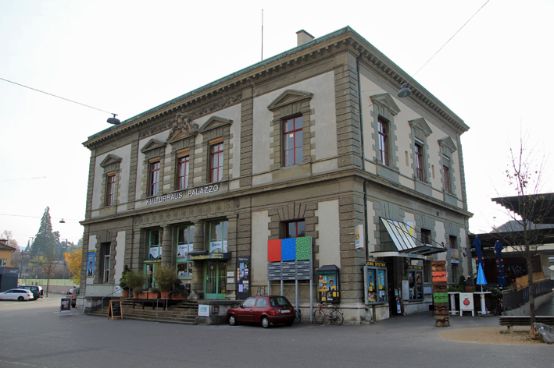
Culture house in Liestal. Photo: I, Parpan05 - proof see below

The Federal Council is providing funding of CHF 280 million for measures in the cultural sector. According to the federal distribution formula, the canton of Basel-Landschaft will be allocated CHF 4.051 million. This is on condition that the canton provides the same amount of funding. A total of CHF 8.102 million is therefore available in the Basel region.

Non-profit cultural enterprises and profit-oriented cultural enterprises without a business identification number (UID) as well as cultural professionals can apply for compensation for loss of up to 80% of the financial loss associated with the cancellation or postponement of events and projects or with the closure of businesses caused by government measures to combat the coronavirus. The measures are implemented and applications processed in close coordination with the Canton of Basel-Stadt. This applies in particular to applications that are related to the BS/BL bicantonal expert committees.

For non-profit cultural enterprises, the Federal Council also provides for repayable interest-free loans to ensure liquidity if this is at risk as a result of government measures to combat the coronavirus. The loans amount to a maximum of 30% of the cultural enterprise's income, less subsidies from the public sector. They can be applied for by submitting an application to kulturelles.bl after a prior consultation.

Due to the coronavirus pandemic, the 2020 Canton of Basel-Landschaft Cultural Awards ceremony has been postponed. The cultural award ceremony will be held in a different form at a later date. Kulturelles.bl will provide information in due course. The 2021 cultural awards ceremony will take place in Oltingen, as planned for this year.

More info: www.kulturelles.bl.ch/corona
 

Picture credits

By I, Parpan05, CC BY 2.5, https://commons.wikimedia.org/w/index.php?curid=74697182

The focus is shifting to digital channels

In light of the corona crisis, m4music also had to be canceled, even the plans for a digital edition. Nevertheless, or perhaps precisely because of this, the pop music festival intends to support the Swiss music scene in the coming months.

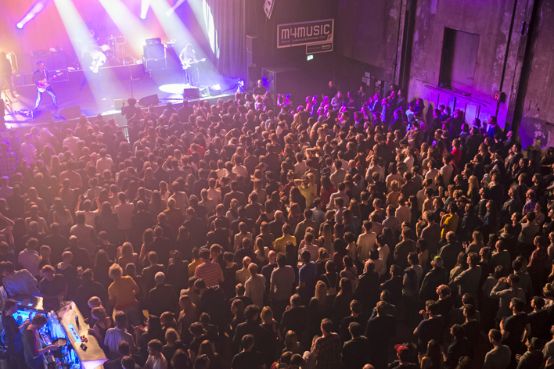
Crowds like this are currently impossible. Photo: Press photo m4music

It is well known that the coronavirus has brought public cultural life in Switzerland to a virtual standstill. The Migros Culture Percentage music festival m4music has even been thwarted twice by the pandemic. Two weeks before the start, it was announced that the 23rd edition, originally planned for March 19 to 21, would have to be canceled due to official requirements. "It is not justifiable to hold the event," the media release stated.

Planning in the rhythm of events

However, the makers did not want to admit complete defeat at this point. Consequently, they announced: "m4music 2020 will become m4music 2.0." Instead of a three-day festival for 6,000 visitors, a livestream was now planned for those at home. A mix of music, panel discussions and the so-called Demotape Clinic - the competition for up-and-coming Swiss pop music talent - was planned. Just eleven days later, this plan was already history. "In view of the current situation and the latest guidelines from the Federal Council, holding an event like the m4music 2.0 streaming festival, for which over 50 employees and guests from various parts of Switzerland would be traveling, is not justifiable," the festival management announced.

For m4music, however, there was no question of backing down. Festival director Philipp Schnyder von Wartensee promised: "Despite all the circumstances, we want to offer Swiss pop music a platform and provide specially produced content for music fans and professionals on our digital channels in the coming weeks." In fact, on March 21 - the original Saturday of the festival - the first online panel was held under the title Total breakdown - The music scene in times of the coronavirus. Around 350 participants followed the discussion live on Facebook or Zoom and the number of clicks on the recording on YouTube is constantly increasing, explained Philipp Schnyder on request. "We can be satisfied with that."

Topicality determines the topics of discussion

When asked about the impact of the festival's cancellation, he explains: "m4music is the most important meeting place for the Swiss indie music scene. So the move was correspondingly painful." At the same time, however, it is important to be aware that the representatives of the local music scene are currently focusing on other issues. Consequently, the above-mentioned online panel, which is still available on YouTube, was deliberately dedicated to these problems. For example, the existential hardship faced by musicians in the absence of payment and the increasing number of clubs and festivals in the face of the ban on events were discussed.

But back to m4music: according to Schnyder, they are currently still analyzing the financial impact of the festival cancellation. It is a complex process that also requires legal clarifications. "It is not the intention of m4music and the Migros Culture Percentage to get off as lightly as possible financially." This is an attitude that the festival can adopt because it is not being called into question despite the cancellation. "We are very well positioned and assume that m4music will take place again next year," explains Schnyder. Postponing this year's festival - to the fall, for example - was not considered. "That would have been too costly," says the festival director.

More panels and demo tape clinic online

It is clear that they want to help the Swiss music scene even without m4music 2020. "We are currently still thinking about how we want to position ourselves in order to support the local scene in the best possible way," reports Schnyder. Because Swiss radio and television are already active with all kinds of streams, m4music is planning to get involved in other ways. For example, the next online panel on April 16, 2020 will focus on the topic of Multiculturalism true(ly)? - About migration, culture and diversity accept. The focus of the discussion is the realization that our society is shaped by migration. But although more than 50 per cent of 15 to 35-year-olds in Switzerland have a migration background, this is hardly reflected in the arts pages, for example. Which leads to the question of why the multicultural music scene in this country is not more in the spotlight.

The Demotape Clinic will also be held digitally for the first time in April. The four category winners and the winner of the Demo of the Year will be announced online on April 28. And in the background, preparations for m4music 2021 will soon begin again, as Philipp Schnyder knows: "We're already starting the booking process again!"

Solidarity fund for young musicians

The Conservatorio della Svizzera italiana, the music university in Italian-speaking Switzerland, wants to help students in financial difficulties with a support fund.

Photo: SMZ

At the end of March, the Conservatorio della Svizzera italiana Foundation created a solidarity fund to quickly and efficiently support students at the Conservatorio della Svizzera italiana who are facing severe financial hardship due to the economic consequences of the current pandemic. According to the foundation, affected students can apply for an emergency grant immediately. After a review of the conditions and financial need, a support contribution will be transferred directly to the student's account.

The anation of all concerts and events deprived students of an important, if not their only, source of income. In addition, the extensive shutdown of the economy not only deprived them of their sideline opportunities, but often also of family support.

The President of the Foundation Board, Ina Piattini Pelloni, appeals for solidarity with the young students. Christoph Brenner, Director General of the Conservatorio della Svizzera italiana, is convinced that the protection and support of musical talent will allow us to "quickly return to normality - when we will need art and culture, especially music."

The initiative has already mobilized 61,710 francs within a few days.

Update 30.4.2020:
The foundation announced on 29 April 2020 that over 100,000 Swiss francs had already been mobilized within three weeks and that 60 emergency scholarships had already been made available.

Donation account

Banca dello Stato del Canton Ticino, 6501 Bellinzona
Fondazione Conservatorio della Svizzera italiana
Fondo di solidarietà
IBAN: CH60 0076 4372 7664 Y000 5
BIC: BSCTCH22XXX
Clearing: 00764
CCP: 65-433-5

For further information:
www.conservatorio.ch/it/fondazione/sostienici
Phone +41 (0)91 960 23 67

Publishing art

The industry prize for sheet music editions and music books of outstanding quality was awarded for the 29th time.

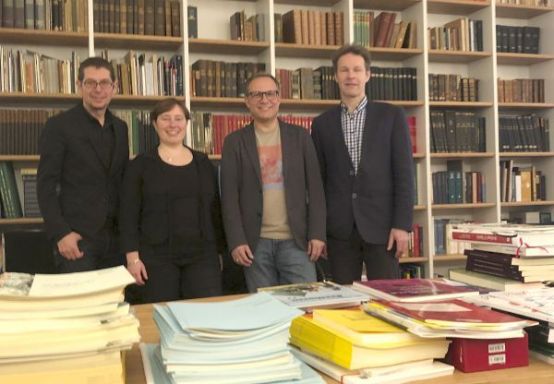
Members of the 2020 jury (from left): Bert Odenthal, Susanne Funk, Mario Müller, Jan Sören Fölster. Photo: DMV,SMPV

This year, the German Music Publishers Association (DMV) honored nine publications with the "Best Edition" seal of approval. The four-member jury (Jan Sören Fölster, church musician, Berlin, Susanne Funk, Kulturkaufhaus Dussmann, Berlin, Mario Müller, Bundesverband Freier Musikschulen, Bonn and Bert Odenthal, graphic designer, Berlin) had to evaluate a total of 81 entries from the entire range of publications from German music publishers. All submitted works were judged according to the following criteria:

  1. Overall editorial impression
  2. Special publishing or scientific achievement or idea
  3. Correctness and quality of the music (engraving, typography, electronic notation, calligraphy)
  4. Graphic design
  5. For digital submissions: User-friendliness, innovation, accessibility
  6. Printing, paper, binding

The awards ceremony was planned as part of the International Music Fair in Frankfurt, which had to be canceled. "Especially at this time, when many music publishers are struggling to survive due to the corona crisis, it is important to show how high-quality their sheet music and music editions are in terms of content and form," explained Clemens Scheuch, Vice President and Chairman of the DMV's E-Music Committee.
 

Image

Award winner 2020:

"Christ on the Mount of Olives"

Beethoven every Friday: to mark his 250th birthday, we take a look at one of his works every week. Today on the oratorio "Christ on the Mount of Olives"

Large-scale vocal music by Beethoven is often reduced to just a few works. The finale of the Ninth is on everyone's lips and ears. The Missa solemnis can confidently be called Opus magnum and the Mass in C major stands in its shadow. But an oratorio, especially for Holy Week? In fact Christ on the Mount of Olives op. 85, Beethoven's only contribution to this genre, has almost completely disappeared from the repertoire. Perhaps it was chance that led Beethoven to compose this work. In early 1803, he had been commissioned by Emanuel Schikaneder to write an opera for the Theater an der Wien. And he was assured that he would also be able to perform concerts with the musicians for his own benefit, the first on April 5, 1803, the Tuesday of Holy Week.

Beethoven had included his first two symphonies and the third piano concerto on the program. The oratorio was also composed more or less at short notice in accordance with the church year. His later assertion that it was written in "14 days" has been written down, is cum grano salis to take. The first sketches date from February of that year. Above all, however, Beethoven evidently saw the oratorio as a step on the way to opera, both dramaturgically and musically.

Christ on the Mount of Olives was successfully performed. However, the libretto by Franz Xaver Huber (1755-1814) proved to be problematic outside Vienna, so that the publisher made unauthorized changes when it went to press (Breitkopf & Härtel, Leipzig 1811). Beethoven only found out about this in the galley proofs - too late to be able to clarify fundamental points in his favor, even though he had to admit: "the text is extremely bad in the old meaning of 'simple', but once you've gotten yourself out of a bad arbitrate text as a whole, it is difficult to prevent it from being disturbed by individual changes."

In particular, he referred to the warriors' chorus, which seems a little strange: "We have seen him, / Going to that mountain, / Just take the path to the left, / He must be very close!" Such verses only make sense against the background of the Viennese performance tradition, which apparently also included a scenic concept. In any case, several textbooks of the time contain corresponding references such as "Christ. He kneels at some distance from the sleeping disciples", "Christ rises", "Paul draws the sword", "Choir of the soldiers leading Christ". Here it is particularly worthwhile to refer to the music text of the current complete edition (also available as a study score from Henle). And once you have been captivated by the symphonic introduction (beginning in E flat minor!), you will probably want to continue listening with curiosity ...

Information on the study score:
Ludwig van Beethoven. Christus am Ölberge op. 85, edited by Anja Mühlenweg (Studien-Edition), Henle-Verlag Munich, 255 pages (HN 9311)


Listen in!

Parts of the Schott Archive Mainz now in Basel

The Paul Sacher Foundation has taken over holdings from the archives of Schott Music Mainz. This expands the collections of the composers Hans Werner Henze, György Ligeti, Heinz Holliger, Aribert Reimann, Dieter Schnebel, Igor Stravinsky, Klaus Huber, Jürg Wyttenbach and Conrad Beck, which are maintained in Basel.

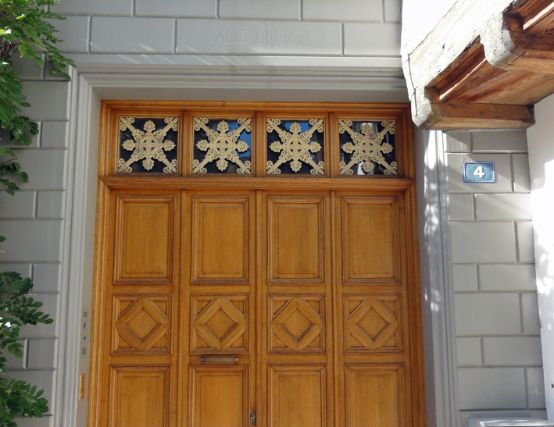
Münsterplatz 4 in Basel - the address of the Paul Sacher Foundation. Photo: Wikicommons, proof see below

The press release states:

"The Paul Sacher Foundation has recently acquired a large number of important scores and letters from the publishing archives of Schott Music in Mainz, enabling it to substantially expand its existing collections. Formerly known as B. Schott's Söhne, one of the publishers of Ludwig van Beethoven and Richard Wagner, Schott is today one of the largest and most traditional music publishers in the world, and has always been committed to contemporary music.

Of the composers represented in the Paul Sacher Foundation, Hans Werner Henze, György Ligeti, Heinz Holliger, Aribert Reimann, Dieter Schnebel and, in some cases, Igor Stravinsky, Klaus Huber, Jürg Wyttenbach and Conrad Beck have had their works published by Schott. In the past, their fair copies usually became the property of the publishing house. The Hans Werner Henze collection in particular is experiencing immense growth,
The composer was associated with the Mainz publishing house for over fifty years and had all his works published there until 2001.

Among the manuscripts that have now found their way into the Paul Sacher Foundation are Hans Werner Henze's fair copies of The Bassarids and Muses of Sicily. But also the handwritten piano score of Igor Stravinsky's Violin concertoGyörgy Ligeti's fair copies of Lontano and Chamber concert or Aribert Reimann's opera Lear are included.

In total, the parts of the Schott archive transferred to Basel comprise over 280 - in some cases extensive - manuscripts of works from the period from 1927 to 2018. In addition, there are around 3,000 original letters, which provide an insight into the creation of the works and the circumstances surrounding their production and premiere. Production documents also document the printing of the works (often in different versions);
Many of them contain substantial corrections by the composers.

The materials from the Schott archive will be processed in the course of 2020 and should be made available for research as quickly as possible."

Picture credits

By User:Mattes - Own work, CC BY 2.0 en https://commons.wikimedia.org/w/index.php?curid=21724401

Canton of Bern implements Covid-19 ordinance

The Bernese cantonal government has approved the national implementation ordinance for the Covid-19 Ordinance on Culture. The Office for Culture of the Canton of Bern is now deciding on the applications submitted for support contributions.

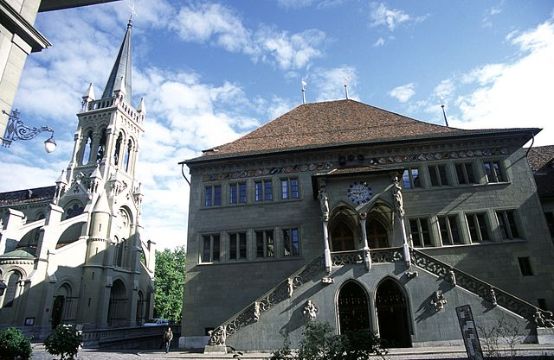
Bern City Hall, seat of the cantonal government. Photo: Peter Alder (see below)

Non-profit cultural enterprises can apply for interest-free, repayable loans from the canton to maintain their liquidity. Self-employed cultural professionals and cultural enterprises can apply for loss compensation to cushion the costs incurred as a result of the COVID measures. For guidance, overviews and decision-making aids have been published on the Homepage of the Office for Culture/Cultural Promotion of the Canton of Bern published. Here, the artists concerned can submit applications online.

After the government council had already decided on March 26 to support the cultural sector with lottery funds in the millions, it has now approved an extraordinary allocation of CHF 15 million from the lottery fund to the cultural promotion fund.
 

Classical:Next 2020 digital

You can register on the platform free of charge until April 17.

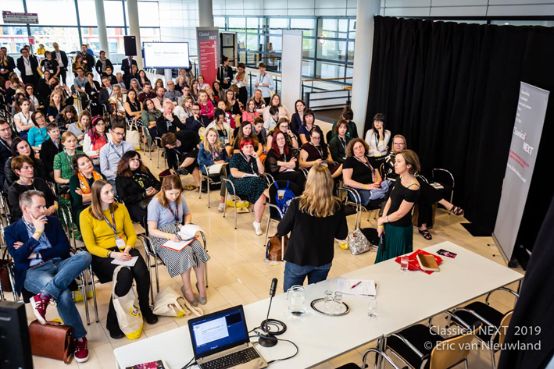
Classical:next 2019: Conferences like this cannot take place in 2020. Photo: Eric van Nieuwland,SMPV

The international classical music fair Classical:Next would have taken place in Rotterdam from May 18 to 21. Due to the spread of COVID-19, this event also had to be canceled.

But Classical:Next is not "just" an event. Rather, the platform creates classicalnext.com the opportunity to network digitally with international players on the classical music scene. For example, "Mentoring Sessions" and "Regional and Sector Meet Ups" will soon be launched as an alternative to the conferences planned during the trade fair. As in the past, Classical:Next wants to continue to promote exchange and mutual learning. The team is open to suggestions and welcomes ideas. Communication will be in English only. You can register free of charge until April 17 and benefit from the platform's services.

get_footer();