The history of the Swiss Society for New Music
On July 1, 2025, Schweizer Musikedition took over the mandate of ISCM Switzerland. This also marked the end of the thirty-year history of the Swiss Society for New Music. Javier Hagen, the last SGNM president, looks back on institutional ties in the field of new music.




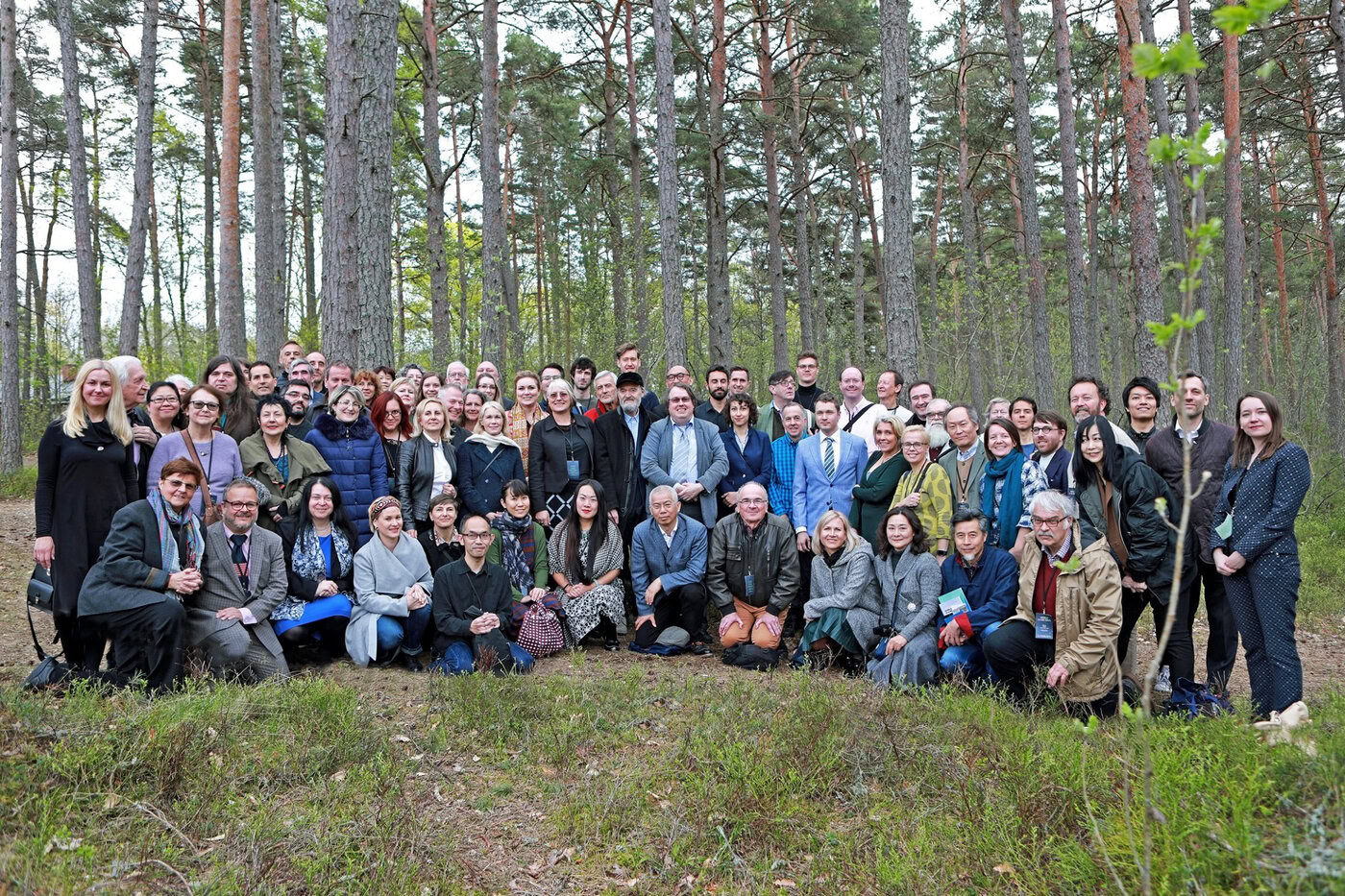
The history of the Swiss Society for New Music (SGNM) from its foundation in 1996 until its dissolution in 2025 with the ISCM Switzerland the Swiss representative of the International Society for Contemporary Music (ISCM). In the German-speaking context, the ISCM is generally known as the International Society for New Music (IGNM).
A history spanning over a hundred years
ISCM Switzerland has existed since October 1922, the year the ISCM was founded, and is one of the oldest ISCM national sections. Several influential Swiss musical personalities were involved in the founding and early years of the ISCM. The German conductor and composer Hermann Scherchen, who worked at the Musikkollegium in Winterthur at the time and was closely associated with the ISCM founders, brought his employer, the Winterthur patron Werner Reinhart, onto the ISCM founding committee. Reinhart was then responsible both for substantial financial support for the first ISCM World Music Days, the ISCM festivals held annually in a different country, and for the founding of ISCM Switzerland as part of the Swiss Musicians' Association STV. The first ISCM Switzerland board included Volkmar Andreae (Chair), Hermann Suter, Emile Lauber, Ernest Ansermet, Werner Reinhart, Reinhold Laquai and Jean Dupérier seat. In the 1920s, ISCM Switzerland also organized the ISCM World Music Days twice: in 1926 in Zurich under Volkmar Andreae and Hermann Scherchen, and in 1929 in Geneva under Ernest Ansermet.
Part of the Swiss Association of Musicians
From 1922 to 1995, ISCM Switzerland was an integral part of the Swiss Association of Musicians (STV), the most important and influential association for contemporary music in Switzerland at the time. At the time, the STV functioned in the same way as the Composer's Unions of the other ISCM member countries.
Until the 1970s, the STV presidents also held the ISCM Switzerland presidency at the same time. From the 1970s onwards, there was a gradual desire for separate STV and ISCM Switzerland presidencies, but legally everything remained under one roof, that of the STV.
In view of the impending ISCM World Music Days 2004 In Switzerland, ISCM Switzerland was separated from the STV in 1996 and incorporated into its own corporate body: the Swiss Society for Contemporary Music SGNM / Société Suisse pour la Musique Contemporaine SSMC, founded for this purpose in 1996 under the direction of Jean-Luc Darbellay. This step was intended to guarantee greater operational flexibility, which was the case until the ISCM World Music Days in Switzerland in 2004.
Difficult situation after the World Music Days 2004
The downside of the founding of the SGNM in 1996 was that the supporting and representative membership structure of the STV was lost. The new association had only about two dozen members instead of over 1000: most of the Swiss IGNM local groups, a few other new music organizers and a handful of ensembles. And as soon as the ISCM World Music Days 2004 were over in Switzerland, the SGNM also lost its federal funding and its project secretariat.
This was still the case when Javier Hagen took over the SGNM presidency in 2014. His assumption of the SGNM presidency was linked to the declared intention of resolving this dilemma and not continuing ISCM Switzerland as before, but rather reintegrating it into a coherent national structure. At the time, this meant returning to the STV.
Since the early 2000s, however, the STV has been undergoing a fundamental transformation under pressure from the Federal Office of Culture, which, as is well known, led to its dissolution and merger with other associations in 2017. Sonart has led to. Therefore, from 2014 to 2023, until the definitive consolidation of Sonart after the pandemic, there was no real prospect of a return to the STV or the successor structure: the potential partners were in the process of disintegration or genesis.
Dissolution of the SGNM and takeover of the ISCM Switzerland mandate
At the 2019 ISCM General Assembly in Tallinn, Javier Hagen was nominated for election to the ISCM ExCom due to his many years of ISCM involvement. The structural weakness of the SGNM, which he repeatedly emphasized to the ISCM, prompted him to decline the election to the ISCM ExCom in favour of his Romanian colleague; the upcoming tasks at home in Switzerland were too pressing.
From 2023, discussions regarding the return of the ISCM Switzerland to a national structure could be resumed. Based on the assumption that the ISCM primarily offers added value for composers, and possibly also for ensembles, this structure should meet the following criteria: maximum congruence with the reality of the ISCM, national reach, stable, i.e. permanently employed and professionalized administration. That used to be the STV. The new association Sonart fulfills these requirements structurally, but only to a limited extent in terms of content.
Alternatively, discussions were also sought with the Swiss music publisher SME/EMS. Together with the Musinfo database, it is also one of the former STV's decoupled projects. SME brings together the majority of Swiss composers as members. A modestly staffed office and a proactive and young board, which agreed to take over the ISCM Switzerland mandate in 2025, manage the business. With the resignation of the SGNM board and the dissolution of the SGNM after 30 years, the ISCM Switzerland mandate, which the SGNM took over from the STV in 1996, was transferred to the SME on July 1, 2025.
Review of diverse SGNM activities up to 2025
The last active SGNM board - Max E. Keller, Egidius Streiff, David Rossel and Javier Hagen - brought ISCM Switzerland back into the public eye and online from 2014. It processed the historical documents in Switzerland, guaranteed a minimal structure and activity and maintained the international networking work with the ISCM with minimal resources and great commitment.
Throughout Switzerland, the SGNM was responsible, among other things, for ensuring that new music was once again represented on the Swiss Music Council SMR thanks to an expansion of the board (2017), and it was involved with the STV in the preparatory discussions for the Sonart merger (2016/17). From 2016, the SGNM held a seat on the board of Schweizer Musikedition SME/EMS and secured its Liquidity when merging SME and Musinfo (2016). She also successfully acted as a mediator for various IGNM local groups in the face of the threat of substantial funding cuts in various cantons (2015/2016).
The SGNM also re-established contact between the Swiss musicologist Anton Haefeli, the author of the reference book on ISCM history 1922-80, and the ISCM. In 2020 Anton Haefeli appointed honorary member of the ISCM at the suggestion of the SGNM.
Thanks to Anton Haefeli, the SGNM came across the founding correspondence of the ISCM in the Winterthur City Library in 2014 - a find of particular significance, as such documents have been lost in many countries due to wars and political turmoil. In view of publications for the ISCM anniversary in 2022, this discovery was more than timely. In the early years of the ISCM, almost all correspondence passed through Werner Reinhart's desk. The carbon copies of these documents are carefully and clearly archived in the Reinhart folder at Winterthur City Library.
Within the ISCM, the SGNM was able to Extension of the official, historical ISCM communication languages German, French and English. Spanish, Chinese, Arabic and Russian were newly added as «Welcoming Languages». This was a groundbreaking step towards facilitating communication within the society (2018). The SGNM has also helped to initiate new memberships and re-entries such as Brazil (2017), China-Shanghai (2017) and Spain (2021).
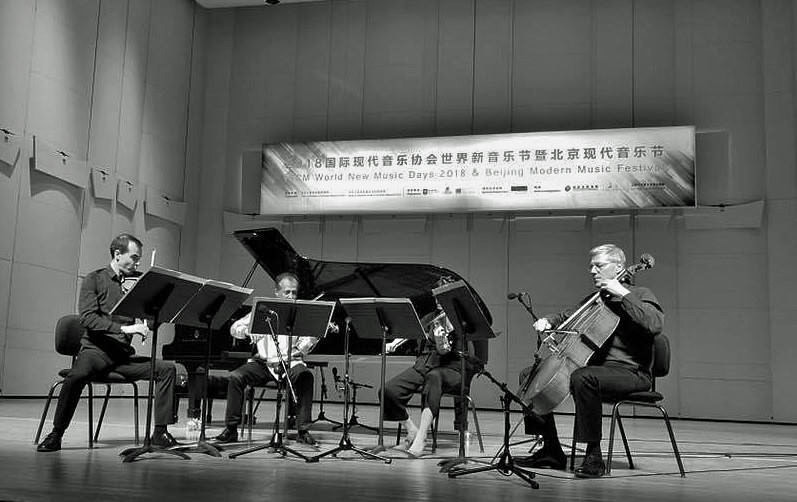
In 2019, the SGNM launched a call for the promotion of Swiss new music ensembles abroad for the first time as part of the ISCM Collaborative Series (Director: Max E. Keller). The HyperDuo and played successfully in the fall of 2020 in the IGNM concert series in Münster, Detmold and Berlin in Germany.
Measures during the corona period
In 2020, the SGNM successfully lobbied the Swiss Federal Assembly for the adoption of the COVID-19 Act, which was amended in favor of Swiss cultural life. It also initiated quota increases at national broadcasters abroad via the ISCM working groups - similar to SRF, which increased the quota of Swiss music in its programming to 50% during the coronavirus pandemic in favor of higher royalties for local musicians.
The ISCM Virtual Collaborative Series (VCS), which were launched in 2020 during the coronavirus pandemic to maintain the promotion of contemporary music on social media in the face of the shutdown of concert operations, were initiated by the SGNM. By November 2023, the ISCM VCS will have a total of Works by over 250 composers from all over the world have been presented, including the following 15 Pieces from Swiss men and women:
- Heidi Baader-NobsEvasion
- Arturo CorralesFlow
- Aglaia GrafBirth of Gods
- Klaus Huber: Tenebrae
- Regina Irman: Black Luck 2
- Sachie Kobayashi: Les cieux roulent des yeux
- Hanspeter KyburzCells
- Ulrike Mayer-SpohnfKFW
- Abril Padilla: Grimja
- Annette Schmucki: Stag Brain Hornet
- Mathias SteinauerKeyner Nit
- Karin WetzelGlass Body
- William BlankReflecting Black
- Iris Szeghy: Perhaps that something would open up for us
- Georg Friedrich Haas: ...And...
For the double anniversary in 2022
For the 100th anniversary of the ISCM 2022, the SGNM (which in principle also celebrated its 100th anniversary as ISCM Switzerland 2022), together with the ISCM sections in Latvia and the Basque Country, launched an international composition competition for new choral music in three categories: equal voices (organized by the SGNM), children's choirs (organized by the Latvian section) and mixed choirs amateurs (organized by the Basque section). The Swiss part of the competition was organized by David Rossel: 108 compositions by 78 composers from all over the world were submitted in this category (equal voices). Works by Luc Goedert (1st prize ex aequo), Cyrill Schürch (1st prize ex aequo) and Thomas Kientz (3rd prize) made it into the ranks. 17 other works received a Special Mention. The winning pieces were premiered at Casino Basel under the baton of US composer and conductor Eric Whitacre.
Also to mark this anniversary, in 2018 the SGNM secured the collaboration of the Paul Sacher Foundation Basel (mentorship) for the musicological review of the ISCM history by the international ISCM sections. This had a valuable catalytic effect, as the collaboration with the Sacher Foundation encouraged several universities to get involved.
The ISCM World Music Days also celebrated their centenary in 2022. To mark this anniversary, the SGNM created a complete online festival documentation. The programs from 1970 to 2005 were missing from the ISCM archives. In 2018, the SGNM found all the documents at the former ISCM Switzerland President Fritz Muggler in Zurich. They were completely digitized for the archive.
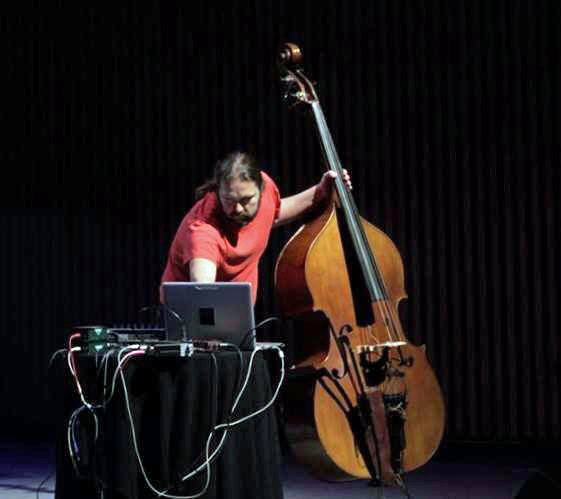
Javier Hagen played a key role in the ISCM working groups Archive, Sustainability and Communication from 2014 to 2023. One of the outstanding results of these working groups was the ISCM World Music Days to mark the 100th anniversary of the ISCM. These took place on the African continent for the first time in its history in 2023. It was held in South Africa under the artistic direction of Lukas Ligeti, the son of composer György Ligeti, who, like many of his contemporaries, owes a large part of his career to the ISCM.
Further notes on the ISCM World Music Days
Every year, with the help of a jury, the SGNM put together a proposal with at least six Swiss works for the World Music Days. It secures funding for the trip of the selected Swiss composers. With Helena Winkelman 2015, Iris Szeghy 2016, Junghae Lee 2019, Karin Wetzel 2021 and Esther Flückiger 2020/2022 and 2023, female composers represented Switzerland at ISCM World Music Days for the first time in its history after 93 years. This established their presence from 0 to at least 50% within a year.
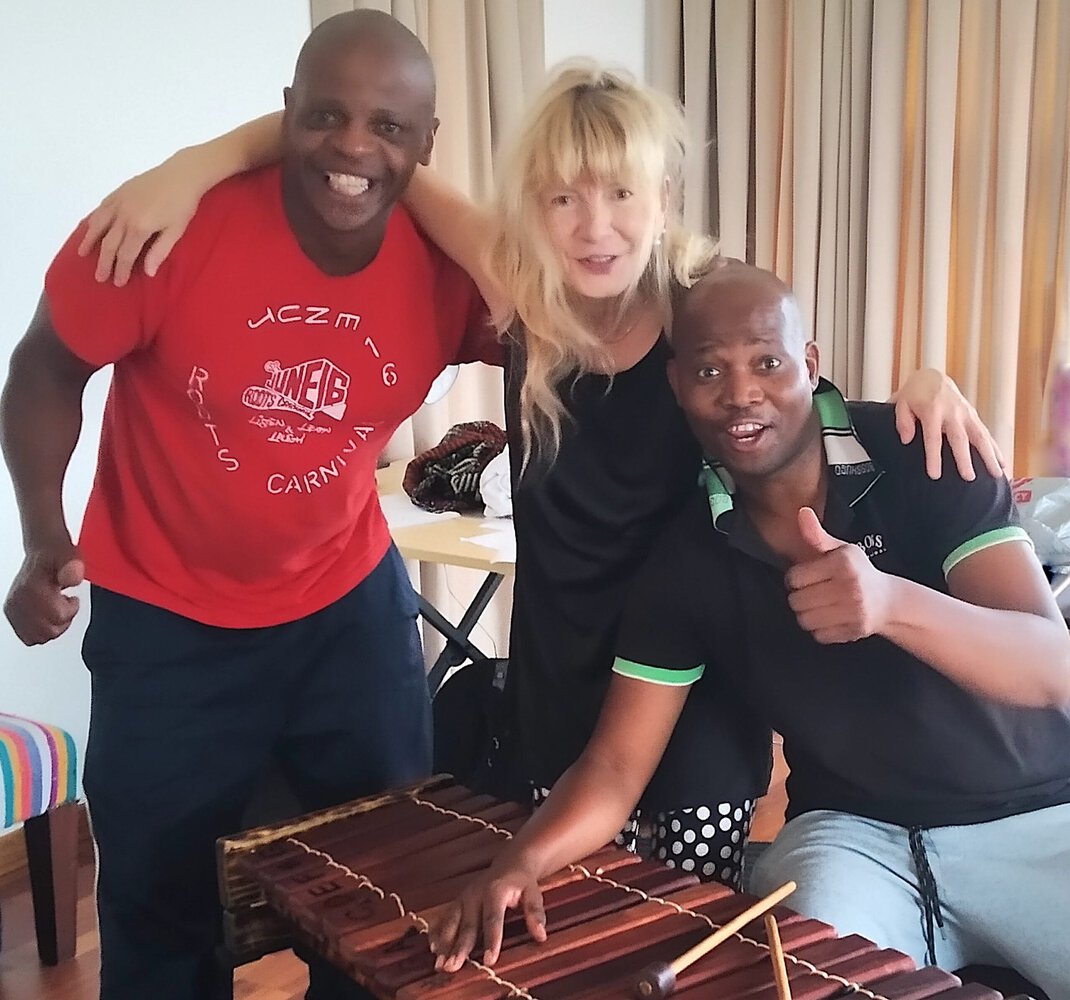
ISCM Switzerland was a member of the jury for the ISCM Young Composer Award at the World Music Days 2014 in Wroclaw.
In 2019, the SGNM set up YouTube and SoundCloud Playlists with concert recordings of the ISCM World Music Days and/or recordings of the pieces played there. These playlists are integrated online on the pages of the ISCM archives.
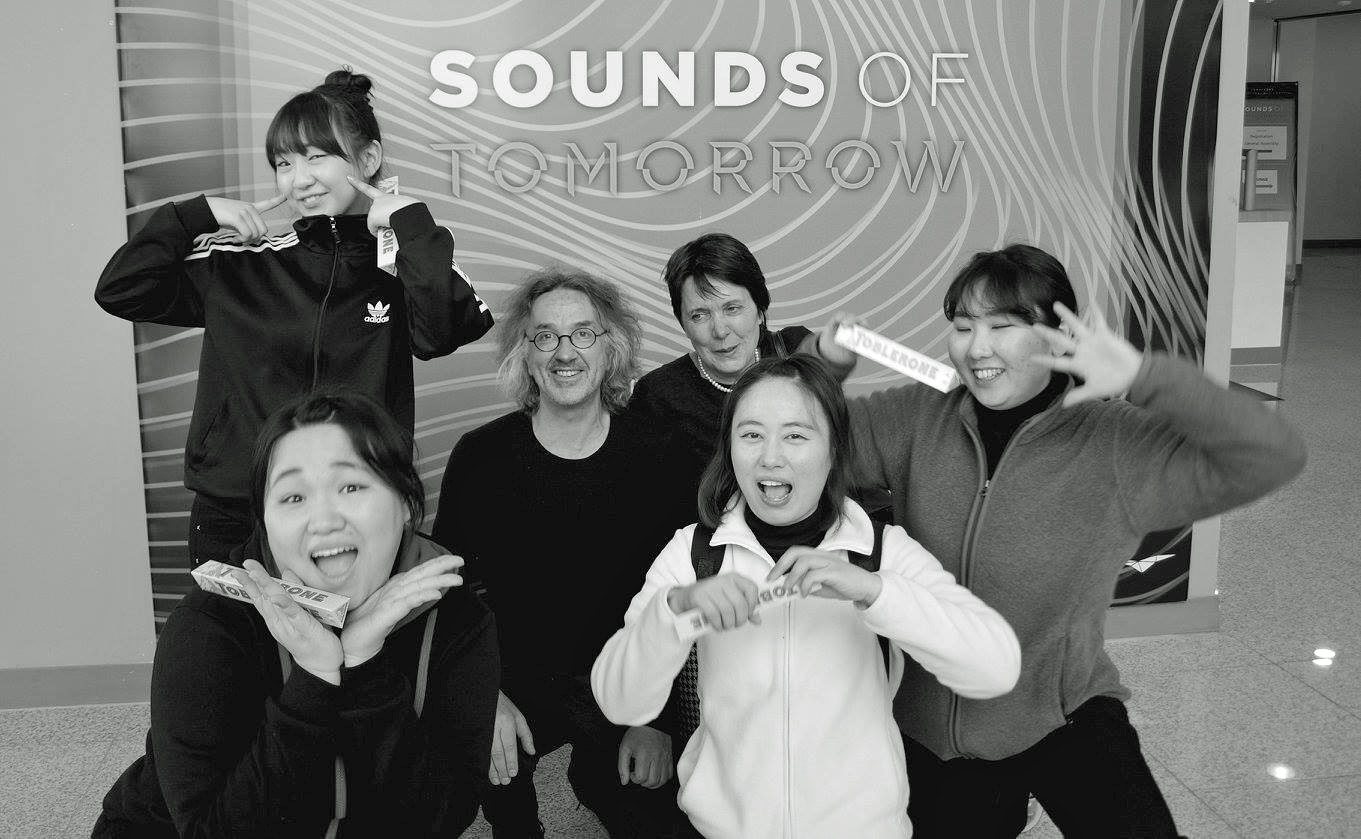
In physical form, the most extensive and complete ISCM archive is that of the Royal Danish Library. Numerous databases exist online: relevant and detailed Wikipedia articles in various languages as well as the ISCM website. All festival programs since 1922 are now documented there with complementary links, reviews and photos. There are also playlists with recordings on YouTube and Soundcloud, including the SGNM playlists. Extensive photo albums can also be found on the social media pages of several ISCM sections, which attractively document the ISCM World Music Days.
Further links
Photo albums of the ISCM World Music Days
- 2014 Wroclaw, Poland
- 2015 Llubljana, Slovenia
- 2016 Tongyeong, South Korea
- 2017 Vancouver, Canada
- 2018 Beijing, China
- 2019 Tallinn, Estonia
- 2022 Auckland/Christchurch, New Zealand (the 2020 and 2021 festivals were canceled due to the pandemic)
- 2023 Soweto/Johannesburg/Cape Town, South Africa
- 2024 Faroe Islands
- 2025 Lisbon/Porto, Portugal
Sound recording online: Esther Flückiger - Guarda i lumi, ISCM WMD 2022 NZ
https://www.rnz.co.nz/concert/programmes/musicalive/audio/2018884827/esther-fluckiger-guarda-i-lumi
ISCM World Music Days 2026 in Bucharest, Romania
https://iscm.org/wnmd/2026-romania/
As President of the IGNM-VS, Javier Hagen was a member of the SGNM Board from 2011. He chaired it from 2014 until its dissolution in 2025. https://de.wikipedia.org/wiki/Javier_Hagen