Work years of the city of Zurich

The City of Zurich is awarding a total of CHF 633,000 to twenty creative artists and two collectives in six funding categories.

Groene Ruis, performance by Cathy van Eck. Photo: zVg

The work years in the field of jazz/rock/pop go to Vincent Glanzmann, Bettina Klöti and Fabian Sigmund, in the field of serious music to Cathy van Eck (work year composition) and the duo Buck / Wolfarth (work year interpretation). Mayor Corine Mauch will present the awards on Thursday, November 30, 2017, at a ceremony for invited guests at Kaufleuten.

A total of twenty artists and two collectives in the six sponsorship categories will be awarded years of work, scholarships and recognition grants totaling CHF 633,000. The award for special cultural merit will also be presented in this context. It goes to the literary mediator Stefan Zweifel.
.-
 

Female jazz musicians pave the way for female jazz musicians

Networking is the big theme at the newly founded International Female Musicians Collective. The sixteen-member female formation went on its first tour of Switzerland in October.

Sarah Chaksad, Rahel Thierstein, Julie Fahrer, Fabienne Hoerni, Sandra Merk, Sonja Huber (from left) © IFMC

Jazz is a male scene in Switzerland, even more so than pop and rock music. This is not only evident on the relevant stages, but also at universities. To counteract this, the association International Female Musicians Collective has set itself the goal. The six founding members are young professional female musicians from Switzerland who want to become role models for future generations. "That younger women also see: Ah, I can do that too," is important to them, emphasizes saxophonist and founding member Fabienne Hoerni. They want to feel less exotic, "but simply be there."

Empowerment and networking

In addition to empowerment as a central theme, the jazz musicians are primarily concerned with networking through joint concerts: "Women already exist - perhaps not primarily in Switzerland." Musicians from Denmark, Germany, France and Norway have joined them for the first tour with a total of ten concerts in German-speaking Switzerland this October.

Playing in an all-female group for the first time was a special experience. "Not because the dynamics or the rehearsal processes are different. But the topics of conversation are definitely different." The female musicians from the Scandinavian countries in particular bring a different wealth of experience with them, not least because their environment is less male-dominated. Another advantage of the international focus was the larger selection of female musicians. This made it possible to find ideal sound combinations for Sarah Chaksad's compositions, which were created especially for the tour.
 

Unusual picture

An "aha" effect really does occur when the 16 female musicians fill the stage in the vaulted cellar of Solothurn Hospital to the last millimeter on 17 October: The women create an unusual picture - from very young to gray, from funky to conservative. And they offer big band music that makes you sit up and take notice: With the specific sonority of her pieces, characterized by vocalizations and vibraphone swells, Sarah Chaksad creates an atmospherically swinging, song-like dream world, in which things can also get tough. Complex, chasing rhythms in the themes, which sometimes consist of only a few intervals, tricky tempo changes and devotion in the solos mix the contemporary with echoes of Bernstein, Maria Schneider and smooth jazz. And the idealism that underpins the project can be felt everywhere: in the way the musicians interact with each other and in the joy of making music together. It is transmitted to an enthusiastic and long applauding audience. Unfortunately, there were few young women among them.

Schnöller teaches at the Lucerne University of Applied Sciences and Arts

The Lucerne University of Applied Sciences and Arts welcomes flautist Isabelle Schnöller as a new main subject lecturer at the Institute for Classical and Sacred Music in the Department of Music.

Photo: HSLU

As an addition to the existing team of lecturers, Isabelle Schnöller will primarily supervise students in Lucerne from the 2018/19 fall semester onwards in the preliminary studies, Bachelor's and Master's degree programs in music education in the classical music profile.

Isabelle Schnöller is a long-standing solo flautist in the Basel Chamber Orchestra and a member of the Camerata Variabile Basel, the Arion Wind Quintet and the Ensemble Amaltea. She completed her training at the Basel University of Music, at the Banff Center for Fine Arts in Canada and at the Freiburg i. Br. University of Music, where she graduated with a soloist diploma.

She has won prizes at the Jeunesse Musicales and the UBS competition for the promotion of young musicians. Her work as a soloist and chamber musician is documented on numerous recordings. Several composers have dedicated works to Isabelle Schnöller. In the current 2017/18 season, she will premiere the new flute concerto by Hans-Martin Linde.


Context instead of text

The Donaueschingen Music Days staggeringly lose themselves in musical remoteness. The secondary takes over.

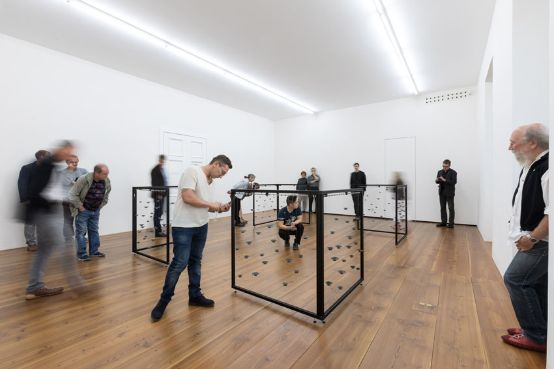
Marianthi Papalexandri/Pe Lang: modular | n°2 - speaking of membranes. Photo: SWR/Ralf Brunner

They hang there in a row - and tick quietly away. There is no cable leading up from the speakers, only nylon threads. At irregular intervals, the thread slides over a rotating roller, transmitting the movement impulse to the membrane. It would not make an impression in solo. But in a tutti of around 80 loudspeakers on four black frames, the result is a distinctive polyphony that is remotely reminiscent of György Ligeti's Poème Symphonique for 100 Metronomes. The Zurich-based Greek composer Marianthi Papalexandri-Alexandri and the Swiss artist Pe Lang have achieved something special. The concept is well thought out, no casually thrown cables disturb the view, the idea is clear, the sound result inspiring.

The first floor of the Donaueschingen Museum resembles an oasis. All around it, disorientation reigns. Composers are lost in media noise, and some visitors are unable to find the concert venues due to incorrect information. Refugees from the south also fit into the desert picture. The concert by the Berlin ensemble Kaleidoskop begins with a truck driving into the hall. It stops and one of the first works of so-called musique concrète instrumentale, Michael von Biel's String Quartet No. 2 After the short piece, musicians come out of the hold in scruffy clothes: obviously refugees. They are supposed to be strolling around, also disoriented. Then they play on. First, a reduced, overstretched sound study by composer Chiyoko Szlavnics plays on predominantly empty strings. This is followed by an extremely poor Maps of non-existent cities: Donaueschingen by the composer Kourliandski, during which the musicians - well - take over the audience rows. Björn Gottstein, festival director since 2015, sees no reason to intervene in concerts as long as no one is offended. But with all due respect: aren't those refugees who didn't make it out of the truck and certainly didn't pick up an instrument being insulted?

Harmful side effects?

Björn Gottstein's signature is now clearly visible: The Musiktage continues to focus on breaking up traditional concert formats, with an increased international focus, more female composers and greater efforts to promote discourse and concepts. Martin Schüttler, who is a professor of composition in Stuttgart, almost completely dispenses with music. Two presenters read private stories from a piece of paper. Apparently, they are talking about their own musical socialization, the pressure to succeed that comes with piano lessons, and probably also about other harmful side effects of serious music. Not surprisingly, videos follow the presenters' dialogs. An electric guitar appears, on another screen a repeated N. Are these references to New Music with a capital N or is it a sophistical reference to Heidegger's "das Nichts nichtet"?

The coquettish prevalence of the secondary is worrying. In the opening concert, the Australian Thomas Meadowcroft mimes the film music composer. Full of pathos, full of swagger, the SWR Symphony Orchestra has to play more than 20 minutes of sounds that could have come from the hard-to-take Hollywood supplier John Williams. What he, Meadowcroft, has achieved with his premiered The News in Music (Tabloid Lament) wants to say? Obviously, the media are in their sights, where the next Madonna hit or the Little night music follows. As understandable as the criticism of this unspeakable radio and television practice is, the place in which it is expressed is questionable. Wouldn't it be better to make a radio piece out of the topic than to hand it over to a large, differentiated body of sound? After five minutes at the latest, every listener has understood the point. What follows in the next 15 minutes is quite unfunny annoyance.

Anyone who came to Donaueschingen for the music and the allure of 20 world premieres is at a loss. However, the Norwegian composer Eivind Buene and Márton Illés, who was quite rightly awarded the orchestra prize, did not get bogged down in the unmusical. Illés emphasizes autonomy in a pleasant way, concentrates in Ez-tér (Es-room) on musical lines. In four self-contained movements, a web of instrumental voices emerges that intertwine, oscillate and shimmer wonderfully. Illés has an intuitive feel for organics, form and sound. He knows exactly when caesuras make sense, when something new is needed, when variation is called for. Eivind Buene, on the other hand, in his Lessons in Darkness takes a different direction. It is not so densely compressed here, but deliberately fragile. How the balance is lost, how the ensembles are deliberately skewed, how a Fender Rhodes and a similarly historic Moog synthesizer contribute to weird microtonality is fascinatingly morbid - but still remains in good memory.

Bach's Mass in B minor is a world documentary heritage

The autograph of Johann Sebastian Bach's Mass in B minor in the Staatsbibliothek zu Berlin - Preussischer Kulturbesitz has been inscribed on the Unesco Memory of the World Register.

Facsimile of the B minor Mass autograph (Photo: Bärenreiter Verlag)

Tomorrow, the President of the German Unesco Commission, Verena Metze-Mangold, will present the General Director of the Staatsbibliothek zu Berlin - Preussischer Kulturbesitz, Barbara Schneider-Kempf, with the certificate designating Bach's Missa as Memory of the World / World Documentary Heritage.

The autograph is part of the largest Bach collection; around 80 percent of all Bach's surviving compositions are in the Staatsbibliothek zu Berlin. The presentation of the certificate will now be combined with a performance of the work. Ton Koopman will conduct the RIAS Chamber Choir and the Berlin Philharmonic Orchestra on October 26, 27 and 28.

A facsimile of the mass has been published by Bärenreiter. The facsimile in high-resolution four-color print documents and secures the current condition of the complete autograph. It is supplemented by older photographs of individual pages, which show the content of pages that are now difficult to read.
 

No turning back for Orfeo and Malaspina

"Lamento", musical theater based on Claudio Monteverdi's "Orfeo" and Salvatore Sciarrino's "Luci mie traditrici", enjoyed five sold-out performances at Basel's Gare du Nord. Directed and conceived by Désirée Meiser, with musical direction by Giorgio Paronuzzi and Jürg Henneberger.

The Messagera brings Orfeo the news of Eurydice's death (in the background). Photo: Ute Schendel

The project Lament is part of the events celebrating the 150th anniversary of the Basel Music Academywhich was thus able to showcase the diversity of its training program with singers and two large ensembles from the University of Music and the Schola Cantorum Basiliensis. On the other hand, it fits into the concept of Basel Gare du Nordbecause in several of its multifaceted series of events, references between times, voices and music theater are explored. Lament was created as a co-production between the two institutions. To Salvatore Sciarrino was commissioned to write an epilogue for the performances: Distendi la frontewhich was performed for the first time.

Roles or people?

Lament. "Heroes become perpetrators", writes the performance brochure. "Overwhelmed by their self-chosen project, they exceed their personal Point of no return" and end in pain over the loss. The evening tells of this spiral of action. It depicts disastrous human behavior through scenes from Monteverdi's Orfeo and from Salvatore Sciarrino's Luci mie traditrici (My treacherous eyes).

The story begins with singers gathering for a singing seminar. To the sound of the ensembles ad astra (Schola Cantorum Basiliensis) and Diagonal (Basel University of Music), they greet each other and get to know each other. Musica (Monteverdi) then begins to distribute the roles. Just roles? Or more? A good two hours later, the characters walk off to the sounds of Monteverdi's Lament They are now drawn apart again by the terrible events that have come to fruition and taken them beyond the fulfillment of their roles into an existential dimension. "They experience the seminar as something between life and death, which they cannot emotionally escape ..." (program booklet). Sciarrino's newly composed epilogue Distendi la fronte (Relaxing the forehead) smoothes the waves, gently and wisely: "We have entered the zone where ... reason and madness mingle ... We cannot return home covered in blood ..." (Sciarrino).

Paths of life and suffering

Six stations exemplify the tragedy of the man who has been forced to his personal Point of no return arrives. Orfeo, on his way to bring his Eurydice back from the underworld, cannot fulfill the condition of not looking back. He turns his back on her and loses her for all time. The means of representation, blind man's spectacles and blind man's stick, given to the singer by one of the "coaches" of the singing seminar, beautifully fulfill the function of making the difficult to imagine vivid. The story of Count Malaspina, who runs astray when he sees no other way out than to kill his wife for her infidelity, is told parallel to Orfeo's story. Both "heroes", Orfeo and Malaspina, experience the consequences of their actions as a punishment to which they are now exposed for life. "Bathe me in blood. Farewell, farewell, I will live in torment forever." (Malaspina)

The stages of the two lives and ordeals are dramaturgically well chosen. Even if it may not be possible to decipher all the images immediately, the direction is convincing and impressively geared towards a contemporary theatrical language. The singers perform their parts with mastery and confidence, with expressive voices without exception. The emotion of the role and their own feelings are equally part of their performance. The ensembles are positioned to the side of the stage, symmetrically arranged and almost equally strong: ad astra with a lush continuo group for Monteverdi, Diagonal with colorful instruments for Sciarrino. Both achieve a precise and colorful performance.

Bold and successful mix of styles

The texts in the program booklet are a good introduction to the subject matter. However, it is difficult to say whether and to what extent the average listener will find parallels and similarities of an aesthetic nature between such different musical styles. In any case, the realization is fascinating. It begins with a balanced juxtaposition of the works in order to increasingly and convincingly create mixtures, for example when both ensembles sing along with a Monteverdi choir (a beautiful scenic idea!) or when violins from the Schola ensemble support the playing of the Sciarrino ensemble. Even superimpositions of the two musics are realized. It is impressive to experience (and this fully confirms the conceptual idea) how both composers use singing as a "manner" over a period of 400 years. The effect of Monteverdi's singing (ornamentation, affect), which is still immediately appealing today, but nevertheless artificial, finds a parallel in Sciarrino's way of using the voice, sometimes cantabile, sometimes halting, as a conscious expression of "voice" more than of "pure" music. Lyrically, too, this opens the door to many parallels.

Finally, I would like to congratulate all the members of the large team. Openness, skill and aplomb characterize them all. The significant resources of the Gare du Nord and the Basel University of Music became an experience. The audience at the five sold-out performances (October 19 to 24, 2017) was thrilled.

Music prizes 2017 of the canton of Bern

The 2017 Music Prizes of the Canton of Bern, each worth CHF 15,000, go to the rapper Baze (Basil Anliker), the DJ and producer Deetron (Sam Geiser), the violinist Meret Lüthi and the clarinettist Ernesto Molinari.

Rea Dubach (Photo: Daniel Bernet)

Baze is one of the most prominent and influential dialect acrobats with national appeal. He has released various solo albums since the late 90s. He has also released numerous albums with the hip-hop alliance Chlyklass, the cover band Tequila Boys, the electro rap formation Boys on Pills and the rap project Temple of Speed.

Sam Geiser aka Deetron is in demand internationally, both on the turntables and in the studio - a heavyweight in his domain of high-quality house and techno sounds. Deetron's current catalog of work includes 60 maxis, two albums and countless remixes.

Meret Lüthi studied at the Bern University of the Arts and won the German University Competition for Early Music in 2007. As concertmaster, she leads the early music orchestra Les Passions de l'Âme, which she co-founded. She also has a broad track record off the stage as a musical coach and media expert.

Ernesto Molinari was solo clarinettist with Klangforum Wien and is currently soloist with Switzerland's most distinguished ensemble for contemporary music: Collegium Novum Zurich. His busy concert schedule as a soloist and chamber musician has taken him to the major festivals in Europe.

Rea Dubach, jazz singer, composer and performer, will be honored with the "Coup de cœur 2017" prize for young talent in the amount of CHF 3,000. The public award ceremony will take place on Tuesday, November 14, 2017, at 7.30 pm in the Great Hall of the Reitschule Bern.

DMR project company under new management

Stefan Piendl will take over the sole management of the non-profit Projektgesellschaft mbH des Deutschen Musikrats (DMR Projektgesellschaft) on July 1, 2018. He will manage the company from both an artistic and commercial perspective.

Stefan Piendl (Image: Andreas Kluge)

Piendl worked as Head of Sales at Sony Music and Marketing Director for EMI Classics before moving to the Bertelsmann Music Group (BMG) in 1998 as Managing Director Germany/Austria/Switzerland, where he was ultimately responsible for the company's entire international classical music activities as Senior Vice President & COO BMG Classics, Worldwide until 2006.

In 2007, he founded Arion Arts music consultants GmbH. In 2011 and 2012, he was significantly involved in the organization of the 7th World Choir Games in Cincinnati (Ohio), the largest choir competition in the world, as General Secretary for Interkultur. In the fall of 2015, Stefan Piendl became Head of Communications SWR Classic and was responsible for establishing the new SWR Classic brand and marketing for the broadcaster's orchestras, ensembles and festivals. Piendl has published several music books.

The DMR's projects promote young musical talent and provide impetus for musical life throughout Germany. They support professional musicians as well as amateur music-making, talented young musicians, contemporary music and offer a platform for networking information and documentation. The DMR Projektgesellschaft has an annual budget of around seven million euros.

Musikpunkt takes over Hug

The Swiss company Musikpunkt AG is taking over the traditional Zurich company Musik Hug AG. No job cuts are planned. The parties have agreed not to disclose the purchase price.

Musik Hug flagship store on Zurich's Limmatquai. Photo: Musik Hug

Musikpunkt Holding AG was formed in 2010 through the merger of Musikhaus Gasser AG (since 1953) with Lohri AG (since 1972). In 2012, the percussion division was integrated into the holding company with Musikhaus Muff AG (since 1993) and the three operating companies merged to form Musikpunkt AG. The supplier of wind instruments and percussion with around 30 employees is represented in Central Switzerland at two locations in Lucerne and Hochdorf. Musik Hug employs around 152 people, including 19 apprentices.

The operational management of the merged companies will be carried out by the co-owner and managing director of Musikpunkt AG, Adrian Lohri, together with the former CEO of Musik Hug, Erwin Steinmann. He will be supported by the current management of the Musik Hug Group. The new Board of Directors will be chaired by the former Chairman of the Board of Directors of Musikpunkt AG, Kurt Sidler.


Research at the Geneva University of Music

This edition aims to provide regular information on the research activities of the various universities of music. It gives a vision of the different universities, but also a global vision of research in general. Rémy Campos, from the HEM, presents the research in Geneva to us.

Matthias von Orelli - Rémy Campos has been research coordinator at the Geneva University of Music since 2003. His research has focused on the rediscovery of ancient music, on conservatories and on questions of historiography. He is currently working on the history of musical practices in the 19th and 20th centuries.

Rémy Campos, in a few words, how would you describe the history of research at the HEM?

The Geneva research unit was founded 15 years ago, and it was really modest at the time: the team was only employed part-time. Today, our budget exceeds one million Swiss francs, which is an impressive development in 15 years. With the completion of numerous projects and the conclusion of partnerships, research at the HEM has evolved to become a center of expertise.

According to you, what are the main missions of research in Geneva, and what are the current research topics?

Since its inception, Geneva has focused on applied research projects on a wide range of artistic practice areas: new creation and new technologies, historical interpretation, art and science, intercultural dialogue and musical education.

The research projects are launched by professors who teach in Geneva and Neuchâtel, so the field is very broad. In addition, experience within the school, particularly in contemporary and ancient music, also plays an essential role.

The intense activity in the field of research also goes far beyond the HEM. The other schools in the field of music and visual arts - the Lausanne School of Music (HEMU) and La Manufacture à Lausanne - joined forces a few years ago to create a research institute (IRMAS).

Quelles sont vos responsabilités ?

I have two jobs: I am research coordinator at the Geneva School of Music and in this capacity I take care of all the requests concerning the research unit. This includes the conception and dissemination of projects as well as the realization of documentaries, the publication of books, CDs and DVDs for the general public.

I am also responsible for IRMAS. The Institut de recherche Musique et Arts de la Scène regroupe les trois écoles du domaine. Its aim is to promote the quality of research and development activities by encouraging exchanges between the researchers it hosts and increasing the visibility of research projects among specialists and the general public alike. The Institute also ensures the evaluation of research projects in the field of music and performing arts.

In your opinion, what is the greatest success of research at the HEM?

I think that we have come a long way with limited resources, as our history also shows. We are now producing high-quality professional work. Many people have contributed individually to the success of each project.

Quelle est l'importance de la recherche à la HEM pour vous ?

I think that the introduction of research a few years ago was a minor revolution in the world of art schools. Although it was initially perceived as an exception to the usual artistic activities, it is now accepted that it brings a lot to schools in all kinds of fields.

Y a-t-il des différences entre la musicologie classique et la recherche dans une haute école de musique ?

From the outset, we have sought to conduct musical research that complements what musicology has been doing for a long time. In addition, we are working on very specific projects that focus mainly on practical issues. However, collaboration with musicology is essential for us. The research practiced in the high schools is also different because it is not limited to written publications. CDs, DVDs and radio broadcasts do justice to projects that put practice first.

What is the potential for you of a close relationship between research and practice?

Well, we are a professional institute that is involved in various projects and everyone works within the framework of their specialty. Some of our assistants studied at the HEM and are thus integrated into a professional environment.

Do you think there are still things to be done in the field of research at the HEM?

Of course! Concerning the HEM, I can say that many teachers and students have participated in the research over the last 15 years, but many have not (yet) done so.

Vous multipliez les coopérations...

Yes, absolutely, and on all continents. We have strong ties to Japan and China, not to mention projects with artists, some of whom are first-rate personalities, and with schools in India, Canada and the Latin America. And, of course, throughout Switzerland.

We are currently conducting a major survey of our former students to determine the impact of their training on their professional environment. This work, seems to me, a good example of what research can bring to a high school: a better knowledge of the professional environment with tools different from those used by artists in their daily work.

A showcase for Swiss music

With swissmusic.ch, Pro Helvetia and the Fondation Suisa are providing a web portal that collects information about the Swiss music scene and makes it freely accessible.

Illustration: macrolink / fotolia.de

Since yesterday evening, the information platform long awaited by many players in the music scene swissmusic.ch online. It is operated and financed by the Swiss Arts Council Pro Helvetia and the Fondation Suisa. According to the official press release, the swissmusic.ch "to offer the numerous institutions that are involved in and for musical life in this country an additional, shared platform. The portal sees itself as a showcase for music from Switzerland, aimed at industry representatives and other interested parties from all over the world". The interactive website provides information in four languages (German, French, Italian, English) on the Swiss music scene, specialist organizations and artists in four clearly structured sections.

  • Read: Reports on the local music scene
  • Listen: Playlists with selected Swiss productions
  • Research: Access to various databases
  • Directory: Addresses

The portal aims to "pool strengths, utilize synergies and always be alive". It is therefore updated and supplemented on an ongoing basis.
 

Mirga Gražinytė-Tyla becomes ZHdK "Companion"

Zurich University of the Arts (ZHdK) is creating two honorary titles. One of these new titles will be awarded for the first time today as part of the ZHdK's University Day: the chief conductor of the City of Birmingham Symphony Orchestra and ZHdK alumna Mirga Gražinytė-Tyla will be honored.

Mirga Gražinytė-Tyla (Image: Frans )

The ZHdK awards the honorary titles "Honorary Companion" for many years of service and "Companion" for outstanding achievements at a young age to personalities "who have rendered outstanding services to the interests of the university or have already achieved extraordinary things at a young age".

The first "Companion" will be awarded by the ZHdK as part of its University Day, which is being held under the motto "Leadership in the Arts". It honors the conductor Mirga Gražinytė-Tyla, who was appointed chief conductor of the City of Birmingham Symphony Orchestra last year at the age of not yet thirty. She completed her conducting studies at the ZHdK in 2015 under conductor and lecturer Johannes Schlaefli.

A maximum of one "Companion" and one "Honorary Companion" will be awarded each year. According to Rector Thomas D. Meier, the ZHdK intends to award the first Honorary Companion in 2018.
 

Cultural education important for success in life

According to a study by the German Council for Cultural Education, parents see cultural education as an important basis for their children's success in life. However, the extent to which mothers and fathers support their children culturally depends largely on the educational background and financial circumstances of the parents.

(Image: Council for Cultural Education)

According to the representative study "Parents/Children/Cultural Education. Horizon 2017", conducted by the Allensbach Institute for Public Opinion Research (IfD) on behalf of the German Council for Cultural Education, over ninety percent of parents say that cultural education promotes their children's development. Joint cultural activities are seen as a central building block for family cohesion.

However, parents with an intermediate or lower level of education are significantly less confident than academics in their ability to support their children - musically or artistically, for example. Only a quarter of them are fully convinced that they can help their children sufficiently in these areas.

However, this does not mean that these parents are more interested in their children taking part in guided cultural activities outside of nursery and school; on the contrary, mothers and fathers with lower educational qualifications are less interested than average. As a result, their children in Germany are also less likely to have taken part in such activities in the last twelve months: Only 37 percent of them confirm this, compared to 59 percent among fathers and mothers with a degree.

Download the study:
http://www.rat-kulturelle-bildung.de/fileadmin/user_upload/pdf/RFKB_Eltern_Kinder_Kulturelle_Bildung_Web_FINAL.pdf


"... and suddenly their soul opens up"

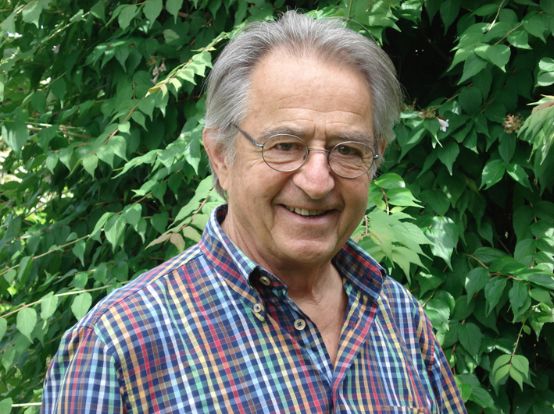
Peter Sigrist is an all-rounder as a teacher, singer and conductor. He conducts his choirs with skill and great attention to detail. In doing so, he brings his singers to great heights. After 45 years, he is now bidding farewell to the Lucerne Concert Choir.

Peter Sigrist in June 2017. photo: zVg

Peter Sigrist comes from a family of musicians. His father was a teacher and organist and his mother's father also practiced this profession. Peter grew up with four siblings in the Maihof district of Lucerne. His father was responsible for playing the organ at the church there and conducted the church choir, a male choir, as was customary in the church at the time. One day, he called his son into the study and practiced the part of the solo soprano with him. Eventually, the nine-year-old took over this part in the choir. This was repeated until he was twelve years old, when the boy decided to stop singing in public. He feared that his voice would no longer hold up.

After his compulsory schooling, Peter attended the teacher training college and took organ lessons at the church music school with Josef Bucher. At the age of twenty, he taught at the comprehensive school in Ebnet, then as a teacher and organist in Ettiswil, a village with a wonderful baroque church, and later also in Dagmersellen. In addition to teaching, he enrolled at what was then the church music school and continued his training as an organist, conductor and singer. "I did it purely out of a love of music and because I wanted to improve myself. I had no idea what my career would be like."
 

Singing, conducting, teaching

In addition to teaching and studying music, Peter Sigrist performs as a lyric tenor wherever he is asked. At the age of 22, he sings the arias from J. S. Bach's St. John Passion after only a short preparation time. "That must never happen to you again," he says to himself. He resolves to only perform well-prepared at concerts in future. During this time, he also practices on the organ for four hours a day.

At the age of 27, he passes his organ diploma with top marks. He now teaches at the Lucerne Teachers' College (music and organ). He also takes singing lessons and voice training methodology at the Lucerne University of Applied Sciences and Arts. He receives more and more engagements as a singer in all the major cities in Switzerland and also abroad. He often sings with his second wife, the soprano Rosmarie Hofmann, and founds the vocal quartet musica sacra.

In 1972, he founded the choir of the Lucerne Cantonal Teachers' College: When his first class graduated, they wanted to continue singing in the choir. From then on, rehearsals took place outside of school hours, every Tuesday from 6 pm. This is still the case today. Only the name has been changed: It has been called the Lucerne Concert Choir since 2001. Initially there were around fifty singers, but then the choir became better known and performed great works such as Le Laudi by Hermann Suter, Gloria and Stabat Mater by Francis Poulenc, St. Paul and Elias by Felix Mendelssohn-Bartholdy. More and more people showed interest and wanted to join in. Today, the choir has 110 members. From 1982 to 2014, Peter Sigrist also conducted the Zurich Young Concert Choir and was a frequent guest conductor in Germany.
 

Keep at it and say goodbye

Peter Sigrist retired at the age of sixty and now works as a freelance singer and conductor. As a choir conductor, he likes to keep at it, be it in terms of intonation, language or dynamics. He can inspire. "I do everything I can to motivate the singers. But if a concert is to be a success, it means hard work: practicing, repeating and rehearsing again and again." It is the progress that fascinates him. "Amateurs sing cautiously at first, but when they are confident, their souls suddenly open up. It's incredibly beautiful."

Peter Sigrist will conduct Felix Mendelssohn-Bartholdy's Symphony No. 2 (Lobgesang) with the Lucerne Concert Choir on November 12, 2017 at the KKL. It was his wish to perform this work with the baroque orchestra Capriccio. He is not finding it difficult to say goodbye to the concert choir, says the conductor with conviction. He had been preparing for it for two years. Then he adds cautiously: "We'll see what it looks like after the last concert." His music-making will then be limited to playing the piano. "I want to enjoy my newfound freedom. I've always been committed my whole life. Now I want to be free."
 

Baselland maps its cultural landscape

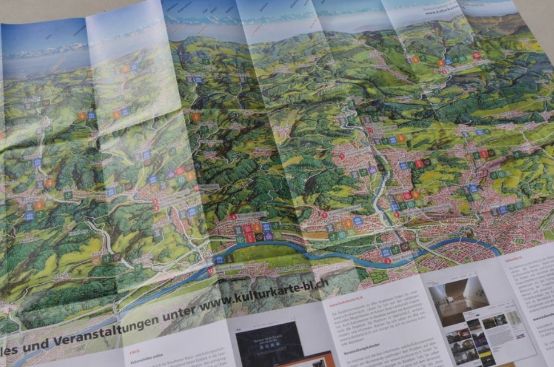
Hundreds of cultural organizations in the canton of Basel-Landschaft will be made visible on the "Kulturkarte Baselland". A supplementary online portal is to develop into a central information platform.

Cultural map of the canton of Baselland (Image: zvg)

The culture card was presented at a media conference in the Klavierwerkstatt Liestal. Government Councillor Monica Gschwind, Head of the Department of Education, Culture and Sport, explained that culture in Basel-Landschaft consists of a number of institutions that are well-known to the general public, but also of a sea of countless smaller, lesser-known cultural players.

It is precisely this versatility that can now be experienced in the new online portal with 560 entries to date. The project was made possible thanks to the collaboration between kulturelles.bl and Baselland Tourismus.

More info: www.kulturkarte-bl.ch


get_footer();