Music like a painting by Mondrian

The Kunstmuseum Solothurn is showing Hermann Meier's graphic scores until February 4, 2018. Some of the works can be heard on December 2.

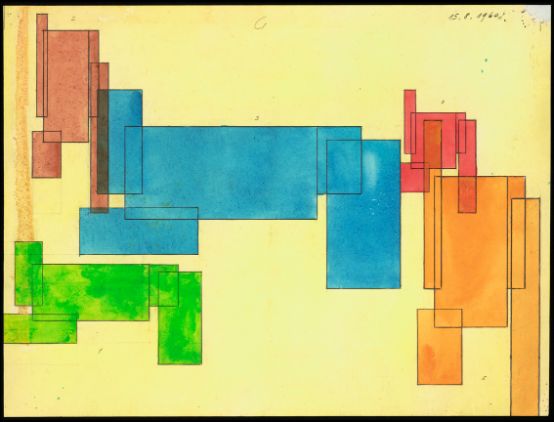
"Piece for large orchestra", 1960 © Paul Sacher Foundation, Basel, Hermann Meier Collection

"I must confess that I'm in a bad mood because of this concert. I'm trembling before it. I have anxiety dreams. Liver problems. Can't even drink wine. Terrible. This concert will surely be my last." So wrote the Solothurn composer Hermann Meier (1906-2002) on January 31, 1984 to the pianist Urs Peter Schneider, who was one of the first to repeatedly champion his oeuvre.

How would Meier have fared if he had known that people would be crowding into the entrance hall of an art museum to view his scores, sketches, drawings and plans at the vernissage? And that the Biel Solothurn Symphony Orchestra under Kaspar Zehnder would perform his Orchestral Piece No. 6 from 1957 in a subsequent concert in Solothurn's Franciscan Church, inserted between the movements of Beethoven's Fourth? How would he have felt, describing himself - in a greeting to his teacher Wladimir Vogel that was probably never sent - as "little Hans"?

Hermann Meier may serve as proof to all those who have always known that true art is created far away from the centers and their hustle and bustle. Switzerland has a few of this species, just think of Alfred Wälchli from Zofingen or the artists of Art brut. Meier is still virtually unknown, this "Schönberg from the Schwarzbubenland", although Schönberg is a bit of a misnomer. He certainly discovered atonality for himself early on, and he certainly familiarized himself with the twelve-tone technique with Vogel, but he obviously didn't like to use it so strictly, and when you hear his compositions, you understand why. This music is more geared towards tonal masses that juxtapose themselves harshly, with many pauses, very unique and uncompromising. He is more of a Helvetic Ustwolski, an erratic block, whose main profession is primary school teacher in Zullwil.

An outsider with a feel for fundamental trends

A black boy, at least in music, often gruff and edgy, with many abysses - and probably not suited to compromise. He worked on his pieces for a long time, as his sketches and plans suggest. They form the centerpiece of the Solothurn exhibition Mondrian musicwhich contains comparatively little music, but emphasizes this exhibitable aspect. And rightly so. For these "graphic worlds of the composer Hermann Meier", as the subtitle reads, point in quite different directions beyond music. Similar to Robert Strübin (1897-1965) from Basel, another outsider figure, they are eye-music or ear-graphics - and somehow typically Swiss in their unconventionality and constructive rigor: visual serialism, related to the Zurich Concretists, Max Bill and Richard Paul Lohse. Bill first spoke of "Concrete Art" in 1936, and Meier became aware of it at the end of the 1940s. Piet Mondrian's paintings were also a profound inspiration. And so he created graphic scores in the provinces at a time when the famous scores by Earle Brown, Morton Feldman and Iannis Xenakis, for example, were also being created, which have long since found their place in music history. The Paul Sacher Foundation, where the Meier estate is located, has contributed some of these scores for comparison. One find: Brown used a score for his epochal December 1952 just like Meier Millimeterpapier.

Above all, these graphics - "floor plans", as Meier called them - served him as templates for electronic music, which he worked on intensively from 1973 to 1983. Like Benno Ammann or Oscar Wiggli, he was also a lone pioneer in Switzerland in this field. In fact, you could now study all of this down to the millimetre, at least in the graphics, because unfortunately, apart from the sound layers, all projects remained unrealized: It is music in imaginary space. It is only today that the recordings are gradually being brought to sound. On "concert day" (December 2), some versions can be heard.

But it is precisely this imagination that the exhibition promotes. The overall visual impression alone is representative and extremely worthwhile. The comprehensive catalog is based on lectures given at the Meier symposium The Eye Composes last January at the Bern University of the Arts (see report by Azra Ramić at musikzeitung.ch/en/reports/conferences). Together with musicologists Roman Brotbeck (HKB) and Heidy Zimmermann (Sacher Foundation), curator Michelle Ziegler has created a Meier compendium that will hopefully help to make this music better known.

Ziegler is currently working on a dissertation on Meier's piano works; other projects are in progress. A new recording of his piano music with Dominik Blum is due to be released soon, and perhaps Hermann Meier will occasionally appear in a major concert. I wonder what he would say?

Catalog
Heidy Zimmermann, Michelle Ziegler, Roman Brotbeck: Mondrian Music. The graphic worlds of the composer Hermann Meier; 223 p. with numerous illustrations; Zurich, Chronos Verlag, 2017.

Diapason d'Or for mischief

The French specialist magazine Diapason has awarded the Diapason d'Or to the CD "Schabernack" by Les Passions de l'Ame. The prize is one of the most important independent European awards for classical music.

Les Passions de l'Ame (Photo: Guillaume Perret)

The Diapason d'Or is awarded monthly and is one of the most prestigious prizes in the industry alongside the German Record Critics' Prize and the English Gramophone Awards. Meret Lüthi, the artistic director of Les Passions de l'Ame, was also recently awarded the Music Prize of the Canton of Bern for her "outstanding and long-standing musical activity".

The ensemble's CD "Spicy" (2013) has already been awarded the Diapason d'Or, while "Bewitched" (2014) received the Supersonic Award. The three CDs have been released on the Sony Music Switzerland label. The name of the orchestra refers to an essay by René Descartes from 1649, in which the philosopher speaks of the passion that mediates between body and soul.

Pro Helvetia with new members of the Board of Trustees

The Federal Council has elected two new Foundation Board members for the Pro Helvetia cultural foundation: Françoise Simone König Gerny replaces Felix Uhlmann and Marie-Thérèse Bonadonna replaces Anne-Catherine Sutermeister.

Pro Helvetia headquarters. Photo: zVg

The previous Foundation Board members Anne-Catherine Sutermeister (Department of Art and Cultural Studies) and Felix Uhlmann (Department of Law) are reaching the end of their term of office. Françoise Simone König Gerny will represent the Department of Law from January 1, 2018. She is Co-Head of the Legal Service in the General Secretariat of the Department of Economic, Social and Environmental Affairs, Basel-Stadt. Marie-Thérèse Bonadonna, Cultural Delegate of Club 44 in La-Chaux-de-Fonds, will also take over the Arts and Cultural Studies department on January 1, 2018.

The current term of office lasts until 2019. The other members of the Board of Trustees are Susanna Fanzun, Marco Franciolli, Guillaume Juppin de Fondaumière, Johannes Schmid-Kunz, Nicole Seiler and Peter Siegenthaler.

The nine-member Board of Trustees of the Swiss Arts Council Pro Helvetia is the foundation's strategic body. It represents the various specialist areas of cultural life and the four language regions of Switzerland. Former Geneva State Councillor Charles Beer was confirmed in his position as President of the Foundation by the Federal Council and will take up his second term of office on January 1, 2018.

Precarious teaching positions for composers in Bavaria

The DKV's Fachgruppe E-Musik (FEM) and the Bavarian branch of the Deutscher Komponistenverband (DKV) are showing solidarity with the striking lecturers at the Bavarian state music academies.

The protest forms in the auditorium of the Munich University of Music. Photo: Juan Martin Koch

Without the many lecturers at the state music academies in Munich, Nuremberg and Würzburg, it would not be possible to maintain their rich educational program, writes the DKV. The lecturers are a cornerstone of academic music education in Bavaria. Like their full-time colleagues, they often do the same work. However, they are only paid a fraction of what permanent staff receive.

Like this, the lecturers give individual lessons, seminars and lectures in almost all departments and subjects. Many composers also teach music theory, aural training and composition in particular. Some of them have been doing this for decades and, according to DKV, they still have to worry every semester about the extension of their teaching contract and, unlike their permanent colleagues, have to take out their own health insurance and provide for their own meagre pension, without continued payment of fees in the event of illness.

The lecturers have therefore gone on strike for two weeks. Among other things, they are demanding appropriate remuneration, a "dignified retirement pension", a sufficient number of hours per week to earn a living so that they do not fall into financial hardship, the right to participate in university committees and continued payment of fees in the event of illness.

More info:
www.nmz.de/kiz/nachrichten/deutscher-komponistenverband-landesverband-bayern-solidarisiert-sich-mit-lehrbeauftr
 

Lucerne Recognition Award For Christov Rolla

The City of Lucerne honors the visual artist Peter Roesch with its Art and Culture Prize. Recognition prizes go to the translator Ute Birgi-Knellessen and the musician Christov Rolla.

Cristov Rolla (Image: zvg)

Born in 1977 in the Seetal valley of Lucerne, Christov Rolla studied choral conducting and music education at the Lucerne Academy of School and Church Music after gaining his primary school teaching diploma at the Hitzkirch Teachers' College. Rolla works full-time as a freelance theater musician.

Rolla also works as a choirmaster with the Johanneschor Kriens and the a cappella ensemble Integral. He is also the pianist and co-lyricist of the chanson formation Canaille du jour, a permanent member of the reading stage The Beauties and the Beast (Loge Luzern), and he regularly writes columns for 041 - The culture magazine as well as the Werklehrmagazin Traces of work. Rolla lives in Lucerne.

The Lucerne City Council is honoring the work of artist Peter Roesch with the 2017 Lucerne Art and Culture Prize. This is endowed with 25,000 francs. The recognition prizes for the translator Ute Birgi-Knellessen and Christov Rolla are endowed with CHF 10,000 each.

​
 

Tartini's theory of the third tone

When two tones are played on the violin, a third tone is heard. In her dissertation, the Swiss musician Angela Lohri studied combination, difference and summation tones using sources from the 18th and 19th centuries.

Photo: Tobias Kunze/pixelio.de

In 1714, the 22-year-old Italian violinist and composer Giuseppe Tartini discovered that a third note ("terzo suono") could be heard when playing two notes on his violin. From 1728, he made this phenomenon a fundamental rule for the students of his school when tuning, which became known throughout Europe. He published his research in 1754 and 1767 and discussed it with Leonhard Euler, among others. Tartini reported that Plato had already known about it and interpreted it as a sign of the soul of the world: "(...) the harmony of the universe is the whole tree; music is a branch of it, but necessarily of the same nature and root, which the innate music of the human species obviously proves, since it alone is capable of the science of number. In this sense there is knowledge and nature in number, (...) and in this sense there is the possibility of discovering the tree through the branch, the whole from the part (...)"

This harmonic view of Tartini is receiving increasing attention in today's research, especially since neurological findings on the connections between the ear and brain have increased. The integer order of overtones, which is intrinsic to all sounds, is physiologically regarded as fundamental to everyday sound recognition. Over the last 300 years, researchers have continually found new ways to track down the combination, difference and summation tones.

In her dissertation, the Swiss Angela Lohri expands on the complexity and multi-layered nature of the phenomenon using primary sources with a focus on the 18th and 19th centuries and explains the differences. She returns to Tartini's holistic view: the third tone is the bass of the two tones and their common overtones, i.e. the unity in the multiplicity; the overtones in turn represent the multiplicity in the unity. To illustrate this, he composed 26 two-part Piccolo Sonata for violin without writing the bass: it would emerge by itself. Tartini defended himself against the one-sidedness of contemporary scholars and musicians and emphasized that his theory was valid for the violin. physical (the combination tones are created in the air), harmonic (see quote above) and musical-practical as a unit.

Lohri makes a significant contribution to the musical aspect: On stringed instruments without frets such as the violin, you can play two syntonic tones (with integer ratios) and control them precisely with the combination tones, as these react very clearly to even the smallest changes of the finger on the string. With the tritone, for example, you can clarify the harmonic context (is the lower or the upper tone the leading tone?), as you have two different combination tones to choose from with a subtle setting! Lohri reports on her listening experiments with various violins and strings, similar to those previously carried out by Pierre Baillot and Michelangelo Abbado. These studies also took her to Stockholm, where she was able to work even more precisely with a string machine. The problem of tempered tuning is approached philosophically by Hans Kayser and Dieter Kolk: Tolerance between idea and reality seeks a way through "all our considerations of nature and spirit" with limited scope.

I underpin my recommendation to study this book for musicians, instrument makers and as an occasion for further research with a quote from Angela Lohri: "The importance of combination tones lies ... in their effect and suitability as a method for sensitizing the perception of tone ... Their mathematical-harmonic properties tell us more about the deeper essence of music." And from Gerhard Mantel: "String players at music academies spend 70-90 percent of their practicing time on improving intonation." The printed book is very helpful for studying, which requires a lot of leafing back and forth. The missing index is advantageously replaced by a perfect search function in the electronic version.

Image

Angela Lohri, Combination tones and Tartini's "terzo suono", 316 p., 94 illustrations and sheet music, free download, paperback € 49.99, hardcover € 55.99 Schott, Mainz 2016, ISBN 978-3-95983-079-9

The opera sky in new lighting

A new series from Edition Breitkopf offers aria albums organized by voice range and subject. Commentaries on the pieces as well as linguistic, methodological and stylistic tips complete the editions.

Photo: Roland Ster/flickr.com

Edition Breitkopf has set out to reorganize the opera singer repertoire - what a laudable undertaking! The special feature: The arias have been selected according to vocal criteria, range, tessitura and role type, and this closes a major gap. Until now, when you bought an aria album, you usually had to deal with works across all disciplines, with perhaps five or six arias fitting your own profile ...

The aim of this collection of repertoire is to compile good sheet music, organize it clearly and present it in a user-friendly way. This is achieved by organizing it according to vocal subjects. This is interesting for university students and lecturers on the one hand, but also for singers who are already in professional life and want to expand their repertoire, are considering a change of subject or are preparing for theater auditions. The collection contains both popular audition arias for the respective vocal subject, but also integrates less well-known and less accessible material, for example from classical modernism.

The first two of four volumes for soprano have been published: Volume 1: Lyric coloratura and Volume 2: Lyric - subdivided into lyrically easy and lyrically difficult. According to the publisher, the volumes Dramatic Coloratura and Dramatic Soprano will follow at the end of 2017.

In this first volume for coloratura soprano we find a pleasingly broad and varied selection, ranging from Handel's Alcina to Mozart's Blondchen, via Lakmé, Juliette and Olympia to more modern roles such as Strauss's Zerbinetta and Cunegonde from Candide by Leonard Bernstein. This volume contains 27 arias and is supplemented by a CD-ROM with aria texts in the original language as well as German and English translations of the texts.

An appendix also contains individual comments on the arias: Range and playing time, their positioning in the context of the opera as well as their content, characterization of the figure and as icing on the cake, so to speak: methodical notes from the singer's point of view, singing technique and stylistic tips (in these commentaries you virtually "hear" an experienced singing teacher, as each of us has certainly had at one time or another - and even bilingually ...).

The series, which began with the two soprano volumes and three baritone volumes, is to be continued for alto, bass, mezzo and tenor and will conclude in 2019.

Image

OperAria. Repertoire collection edited by Peter Anton Ling and Marina Sandel, € 29.80 each, Breitkopf & Härtel, Wiesbaden 2017

Published so far:

Soprano:
lyrical - coloratura EB 8867
lyrical EB 8868

Baritone:
lyrical EB 8877
lyrical-dramatic EB 8878
dramatic 8879;


Practice historically informed

In her technique book for transverse flute, Anja Thomann has expanded historical sources into series of exercises that take all the important aspects of playing into account.

Excerpt from the title page

In the tone and technique book for transverse flute Back to basics the transverse flutist Anja Thomann has compiled specific exercises on articulation, finger technique, intonation and tone shaping. Most of the exercises are based on historical sources, each of which is preceded by a facsimile of the original. The author has used methodical works by Michel Corette, Charles de Lusse and Johann Joachim Quantz as sources. Excerpts from these are expanded into complete methodical exercises so that the book can be used to practise basic tonal and technical exercises "historically informed".

Chapter one begins with short preludes in all keys, followed in the second chapter by introductory exercises which are extended from the duole to triplets and groups of four. The articulations common in the Baroque period, such as tidi and diri, are included right from the start. Scales and arpeggios follow in chapters three and four. In chapter five, typical baroque figures such as alternating notes are practiced in a sequential manner and chains of thirds and fourths are also taken into account. This is followed in the sixth chapter by exercises for developing the tone, which include intervals, chromaticism and exercises for shaping long tones using swells. The author devotes the entire seventh chapter to the articulation did'll and expands it with her own practice ideas through singing and playing. In the eighth chapter, ornaments and trills based on a scale are sequenced. The book ends with a detailed fingering chart and a trill chart, which are supplemented with helpful tips on intonation.

When studying these valuable and advanced exercises by Quantz, de Lusse and Corette, some will realize that their structure anticipates what Marcel Moyse or Paul Taffanael later produced in their methodical booklets for the Boehm flute. This clearly laid out publication is a great enrichment for a basic structure of tone, technique and articulation on the transverse flute, as the essential aspects are summarized in one booklet.

Image

Anja Thomann: Back to basics. A technique book for the transverse flute, EW 982, € 19.80, Edition Walhall, Magdeburg 2016

Sacher's reception of Schönberg

A publication by the Paul Sacher Foundation presents documents and commentaries that show how composers engage with Schönberg's works.

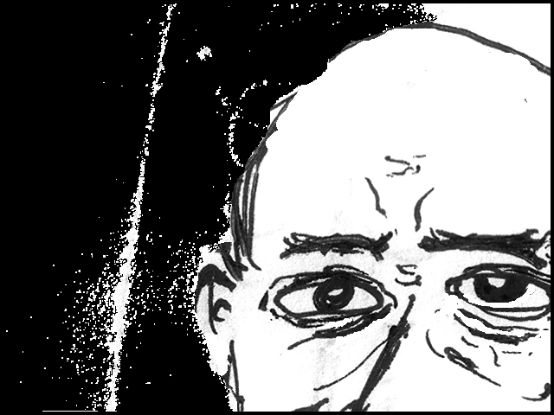
Arnold Schönberg. Drawing by Edward Drantler, 2007, wikimedia commons

The Paul Sacher Foundation in Basel came into possession of numerous documents on the history of Arnold Schönberg's reception through the acquisition of many estates of composers who were involved with his music. As a commemorative edition for the 70th birthday of musicologist Hermann Danuser, 59 selected documents with commentaries by eight authors are now available.

As a conductor and patron, Paul Sacher (1906-1999) primarily championed Bartók, Honegger, Martin, Stravinsky and neoclassicists such as Martinů and younger composers. While the patron Werner Reinhart and the conductor Hermann Scherchen had repeatedly championed Berg, Schönberg and Webern in Winterthur since the 1920s, it was not until 1933 that Schönberg's 2nd String Quartet op. 10 in a version for string orchestra, a work of the Second Viennese School, was included on a program of the Basel Chamber Orchestra founded and conducted by Sacher. In the last years of his life, Sacher secured the manuscripts of Schönberg's Five orchestral pieces op. 16 and Kol nidre op. It is an irony of fate that the conductor, who until then had shown himself to be closed to Jewish music, acquired a composition that was central to Schönberg's self-image as a Jew.

The music that began with Anton Webern's arrangement of the prelude to the Gurre songs for two pianos, eight hands (1909), cover a broad spectrum up to Heinz Holliger's transcription of the Six little piano pieces for chamber ensemble (2006). Arrangements of the same pieces by Wolfgang Rihm and Younghi Pagh-Paan will also be presented. Among the early compositional explorations of Schönberg's music, Stravinsky's Trois poésies de la lyrique japonaise (1912/13) and Milhaud's 3rd string quartet with voice (1916). The most interesting documents also include Bartók's contribution Arnold Schönberg's music in Hungary to the Viennese avant-garde magazine Music sheets of the Anbruch (1920), Schönberg's Piano Suite op. 25 with annotations by Stefan Wolpe and Klaus Huber's performance manuscript An attempt at greatness. Schönberg's self-image in his letters (1974).

The publication is attractively designed with black and red lettering and contains an alphabetical list of the illustrated documents, a list of manuscripts and annotated printed editions relating to Schönberg in the collections of the Paul Sacher Foundation and an index of names.

Image

"On revient toujours". Dokumente zur Schönberg-Rezeption aus der Paul Sacher Stiftung, Festgabe für Hermann Danuser zum 70. Geburtstag, ed. Paul Sacher Stiftung, Basel, 192 p., € 35.00, Schott, Mainz 2016, ISBN 978-3-7957-1202-0

About Kodály's chamber music

A German book about Zoltán Kodály is rare anyway. This one is also devoted entirely to his chamber music. - Hopefully an incentive for one or two ensembles to include it in their programs.

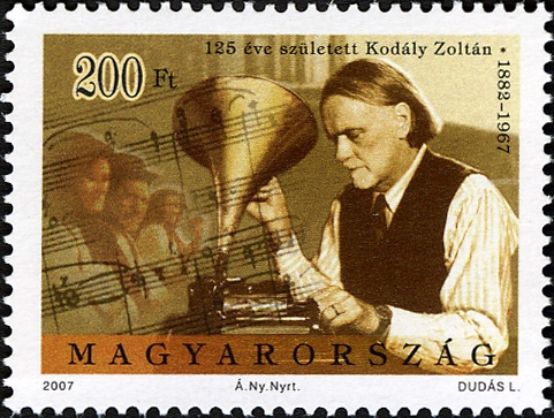
Stamp commemorating the 125th birthday of Zoltán Kodály. Hungarian Post Office/wikimedia commons

An overview of the 57 volumes in the series Studies on valuation research, one is amazed at the diversity of the subject areas, but is often also surprised that many of the findings hardly reach beyond the boundaries of science to the musicians and concertgoers, who could be regarded as their "consumers". However, since in most cases these are the collected lecture manuscripts from symposia, whose language sometimes corresponds to specialist jargon, they would have to be "translated" for laypeople. And so it is a long way to the performers and then to the concert introductions.

In this volume on the chamber music of the Hungarian composer Zoltán Kodály (1882-1967), however, all the texts are written in a pleasingly readable style. In addition, extensive score examples are included so that "reading along" with the music makes it easier to access the aspects discussed. Hartmut Schick examines the Cello Sonata op. 4 from the perspective of the fourth, the treatment of which forms the threshold to New Music. Roswitha Schlötterer-Traimer shows folk music elements in the first and second string quartets, László Vikárius in the solo cello sonata op. 8. Michael Kube focuses on the string quartet op. 2 with its reception and printed editions, Anna Dalos on the string quartet op. 10, whereby the period of the First World War plays a role here.

It is commendable that the space belongs to Zoltán Kodály alone (without the usual reference to Bartók) and that the socio-political side of the period before the First World War - Kodály's Budapest around 1900 - is presented in detail by Ilona Sármány-Parsons. Thomas Kabisch and Klaus Aringer deal with the two unusually scored works Opus 7 (Duo for violin and cello) and Opus 12 (Serenade for 2 violins and viola). Thus, some compositions are presented that rarely find their way into today's chamber music programs. Such a publication could remind musicians of Zoltán Kodály's name and remedy this shortcoming. German-language literature is so rare that even the small book with the five conversations that Lutz Besch had with Kodály is mentioned several times (Verlag Arche, Zurich 1966).

Image

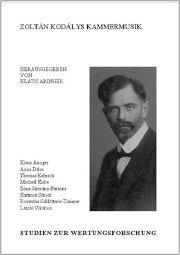
Zoltán Kodály's chamber music, Studien zur Wertungsforschung 57, edited by Klaus Aringer, 239 p., paperback, € 28.50, Universal Edition, Vienna 2015, ISBN 978-3-7024-7283-2

Musical circle of fifths

With Violin Circle, violin teacher Markus Joho, who works in Aarau, has completed an all-around hit by choosing the circle of fifths as the theme for a completely different violin school.

Excerpt from the title page

The catchy tunes by famous composers and many pieces created by the author himself guide the learner through all keys in an entertaining way and provide countless important theoretical and technical foundations for solid violin playing. I can well imagine this booklet as a teaching aid for adult beginners or those returning to the violin. For bright children, the Circle be useful as a supplement to another course.

Two thirds of the 136 numbers are attractive songs and compositions, the majority of which are set as excellent violin duets. Thanks to a clear presentation with keywords next to the page numbers, technical details highlighted in blue and an alphabetical table of contents, the selection process is made easier. Explanations could be formulated more simply and introductory exercises could be more graphically attractive. The playing of positions plays a secondary role; in some pieces, alternative fingerings would be an asset. The treatment of chromatic, whole, blues and gypsy scales is valuable, as are the suggestions for improvising, transposing and composing.

Markus Joho: Violin Circle, An enjoyable booklet for playing and practicing the keys and techniques of the violin, PE 1003, Fr. 29.80, Edition Pelikan/Hug Musikverlage, Zurich 2016

Social archive takes over Gurtenfestival documents

The archives relating to the first five Gurtenfestivals (1977 to 1983) will go to the Swiss Social Archives in Zurich. The Gurtenfestival pioneers invite you to make further memorabilia available to the public.

(Photo: Daniel Leutenegger)

The Gurten Festival materials collected and stored by Ueli Fricker and Daniel Leutenegger for over 40 years will be transferred to the Swiss Social Archives in Zurich in the coming months. They will be supplemented by the files of founding member Hansruedi Egli, which have so far been processed and secured by Hansueli von Allmen's Cabaret-Chanson-Mundartrock-Mimen archive in Thun.

The first five Gurtenfestivals were organized by an honorary organizing committee and hundreds of volunteers and attracted up to 30,000 people to Bern's local mountain each time. The Gurtenfestival was completely free of advertising and was organized without any sponsorship.

Fricker and Leutenegger are inviting other members of the organizing committees from the early years, helpers, participants, visitors, media people and others involved at the time to join them and entrust them with memorabilia from the first five Gurten Festivals (texts, photos, drawings, videos, sound recordings, objects, etc.), which they will collect and then pass on to the Swiss Social Archives.

For deliveries by post:
Ueli Fricker, Lombachweg 38a, 3006 Berne

For deliveries via e-mail:
daniel.leutenegger@dreamteam.ch

Daybreak on the drumset

Claus Hessler researches the origins of drum signals and how they were adopted in various schools of rudimental drumming.

Claus Hessler. Photo: Florian Alexandru Zorn

The activities in the military garrisons were determined by the drums. Specific drum pieces gave the soldiers the signal for day watch, assembly, inspections, eating or night rest. The soldiers were expected to familiarize themselves with the drum signals and follow the orders immediately. (Free translation from www.warnersregiment.org)

The Camp & Garrison Duty is a catalog of traditional drum pieces. Claus Hessler traces their path from their beginnings in the British army to the modern drumset in his latest work Camp Duty Update. He begins with the historical background and contexts of European drumming tradition, from where the transfer to the various schools of rudimental drumming is traced.

After a brief definition of the term "rudiment", the author takes us on an entertaining journey through time into the fantastic world of drumming. We learn that drums were first used as early as the 14th century, mostly in connection with warlike events, to transmit information, but also to intimidate the enemy. Hessler's horizon spans several centuries up to the modern era and practically all of Europe geographically. The statements on the geographical and musical classification of rudiments as well as the brief explanations of "drag" and "ruff" are very informative.

With the Air des fifres ou hautbois by the French court musician and composer André Danican Philidor, Hessler moves on to practice in the second third of his 90-page work. All the titles presented here are from the U. S. Camp & Garrison Dutythe collection from which Hessler derives the title of his course. There are delicacies such as The Downfall of Paris or Yankee Doodle. Pieces like these and many others are recorded with piccolo flute on the accompanying CD and are also available as play-alongs. Hessler presents the drum accompaniment in the original version and in his own arrangements - which provide a number of surprises. The author has also written interpretation aids for some pieces. These are intended to help the player by means of written-out rolls and ornaments. All music examples are written in Berger notation, which is briefly explained at the beginning of the book.

In his outlook, Claus Hessler uses the example of Another Grenadier the realization that the art of "marching drumming" can certainly be transferred to the drumset. A table towards the end of the book compares rudiments and their names in the various drumming traditions. The frequency of quintuplets in the following exercises is striking. The author writes in the foreword: "The fact that many rudiments gain significantly in comprehensibility and flow against the background of rhythms based on quintuplets may be a new aspect for many readers."

Camp Duty Update is a refreshing change in the great abundance of modern percussion literature - and should therefore not be missing from any well-stocked collection. Claus Hessler works as a clinician on an international level and writes for magazines such as Modern Drummer. With his book publications and the double DVD Drumming Kairos he has already set standards in the past. He teaches at the Frankfurt University of Music and Performing Arts, among others.

Image

Claus Hessler: Camp Duty Update. Vom ursprünglichen Wesen und Sinn der Drum Rudiments, book and MP3-CD, 20255G, € 19.95, Alfred Music, Cologne 2015, ISBN-13:978-3-943638-93-6

Kodály first edition

Zoltán Kodály also created a version of his "Hungarian Rondo" for small orchestra for cello and piano. It is now available in print for the first time.

Zoltán Kodály 1930 Source: Pesti Napló 1850-1930/wikimedia commons

Composed in 1917 Hungarian Rondo is one of Zoltán Kodály's most catchy compositions: four Hungarian folk songs and an instrumental dance melody are effectively combined in rondo form.

The well-known version for small orchestra was premiered in Vienna in 1918. However, Kodály also prepared a version for cello and piano, which was first performed in Budapest in 1927 but has not yet been published.

The first edition now published by Editio Musica Budapest is a welcome addition to the cello literature. The level of difficulty of the piece is high, roughly comparable with the Three pieces for cello and piano by Nadia Boulanger. The composer is not stingy with effective effects such as pizzicati in the left hand, virtuoso runs in the high register, double stops and sonorous cantilenas in the low register. The treatment of the cello part is sometimes reminiscent of David Popper's compositions; Kodály, who plays the cello himself, must have been familiar with his cello works, as Popper taught at the Liszt Academy in Budapest.

The edition was prepared by the Hungarian cellist Miklós Perényi, who recorded the work with Dénes Várjon at the piano for Hungaroton in 2003.

Image

Zoltán Kodály: Hungarian Rondo for cello and piano, edited by Miklós Perényi, first edition, Z. 14990, Fr. 14.70, Editio Musica Budapest 2016

Sibyl Matter on the STB Foundation Board

The municipal council of the city of Bern has elected Sibyl Matter to the seven-member Board of Trustees of Konzert Theater Bern (KTB). On January 1, 2018, she will succeed Peter Stämpfli, who has been a member of the Board of Trustees for many years and will step down from the Board at the end of December 2017.

Sibyl Matter (Photo: Alexander Egger)

53-year-old Sibyl Matter is an advocate, notary and mediator and a partner in the Solvas law firm. Among other things, she is President of the Bern Center for the Blind and Disabled and a member of the Progr Foundation Board. Sibyl Matter manages the rights to her father Mani Matter's songs on behalf of the family.

Peter Stämpfli has represented the City of Bern on the Board of Trustees of the newly founded cultural institution Konzert Theater Bern since its inception in July 2011. According to the City of Bern, he played a major role in ensuring that the KTB coped well with the challenging start-up phase and found its place as the most important cultural institution in the canton and the entire region.
 

get_footer();