Jörg Rothkamm, who works at the University of Tübingen, has come across a previously unpublished version of the "Erntelied". The Mahler composition will be premiered at the University of Tübingen on Tuesday, January 31.
Music newspaper editorial office
(translation: AI)
- 26 Jan 2017
Gustav Mahler 1909. photo: Studio A. Dupont, N.Y., Library of Congress/wikimedia commons,SMPV
Mahler and his wife Alma worked together on compositions. They often produced several versions of a piece. Rothkamm tracked down, verified and deciphered the piece based on a poem by Gustav Falke in Gustav Mahler's manuscript in the "Médiathèque Musicale Mahler" in Paris. He was able to show that Gustav Mahler's contribution to the joint composition was greater than previously expected.
The version differs from the known and published version in numerous respects, both in the text and melody, but above all in the piano accompaniment and harmonies. The ending in this autograph by Gustav Mahler, i.e. the handwritten version, is also completely new in formal terms.
At the premiere of the "Erntelied", Jörg Rothkamm will explain its genesis in an introductory lecture with numerous musical and sound examples. It was composed at exactly the same time as Mahler was drafting his last, unfinished 10th Symphony - and there are indeed musical connections between the works.
Info: January 31, 2017, 6:15 pm, University of Tübingen, Institute of Musicology.
institutionalize
To what extent have jazz and folk music become institutionalized in French-speaking and German-speaking Switzerland? - How does the Youth and Music program actually work? - And how are prospective teachers for music lessons at elementary school trained at the Bern-Jura-Neuchâtel University of Teacher Education?
SMZ
(translation: AI)
- 26 Jan 2017
To what extent have jazz and folk music become institutionalized in French-speaking and German-speaking Switzerland? - How does the program actually work Youth and music? - And how are prospective elementary school music teachers trained at the Bern-Jura-Neuchâtel University of Teacher Education?
All articles marked in blue can be read directly on the website by clicking on them. All other content can only be found in the printed edition or in the e-paper.
Focus
The rapid institutionalization of jazz Since 1975, jazz schools have been growing like mushrooms in French-speaking Switzerland
Bella Canto becomes Y+M manager A kind of guide through the official jungle for music school teachers
Former à l'enseignement musical scolaire Le cas de la HEP-BEJUNE
Since January 2017, Michael Kube has always sat down for us on the 9th of the month in row 9 - with serious, thoughtful, but also amusing comments on current developments and the everyday music business.
Here you can download the current issue. Please enter the search term "e-paper" in the print archive.
The download is free of charge for subscribers. All other interested parties will receive the PDF of the current issue (or an earlier issue) by e-mail. Costs: Fr. 8.-. Click here to order the e-paper.
Even well-known pieces such as Mozart's A major Sonata are occasionally a source of new information.
Karl-Andreas Kolly
(translation: AI)
- 25 Jan 2017
Photo: Klaus Rupp/pixelio.de
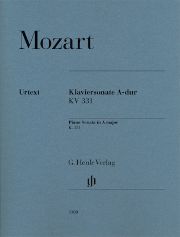
Of Mozart's 18 piano sonatas, the one in A major K. 331 is probably his most popular. The variation theme of the first movement, which Max Reger used for his own Mozart Variations for orchestra is just as catchy as the concluding Rondo Alla Turcawhich has recently caused a sensation in Fazil Say's version. However, none of these arrangements can match the magic of the original.
Speaking of the original: In September 2014, a sheet of music in Mozart's own hand was discovered in the Hungarian National Library in Budapest, which contains essential parts of the sonata. The G. Henle publishing house took this discovery as an opportunity to "fundamentally" revise its previous Urtext edition. And the work has already been recorded on CD in this version by pianist William Youn.
Well, the changes are not so "fundamentally" different and "sensational" after all. They mainly affect the 2nd movement, where individual notes of the theme and the harmony of a small section deviate from the usual. At least we now have the opportunity to study the sources in detail in the extensive Critical Apparatus and draw our own conclusions.
However, the new dating of the work is revealing: according to recent research, it was not written in Paris in 1778, but in 1783, when the centenary of the liberation of Vienna from the Turkish siege was celebrated. Is in the Alla Turca perhaps a big pinch of irony after all?
Incidentally, the A major Sonata (which does not contain a single sonata movement!) is not often heard in concert. The work is mainly popular in the classroom. Will this perhaps change with the new Henle edition?
Wolfgang Amadeus Mozart, Piano Sonata in A major KV 331 (Alla Turca), edited by Wolf-Dieter Seiffert, HN 1300, € 7.00, G. Henle, Munich 2015
Stemann succeeds Müller at the ZHdK
In February 2017, German theater and opera director Nicolas Stemann will take over as head of the directing profile in the Master of Theater at Zurich University of the Arts. He is currently in-house director at the Münchner Kammerspiele. He succeeds Stephan Müller, who is retiring.
Nicolas Stemann studied philosophy and literature at the University of Hamburg as well as directing at the Max Reinhardt Seminar in Vienna and the Theaterakademie Hamburg. After his first work in the independent scene (Kampnagel Hamburg), he was commissioned by the major state theaters in Germany, Austria and Switzerland, and later also in French-speaking countries.
Nicolas Stemann's best-known works include formally and substantively innovative adaptations of classics, world premieres of plays by Austrian Nobel Prize winner Elfriede Jelinek and his own musical-performative projects. He has also been active as an opera director since 2010 (including at the Opéra Comique Paris).
Nicolas Stemann regularly accepts invitations to festivals such as the Berliner Theatertreffen, the Salzburg Festival, the Holland Festival and the Festival d'Avignon. He has been a member of the Akademie der Künste Berlin since 2013 and has also taught at the Hamburg Theater Academy and the Ernst Busch Academy of Dramatic Arts in Berlin since 2003.
Rich character pieces
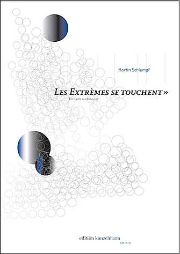
The eleven pieces for cello and piano, "Les extrèmes se touchent", by Martin Schlumpf travel through 200 years of music history and in part also pose riddles.
The Swiss composer Martin Schlumpf (born 1947) studied clarinet, piano, conducting, theory and composition at the Zurich Conservatory from 1968 to 1972. After graduating with Rudolf Kelterborn, he continued his studies with Boris Blacher in Berlin in 1974. From 1977 to 2011, he taught theory at the Zurich University of the Arts (formerly the Zurich Conservatory). Until 1980, Martin Schlumpf was primarily active as a composer in the field of serious music. Since then he has also been involved with improvised music and since the end of the 1980s has been active in a wide range of activities at the interface between improvisation and composition.
Edition Kunzelmann has published Schlumpf's Duo Les Extrèmes se touchent for cello and (lightly) prepared piano was published for the first time. The original version, written in 1975, was completely reworked in 2015. 11 character pieces form a multi-layered whole with Webernian brevity. The approximately 19-minute score makes reference to 200 years of music history and establishes direct links to Beethoven, Chopin, Alexander Scriabin, Bernd Alois Zimmermann and Jonny Rollins. But there are also musical puzzles: in No. III (Aria), the cello sings in the highest register - a reminiscence of the V movement from Messiaen's Quatuor pour la fin du temps? It is left to the imagination of the performers and listeners to discover further references and similarities.
The edition contains precise information on the preparation of the grand piano and the use of the two-part click track in the IXth movement.
The musical and technical demands of the work are high and require a corresponding degree of technical skill from the performers.
The world premiere with the dedicatees Thomas Grossenbacher and Petya Mineva can be seen at the Youtube portal can be called up.
Martin Schlumpf: Les Extrèmes se touchent, 11 character pieces for violoncello and piano, GM-1919, Fr. 57.00, Edition Kunzelmann, Adliswil 2016
Rail travel in a duet
Seven duets from cozy to daring for two players who are no longer beginners, but who like pictorial pieces.
Martin Sonderegger
(translation: AI)
- 25 Jan 2017
Photo: Glawster Oldspot
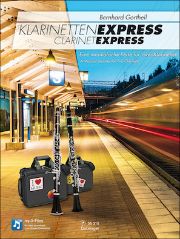
With Treno di Tarantella starts Bernhard Gortheils Clarinet Express The journey soon takes us on trains around the world and moves towards clarinetistic trickiness and dangerous curves. For this volume, Gortheil has composed seven duets for clarinettists who have already left the beginner's level behind them and enjoy interpreting pictorial music (titles). In the Orient Express both players are encouraged to play expressively with 'rubato molto vibrato', embellishments and glissandi. The piece Train dreams is a soulful ballad, Woodwind Nighttrain a classic blues and in Ticket for Two a ride on an old steam locomotive is the order of the day.
The composer incorporates rhythmic, technical and musical challenges in all the pieces, which are a pleasure to master. Together with the music, the expressive titles manage to create beautiful images.
Bernhard Gortheil, Clarinet Express. A musical journey for two clarinets, D 35 315, with mp3 files for download, Doblinger, Vienna 2016
Œuvres Suisses" project completed
Over the past three years, eleven Swiss orchestras have premiered a total of 33 works by Swiss composers. The project came to a close with a Jarrell premiere.
Music newspaper editorial office
(translation: AI)
- 23 Jan 2017
Michael Jarrell (Image: C. Daguet / Editions Henry Lemoine)
The world premiere of Michael Jarrell's "Des nuages et des brouillards" by the Orchestre de Chambre de Lausanne marked the end of the three-year "Œuvres Suisses" project. Eleven Swiss orchestras each commissioned three new works from Swiss composers and premiered them.
Œuvres Suisses" was launched as a joint initiative of the Swiss Arts Council Pro Helvetia and the Association of Swiss Professional Orchestras orchester.ch. Thanks to a partnership with the Swiss Broadcasting Corporation (SRG SSR), all world premieres have been recorded. About the website www.oeuvressuisses.ch all works can be listened to in full length.
The participating orchestras were responsible for financing the commissions and premieres. In return, they received contributions from Pro Helvetia towards their international touring activities and educational projects. During the project, 41 tours were realized in Europe, Asia and South and North America.
Ticino's pop scene strengthens
Sinplus is the first Swiss band to go gold with an Italian-language song, selling over 15,000 singles. This makes their song "Tieniti Forte" the most commercially successful Swiss single of the past year.
Music newspaper editorial office
(translation: AI)
- Jan 20, 2017
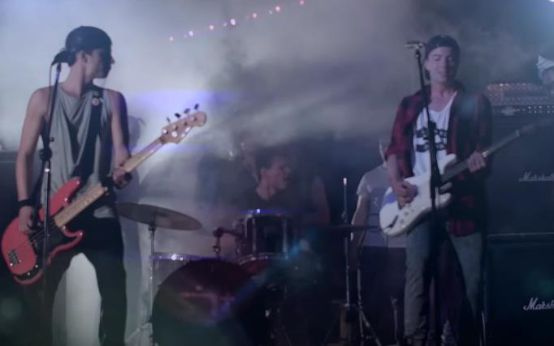
Sinplus (video still from clip for Tieniti Forte)
"Tieniti Forte" is the official title track of the 2016 European Gymnastics Championships, making Sinplus the first Swiss band ever to achieve gold status with an Italian-language song, selling over 15,000 copies. Previously, only the Italians Eros Ramazotti and Tiziano Ferro had achieved this.
Sinplus consists of the two brothers Ivan and Gabriel Broggini. In 2012, they took part in the Eurovision Song Contest for Switzerland with the song "Unbreakable". Their performance in Baku laid the foundation for a career that has made them particularly popular in Eastern Europe. Her last major tour took her through no fewer than 15 countries of the former Eastern bloc. She has also won awards such as the MTV Award for Best Swiss Act and a Swiss Music Award.
Bern Cultural Talks
Bern has a new mayor in Alec von Graffenried. He is considered to have a greater affinity for culture than his predecessor Tschäppat and will face Bern's creative artists as part of a new cultural dialog platform in February.
Music newspaper editorial office
(translation: AI)
- Jan 19, 2017
Alec von Graffenried (Image: zvg)
The City of Bern's cultural strategy, which was adopted by the municipal council in November 2016, names the strengthening of dialog and communication with cultural professionals and other interest groups as one of its three priorities. In this context, the City of Bern's Culture Department has developed a concept for a series of talks that will be implemented in collaboration with the Kornhausforum Bern from 2017: Four to five events will be held each year under the title "Berner Kulturgespräche im Kornhausforum".
The new cultural forum focuses on current cultural activities, cultural offerings, cultural promotion and cultural policy in the city and region of Bern. It is aimed at cultural professionals, who are offered a platform to exchange ideas and discuss issues relating to day-to-day cultural work. The series also aims to promote discussion between cultural professionals and interested members of the public, thereby contributing to cultural mediation and understanding.
The series begins at the beginning of February with an "among us": the new acting director of Konzert Theater Bern, Cihan Inan, will be talking to representatives of the independent theater scene in a closed circle. On February 20, there will be a public panel discussion with Mayor Alec von Graffenried on his understanding of culture and his initial ideas on Bern's cultural policy for the coming years. Other topics in 2017 will include the city's new practice to improve social security for cultural workers and an initial conclusion on the cultural strategy towards the end of the year.
WEF honors Anne-Sophie Mutter
The Davos World Economic Forum (WEF) has honored the German violinist and teacher Anne-Sophie Mutter with a Crystal Award for her support of young musicians.
Music newspaper editorial office
(translation: AI)
- 18 Jan 2017
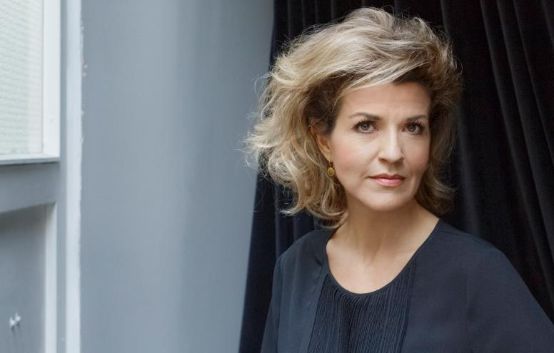
Anne-Sophie Mutter (Picture: Monika Höfler)
With this award, the WEF honors initiatives to support young musicians. In 1997, Mutter founded the "Friends of the Anne-Sophie Mutter Foundation", which supports highly talented string players. In 2008, the Munich-based charitable foundation of the same name was established: The aim is to support young, highly talented soloists in the violin, viola, cello and double bass worldwide.
In addition to the enormous sums of money involved in training, financing an adequate string instrument is also a major problem in many cases. Added to this are the corresponding insurance sums and unavoidable travel.
Also honored in Davos were the Colombian singer Shakira, ambassador of the UN Children's Fund Unicef, and the actor Forest Whitaker, who trains young people in several countries as conflict resolvers and peacemakers.
Previously unknown Chopin portrait
The Valais physicist Alain Kohler and the journalist M. Gilles Bencimon from Radio France Internationale present a previously unknown presumed portrait of Frédéric Chopin.
Music newspaper editorial office
(translation: AI)
- 17 Jan 2017
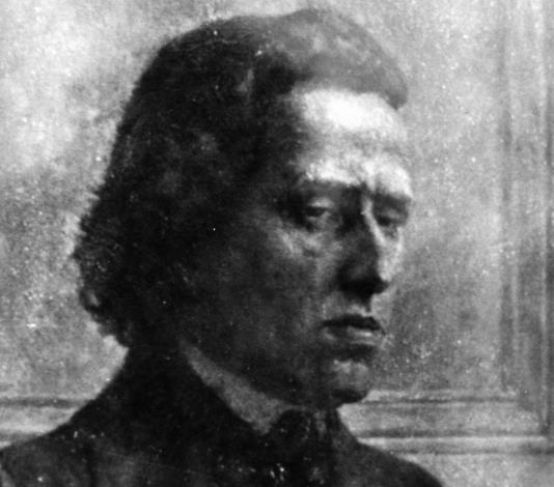
Daguerreotype by Louis-Auguste Bisson, most probably showing Chopin (Image: zvg)
Kohler discovered the portrait by chance in a private house where he was in conversation with a music lover. The renowned Chopin expert, who is very familiar with Chopin's iconography, persuaded the owner of the photograph to have the previously unknown portrait examined in detail. Together with Gilles Bencimon, he traced its origins.
According to Kohler, meticulous examinations of the picture leave little doubt that it is an authentic photograph of Chopin from 1847. It shows the composer shortly after his separation from George Sand, already clearly marked by a serious illness.
However, one fly in the ointment remains: the photograph is a photographic copy of the original daguerreotype, similar to two previously known but lost portraits. Despite intensive efforts, Kohler and Bencimon have not been able to find out more about the fate of the originals.
Concert halls and formats in Germany
To mark the opening of the Elbphilharmonie in Hamburg, the German Music Information Center (MIZ) is shedding light on the topic of "concert halls in Germany" - and German music academies are presenting alternatives to traditional concert formats.
Music newspaper editorial office
(translation: AI)
- 16 Jan 2017
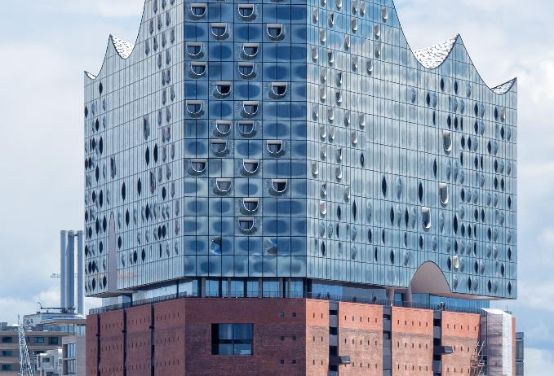
View of the Elbphilharmonie (Image: zvg)
At the heart of the MIZ's offering is a specialist article that asks what social significance concert halls have and what buildings and concepts are needed to make culture accessible to broad sections of the population. The organizational and management structures on which concert halls are based will be examined, as well as the question of location, their programming and artistic orientation.
In addition, the MIZ website offers detailed information on the infrastructure of the German concert hall landscape, for example on sponsors, operating forms and management structures of the individual houses, on their content orientation and performance operations as well as on hall capacities and historical facts. The new service can be accessed here
Meanwhile, the German music academies have joined forces for a special concert series: Under the artistic direction of Sebastian Nordmann, artistic director of the Konzerthaus Berlin, the students developed site-specific productions for the Konzerthaus, the Musikinstrumenten-Museum and for the Hamburger Bahnhof - Museum für Gegenwart - Berlin. Their aim is to show how to respond to changes in listening behavior and new performance practices - concert schedules and performed repertoire.
Schwäbisch Gmünd honors Rihm
Composer and director of the Lucerne Festival Academy Wolfgang Rihm receives the European Church Music Prize 2017, awarded by the city of Schwäbisch Gmünd in recognition of his "special work in the field of sacred music".
Music newspaper editorial office
(translation: AI)
- Jan 13, 2017
Wolfgang Rihm (Image: Universal Edition, Eric Marinitsch)
"His use of spiritual texts" combines "word and sound into a convincing unity that always focuses on people, reflects essential questions and is emotionally gripping", according to the citation. Wolfgang Rihm, who is celebrating his 65th birthday this year, will be presented with the award this year by Lord Mayor Richard Arnold as part of the European Church Music Festival (July 13 to August 6) in the Heilig-Kreuz-Münster Schwäbisch Gmünd.
The European Church Music Prize is endowed with 5000 euros. Since 1999, it has honored high-ranking performers and composers for groundbreaking achievements in the field of sacred music. Previous winners include the composers Petr Eben, Sofia Gubaidulina, Klaus Huber, Arvo Pärt, Younghi Pagh-Paan, Krzysztof Penderecki, Dieter Schnebel, Sir John Tavener and Hans Zender.
Other honorees include the conductors Frieder Bernius, Marcus Creed, Eric Ericson, Hans-Christoph Rademann and Helmuth Rilling, the organist Daniel Roth, the chamber singer Peter Schreier, the musicologist, conductor and composer Clytus Gottwald and the Thomanerchor Leipzig. This year marks the 19th time that the Schwäbisch Gmünd European Church Music Prize has been awarded.
Warming by the campfire
The impressions at the opening concert of the Elbphilharmonie on January 11 were overwhelming, Hamburg can be proud of the new landmark.
Georg Rudiger
(translation: AI)
- Jan 13, 2017
Elbphilharmonie in April 2016. photo: Maxim Schulz
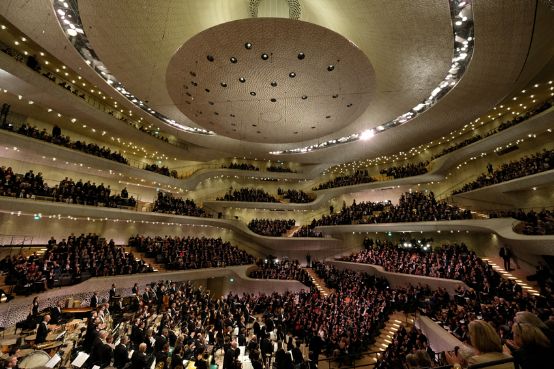
The path to art is steep. You have to make an effort to get to the large concert hall of Hamburg's Elbphilharmonie concert hall. A curved wooden staircase leads up from the publicly accessible plaza. And if you sit higher up in the steep hall, you have many more steps to climb if you don't take the easy elevator route. You can also simply follow the spherical lamps, which provide orientation like a strip of light. The fluorescent tubes that burn in the foyers around the hall are all directed towards the conductor's podium, explains Jan-Christoph Lindert from the Basel architecture firm Herzog & de Meuron during the morning press tour. The music is even staged in the foyer.
Much has been written about the acoustics of the large hall before a note has even been heard in it. Chief acoustician Yasuhisa Toyota has achieved perfect sound insulation by placing the double-shell hall on steel springs and thus decoupling it from the building. No ship's siren penetrates inside, no trumpet sound outside. Inside the hall, 10,000 gypsum fiber boards were installed, the different millings of which are intended to finely distribute the sound waves. The so-called white skin is actually gray and also sets a strong visual accent. Maximum material density meets maximum dispersion - like a jet of water splashing against a wall and forming a mist of droplets, explains Lindert. And promises that this creates the same auditory impression in all 2100 seats.
Ingenious architecture and transparent acoustics
The mood among the invited premiere guests is relaxed. People laugh and marvel, look around and touch the strange structures on the walls. There is no anger when the ceremony is postponed by half an hour. Anyone who has waited six years for the opening of the Elbphilharmonie can no longer be upset by thirty minutes. You don't look up at the stage, you look down. Even the visitors in the stalls are at eye level with the artists. Every seat can be reached from any other. No audience member sits more than thirty meters away from the conductor. The image of a campfire around which people gather, used by artistic director Christoph Lieben-Seuter, fits well with the feeling in the hall. Federal President Joachim Gauck spoke appropriately of a sense of community, which, however, did not reveal individuality.
The individual spectator areas vary in size. They are arranged like vines on a slope. This is why this form of hall design, which can also be experienced in a similar way in the Berlin Philharmonie, is called the vineyard principle. The crowd is divided into small groups. There is no sense of hierarchy. Ingenious architecture! But do the acoustics live up to the expectations? The first notes make you sit up and take notice. Conductor Thomas Hengelbrock begins the ceremony with Ludwig van Beethoven's overture to The creatures of Prometheus. The very first chord strikes jump out at the listener. The timpanist of the NDR Elbphilharmonie Orchestra hits the drumheads with wooden mallets. The sound is direct and clear. Music as a wake-up call! You wouldn't be able to doze off in the straight, hard upholstered seats anyway. The energy that immediately spreads from the stage into the hall is enormous. In the seat to the left behind the orchestra, directly in front of the organ, the strings and woodwinds sound as vivid as if you were hearing them from the front. You can follow every single voice like in no other concert hall - and observe every detail. Chamber music precision instead of billowing pathos. The first impression is overwhelming. Only the background noise of the organ impairs the listening pleasure in the adjacent seats that evening.
Intermission applause at the opening concert on January 11. Photo: Michael Zapf
Joy and jubilation
During the interval, there is a big crowd in front of the six bars. But the many staircase foyers and passageways also offer places where you can enjoy the spectacular view through the glass walls in peace and quiet. Or you can go right out onto the loggias, where you can hear the noise of the city. The stiff breeze ruffles your hair. The people of Hamburg don't want to be reminded of the cost explosion of the 789 million euro building. "It's all forgotten," says one lady, sipping her champagne glass. Mayor Olaf Scholz, who untied the Gordian knot of the construction freeze with new contracts in 2013, only briefly touched on the planning mistakes of the past at the press conference and appeared soberly Hanseatic in the hour of triumph.
For the actual celebratory concert, Thomas Hengelbrock subjects the Elbphilharmonie to a crash test, explores the extremes of the dynamics and distributes the artists around the hall. The warm, transparent acoustics can also be admired here when Philippe Jaroussky fills the entire hall with his delicate countertenor, accompanied only by a harp. With the extremely loud works such as Bernd Alois Zimmermann's Photoptosiswhere the organ (Iveta Apkalna) also contributes additional sound, the harshness increases. The rather dry hall forgives nothing. And you have to be very careful not to let the percussion and brass become too massive.
The other side of the coin is even more noticeable after the interval. In Richard Wagner's Parsifal-The winds and strings are often not congruent in the unison prelude. A millisecond's delay is enough - and the cogs no longer mesh. This is where the otherwise very precise and agile orchestra weakens. At the world premiere of Wolfgang Rihm's routine-looking commissioned composition Reminiscence. Triptych and saying in memoriam Hans Henny Jahnn Pavol Breslik's voice, heard from behind, does not have the same intensity as the instrumental sounds. Even in the finale of Beethoven's 9th Symphony with the Ode to joy the voices of Hanna-Elisabeth Müller (soprano), Wiebke Lehmkuhl (alto), Pavol Breslik (tenor) and Bryn Terfel (bass-baritone) get a little lost in space. The two choirs from NDR and BR (rehearsed by Philipp Ahmann), on the other hand, sound quite present at the back of the orchestra.
Other highly acclaimed halls such as the KKL in Lucerne, built in the classic shoebox shape, have nothing to hide from these extremely transparent acoustics. They have other strengths, such as a slightly longer reverberation, which does not make the orchestral sound seem as naked as it does in the Elbphilharmonie. In Lucerne, the registers blend better. However, with the ceiling reflector, the differently finished white wall and the exposed location on the water, there are certainly similarities between the two outstanding concert halls. In the Elbphilharmonie, Thomas Hengelbrock fires up his NDR Elbphilharmonie Orchestra one last time with his great charisma. The rest is joy and jubilation. Hamburg has every right to be proud of the city's new landmark.
Admission restrictions will continue to apply at Bern University of the Arts (HKB) in the 2017/2018 academic year. This has been decided by the cantonal government of Bern.
PM/Codex flores
(translation: AI)
- Jan 12, 2017
Photo: Ines Krmlmnstr/flickr.com
According to the Government Council's decision, a total of 300 new study places are available for the Department of Music, Theater and Other Arts, and 85 study places for the Department of Design, including Conservation-Restoration.
The HKB offers Bachelor's degree courses in classical music, jazz, music and media art as well as music and movement (rhythmics), and Master's degree courses in music performance, specialized music performance, pedagogy and composition/theory. Since 2016, a PreCollege has also been preparing students for a Bachelor's degree in music. The music program is complemented by an opera studio in the context of regular university education.