Players wanted

Two orchestras in Eastern Switzerland are looking for good amateur musicians to perform Rodion Shchedrin's "Carmen Suite" in May.

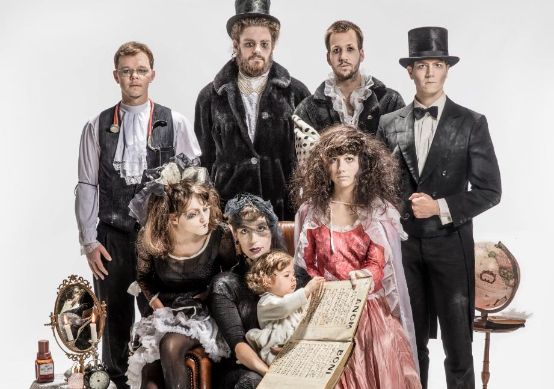
Actress Annette Stickel in the role of Carmen. Photo: Pascal Démarais,SMPV

Two young orchestras in eastern Switzerland are joining forces and are planning a joint project with Shchedrin's Carmen Suitewhich is also open to other interested amateur players. That is why the Sankt Gallen Chamber Orchestra and the Graubünden Young Orchestra are inviting young, young-at-heart and good string players to take part in four concerts in mid-May 2017 in St. Gallen (Lokremise), Chur and Altstätten. An unknown, inspiring version of the famous Carmen Suite (with 5 percussionists led by Eckart Fritz from Chur and a string orchestra) is developed together with the regular players in rehearsals in Chur and St. Gallen, and then put together with direction, stage, actors (led by Annette Démarais from St. Gallen, Dimitri Schule), percussion and lots of energy. The conductor of this production is the Flims musician and cellist Mathias Kleiböhmer

We are looking for interested amateur musicians to join our string orchestra. Rehearsals will start in January, the concerts are on May 12, 13, 14 and 19, 2017.


Further information at

www.kammerorchestersg.ch

Personal contact: Mathias Kleiböhmer (conductor), Tel. 076 377 59 54

Task force on the scarcity of space for cultural projects in Aarau

A survey of cultural professionals in Aarau shows that studio, rehearsal and club spaces are in short supply in the city. The establishment of a task force is planned to improve the situation for cultural workers.

Photo: Oliver Weber/pixelio.de

In an online survey conducted in August and September 2016, the City of Aarau's cultural office asked Aarau's cultural practitioners about the current situation of their studio, rehearsal and club spaces. 94 percent of the respondents took part.

The survey shows that many cultural professionals are currently looking for suitable rehearsal, studio or club rooms in Aarau and that the demand for rooms will increase over the next few years. They are looking for rooms up to 50 square meters with favorable rental conditions in the Aarau region. Many cultural professionals are willing to use rooms in interim use for a certain, fixed period of time.

The city itself cannot offer its own properties. In order to improve the situation for cultural professionals, a task force is to be set up. This is intended to raise awareness of the issue in the city and among the general public, maintain an exchange with the city's urban planning department and seek contact with private property managers. In particular, the mediation of space search, space offer and space sharing should be addressed.

This form of infrastructural support was already set out in the city's cultural concept from December 2014. Those responsible are hoping for unbureaucratic, clear and quicker access to spaces for public and private (cultural) events by setting up a space database.
 

Practical music education at elementary school

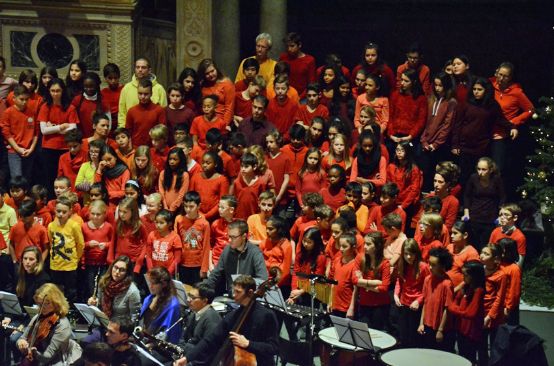
Lorenz Indermühle is the initiator and, since 2005, director of the "Sing with us!" project, which was carried out in 2016 under the title "da Pacem".

Photo: Sing with us!

The aim of the "Sing with us!" project is to have entire school classes from first to fifth grade perform Christmas carols from all over the world in a children's concert, accompanied by a small, young, professional orchestra with strings, wind instruments and harp. The initiator and director is Lorenz Indermühle, who lives in the Thun area and has experience with children's choirs and orchestras and whose aim is to give all the children taking part a deep, lasting experience of music. Our youngest grandson, aged 9, sang along to the concert, which we were able to attend in the large, completely full Neumünster church in Zurich. Over thirty teachers from the canton of Zurich took advantage of this offer and have been rehearsing diligently with their classes since the summer vacations, supported by a CD with the excellent, snappy orchestral arrangements.

The last rehearsal in the school building took place early on Advent Sunday morning. Afterwards, a single full rehearsal with orchestra in the Neumünster had to suffice; the concert began at eleven o'clock and turned out excellently with almost four hundred children singing by heart and with confidence. And there were rumba rhythms, 5/8 bars etc. to master.

From the program: Ninõ Lindo from Venezuela, La marche des Rois from France, Dormi, dormi, bel bambin from Italy, Jingle Bells from America, Da pacem, Domine by Melchior Franck, Every year again from Germany etc. with the crowning finale, the beginning of the first cantata of the Christmas Oratorio, combined with the Luther song From heaven high, here I come.

One could argue that only teachers who sing a lot with their classes anyway came forward. But the effect is contagious, at least in the school building, and the project is spreading to many cantons and even to the German neighborhood. There was even a concert in Granada! The project is self-supporting, financed by moderate ticket prices that are affordable for whole families. And it has an integrating effect on many children with a migration background.

Further information and photos are available at

www.singmituns.ch

Young jazz on tour

Every two years, musicians from the young jazz generation tour all over Switzerland as part of Suisse Diagonales Jazz. Now it's time again: from January 14 to February 19, 2017, ten bands will play 60 concerts at 25 different venues.

Marena Witcher (Image: zvg)

The 2017 Suisse Diagonales Jazz Festival brings together 25 jazz clubs, which are organizing sixty concerts with ten promising young jazz groups from 14 January to 19 February 2017. The bands were chosen for their artistic potential and the originality of their music.

The bands come from all parts of Switzerland and are called Esche, Gauthier Toux Trio, Mantocliff, Marena Whitcher's Shady Midnight Orchestra, Marie Kruttli Trio, Maurus Twerenbold Non Harmonic Quartet, Nojakîn, Pauline Ganty Quartet, Raphael Walser's GangArt and TreMeandy.

Suisse Diagonales Jazz 2017 starts on January 14, 2017 in Bern with a matchmaking event in the afternoon for professionals in the jazz scene and an opening event in the evening, bringing together jazz players from all over Switzerland.

Elina Duni will perform her solo project "Aufbrechen", in which she sings about the theme of "breaking up" in nine different languages. Matthieu Michel, Colin Vallon, Flo Götte and Domi Chansorn will then play in a quartet. The concerts start at 8 pm in the gymnasium at the PROGR in Bern.

Women in culture and media

To mark the establishment of a round table, the German Cultural Council has published the study "Women in Culture and Media. An overview of current trends, developments and proposed solutions" online as an e-book free of charge.

Photo: Rainer Sturm/pixelio.de

The study examines the state of gender equality in the cultural and media sector over a period of more than twenty years. It looks at the training situation, the presence of women in management positions in cultural institutions, the participation of women in the promotion of individual artists and much more over a period of 20 years.

A key finding of the study is that, despite the greater presence of women in some areas, there is no gender equality. This applies equally to cultural associations. 

According to Olaf Zimmermann, Managing Director of the German Cultural Council, the gender pay gap for freelance female artists in the cultural sector is "an alarming 24%". In response to the results of the study, the German Minister of State for Culture, Monika Grütters, has set up a round table on gender equality to discuss possible solutions.

Download the study:
https://www.kulturrat.de/wp-content/uploads/2016/12/Frauen-in-Kultur-und-Medien.pdf

Beethoven remains as popular as ever

Beethoven remains the undisputed most-performed composer - with six works in the top ten most-performed works ever. His Symphonies Nos. 5, 7, 3 and 6 are in the top 10, as are his Violin Concerto and Piano Concerto No. 5.

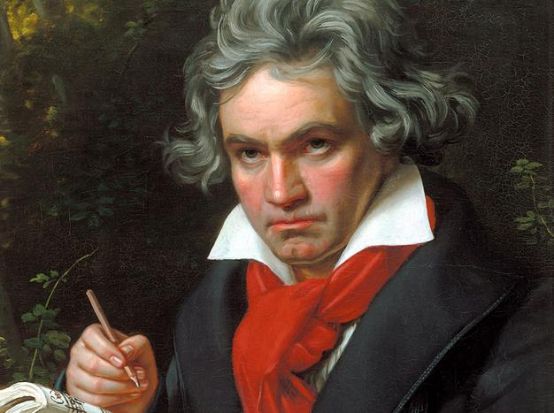
Ludwig van Beethoven, painting by Joseph Karl Stieler from 1820

According to statistics from the classical music platform Bachtrack, Beethoven's 5th Symphony is the most-performed work in general, with 145 performances in 2016. Tchaikovsky's Violin Concerto in D major was also played in the top 10, landing in third place - higher than ever before, while his Fantasy Overture "Romeo and Juliet" is in its fifth year on the rise, making it to 22nd place.

This year, too, anniversaries are influencing the ranking of composers; Dutilleux, Reger, Ginastera and Satie have all moved up the ranks and the same applies to Kurtág, who celebrated his 90th birthday in 2016.

As for the most active artist, Valery Gergiev was on the podium almost every other day - 143 concerts and performances were recorded by Bachtrack in 2016. The New York Philharmonic Orchestra maintained its status as the most active orchestra and the French brothers Renaud and Gautier Capuçon both ranked second among the busiest violinists and cellists with almost the same number of solo performances (50 and 49 respectively).

There are hardly any women in the list of the most active artists, with the exception of the female choreographers, who have left a clearer mark than the female composers: however, there are only 3 female choreographers in the list of the 30 most active choreographers.

Bachtracks database represents the world of classical music with over 32,000 registered events for 2016 all over the world. The platform claims to be the largest platform for classical music worldwide.
 

Legendary music collection in Bern accessible again

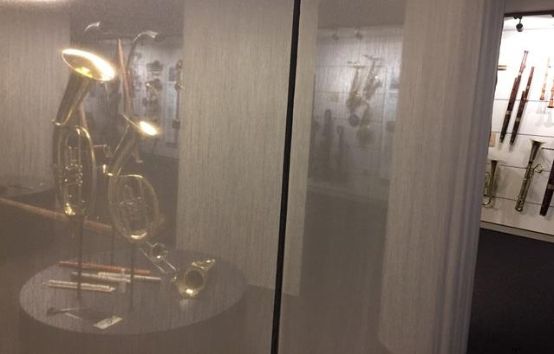
The collection of musical instruments originally housed in Zimmerwald by wind music specialist Karl Burri is once again accessible as the "Sounding Collection" in the center of Bern. The Center for Historical Musical Instruments opens on 21 January with the newly conceived exhibition "C'est le vent qui fait la musique".

Picture: zvg

Well over a thousand instruments from the important and internationally acclaimed Burri Collection have moved to Kramgasse. A small selection of them - supplemented by other objects - can be seen in the exhibition, which was conceived by musicologist Adrian v. Steiger, head of the collection. Scenographer Martin Birrer is responsible for the design.

Visitors can play twenty instruments themselves, from the Viking lute to the taragot, and they can also listen to the groups of instruments on display in videos on iPads. Six musical ensembles are presented, from "Turkish music", brass music from around 1800, to the instruments for Berlioz' Symphonie fantastique and cyclist music.

After the open day on January 21, the exhibition will be open from Wednesday to Saturday from 11 am to 5 pm. Guided tours and workshops are also available to visit the display collection in the basement, where the instruments and their history can be experienced vividly and sonically.

In addition to providing information, the collection is committed to preserving, expanding and researching this important collection. It also makes restored instruments available to specialists for historical performance practice projects, for example to the Bern University of the Arts Orchestra for a workshop performance of Stravinsky's "Sacre du printemps" in February 2017.

More info: sounding-collection.ch

State Music Council awards music school prize

For the first time, the State Music Council of the German federal state of Rhineland-Palatinate is awarding the "Student Prize of the State Music Council" to students who have consistently performed very well in the subject of music.

Logo of the Student Award,SMPV

At the end of the school year at a general education school in Rhineland-Palatinate, the best pupils are awarded the prize. In addition to good grades, the decisive factor is a special musical commitment in school (e.g. school orchestra, music clubs, etc.) and extracurricular activities (music club, choir, competition, etc.) that goes beyond regular lessons.

The music conference of the respective school decides who should receive the prize. The subject teachers are guided by the individual progress, the absolute and relative level of knowledge of the pupils and the objectives of the lessons. The winners receive a certificate and a voucher worth 15 euros, which can be redeemed in the online store of a music publisher.

More info: www.lmr-rp.de


Zohra pays a visit to Zurich

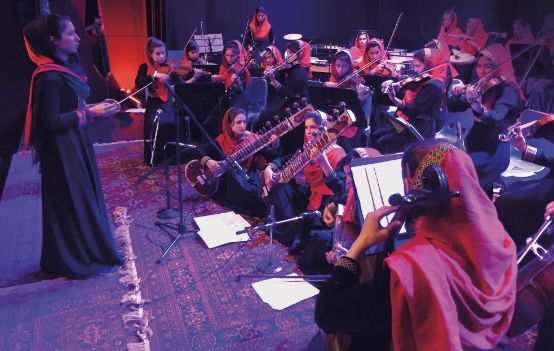
On January 21, 2017, the Afghan Women's Orchestra "Zohra" has been invited by the Tonhalle-Gesellschaft Zürich to perform traditional Afghan music as well as an arrangement of Beethoven's Ninth Symphony.

Afghan Women's Orchestra Zohra (Image: zvg)

The women's orchestra is on an international tour and will perform at the closing evening of the World Economic Forum in Davos. After the Youth Orchestra of Caracas from Venezuela and the Bochabela String Orchestra from South Africa, the Tonhalle-Gesellschaft Zürich is now inviting the third youth orchestra from special regions of the world.

More than thirty young Afghan women between the ages of 14 and 20 make music together under the most difficult conditions in this war-torn country. The Afghan Women's Orchestra is the first female ensemble in the history of Afghanistan. Before the war, women were present in public life, rode bicycles and largely enjoyed the same rights as men in education and employment.

At the Afghanistan National Institute of Music (ANIM), founded by Ahmad Sarmast, from which the orchestra emerged, music is a response to war and destruction, a way into the future of hundreds of Afghan children, regardless of their gender, ethnic or religious affiliation or socio-economic circumstances.

By making music together, girls and boys learn to treat each other with respect and break down gender-specific barriers. According to the Tonhalle Society's press release, families queue up every year to enrol their children in ANIM. Music can make a decisive contribution to building a peaceful civil society in this torn nation.

Message from the St.Gallen government on the Culture Act

The government of the Canton of St. Gallen has adopted the dispatches on a Cultural Heritage Act and a Cultural Promotion Act for the attention of the Cantonal Council. The dispatches form a new legal basis for promoting culture and preserving cultural heritage in accordance with the cantonal constitution.

Government Council of the Canton of St. Gallen. Photo: zvg

Thanks to the new cultural promotion strategy, the Cantonal Council is to be involved in the direction of cultural policy on a more regular basis and as part of an overall review. In addition, regional cooperation between the municipalities and with the canton in the cultural promotion platforms (Südkultur, Rheintaler Kulturstiftung, Kultur Toggenburg, Thurkultur and ZürichseeLinth) will be supported by law. The municipalities will also be legally responsible for the promotion of cultural activities and monuments of local importance, although the extent of their promotional activities will remain their responsibility.

In the consultation carried out in summer 2016, the vast majority of the 55 participants (political parties, municipalities, church and cultural institutions, etc.) judged both draft laws to be necessary, up-to-date and sensible. In terms of cultural promotion, the current practice is codified and thus legitimized for the benefit of cultural institutions and creative artists.

The government will forward the cultural legislation to the Cantonal Council in the February 2017 session. Parliamentary deliberations are planned for the April and June 2017 sessions.


Audio installations in Appenzell barns

Eight agricultural barns will be filled with audio installations by artists in September 2017. The project is one of the cultural projects supported by the canton in the coming year. Another is an anniversary of the Schötze-Chörli Stein.

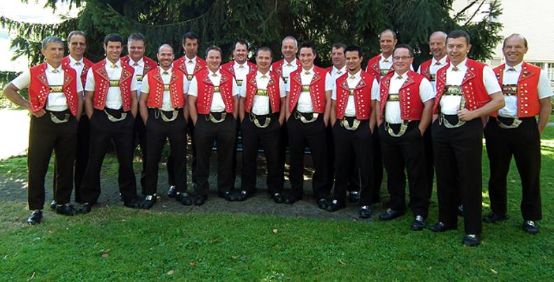
Schötze-Chörli Stein (Picture: Schötze-Chörli)

In mid-November, the government council of Appenzell Ausserrhoden dealt with the third tranche of funding applications for contributions from the cultural fund. On the recommendation of the Cultural Council, it awarded support to four projects. These include two music projects: On the one hand, the various activities for the 50th anniversary of the Schötze-Chörli Stein AR next spring will be supported. In addition to the publication of a CD, the centerpiece of the anniversary will be twelve events at the Appenzell Folklore Museum in Stein, which will bring the history of the Schötze-Chörli to life in the form of a musical journey.

Secondly, it supports the innovative audio expo organized by the "Klang Moor Schopfe" association in the Gaiser Hochmoor. Eight agricultural barns will be used for audio installations by invited artists for ten days at the beginning of September 2017. An additional supporting program with performances and concerts will transform the Schützenhaus into a meeting place.

A third grant went to the exhibition celebrating the 25th anniversary of IG Halle in Rapperswil, in which two installations by Thomas Stricker form the centerpiece. Finally, a contribution was also granted for the publication of the 2016 cultural concept. The Government Council also took note of the decisions that the Department of Education and Culture made on its own authority in the second half of the year. A total of 64 applications were processed, of which 47 projects were granted support totaling CHF 88,900.
 

Composition competition for sacred music

In its current competition, the Festival International de Musiques Sacrées, Fribourg is encouraging compositions inspired by the painting "Vanitas - Still Life with Skull" by Sebastian Stoskopff.

Vanitas, by Sebastian Stoskopff (Image: Kunstmuseum Basel/Martin P. Bühler)

The 13th edition of the competition is organized in collaboration with the Haute Ecole de Musique Vaud Valais Fribourg (HEMU) and Espace 2 - RTS (Radio Télévision Suisse) and is dedicated to an instrumental ensemble.

Competition participants must submit a work composed for an instrumental ensemble by October 15, 2017. The submitted work must be composed exclusively for the following instrumentation:

- 1 viola, 1 bassoon, 2 trombones (T + Bb), 2 timpani, 1 harp;
for an instrumental ensemble with 6 instrumentalists

The instrumental piece to be composed is inspired by the painting "Vanitas - Still Life with Skull" by Sebastian Stoskopff (1597-1658), which is exhibited in the Kunstmuseum Basel (Switzerland).

More info: www.fims-fribourg.ch

Temporary recording studio for Biel's Gurzelen district

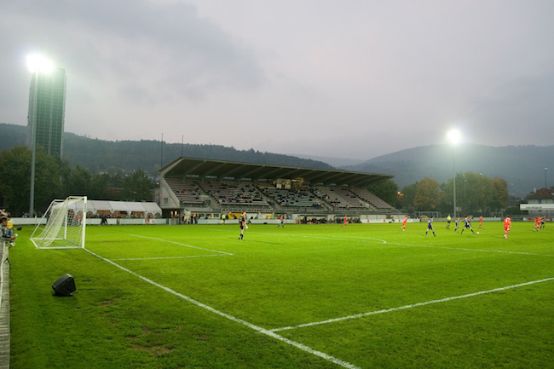
Biel is allowing interim use of the former Gurzelen football stadium. From January, it will serve for three years as a center for cultural and social activities with a local connection. Among other things, a recording studio is planned.

Gurzelen stadium when football was still played there. Photo: Simon Bohnenblust/wikimedia commons

The concept of the Terrain Gurzelen association is to set up a center for the realization of various ideas in the field of socioculture and to appeal to the local population, children, families, artists and other creative forces with the various offers and opportunities and to allow them to participate in this temporary open space.

Football operations on the Gurzelen were discontinued in summer 2016. As it will take three years for a new district to take shape on this site, the municipal council wants to allow the area to be used temporarily. The newly founded Terrain Gurzelen association was able to convince with its concept and will play on Gurzelen over the next few years.

More info: www.terrain-gurzelen.org/

Rental agreement with Zurich Cantaleum School approved

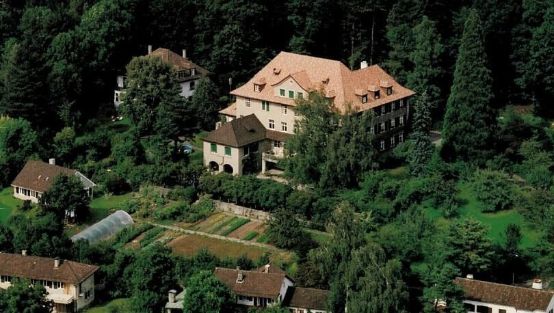
The Zurich City Council has approved the rental agreement with Cantaleum Zürich AG and approved a loan of CHF 720,000 for construction measures. This will enable a private school with a focus on music to open in a former orphanage from summer 2017.

House Sonnenberg. Photo: ©City of Zurich,SMPV

From summer 2017, the Villa Sonnenberg on the upper Heuelsteig in Zurich's Hottingen district is set to come alive with young talent: The Cantaleum private school will support children of kindergarten and primary school age both academically and musically. The school will be bilingual (German and English) and run as an all-day school.

It is planned that music and singing lessons will be integrated into the timetable as well as supplementing lessons. In addition, the children will take part in the boys' or girls' choir or be encouraged to play instruments. The school's most important partner is the Zurich Boys' Choir Association (ZSK).

Last year, the Cantaleum Foundation collected over one million francs in mainly private donations to set up the school and secure funding for the start-up phase. Personalities from Zurich's cultural and educational sector have joined a patronage committee for the project.

Built in 1911, the villa was used as an orphanage for many years and later as accommodation and a school. In 2000, the city transferred the building to the Zurich Children's and Youth Homes Foundation; in 2013, it returned to the city's ownership. It is currently being used temporarily by the Zurich Asylum Organization and the Zurich Student Housing Cooperative.
 

Is the www eating its children?

On December 15, 2016, the conference "Turning the Tide - Das Blatt wenden" took place at the Institute of Art in Context at Berlin University of the Arts. The occasion was the concern for democracy in view of the current triumph of right-wing populism in Europe.

pepsprog/pixelio.de

The unexpected Brexit decision and, above all, Donald Trump's election victory had caused consternation and shock, said Jörg Heiser, Director of the Institute for Art in Context at the Berlin University of the Arts, author, philosopher and musician. Heiser had invited the audience to discuss the causes of the dramatic situation, which should be seen as a threat to the fundamental values of civil society.

The speakers, including the American philosopher Susan Neiman, Director of the Einstein Forum in Potsdam, the Dutch philosopher Robin van den Akker, the Polish internet and human rights activist Joanna Bronowicka, the Italian curator Barbara Casavecchia and the London artist Adam Broomberg, analyzed the political developments in their countries and made a connection between social media and the rise of right-wing populism in their observations. The Zurich journalist and economist Hannes Grassegger, who deals with the political instrumentalization of big data and personality-based influencing of social media users, was also invited. Hannes Grassegger, together with co-author Mikael Krogerus, was interviewed by psychologist Michal Kosinski I have only shown that the bomb exists (Link to the article) in the Magazine No. 48 of December 3, 2016, he pointed out a direct connection between social media and Donald Trump's election victory. However, as Grassegger was unable to attend for health reasons, according to the UdK press office, he had named Paul-Olivier Dehaye (mathematician, University of Zurich, and data protection activist) as his representative, who assisted with the research that went into the article for The magazine was significantly involved in the development of the project. For this reason, a Skype conversation on big data and the Trump election took place with Dehaye during the conference.

The dismay expressed at the Berlin conference was not least due to a paradigm shift in the internet. Over the last ten years, the favorite medium of artists and intellectuals has revealed an anti-democratic and anti-enlightenment potential. According to Heiser, it gives the impression that we are in the process of losing the foundations of our social contract, the tools of enlightenment, logic and knowledge, without even realizing it.

In their analyses, the speakers explained that it is social networks, blogs and the like that offer right-wing populists a self-reinforcing resonance space and prepare the ground for right-wing populism, xenophobia and hatred of minorities with blatant lies - fake news - and manipulation. Robin van den Akker analyzed the social media presence of Dutch right-wing populist Geert Wilders. Barbara Casavecchia showed the economic connection between the leader of the Italian Five Star Movement Beppe Grillo and the internet strategist and media mogul Gianroberto Casaleggio. Susan Neiman, a moral philosopher from the USA, showed how self-reinforcing extreme lies such as "Hillary Clinton runs a child pornography ring" are on the internet and in reality.

What to do?

What can artists and intellectuals do in the face of the triumph of right-wing populism? Above all: take the situation seriously. And: get clarity. Demand transparency, especially transparency from internet companies in their handling of big data. Build media literacy. Create independent and trustworthy media. Susan Neiman made a passionate plea for a new morality of communication based on clarity, complexity and responsibility. Robin van den Akker suggested using the means and methods of right-wing populists to build a left-wing or ethical populism.

Are these realistic options for action or rather an expression of helplessness? We don't have to be satisfied with the answers, but it was right that the questions were asked. The alarming tone of the conference is probably appropriate. We are only at the very beginning of using the new technologies and there has been no learning phase.

get_footer();