On July 1, 2015, Schwabe AG will acquire a majority shareholding in Zytglogge-Verlag, which will continue to operate as an independent public limited company under its existing name. Publishers Bettina Kaelin Ramseyer and Hugo Ramseyer will remain associated with Zytglogge-Verlag as minority shareholders and members of the Board of Directors; Thomas Gierl will become the new publishing director.

SMPV

In August 2014, Bettina Kaelin Ramseyer and publishing house founder Hugo Ramseyer announced that they would like to retire from active publishing life on the 50th anniversary of Zytglogge-Verlag in 2015. The search was on for someone interested in taking over the business.From among the applicants, the two owners have now opted for Basel-based Druck- und Verlagshaus Schwabe AG, which celebrated its 525th anniversary last year."In this anniversary year, we are delighted to have found a successor in Schwabe that is in line with our company's philosophy and will ensure that Zytglogge remains an independent publishing house in Switzerland," said Hugo Ramseyer at the signing of the contract. 

Thomas Gierl, who is a member of Schwabe AG's management and has been managing the company's fiction publishing house Johannes Petri since 2010, will take over as publishing director on July 1, 2015. Publishing distribution will continue to be handled by Balmer Bücherdienst AG, Einsiedeln, while sound carrier distribution will be handled by TBA AG, Glattbrugg.Thanks to the succession arrangement that has been made, a joint program (by Hugo Ramseyer and Thomas Gierl) can be prepared for spring 2015 even before the official handover of the business.

The agreement between the two publishing houses offers optimal conditions for a rich and mutually enriching program: on the one hand, Zytglogge with its distinguished range of literature, non-fiction and sound recordings on the topics of culture, politics, society, history, current affairs, music and the art of language; on the other hand, Schwabe-Verlag with its renowned specialist program in the humanities and cultural studies as well as selected fiction and non-fiction titles.

A classical music concert calendar for Aargau

The newly founded KonzertRaum Aargau association aims to set up a joint body for classical music artists in the canton (similar to Bern Konzerte Bern) and thus coordinate the individual offerings.

Image: Rainer Sturm/pixelio.de

In particular, the association aims to promote the coordination and cooperation of individual artists (ensembles, choirs and event organizers) in the field of serious music in the Canton of Aargau, as well as to provide comprehensive and central information about all events. 

A lack of communication or the large additional workload that comprehensive coordination of the individual events entails for the organizers often leads to annoying overlaps or clusters of concerts in a small space, at the same time and especially around holidays such as Easter, even with a similar programme, writes the association. 

The cantonal association KonzertRaum Aargau will establish a joint body for cultural professionals in the canton, with the help of which - and the internet platform provided - coordination and communication between event organizers will be made considerably easier.

The website has been online since October 22, 2014: www.kora-ag.ch

You'll need Skype CreditFree via Skype


All-Stars band commemorates Mani Planzer

Mani Planzer from Lucerne, lateral thinker and networker between musical styles, chairs and benches, would have turned 75 this year. To mark the occasion, jazz lecturer Thomas K. J. Mejer arranged classics from Planzer's "Suite Catalane" and "Esperar" for the DKSJ All-Stars Band.

Mani Planzer, picture: Olivier Christinat / ZHB Lucerne Special Collection

Planzer, who died in 1997, was one of the most independent and inspiring musicians of his era, writes the Lucerne Central and University Library, which manages his estate. He wrote orchestral music, chamber music, vocal works, music for theater and films. He founded and led the Mani Planzer Big Band and the MorschAchBlasorCHester, which experimented with composed and improvised music.

The DKSJ All-Star Project was initiated in 2007 by the Directors' Conference of Swiss Jazz Schools (DKSJ). The musicians are jazz students from the music academies in Bern, Basel, Lucerne, Zurich and Lausanne and were selected by the respective school management.

The ensemble will be touring the five cities of the participating music academies from 13 to 17 October 2014 with the Mani Planzer program, which includes the "Suite Catalane" and "Esperar" arrangements as well as works by the idiosyncratic Mani Planzer Big Band.

The festival kicks off on Monday, October 13, from 8.30 pm at the Jazzkantine Lucerne. Further concerts: 14.10.2014, Bird's Eye Basel; 15.10.2014, Chorus, Lausanne; 16.10.2014, HDK Bern; 17.10.2014, Mehrspur Zurich.


Music in medieval metropolises

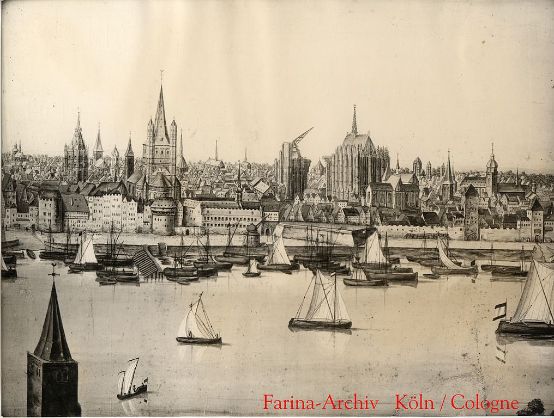
The Department of Musicology at Johannes Gutenberg University Mainz (JGU) is organizing a conference on music in medieval metropolises using the cities of Cologne and Mainz in the period from around 900 to 1400 AD as an example.

View of medieval Cologne with unfinished cathedral. Image: Farina archive, wikimedia commons,SMPV

Sacred and secular music played a prominent role in the Middle Ages for the cultural profiling, urban identity formation and representation of the ecclesiastical electoral seats of Cologne and Mainz, but this has hardly been studied in detail to date. In conjunction with other forms of external and internal urban representation, such as architecture, music was a highly relevant factor.

Around thirty renowned experts from the USA, Great Britain, the Netherlands, Switzerland, Austria and Germany are expected to attend the international conference "Music of the Medieval Metropolis: Spaces, Identities and Contexts of Music in Cologne and Mainz ca. 900-1400" from October 15 to 18, 2014, meeting for the first two days in Mainz and then for two more days in Cologne.

Therese Bruggisser-Lanker, who works at the University of Zurich, gives a lecture on music, visionary
Liturgy and scriptural exegesis in Rupert von Deutz. A lecture ("Networks Cologne - Paris: Johannes de Grocheo's Ars musicae in the manuscript of the Karthause St. Barbara") will also be given by Inga Mai Groote, who is currently moving from the University of Zurich to the University of Freiburg.

Innovative music learning software

Every two years, the Association of German School Musicians (VDS) awards a media prize for innovative music learning software and music education productions in the field of audiovisual media. This year, three productions have been honored.

Photo: Dirk Schelpe/pixelio.de,SMPV

The expert jury, chaired by Walter Lindenbaum, selected a total of six productions from 30 entries. The VDS Media Awards 2014 went to the following productions: "Musik-Freeware im Unterricht" (Kurt Schlegel and Jochen Stegmaier, Helbling Verlag Esslingen), "Musik um uns 2 / 3" (new edition by Markus Sauter and Klaus Weber, Schroedel Verlag Braunschweig) and "Spiel und Tanz zu klassischer Musik" (Renate Fischer, Verlag Schott Music Mainz).

Bayerischer Rundfunk received recommendations for "W. A. Mozart: Requiem", from the CD series "Starke Stücke für Kinder", Cornelsen Verlag Berlin for "Musikbuch 1" and Universal Edition Wien for "Alban Berg: Violin Concerto" and "György Ligeti: Atmosphères", both from the "listening lab" series.

The prize is awarded to products that open up access to music for children and young people in a particularly appealing and innovative way and thus have an educational effect on music in a broader sense.
 

The cultural life of the Bernese Seeland

The Biel/Bienne - Seeland - Bernese Jura region has 23 cultural institutions of regional importance. The Government Council of the Canton of Berne has approved an amendment to the annex to the cultural promotion ordinance with a list of these institutions. Theater Orchester Biel Solothurn is mentioned first and foremost.

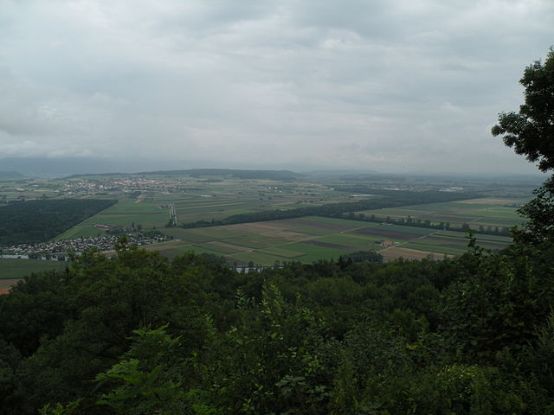
The Seeland from Mont Vully. Photo: Pymouss, wikimedia commons

The region is the second in the canton, after the Bern - Mittelland region, where he has made this determination. The selection was based on criteria such as importance, charisma, professionalism and the range of cultural events on offer. The list met with widespread approval during a consultation process.

Cultural institutions of regional importance are financed by the local municipalities, the canton and all regional municipalities. In this way, the canton aims to broaden the financial support for these institutions and promote solidarity between the municipalities. At the same time, the situation of these institutions is to be consolidated.

The institutions and their sponsors conclude performance contracts. In the Biel/Bienne - Seeland - Bernese Jura region, these contracts are to come into force on January 1, 2016 (July 1, 2015 for the Theater Orchester Biel Solothurn).
 

The complete list can be found in this Media release.

German Stage Association wants to prevent Navracsics

The proposal by EU Commission President Jean-Claude Juncker to appoint the current Hungarian Foreign Minister Tibor Navracsics as EU Commissioner for Education, Youth, Culture and Civil Society is met with sharp rejection by the German Stage Association.

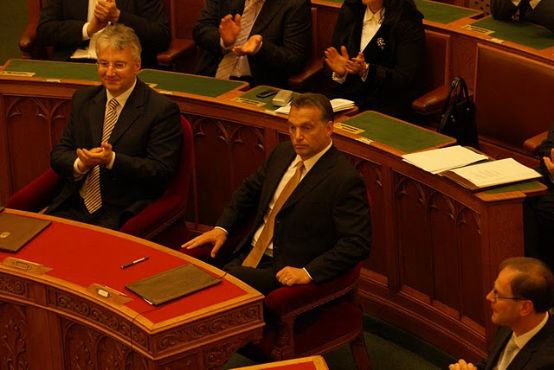
Tibor Navracsics (center) in the Hungarian Parliament in 2010. photo: Dodann, wikimedia commons

It is unacceptable that a politician like Navracsics should take over an EU portfolio that is of central importance for the intellectual climate in Europe, emphasized the President of the German Stage Association, Klaus Zehelein, in Cologne. The ruling, Eurosceptic Fidesz party, to which Navracsics belongs, stands for restrictions on press freedom and the dismissal of uncomfortable theater directors in Hungary.

Europe is characterized by its cultural diversity. It is precisely this that is being called into question by the Fidesz party. Education and upbringing, especially of young people, in the spirit of this diversity is important in order to win young people over to Europe and to show them the importance of creativity and imagination for the development of Europe. According to Zehelein, it is also important to make freedom of expression and freedom of art a focal point of European cultural and educational policy.

An EU Commissioner who is responsible for restricting these freedoms in his own country cannot convey this. Zehelein therefore urges the EU Parliament to reject the proposal for the Education, Youth, Culture and Civil Society portfolio.

New rooms for Zurich Conservatory music school

During the summer vacations in 2014, the Zurich Department of Buildings renovated the third floor of the Kanzlei school building in district 4. Fourteen rooms were created from the former classrooms, which the Musikschule Konservatorium Zürich (MKZ) can use for lessons in addition to the existing music rooms in the Kanzlei school building.

Excerpt from the flyer of the inauguration festival on September 27/28

Four of the new music rooms were developed with the aim of providing band lessons and workshops for MKZ's pop/rock/jazz department.

With the relocation of the Zurich University of the Arts (ZHdK) from downtown Zurich to the newly built Toni-Areal, MKZ also had to find a new location for its pop/rock/jazz department, which until then had been able to use the ZHdK premises on Waldmannstrasse between the Kunsthaus and Bellevue.

The Kanzlei school building, the headquarters of MKZ Limmattal, is an ideal location, according to a statement from the city. The proximity to the Zurich music scene and the Kanzlei club, where MKZ has been a welcome guest for several years as a municipal institution, are the major advantages of the new home of MKZ Pop/Rock/Jazz.

On the weekend of September 27 and 28, 2014, the new music center will be inaugurated with a big party on the entire Kanzlei site.
 

Automatic tuner for organs

Mechatronics students at Kiel University of Applied Sciences (FH Kiel), supported by emotion psychologists from Kiel University and the Bonn organ builder Klais, have developed a device with which organ pipes can be automatically tuned within a few seconds.

Photo: Frank Radel / www.pixelio.de,SMPV

As part of a Bachelor's project, FH students Tobias Bothe and Jan Kablitz have developed a prototype from a sensor-actuator system in which a microprocessor is responsible for digital control and frequency analysis. One challenge for the two students was the fast and precise detection of organ tones, even at fundamental frequencies of 175 Hz, for example.

The prototype is able to analyze the pitch around 15 times per second with an accuracy of 0.2 Hz, an outstanding achievement for project supervisor Christoph Weber from the Institute of Mechatronics. This measuring speed is required to enable dynamic pitch changes.

With such a system, hard-to-access stops on an organ can be retuned quickly and several times a year. On the other hand, it is possible to set other tunings, such as those commonly used in the Middle Ages, at the touch of a button in addition to today's standard equal temperament. In addition, music psychologists can investigate how different tunings affect the human mood.

The prototype will continue to be used by the Music Psychology working group at Kiel University (CAU). One of the aims is to investigate the extent to which slight detuning in relation to other organ pipes influences the acoustic perception. The organ building company Klais would also like to continue the project and plans to equip an entire stop of 61 organ pipes with the system.

Treichler receives first Swiss Grand Prix Music

The Swiss Grand Prix Music was awarded for the first time at the Lausanne Opera House in the presence of Federal Councillor Alain Berset. The award, which comes with CHF 100,000 in prize money, was presented to Franz Treichler, founder of the group Young Gods, on the recommendation of the Swiss Federal Music Jury.

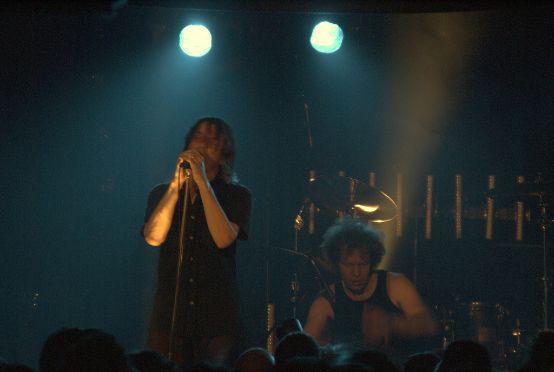
Franz Treichler and Bernard Trontin. Photo: Uri Sharf, wikimedia commons

After "around 30 years of artistic work and a tireless search for new experiences", Treichler still develops numerous projects today and also collaborates with artists from other cultural fields such as dance or film, according to the citation.

A seven-member jury mandated by the BAK (Federal Office of Culture) selected 15 finalists for the Grand Prix Music from 41 proposed musicians and ultimately designated the winner from among them. The award recognizes "outstanding, innovative Swiss music creation and brings it to the attention of the national and international public".

Between March and September of this year, the 15 nominees for the Swiss Grand Prix Music enjoyed the benefits of targeted promotional campaigns. Dragos Tara from Lausanne, Mama Rosin from Geneva, Franco Cesarini from Melide, Corin Curschellas from Rueun, Andreas Schaerer, Beat-man and Julian Sartorius from Bern, Irène Schweizer from Zurich and the ensemble Steamboat Switzerland, also from Zurich, Norbert Möslang from St. Gallen, the Basel ensemble Phoenix, Erika Stucky from Thalwil, Hans Kennel from Baar and Marcel Oetiker from Altendorf will each receive prize money of CHF 25,000.


Basel is looking for ideas for cultural education projects

For nine years, the Basel City Department of Culture has been working with Education Projekte Region Basel to implement art education projects for schools. Since 2012, the kult&co competition has complemented the cultural education initiatives. It is taking place for the fourth time this year.

Excerpt from the flyer

We are now looking for mediation projects with new approaches and partners from the non-institutional sector that expand and complement the existing education projects.

Artists and cultural practitioners from all disciplines who are planning an artistic project for 2015 with Basel schools or youth groups are eligible to take part. A total of CHF 70,000 in prize money is available for the competition program. The maximum contribution per project is CHF 20,000.

Funding is provided for educational projects with an artistic focus that demonstrate an innovative approach and enable an in-depth exchange between cultural professionals and young people. The award-winning projects will be publicly evaluated in Basel in 2015. The jury meeting will take place in December 2014.

More info: culture.bs.ch
 

The future of Aarau's cultural life

From September 2012 to April 2014, the cultural concept core group was commissioned by the city council to develop an updated cultural concept for Aarau. It also identifies the obstacles for the music scene.

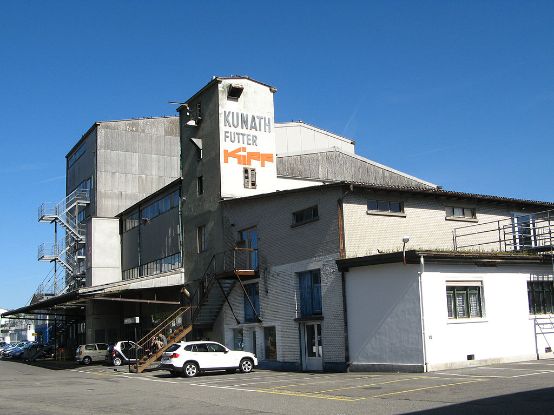
KiFF (Kultur in der Futterfabrik) in Aarau. Photo: Voyager, wikimedia commons

The concept states that there is a broad musical life with KiFF, Jugendhaus Flösserplatz and private clubs in the rock/pop sector, the Jazzclub Aarau and the argovia philharmonic in classical music. However, the infrastructure for larger festivals with a supra-regional appeal is lacking. This applies to possible concert venues as well as the hotel industry.

Most of the city's money currently goes to KiFF (CHF 370,000 annually), the Szenaario theater association (CHF 318,200) and Theater Marie (CHF 104,500). Aargovia philharmonic receives 21,000 francs.

According to the concept, a broader range of spaces is apparently at the top of the population's wish list, alongside more courage in terms of funding policy. Almost all sectors are struggling with a lack of infrastructure.

On the one hand, the city wants to increase support for the already most important event organizers in Aarau, the theater sector, the KiFF and the cantonal cultural institutions. It also wants to focus on promoting the general public.

More info: www.aarau.ch/kultur


Graubünden honors diverse musical creativity

The artist couple Hannes and Petruschka Vogel receive the Graubünden Culture Prize 2014, which is endowed with 30,000 francs. Recognition prizes go to representatives of jazz and classical music, among others.

Maria Riccarda Wesseling. Photo: zvg

Flurin Caviezel, Chur, in recognition of his work as a cabaret artist, musician and storyteller and his function as a multilingual ambassador outside the canton of Graubünden, and Cornelia Müller, Poschiavo, in appreciation of her dedicated work in the promotion of jazz, improvised music and ethnic music as well as "her persistent and passionate commitment to the organization of the avant-garde festival UNCOOL Valposchiavo", each receive recognition prizes worth CHF 20,000.

Maria Riccarda Wesseling, Amstelveen NL, also received a recognition award "in honor of her outstanding achievements as a mezzo-soprano and her role as an ambassador for Graubünden at home and abroad".

Sponsorship awards of CHF 20,000 each go to Anita Hassler (Bern, musician), Martin Jud (Chur, choir/orchestra conductor), Annatina Kull (Lucerne, musician) and Jürg Wasescha (Savognin, church musician).

Puts Marie receives Biel/Bienne Culture Prize 2014

The municipal council of the city of Biel/Bienne is awarding the 2014 Biel/Bienne Culture Prize to Puts Marie. The success of the rock band's latest album "Masoch" has made them known far beyond the region's borders. Daniel Schneider, founder of Groovesound GmbH among other things, is awarded the prize for special cultural services in 2014.

Excerpt from the CD cover of "Masoch"

Puts Marie have been performing on national and international stages between here and Mexico for many years. The mini-album "Masoch", released in 2013, was a career leap for the five musicians. According to the city of Biel, Puts Marie is currently considered one of the best Swiss music groups by music lovers. Their songs are regularly played on the major radio stations in Switzerland.

Daniel Schneider (1959), who grew up in Biel and Orpund, moves between cultural promotion and commerce, also within his company Groovesound GmbH and as general manager of the Culture and Convention Center in Thun. From 2005 to 2011, he was artistic director of the renowned "Moods" in Zurich.

The Culture Prize is awarded each year to an individual or organization that has made an outstanding contribution to the cultural sector. The prizewinner and the work must have a connection to the city or region of Biel/Bienne. The prize is endowed with CHF 10,000 and is not divisible.


Mass in B minor as a hybrid edition

Carus-Verlag has published an edition of Bach's masterpiece which offers both the musical text, including the latest research findings, and a DVD with all the relevant sources.

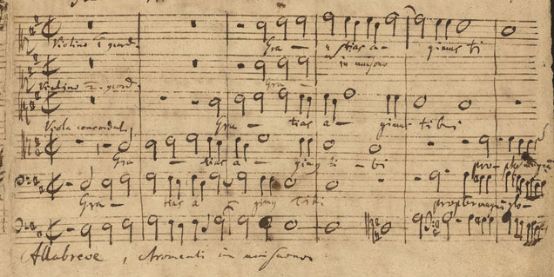
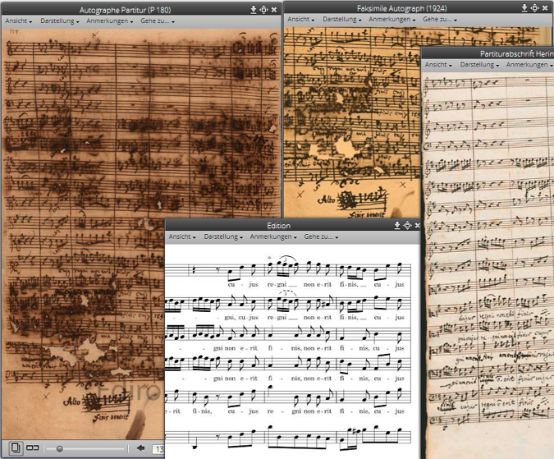
Beginning of "Gratias agimus tibi", autograph score, Staatsbibliothek zu Berlin - Preussischer Kulturbesitz,DVD-Screenshot,SMPV

Although the Mass in B minor The autograph score by Johann Sebastian Bach is one of his most frequently performed works, yet it is full of riddles and tricky questions. Poor paper quality and aggressive ink make the autograph almost illegible in many places today. In addition, the original manuscript was extensively altered after Bach's death by his son Carl Philipp Emanuel. He clarified unclear details, but also made unauthorized changes at several stages.

With the autograph score of this mass, the Staatsbibliothek zu Berlin is preserving a unique legacy of music history. Together with the digital edition project Edirom, Carus and the Staatsbibliothek are publishing the first volume of the new series Edition Staatsbibliothek zu Berlin presents a new edition of Bach's opus ultimum.

In addition to the scholarly edited musical text, the central sources are made digitally accessible as high-resolution color scans together with the Critical Report in a linked presentation. Linked bar by bar, sources and new engravings can be viewed in parallel or specific bars and passages can be selected. Comments and annotations can be assigned to source measures and parallel passages can be compared with each other.

Image

Passages such as bars 97-99 in "Et resurrexit", which are virtually indecipherable due to subsequent alterations and ink erosion both in the autograph score (left) and in the facsimile edition of 1924 (right), are easier to decipher when compared with Hering's copy (below right).

Image

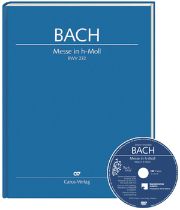
Johann Sebastian Bach, Mass in B minor, BWV 232, with all relevant sources (autograph score, Dresden parts, Insel facsimile edition, copy of the score by J. F. Hering and from the estate of J. P. Kirnberger, Carus-Neustich with critical report) on DVD, edited by Ulrich Leisinger; score (linen with source DVD), € 31.232/01. Kirnberger, Carus-Neustich with critical report) on DVD, edited by Ulrich Leisinger; score (cloth) with source DVD, CV 31.232/01, € 139.00 (from 1.1.2015 € 199.00); score (paperback), CV 31.232,
€ 75.00; piano reduction, CV 31.232/03, € 12.50; orchestral material on request; Carus, Stuttgart 2014

get_footer();