Friedrich Chrysander's estate is being researched

The library of the Handel House Foundation in Halle is currently working on cataloging the estate of Handel scholar Friedrich Chrysander (1826-1901).


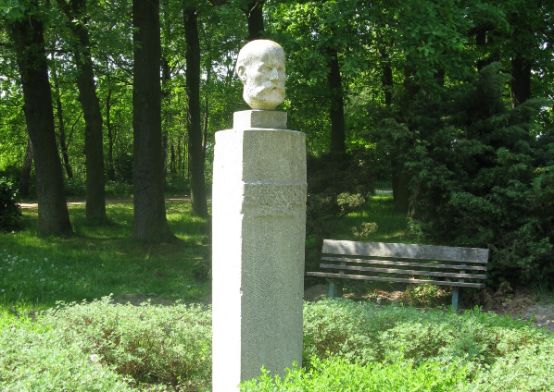
Chrysander monument in his birthplace Lübtheen, photo: Niteshift, wikimedia commons,SMPV

Musicologist Jana Kühnrich, who studied at Martin Luther University Halle-Wittenberg, has been entrusted with this task since December 2012.

After Chrysander's correspondence had already been catalogued and published in book form by the Handel House in 2001, Kühnrich is now examining Chrysander's musical and scholarly manuscripts. The estate comprises around 1000 documents, from small notes to comprehensive handwritten scores.

As part of the project, a database is being created that will provide access to the contents of the estate. It will be available for interested parties to use in the library of the Handel House from October 2013. It may also be possible to access it via the Internet at a later date.

Website of the Handel House: www.haendelhaus.de
Théâtre du Jorat receives further support

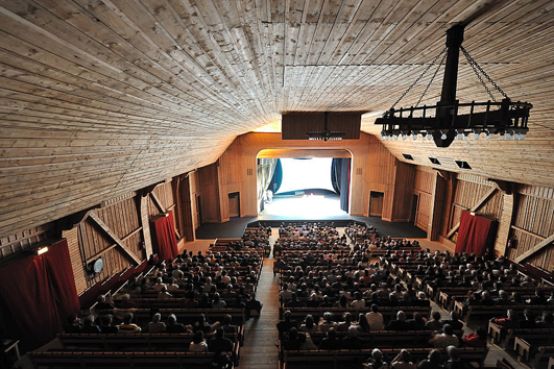
Founded in 1908, the Théâtre du Jorat in Vaud is where Honegger's oratorio Le Roi David was premiered. The historic building with space for a thousand spectators is still used intensively today. To keep it that way, the canton and municipality have pledged support for a further three years.

Photo: Wavre

According to the agreement, which was officially signed on August 19, the theater, a characteristic wooden building located 15 kilometers from Lausanne in the middle of the small village of Mézières, will be supported between 2013 and 2015.

It will thus be tasked with offering a high-quality program with a local focus and attracting new audiences in addition to existing subscribers. Financial details of the agreement are not included in the canton's announcement.

Website of the theater: www.theatredujorat.ch

Jazz sponsorship prizes awarded

The seventh music competition organized by the Marianne and Curt Dienemann Foundation Lucerne was reserved for jazz for the first time.

Yves Theiler, Photo: Marc Wetli

At the request of the jury, the Foundation Board awarded seven sponsorship prizes totaling 51,000 Swiss francs. The prizes were awarded to: Rico Baumann, percussion, Bern; Claire Huguenin, voice, Bern; Matthias Tschopp, saxophone, Zurich; Florian Egli, saxophone, Zurich; David Meier, percussion, Zurich; Yves Theiler, piano, Zurich; Lukas Wyss, trombone, Worb.
Thirty students and graduates of the jazz course registered for the competition; 18 of them were invited to audition in Lucerne.

Founded in 1986, the Foundation The main aim of the program is to promote training in the field of music (jazz and classical) and the development of literary works. The target group is young (up to the age of 40), talented literary artists, musicians and composers of Swiss nationality or artists who live in Switzerland.


The German music market is up slightly

After more than a decade of declining or stagnating sales, the German music market developed positively again in the first half of 2013.

Picture: doomu - Fotolia.com

According to the German Music Industry Association (BVMI), revenue from physical and digital music sales rose by 1.5 percent to EUR 660 million compared to the first half of 2012. The greatest growth was recorded in the area of digital music sales, i.e. revenues from downloads and music streaming, which increased by a total of 16 percent in a half-year comparison. With a drop of 2.5 percent, the decline in sales in the physical recorded music business was also significantly lower than in previous years.

German music buyers continue to prefer physical sound carriers, which remain the backbone of the German music industry with a 75.5 percent share of sales - above all the CD, which declined slightly by 2.7 percent compared to the first half of 2012, but still accounts for 67.5 percent of the overall market.

Vinyl records are continuing the comeback in the niche market that began in 2006: Compared to the first six months of the previous year, vinyl sales rose by more than 30 percent, giving it a 1.8 percent share of the overall market.

One in four euros came from digital music sales in the first half of the year, with the download business, which increased by 5.3% compared to the same period last year, now accounting for a market share of around 20%. The relatively new market segment of streaming (subscriptions and ad-financed) doubled its market share to 4.6%, which according to the BVMI currently offers the market's greatest growth potential with a 105% increase in sales.

Where to make music in the USA

If you want to earn your living (or hamburgers and hot dogs) with music, you don't have to start in Los Angeles or New York in the USA, even if that is where the most music jobs are to be found in absolute terms. The best conditions are to be found in Nashville.

Photo: mimon - Fotolia.com

Between 1970 and 2006, Nashville was the only American city with a growing number of jobs in the music industry. Today, there are 7.8 musicians per 1000 inhabitants. In Los Angeles there are 2.8, in Austin 2.6 and in New York 2.1

Musicians in Los Angeles earn 175% of the average American wage, in Nashville 156% and in New York 147%. Musicians in the soul and jazz cities of Memphis (79 percent) and New Orleans (73 percent) are at a relative disadvantage.

In contrast to Los Angeles, where the cost of living is 31 percent higher than average, in Nashville it is 11.1 percent lower. In absolute terms, the city has 27,000 jobs in the music industry. They generate a payroll of 1.7 billion dollars and contribute 5.5 billion dollars to the city's annual turnover.

New regulations for Aarau music teachers

The City Council of Aarau has approved the regulations governing the employment of music teachers in the city. The new regulations replace the previous ones from 1983.

Photo: Kokhanchikov - Fotolia.com

Among other things, the new regulations allow children to learn certain instruments earlier than before, because smaller instruments and teaching forms and time structures adapted to the age of the children now make it possible to start instrumental lessons at pre-school age.

With the revised regulations, the music school can also offer additional subjects such as accordion or solo singing if there is a proven need. In addition, the previously different employment conditions between music and elementary school teachers are to be equalized.

The costs for the expanded range of subjects and for a broader age segment of pupils will amount to around CHF 53,000 per school year. The revised music school regulations will also lead to additional salary costs of CHF 58,000 per school year. This amount is to be continuously reduced through new hires and retirements.

Only a few students become self-employed

According to the Swiss Federal Statistical Office, only a few university graduates venture into self-employment, musicians more often than the average. However, professional independence remains the exception rather than the rule.

Photo: Thomas Kölsch / pixelio.de

Only four percent of university graduates are self-employed five years after graduation. While graduates in the exact and natural sciences are less likely to become self-employed (just 1 percent), those in the field of design are particularly likely to do so (23 percent). The proportion of self-employed people in the fields of music, theater and other arts is also relatively high at 13%.

The majority of bachelor's graduates from universities of applied sciences either work freelance on a contract or mandate basis (57%) or have founded a company (27%). Among Master's graduates from universities, self-employment on a contract or mandate basis is also the most common (40 percent).

Over 90 percent of self-employed people who have taken over or founded a company are satisfied with the level of responsibility, the content of their tasks and their freedom of action and decision-making; they also score highly in other areas.

The entire study is available at www.bfs.admin.ch can be obtained:
 

The winners have been announced

At the 20th presentation of the Echo Klassik Awards for outstanding recordings on October 6, 2013 at the Konzerthaus Berlin, the Musikkollegium Winterthur, I Barocchisti, Sol Gabetta and Patricia Kopatchinskaja, among others, will be honored.

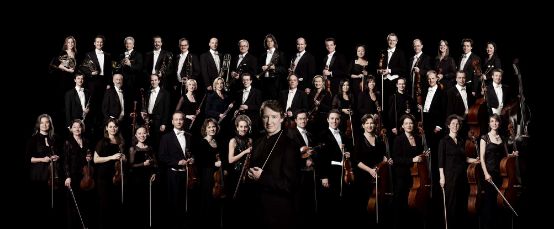
Musikkollegium Winterthur, Photo: zvg,SMPV

The German Music Award Echo is one of the most established and best-known of its kind. The Deutsche Phono-Akademie - the cultural institute of the Bundesverband Musikindustrie e. V. - honors outstanding and successful performances by national and international artists every year. The Echo Klassik is awarded by a jury made up of the Classical Music Working Group of the German Music Industry Association, independent industry experts and the ZDF music editorial team. It makes its decision based on both artistic quality and audience success. The awarding of the prize thus reflects not only the opinion of critics, but also the appreciation of music buyers.
This year, 54 prizewinners in 21 categories will be honored. These include Martha Argerich as Instrumentalist of the Year with her Lugano concertosThe Musikkollegium Winterthur under the direction of Douglas Boyd with the Concerto for Two Pianos and Orchestra and the 5th Symphony by Ralph Vaughan Williams, with the duo Tal & Groethuysen as soloists; the Ticino ensemble I Barocchisti under the direction of Diego Fasolis accompanying Cecilia Bartoli in opera excerpts by Agostino Steffani; Sol Gabetta in a duo with Helene Grimaud; Patricia Kopatchinskaja with works by Bartók, Eötvös and Ligeti.
The winners of the Lifetime Achievement, Promotion of Young Talent and Bestseller of the Year categories will be announced in the coming weeks.

List of award winners
 

New management at Ensemble Proton Bern

At the beginning of September, Beat Sieber takes over from Annelise Alder as Managing Director of Ensemble Proton Bern. Founded three years ago, the orchestra is dedicated to performing contemporary music.

Photo: zvg

Trained as a cellist in Biel and Lausanne, Sieber worked for five years with the Rheinische Philharmonie state orchestra in Koblenz (Germany). He is currently studying for a master's degree in cultural management at the University of Zurich and works as project manager for the vocal ensemble Ardent.

Ensemble Proton Bern is active in Switzerland and internationally. It has particular ties to its home city of Bern, where it is an "Associated Artist" of the Dampfzentrale Bern. Its next performance will take place on September 6, 2013 as part of the Bern Music Festival.
 

Documentaries on the Willisau Jazz Festival

At the end of August, the Lucerne University of Applied Sciences and Arts will release the publication "Willisau and All That Jazz - a visual chronicle". It is edited by festival founder Niklaus Troxler and music researcher Olivier Senn. The book and a comprehensive online archive will be presented as part of this year's Willisau Jazz Festival.

Excerpt from the book cover

The publication "Willisau and All That Jazz" tells the eventful history of jazz in Willisau from 1966 to 2013 with numerous photos, posters and press quotes on over 700 pages. Festival founder Niklaus Troxler provides insights into his memories and reports on his encounters with jazz greats such as Keith Jarrett, Irène Schweizer, John Zorn and Ornette Coleman.

The Lucerne University of Applied Sciences and Arts has also developed the online database "Willisau Jazz Archive": Primary sources such as concert posters, photos, program booklets and excerpts from unpublished recordings are already accessible online and allow comprehensive research on jazz in Willisau.

Both projects are the direct result of a donation: two years ago, Niklaus Troxler donated his private jazz archive to the Lucerne School of Music. This comprises around 720 hours of sound recordings, over 180 concert posters, a large collection of press reports and all the festival program booklets. In return, the university undertook to organize, inventory, professionally store and scientifically index this data.

The illustrated book "Willisau and All That Jazz" will be presented at the upcoming edition of the festival (28.8. to 1.9.2013). The vernissage will take place on Thursday, August 29, at 6 p.m. in the Festhalle Willisau. The book is published by Till Schaap Edition and is available in stores at a price of 78 francs.

More info:
www.willisaujazzarchive.ch
 

Rock & Pop Center St. Gallen before opening

With the Rock & Pop Center (RPC), the teaching of modern music styles in St. Gallen is getting its own home. The city's music school wants to promote talented young people in a more targeted way in the Spartenhaus.

Thomas Sonderegger (left, Head of Department), Orlando Ribar (Head of Division). Photo: Sir Robin Photography

The RPC is housed in a specially converted former primary school building in the Lachen district. The concept by St. Gallen architect Daniel Cavelti includes two concert halls, rooms for band lessons and rooms for individual lessons. Sound systems and sound insulation were designed by specialists.

All classrooms are connected via encrypted Wi-Fi with broadband internet access, have an acoustic listening station and are set up for audio streaming via AirPlay. A dedicated server with a learning platform serves as a central data repository for digital teaching materials. An iMac is also available as a mobile multimedia station.

Information, know-how and tips are to be collected in one place in the Spartenhaus, where they will be available to all participants at all times and where exchange and creative competition will be encouraged. A team of specialist teachers from the city's music school will continuously teach, encourage and support the up-and-coming talent. Swiss show business greats will also pass on their own experience in workshops and special courses.

The RPC will open on Saturday, August 31, 2013 at 5 p.m. with a ceremony and an official opening of the building. Among others, Swiss guitarist Slädu, drummer and multi-percussionist Orlando Ribar and bassist Daniel Ziegler will perform. During a concert lasting around two and a half hours, various student bands, the Big Band of the Music School of the City of St. Gallen and projects by the teaching staff will also be presented.

Fischer honored for music to "Trapped"

Zurich composer and arranger Thomas Fischer has been awarded the 2013 Fondation Suisa Film Music Prize for his music for the thriller "Trapped". The award was presented at the 66th Locarno International Film Festival.

Scene from "Trapped"

For the film "Trapped", a commission from director and screenwriter Philippe Weibel, 40-year-old Thomas Fischer has realized his first complete film score.

The music maintains the tension from the beginning to the end. The carefully selected, repetitive elements also allow the mysticism of the story to be experienced emotionally, according to the justification for Fischer's choice.

The Fondation Suisa awards its Film Music Prize, endowed with CHF 15,000, annually. The decision is made by a jury of experts. The award is presented at the Locarno International Film Festival.

Berset wants an effective national cultural policy

Federal Councillor Alain Berset wants a discussion on a national cultural policy geared towards the changing needs of culture and the public. Federalism should not prevent the development of a Swiss cultural policy.

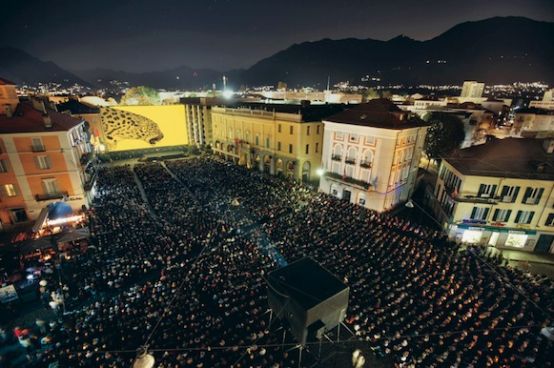
Photo: Locarno Film Festival © Pardofestival, wikimedia commons

At the media conference during the Locarno Film Festival, the head of the Federal Department of Home Affairs spoke out in favor of developing a national cultural promotion policy. Joint, coordinated measures should do better justice to the new forms of cultural production and consumption.

With the national cultural policy project, Federal Councillor Alain Berset wants to "strengthen the coherence and continuity of the measures taken by all those involved in promoting culture in Switzerland". He advocates closer cooperation between the federal government, cantons and municipalities. He is also striving for better visibility of Swiss culture abroad, greater involvement of all audience groups in cultural life and better equal opportunities for access to culture.

Rules for success in swarm financing

The German cultural consultancy Actori has taken a close look at the opportunities of crowdfunding for the German cultural and creative landscape and formulated rules for the success of this form of project financing, which is still relatively new in Europe.

Photo: Silvana Comugnero - Fotolia.com

On average, around 3,200 euros per project were raised through crowdfunding in Germany in 2012, while most successful projects in the USA also received less than 10,000 dollars. Actori writes that crowdfunding has not yet been able to generate big money.

However, this form of fundraising represents an opportunity for the independent scene in particular: With a success rate of 42% in Germany and 44% in the USA, almost every second project is realized.

The company sees rules for success for this form of fundraising: unique and exciting ideas that have a strong emotional appeal and from whose realization the supporters themselves can benefit are promising. In addition, the project must be presented as vividly and concretely as possible, but still be easy to understand.

A targeted communication strategy is also important. Ideally, online tools such as Web 2.0 applications and social networks should be combined with traditional offline marketing (flyers, press work, word of mouth, etc.). Regular updates are essential.

A certain size of the network is also crucial for monetary success, as usually only one percent of a community participates financially.

The entire study can be found at:
www.actori.de/fileadmin/Redaktion/Downloadcontent/Publikationen/1301_Crowdfunding.pdf

City of Biel seeks culture prize winner

Every year, the City of Biel awards the Cultural Prize of the City of Biel, endowed with CHF 10,000, and also honours individuals or organizations for their cultural achievements. No monetary prize is associated with the award.

Photo: © International Chess Festival Biel

The City of Biel/Bienne Culture Prize is awarded to individuals, groups of people or organizations for significant cultural achievements. The prizewinner or the work must have a connection to the city or region of Biel/Bienne.

Cultural organizations and interested individuals are invited to submit proposals to the Cultural Commission. The award for cultural merit can be presented to individuals or organizations that have made a significant contribution to the cultural life of the city or region.

The proposals should contain the following information: brief personal details and biography of the nominee, the cultural work of the nominee and the cultural merits of the nominee.

Proposals can be submitted by August 14, 2013 at the latest with the reference "Kulturpreis". Further information and the guidelines for the 2013 Culture Prize can be found at www.biel-bienne.ch/kultur


get_footer();