According to a report by the German Cultural Information Center, violist Tabea Zimmermann has been a member of the board of trustees of the Fondation Hindemith, based in Blonay, Vaud, since January 2013.

After professorships at the Hochschule für Musik Saar and the Hochschule für Musik und Darstellende Kunst Frankfurt am Main, Tabea Zimmermann has been a professor at the Hochschule für Musik Hanns Eisler in Berlin since October 2002.

In the Hindemith memorial year 2013, she is playing works by the composer in various programs, including as soloist in the viola concerto "Der Schwanendreher", with which the Osnabrück Symphony Orchestra was the first German orchestra to visit Volgograd (formerly Stalingrad) in Russia in January 2013.

She is currently preparing a complete recording of all of Hindemith's sonatas and concertos for the CD label myrios classics.

The Hindemith Foundation was established by Hindemith's widow and heir Gertrud Hindemith. The foundation established the Hindemith Institute Frankfurt in 1974 and founded the Hindemith Music Center Blonay in 1978. In addition to Zimmermann, the five-member foundation board includes Andreas Eckhardt, François Margot, Hans-Dieter Resch and Andreas Schober. Andres Briner is an honorary member.

4th Swiss Children's and Youth Choir Festival

Over 50 ensembles will be singing in St. Gallen from May 10 to 12.

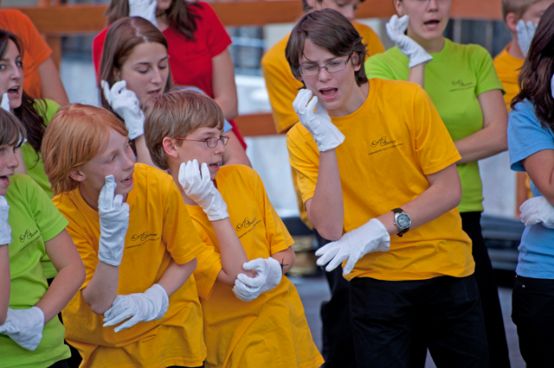
Photo: Lukas Wehrli - Coro di voci bianche Clairiere at the SKJF 2011 in Lausanne

After Zurich, Schaffhausen and Lausanne, the 4th Swiss Children's and Youth Choir Festival (SKJF) will take place in St.Gallen. Over 50 children's and youth choirs with around 1600 singers from all over Switzerland have registered for the three-day festival from May 10 - 12, 2013. This is a record number.

The public concerts will take place in the Athletik Zentrum St.Gallen, which will be transformed into a spacious concert hall with a stage as the main venue. This will provide sufficient space for the more than 50 participating festival choirs and the audience. In addition, the choirs will sing throughout the city at various concerts, in squares, church services and matinees during the festival weekend. The musical program will be developed under the direction of Bernhard Bichler from the music commission.

During the festival, there will be the opportunity to take part in the Study Tour for choir conductors led by Michael Gohl. The following points are on the program:

  • Introduction to the festival program
  • Attendance at selected concerts and workshops
  • Discussion of the concert performances, taking into account various criteria
  • Literature exhibition (with purchase option)
  • Suggestions for choir conductors regarding the choice of literature and forms of performance
  • Starting points and criteria for assessing the quality of children's choir conducting

The association Schweizer Kinder- und Jugendchor-Förderung SKJF was founded in Zurich on March 7, 2006. It ensures the regular organization of the festival, which takes place every two years, alternating with the European Youth Choir Festival. SKJF promotes the networking of Swiss children's and youth choirs with other projects across language borders.

www.skjf.ch
 

Federalism in cultural and educational policy is an issue not only in Switzerland, but also in Germany: the German Cultural Council is calling for the abolition of the ban on cooperation between the federal government and the federal states in the field of education. The federal government should be able to directly support cultural education in schools and daycare centers.

According to a report by the Standing Conference of the Ministers of Education and Cultural Affairs (KMK) and the Mercator Foundation, the potential of cultural education has often remained untapped. Overall concepts need to be better interlinked.

The German Cultural Council agrees with this demand. One way to improve the situation of cultural education would be to lift the ban on cooperation between the federal and state governments in the education sector. According to the Cultural Council, the federal government is currently not allowed to directly support cultural education projects in schools and daycare centers. This obstacle must be removed. 

Make some noise!

Translation: Pia Schwab

Translation: Pia Schwab

"Cacophony" - the buzzword quickly came to mind when we were looking for a theme for our February issue. People associate it with carnival music without giving it much thought. And there are at least two reasons for this: On the one hand, carnival, a tradition that dates back to ancient times, celebrates the end of winter and drives it away with noisy and dissonant music. On the other hand, it is a festival of disguise. The poor are allowed to take the place of the rich or even the king for a day. And when the social order is symbolically upside down, you have to make music that is upside down, that parodies itself: Cat music with everyday objects that, far from their usual use, let off steam "disguised" as instruments. Hoses, pipes and funnels act as trumpets, pans and other kitchen utensils as drums.

It is a Swiss peculiarity that this roar was taken up by the festive and colorful brass bands. This gave rise to the Guggenmusik bands in Basel and Lucerne at the beginning of the 20th century.

Surprisingly, it was precisely at this time that avant-garde composers such as Luigi Russolo began to create music from sounds in a completely different genre. This approach reached its peak with Pierre Schaeffer, who in 1966 composed his Traité des objets musicaux a monumental work that classifies all possible and imaginable sounds according to a series of precise criteria. This also ennobled the concrete music that Schaeffer and his students created by processing the sounds themselves, which they had recorded on tape. The composition Variations pour une porte et un soupir (Variations for a door and a sigh) by Pierre Henry, an hour of hissing and creaking door hinges, is a telling example.

"That's not music, that's noise!" the critics never failed to say. But how often have we heard this phrase applied to all kinds of styles that stray off the beaten track? At the beginning of the 20th century, jazz was so disparaged with this phrase that for a while its name was synonymous with hellish noise. And only rock, fifty years later, or serial music! Today, jazz can be heard in the Salle Pleyel and the Rolling Stones have been ennobled by the Queen.

So it is a long time since music was merely the "art of writing beautiful melodies", as the dictionaries of the 18th century put it. A number on the subject of cacophony therefore opens up an extremely broad field. So let's conclude in the same way that rappers fire up their audiences: make some noise!

Have fun!


P.S. The following video shows just how much music can be contained in everyday noises Sound of Noise: Music for one appartement and six drummers.

 

Kategorien

IG Volkskultur in the House of Folk Music

This year, Switzerland's largest folk culture umbrella organization, which is supported by the federal government, is setting up its new office in the House of Folk Music in Altdorf. The cantonal government of Uri has also made a contribution to this year's Seelisberg Festival.

Photo: zvg

The Interessengemeinschaft für die Volkskultur in der Schweiz und dem Fürstentum Liechtenstein (IG Volkskultur) is an association of eleven national folk culture associations with a total of around 250,000 members. The Government Council has decided to continue the annual contribution of CHF 70,000 to the House of Folk Music for 2013 to 2015.

From August 1 to 18, 2013, the Waldweidli in Seelisberg will also host an open-air musical performance of Tell and Wagner. The aim is to make the mountain community of Seelisberg more attractive. The Munich writer Ursula Haas and the Swiss writer Guy Krneta have been engaged, as well as Beat Toniolo for the artistic festival management.

Cacophony - the flip side of euphony

While Guggenmusik can be heard in many places, we ask ourselves what the term "cacophonous" actually means. And also: city noises as a starting point for music lessons.

Earplugs © topfmodel - Fotolia.com
Kakofonie  — die Kehrseite des Wohlklangs

While Guggenmusik can be heard in many places, we ask ourselves what the term "cacophonous" actually means. And also: city noises as a starting point for music lessons.

Focus

Sounds from St. Atonalien
The term cacophony and its tiresome historical use

Trench warfare in the orchestra
Interview with Udo Rauchfleisch about interpersonal discord

Le succès des guggenmusik entre Shanghai et Beijing
Les festivals folkloriques chinois avides de fanfares suisses
Swiss Guggenmusik in China
Touring groups have success at folklore festivals.

La cacophonie à l'école
And if one utilized the urban sonorities as a base material?
Cacophony as teaching material
From ambient noise to a musical concept

A lire sur www.revuemusicale.ch - La rotonde : du chaos aux durations

and furthermore

RESONANCE

A journey back
The film "appassionata" accompanies Alena Cherny to Ukraine.

Simple masterpieces
"10 x Beethoven - a vision of archetypal form": report and interview

Carte Blanche with Roman Brotbeck

CAMPUS

On the platform towards the future
A conversation about itineraries and destinations in music lessons

The people behind the music styles
4th Norient Music Film Festival: Report

Feel the Rhythm - Rhythm on the piano
Epta Fall Congress: Report

FINAL

A strange case of cacophony: Puzzle by Thomas Meyer


Kategorien

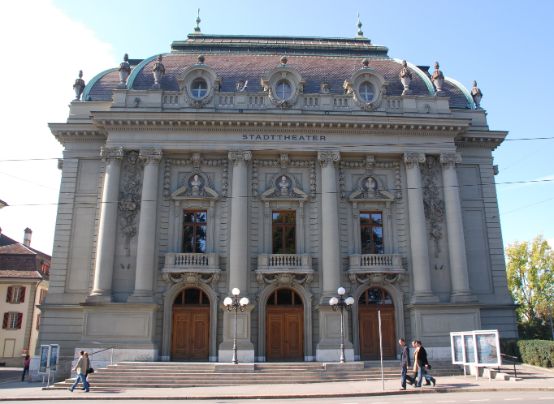
Stadttheater Bern parts ways with musical director

The contract of Bern's Music Theater Principal Conductor Srboljub Dinić will not be renewed. He will leave Konzert Theater Bern at the end of the 2012/13 season.

Wikimedia Commons

As a result of the merger of the Stadttheater and the Bern Symphony Orchestra (BSO) to form the Konzert Theater Bern and the associated restructuring measures, a new leading musical position will be created in the music theater from the 2013/14 season, according to the press release.

Together with the chief conductor of the BSO, Mario Venzago, and the opera and concert director Xavier Zuber, she will complement the artistic direction of the music theater of Konzert Theater Bern.

Zuber paid tribute to the conductor, saying that Dinić had played a decisive role in shaping musical life in Bern over the past twelve years of his engagement. Dinić himself "accepts the decision with regret".

Siemens sponsorship award for Hefti

One of the three composer sponsorship awards from the Ernst von Siemens Music Foundation
goes this year to the Swiss composer and conductor David Philip Hefti.

Photographer: Mareike Niemz, 2012

In addition to financial support, the recipients receive a portrait CD produced according to their individual wishes in cooperation with the Viennese label col legno. Hefti will be presented with the award at a musical ceremony in Munich's Prinzregententheater on June 4, 2013.

The Board of Trustees of the Ernst von Siemens Music Foundation, whose members include the composers Wolfgang Rihm (Hefti's composition teacher) and Helmut Lachenmann, sees Hefti as one of the up-and-coming composers.

In addition to Hefti, the Canadian Samy Moussa and the Serbian Marko Nikodijevic will receive a sponsorship award from the Ernst von Siemens Music Foundation. The international Ernst von Siemens Music Prize for lifetime achievement in the service of music, endowed with 250,000 euros, goes this year to conductor Mariss Jansons.

The Ernst von Siemens Music Foundation awards a total of 3 million euros. In 2013, over one hundred contemporary projects that have made an outstanding contribution to contemporary music will be supported worldwide.

On the way to becoming a professional drummer

The Swiss Drum Academy offers extra-occupational training courses.

zvg/Swiss Drum Academy: Studio drumming with Rico Horber

The Swiss Drum Academy prepares motivated young drummers for careers as professional drummers and drum teachers in a short space of time. Classes are mainly held at weekends and can be attended on a part-time basis. All musical styles are taught with a focus on modern music such as pop, jazz, rock, metal, etc. Subjects such as Cubase, studio drumming, percussion, basic piano, harmony, drums & bass, band, music business, mental training, cajon, pedagogy/didactics etc. are also taught. The focus is clearly on practice-oriented drumming.

The lecturers include Christoph Beck, Mario Caspar, Paolo Fedrigoli, Peter Haas, Rico Horber, Roman Schmon, Sascha Kaisler, Stefano Gus, Willy Günther, Wim Dykstra, Dani Löble, Sven Quartier, Felix Müller, Jan Moser and Andrea Tinner.

The new training year starts in August. Anyone who would like to ask questions about the training courses can do so at the information event. It will take place on Saturday, April 27, 2:00 to 4:00 p.m., on the SDA premises at Wehntalerstrasse 6 in 8154 Oberglatt. Registration is required at least one day before the event at info@swiss-drum-academy.ch desired.

The SDA offers the following training courses:
- 1-year preparatory course (start August 2013)
- 2-year, part-time study program (start August 2013)
- and other interesting courses (see www.swiss-drum-academy.ch)
 

Bernese Cantonal Music Festival 2014 in Aarwangen

The major event will take place over two long weekends in June 2014 under the motto "wunderbAare Musik".

S. Hofschlaeger / pixelio.de

The 23rd Bernese Cantonal Music Festival will take place in Aarwangen from June 13 to 15 and from June 20 to 22, 2014. The population, the authorities and the Aarwangen Music Society are looking forward to hosting this major event. The festival is under the patronage of the Bernese Cantonal Music Association with President Claude Muller, the OC is chaired by Marcel Cavin and the Music Committee is headed by Bruno Schüpbach.

The motto of the festival is "wunderbAare Musik". The atmosphere will benefit from the short distances between the performance venues, the parade music route and the marquee in the historic village.

The call for applications has been open since January. All registration forms can be found on the website www.bkmf14.ch. The provisional schedule and current information can also be found there. Please note the schedule overview form. Participants will be invited in writing for the starting block draw and for the submission of the task pieces.
 

German Musical Instrument Award 2013

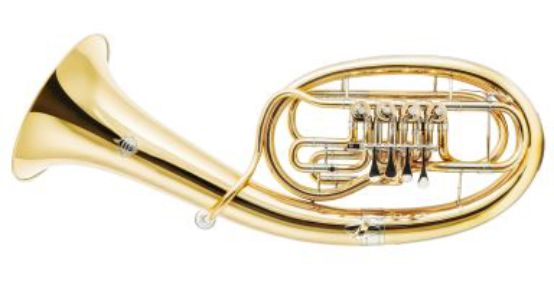
A tenor horn and an Eb clarinet will be honored.

© Musikmesse Frankfurt / Tenor horn,SMPV

With the German Musical Instrument Award, the founder, the Federal Ministry of Economics and Technology, emphasizes the importance of craftsmanship for the musical instrument industry and the German economy. The prize has been awarded for 22 years during the International Music Fair, the world's largest trade fair for musical instruments and accessories. This year it will take place in Frankfurt from April 10 to 13.

The two categories in which instruments are awarded prizes change every year. This year, the winning instruments come from the woodwind and brass categories. The 2013 winners in the tenor horn category are Gebr. Alexander Rhein, Musikinstrumentenfabrik GmbH, Mainz (Rhineland-Palatinate) for the "Tenor Horn Alexander 146 GL" and in the Eb clarinet category Schwenk & Seggelke, Bamberg (Bavaria) for the "Eb Clarinet Model 2000".

Historically, the tenor horn closes a gap between the low brass instruments such as the tuba and the low trumpets. The valve horn is mainly used in military music, folk music and brass music. In the clarinet family, the Eb clarinet is the one with the highest pitch. This is visually noticeable due to the shortness of the instrument. Eb clarinets are considered extremely difficult to play due to their special intonation. They are traditionally used in symphony orchestras. Just how lively the musical instrument industry is can also be seen in the excellent manufacturers.

The company Gebr. Alexander has been in existence for more than 200 years. During this time, pioneering developments have been made in the field of brass instruments and the company has worked with important musicians and composers, including Richard Wagner. The second prize-winner, the Schwenk & Seggelke master workshop, was only recently founded. The company has been in existence since 1995 and offers both instruments as historical replicas of the 18th and 19th centuries and modern clarinets that can be made to customer specifications.

www.musikmesse.com
 

Unbroken narrative strength

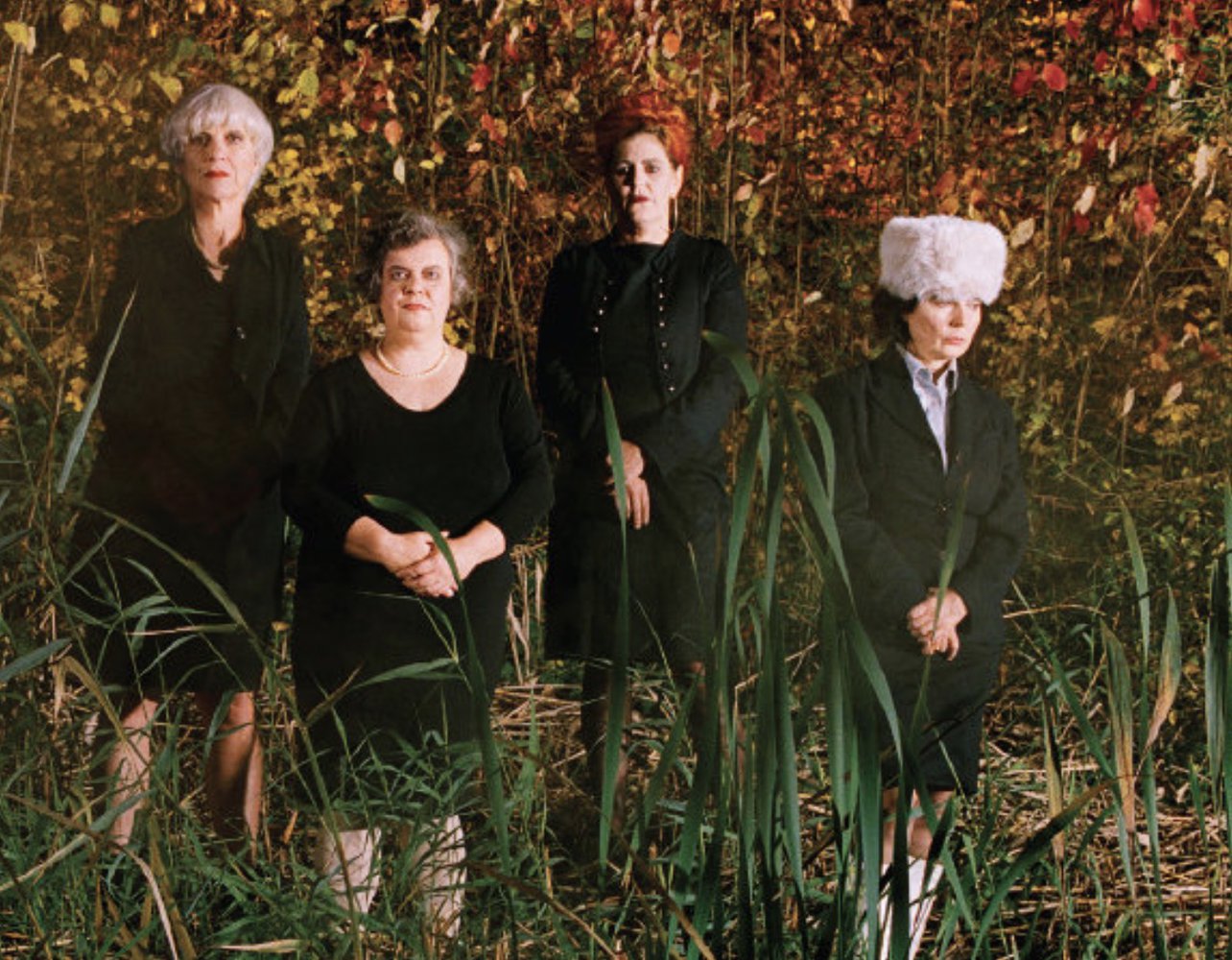
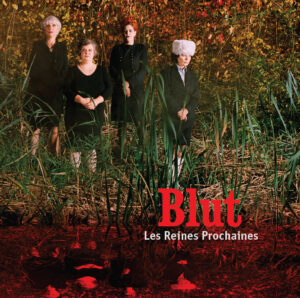
After a ten-year break from recording, one of the most influential Swiss female bands is back: Les Reines Prochaines

Les Reines Prochaines. Excerpt from the CD cover

Les Reines Prochaines let their 25th anniversary in 2012 pass by without a second thought. At least outwardly. But the musical feminists were already busy. With the preparations for their new album Bloodthe first since 2003, and with the final work on the documentary film Les Reines Prochaines - the movie (director: Claudia Willke), which is about the artistic doings of the collective. In the film, which can be seen in a few Swiss cinemas these days, Muda Mathis, the last remaining co-founder of the formation, says: "Art has to be a risk, otherwise it won't work."

One of the band's original ventures was their dilettantism. Playing instruments? Yes. Mastering instruments? Absolutely not. As a result, their earlier records were simple and yet daringly arranged. Over the years and actually against their will, Les Reines Prochaines have acquired a certain degree of professionalism. This is also because the previously frequently changing line-up has remained in place since the turn of the millennium. New songs such as the Balkan-sounding Sunday Instrumental or Of fennel and sausage, an over-the-top pop number in the style of early Nina Hagen, are if not virtuoso, then skillfully played. Nevertheless, the 21 tracks on Blood anything but standard fare.

This is not least due to the fact that Les Reines Prochaines are about more than just music, namely performance art. Their sources of inspiration are the everyday, the mythological and the physical, pop and folklore or childhood, write the Basel-based group on their website. This manifests itself in weird singing, Dadaist moments, poems about stolen hedges (sic!) or stories about a virus. Les Reines Prochaines continue to surprise. Less through the still minimalist music than through their narrative strength. This is unbroken. Which makes the quartet's lyrics particularly captivating to listen to.

Les Reines Prochaines: Blood. Michèle Fuchs, Fränzi Madörin, Muda Mathis, Sus Zwick. Distribution: www.unrecords.me

The Swiss Society for Theater Culture awards the Hans Reinhart Ring 2013 to the actress and singer Yvette Théraulaz. The highest award for theater professionals in Switzerland has been presented by the Swiss Society for Theater Culture SGTK since 1957.

Yvette Théraulaz is being honored "for the creative originality of her passionate and sensitive acting". For over 50 years, the actress has shaped the theater scene in French-speaking Switzerland - both institutional and independent - and extended its sphere of influence to the stages of France and Belgium through plays in those countries.

Parallel to her theater career, Yvette Théraulaz has staged numerous song performances, in pairs for "À table" with Pascal Auberson (1996), in a group for "Perdants magnifiques" directed by Anne-Marie Delbart (2000) and more than ten times alone, such as for the performance "Histoires d'Elles", which is entirely dedicated to the memories of her mother and her own emancipation through feminism (2007).

The official award ceremony for the Hans Reinhart Ring 2013 will take place in the fall. The time and place of the award ceremony will be determined at a later date.

The Department of Culture of the Canton of Valais offers scholarships and grants. They are aimed at all musicians who wish to pursue a professional career, whether in the field of classical or contemporary music or chanson.

Three three-year grants for musicians and groups amounting to CHF 15,000 per year for musicians and CHF 30,000 per year for groups as well as two grants for compositions amounting to CHF 10,000 will be awarded.

Three to five grants of up to CHF 25,000 per project are available for setting up studios for contemporary music and three grants of up to CHF 20,000 per project for collaborations between professional and amateur musicians.

Finally, three tutoring projects for aspiring artists will be funded in the amount of CHF 2000 to CHF 5000. Applications must be submitted by April 15, 2013. More information: www.vs.ch
 

The art of introducing Bach's cantatas

A comprehensive anthology concludes the Basel performance series.

Nave of the Predigerkirche Basel. Photo: Martin Sg / Wikimedia commons

If concert life had long been dominated by Bach cantatas, the SMZ has reported on three series of performances in recent years: in the church in Trogen under the direction of Rudolf Lutz (9/2009, p. 14 f.), in Basel's Predigerkirche, initiated by Jörg-Andreas Bötticher (9/2011, p. 24), and in Lucerne's Franziskanerkirche under Franz Schaffner with modern instruments (3/2011, p. 11).

A handsome volume with all the introductions to the works was published to mark the final concert in Basel. The initiator, who works as organist at the Predigerkirche, was able to perform concerts with a consistently soloistic line-up, as propagated by Joshua Rifkin. The highly readable texts combine historical expertise with emotional playing practice and therefore provide a more direct approach to the music than the certainly commendable books (by Alfred Dürr, Konrad Küster and Martin Petzoldt, among others). The introductions come quite close to the lively, well thought-out ones by Rudolf Lutz and Pastor Karl Graf, which can be followed on DVD. Two examples from Basel to illustrate this: the Weimar Christmas Cantata 63 is particularly richly scored, including four trumpets. Dagmar Hoffmann-Axthelm describes the performance venue, the castle church of Weimar, called "Die Himmelsburg" (with illustration). The location of the musicians around the organ on the third gallery was very limited, so that Bach scholars have already suggested that the performance was probably moved to another location. For soloists, however, the available space was sufficient. - For Advent Cantata 61, Bötticher describes not only the artistic musical arrangements but also Bach's response to the text: During the minimally scored da capo aria Open up For example, in the middle section the character changes completely, even the time signature, to portray the blissful mood of the heart.

Image

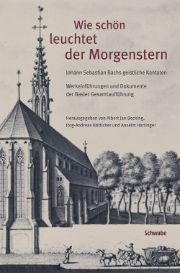
How beautifully the morning star shines. Johann Sebastian Bach's sacred cantatas. Introductions to the works and documents of the complete performance in Basel, ed. by Albert Jan Becking, Jörg-Andreas Bötticher, Anselm Hartinger, 690 pp. hardback with 86 illustrations incl. photo documentation, Fr. 48.00, Schwabe Verlag, Basel 2012, ISBN 978-3-7965-2860-6

get_footer();