Federal Music Festival 2026 of the Swiss Wind Music Association
The 35th Swiss Federal Music Festival (EMF26) will take place in Biel/Bienne from May 14 to 17, 2026. Around 550 music societies will take part in competitions and concerts.
PM/SMZ/ks
(translation: AI)
- 08 May 2026
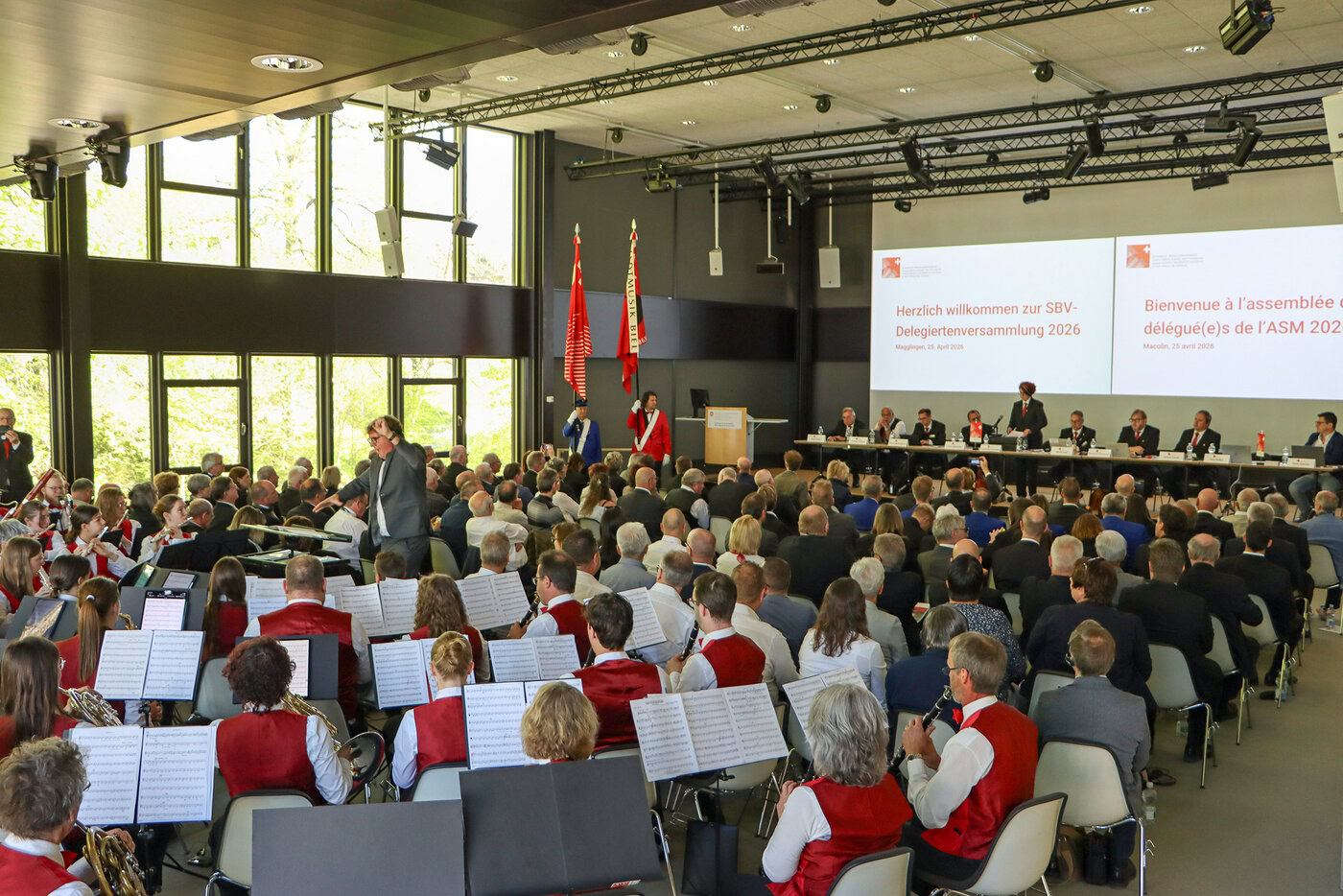
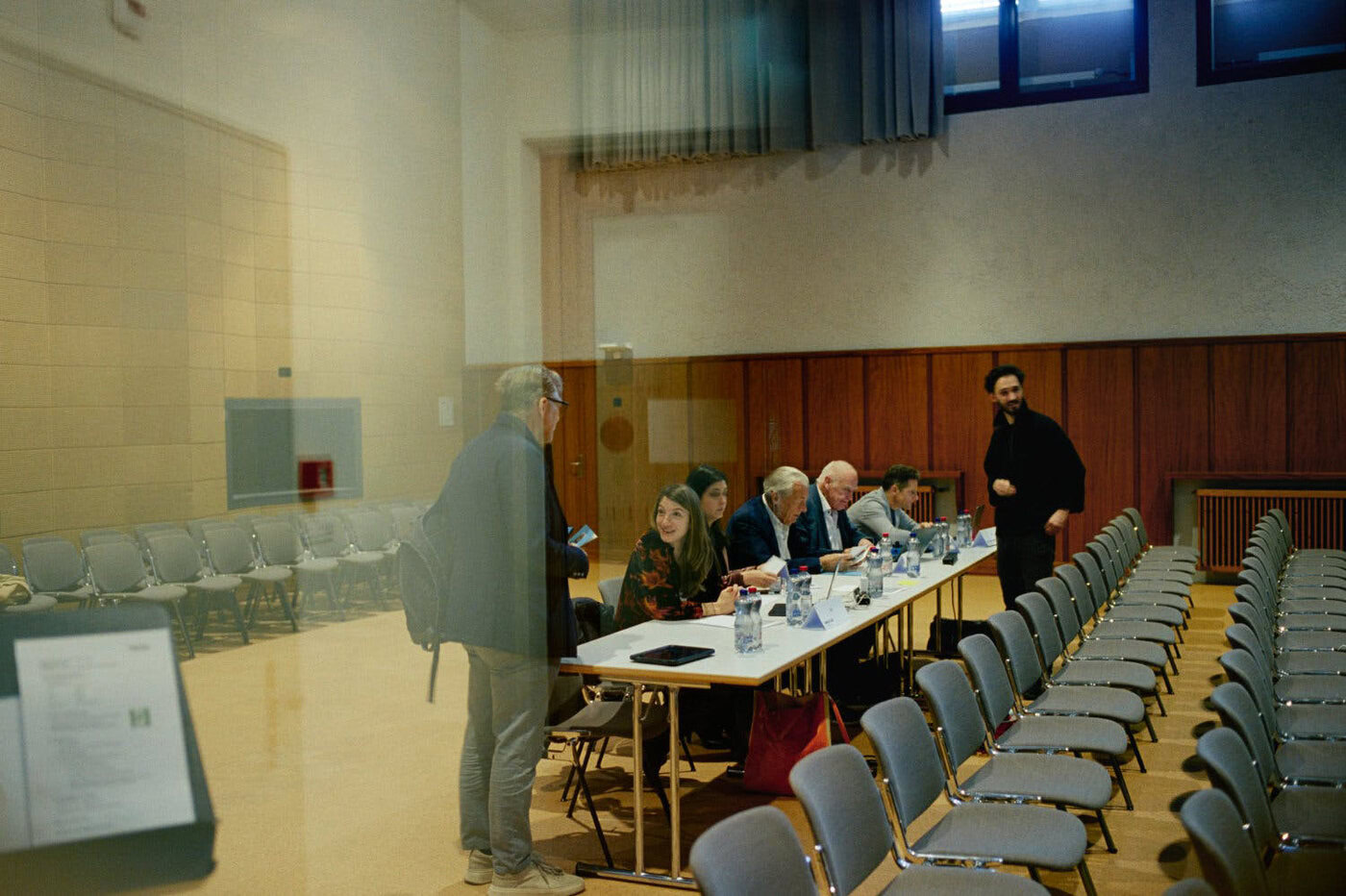
Picture from this year's delegates' meeting of the Swiss Wind Music Association. Photo: Franziska Dubach/SBV
At the 164th Assembly of Delegates of the Swiss Wind Music Association (SBV) on 25 April 2026 in Magglingen, the organizing committee informed the delegates about the status of preparations. OC President Nadja Günthör described the organization of the major event as a challenge that her team had mastered in just under a year and a half.
In addition to the musical competitions, the festival offers an extensive supporting program. Bands from a wide range of genres play on open stages in the city, for example on the Main Stage at the Esplande, at Guisanplatz or in the city church and the city library. A special festival app is also available to download. It accompanies musicians and audience through the festival.
A special highlight is the media partnership with SRF and RTS. The parade music with evolutions from around 30 clubs will be recorded and broadcast using golf carts. According to a press release issued by the brass music association on April 27, this is a world premiere. On May 23, all four national broadcasters will broadcast a live program with around 30 SRF employees.
Further information on the festival can be found at www.emf26.ch.
Paul Juon« Chamber Music Competition»
On October 31 and November 1, 2026, the national «Paul Juon Chamber Music Competition» will be held for the second time.
PM FKMS
(translation: AI)
- 07 May 2026
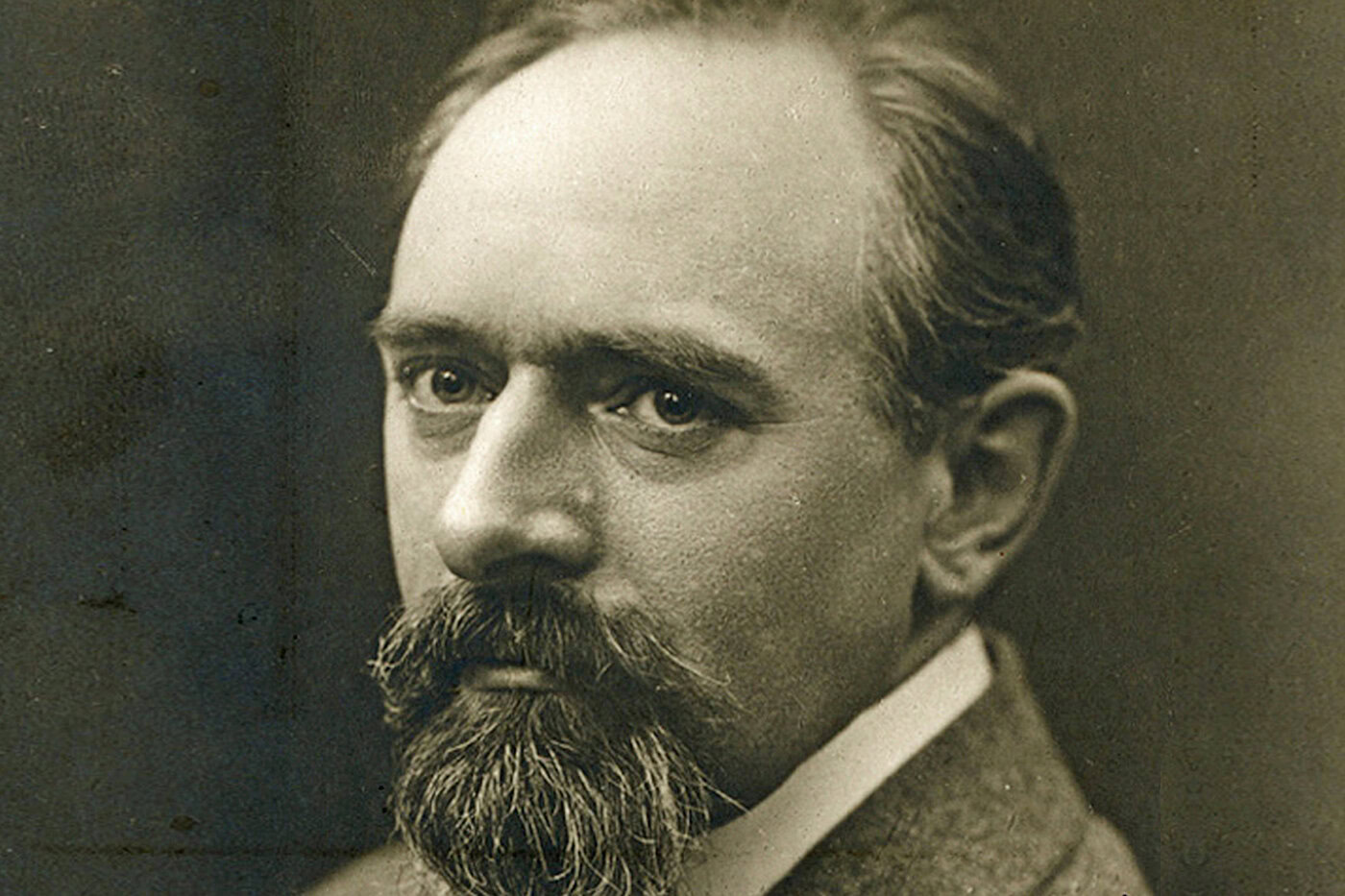
Paul Juon, circa 1908. picture: zVg by FKMS
In addition to a total prize money of 25,000 Swiss francs, the concept also provides concert placement for three years for the winning ensembles. With this targeted support, the winning ensembles of the first competition in 2023 have been supported in over 80 concerts throughout Switzerland to date. The sponsoring association is the Förderkreis Kammermusik Schweiz (FKMS) in collaboration with the Paul-Juon-Gesellschaft, and the venue is the Kunsthalle Appenzell.
«As a teacher of the Zeitgeist Ensemble, I cannot thank you enough for this wonderful initiative and support for the young ensembles in Switzerland! What a pearl this Juon competition is!» With these words, Anton Kernjak expresses his appreciation for the competition's commitment. Artistic Director Martin Lucas Staub is also delighted. The support of the winning ensembles at so many concert appearances shows the sustainability of the concept, which has been enthusiastically received by the concert organizers and their audiences.
The «Paul Juon Chamber Music Competition» pursues several objectives: The sustainable promotion of young Swiss chamber ensembles, the financial support of ensembles and concert organizers as part of the three-year concert placement and the promotion of Paul Juon's great chamber music.
The second edition of the competition in fall 2026 will be based on the tried-and-tested concept: ensembles from trio to sextet are eligible to perform a work by Swiss composer Paul Juon in addition to two freely selectable works. The jury is primarily looking for chamber ensembles with great creative power and stage presence. The prizewinners' concert will take place on November 22, 2026 at 5 pm in the Kunsthalle Appenzell.
Further information on the competition and online registration until September 20, 2026 at www.fkms.org
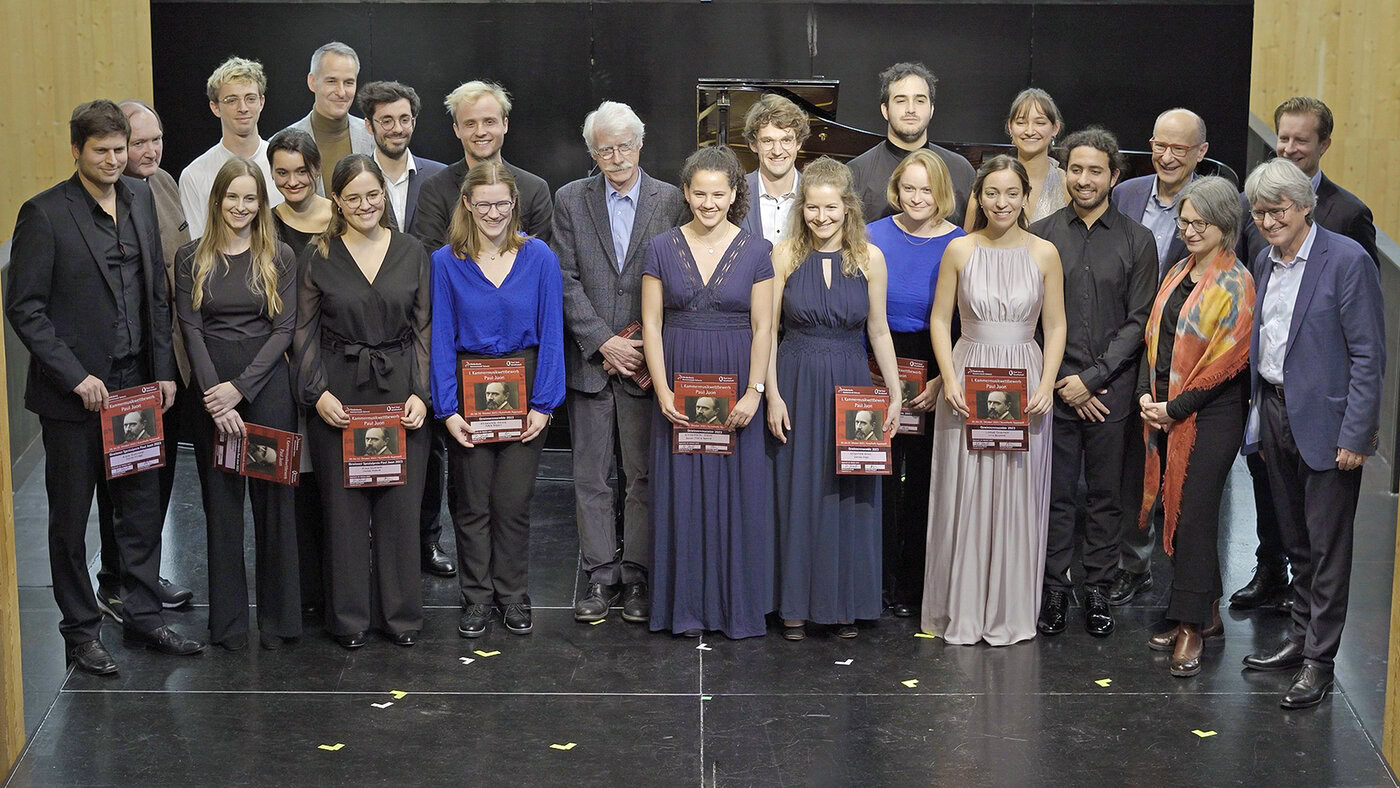
The successful ensembles of the first competition in 2023. photo: Eliyah Reichen
20 years Forum Valais and program 2026
The Festival for New Music is celebrating its 20th anniversary. This year it will be held with a varied program over several weekends in Goms.
PM/SMZ/ks
(translation: AI)
- 06 May 2026
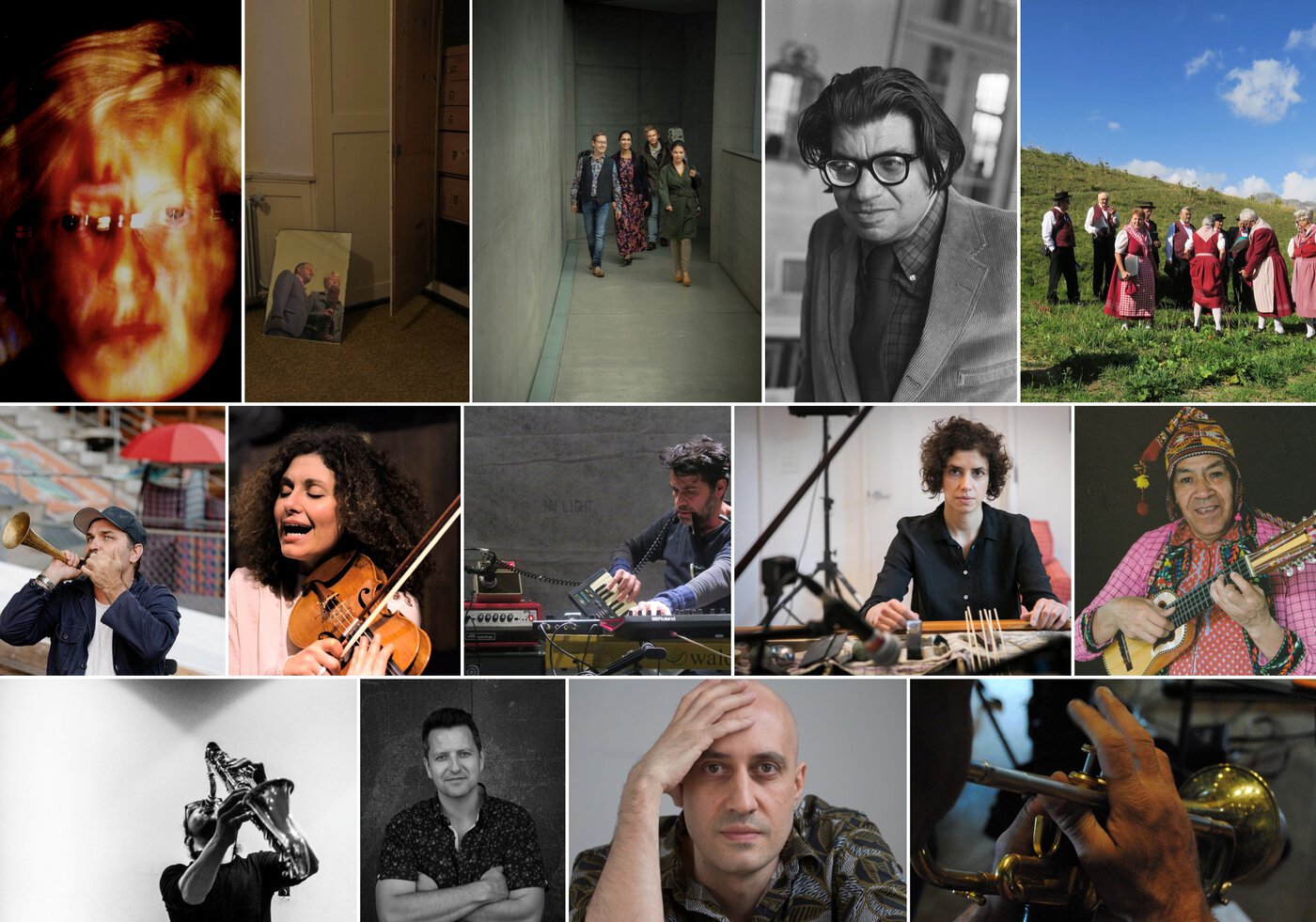
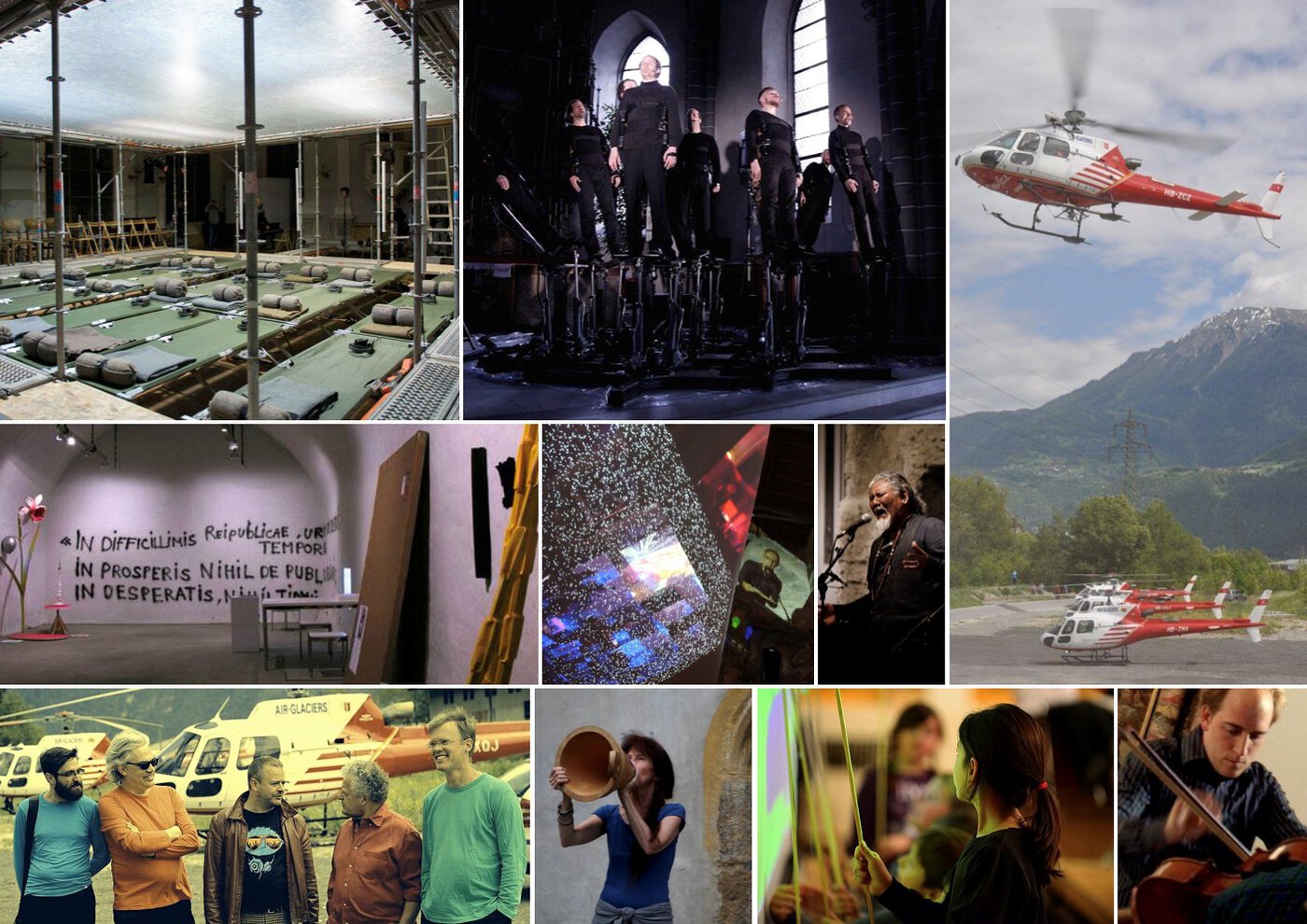
The line-up of the Forum Valais 2026 (from left to right) UMS'nJIP, Minguet Quartet, Morton Feldman, Oberwalliser Volksliederchor, Antoine Läng, Biliana Voutchkova, Hans-Peter Pfammatter, Magda Mayas, Juan Arnez, Christoph Erb, Rolf Hermann, Luis Tabuenca, Manuel Mengis. Picture: Forum Wallis
In the twenty years of its work, the Forum Wallis has brought hundreds of works of contemporary music to the Swiss mountain canton. In addition to its major development work, it has made a name for itself with the legendary production of Stockhausen's Helicopter string quartet Proven international level in 2015.
Unusual lengths
This year's festival runs from June 4 to July 4, 2026 and presents chamber music, experimental and acousmatic formats from Valais, Switzerland and around the world. A common thread runs through the performances: Excessive length and deceleration. Giving time, taking time - that is the focus.
For the 11th time, the acousmatic series Ars Electronica Forum Valais Selection Concerts on MEbU (Münster Earport) takes place. Simone Conforti will present 32 works by 35 composers in four concerts. These include 3 world premieres and 29 Swiss premieres.
It emerged from the association Kleine Konzertreihe Oberwallis, which pioneered concert life in Valais from the 1980s onwards. From 2006, the festival offered the contemporary music scene a platform for the first time to showcase works and reflect the international scene. In 2011, the IGNM-VS was founded - the Valais local section of the International Society for New Music - and thus structurally anchored the festival internationally.
The track record is impressive. By 2025, the Forum Valais will have co-produced over 350 world premieres, performed works by more than 500 composers and provided a stage for over 100 local artists and more than 200 ensembles and musicians.
Today's challenges
The festival works on a voluntary basis in order to pass on funding directly to the musicians. The bureaucratic effort is increasing, the support is decreasing. Although local organizers today also program contemporary music, they prefer formats that appeal to the public. The Forum Wallis fills the gap: with sophisticated, advanced productions. This brings small audiences and funding difficulties - but also appreciation from artists, audiences, the media and politicians. This is because the Forum Valais is still on a par with the quality standards of the major international festivals.
Highlights of the festival history
The festival has seen many impressive performances in 20 years. Here are just a few to mention. Jean-Pierre Pellets Forest solitude with the Mondrian Ensemble on the opening evening of the very first festival in Brig in 2006. Valentin Carron's Cicero graffiti in the cellar of the Stockalper Castle in Brig. Mela Meierhans’ music theater Aunt Hänsi, which brought Valais yodel choirs to the Berlin Festival. St. Mary's glass by Beat Gysin, a sensual-claustrophobic audio theater on The castle by Franz Kafka. Les Musiciens de Brème, a children's opera by Wen Deqing together with the NEC. Cod.Acts Pendulum Choir on Pentecost Sunday 2016 in the Leuker Stefanskirche.
Continue the program track Integration, which has brought together ensembles and musicians as diverse as Klangforum Wien, recherche, UMS'nJIP, Ensemble Modern, zafraan, dissonArt, Taller Sonoro, Wolfgang Mitterer, Fabian Panisello and many more to make music and improvise together. Or for more than 10 years the Ars Electronica Forum Wallis Selection Concerts with new acousmatic music from all over the world. Nor should the subtle performances by Richard Jean and Lukas Huber or the boomingly loud performances by Steamboat Switzerland and Frachter be missed.
Under Jan Dobrzelewski, there were children's and school projects throughout Valais with the HEMU symphony orchestra for several years. In 2020 and 2021, Forum Wallis was one of the few festivals for new music in Europe to continue live during the pandemic. Ironically, the break came in 2022 after the pandemic, when an inflationary number of events were rescheduled and there was simply no more room for new music.
A selection of Forum Valais highlights 2006-2025 (from left to right): Marienglas (Beat Gysin), Pendulum Choir (Cod.Act), Helicopter String Quartet (Air Glaciers), Valentin Carron, Richard Jean, Porok Karpo, Arditti String Quartet, Brigitte Schildknecht, Peter and the Wolf (HEMU/Schulen Goms), Titus Engel. Picture: Forum Wallis
Outstanding: the «Helicopter String Quartet»
In 2015, the Forum Wallis presented Stockhausen's Helicopter string quartet his journeyman's piece. From 2006, the Valais Forum set processes in motion in Valais that had been established elsewhere in Switzerland almost 100 years earlier. Shortly after the IGNM/ISCM was founded in 1922, the first ISCM World New Music Days in Switzerland under Hermann Scherchen and Volkmar Andreae in Zurich. Then in Geneva in 1929 under Ernest Ansermet. Cultural policy, the media and even the scene are only too happy to overlook this lack of development. In its early years, the festival was regularly criticized for not putting on enough advanced programmes because it deliberately gave local forces a lot of space and a springboard.
This is why the IGNM-VS decided in 2015 to produce the most remarkable performance of the most difficult piece imaginable in record time: Stockhausen's Helicopter string quartet. And in record time and with the best in their field: the Arditti Quartet and André Richard. The Arditti Quartet initiated and premiered the work. André Richard had assisted Stockhausen several times on this piece and conducted the piece at the Salzburg Festival and the Biennale Musica Venezia.
They were joined by the four chief pilots from Air Glaciers, the legendary helicopter rescue airline from Sion, and the technicians from Swiss Television (TPC), who are very familiar with helicopter broadcasts for ski and bike races, among other things, and have been partners of Air Glaciers for many years. In fact, all it took was a handful of calls and a five-month run-up. According to Arditti and Richard, this resulted in the smoothest performance of this work to date, both technically and musically. And not in one of the major music capitals, but in Leuk. Since then there has been peace and quiet and the festival has turned its attention back to building up.
Children's opera orchestra debuts with Bizet and Humperdinck
This season at Zurich Opera House, an orchestra of 76 children and young people has prepared excerpts from «Carmen» and «Hansel and Gretel». It presents these under the direction of General Music Director Gianandrea Noseda and Director of Studies Ann-Katrin Stöcker.
PM/SMZ/ks
(translation: AI)
- 04 May 2026
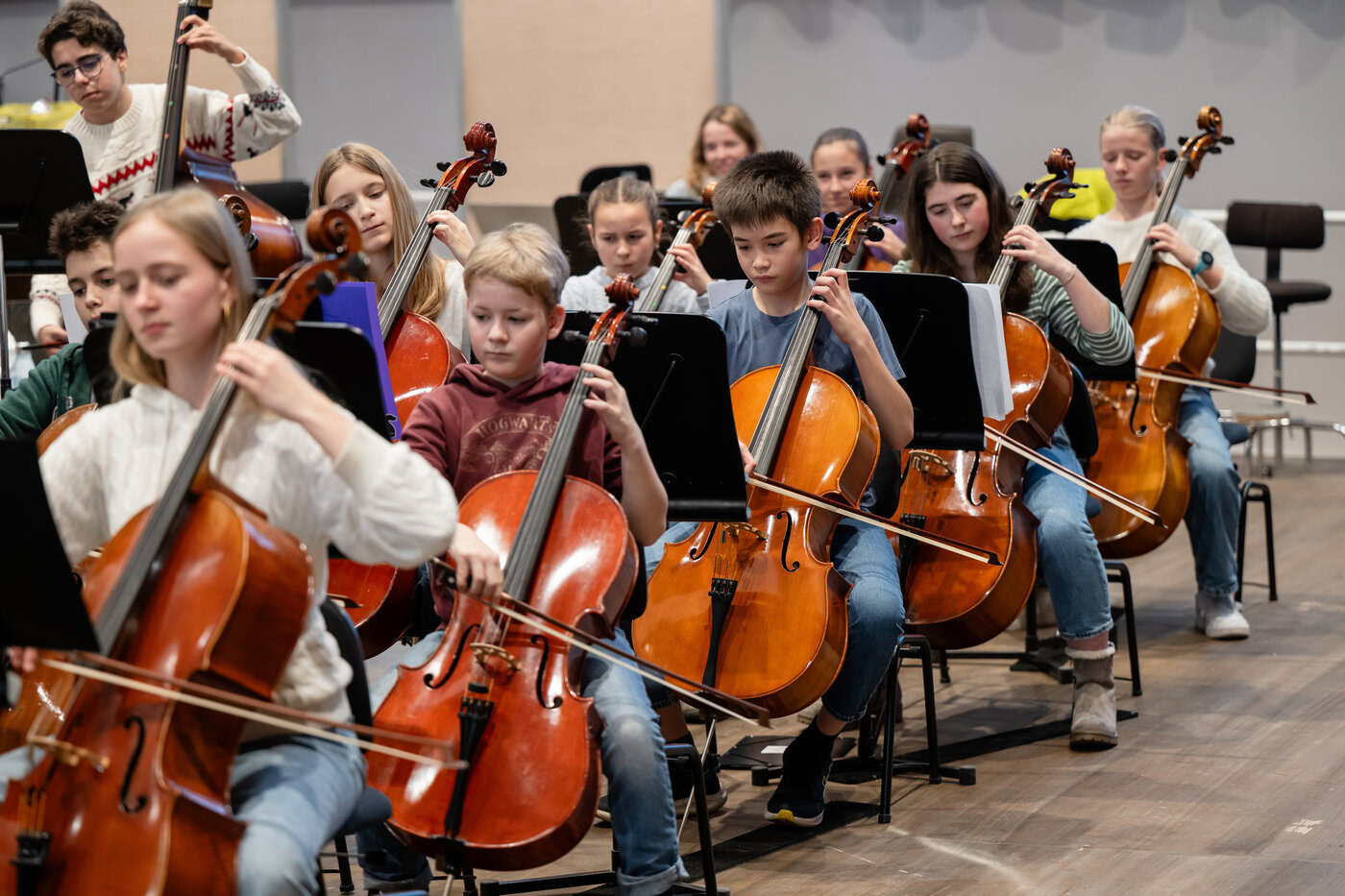
Children's opera orchestra at Zurich Opera House: Rehearsal from 29.11.2025. Photo: T+T Fotografie / Toni Suter + Tanja Dorendorf
Since September 2025, children and young people from all over the canton of Zurich have been rehearsing works together that are usually reserved for professional orchestras. On Whit Monday, the result can be experienced for the first time on the stage of Zurich Opera House.
A project for the entire canton
The Children's Opera Orchestra is closely embedded in the music school landscape of the Canton of Zurich: In cooperation with the music schools, talented children from all regions were found and selected for the orchestra. In register and tutti rehearsals, accompanied by 28 mentors, an orchestral sound has developed in around ten months that goes far beyond an educational school project.
What makes it special: The children and young people work on original repertoire and experience opera at close quarters. The highlight was a side-by-side rehearsal in January 2026, where the children sat in the middle of the professional orchestra and performed excerpts from «Carmen» together. «Now it's really become real,» music theater teacher Thirza Möschinger sums up this moment.
Professionals as role models and partners
Director of Studies and conductor Ann-Katrin Stöcker has accompanied the orchestra from the very beginning. She is impressed by the children's motivation. «There are days with several hours of rehearsal - and then the children go home and continue practicing,» she says. The rehearsals are deliberately based on those with a professional orchestra. The focus is on interaction, technical challenges and the search for a common sound. At the same time, they also get to know the orchestra as a social structure. Older children take on responsibility and help the younger ones with cues and counting.
At the premiere on Whit Monday, the children's opera orchestra will perform in public for the first time - together with soloists and the Zurich Opera Children's Choir, under the musical direction of Gianandrea Noseda and Ann-Katrin Stöcker.
Detailed information and interviews with Thirza Möschinger, Ann-Katrin Stöcker and a participating 12-year-old violinist can be found in Magazine No. 5, Season 2025/26, from page 36 or online.
Dates:
Whit Monday, May 25, 2026, 11.15 a.m. - Zurich Opera House (premiere)
Monday, June 1, 2026, 11.00 a.m. - Zurich Opera House (school performance)
Saturday, June 13, 2026, 7 p.m. - Stadthaus Winterthur
Thursday, June 18, 2026, 11.00 a.m. - Zurich Opera House (school performance)
Sunday, June 21, 2026, 5 p.m. - Dietikon Town Hall
20 years of the House of Folk Music
The House of Folk Music in Altdorf has been the Swiss competence center for folk music for two decades. The anniversary year brings a new president, its own magazine and a major festival.
In 2006, the House of Folk Music (HdVM) opened its doors in the cantonal capital of Uri, Altdorf. Two decades later, the competence center has become an integral part of the Swiss folk music landscape: it documents, communicates and promotes local folk music in all its regional and stylistic facets - from traditional, rustic dance music to contemporary trends. Sheet music, recordings, photos and books are collected and made available online to all interested parties via the folk music collection.
Simone Felber elected President
The anniversary general meeting on April 9, 2026 was marked by a new beginning. Those present officially elected Simone Felber, who has been President of the sponsoring association since the beginning of the year, into office. According to information on the website of the HdVM As an active singer, yodeller and choir director, she is not only interested in documentation and research, but above all in communication. «The House of Folk Music performs an important bridging function: it preserves tradition and at the same time is dedicated to contemporary creation,» she is quoted as saying in her inaugural speech. Her credo: «Everyone is welcome here.»
Vision: A house for everyone
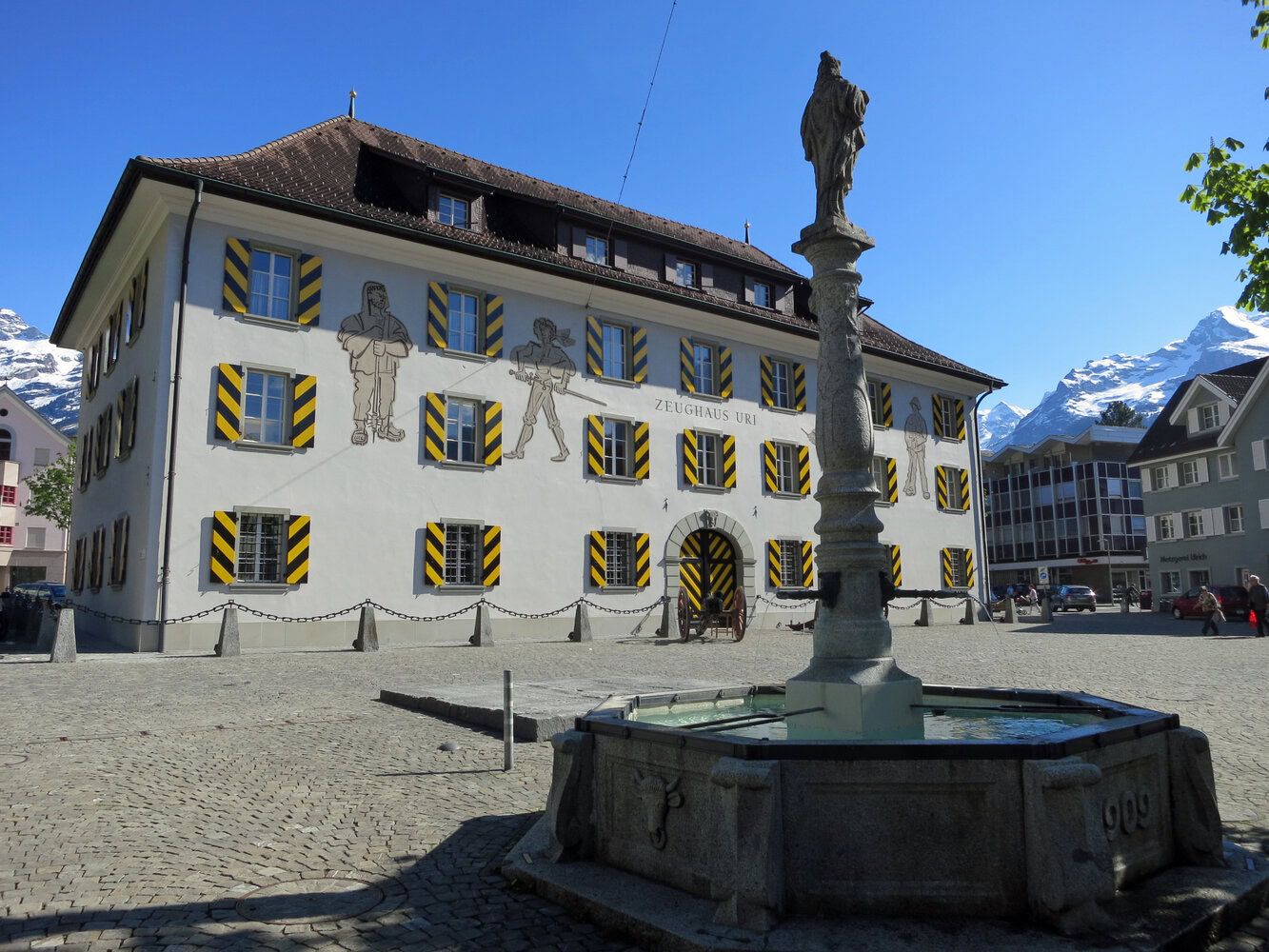
A central topic at the General Assembly was the future of the HdVM at the Zeughaus site on Lehnplatz in Altdorf, where the competence center has been based as a subtenant of the canton for twenty years, as the HdVM writes further. After plans were announced last fall to gut the historic building and convert it into a Chamber Music Hall the HdVM has made its own vision public. The aim is to create a lively, open house with space for events and room for archives, offices and course rooms. The plan is to collaborate with local partners such as the Uri Theater and the Uri Music School.
tutti« magazine and folk music festival
Instead of a big anniversary celebration, the HdVM is putting its energy into two projects. With the new magazine «tutti», it wants to provide regular information about its work and share the surprising stories that the team encounters in the course of its work with its readers.
The real centerpiece of the anniversary year is the Altdorf Folk Music Festival in June. This is the eighth edition of the event, which takes place every two years. This year, more than 40 formations with musicians from all 26 cantons are expected. Over three days, they will provide an insight into the diversity of Swiss folk music - from traditional dance music to contemporary projects.
Brass music spectacle between two worlds
The German-Swiss premiere of the cross-Röstigraben project Traktorkestar & Harmonie Lausannoise under the direction of Antoine Rabut deserves special mention. This is «a concertante spectacle between power and elegance, classical music and Balkan dance», says Balthasar Streit, musical director of Traktorkestar, in the HdVM media release of April 13. On the evening of June 13, «two completely different worlds will come together, so there will be a lot of improvisation and surprises are guaranteed.»
akustika Nuremberg 2026: Europe's music fair grows
More exhibitors, more visitors, more countries: akustika Nuremberg concluded its fourth edition from April 24 to 26, 2026 with a positive balance sheet. Behind the figures lies a greater ambition - the trade fair wants to become the leading European trade fair for music.
PM/SMZ/ks
(translation: AI)
- 30 Apr 2026
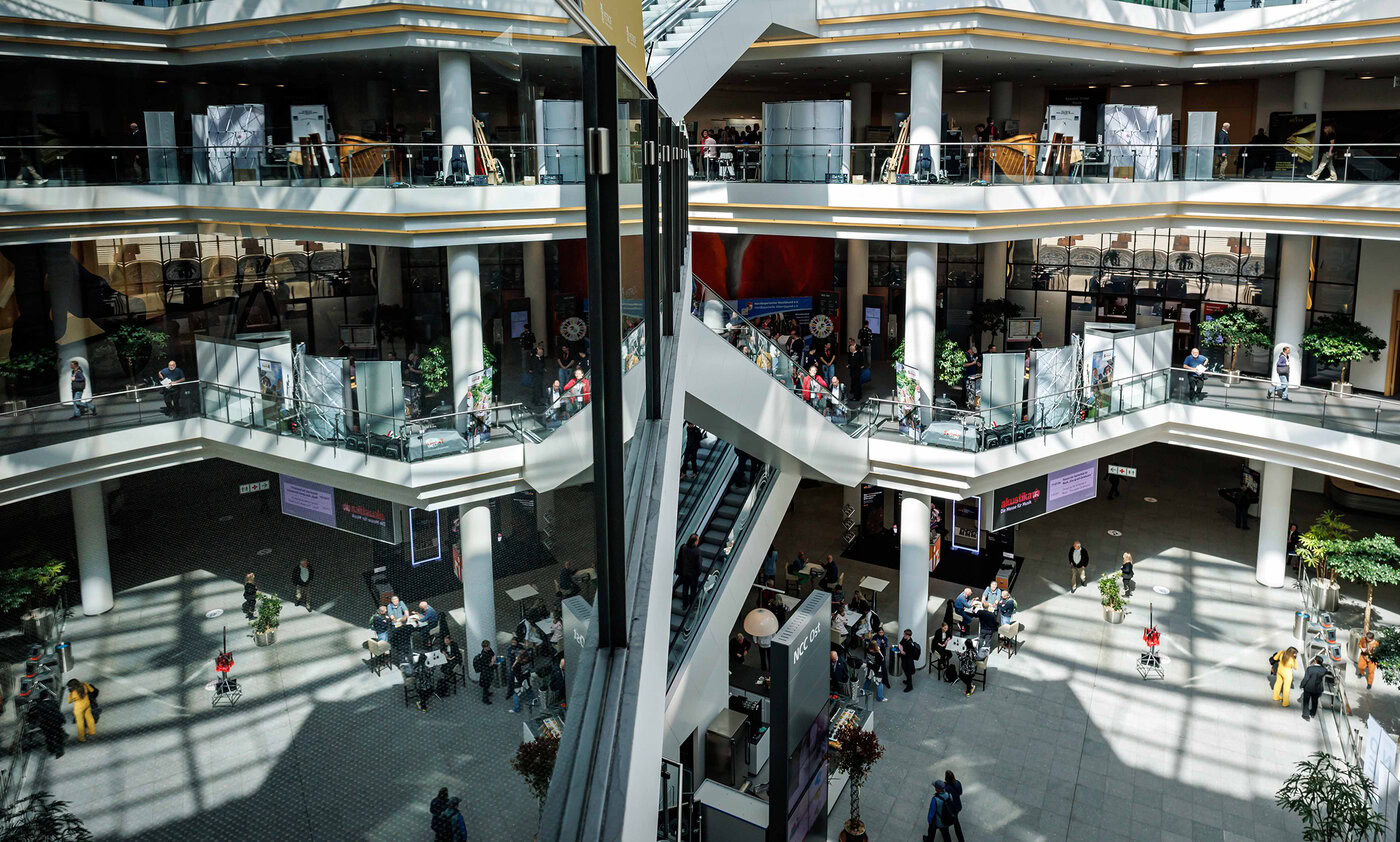
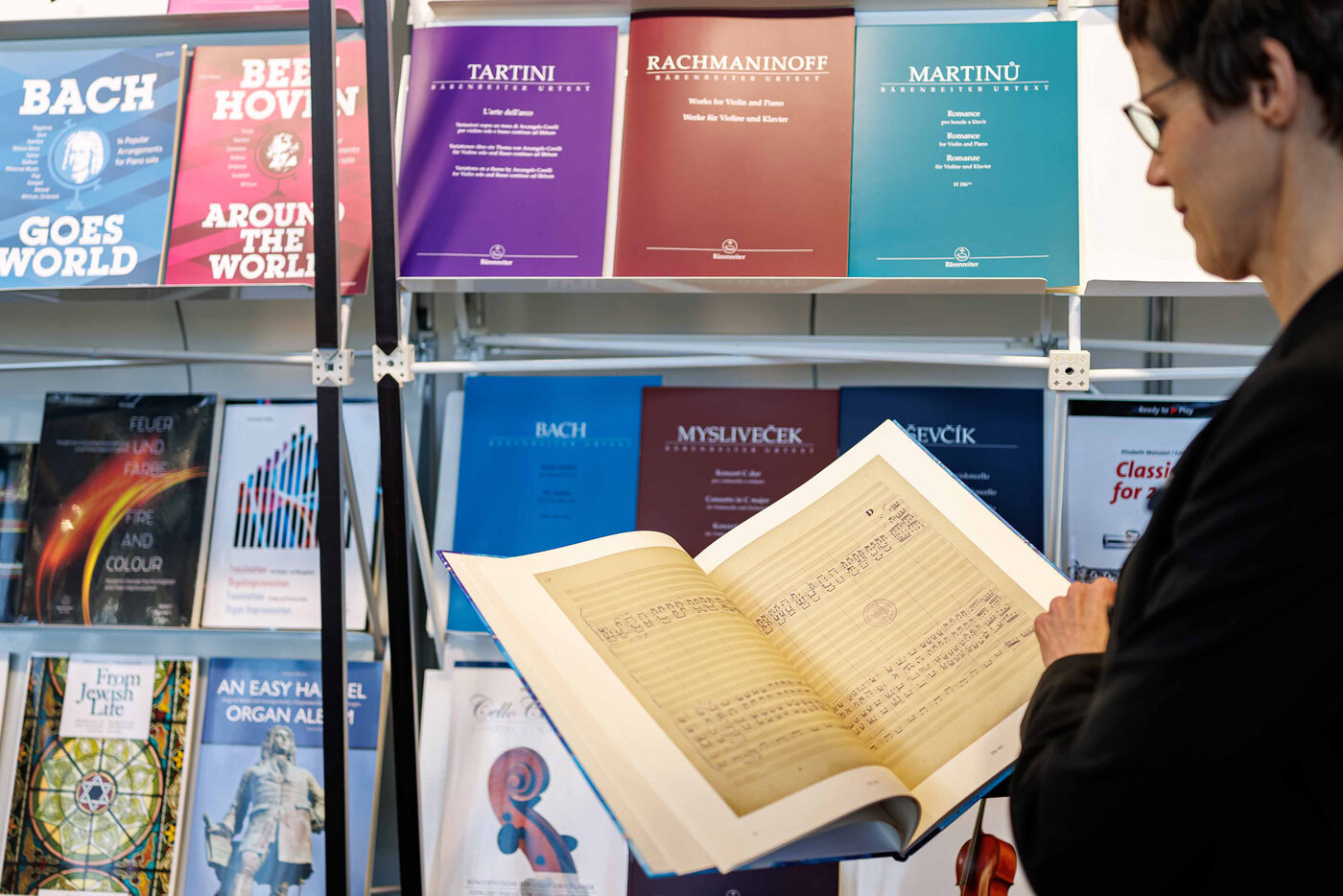
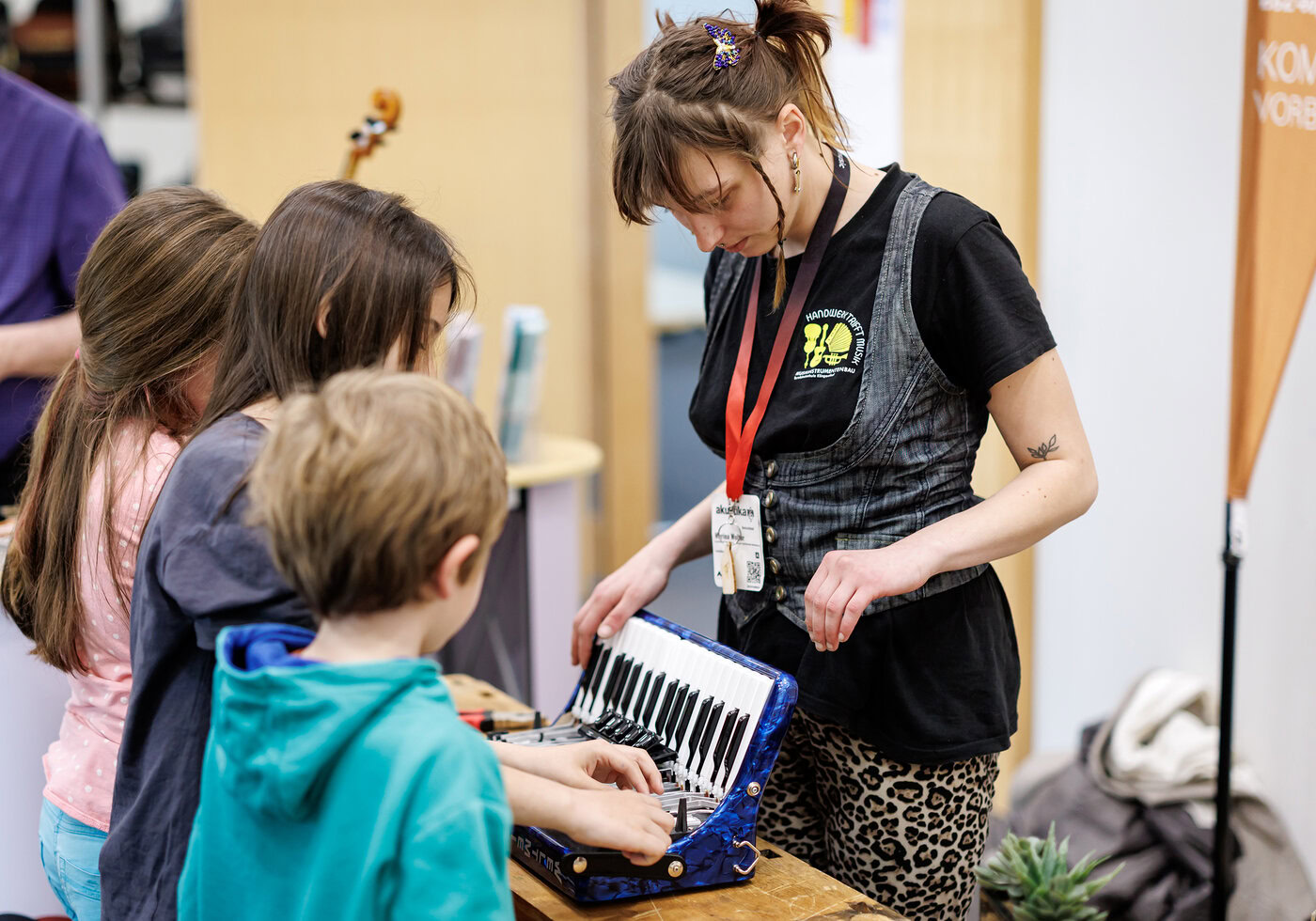
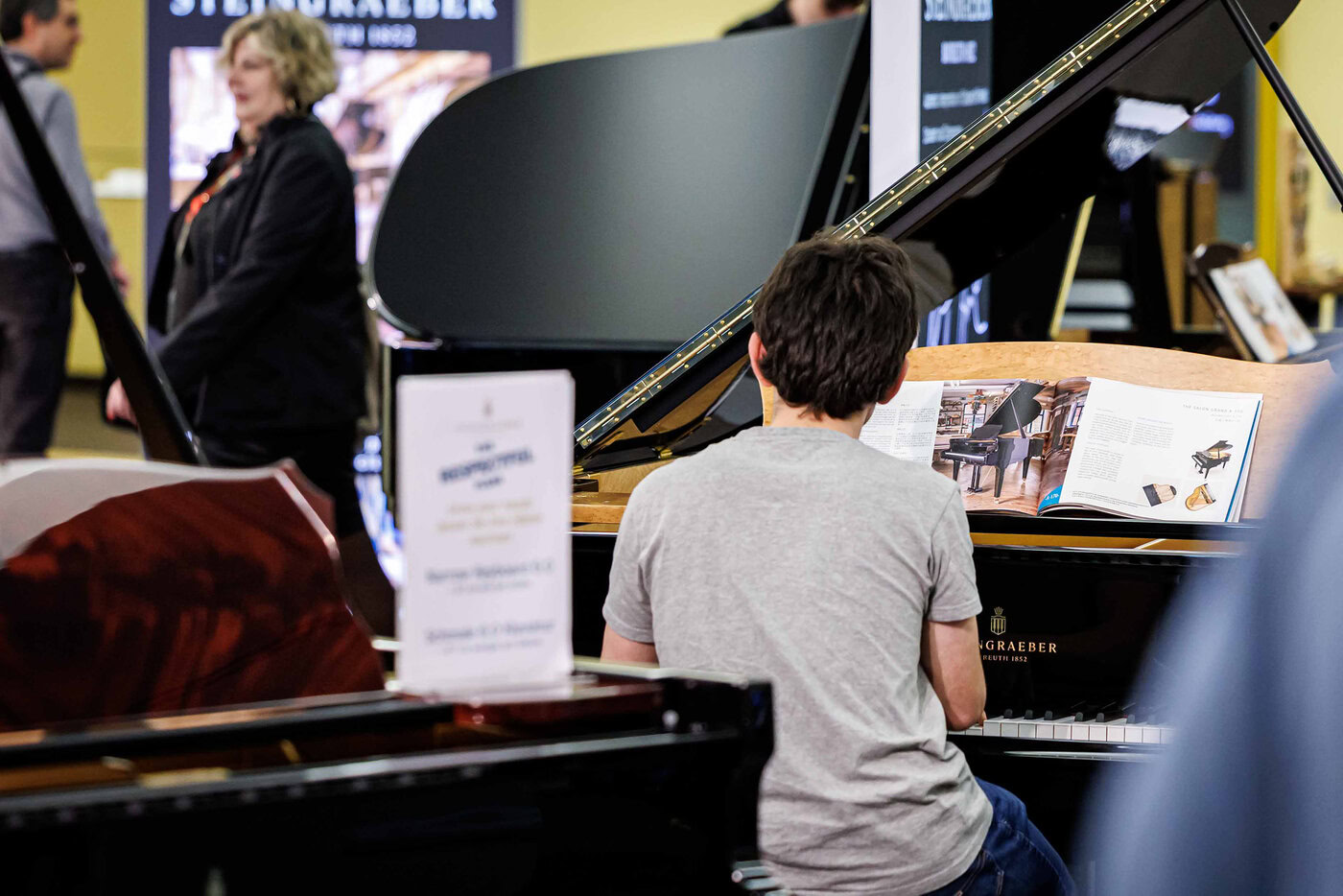
akustika Nuremberg 2026 - all photos: Daniel Karmann
Around 11,500 visitors from 49 countries and 273 exhibitors from 25 nations - the key figures for akustika 2026 speak for themselves. The trade fair, which is organized by Arbeitsgemeinschaft für Messen und Ausstellungen GmbH (AFAG), founded in 1947, has developed steadily since its premiere in 2023 and is now regarded as the most important platform for the instrument making trade in German-speaking countries. For the first time, akustika occupied Hall 7A in addition to NCC Ost, the largest of the three Convention Centers (NCC) at the Nuremberg exhibition grounds, where sheet music publishers and string and plucked instruments were given their own area - and the new space was very well received by visitors.
Why Europe needs a trade fair like this
Several exhibitors put it in a nutshell: Europe has so far lacked an independent international music fair with real appeal. After the last Musikmesse Frankfurt took place in 2019, it was canceled in 2020 due to the coronavirus pandemic and was not resumed afterwards due to market conditions. «At the moment, it only exists in the USA and China,» said Simon Götz from C.A. Götz jr. GmbH, a long-established company for violins and string instrument accessories from Markneukirchen. «We have lost this in Europe - and I hope that we will have it in Nuremberg in five years» time."
This finding explains why akustika is more than just a regional trade fair. It brings together instrument makers, music publishers, dealers, teachers and musicians under one roof - a combination that hardly exists anywhere else. Hans-Peter Strohhäcker from Yamaha Music Europe spoke of akustika as the future «industry meeting place of Europe», which aims to bring together different associations, clubs and music cultures.
Anna Petrof Pruskova from the Czech piano manufacturer Petrof also emphasized that akustika is currently the only trade fair with an international presence in Europe that is still active - and thus fills a gap that has arisen elsewhere.
Craftsmanship, concerts and networking as trademarks
akustika is a lively event: 80 concerts, 10 composer portraits and 50 workshops, seminars and lectures took place on six stages. The accordion, declared Instrument of the Year 2026 by the German State Music Councils, took center stage - the Nuremberg Accordion Orchestra, reigning world champion, performed. For the organizers, this concert program is a deliberate strategy: the trade fair should be a tangible and emotional experience, not just a showcase for products.
«Especially in the current times, music is one of the few things that connects people across borders - and this can be experienced everywhere at akustika,» AFAG Managing Directors Henning and Thilo Könicke are convinced.
Swiss participation and outlook
Exhibitors from Switzerland were also represented at akustika 2026, for example daCarbo AG from Lachen, Jancic AG from Villmergen, Servette Music SA from Geneva and Swiss Wood Solutions AG Sonowood from Altdorf. The organizers have two clear goals for 2027: to strengthen the B2B area with more specialist music retailers and to further expand the international reach. Other foreign companies have already registered to take part in the future. The next akustika will take place from April 9 to 11, 2027 at Messe Nürnberg.
Since the winters have become warmer and the ski slopes shorter, the mountain regions have discovered summer tourism and with it, culture. Andreas Haefliger wants to convert the old arsenal in the cantonal capital of Uri for this purpose.
Max Nyffeler
(translation: AI)
- 29 Apr 2026
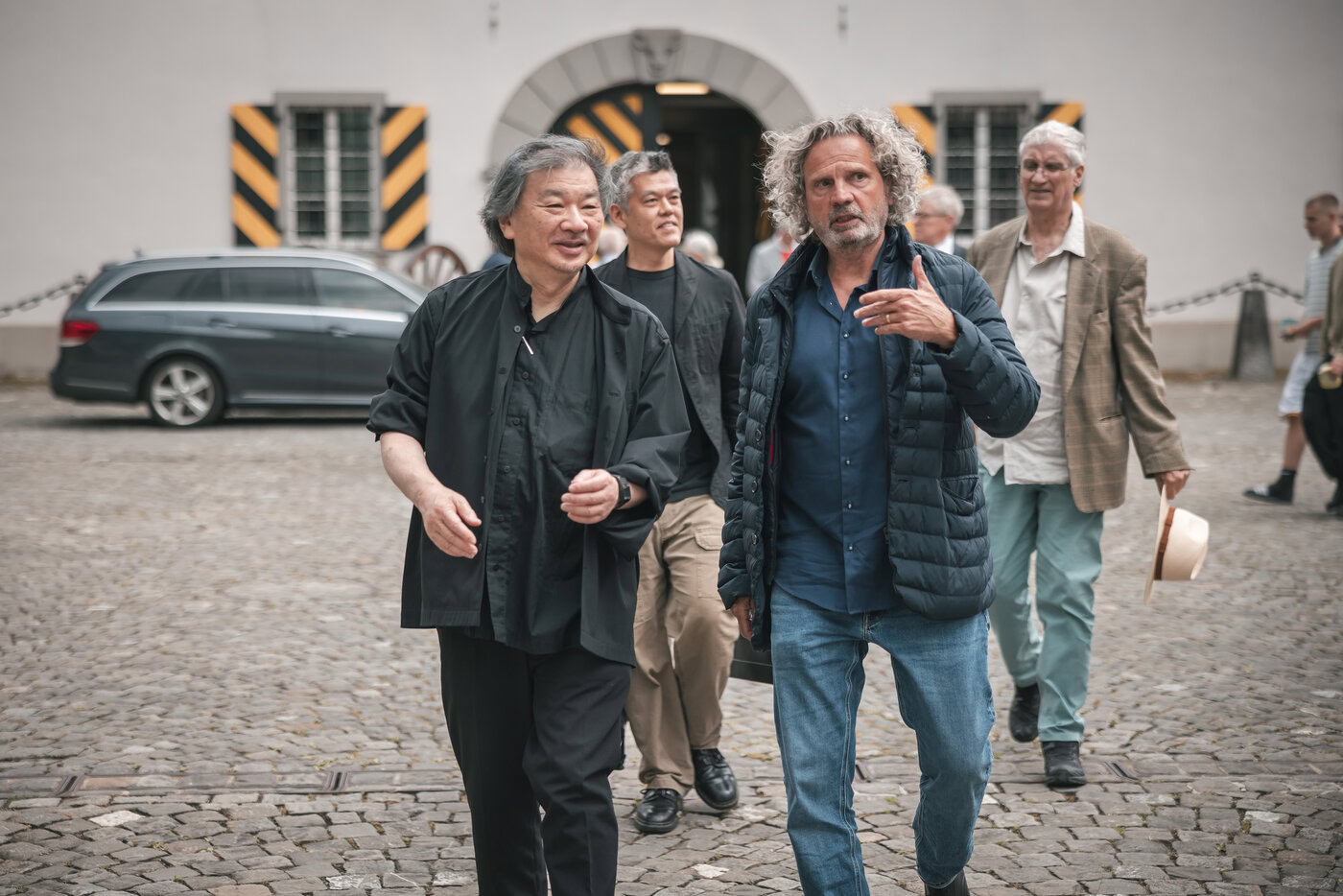
Shigeru Ban (left) and Andreas Haefliger in front of the old arsenal in Altdorf. Photo: Marc Püntener
The Alpine arc is rich in concert venues, from Zermatt, Sion, Ernen, Verbier and Gstaad to Meiringen, Sarnen, Andermatt, Klosters and Davos, to name but a few. And with a view of the lake and mountains, the classic Olympics in Lucerne. Altdorf is soon to be added to the list.
The capital of the canton of Uri with 10,500 inhabitants, which most people only know from driving past in the south, may be associated with William Tell, but not necessarily with classical music. That is about to change, says Andreas Haefliger. The internationally successful pianist returned to Switzerland from the USA a few years ago and now lives with his wife, the American flautist Marina Piccinini, high above Altdorf at seventeen hundred meters with a magnificent panoramic view of the Uri Alps. The charismatic artist has fallen in love with Altdorf, where he wants to build a concert hall for chamber music and is convinced that the hall will not only be a cultural enrichment for Altdorf, but will also attract attention beyond Switzerland with the internationally renowned artists who will perform here. Economic benefits from cultural tourism would be guaranteed.
A gift with a concept
Haefliger's concert hall idea is already on its way to realization. The plans he is putting on the table for the community are fully developed in terms of architecture, administrative structure and finances. In a way, they form a gift package with a gold ribbon that a generous artist wants to present to the community. The project is to be financed exclusively by private individuals - a stroke of luck for Altdorf. And a pointer towards Europe, where the subsidized cultural sector is dangerously faltering due to the low tide in public coffers.
Haefliger has planned his project with strategic foresight. He wants to reduce his concert activities over the next few years in order to be able to devote himself fully to his passion project as a lobbyist on his own behalf. A foundation with personalities from Altdorf already exists as the operating company for the Saalbau, and a project group consisting essentially of the Haefliger couple and the cultural manager Pius Knüsel will oversee the construction. He has quickly built up a circle of local acquaintances, ranging from bakers to councillors, and he and his wife are already well established here as musicians. Their Magic Sound Festival, he says, attracts local audiences and visitors from all over Switzerland. He does not regard the concert hall in Andermatt, located behind the Schöllenen Gorge, as competition, nor the new hall in nearby Vitznau. The event models are totally different.
Wooden construction by Shigeru Ban
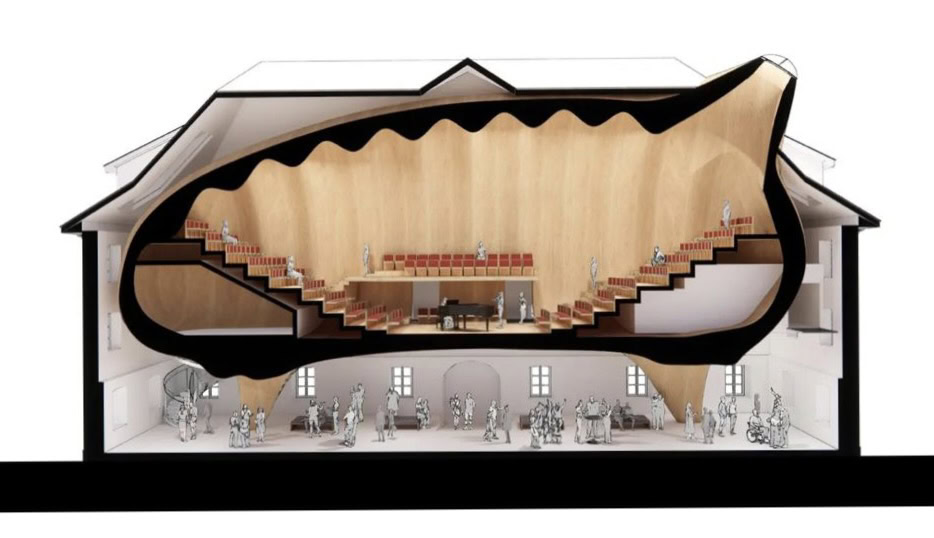
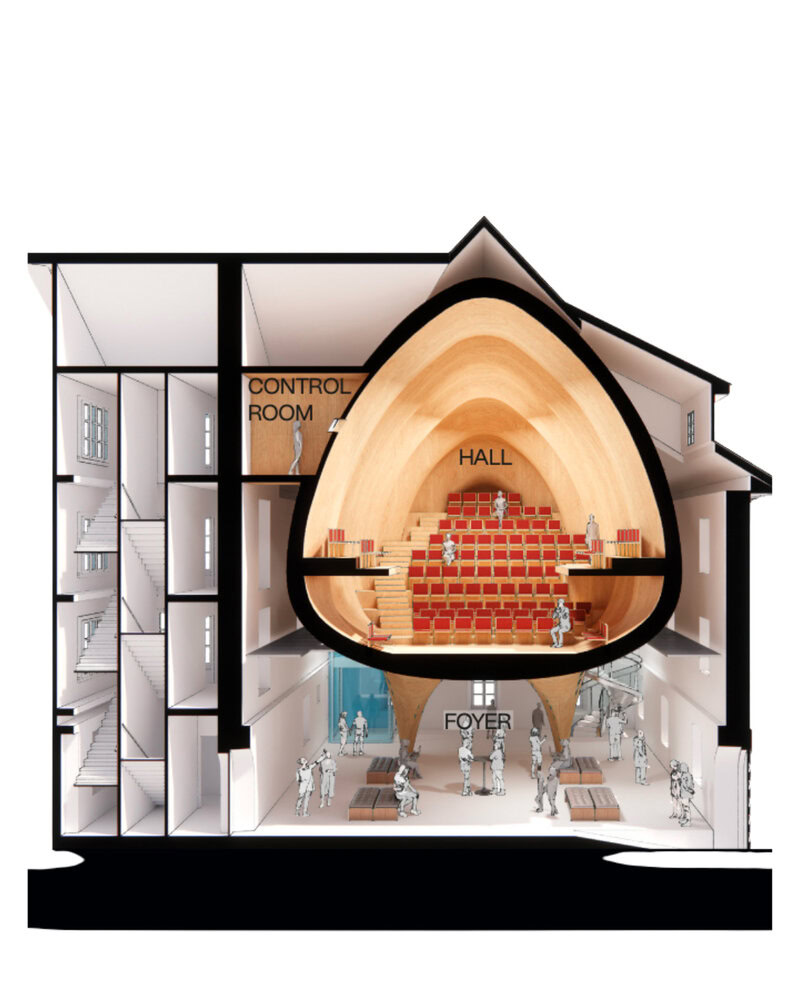
The conversion plans situate the hall in the listed arsenal from the early 19th century in the center of Altdorf. Its façade will remain untouched, but the interior will be redesigned to make way for a wooden structure resting on four pillars and offering space for 250 people. The innovative design was created by Japanese architect Shigeru Ban, an international luminary known for his timber buildings. In Switzerland, he has already designed the headquarters of the Swatch Group in Biel and the Tamedia media building in Zurich, among others.
This is how the new concert hall in the old Zeughaus Altdorf is planned. Visualization: Shigeru Ban Architects
The schedule is tight and precisely timed, and fundraising is already in full swing. The building permit is due to be granted in 2027, construction will begin in 2028 and the building is scheduled to open in 2030. The costs of around 45 million francs are to be covered by donations from patrons and foundations. A bold bet, but Haefliger is certain that it will work, pointing to his extensive personal contacts. The not inconsiderable costs for ongoing operations have already been secured by a firm commitment. The municipality and the canton, which currently owns the arsenal, would therefore also be exempt from the follow-up costs.
A place for everyone
The armory is currently used by the cantonal administration for offices and by the association House of folk music which also has some offices and an archive here and organizes events on the first floor. If no adequate replacement is found, the project could face opposition from this side. Folk music against classical music would be a fatal constellation. Haefliger is therefore seeking an exchange with the locals and emphasizes: "The hall should by no means be a foreign body in the village center, where only high culture is celebrated for a clientele that has traveled here. It should be integrated into local cultural life and also be open to event organizers from other musical genres. The foyer on the first floor is planned as a local meeting place where people can also meet for a coffee or a beer during the day.
The idea of using music to initiate a cultural development process in the region coincides with the models of sustainable tourism practiced today. At the same time, the project generates considerable artistic added value. If all goes well, concerts of exceptional quality will be heard in Altdorf from 2030, sound recordings will be made here thanks to the excellent acoustics, educational programmes will be held for Altdorf schoolchildren and Marina Piccinini, who teaches flute at Johns Hopkins University in Baltimore, will organize international masterclasses here. She has also arranged for her university to send students to Altdorf as early as 2027 as part of a certified exchange program. And finally, what cannot be overestimated: in view of the bleak economic and political prospects for the future, this project is a strong, courageous signal for the preservation of our musical culture.
The Gorgier Music Festival celebrates its premiere
From May 28 to June 1, 2026, the Château de Gorgier will host a chamber music festival for the first time. The privately inhabited castle will open its doors for five evenings of concerts.
PM/SMZ/ks
(translation: AI)
- 28 Apr 2026
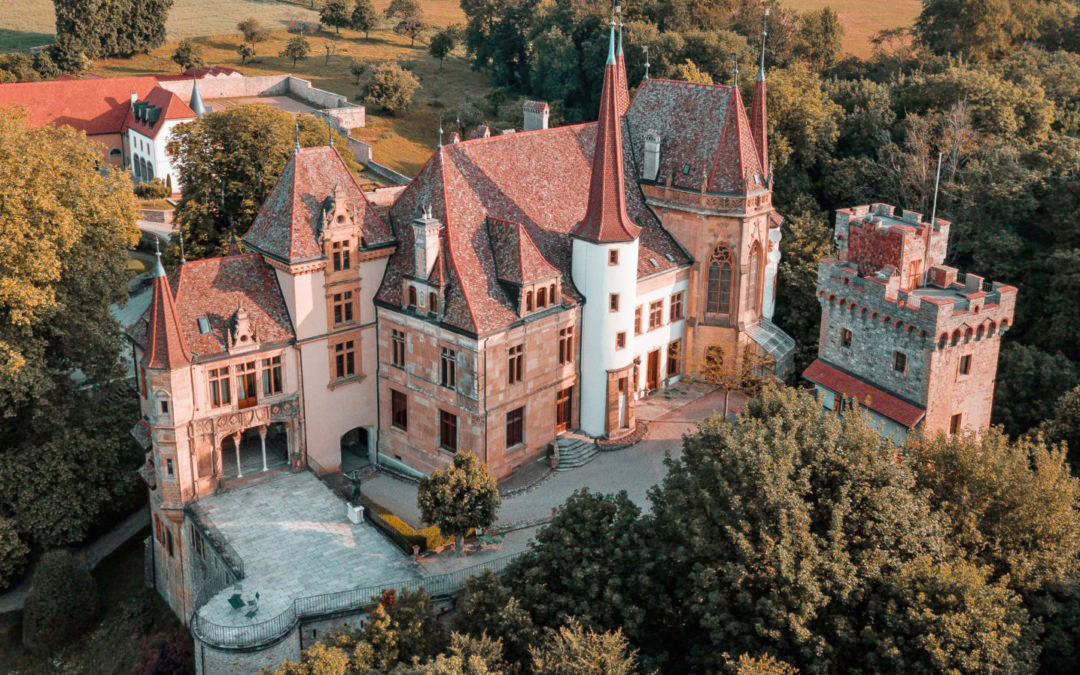
Château de Gorgier. Photo: zVg
The Château de Gorgier in the canton of Neuchâtel, a cultural asset of national importance, is not normally open to the public. The newly founded Gorgier Music Festival is the first opportunity for the public to visit the medieval building. The initiator of the festival is violinist Hans Liviabella.
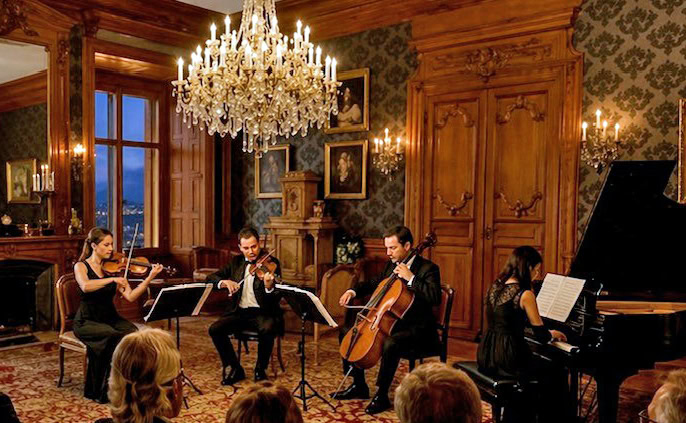
Concert in the great hall of Gorgier Castle. Photo: zVg
The five concerts each begin at 7 pm. A program entitled «Dédié aux femmes» opens on 28 May with works by English female composers of the post-Victorian era for violin, piano, cello and voice. On May 29, baroque music by Antonio Vivaldi can be heard in the castle chapel on the second floor. On May 30, the evening «C'est juste le temps qui passe» combines music with visual art. Two further concerts will follow on May 31 and June 1.
Most of the concerts take place in the castle's Great Hall, which, according to the organizer, is particularly suitable for chamber music. After each concert evening, guests are served an aperitif dinner.
A resonance chamber for Zurich's classical talents
The support landscape for young musicians in the canton of Zurich has been enriched by a new platform: «Zurich Youth Classical» ZYC aims to be more than just a competition. The artistic personality should take center stage.
Niklaus Rüegg
(translation: AI)
- 27 Apr 2026
Finalists listen to a performance. Photo: Ueli Steingruber/Zurich Youth Classical
Technical perfection in music-making was not the most important criterion in the qualifying round of the first ZYC in Brunnenhof and Florhof. Technical skill on the instrument was virtually a prerequisite for successful participation. The jury focused on the artistic attitude and personal creativity of the children and young people performing - always taking into account their age and stage of development. According to the concept, the aim of the auditions is not to further select the best, but to promote a holistic approach.
Andrea Raschèr, President of the «Förderstiftung Musik Zürich», believes that Zurich Youth Classical a matter close to his heart that has been with him for a long time. He is responsible for the strategic, financial and structural management of the project. Since the beginning of last year, he has been working on it together with pianist and artistic supervisor Oliver Schnyder and Valérie Probst, Head of the Artistic Office.
In his speech at the final concert, which was read out by Valérie Probst for health reasons, the basic idea is formulated: «ZYC is not a classic competition in the sense of a performance comparison. It is a resonance chamber. A place where the focus is not on rankings, but on your artistic identity. Each participant has chosen a program that suits them - their own level of development, their own personality.» Raschèr is convinced that musical talent deserves more than recognition, «it deserves space - to grow, to show, to connect.» The new format is intended to enable talented musicians to showcase their «genuine feeling, personality, expressive will and musical voice».
Feedback instead of competition
ZYC is aimed at children and young people as well as pre-professionals between the ages of 7 and 24. All instruments and vocals from all stylistic periods are permitted. Chamber music up to quintet and vocal ensembles are welcome. Further categories are composition and free creative space for experimental music. Only performances that can be classified by the jury as classical music in the broader sense will be considered. Terms such as «contest» or «competition», which imply rivalry and comparison of performance, are avoided by those responsible. Instead, terms such as «recurring funding format» and «fixed platform for the promotion of young talent in the Canton of Zurich» are used.
However, it does not work completely without selection. The somewhat softer term «contest» is used for the auditions. The number of entries was so high that a pre-selection had to be made based on the video material sent in. 47 performers or groups were invited to the qualifying round from March 6 to 8 at the Brunnenhof. Here there was a traditional ranking list with 3rd, 2nd and 1st prizes as well as 1st prizes with distinction. 23 entries reached the final from April 17 to 19.
Jury president Oliver Schnyder had convened a high-caliber and broad-based panel to evaluate individuality, musicality, expressiveness, stage presence and communicative quality according to set criteria. The idea of competition should never arise, but rather the development of potential should be kept in mind. The organizers attach great importance to a relaxed and attentive implementation of the contest. Valérie Probst says: «With this first edition of Zurich Youth Classical, we have achieved and even exceeded our goals. It was important to us to ensure the highest level of professionalism and quality in every respect, while at the same time offering the young artists a welcoming and stimulating environment. We have received very positive feedback in this regard.» The feedback discussions are of central importance. Jury member Daniel Fueter comments: «The jury makes a real effort to provide detailed feedback. These are very relaxed discussions and the young people are happy to take on board what we have to say.»
Following the contest, the potential for a possible professional career is to be developed in the departments «The Cadenza» and «The Crescendo». Up to three participants, usually those with distinction, receive follow-up support, advice and guidance on their career path from proven experts.
Carefree to astonishing achievements
The intended relaxed atmosphere was transferred to the audience at the final concert. They listened relaxed to a varied program of a high standard. At no time did they think of a stressful situation. The 17-year-old cellist Frida Lindner - who attends the Kunst- und Sport-Gymnasium Rämibühl and is preparing for professional studies - confirmed this impression after her remarkable concert contribution with Elgar, Haydn and Kurtág: «You can clearly tell the difference, even with the jury. It is very mixed, in terms of musical style, but also in terms of age. As a result, the judging is also different. In other competitions, it was almost all cellists who paid close attention to the technical aspects.» The 10-year-old harpist Jaron David Kiener, who won the Small Bolero by Anna Sikorzak-Olek, put it succinctly: «It's pleasant to play here. They are less strict than elsewhere.»
«I'm overwhelmed by what they can do at that age, it's simply amazing, one better than the other!» Pepe Lienhard exclaimed during a break in the final. Lienhard was appointed to the jury as a «career changer», as he calls it, to judge the performance quality of the participants. «Of course, I'm not a specialist in classical music. I am best placed to judge the performance of 11-year-old oboist Marc Boller. I got my first saxophone at his age and he already plays such difficult pieces, unbelievable ... I also took part in competitions as a youngster and was often on juries. In terms of level, there's a world of difference between then and now.»
More contemporary, but also more demanding
Oliver Schnyder wasn't sure in advance whether «the basic idea of Zurich Youth Classical would be well received», namely that «it's not about a cross-comparison, but that the young people are measured against the tasks they set themselves. We were pleasantly surprised at how well this worked and that the message got across straight away.»
In some respects, the ZYC format is more demanding for everyone involved than the traditional competitions that aim to be competitive. If you want to see artistic personalities who have something to say on the podium, the instrumental basis must already be in place. As we saw at the ZYC final, this is increasingly the case today and at a younger age. With this in mind, the time is ripe for a rethought, contemporary form of promoting excellence. ZYC could thus actually become a driving force.
The jury at the ZYC Final 2026 Photo: Ueli Steingruber/Zurich Youth Classical
The history of the Swiss Society for New Music
On July 1, 2025, Schweizer Musikedition took over the mandate of ISCM Switzerland. This also marked the end of the thirty-year history of the Swiss Society for New Music. Javier Hagen, the last SGNM president, looks back on institutional ties in the field of new music.
Javier Hagen
(translation: AI)
- 22 Apr 2026
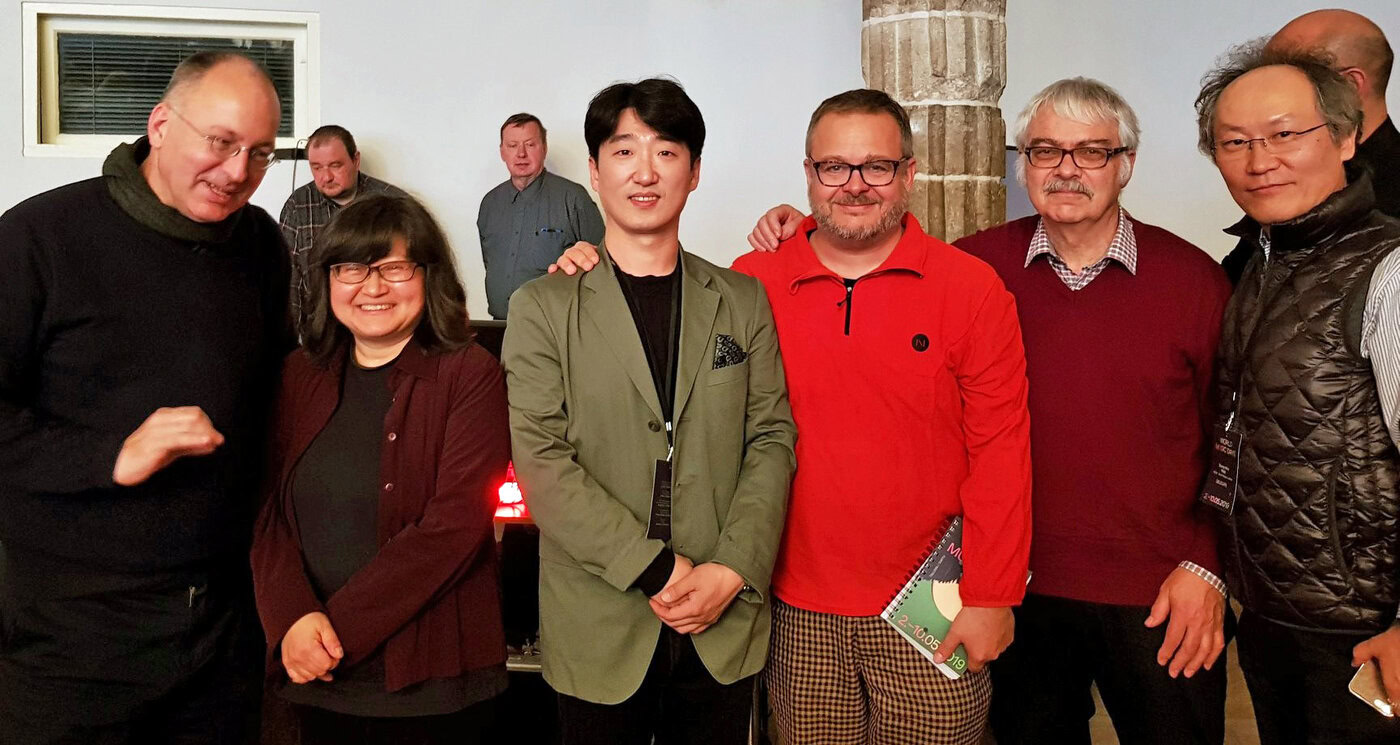
«Family photo» of the ISCM delegates on the occasion of the ISCM General Assembly at the ISCM World Music Days 2019 in Tallinn, Estonia, 2nd from left in the front row: Javier Hagen, 1st from right in the front row: Max E. Keller. Photo: zVg/ISCM Switzerland
The history of the Swiss Society for New Music (SGNM) from its foundation in 1996 until its dissolution in 2025 with the ISCM Switzerland the Swiss representative of the International Society for Contemporary Music (ISCM). In the German-speaking context, the ISCM is generally known as the International Society for New Music (IGNM).
A history spanning over a hundred years
ISCM Switzerland has existed since October 1922, the year the ISCM was founded, and is one of the oldest ISCM national sections. Several influential Swiss musical personalities were involved in the founding and early years of the ISCM. The German conductor and composer Hermann Scherchen, who worked at the Musikkollegium in Winterthur at the time and was closely associated with the ISCM founders, brought his employer, the Winterthur patron Werner Reinhart, onto the ISCM founding committee. Reinhart was then responsible both for substantial financial support for the first ISCM World Music Days, the ISCM festivals held annually in a different country, and for the founding of ISCM Switzerland as part of the Swiss Musicians' Association STV. The first ISCM Switzerland board included Volkmar Andreae (Chair), Hermann Suter, Emile Lauber, Ernest Ansermet, Werner Reinhart,Reinhold Laquai and Jean Dupérier seat. In the 1920s, ISCM Switzerland also organized the ISCM World Music Days twice: in 1926 in Zurich under Volkmar Andreae and Hermann Scherchen, and in 1929 in Geneva under Ernest Ansermet.
Junghae Lee together with SGNM board members Egidius Streiff, Max E. Keller and Javier Hagen at the ISCM World Music Days in Tallinn, Estonia, 2019. Photo: zVg/ISCM Switzerland
Part of the Swiss Association of Musicians
From 1922 to 1995, ISCM Switzerland was an integral part of the Swiss Association of Musicians (STV), the most important and influential association for contemporary music in Switzerland at the time. At the time, the STV functioned in the same way as the Composer's Unions of the other ISCM member countries.
Until the 1970s, the STV presidents also held the ISCM Switzerland presidency at the same time. From the 1970s onwards, there was a gradual desire for separate STV and ISCM Switzerland presidencies, but legally everything remained under one roof, that of the STV.
In view of the impending ISCM World Music Days 2004 In Switzerland, ISCM Switzerland was separated from the STV in 1996 and incorporated into its own corporate body: the Swiss Society for Contemporary Music SGNM / Société Suisse pour la Musique Contemporaine SSMC, founded for this purpose in 1996 under the direction of Jean-Luc Darbellay. This step was intended to guarantee greater operational flexibility, which was the case until the ISCM World Music Days in Switzerland in 2004.
Difficult situation after the World Music Days 2004
The downside of the founding of the SGNM in 1996 was that the supporting and representative membership structure of the STV was lost. The new association had only about two dozen members instead of over 1000: most of the Swiss IGNM local groups, a few other new music organizers and a handful of ensembles. And as soon as the ISCM World Music Days 2004 were over in Switzerland, the SGNM also lost its federal funding and its project secretariat.
This was still the case when Javier Hagen took over the SGNM presidency in 2014. His assumption of the SGNM presidency was linked to the declared intention of resolving this dilemma and not continuing ISCM Switzerland as before, but rather reintegrating it into a coherent national structure. At the time, this meant returning to the STV.
Helena Winkelman at the ISCM World Music Days in Ljubljana, Slovenia, 2015. photo: zVg/ISCM Switzerland
Since the early 2000s, however, the STV has been undergoing a fundamental transformation under pressure from the Federal Office of Culture, which, as is well known, led to its dissolution and merger with other associations in 2017. Sonart has led to. Therefore, from 2014 to 2023, until the definitive consolidation of Sonart after the pandemic, there was no real prospect of a return to the STV or the successor structure: the potential partners were in the process of disintegration or genesis.
Dissolution of the SGNM and takeover of the ISCM Switzerland mandate
At the 2019 ISCM General Assembly in Tallinn, Javier Hagen was nominated for election to the ISCM ExCom due to his many years of ISCM involvement. The structural weakness of the SGNM, which he repeatedly emphasized to the ISCM, prompted him to decline the election to the ISCM ExCom in favour of his Romanian colleague; the upcoming tasks at home in Switzerland were too pressing.
From 2023, discussions regarding the return of the ISCM Switzerland to a national structure could be resumed. Based on the assumption that the ISCM primarily offers added value for composers, and possibly also for ensembles, this structure should meet the following criteria: maximum congruence with the reality of the ISCM, national reach, stable, i.e. permanently employed and professionalized administration. That used to be the STV. The new association Sonart fulfills these requirements structurally, but only to a limited extent in terms of content.
Alternatively, discussions were also sought with the Swiss music publisher SME/EMS. Together with the Musinfo database, it is also one of the former STV's decoupled projects. SME brings together the majority of Swiss composers as members. A modestly staffed office and a proactive and young board, which agreed to take over the ISCM Switzerland mandate in 2025, manage the business. With the resignation of the SGNM board and the dissolution of the SGNM after 30 years, the ISCM Switzerland mandate, which the SGNM took over from the STV in 1996, was transferred to the SME on July 1, 2025.
Review of diverse SGNM activities up to 2025
The last active SGNM board - Max E. Keller, Egidius Streiff, David Rossel and Javier Hagen - brought ISCM Switzerland back into the public eye and online from 2014. It processed the historical documents in Switzerland, guaranteed a minimal structure and activity and maintained the international networking work with the ISCM with minimal resources and great commitment.
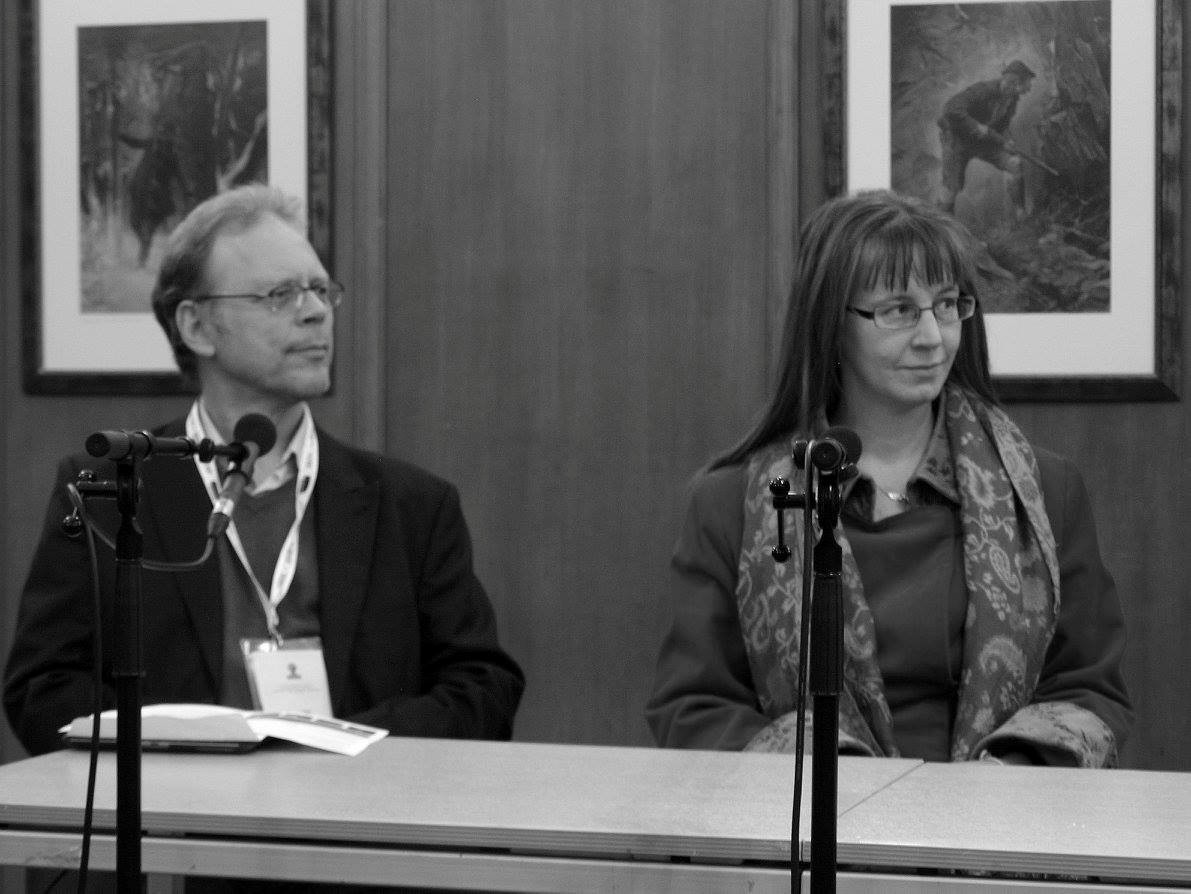
The jury of the ISCM Young Composer Awards 2014 in Wroclaw: Tomoko Fukui (Japan), Eva Lopzyc (Argentina), Javier Hagen (Switzerland). Photo: zVg/ISCM Switzerland
Throughout Switzerland, the SGNM was responsible, among other things, for ensuring that new music was once again represented on the Swiss Music Council SMR thanks to an expansion of the board (2017), and it was involved with the STV in the preparatory discussions for the Sonart merger (2016/17). From 2016, the SGNM held a seat on the board of Schweizer Musikedition SME/EMS and secured its Liquidity when merging SME and Musinfo (2016). She also successfully acted as a mediator for various IGNM local groups in the face of the threat of substantial funding cuts in various cantons (2015/2016).
Denis Schuler at the ISCM World Music Days in Wroclaw, Poland, 2014. photo: zVg/ISCM Switzerland
Thanks to Anton Haefeli, the SGNM came across the founding correspondence of the ISCM in the Winterthur City Library in 2014 - a find of particular significance, as such documents have been lost in many countries due to wars and political turmoil. In view of publications for the ISCM anniversary in 2022, this discovery was more than timely. In the early years of the ISCM, almost all correspondence passed through Werner Reinhart's desk. The carbon copies of these documents are carefully and clearly archived in the Reinhart folder at Winterthur City Library.
Within the ISCM, the SGNM was able to Extension of the official, historical ISCM communication languages German, French and English. Spanish, Chinese, Arabic and Russian were newly added as «Welcoming Languages». This was a groundbreaking step towards facilitating communication within the society (2018). The SGNM has also helped to initiate new memberships and re-entries such as Brazil (2017), China-Shanghai (2017) and Spain (2021).
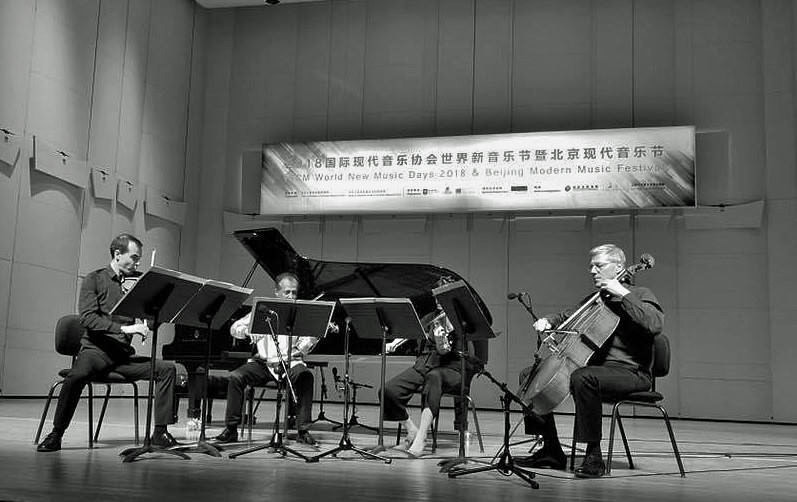
David Philipp Hefti's «à la recherche» at the ISCM World Music Days in Beijing, China, 2018. Photo: zVg/ISCM Switzerland
In 2019, the SGNM launched a call for the promotion of Swiss new music ensembles abroad for the first time as part of the ISCM Collaborative Series (Director: Max E. Keller). The HyperDuo and played successfully in the fall of 2020 in the IGNM concert series in Münster, Detmold and Berlin in Germany.
Measures during the corona period
In 2020, the SGNM successfully lobbied the Swiss Federal Assembly for the adoption of the COVID-19 Act, which was amended in favor of Swiss cultural life. It also initiated quota increases at national broadcasters abroad via the ISCM working groups - similar to SRF, which increased the quota of Swiss music in its programming to 50% during the coronavirus pandemic in favor of higher royalties for local musicians.
The ISCM Virtual Collaborative Series (VCS), which were launched in 2020 during the coronavirus pandemic to maintain the promotion of contemporary music on social media in the face of the shutdown of concert operations, were initiated by the SGNM. By November 2023, the ISCM VCS will have a total of Works by over 250 composers from all over the world have been presented, including the following 15 Pieces from Swiss men and women:
For the 100th anniversary of the ISCM 2022, the SGNM (which in principle also celebrated its 100th anniversary as ISCM Switzerland 2022), together with the ISCM sections in Latvia and the Basque Country, launched an international composition competition for new choral music in three categories: equal voices (organized by the SGNM), children's choirs (organized by the Latvian section) and mixed choirs amateurs (organized by the Basque section). The Swiss part of the competition was organized by David Rossel: 108 compositions by 78 composers from all over the world were submitted in this category (equal voices). Works by Luc Goedert (1st prize ex aequo), Cyrill Schürch (1st prize ex aequo) and Thomas Kientz (3rd prize) made it into the ranks. 17 other works received a Special Mention. The winning pieces were premiered at Casino Basel under the baton of US composer and conductor Eric Whitacre.
Also to mark this anniversary, in 2018 the SGNM secured the collaboration of the Paul Sacher Foundation Basel (mentorship) for the musicological review of the ISCM history by the international ISCM sections. This had a valuable catalytic effect, as the collaboration with the Sacher Foundation encouraged several universities to get involved.
The ISCM World Music Days also celebrated their centenary in 2022. To mark this anniversary, the SGNM created a complete online festival documentation. The programs from 1970 to 2005 were missing from the ISCM archives. In 2018, the SGNM found all the documents at the former ISCM Switzerland President Fritz Muggler in Zurich. They were completely digitized for the archive.
Dragos Tara plays his own work «Pixel» at the ISCM World Music Days in Vancouver, Canada, 2017. photo: zVg/ISCM Switzerland
Javier Hagen played a key role in the ISCM working groups Archive, Sustainability and Communication from 2014 to 2023. One of the outstanding results of these working groups was the ISCM World Music Days to mark the 100th anniversary of the ISCM. These took place on the African continent for the first time in its history in 2023. It was held in South Africa under the artistic direction of Lukas Ligeti, the son of composer György Ligeti, who, like many of his contemporaries, owes a large part of his career to the ISCM.
Further notes on the ISCM World Music Days
Every year, with the help of a jury, the SGNM put together a proposal with at least six Swiss works for the World Music Days. It secures funding for the trip of the selected Swiss composers. With Helena Winkelman 2015, Iris Szeghy 2016, Junghae Lee 2019, Karin Wetzel 2021 and Esther Flückiger 2020/2022 and 2023, female composers represented Switzerland at ISCM World Music Days for the first time in its history after 93 years. This established their presence from 0 to at least 50% within a year.
Esther Flückiger at the ISCM World Music Days in South Africa, 2023. photo: zVg/ISCM Switzerland
ISCM Switzerland was a member of the jury for the ISCM Young Composer Award at the World Music Days 2014 in Wroclaw.
In 2019, the SGNM set up YouTube and SoundCloud Playlists with concert recordings of the ISCM World Music Days and/or recordings of the pieces played there. These playlists are integrated online on the pages of the ISCM archives.
In physical form, the most extensive and complete ISCM archive is that of the Royal Danish Library. Numerous databases exist online: relevant and detailed Wikipedia articles in various languages as well as the ISCM website. All festival programs since 1922 are now documented there with complementary links, reviews and photos. There are also playlists with recordings on YouTube and Soundcloud, including the SGNM playlists. Extensive photo albums can also be found on the social media pages of several ISCM sections, which attractively document the ISCM World Music Days.
Claude Berset at the ISCM World Music Days in Tongyeong, South Korea, 2016. photo: zVg/ISCM Switzerland
As President of the IGNM-VS, Javier Hagen was a member of the SGNM Board from 2011. He chaired it from 2014 until its dissolution in 2025. https://de.wikipedia.org/wiki/Javier_Hagen
Classical:next 2026: Shaping the future of art music
This year's edition of the world's largest symposium for classical and contemporary music took place in Budapest. Swiss participation was marginal.
Anna E. Fintelmann
(translation: AI)
- 20 Apr 2026
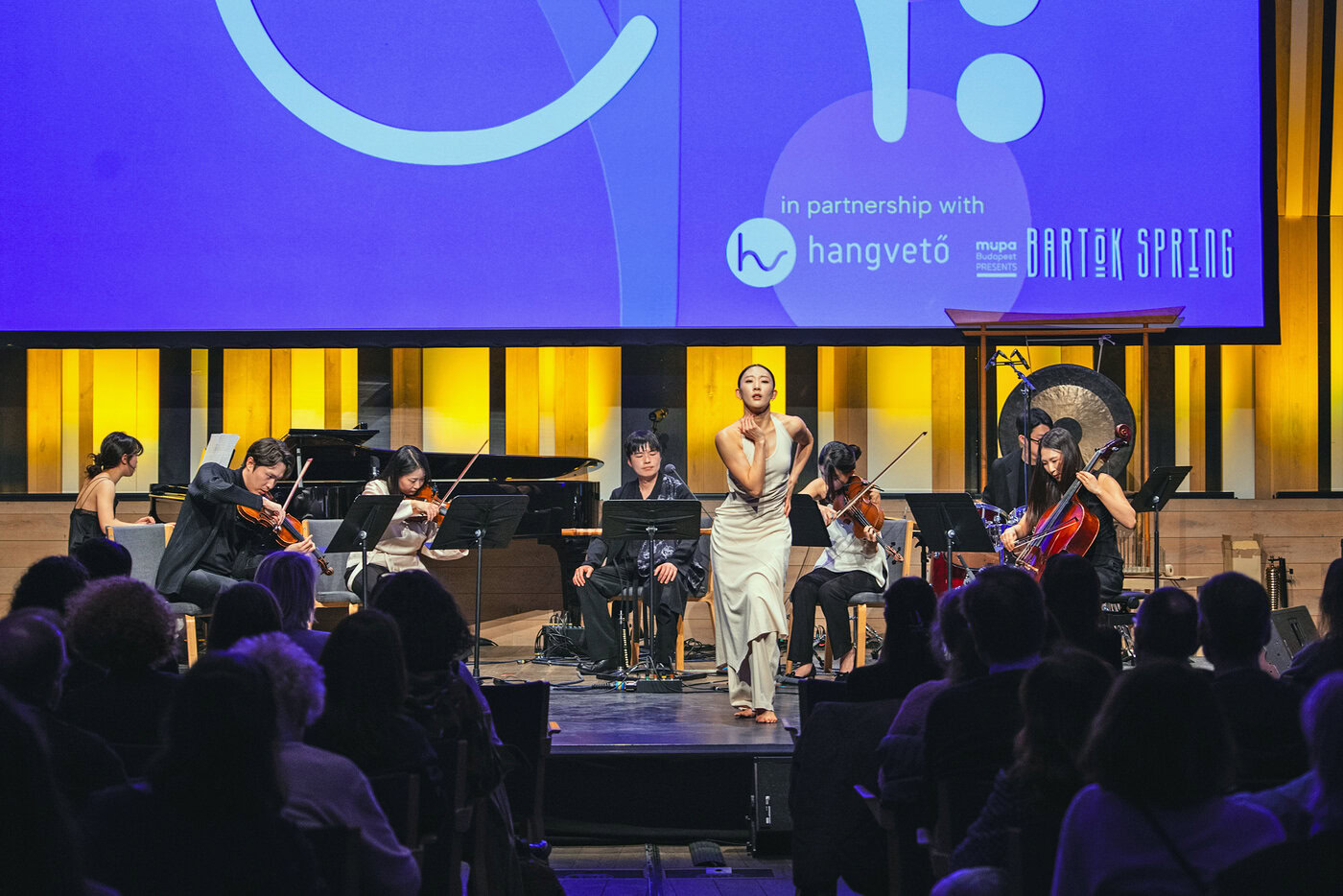
Ilsang ensemble from South Korea. Photo: Christoph Mangler/Classical:Next 2026
Shortly before a landmark election Sunday, around 900 cultural professionals from 49 countries gathered in Hungary's capital for the 13th Classical:next industry meeting. Under the motto «Shaping the future of art music», the conference, showcase festival and trade fair took place at central cultural venues - Millenáris, Liszt Academy, Budapest Music Center and House of Hungarian Music - from 8 to 11 April, co-organized by Hangvetö and the Bartók Spring International Arts Weeks.
At the Liszt Academy, Director Fabienne Krause opened an evening dedicated exclusively to Hungarian composers, from Liszt to Péter Eötvös. In the presence of György Kurtág, who has just turned 100, pianist Ildikó Rozsonits, among others, showed that classical modernism can make a hall vibrate. Conductor and composer Iván Fischer had already set the contextual framework with his opening address at midday: The concert ritual in its current form is not sustainable; what is needed is a reorientation towards the audience and truthfulness on stage.
How do you reach a dispersed audience?
The conference topics ranged from new music technologies and gender representation to wage models and sustainability. The debate about music journalism was particularly lively. «Who decides what matters?» asked moderator Olivia Brown (London). The attitude of the British Classical Music Magazine stood alongside the success of Stream track with around two million subscribers. Content creator and flautist Cinci Baglyas pleaded for «behind-the-scene» content as a means of combating barriers to access; Martin Andris (Elbphilharmonie) reported on a «creator in residence» - the outcome remains to be seen. Whether AI will bring new listeners to the music business remains uncertain. Anna Tiszolczi from the Budapest Festival Orchestra presented more concrete proposals for different audience segments: In addition to «cocoa concerts» for children, the «Midnight Music» format was a hit, lounge concerts for young people, expressly without parents, she said. Toks Dada (Southbank Centre) and Linda Begbie (Manchester Collective) encouraged people to take more risks: «When we do different things, different people will come.»
Award-winning technologies in the service of music
Three projects were honored with the Innovation Award 2026, focusing on new technologies: SOAVE (Stage Orchestra Audio Video Experience, Italy) uses virtual reality to immerse the audience in a symphony concert from different orchestral perspectives. The Borealis Festival (Norway) uses technological aids to create new physical listening experiences that go beyond conventional concert formats. Playing With Fire: An Immersive Odyssey (France) invites you to an intimate virtual encounter with the pianist as a mixed reality concert with Yuja Wang - realized by Vive Arts and the Philharmonie de Paris.
Hoping for broader Swiss participation
As the only Swiss contribution among 69 artists from 15 countries, the crossover project «Charles River» by Basel percussionist Florian Arbenz impressed the audience with a program based around songs by Charles Ives. Singers Anna Juniki and Immy Churchill brought melancholy poetry to the stage with the contrast of classical and jazz vocals; the eight-piece ensemble effortlessly filled the hall of the Budapest Music Center.
Nevertheless, some Swiss providers made new contacts at the trade fair. 2027 offers an opportunity for more presence: as part of the Polish Capital of Culture program, Classical:next will take place from 11 to 14 May 2027 in Katowice, a UNESCO City of Music with a lively orchestral landscape. Swiss music export, please make a note!
Fabian Renz becomes the new editor-in-chief of the Schweizer Musikzeitung
Journalist Fabian Renz will take over as editor-in-chief of the Schweizer Musikzeitung on July 1.
SMZ/ks
(translation: AI)
- 15 Apr 2026
Fabian Renz will take over as editor-in-chief on July 1, 2026. photo: zVg
Renz has been with the Daily Gazette most recently as Head of Analysis and Opinion. Before that, he worked for eight years as a team leader in the Federal Parliament. His journalistic career began in 1999; from 2006 he worked as a Federal Parliament correspondent for various media.
At the University of Zurich, he studied general history with a minor in musicology and Swiss history. In addition to journalism, he is also deeply involved in musical issues.
Until the end of August, he will be accompanied by the current Editor-in-Chief Katrin Spelinova and Pia Schwab. Both will retire at this time.
Jean-Damien Humair remains in his position and also ensures continuity. He has headed the French editorial team since the first issue of Swiss Music Newspaper For some years now, he has also coordinated the contributions of the SMZ associations.
The documentary «Unisono - Von der Liebe zur Musik» by Georges Gachot about the Aargau Youth Symphony Orchestra will be shown for the first time in Basel on April 26, 2026.
PM/SMZ/ks
(translation: AI)
- 15 Apr 2026
Still from the film «Unisono - Von der Liebe zur Musik» by Georges Gachot . Picture: zVg/anderdog.ch
On Sunday, April 26, 2026, at 12 noon, Kinokoni Basel (Steinenvorstadt 36) will be showing a preview of the documentary film Unisono - From the love of music by Georges Gachot. The event takes place as part of the Offbeat festivals at which Finnish jazz pianist Iiro Rantala - one of the film's protagonists - will perform. After the screening, director Georges Gachot and Urs Blindenbacher from the Offbeat Festival will talk to the audience.
The film accompanies the Aargau Youth Symphony Orchestra under conductor Hugo Bollschweiler during intensive rehearsals. It shows young Swiss musicians at work and grappling with the question of how classical music should be played today. Iiro Rantala introduces the ensemble to the world of improvisation. The program ranges from the Romanticism of Dvořák to the works of Górecki and Rantala's own piano concerto The Best of Beethoven, which combines jazz, tango and humor with Beethoven's themes.
Gachot is known for his music films, including the 2002 Martha Argerich, conversation nocturne. Unison belonged to the Solothurn Film Festival 2026 is one of the most talked about films. The regular theatrical release in Switzerland is planned for the end of August 2026.
Zurich Youth Classical: Finale at Brunnenhof Zurich
The final of the first edition of Zurich Youth Classical - The Contest will take place at Brunnenhof Zurich from April 17 to 19, 2026.
PM/SMZ/ks
(translation: AI)
- 14 Apr 2026
Photo: Ueli Steingruber, Zurich Youth Classical
With this format, the Förderstiftung Musik Zürich is launching a program for young musicians from the canton of Zurich. Children and young people between the ages of 7 and 16 as well as talented pre-professional musicians up to the age of 24 can take part.
The Competition assesses not only technical ability but also musical expression and personal development. The jury is made up of Pepe Lienhard, Daniel Fueter, Yilan Zhao, Gwendolyn Masin and Valentine Michaud. Pianist Oliver Schnyder is the artistic supervisor.
On April 19, the prizewinners will perform in the final concert at 10:00 a.m. in the large concert hall (Studio 1) at Brunnenhof Zurich. The concert is open to the public.
The Brunnenhof was once Switzerland's first radio studio and is now used as a music and education center.
The jury of the 1st ZYC - The Contest. Photo: Ueli Steingruber, Zurich Youth Classical
Erika Radermacher turns ninety
The versatile performer and composer Erika Radermacher is a formative personality of the Swiss music avant-garde.
Thomas Meyer
(translation: AI)
- 10 Apr 2026
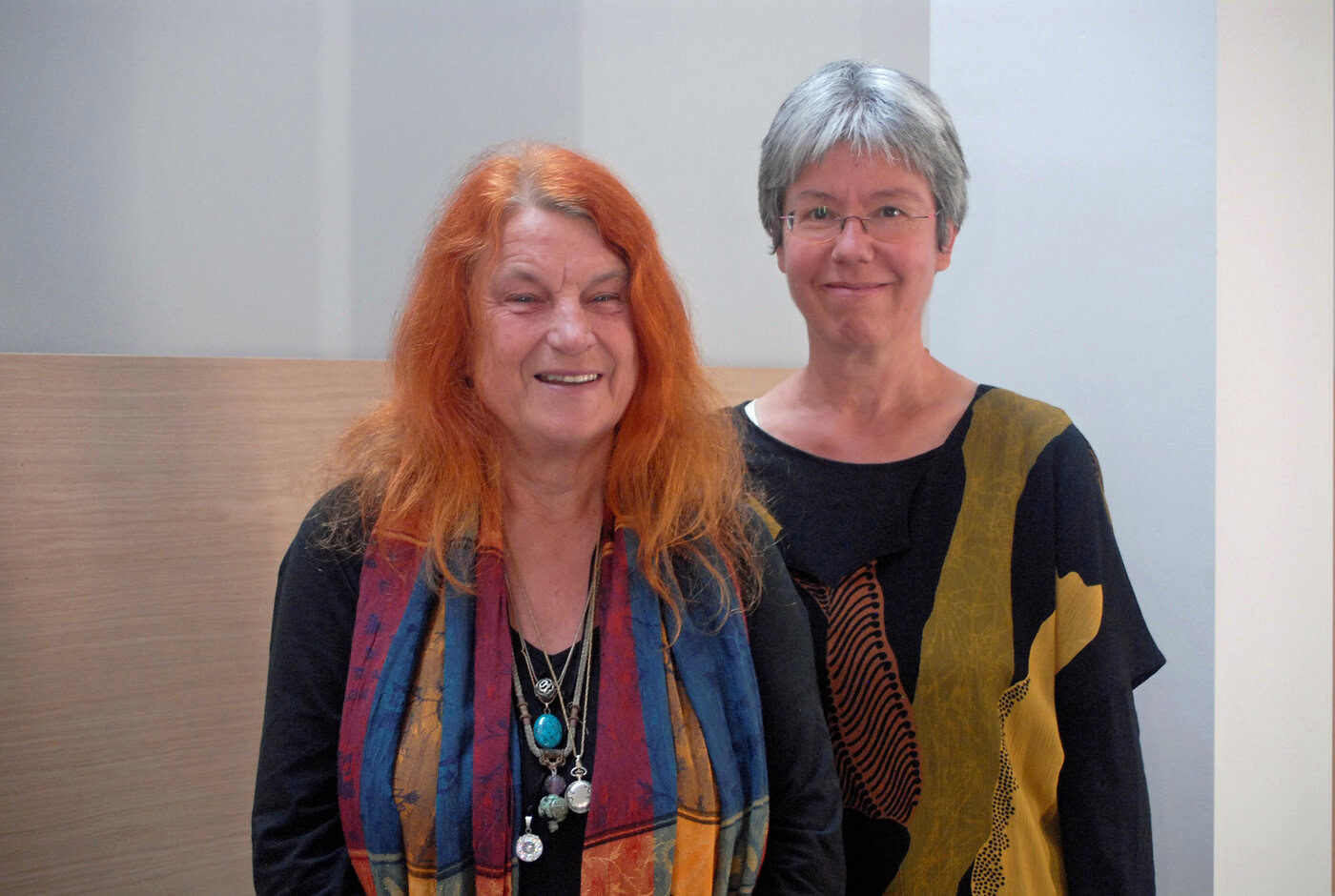
Erika Radermacher (left) and Katharina Weber improvise freely and cultivate a varied repertoire. Photo: Nicole Philipp
In conversation, the composer Regina Irman wrote in 1985 about her colleague Erika Radermacher that she was completely devoid of ambition, airs and graces. «With naturalness and naturalness, she is simply a musician and as such takes on a wide variety of functions.» Everything is integrated. This attitude is indeed characteristic of Erika Radermacher, who was born on April 16, 1936 in Eschweiler near Aachen and came to Switzerland in 1967.
She is an excellent interpreter of both the classical and contemporary repertoire, a singer and pianist; she fills concepts with originality and personality, but also improvises excellently on the piano. As a founding member of the ensemble Neue Horizonte Bern in 1968, she led the Swiss avant-garde with her then husband Urs Peter Schneider, for example in a duo with Katharina Weber. The teacher was followed by numerous young musicians on the piano. She also trained in holistic healing, humanistic psychology and meditation and practices in Schliern near Köniz, where she created an independent, stylistically almost incomprehensible compositional oeuvre, often with unusual approaches. Although she does not believe that there is an audible difference between women's and men's music, she is a great role model for the compositional work of women in this country.